
Introduction: Why the Right Date Matters When Buying a Home

When we buy property, we tend to focus on location, price, inspections, and financing. Those things are crucial, yet for many buyers in East Asian cultures, there is a parallel layer of decision making that matters just as much: timing. Choosing an auspicious date can feel like adding an extra layer of protection and harmony to what is often one of the biggest financial and emotional commitments in life. If you are considering traditional methods to select the best day, you may have come across the concept of Qi Men Dun Jia. In particular, many people ask about the best Qi Men Dun Jia property purchase date for signing contracts, collecting keys, and moving in. This article will walk you through the fundamentals, the practical steps, and the real-world ways to integrate this ancient system into a modern property transaction.
We write from direct experience working with buyers, real estate agents, and traditional practitioners. You do not need to become a scholar of metaphysics to use Qi Men Dun Jia well; you only need to know what information to collect, what to look for, and how to balance tradition with the realities of the property market. Below you will find a clear introduction to how Qi Men works, step-by-step guidance for selecting a purchase date, and practical tips for lining that date up with contracts, lawyers, lenders, and moving crews.
What Qi Men Dun Jia Is, and Why it Matters for Property Purchases

Quick Overview: Origins and Core Ideas

Qi Men Dun Jia is a Chinese metaphysical art originally developed for military strategy many centuries ago. It later evolved into a tool for decision making, timing, and divination. The system organizes time and space into a matrix of nine palaces, each populated by combinations of stars, doors (gates), deities, and the heavenly stems and earthly branches. When applied to daily affairs, Qi Men provides guidance about which times and directions will favor particular activities, including signing documents, negotiating, or moving into a new home.
Why does that matter for purchasing property? A property purchase is not a single event; it is a sequence of critical moments (offer, contract signing, deposit, mortgage application, deed transfer, key handover). Each of those moments can be assigned a time and date. Qi Men helps us choose times that align the forces represented by the stars and gates with our intended objective, for example, “opening” and “establishing” energy for a new household. People who use Qi Men seek dates that reduce friction (legal disputes, unexpected delays) and increase support (cooperative negotiations, smooth registration).
Core Components You Need to Understand
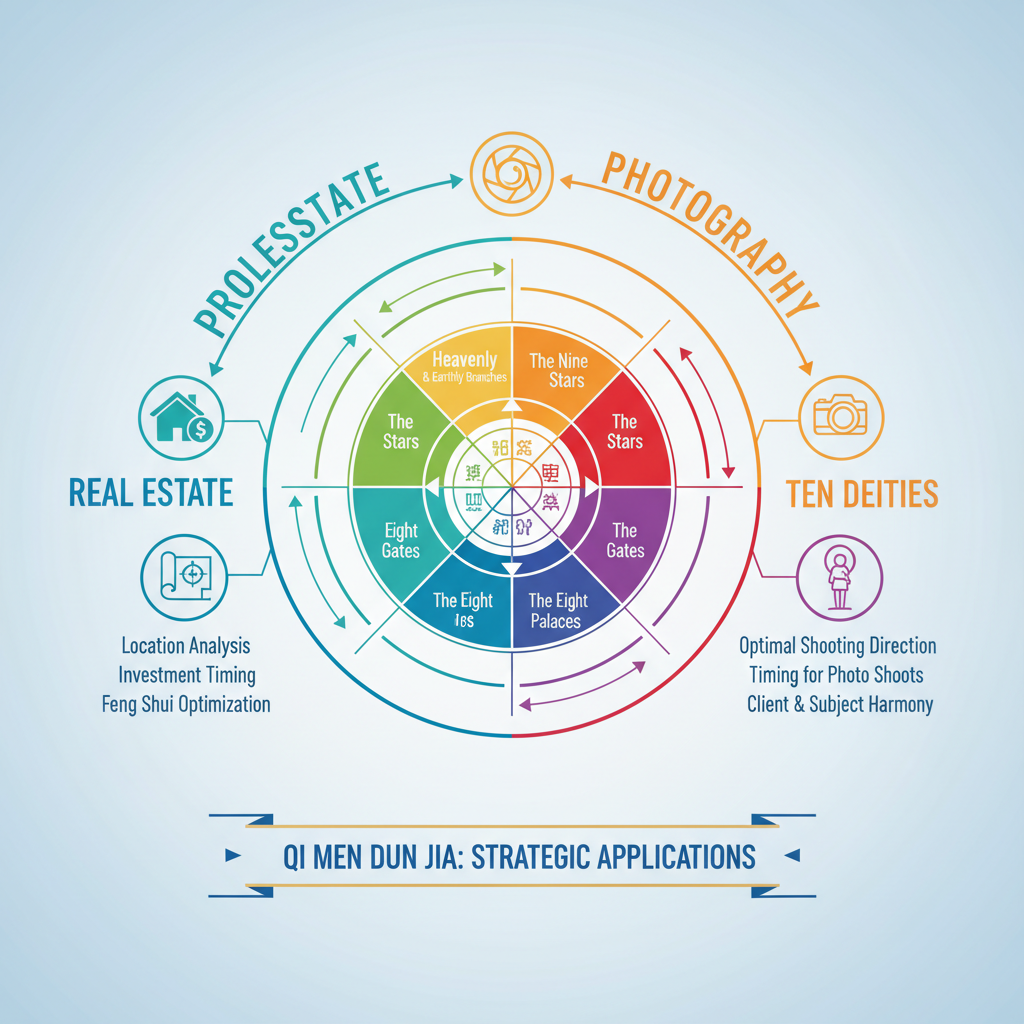
For practical purposes, you only need a working knowledge of the main elements used to evaluate a date:
- Nine Palaces, the grid that locates stars, gates, and deities for a given date and hour.
- Nine Stars, each with qualities: for example, the “White” star favors authority and wealth, while the “Empty” star may indicate instability.
- Eight Gates, such as the Open gate, Rest gate, and Prosperity gate, which describe the likely outcome of actions taken during the time.
- Deities, symbolic influences that can strengthen or weaken the outcome, such as the deity of success or obstacles.
- Heavenly Stems and Earthly Branches, which provide the day and hour context and show compatibility or conflict with personal birth data.
We do not need to memorize every combination. Instead, we learn which stars and gates we prefer for property-related activities and which to avoid. For example, the Open gate and Prosperity gate are often favored for signing agreements and making payments, while the Rest gate might be better for completing paperwork quietly or taking possession in low-conflict scenarios. Conversely, the Death-related or Harmful configurations are avoided for signing or transferring ownership.
How Qi Men Differs from Other Timing and Feng Shui Methods

Many people conflate Qi Men with Ba Zi (Four Pillars) or with classical Feng Shui (form school and flying stars). The key difference is that Qi Men is primarily a timing and tactical system, concerned with the moment you act, rather than the long-term energetic profile of a building or person. Ba Zi profiles the person and long-term destiny, while Feng Shui analyzes the energy layout of a house or plot. In practice, we combine them: use Feng Shui to assess the property, Ba Zi to confirm owner compatibility, and Qi Men to choose the best moment to sign, exchange payment, or move in.
That combination is why the term “Qi Men Dun Jia property purchase date” is meaningful. It signals that the buyer is aligning a critical act with a system designed to optimize timing at the precise moment decisions are made. In the next sections, we will move from theory to practice: how you select a date, and how you coordinate it with the legal and logistical realities of buying property.
How to Determine an Auspicious Property Purchase Date Using Qi Men Dun Jia
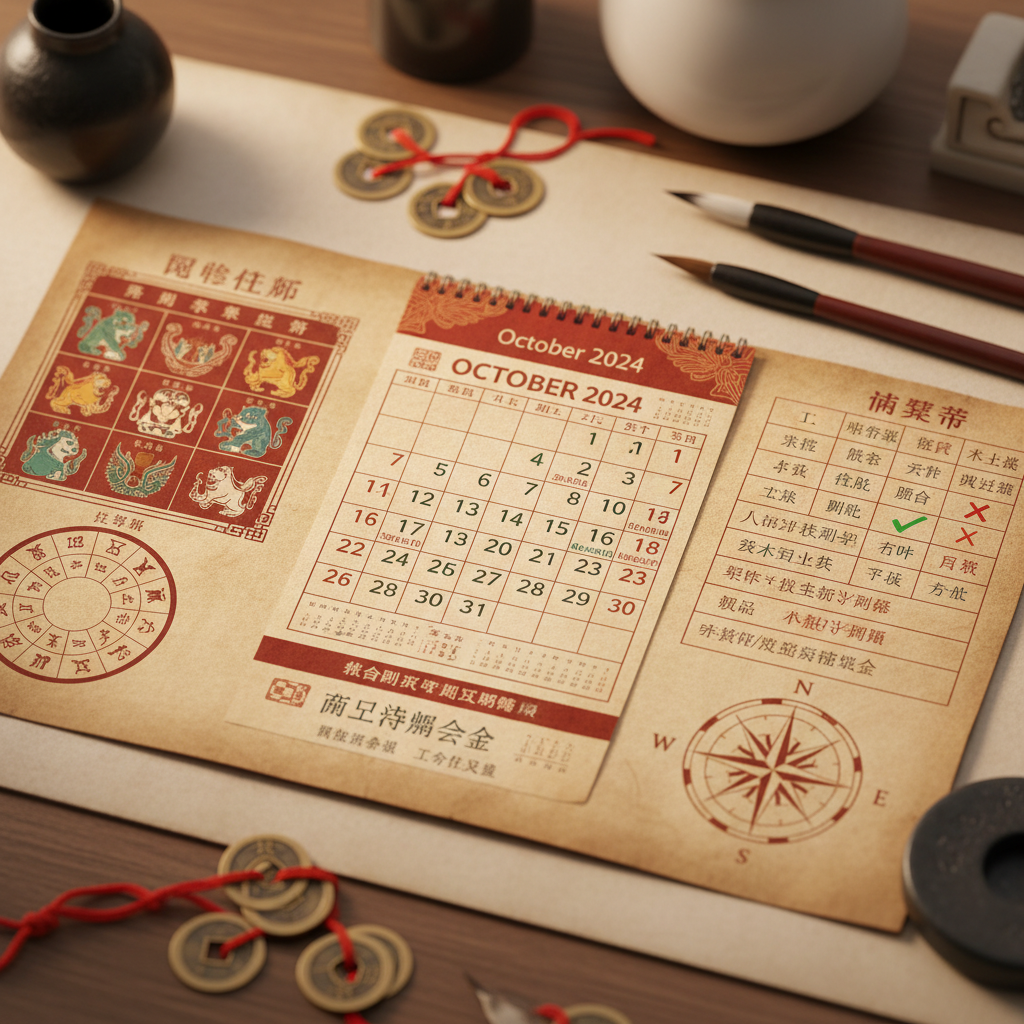
Step-by-step Approach We Use with Clients

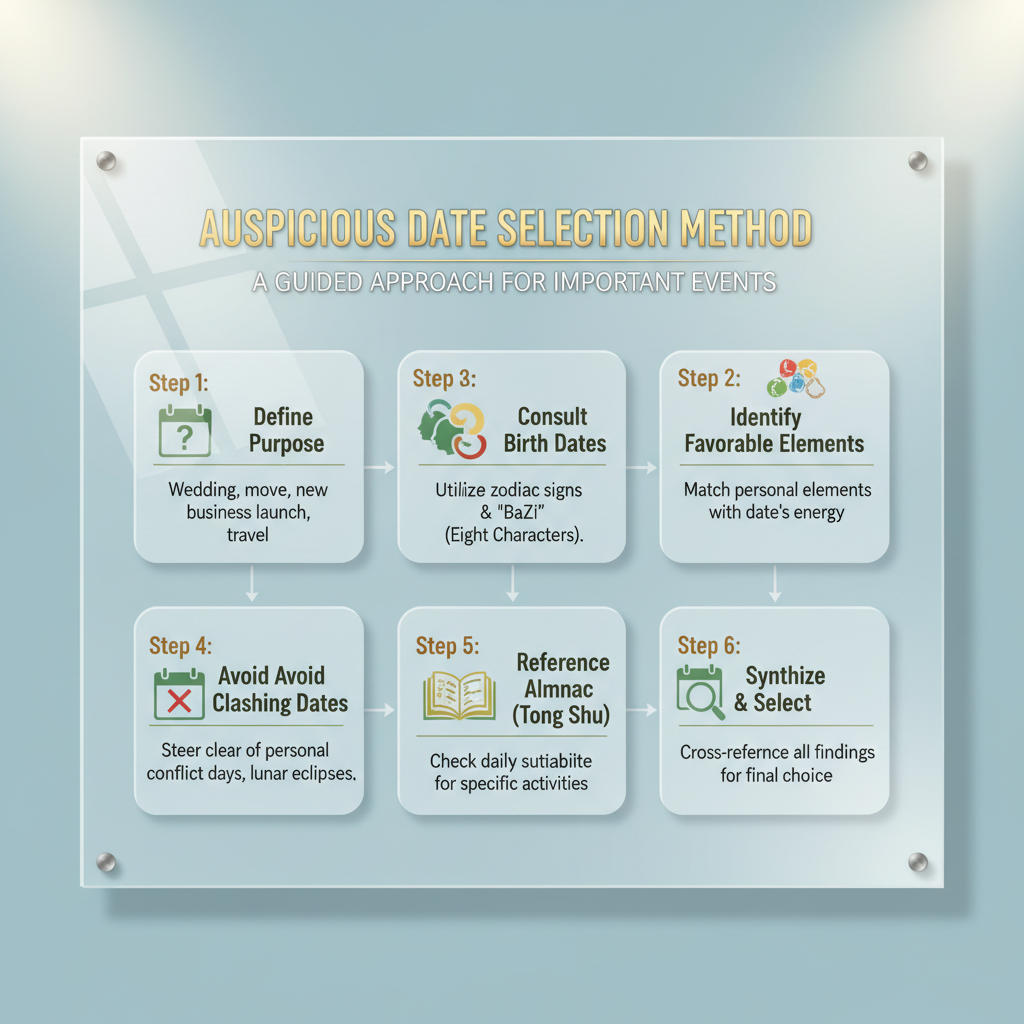
Here is a straightforward process you can follow to identify and confirm an auspicious date. We use this checklist with buyers, and it balances the spiritual mechanics with real-world constraints such as seller availability and lender deadlines.
- Collect essential information: buyer’s full birth data (date, time, location), the property’s address and facing direction, and any key dates required by contracts (closing date window).
- Shortlist date ranges: identify the month(s) or weeks within which the transaction must complete. If possible, leave a buffer of a few days on either side for flexibility.
- Generate Qi Men charts for each candidate date and, if necessary, for the preferred hour within the day. Focus on the gates and stars occupying the palace corresponding to the property facing and the buyer’s main palace.
- Filter by high-level rules: avoid dates that clash with the buyer’s birth year or personal Tai Sui conflicts; rule out days with directly harmful deities or gates for contractual actions.
- Refine by specific goals: for contract signing and payment prefer Open gate, Prosperity gate, or Success star. For taking possession, prefer Rest or Prosperity depending on the buyer’s priority (peaceful move-in versus auspicious commencement).
- Confirm with secondary checks: cross-check the selected date against a reputable almanac (Tong Shu), legal availability (lawyer, notary, lender), and the seller’s constraints.
- Document the selected hour: Qi Men is hour-sensitive. Once the day is chosen, fix the two-hour time block that best fits the chosen gates and stars.
What to Look for in a Chart: Favorable and Unfavorable Signs
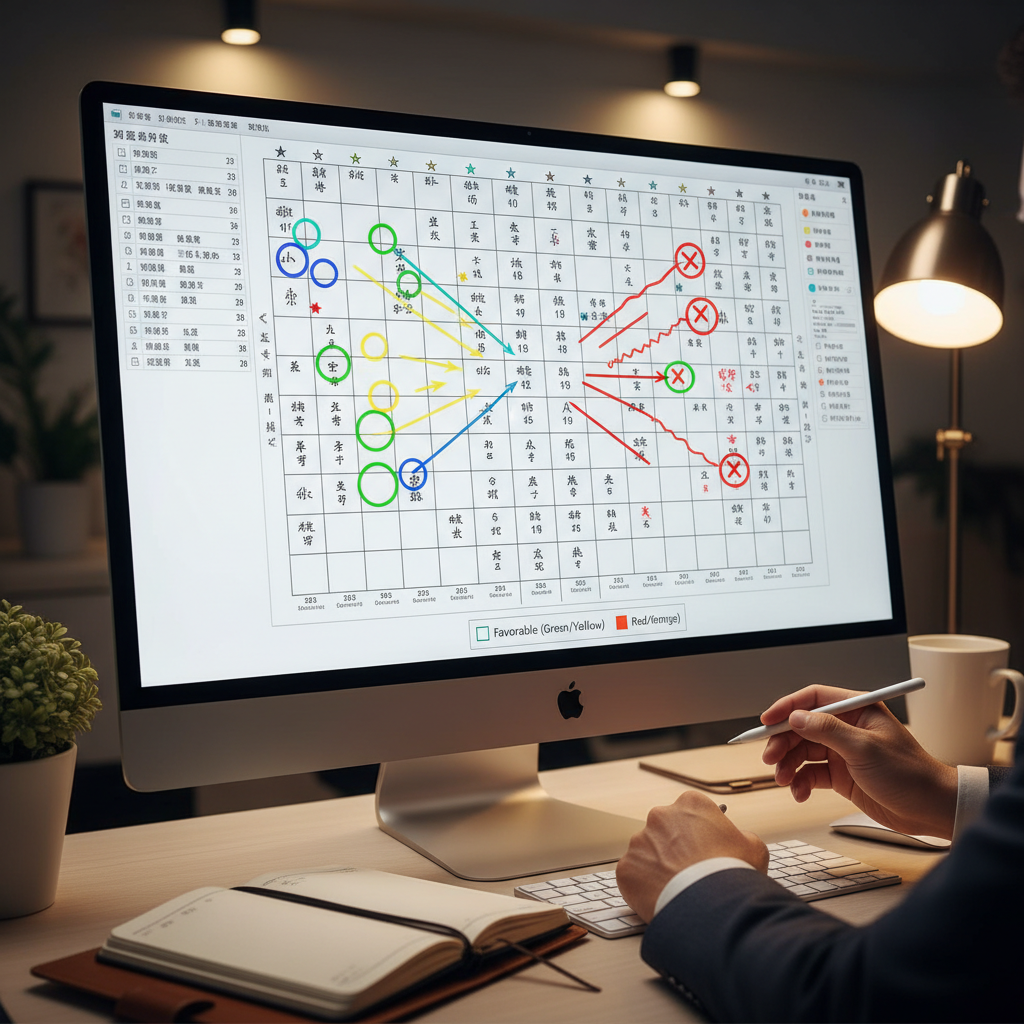
When reading Qi Men charts for property purchase, we rely on a few repeatable heuristics that give reliable guidance:
- Favorable gates: Open gate (opportunities, agreement), Prosperity gate (wealth, beneficial outcomes), and Success gate (achievement) are usually preferred for signing and payment.
- Favorable stars: White or Jade-like stars that support authority, wealth, and cooperation.
- Supportive deities: Deities associated with victory, protection, or smooth travel are helpful if the transaction requires third-party cooperation such as banks or government offices.
- Avoid gates or stars associated with illness, quarrels, or obstruction when you sign contracts or hand over large sums.
- Hour alignment: the chosen two-hour period should ideally place the favorable gate and star in the buyer’s palace or the property-facing palace of the chart.
For example, if you are signing the contract and the chart shows the Open gate with a supportive star and a benevolent deity in the same palace as the buyer’s sitting position, that combination is considered strong for achieving agreement and minimizing disputes. Conversely, if the Harm or Death gate sits in a palace that governs wealth or negotiation during the chosen hour, we move to another date or hour.
Example Case: a Hypothetical Client Timeline

To make this concrete, consider a hypothetical buyer, Ms. Tan, who needs to sign her purchase contract within a two-week window. She provides her birth date and preferred times for signing. We follow the steps above:
- We map the two-week window and generate Qi Men charts for each day, then look at the morning and afternoon two-hour blocks for each candidate day.
- Day A shows the Prosperity gate and a favorable star in the buyer’s palace at the 10:00 to 12:00 block; however, the deity indicates potential delays with paperwork. Day B shows the Open gate with a success star and a protective deity at the 14:00 to 16:00 block.
- Given Ms. Tan’s priority for a dispute-free signing and efficient handover, we select Day B in the afternoon. We then cross-check with her lawyer’s availability and the seller’s schedule.
- Ms. Tan signs the contract, pays the deposit, and later reports that the transfer proceeded with fewer last-minute hiccups than she had previously experienced in another purchase.
This example highlights how Qi Men is used to choose a most-likely-smooth moment, not to guarantee specific outcomes. It also shows the importance of aligning the chosen moment with practical availability.
Integrating Qi Men Dun Jia Dates with Legal, Logistical, and Financial Realities

Distinguish the “purchase Date” Events You must Schedule

When buyers ask about a Qi Men Dun Jia property purchase date, they may mean different things. It is important to be precise about which event you want to optimize:
- Offer signing: when you make or accept the offer, often informal but can be legally binding in some jurisdictions.
- Formal contract execution: the date when both parties sign the binding sale agreement and deposit is paid.
- Completion/closing date: when title transfers, mortgage funds are disbursed, and keys are handed over.
- Move-in date: the day you take physical occupancy.
Each event has a different practical risk profile and therefore a different Qi Men preference. For example, you might prefer an Open gate for signing to promote agreement, but a Rest gate for move-in to emphasize peace and stability during the actual transition.
Legal and Lender Constraints: What You Cannot Change
One of the biggest practical barriers to following Qi Men is that legal schedules, banks, and seller timelines often fix dates. Here is how we handle those constraints:
- Negotiate date windows in the contract where possible: instead of a single hard deadline, request a completion window of a few days and then pick the best date within that range.
- Use the contract to lock in an auspicious signing hour when both parties and the lawyer can agree; for completion dates, attempt to secure flexibility with the lender or request a specific time for the final disbursement.
- If a public office or registry has limited hours, choose the best available block within those hours; Qi Men can still identify a preferable two-hour window even on a constrained day.
- When the lender imposes constraints, coordinate with the lender in advance and explain that you will schedule document signing within available hours. Many professionals are accommodating when asked early.
Always keep in mind that a date that meets both legal requirements and Qi Men preferences is better than an ideal Qi Men date that is legally or logistically impossible. We prioritize a workable hybrid solution.
Practical Scheduling Template and Checklist

Use this simple template to align Qi Men timing with your purchase steps. It doubles as a checklist you can share with your lawyer, real estate agent, and the seller.
- Step 1: Define the critical event. Label it precisely: “Contract signing at lawyer’s office” or “Completion and key handover.”
- Step 2: Gather unchangeable constraints: lender deadlines, registry hours, seller availability, and any restrictive clauses in the contract.
- Step 3: Ask your Qi Men practitioner or use a charting tool to propose 3 candidate dates and hours that fall within the constraints.
- Step 4: Confirm with all parties (lawyer, seller, lender) that those times are feasible. If none are feasible, work the next-best hours on the prioritization list.
- Step 5: Put the chosen date and hour into the contract or an addendum if possible; otherwise, record email confirmations so there is clear evidence of agreed timing.
- Step 6: On the day, follow simple ceremonial actions if you wish: arrive early, keep the physical documents orderly, and consider a short blessing or quiet intention to align your personal focus with the timing.
These steps keep the process transparent and professional. They also reduce last-minute stress that can negate the psychological benefits of an auspicious time.
When to Consult a Practitioner and What to Expect

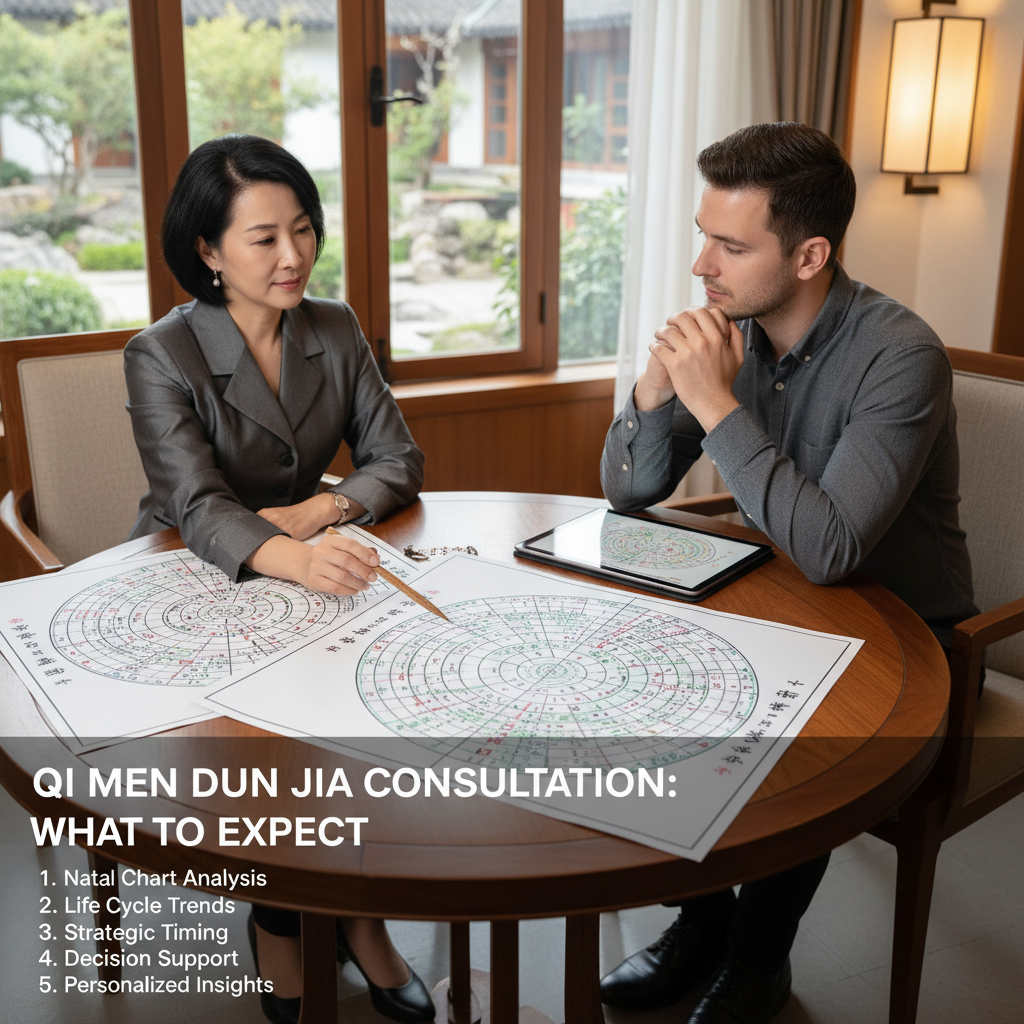
Not everyone needs a full Qi Men consultation. If you are comfortable following general rules, a basic chart and a one-hour consult may be sufficient. Here is what a professional session typically includes:
- Pre-session intake: buyer’s birth data, property details, and the transactional window.
- Chart generation and prelim filtering: the practitioner produces charts for candidate dates and identifies top options.
- Interpretation: the practitioner explains why certain gates, stars, or deities are preferable for your goals and how to avoid pitfalls.
- Logistics planning: the practitioner helps you map the chosen timing onto the legal and practical schedule and suggests backup options.
- Written recommendation: a short report listing best dates and hours, plus clear instructions for the critical ceremony or steps to follow on the day.
Costs vary widely: a simple session can be modestly priced, while a detailed comprehensive timing plan and on-site ritual will cost more. In our experience, spending on a short, focused consultation yields the most pragmatic return because it prevents you from making avoidable timing mistakes that could cost time and money.
How Qi Men Dun Jia Maps Onto Property Timing: the Logic Behind Picking a Date

When we talk about auspicious timing for a big life event, like buying a house, we are really talking about alignment: aligning the external timing energies with the intention you have for the transaction. Qi Men Dun Jia is a timing and decision-making system that gives us a structured way to read that alignment. In practice, Qi Men uses three basic layers, often called plates or boards: the Heaven plate (time influences), the Earth plate (location or palace layout), and the Human plate (people, doors, and current actions). By reading how these layers interact on any given year, month, day, and hour, we can judge whether the energetic conditions favor signing, registering, moving in, or closing.
There are several core elements we check in a Qi Men reading for a property transaction: the palace that governs the activity, the Door in that palace, the Star that occupies it, and the Deity or Spirit attached to it. In plain language, some palaces and doors are naturally favorable for beginnings and contracts, others are better for concealment or rest, while certain stars indicate clear breakthroughs or obstacles. When the right combination shows up with a clean chart, that date is useful; when the chart shows conflicting energies or direct clashes with key personal factors, we look for alternatives.
From experience, the most useful conceptual distinction is intention versus action. If you are signing a sales agreement, you want decisiveness and clarity in the chart: doors and stars that support starting contracts and clear communication. If we are registering title or proving ownership, we look for stability and legal protection energies. If you plan to physically move in, you may prioritize doors and stars that favor household harmony and health. The same method applies across stages, but the “best” palace or door changes based on the task.
What We Mean by Favorable and Unfavorable in Practice
Favorable here is practical, not mystical. A favorable Qi Men date gives you higher odds of smooth paperwork, cooperative counterparties, fewer administrative hiccups, and a calmer personal experience during what can otherwise be a stressful process. Unfavorable dates tend to coincide with delays, miscommunications, sudden contract amendments, or higher friction with banks and lawyers. So when we select the Qi Men Dun Jia property purchase date, we are choosing dates that statistically lower the chance of those negative outcomes, and that increase alignment with our legal and logistical constraints.
How Qi Men Complements – Not Replaces – Conventional Timing Considerations

It is important to stress that we do not use Qi Men in isolation. Real estate is subject to fixed deadlines, lender windows, seller constraints, and local registration working hours. Qi Men is most helpful when we have flexibility within those constraints. For example, if the seller can sign within a week, Qi Men helps choose the best day within that week. If the timeline is rigid because of mortgage rate locks or lease expirations, Qi Men becomes part of a mitigation strategy rather than the sole determinant. In practice, merging Qi Men advice with a calendar that accounts for bank holidays, closing lead times, and personal availability produces the best outcome.
Step-by-step Method to Select an Auspicious Purchase Date
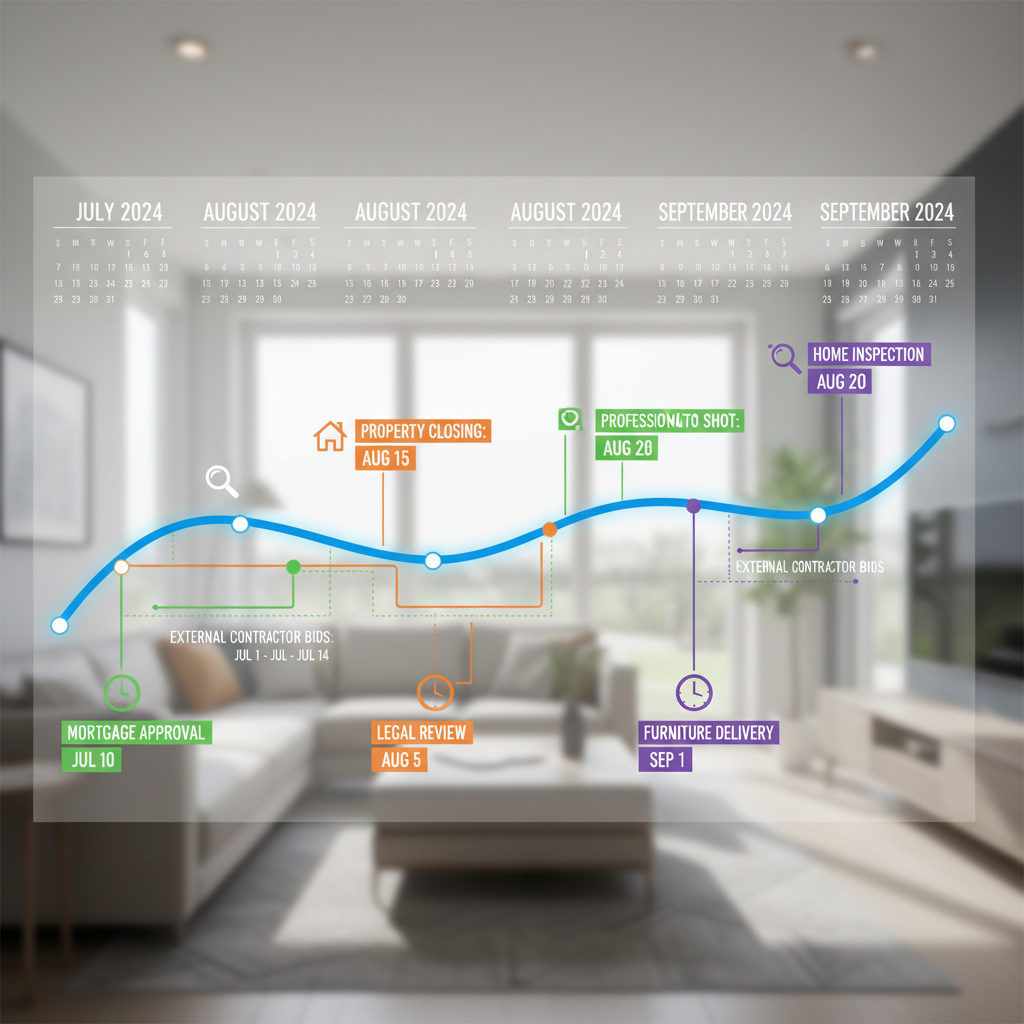
Below is a practical process we use with clients when choosing a date for a property transaction. It is detailed so you can follow it yourself, or use it to interview a practitioner. I find that a repeatable method reduces confusion and makes it easy to check assumptions. Each step can be completed with online tools, a Qi Men app, or with a professional consultant if you prefer.
Step 1: Define the Specific Action and Its Priorities
- Action type: Signing contract, paying deposit, mortgage application, title registration, or moving in. Be precise.
- Priority: Decide if you prioritize legal protection, speed, harmony with seller, or minimizing stress during moving. This changes which palace attributes we favor.
- Constraints: Note immovable deadlines (rate lock expiry, lease end date, seller availability). These reduce the range of candidate dates.
For example: If paying the deposit is the most critical event (deposit secures the property), our primary goal is legal clarity and trust, so we prioritize dates that favor contracts and clarity.
Step 2: Gather the Timeline Window and External Dates

Collect all relevant dates that are not flexible: lender cutoff dates, bank working days, public holidays, seller travel, and moving truck availability. Create a one- to four-week window that includes those immovable items and allows at least three candidate dates. In the modern market we rarely get unlimited time, so planning a window is the safest approach. For instance, if you must close within the last two weeks of June because your current lease ends July 1, your candidate window is June 15 to June 30.
Step 3: Pull Qi Men Charts for Candidate Dates and Hours

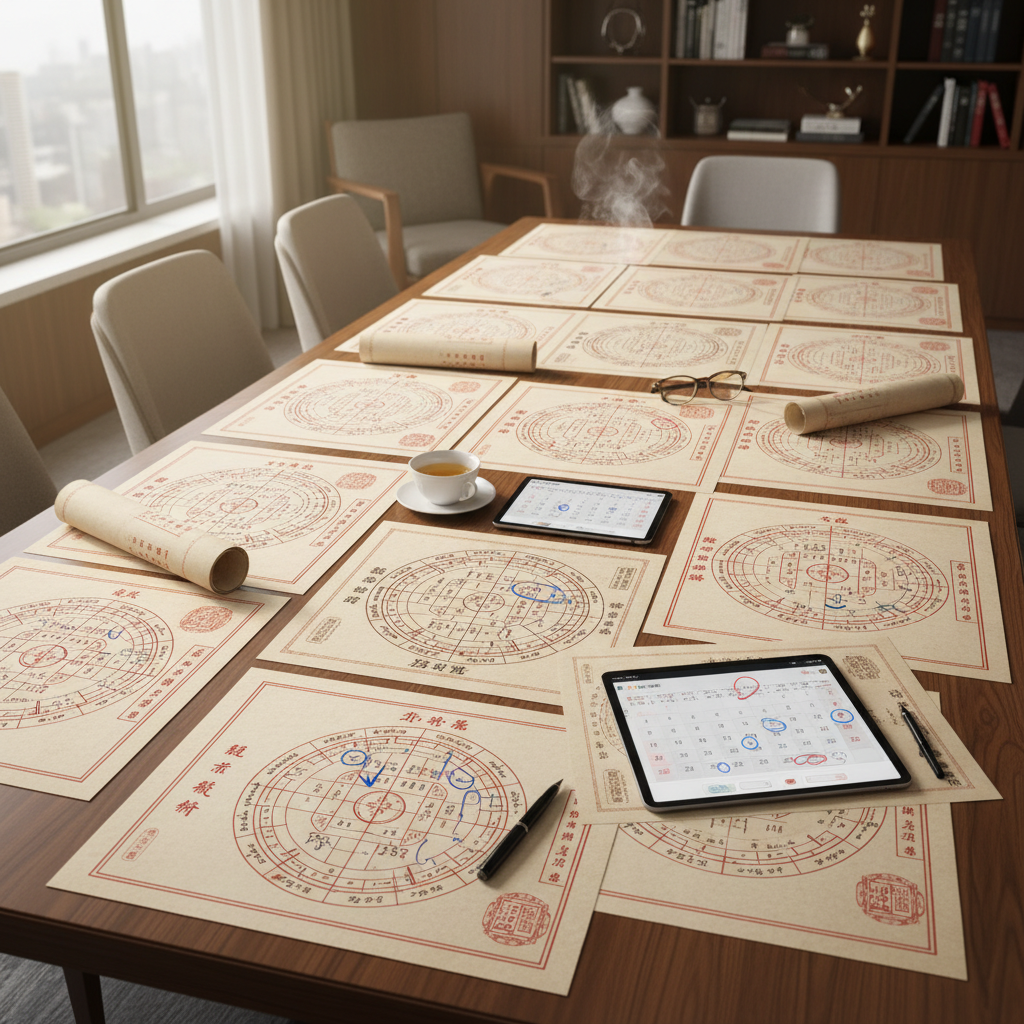
Qi Men charts change by year, month, day, and hour. For property events we typically check the day chart and narrow down to specific hours for signing or for bank transfers. Use a reputable generator or your consultant to produce a chart for each candidate day and for the hours you can actually meet. When you read charts, focus on these four things:
- Door quality: Doors that favor opening negotiations or legal clarity are preferred for signing and payments. Doors indicating rest or concealment may be better for moving in quietly.
- Palace position: Where the action falls spatially in the chart; a central or commanding palace often supports official business.
- Star alignment: Check whether the stars reinforce the intended result. Some stars are energetic and bring momentum, others are stabilizing.
- Deity influence: Deities indicate the moral or social quality of the outcome. Beneficial deities support trust and smooth interaction.
Do not ignore obvious negatives. If a date shows direct clashes with the buyer’s or seller’s solar terms or personal BaZi nodes, it is usually safer to pick a different date, even if other indicators look decent.
Step 4: Cross-check Personal and Practical Compatibility

After narrowing to a few Qi Men-advantaged day/hour combos, cross-check them against personal BaZi and the practical calendar. Personal BaZi clashes can invalidate an otherwise auspicious day. Similarly, a strongly auspicious Qi Men day that falls on a public holiday when banks are closed may be unsuitable for anything that needs bank processing. At this stage we also consider time zone and daylight saving issues when dealing with international buyers, because the hour line matters in Qi Men timing.
Step 5: Prepare a Contingency Plan and Record the Decision
A good contingency plan reduces stress. Choose a primary date and one or two alternates and share them with your lawyer, bank, and seller. Document the reasoning: which palace, door, or star made the date favorable, and what alternatives remain if something goes wrong. This record is especially helpful if you later want to evaluate outcomes and refine your method.
Interpreting Charts: Practical Examples and What to Look For

Interpreting a Qi Men chart can look intimidating at first, but when you reduce it to practical markers, it becomes manageable. Below I offer examples that show how you might compare two candidate dates for the same action. I will keep the examples conceptual rather than overly technical so you can apply them whether you use a software tool or consult a practitioner.
Example 1: Comparing Two Candidate Signing Dates

Scenario: We have two possible signing days within a seller’s available week, April 12 and April 15. Both are workable in terms of logistics, but the seller prefers the earlier date. We chart both days and find the following broad patterns.
- April 12: The chart shows a palace alignment that favors movement and agreements, the main Door present in the action palace is favorable for negotiations, and the star pattern indicates momentum. However, the chart also contains a minor clash with the buyer’s month pillar.
- April 15: The palace shows a stable, legal-protection oriented configuration, the Door is neutral but the Deity suggests integrity and contract enforcement. There is no personal clash with the buyer or seller.
Interpretation: If we prioritize signing speed and the seller insists on April 12, it can be acceptable if we neutralize the minor personal clash (for example, by choosing a specific hour that avoids the buyer’s clash, or having an additional witness or escrow arrangement). If we prioritize legal stability and risk reduction, April 15 is the better pick. In practical terms, that means we might book April 15 for the formal signing, and keep April 12 as a backup if the seller cannot move.
Example 2: Choosing a Moving-in Date with Family Harmony in Mind

Scenario: You want to pick a moving-in date that reduces initial household stress and encourages a smooth integration. Two candidate dates are June 3 and June 6. Both are weekends. The charts show:
- June 3: The palace for the movement shows empathetic, restful door influence, and supportive star patterns that favor health and cohesion. It is not the most decisive chart for contracts but is excellent for settling in.
- June 6: The chart is dynamic; the door is action-oriented which can be useful for unpacking and setting things up quickly, but the star configuration suggests possible misunderstandings on the first day if family members are stressed.
Interpretation: If minimizing initial friction is the priority, June 3 is preferable. If you must set up utilities and need high-energy coordination, June 6 might be acceptable provided you plan for clear communication and stagger tasks to avoid family stress.
How to Treat Partial Positives and Negatives

In real-life charts you often see mixed signals. A palace may have a strong star but a weak door, or a good door may be in a peripheral palace. My approach is to weigh which component is most relevant to the specific action and then mitigate the weaker aspects. For signing, doors and palace quality matter most, so a strong star cannot fully compensate for an inauspicious door. For moving in, doors and deities that affect home life are given more weight. Mitigation tactics include picking a specific hour within the day that improves the chart, adding witnesses and legal protections, or splitting tasks across dates so that the most important action happens on the best date.
Common Pitfalls, Logistics, and Contingency Strategies

Over the years we have seen a pattern of common mistakes that create unnecessary stress when people try to use Qi Men for property purchases. Below I summarize those pitfalls and provide pragmatic ways to avoid them. These are based on hands-on cases where a simple checklist would have prevented delays or confusion.
Pitfall 1: Forgetting Legal and Administrative Windows

One buyer I worked with booked an auspicious signing date that fell right before a long public holiday. The bank could not process the loan in time and the seller could not hold the property, which caused a cascade of penalties and loss of goodwill. Always cross-check your auspicious date against bank processing timelines, lender restrictions, and municipal office hours. If an auspicious day falls on a bank holiday or near a cut-off, pick the next-best date that allows processing within normal working hours. You can negotiate temporary extensions with sellers if you present the alternate date clearly in advance.
Pitfall 2: Ignoring the Hour

Qi Men charts change by hour. If you choose a day without specifying the hour, you can end up in an unfavorable hour even on an otherwise good day. Always select a specific hour for critical actions such as deposit transfers and signatures. When logistics make a narrow hour impractical, choose a full-day approach where you spread signing formalities across the best hours, or choose a different day that offers a longer favorable window.
Pitfall 3: Over-relying on a Single Auspicious Date
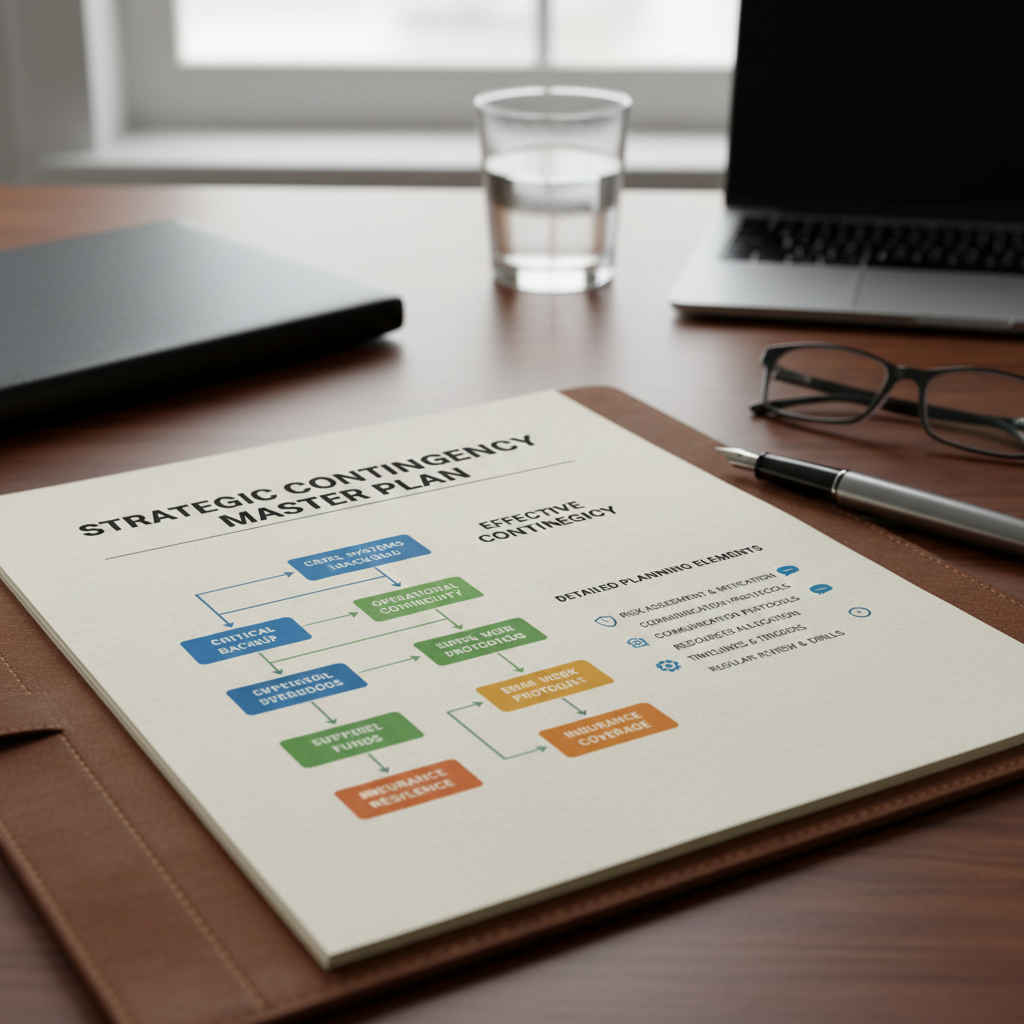
Sometimes clients put all their hopes on a single “perfect” date and cancel other practical safeguards, like deposit insurance or clear contractual penalties for late performance. Qi Men timing increases odds, but it does not eliminate legal or market risks. Keep standard legal protections in place and ensure the contract has clear remedies and timelines. If you must, build a small buffer into mortgage rate locks and closing deadlines to account for last-minute complications.
Pitfall 4: Not Communicating Dates to All Stakeholders

An auspicious date only works if everyone who needs to be present or process paperwork can be available. Communicate early with lawyers, notaries, banks, and the seller. Provide at least two alternates and explain the reason for the request in practical terms: “We have two dates that allow us to meet the bank’s processing deadlines and also align with my personal availability.” This makes it easier to get buy-in without invoking esoteric reasons.
Contingency Strategies That Actually Work

- Have alternates: Always present a primary date and two alternates that are logistically feasible. This increases the chance the seller or bank will accept one of them.
- Split critical actions: If a single day has serious obstacles, split the process. For example, sign non-financial documents on one auspicious day, and make the transfer on another auspicious hour that aligns with banking hours.
- Use interim legal tools: Escrow arrangements, conditional deposits, and explicit clauses about late registration protect you if timing goes awry.
- Be flexible on less critical items: Moving furniture and scheduling cleaners can follow a different, more convenience-oriented timeline; reserve your Qi Men constraints for the truly critical dates.
When we plan with contingencies, we reduce the emotional pressure to make a single “perfect” choice. That, in itself, often creates better results, because the people involved are calmer and more cooperative.
Case Studies and Timelines: Applying Qi Men to a Full Property Purchase
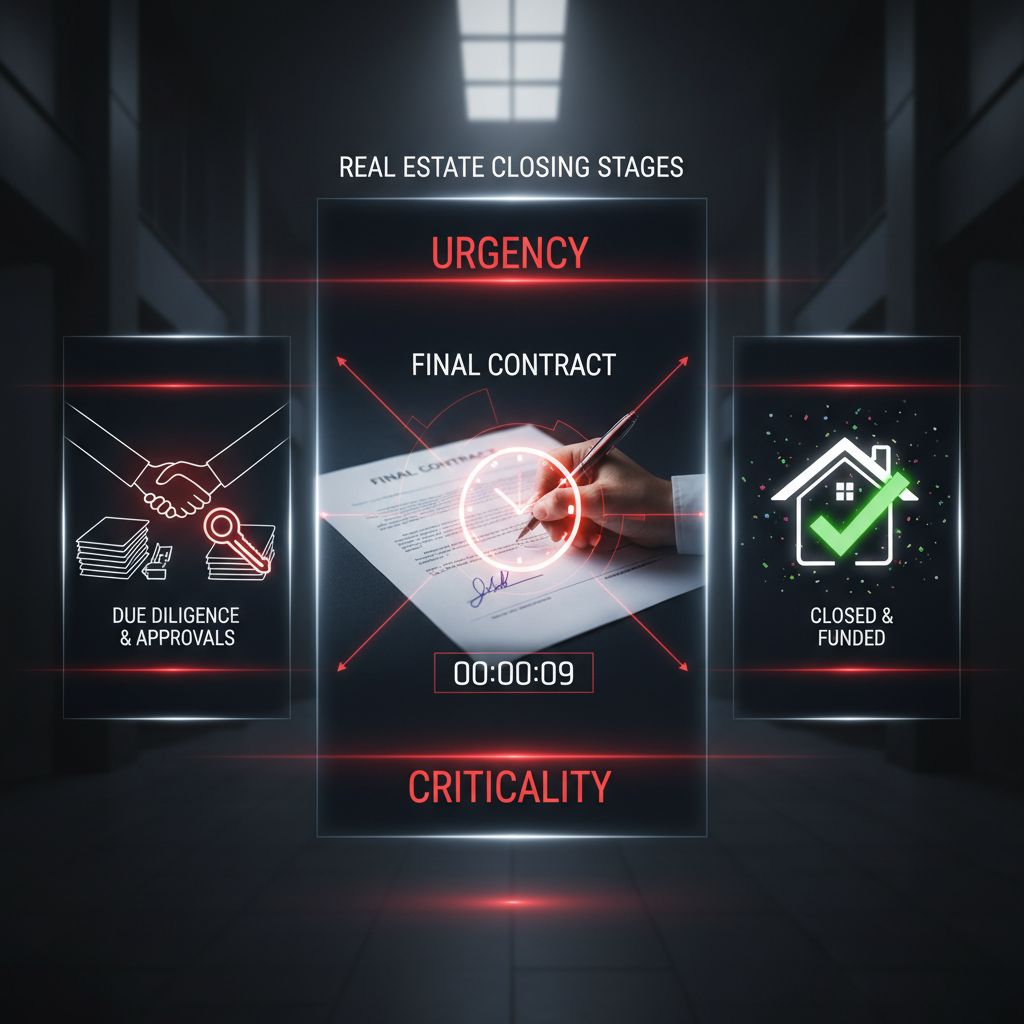
To make this concrete, I will walk you through a typical timeline for a residential purchase and show where Qi Men timing can be applied. The timeline is organized into stages, with suggested lead times and typical tasks. Each stage includes where we would use Qi Men and how to combine it with administrative needs.
Stage 1: Pre-offer Preparation, 4 to 8 Weeks before Signing

Tasks: property inspections, mortgage pre-approval, background checks, and drafting the offer. Qi Men use: minimal at this stage, but we run the buyer’s BaZi and note any month or day clashes to avoid during signing and transfer stages.
- Actionable tip: Book your inspector and lender early, so you have a week window for the signing that is not constrained by third parties.
- Actionable tip: If you know the seller’s availability, request a week range rather than a single date; this gives you room to choose a Qi Men-conducive day later.
Stage 2: Signing the Sales Agreement, 1 to 4 Weeks before Closing

Tasks: negotiate terms, sign the sales contract, pay deposit, submit mortgage application. Qi Men use: high. This is where the Qi Men Dun Jia property purchase date matters most because the contract formation sets the legal stage.
- Actionable approach: Identify three candidate days within the seller’s week, generate the Qi Men charts, and choose the day/hour with the best palace/door alignment and the fewest personal clashes.
- Practical check: Confirm bank and notary availability for the chosen hour to avoid processing delays.
Stage 3: Mortgage Approval and Insurer Timelines, 2 to 6 Weeks

Tasks: submit documents, appraisal, and lender final approval. Qi Men use: moderate. You can schedule the submission of critical documents on an auspicious hour to reduce miscommunications but do not delay required appraisal windows if the lender sets them.
- Actionable tip: Use Qi Men to choose the hour you send the final documentation or make a large transfer to the lender; ensure the transfer aligns with banking cut-offs.
- Contingency: If an appraisal is delayed, use the documented Qi Men alternates to renegotiate any deadlines with the seller.
Stage 4: Closing and Title Registration, Day of Closing
Tasks: final signature, transfer funds, register title, receive keys. Qi Men use: high. This is another moment where the chart can influence the ease of registration and the emotional tone of the transition.
- Actionable approach: Choose a closing hour where the palace supports formalization and legal protection. If the registration office has limited hours, select the earliest favorable hour within those hours.
- Actionable approach: Have escrow set up so that the legal transfer is not held back by bank delays; this reduces the risk of an auspicious hour being ruined by logistics.
Stage 5: Move-in and Household Dedication, 0 to 7 Days after Closing

Tasks: physically moving, first meals, setting utilities. Qi Men use: moderate to low depending on cultural priorities. Many families prefer to hold a brief household ritual or first-meal on an auspicious hour to settle the space.
- Actionable tip: If you are doing rituals or dedication ceremonies, schedule them on an auspicious hour that favors wellbeing and harmony rather than aggressive action.
- Practical note: If your move-in day must be on a weekend, balance convenience with Qi Men indications by scheduling the actual entry time for a favorable hour.
Following this staged approach, we maximize the protective benefits of Qi Men timing where it counts, and we avoid overcomplicating logistical necessities elsewhere. The mantra I use with clients is simple: prioritize Qi Men for binding legal actions and high-stress transition points, and be pragmatic elsewhere.
Finally, when we select a Qi Men Dun Jia property purchase date, we are not guaranteeing outcomes; we are stacking probabilities in our favor. By combining clear timelines, legal safeguards, and a small set of carefully chosen Qi Men-guided dates, you protect your transaction and reduce stress. If you would like, I can provide a sample checklist you can use to prepare your own timeline, or I can walk through a specific purchase scenario with candidate dates and practical recommendations.
Practical Steps to Choose the Best Date for Your Purchase

Choosing a date for signing contracts, closing, or moving into a new property is where Qi Men Dun Jia can be most practical. From years of working with home buyers and property investors, I find that a step-by-step workflow reduces guesswork and gives you a clear, defendable plan. Below I walk through a repeatable process you can follow, with actionable checks you can perform yourself or hand to a consultant.
1. Prepare the Essential Data

Before you even pull a Qi Men chart, gather this information. You will save time and avoid rework.
- Buyer data: full birth date and time for the primary buyer or the couple. Even if you only have an approximate time, note it clearly.
- Property details: exact address, building orientation (compass bearing of the main door and living room), and unit number where applicable.
- Key dates: desired move-in month, any legal deadlines for deposit, and lender or vendor-imposed closing windows.
- Constraints: days you absolutely cannot sign due to travel, work, or family events; periods when the seller or lender are unavailable; and cultural or legal blackout dates (for example, national holidays when offices are closed).
Having these items in one place allows you or your Qi Men practitioner to evaluate candidate dates quickly and to prioritize dates that meet both metaphysical and practical constraints.
2. Define the Objective for Each Date

There are at least three distinct dates you may need to choose: the date to sign the purchase agreement, the date to close (title transfer), and the move-in date. Treat each as its own appointment. We want different Qi Men configurations for each, because the objective changes.
- Signing: prioritizes legal protection and clear communication. We want a day that reduces miscommunication and supports contractual clarity.
- Closing / transfer: prioritizes successful transfer of funds, clear title, and no surprises at the registry or lender.
- Move-in: prioritizes harmony in the new space, smooth logistics, and energetic settling.
When you clarify the objective, you can target specific deities, doors, or stars in the Qi Men chart that support that objective. For example, the Deity of Opening (Kai) supports transactions, while the Deity of Rest (Xiu) helps with settling and living harmony.
3. Generate Candidate Dates and Shortlist

With constraints and objectives defined, generate a short list of candidate dates across the allowable window. Aim for five to ten dates per event; narrowing from too many options is easier than stretching when nothing is workable. Use these practical filters to shortlist:
- Exclude days that clash with the buyer’s personal zodiac branch or major life-year clash, when applicable.
- Avoid solar term transitions if you need absolutely smooth administrative flow, because offices can be busy or clerks may be less focused.
- Filter out days when key people are unavailable, such as lender signers or power-of-attorney holders.
- Prefer weekdays for signing and closing if your local registry is workday-only, while move-in can be weekend or weekday depending on moving company rates and traffic conditions.
Once these filters are applied, you’ll typically have three to six candidate dates to evaluate with Qi Men charts.
4. Read the Qi Men Chart with Your Objective in Mind

When evaluating a Qi Men chart for a candidate date, map the following to your objective. If you are doing this yourself, focus on the presence and placement of helpful elements rather than memorizing every rule. If you consult a practitioner, ask them to explain these points so you can make an informed choice.
- Deity alignment: which deity sits in the relevant palace for your purpose. For signatures and transfers, we favor deities associated with openings and success.
- Star auspiciousness: look for auspicious stars (for example, Tian Yi or Tai Yang in classic systems) in the palace relevant to transactions. The presence of hostile stars in the same palace reduces effectiveness.
- Door utility: certain doors indicate ease of movement, negotiation, or closure. Select days when a favorable door governs the transaction palace.
- Conflict checks: make sure the day does not have a direct clash with the buyer or property’s key elemental signs, such as the day pillar clashing with a person’s birth branch.
- Time of day refinement: Qi Men allows picking precise time blocks. If a day looks promising, refine to an auspicious double-hour for the actual signing or handover.
Actionable tip: ask for a short report for each candidate date that states the supporting deity, star, and door, and one sentence on the primary risk. This lets you compare dates side by side quickly.
5. Coordinate with Legal and Lender Timelines

Qi Men recommendations are only useful when they align with administrative realities. Communicate your shortlisted dates early to your lawyer, lender, and seller. Request provisional calendar holds rather than final confirmations until the date decision is made.
- Confirm that your lender can process documents on the chosen day and that wire transfers are allowed on that date.
- Ask your lawyer or escrow agent if they require additional lead time for their paperwork and when the registry accepts documents for filing.
- Reserve movers and utilities around the move-in date, with flexible cancellation or rescheduling options where possible.
Example: If your lender cannot send funds on a Saturday in your jurisdiction, avoid picking a weekend closing even if that day looks auspicious in the Qi Men chart.
6. Select the Final Date and Document the Rationale

Once you select a date, document why you chose it. This helps if you need to reschedule and want to maintain the same energetic logic. Your rationale should include:
- The objective (signing, closing, move-in).
- The candidate dates considered and why others were excluded.
- Summary of the Qi Men chart for the selected date: main deity, star, door, and any time-of-day blocks chosen.
- Administrative checks completed, such as lender confirmation and registry availability.
Why document? Because property transactions are multi-party. If the seller or agent questions the selection, this document gives a clear explanation and reduces last-minute objections.
7. Prepare a Backup Plan

Even with meticulous planning, delays happen. We always prepare at least one fallback date that still meets the key Qi Men checks. Make the fallback realistic: if your first date requires the lender to wire funds same-day, pick a fallback that fits a noon wire timeline rather than an end-of-day transfer.
- Keep contacts updated so all parties can switch quickly if needed.
- Negotiate contract clauses that allow limited, agreed-upon rescheduling for uncontrollable delays, such as banking holidays or regulatory holds.
Actionable checklist: Ask your lawyer to include one short clause in the contract that allows a single reschedule of the closing, with the buyer covering any incremental administrative costs up to a capped amount. This preserves your Qi Men choice while being fair to the seller.
Case Studies and Real-world Examples

To make the approach concrete, here are three anonymized case studies that show how we applied Qi Men frameworks to real property transactions. Each example highlights the problem, the selection process, and a measured outcome. These are descriptive anecdotes rather than scientific proof, but they illustrate how to operationalize the method.
Case Study 1: Urban Condo Purchase, Time-sensitive Closing

Background: A couple in their mid-thirties were buying a city condo, with a fixed closing deadline mandated by their lender. They had only two possible weeks for title transfer due to the seller’s contract. The couple wanted minimal risk of last-minute financing issues.
Process: We prepared five candidate dates that met lender availability and excluded days clashing with either buyer’s birth branch. We then generated Qi Men charts for each day, focusing on the palace associated with transactions. One day showed a favorable deity for openings, a strong transactional star, and the “open” door in the closing palace, with no direct clashes.
Action: The couple scheduled the closing on that date, with the actual title transfer set for the auspicious double-hour indicated in the chart. Their lawyer confirmed acceptance and the lender verified wire timings in advance.
Outcome: The transfer completed without need for overnight wiring, no procedural errors, and the buyers reported a calm signing experience. While we cannot say the date caused the positive result, the coordinated planning removed common friction points and gave all parties clear expectations.
Case Study 2: Rural House Purchase, Complicated Seller Timeline

Background: An investor buying a countryside property faced a seller who could only vacate on certain weekends. The investor wanted a move-in date that would encourage quick tenant occupation and a harmonious start for the property manager taking over operations.
Process: We concentrated on move-in dates and the relevant palaces for settling energy. The shortlist included two weekends. One weekend had a stronger alignment for household harmony and the deity of rest in the palace corresponding to residence. The other weekend, while also acceptable, had a minor star conflict that suggested potential annoyances in logistics.
Action: The investor selected the weekend with the harmony alignment and arranged movers to arrive in the early auspicious double-hour recommended by the chart. Utilities activation was scheduled mid-morning to avoid delays.
Outcome: The move-in encountered a single minor delay with a subcontracted cleaner, but overall tenant handover proceeded smoothly. The property manager reported easier onboarding of utilities and contractors that week compared to other moves that year.
Case Study 3: Cross-border Purchase with Legal Complexity

Background: A buyer purchasing a property in another country had strict embassy windows for notarized documents and needed to coordinate multiple time zones. There was a risk of documents expiring if processing was delayed.
Process: We prioritized dates that aligned with embassy availability and selected Qi Men dates that supported legal clarity and endurance. Because of time zones, we recommended a local double-hour that overlapped with business hours in the buyer’s home country.
Action: The schedule included contingency for a two-day window so the buyer could visit the embassy and then complete notarization in-country. All parties received the timeline and agreed on a short backup date.
Outcome: The notarization occurred in the planned window, documents were accepted, and the buyer avoided costly re-issuance. The buyer later described the process as “controlled and less stressful than expected.”
Faq: Common Questions about Qi Men Dun Jia and Property Timing
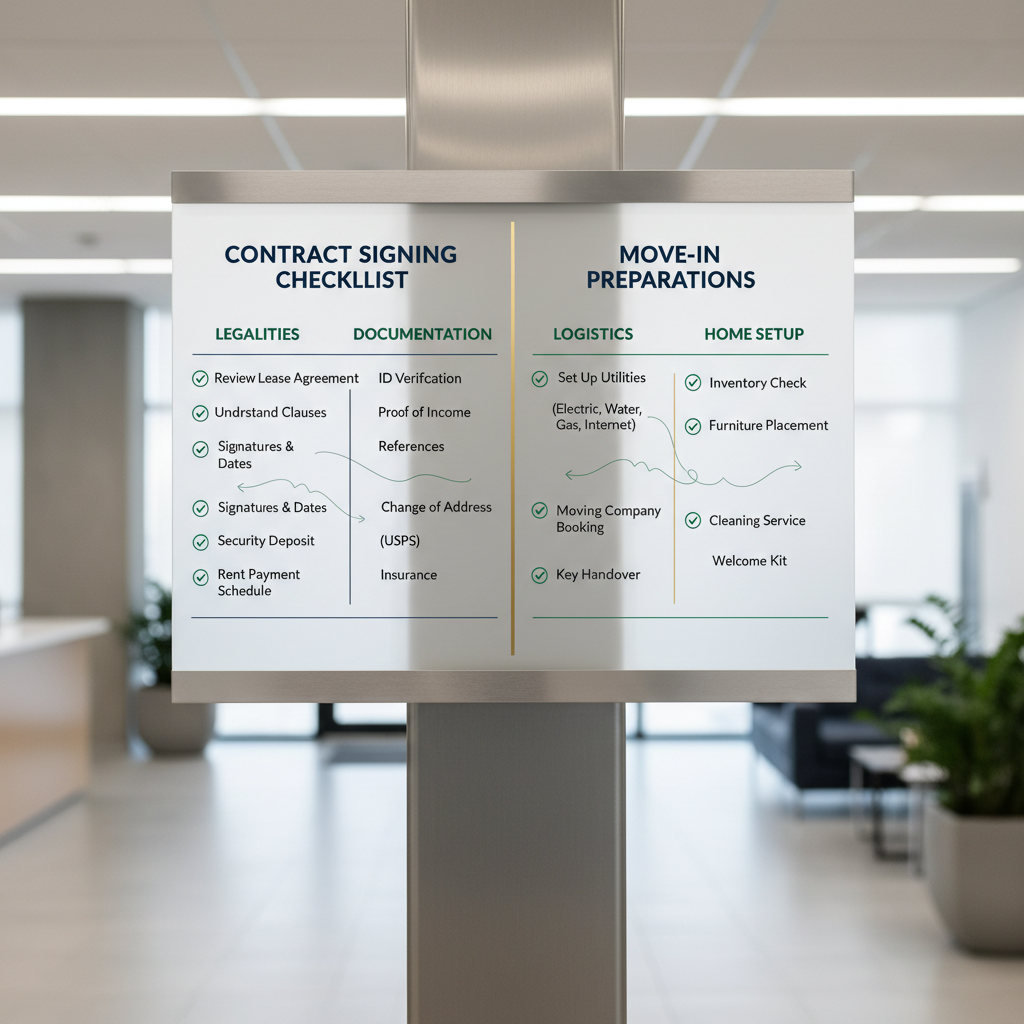
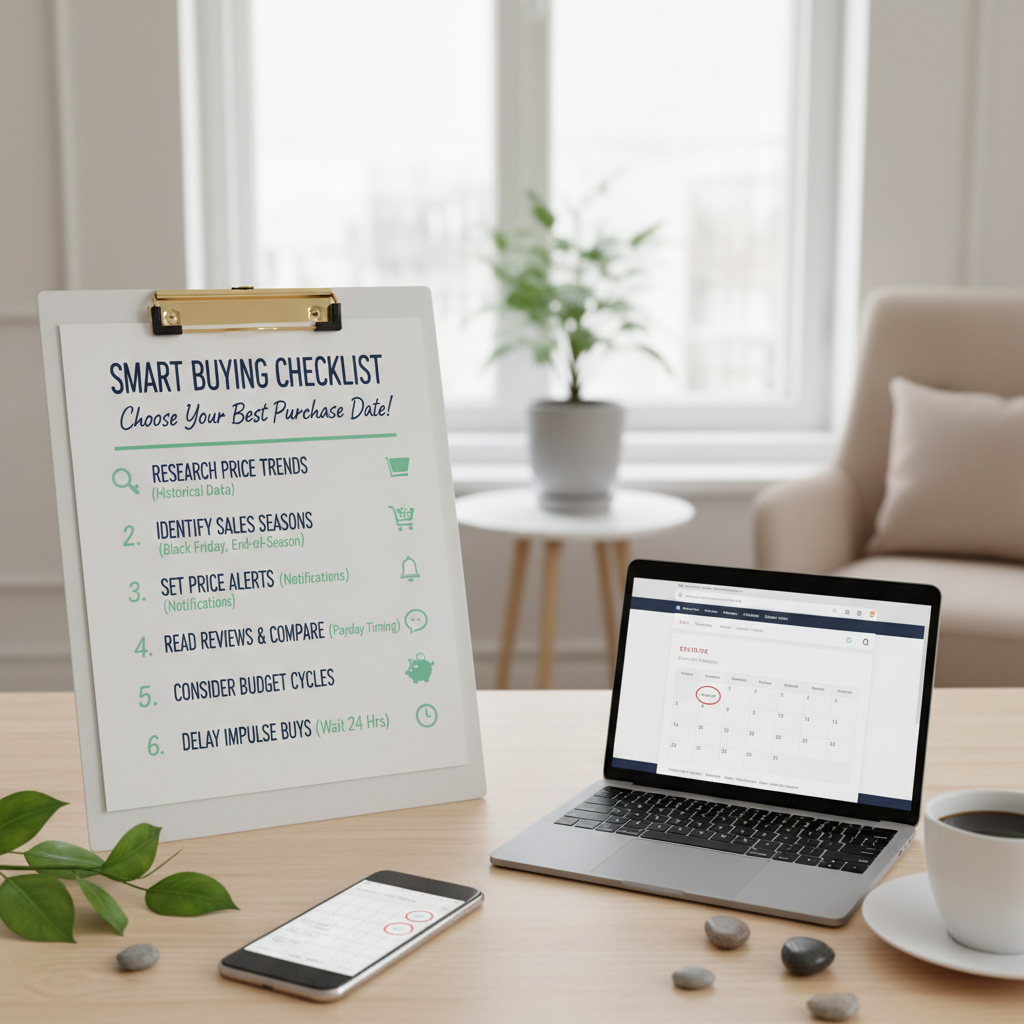
Below are practical answers to frequent questions we get from buyers and advisors. If you have a specific situation, these will help you frame the next conversation with your practitioner or lawyer.
Q1: How Far in Advance should I Pick a Qi Men Dun Jia Property Purchase Date?

Ideally, start the process at least three to four weeks before the earliest practical date for signing or closing. That gives you enough time to gather birth data, check lender and registry availability, generate candidate charts, and circulate shortlisted dates to stakeholders. For complex cross-border deals or commercial purchases, plan for six to eight weeks.
Q2: can I Use Qi Men for Both the Contract Signing and the Move-in?

Yes, and you should treat them separately. Contract signing benefits from date selections that favor legal clarity and negotiation success. Move-in benefits from dates that favor domestic harmony and settling. It is common to have different auspicious days for each; sometimes they are close together, sometimes weeks apart.
Q3: What If My Lender or the Registry Only Works on Certain Days?

Always align metaphysical choices with administrative realities. If a lender cannot wire funds on weekends, exclude weekend closings even if they look auspicious. In practice, you choose the best available date within operational constraints. Part of the Qi Men process is finding a date that balances metaphysical support with real-world feasibility.
Q4: is the Buyer’s Birth Time Critical If I Only Know the Birth Date?

Birth time improves precision, especially for personal conflict checks and hour selection. However, if you only know the date, you can still generate useful charts by using the date-level reading and choosing conservative options. If the birth time is unknown, consider confirming it via family records or using an approximate time with a note that the result is less precise.
Q5: can Qi Men Help Reduce Legal Risk in a Property Purchase?

Qi Men supports selection of dates that favor clear outcomes and reduced friction; it is not a substitute for legal due diligence. Use Qi Men to pick dates that align energetically with your objective, and pair that with strong legal protection such as a clear contract, escrow arrangements, and contingency clauses. The best results come from combining both approaches.
Q6: How do I Balance Cultural Traditions and Lender Requirements?

Be explicit with your lender and legal team. Explain that you want to pick a date for cultural or personal reasons, and ask for their guidance about operational constraints. Most professionals are familiar with reasonable scheduling requests. If necessary, select a date that suits both sides; sometimes moving the signing a day or two achieves both ceremonial and administrative acceptance.
Q7: What Software or Tools do You Recommend for First-time Users?
Start with a few reputable Qi Men apps that generate charts from date, time, and location input. Use the app to generate candidate charts, but consult a human practitioner for interpretation. For scheduling and coordination, use shared calendars with provisional holds and a simple checklist document that lists the date rationale, administrative confirmations, and backup dates.
Q8: How Often should I Refresh My Plan If the Seller Delays?

If the seller requests a delay, assess whether the new window still meets the key checks. If the delay is under a week and your original date is still available, you might maintain the original plan. For delays beyond two weeks, re-run the Qi Men checks and choose a new date. Always document the change and keep parties informed.
Conclusion: Practical Takeaways and a Simple Checklist

Working with Qi Men Dun Jia for property dates combines ancient pattern recognition with modern project management. From my experience, the most successful outcomes occur when we are both methodical and flexible. We apply a structured workflow, communicate clearly with legal and financial partners, and document decisions so everyone understands the rationale.
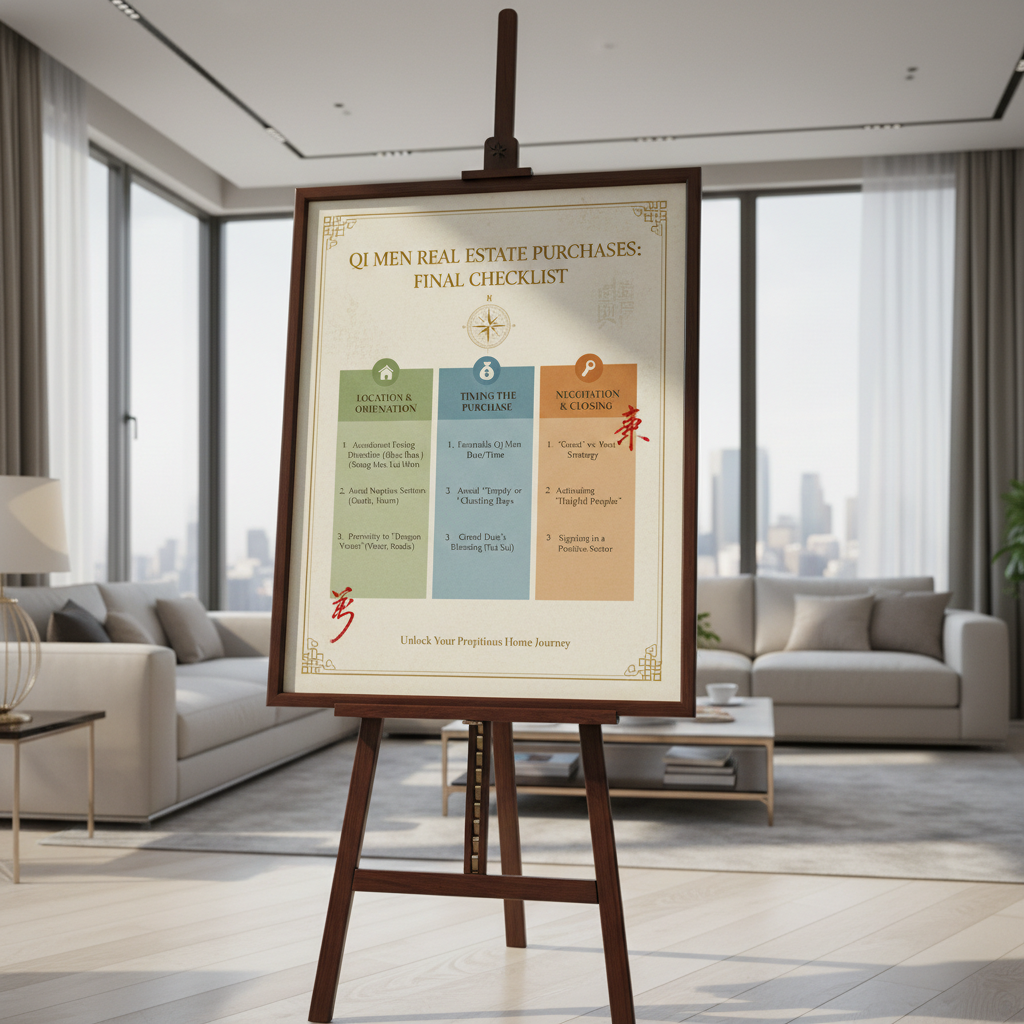
Here is a concise checklist you can use immediately:
- Collect buyer birth dates and times, property address, and orientation.
- Define objectives for signing, closing, and move-in separately.
- Shortlist candidate dates that meet administrative and personal constraints.
- Evaluate Qi Men charts for each date with clear notes on deity, star, and door.
- Confirm operational availability with lender, lawyer, seller, and registry.
- Select a primary date and one realistic backup, document the rationale.
- Schedule key tasks (wire transfer, notarization, movers) around the selected date and auspicious hour.
Final advice: treat the Qi Men reading as one powerful tool in your decision toolbox. It helps you align timing with intention, reduce emotional friction, and present a reasoned schedule to other parties. If the transaction is high value or complex, I recommend pairing a Qi Men consultation with a trusted lawyer who understands the timing constraints in your jurisdiction. With careful planning and clear communication, you can use an auspicious date to create smoother logistics, clearer agreements, and a calmer move-in experience.
If you would like, I can prepare a sample two-week candidate calendar and outline the Qi Men pros and cons for each date based on your specific birth data and property details. Share the basic information and we can walk through it together.
Leave a Reply
You must be logged in to post a comment.