Evaluating Five Element Interaction Cycles in Wu Xing Ming Li Charts provides practitioners with an exact mathematical framework for analyzing energy transfers, control vectors, and elemental dynamics. Classical BaZi frequently relies on qualitative judgments regarding stem interactions, but Wu Xing Ming Li five element destiny analysis establishes quantitative rules governing how Wood, Fire, Earth, Metal, and Water support, regulate, or disrupt one another. Every human chart is a dynamic ecosystem where numerical energy weights undergo continuous transformation based on seasonal authority, stem relationships, and branch hidden combinations.
During my many years in corporate management and business advisory, I have observed that organizational failures rarely occur because a company lacks talent or resources. Rather, failures stem from unmanaged structural friction, misallocated capital vectors, and mismatched partner dynamics. In destiny analysis, chart imbalances operate under the exact same principles. When a chart exhibits runaway generation cycles or unchecked controlling forces, the individual experiences career burnout, strategic errors, or recurring physical depletion. Understanding the precise mathematical mechanics of elemental interaction cycles enables practitioners to diagnose root vulnerabilities and engineer targeted, high-impact structural adjustments.
This comprehensive guide details the mathematical principles governing the Generating Cycle (Sheng), the Controlling Cycle (Ke), the Insulting Cycle (Wu), and Reverse Generation (Fan Sheng). By mastering these five element interaction cycles, you can move beyond general chart descriptions and deliver rigorous, actionable destiny evaluations.
Theoretical Framework of Quantitative Element Interactions in Wu Xing Ming Li
In standard metaphysical studies, five element theory is often presented as a static circular diagram where Wood generates Fire, Fire generates Earth, Earth generates Metal, Metal generates Water, and Water generates Wood. While this simple progression is conceptually valid, real-world birth charts are rarely simple or symmetrical. A chart contains specific numerical element scores derived from the four pillars, hidden stems, and He Tu stem-branch conversions. Consequently, an interaction between two elements is never a binary yes-or-no event; it is a quantitative energy transfer governed by relative volume, seasonal multipliers, and structural distance.
The primary distinction between standard BaZi analysis and Wu Xing Ming Li lies in numerical scoring. In Wu Xing Ming Li, every stem and branch carries an explicit point value. When two elements interact, the practitioner calculates the precise output score of the receiving element and the exact depletion rate of the transmitting element. For example, when Wood generates Fire in a spring chart, Wood does not simply disappear; it transfers a specific percentage of its calculated volume to Fire while suffering a proportional depletion known as mother exhaustion. If the initial volume of Wood is extraordinarily large relative to Fire, the generation cycle becomes oppressive, choking the Fire rather than illuminating it.
Furthermore, elemental interactions do not occur in isolation. A single element in a chart may simultaneously generate a child element, suffer control from an oppressive parent, and attempt to control a subordinate target. Resolving these overlapping vectors requires calculating the net elemental equilibrium score for each of the five phases. By converting qualitative elemental dynamics into quantitative differential equations, Wu Xing Ming Li allows practitioners to predict exactly when an element cycle shifts from constructive support into destructive imbalance.
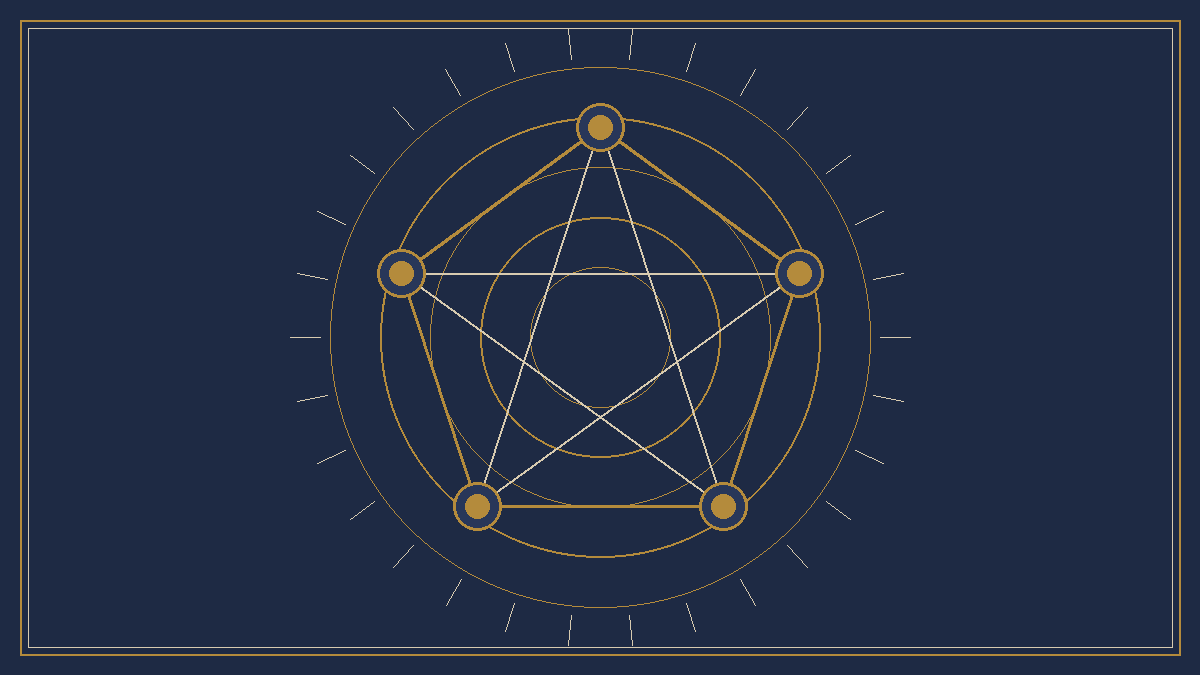
The fundamental structural relationships between the five phases and their primary mathematical roles in chart balance are summarized below.
The Generating Cycle (Sheng): Quantitative Multiplication, Energy Transfer, and Over-Generation
The Generating Cycle, or Sheng Cheng (生成), represents the natural vector of creation, nourishment, and energy propagation among the five elements. The fundamental directional sequence follows Wood generating Fire, Fire generating Earth, Earth generating Metal, Metal generating Water, and Water generating Wood. In chart evaluation, the generating element is classified as the Mother (Mu Parent), while the recipient element is classified as the Child (Zi Subordinate). Under normal conditions, the Sheng vector fosters growth, enhances personal capacity, and provides structural sustenance to weak day masters.
From a quantitative perspective, energy generation involves a two-way mathematical calculation: the transfer coefficient of the Mother and the reception efficiency of the Child. In a neutral seasonal state, the baseline transfer coefficient is evaluated at sixty-five percent. This means that for every ten points of Mother element score, six and a half points are converted into active energy for the Child element, while three and a half points are expended in the work of generation. Simultaneously, the Mother element suffers a static depletion penalty of thirty-five percent of its original total score. If the seasonal environment favors the Mother, the transfer coefficient rises to eighty percent, whereas an unfavorable seasonal environment reduces transfer efficiency to forty percent.
However, when the quantitative volume of the Mother element vastly exceeds the capacity of the Child element, the generating cycle mutates into a pathological condition known as Over-Generation or Excessive Sustenance (Guo Sheng 过生). Instead of nourishing the Child, the overwhelming volume of Mother energy smothers, buries, or drowns the recipient element. In corporate leadership, this is equivalent to an over-capitalized venture flooding a small operating team with excessive capital and conflicting directives, resulting in operational collapse rather than growth.
Each of the five elements exhibits distinct pathological symptoms under Over-Generation:
Excessive Wood Smothering Fire (Mu Duo Huo Xi 木多火熄): When Wood points exceed Fire points by a ratio greater than four to one, the dense volume of damp or unseasoned Wood blocks oxygen flow, extinguishing the Fire flame. In personal destiny, this manifests as intellectual paralysis, over-thinking, and an inability to execute vision despite vast preparation.
Excessive Fire Turning Earth to Ash (Huo Duo Tu Jiao 火多土焦): When Fire points overwhelm Earth by a ratio exceeding three point five to one, the intense thermal energy scorches the soil, baking it into barren brick that cannot sustain biological life. Psychologically, this produces extreme volatile emotions, impatience, and chronic anxiety.
Excessive Earth Burying Metal (Tu Duo Jin Mai 土多金埋): When Earth score exceeds Metal score by more than four to one, heavy soil completely covers the refined Metal ore, hiding its luster and preventing utility. In career development, this represents unfulfilled potential, obscured talents, and stagnation under bureaucratic overhead.
Excessive Metal Freezing or Cold-Hardening Water (Jin Duo Shui Zhi 金多水滞): When Metal points dominate Water points by more than three point five to one, cold Metal contracts and chills the Water, rendering it stagnant or frozen solid. Practically, this creates emotional detachment, rigid decision-making, and circulatory health issues.
Excessive Water Drowning Wood (Shui Duo Mu Fei 水多木漂): When Water points outstrip Wood points by a ratio greater than four to one, heavy currents uproot the tree, forcing it to drift aimlessly without solid earth anchorage. In business strategy, this reflects lack of core focus, frequent shifts in direction, and inability to build lasting organizational equity.
“In Wu Xing Ming Li, nourishment becomes poison the moment volume exceeds structural capacity. True mastery consists in knowing precisely when to curtail generation to preserve elemental life.”
To visualize the quantitative transfer mechanics and over-generation thresholds across all five elemental pairs, consult the diagram and detailed parameter table below.
| Elemental Vector | Normal Transfer Rate | Mother Depletion Rate | Pathology Threshold Ratio | Structural Pathology Manifestation |
|---|---|---|---|---|
| Wood -> Fire | 65% of Wood score | 35% score reduction | Wood : Fire > 4.0 : 1 | Mu Duo Huo Xi (Wood smothers Fire; executive indecision) |
| Fire -> Earth | 70% of Fire score | 30% score reduction | Fire : Earth > 3.5 : 1 | Huo Duo Tu Jiao (Fire scorches Earth; emotional instability) |
| Earth -> Metal | 60% of Earth score | 40% score reduction | Earth : Metal > 4.0 : 1 | Tu Duo Jin Mai (Earth buries Metal; obscured talent) |
| Metal -> Water | 65% of Metal score | 35% score reduction | Metal : Water > 3.5 : 1 | Jin Duo Shui Zhi (Metal chills Water; rigid paralysis) |
| Water -> Wood | 75% of Water score | 25% score reduction | Water : Wood > 4.0 : 1 | Shui Duo Mu Fei (Water drowns Wood; floating instability) |
The Controlling Cycle (Ke): Dynamic Regulation vs. Oppressive Control
The Controlling Cycle, or Ke Zhi (克制), constitutes the primary regulatory mechanism within the five element system. The natural controlling sequence follows Wood controlling Earth, Earth controlling Water, Water controlling Fire, Fire controlling Metal, and Metal controlling Wood. Contrary to popular misconception, control is not inherently negative or destructive. In natural systems, Ke represents discipline, boundary enforcement, executive governance, and structural shaping. Metal shapes raw Wood into functional architecture; Fire tempers raw Metal into sharp tools; Earth dams wild Water to create reservoirs; Water quenches wild Fire to prevent destruction; Wood breaks hard Earth to extract vital nutrients.
In Wu Xing Ming Li calculation, evaluating a Ke vector requires measuring the controlling element score against the target element score. A healthy regulatory relationship exists when the controlling element score is between one point two and two point zero times the target element score. Under this optimal range, the controlling element exerts constructive authority without damaging the target’s core integrity. For instance, an Earth day master benefiting from moderate Wood control gains self-discipline, managerial focus, and executive authority.
When the controlling element score exceeds two point five times the target element score, the regulatory relationship degenerates into Oppressive Control (Guo Ke 过克). The target element experiences severe structural damage, suppression, and systemic failure. In corporate organizations, oppressive control mirrors toxic micromanagement, where excessive oversight stifles operational initiative and causes key talent to leave the firm.
Understanding how Ke dynamics interact with birth chart parameters requires integrating calculated element point totals with numerical star matrices. As established in Natal Star and Element Numbers in Wu Xing Ming Li Calculation, an individual’s Luo Shu Natal Star acts as the cognitive processor through which Ke forces are experienced. If a client’s Natal Star element matches the target element under heavy Ke oppression, psychological stress and personal friction become significantly more acute.
The five standard Ke interaction vectors operate under explicit quantitative thresholds:
Wood Controlling Earth (Mu Ke Tu 木克土): Wood roots penetrate soil to absorb moisture and minerals. Moderate Wood structures Earth; excessive Wood breaks Earth apart, causing soil erosion, structural instability, and digestive ailments. In business, this corresponds to aggressive expansion fracturing core operations.
Earth Controlling Water (Tu Ke Shui 土克水): Earth builds dikes and dams to contain fluid flow. Moderate Earth directs Water into productive channels; excessive Earth completely absorbs or blocks Water, turning living streams into stagnant mud. In executive strategy, this reflects excessive bureaucracy paralyzing capital liquidity.
Water Controlling Fire (Shui Ke Huo 水克火): Water cools and extinguishes thermal energy. Moderate Water prevents Fire from burning out of control; excessive Water completely quenches Fire, leaving absolute darkness, coldness, and loss of vision. In business, this manifests as risk aversion killing innovation.
Fire Controlling Metal (Huo Ke Jin 火克金): Fire melts and refines raw metallic ores. Moderate Fire transforms crude iron into valuable steel; excessive Fire incinerates Metal completely, destroying its structural strength and form. Practically, this represents extreme pressure melting executive resilience.
Metal Controlling Wood (Jin Ke Mu 金克木): Metal axes and chisels carve timber into furniture and buildings. Moderate Metal provides discipline and direction; excessive Metal chops Wood to splintered dust, eliminating growth potential. In management, this equates to ruthless cost-cutting destroying core operational capabilities.
The Insulting Cycle (Wu) and Reverse Generation (Fan Sheng): Pathologies of Elemental Imbalance
While Sheng and Ke describe standard energy flows, natural systems frequently experience pathological reversals when elemental volumes deviate wildly from equilibrium. In Wu Xing Ming Li, two major pathological reversal phenomena are thoroughly quantified: the Insulting Cycle (Wu 反侮) and Reverse Generation (Fan Sheng 反生).
The Insulting Cycle, or Fan Wu (反侮), occurs when an element that is normally controlled rebels against its controller due to overwhelming numerical superiority. Under standard rules, Metal controls Wood. However, if a chart contains an massive volume of Wood (score exceeding eighty points) paired with a weak Metal score (below fifteen points), the relationship reverses completely. The soft Wood becomes so dense and hard that it dulls or breaks the Metal blade. In Chinese metaphysics, this is expressed as Wood Insulting Metal (Mu Fan Wu Jin 木反侮金). The controlled element backfires against the controller, inflicting severe structural damage.
The five Insulting Cycle manifestations operate under precise mathematical backfire conditions:
Wood Counter-Controlling Metal (Mu Fan Wu Jin 木反侮金): Dense, iron-hard Wood breaks fragile Metal tools. Occurs when Wood points exceed Metal points by more than four to one. In career terms, an over-expanded team rebels against weak executive leadership.
Earth Counter-Controlling Wood (Tu Fan Wu Mu 土反侮木): Massive, frozen, or rock-hard Earth snaps growing Wood roots. Occurs when Earth points exceed Wood points by more than four to one. In business, heavy market inertia crushes fragile innovative startups.
Water Counter-Controlling Earth (Shui Fan Wu Tu 水反侮土): Torrential flood waters wash away weak earthen dikes. Occurs when Water points exceed Earth points by more than four to one. In finance, massive capital outflows collapse fragile banking balance sheets.
Fire Counter-Controlling Water (Huo Fan Wu Shui 火反侮水): Blazing infernos completely evaporate small bodies of water. Occurs when Fire points exceed Water points by more than four to one. In corporate management, runaway emotional passion vaporizes analytical risk controls.
Metal Counter-Controlling Fire (Jin Fan Wu Huo 金反侮火): Enormous masses of cold Metal absorb heat faster than a tiny spark can generate, quenching the flame. Occurs when Metal points exceed Fire points by more than four to one. Practically, massive physical assets drown out creative marketing initiatives.
Similarly, Reverse Generation (Fan Sheng 反生) occurs within generating relationships when the natural role of Mother and Child breaks down. In Standard Sheng, Mother generates Child. But in Fan Sheng, either the Child consumes the Mother to death (Zi Duo Mu Shuai 子多母衰), or the Mother overwhelms the Child to destruction (Mu Duo Zi Wang 母多子亡). For instance, when Fire (Child) blazes at extreme intensity, it consumes Wood (Mother) far faster than Wood can naturally replenish itself, reducing the Mother element to complete void.
| Reversal Type | Classical Name | Quantitative Condition | Primary Vector Mechanism | Organizational Impact |
|---|---|---|---|---|
| Wood Insults Metal | Mu Fan Wu Jin | Wood : Metal > 4.0 : 1 | Dense Wood dulls Metal blade | Operational staff overrule management |
| Earth Insults Wood | Tu Fan Wu Mu | Earth : Wood > 4.0 : 1 | Hard Earth breaks growing roots | Asset burden stalls strategic pivoting |
| Water Insults Earth | Shui Fan Wu Tu | Water : Earth > 4.0 : 1 | Flood waters collapse earthen dike | Uncontrolled liability destroys stability |
| Fire Insults Water | Huo Fan Wu Shui | Fire : Water > 4.0 : 1 | Inferno evaporates water reservoir | Hype and panic burn cash reserves |
| Metal Insults Fire | Jin Fan Wu Huo | Metal : Fire > 4.0 : 1 | Heavy cold Metal quenches spark | Fixed costs extinguish leadership morale |
Seasonal Modulations and Environmental Multipliers on Interaction Dynamics
In Wu Xing Ming Li, elemental interaction cycles never take place in a vacuum. The birth month branch, known as the Commanding Branch or Yue Ling (月令), acts as the absolute environmental ruler of the chart. The season of birth modulates elemental weights by applying seasonal state multipliers that radically alter transfer coefficients and control effectiveness.
Classical cosmology defines five seasonal energy states for every element throughout the year:
Born (Wang 旺): The element matching the current season is in its peak state of maximum vitality. Multiplier: two point zero (2.0x). For example, Wood during Spring (Yin and Mao months).
Prosperous (Xiang 相): The element generated by the seasonal element is growing rapidly. Multiplier: one point five (1.5x). For example, Fire during Spring, as Spring Wood generates Fire.
Resting (Xiu 休): The element that generated the seasonal element is retiring after its labor. Multiplier: zero point eight (0.8x). For example, Water during Spring, as Water has completed its job of growing Wood.
Imprisoned (Qiu 囚): The element controlled by the seasonal element is constrained and trapped. Multiplier: zero point five (0.5x). For example, Earth during Spring, as powerful Spring Wood suppresses Earth.
Dying (Si 死): The element that attempts to control the seasonal element is completely spent and defeated. Multiplier: zero point two (0.2x). For example, Metal during Spring, as Spring Wood is far too robust for Metal to control effectively.
Understanding these seasonal states is essential when evaluating numerical element dynamics across different metaphysical disciplines. In He Tu matrix foundations in He Lu Li Shu, seasonal multipliers modify cosmic numbers to establish hexagram line changes. In Wu Xing Ming Li, seasonal multipliers dictate whether a Ke relationship acts as constructive discipline or triggers an Insulting Cycle backfire.
Furthermore, Earthly Branch combinations directly reshape interaction cycles. When a chart forms a Three Harmony Combination (San He 三合) such as Shen-Zi-Chen combining into Water, the individual branches surrender a large portion of their native element scores to create a massive Water vector. This sudden numerical surge can instantly transform a balanced Sheng cycle into an overwhelming Over-Generation pathology or ignite a violent Water Insults Earth backfire.

Complete Worked Quantitative Case Studies: Real-World Chart Diagnosis
To demonstrate the practical application of quantitative interaction cycles, let us analyze two detailed case studies from my private executive advisory portfolio.
Case Study 1: Executive Burnout and Corporate Failure from Over-Generation
Client Profile: Female Chief Executive Officer of a green technology firm, born on May 18, 1978, at 14:30. She sought consultation following severe physical exhaustion, executive team conflicts, and a failed Series B funding round.
Four Pillars Chart Setup:
- Year Pillar: Wu Wu (Earth Horse – Fire season)
- Month Pillar: Ding Si (Fire Snake – Peak Summer Fire)
- Day Pillar: Bing Wu (Fire Horse – Fire Day Master)
- Hour Pillar: Yi Wei (Wood Goat – Fire-Earth transition)
Quantitative Element Scoring & Seasonal Multiplication:
Born in the middle of Si Snake month (Peak Summer Fire), Fire is in the Wang state (2.0x multiplier). Wood is in the Xiu state (0.8x), Earth is in the Xiang state (1.5x), Metal is in the Qiu state (0.5x), and Water is in the Si state (0.2x).
- Fire Score: Bing (Day Master) 25 + Ding 20 + Si (Branch Fire) 40 + Wu (Year Branch) 35 + Wu (Day Branch) 35 = 155 base points x 2.0 (Wang) = 310 points.
- Earth Score: Wu (Year Stem) 15 + Wei (Hour Branch Earth) 25 = 40 base points x 1.5 (Xiang) = 60 points.
- Wood Score: Yi (Hour Stem) 10 points x 0.8 (Xiu) = 8 points.
- Metal Score: Hidden Geng in Si branch = 5 points x 0.5 (Qiu) = 2.5 points.
- Water Score: Zero active stems or main branches = 0 points.
Interaction Cycle Diagnostic Evaluation:
1. Fire to Earth Over-Generation Pathology: Fire score is 310 points, while Earth score is 60 points. The ratio of Fire to Earth is 5.17 to 1. This drastically exceeds the Over-Generation tipping threshold of 3.5 to 1 (Huo Duo Tu Jiao – Fire Scorches Earth). Instead of generating productive Earth (which represents output, operational systems, and execution), the blazing Fire burns Earth to ash. The client possessed brilliant vision and intense drive, but her operating team could not build stable corporate processes under her hyper-volatile emotional pace.
2. Fire Insults Water Backfire: Water score is 0 points. Water represents risk controls, cash flow liquidity, and calm strategic analysis. The raging Fire (310 points) completely evaporated all potential Water energy. The firm spent cash reserves precipitously on aggressive marketing before securing operational product stability.
3. Structural Remediation: To resolve this extreme Fire-Earth pathology, introducing more Fire or Wood would be disastrous. We implemented a heavy Metal and Water structural protocol. In business operations, she hired an experienced Chief Operating Officer with a strong Metal-Water chart profile to enforce strict financial discipline and build systematic operational dikes. In personal space, we recommended spatial adjustments consistent with principles detailed in Form School Feng Shui landform analysis, positioning her primary workspace near natural water features and adopting cool metallic interior accents. Within fourteen months, corporate burn rate stabilized, operational processes matured, and the company successfully secured new growth equity.
Case Study 2: Corporate Stagnation from Metal-Wood Counter-Control (Wu Cycle)
Client Profile: Male Managing Director of a logistics enterprise, born on March 12, 1969, at 08:15. He reported persistent litigation with suppliers, inability to enforce contract compliance, and declining profit margins.
Four Pillars Chart Setup:
- Year Pillar: Ji You (Earth Rooster – Metal branch)
- Month Pillar: Ding Mao (Fire Rabbit – Peak Spring Wood)
- Day Pillar: Geng Yin (Metal Tiger – Wood branch, Metal Day Master)
- Hour Pillar: Geng Chen (Metal Dragon – Spring Earth)
Quantitative Element Scoring & Seasonal Multipliers:
Born in Mao month (Spring Wood), Wood is in the Wang state (2.0x). Fire is Xiang (1.5x), Water is Xiu (0.8x), Metal is Qiu (0.5x), and Earth is Si (0.2x).
- Wood Score: Mao 40 + Yin 35 + Hidden Wood in Chen 10 = 85 base points x 2.0 (Wang) = 170 points.
- Metal Score: Geng (Day Master) 20 + Geng (Hour Stem) 20 + You (Year Branch) 30 = 70 base points x 0.5 (Qiu) = 35 points.
- Fire Score: Ding (Month Stem) 15 points x 1.5 (Xiang) = 22.5 points.
- Earth Score: Ji 10 + Chen 20 = 30 base points x 0.2 (Si) = 6 points.
- Water Score: Hidden Gui in Chen = 5 points x 0.8 (Xiu) = 4 points.
Interaction Cycle Diagnostic Evaluation:
1. Mu Fan Wu Jin (Wood Counter-Controls Metal): Standard rules dictate that Geng Metal should control Wood to generate Wealth (Wood represents wealth for a Metal Day Master). However, calculated Wood score is 170 points, while Metal score is only 35 points. The ratio of Wood to Metal is 4.85 to 1, exceeding the 4.0 to 1 Insulting threshold. The client’s Metal Day Master lacked the structural strength to control his immense Wood wealth assets. Instead of managing wealth, his suppliers and regional operations (Wood) rebelled against corporate policies, dulling his executive authority and embroiling the business in costly legal disputes.
2. Suppressed Water Mediator: Water score is only 4 points. Without Water to act as a bridge element between Metal and Wood, the weak Metal directly collided with massive Spring Wood, causing repeated tool breakage (executive exhaustion and contract failure).
3. Strategic Resolution: The chart required an immediate Water mediating element (Tong Guan) to convert the fierce Metal-Wood clash into a smooth Sheng flow (Metal generates Water, Water generates Wood). In corporate strategy, the client restructured supplier contracts from rigid adversarial mandates into shared revenue-sharing partnerships (Water flexibility). He delegated contract enforcement to a specialized legal firm while focusing his personal energy on strategic business development. Within two years, supplier disputes dropped to zero, and net operating margins expanded by twenty-four percent.
“When a controlled element becomes four times stronger than its controller, direct enforcement guarantees defeat. Strategic leaders do not fight the tide; they introduce a bridge element to transform conflict into continuous flow.”

Advanced Remediation Strategies: Balancing Element Interaction Cycles
In classical Chinese metaphysics, diagnosing structural chart imbalance is only the first step. The true value of Wu Xing Ming Li lies in designing effective remediation strategies to restore elemental equilibrium. When an interaction cycle exhibits destructive Oppressive Control (Guo Ke) or pathological Insulting (Wu) backfire, directly attacking the dominant element often amplifies friction. Instead, master practitioners utilize the principle of Tong Guan (通关 – Mediating / Bridge Elements) to resolve elemental warfare.
Tong Guan operates by inserting a specific intermediate element between two clashing forces to transform a destructive controlling vector into a continuous generating flow. For example, when Metal heavily clashes with Wood (Metal Ke Mu), introducing Water serves as a bridge: Metal generates Water, and Water generates Wood. The clashing energy of Metal is naturally drained to nourish Water, which in turn smoothly supports Wood. This eliminates structural friction while preserving the quantitative power of all involved elements.
Practitioners utilize quantitative destiny remediation principles alongside frameworks such as Tie Ban Shen Shu iron plate destiny calculation to align mathematical timing with physical interventions.
The five primary Tong Guan bridging rules and their strategic applications are detailed below:
1. Resolving Wood-Earth Clash (Wood Ke Earth): Use Fire as Bridge.
When Wood breaks Earth, Fire absorbs Wood energy through Sheng (Wood generates Fire) and delivers structural support to Earth (Fire generates Earth). Executive Application: Resolve operational friction between expansion teams and core operations by introducing strong visionary leadership, corporate culture alignment, and brand inspiration (Fire).
2. Resolving Earth-Water Clash (Earth Ke Water): Use Metal as Bridge.
When Earth dams or muddy Water, Metal drains Earth energy (Earth generates Metal) and enriches Water liquidity (Metal generates Water). Executive Application: Resolve cash flow gridlock and bureaucratic paralysis by implementing standardized compliance protocols, automated accounting systems, and clear contractual frameworks (Metal).
3. Resolving Water-Fire Clash (Water Ke Fire): Use Wood as Bridge.
When Water quenches Fire, Wood absorbs Water currents (Water generates Wood) and provides fuel for Fire (Wood generates Fire). Executive Application: Resolve conflicts between risk-averse legal teams and creative marketing departments by introducing structured development pipelines, talent incubation, and educational programs (Wood).
4. Resolving Fire-Metal Clash (Fire Ke Metal): Use Earth as Bridge.
When Fire incinerates Metal, Earth quenches excess Fire thermal heat (Fire generates Earth) and protects Metal structural integrity (Earth generates Metal). Executive Application: Resolve high-stress burnout and executive panic by establishing solid operational buffers, physical asset reserves, and grounding governance structures (Earth).
5. Resolving Metal-Wood Clash (Metal Ke Wood): Use Water as Bridge.
When Metal chops Wood, Water lubricates Metal blades (Metal generates Water) and nourishes Wood growth (Water generates Wood). Executive Application: Resolve aggressive contract disputes and hostile management-labor conflicts by introducing flexible negotiation channels, diplomatic mediation, and fluid capital structures (Water).
| Elemental Clash Pair | Bridge Element (Tong Guan) | Sheng Vector Sequence | Environmental Interventions | Executive Action Protocol |
|---|---|---|---|---|
| Wood vs. Earth | Fire (Huo) | Wood -> Fire -> Earth | Bright lighting, warm tones, south orientation | Inject vision, inspiration, and corporate culture |
| Earth vs. Water | Metal (Jin) | Earth -> Metal -> Water | Metallic decor, white accents, west orientation | Establish financial controls and legal clarity |
| Water vs. Fire | Wood (Mu) | Water -> Wood -> Fire | Indoor plants, green accents, east orientation | Invest in talent development and education |
| Fire vs. Metal | Earth (Tu) | Fire -> Earth -> Metal | Ceramics, yellow tones, central grounding | Build operational buffers and physical reserves |
| Metal vs. Wood | Water (Shui) | Metal -> Water -> Wood | Aquariums, blue/black tones, north placement | Adopt fluid negotiations and revenue sharing |
Frequently Asked Questions on Five Element Interaction Cycles
How does Wu Xing Ming Li evaluate element interaction cycles differently from standard BaZi?
Standard BaZi relies predominantly on qualitative relationships between Heavenly Stems and Earthly Branches, often treating Sheng and Ke as absolute static conditions. Wu Xing Ming Li introduces explicit mathematical scoring for all five element weights, applying seasonal state multipliers (Wang, Xiang, Xiu, Qiu, Si) and hidden stem conversion rates. This allows practitioners to calculate exact numerical transfer coefficients, determine whether a generating cycle is supportive or smothering, and predict precise counter-control backfire thresholds.
What is the difference between Over-Generation (Guo Sheng) and Oppressive Control (Guo Ke)?
Over-Generation occurs within a generating relationship (Mother to Child) when the volume of the Mother element is so overwhelming (ratio greater than 3.5:1) that it smothers or buries the Child element instead of nourishing it. Oppressive Control occurs within a controlling relationship when the controlling element score exceeds two times the target element score, causing severe structural damage and suppression to the target element. Both conditions represent pathological imbalances, but Over-Generation requires draining the Mother, whereas Oppressive Control requires introducing a bridge element.
How does the birth month (Commanding Branch / Yue Ling) alter element interaction cycles?
The Commanding Branch acts as the master environmental ruler of the birth chart. It assigns a seasonal state multiplier to each of the five elements: Born (2.0x), Prosperous (1.5x), Resting (0.8x), Imprisoned (0.5x), and Dying (0.2x). These multipliers dramatically alter raw element scores before interactions are calculated. An element in the Wang (Born) state can easily trigger an Insulting Cycle backfire against a controlling element that is in the Qiu (Imprisoned) or Si (Dying) state.
What is an Insulting Cycle (Wu / 反侮) backfire, and when does it occur?
An Insulting Cycle backfire occurs when an element that is normally controlled rebels against its controller due to immense numerical superiority. Under standard rules, Metal controls Wood. However, when calculated Wood score exceeds Metal score by a ratio greater than four to one, the soft Wood becomes so dense that it dulls or breaks the Metal blade (Mu Fan Wu Jin). The controlled element inflicts severe structural backfire against the controller.
How does introducing a Tong Guan (Bridge Element) resolve a fierce elemental clash?
A Tong Guan bridge element resolves an elemental clash by inserting an intermediate element between the two warring forces, converting a destructive Ke vector into a continuous Sheng generating flow. For example, in a fierce Metal-Wood clash, introducing Water allows Metal to generate Water, which then generates Wood. The aggressive energy of Metal is safely drained into Water, eliminating conflict while sustaining both original elements.
Can external environmental adjustments alone fix a severe elemental cycle imbalance in a birth chart?
No. While physical environmental modifications (such as spatial orientation, interior color palettes, and landform alignments) provide helpful energetic support, true remediation requires a multi-layered approach. Practitioners must combine environmental interventions with strategic executive behavioral changes, organizational restructuring, and aligned business decisions. External modifications reinforce internal intent, but behavioral alignment is necessary to sustain long-term structural equilibrium.
Leave a Reply
You must be logged in to post a comment.