
The Confident Negotiator: A Face Reading Guide for Business
Negotiation is not about what people say. It is about what they mean, and what their face tells you before they open their mouth. I have sat across the table from hundreds of negotiators, from corporate dealmakers to street vendors, and the face always tells the story first. The confident negotiator has a specific set of facial markers that separate them from the pretender. Learn those markers and you will know who holds the real power in any room before the first offer is made.

This article is part of my Can Confidence Show on Your Face series. For the foundational guide, see What Facial Features Indicate Confidence. Sibling articles include Confidence Features in Different Face Shapes and Practicing Face Reading with Video.
Why Face Reading Belongs in Negotiation
Negotiation training teaches you to read body language, listen for verbal cues, and structure your arguments strategically. All useful. But body language is performable, words are scripted, and arguments are planned. The face is the one thing a negotiator cannot fully control. Micro-expressions leak. Jaw tension leaks. Eye contact habits leak. When someone is bluffing, their face knows it before their words do.
Face reading in negotiation is not about predicting what someone will do. It is about calibrating their emotional baseline and detecting when that baseline shifts. A confident negotiator at ease looks one way. The same negotiator under pressure looks different. The same negotiator pretending to be at ease while actually feeling pressure looks different again. The face reveals the difference between comfort, performed comfort, and real discomfort.
The Body Language vs Face Reading article in this series covers the fundamental difference between behavioral and structural reading. In negotiation, you need both. Body language tells you what is happening right now. Face reading tells you what the person is built to sustain.
The Four Confidence Zones in Negotiation
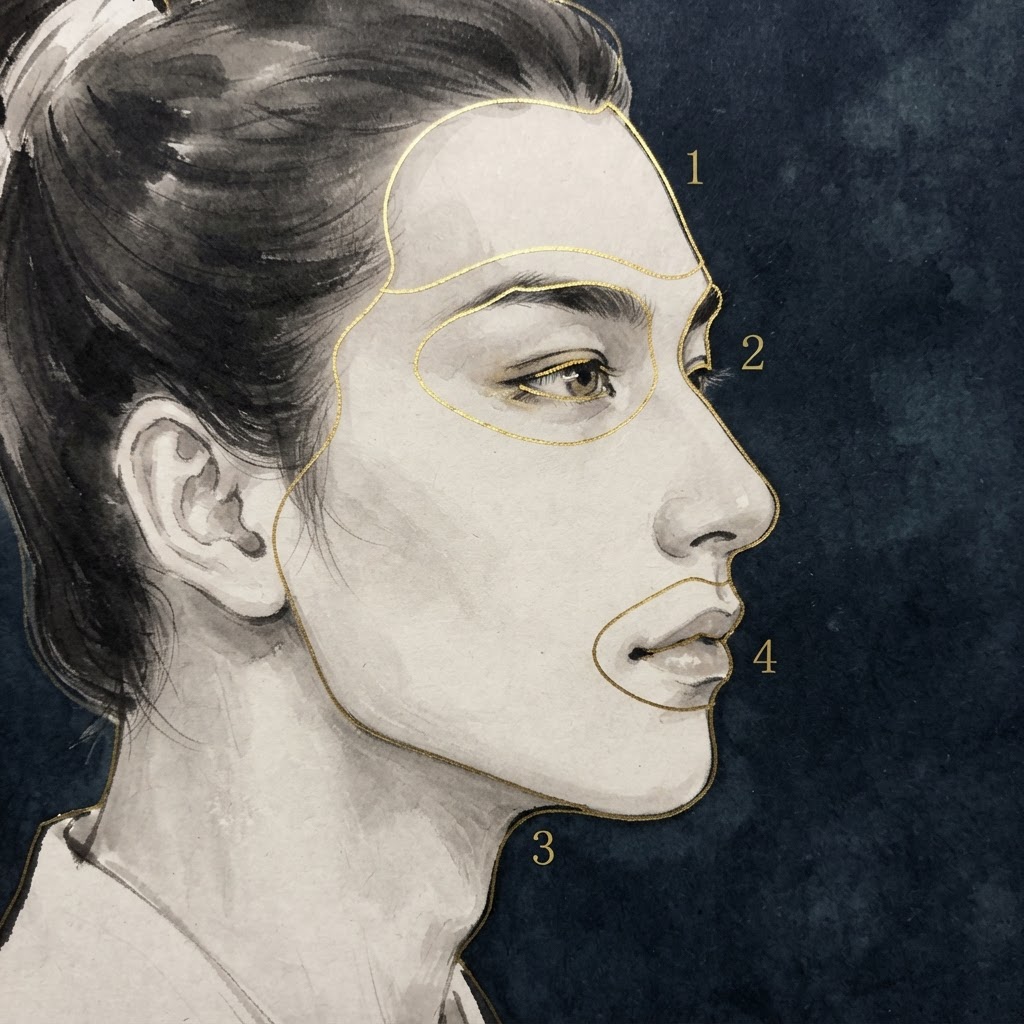
When I read a negotiator’s face, I focus on four zones, each of which governs a different aspect of negotiation behavior. Read all four and you have a comprehensive picture of how this person will perform under pressure.
| Zone | What It Reveals | Strong Markers |
|---|---|---|
| Brow and forehead | Strategic thinking, patience, clarity of plan | High, wide, smooth brow bone |
| Eyes | Comfort with confrontation, truthfulness | Clear, steady, spirited (shen) |
| Jaw | Willpower, ability to hold a position | Wide, firm flesh, not clenched |
| Mouth | Emotional control, follow-through | Level corners, firm lips, no twitching |
The Brow Zone: Strategic Thinking
A high, wide, smooth brow bone suggests someone who thinks ahead and stays calm under complexity. In negotiation, this person can hold multiple variables in their head simultaneously without getting flustered. They plan their moves several steps ahead. You will notice they rarely react immediately to an offer. They pause and calculate.
A low or heavily lined brow suggests someone who reacts emotionally to new information. This does not mean they are a weak negotiator, but their decision-making is more reactive than strategic. They negotiate by feeling their way through rather than by mapping the terrain in advance. If you face this person, surprises will rattle them.
The key is watching the brow during the negotiation itself. Does it stay smooth when you introduce a new term? Does it furrow when you push for a concession? The negotiator whose brow stays calm under pressure is the one who has a plan for every scenario. The one whose brow tightens with every counter is improvising. The Interviews and Hiring article covers brow reading in professional contexts.
The Eye Zone: Comfort with Confrontation
Eyes tell you whether the negotiator is comfortable with the adversarial nature of the process. Clear, steady eyes with good spirit (shen) suggest someone who can hold eye contact during disagreement without flinching. Their eyes do not widen with surprise when you make a bold claim. They do not look away when they counter. They are at home with confrontation.
Narrow or darting eyes suggest someone who is uncomfortable with direct conflict. They will negotiate but they will avoid the confrontational moments that often decide outcomes. When you push them on price, they will look away. When you challenge their position, their eyes will blink rapidly. This is not weakness. It is a signal that their negotiation style is collaborative rather than adversarial. Adjust your approach accordingly.
The most dangerous negotiator has eyes that are simultaneously calm and intense. They hold a steady gaze that does not feel aggressive but does not feel warm either. This person is comfortable with the game and they are playing to win. They will not blink at your threats because they have already calculated your position before you started speaking.
In a room full of negotiators, the one whose eyes do not change when the stakes change is the one who set the stakes.
The Jaw Zone: Willpower and Position-Holding
The jaw is the willpower zone in face reading. A wide jaw with firm flesh that is not clenched suggests someone who can hold a position firmly without becoming rigid. They will not fold at the first counteroffer, but they will also not waste energy fighting battles they cannot win. This is the ideal jaw for negotiation.
A very tightly clenched jaw suggests someone who will hold their position through sheer force of will, even when flexibility would serve them better. They negotiate by refusing to move, which works when they have leverage and fails badly when they do not.
A narrow or weak jaw suggests someone who will concede under sustained pressure. They may negotiate well in the opening stages, but as the conversation extends and the pressure builds, their resolve erodes. If you are reading a weak jaw on your opponent, time and sustained pressure will favor you. If you are reading a strong jaw, do not expect concessions to come easily.
The Wealth Features article covers the relationship between jaw strength and financial discipline, which maps directly to negotiation behavior around money.
Reading the Jaw During a Deal
I was once called into observe a negotiation between two companies. One CEO had a wide, firm jaw with good flesh. The other had a narrow jaw that clenched visibly whenever the terms got tough. The narrow-jawed CEO started with an aggressive opening position, which initially seemed like strength. But every time the other side pushed back, the jaw tightened. By hour three, his team was making concessions while the wide-jawed CEO had barely moved from his opening position. The narrow jaw told me he would fold under pressure. The wide jaw told me the other one would not. The deal went the way the faces predicted.
The Mouth Zone: Emotional Control
The mouth reveals emotional control, which in negotiation means the ability to hide what you are feeling until you choose to show it. Level mouth corners suggest someone with steady emotional regulation. They will not grimace at an unfavorable term or smile too quickly at a favorable one. Firm lips suggest someone who can keep a secret and will not telegraph their position through facial leakage.
Down-turned mouth corners suggest someone whose default state is skepticism. They will instinctively distrust your first offer. Up-turned corners suggest someone whose default is optimism, which can make them more open to collaboration but also more vulnerable to hardball tactics if they trust too soon.
Watch the mouth when new terms are introduced. Micro-twitches at the corners reveal the negotiator’s true reaction before they formulate their verbal response. If the left corner pulls down slightly when you name a number, they are unhappy with it, even if they say it is fine. If both corners remain perfectly level, they are either truly calm or very well trained. The Micro-Expressions article breaks down these subtle tells.
| Mouth Signal | Likely Meaning | Your Response |
|---|---|---|
| Corners pull down on hearing offer | Unhappy but hiding it | Push for more, they will likely concede |
| Corners lift slightly on hearing offer | Happier than expected | Check if your offer was too generous |
| Lips tighten and press together | Bracing for a fight | Expect a counter, prepare your defense |
| Mouth stays perfectly still | Trained or genuinely calm | Read the eyes for the real signal |
The Pre-Negotiation Read
Before the negotiation starts, while everyone is still doing small talk, read the four zones. This is when the negotiator’s face is least guarded and most informative. Their resting state tells you their baseline. Once the real negotiation begins, they will start controlling their expressions, and reading becomes harder. The pre-negotiation window is the most valuable 60 seconds in any deal.
In that window, note: the overall face shape (the Face Shapes article covers the baseline each shape provides), the resting eye quality (clear and spirited or guarded and flat), the resting jaw tension (firm or clenched), and the mouth set (level, down-turned, or up-turned). These four data points give you a reading before anyone says a word about the deal.
When Their Face Contradicts Their Words
The most valuable moment in any negotiation is when the face says one thing and the words say another. The negotiator says “that is my final offer” but their jaw just relaxed. That relaxation means they are relieved to have said it, which usually means they have more room left. Or they say “I cannot accept that” but their mouth corners lifted slightly. The lift leaks satisfaction, which means they expected your offer to be worse.
Do not call out the contradiction. Note it. Use it. If their face says they have more room, keep pushing. If their face says they are satisfied with your position, do not offer more. The face is the truth in a game where words are the performance.
This skill develops with practice. Start by watching recorded negotiations and pausing when you catch a contradiction between face and words. Write it down. Over time, your eye will catch these moments in real time without pausing. The Practicing with Video article in this series provides a structured training method for exactly this kind of development.
Frequently Asked Questions
Can a skilled negotiator hide their facial tells?
Partially, yes. Training, Botox, and deliberate expression control can suppress some tells. Micro-expressions, however, are involuntary and flash faster than conscious control can catch. A trained reader will still catch what Botox did not freeze and what coaching did not reach. The Confident vs Shy Features article covers structural markers that cannot be trained away.
Is it ethical to read someone’s face during a negotiation?
Face reading is observation, not manipulation. You are reading what the person is already showing you. The ethics depend on how you use the information. Using it to understand the other side better and find mutually beneficial terms is ethical. Using it to exploit someone’s weaknesses aggressively is not. Reading is neutral. Intent makes the difference.
What if I read the wrong signals and make a bad call?
Every reading carries uncertainty. Face reading increases your odds, it does not guarantee outcomes. Always combine facial reading with conventional negotiation preparation: research, leverage analysis, and fallback positions. The face is one input among many, but it is often the earliest input you get. Use it as a signal to verify, not as a standalone decision-maker.
Should I read my own face before negotiating?
Yes. Know what your own face reveals so you can manage it. If your jaw clenches under pressure, you are telling your opponent you are stressed. If your eyes dart, you are signaling uncertainty. The parent article and the confidence guide cover self-assessment methods that help you understand what your face is saying before you enter the room.
Leave a Reply
You must be logged in to post a comment.