
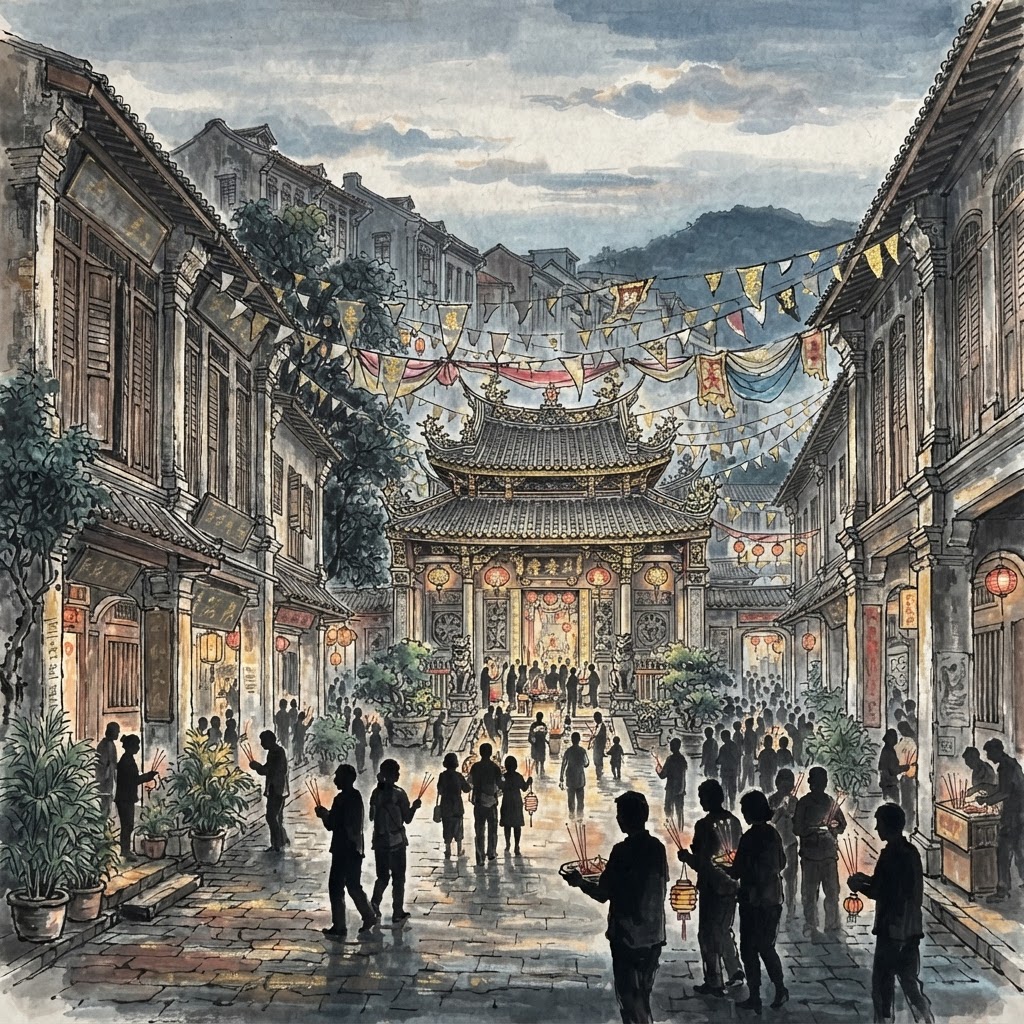
If you have ever walked down Waterloo Street on the first or fifteenth day of a lunar month, you already know something about this temple before reading a single word of its history. The whole street smells of incense, the queue sometimes wraps around the corner, and inside, people from every background you can imagine are kneeling in front of Kwan Im, the Goddess of Mercy, asking quietly for help with things they would never say out loud.
The Kwan Im Thong Hood Cho Temple (四马路观音庙), most locals just call it the Waterloo Street Guan Yin temple, is one of those places I take overseas visitors and students to see, because it explains Singapore better in ten minutes than any brochure can. It is old, it is working, and it is generous. And for people interested in divination, it is also the most famous place in Singapore to draw a Guan Yin lot.
Everything About Kwan Im Temple 四马路观音庙
First, the basics. This is one of the oldest Buddhist temples in Singapore. According to the wall inscriptions inside, the temple was founded by Master Li Nan Shan (李南山上人), a monk who came from Guangdong in China. In 1884 he received a piece of land from a firm called Chen Liang Cheng (陈两成商号), and the temple went up between 1884 and 1886 on the site it still occupies today at 178 Waterloo Street, right in the middle of what we now call the Bugis area.
Visiting it gives you a clear, unfiltered look at how Chinese Buddhism lives in everyday Singapore. People do not come here as tourists. They come to pray, to give thanks, to draw lots, and to ask for help. That is what the temple has always been for, and that is the frame for everything else in this guide.
The History and Architecture of the Temple
The temple survived the Second World War in a way that people still talk about. During the Japanese bombardment, the surrounding area was badly hit, but the temple came through largely undamaged, and during those years it became a refuge for the injured and the homeless. The inscriptions on the temple grounds record that this kindness was given so the temple could serve, in their words, the good men and women. I have always liked that phrase. It is a temple built with a job to do, not a monument built to be admired.
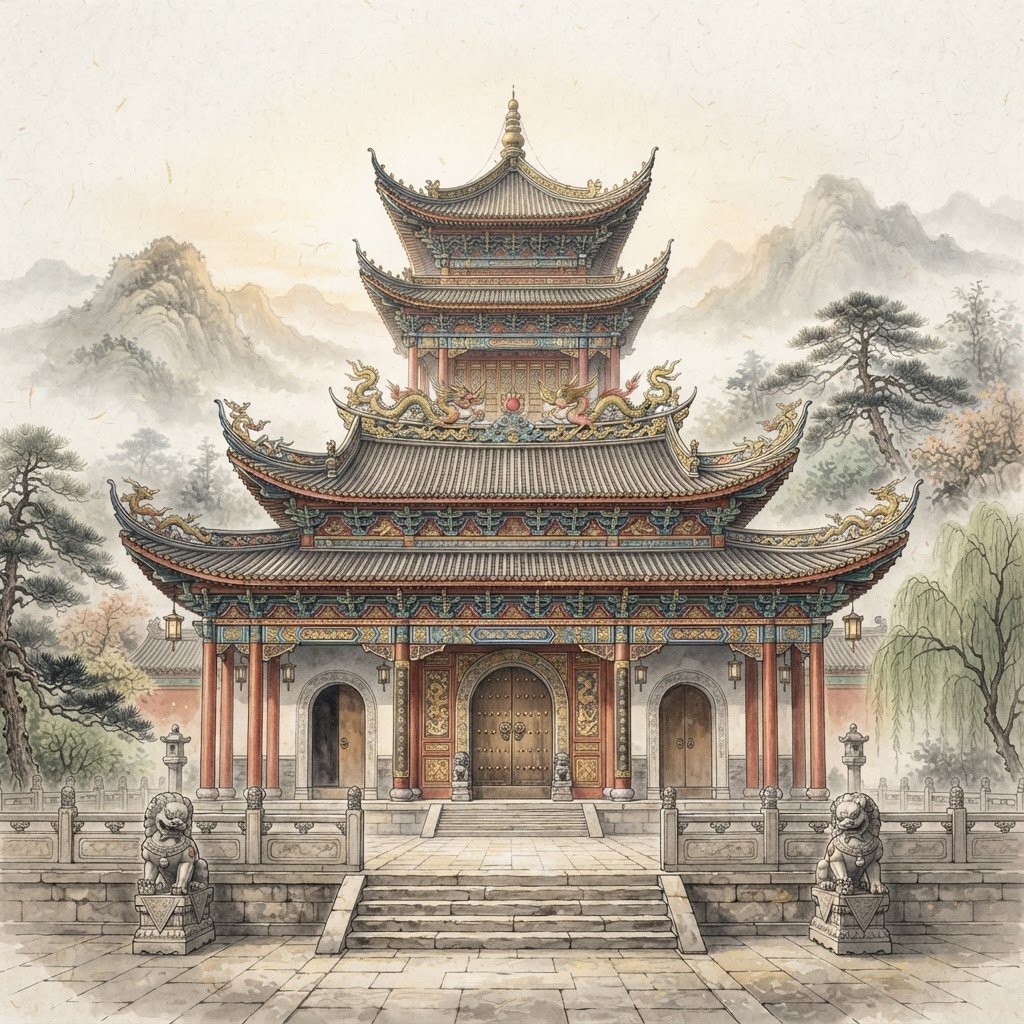
The building you see today is the result of a major reconstruction that began in 1982 and very nearly doubled the temple’s size. The project earned the temple a historic site designation from the National Heritage Board, and it is worth slowing down to look at the craft. The exterior carries the hallmarks of late 19th century Chinese temple architecture: sweeping pagoda roofs, and carvings of dragons, phoenixes and water lilies picked out in blue, green, red and yellow.
There are two rooflines at different heights, and the entrance is built as one large central doorway flanked by two smaller ones. The upturned curves of the roofs are considered lucky, and the yellow Buddhist swastikas along the sides are traditional religious symbols, ancient and entirely benign, a point worth knowing if you are visiting with friends who have not seen them before.
A few details changed in the reconstruction. The temple hall floor was clay tiles once, and it is granite now. And inside the main hall there are no candles or incense burning, deliberately: the incense urn sits outside the hall so the soot never stains the roof. Look at the ceiling if you visit, and you will see exactly what that decision protected.
The Temple in Singapore’s Temple Landscape
Singapore has no shortage of temples, and anyone who tells you they are all the same has not spent time in them. There are the grand tourist-facing institutions, the clan association halls tucked into shophouses, the small neighborhood altars that serve one block and ask nothing of anyone. The Kwan Im Thong Hood Cho Temple sits in a category of its own: a major working temple that never became a museum of itself.
I often describe the difference this way to visitors. Some temples you visit, and some temples you use. This one is used, daily, by aunties coming off the bus with bags of oranges, by office workers on their lunch break, by students before exam season, by business owners like the ones I have spent three decades working with, quiet men in shirts who stand at the back with their eyes closed. The incense never stops for long. On any random Tuesday you will find a dozen people inside, and on the first and fifteenth of the lunar month you will find a street full.
That distinction matters for how you should approach your visit. Nobody here needs you to perform reverence. Just join the flow, do what the locals do, and let the place do the rest. The temple has been absorbing strangers gracefully since 1884, and it will absorb you too.
One more framing note, because my students ask. Is this a Buddhist temple or a folk religion temple? The honest answer is that it is a Chinese temple serving a Buddhist practice, with all the cultural layering that implies. Guan Yin sits at the center as a fully Buddhist figure, and the temple’s charitable arm works in an unmistakably Buddhist spirit. But the lived practice of visitors, drawing lots, offering fruit, timing visits to lunar dates, belongs to the wider Chinese folk tradition that never asked anyone to choose between categories. Singapore does not ask either, which is exactly why the temple and its Hindu neighbor can share a street and a congregation.
The World That Built This Temple: Singapore in 1884
To understand why this temple feels the way it does, it helps to know the city it was born into. In 1884, when Master Li Nan Shan received the land from the Chen Liang Cheng firm, Singapore was a colonial port growing at a speed that swallowed villages into streets within a decade. The Chinese immigrant community, Hokkien, Teochew, Cantonese, Hakka, Hainanese, had arrived in waves, and each wave brought its gods with it, because a migrant’s deities were the one piece of home that could survive the ocean crossing intact.
Temples in that era were not only places of worship. They were the community’s insurance system, employment exchange, letter-writing office, bank for remittances home, and social hall, all under one roof, because no colonial institution was going to provide those services to a Chinese laborer. When you read that this temple became a refuge during the war years, or that its modern charity reaches into education and medicine, you are watching a very old instinct continue: the temple as the institution that catches people when nothing else does.
Waterloo Street itself was part of the fabric. The street sat between the colonial town and the Chinese quarters, which is exactly why a temple there drew everyone, merchants, laborers, domestic workers, and later, the whole polyglot city, Hindu neighbours included. The location was an accident of geography that turned into a permanent statement: this was going to be a temple on a shared street, and it still is, with the Sri Krishnan Temple across the way and a Catholic church, the Church of Saints Peter and Paul, a few minutes’ walk down the road. Three traditions on one short street. That is Singapore before Singapore knew what it would become.
The 1982 reconstruction happened in another Singapore entirely, an independent city-state in a hurry, and it is worth pausing on what the rebuild kept. The temple’s board doubled the floor space and modernized the structure, granite floors, fire safety, the smoke-management decision to move the censer outside, and simultaneously preserved the 19th century rooflines, the carvings, the three-doorway entrance grammar, the scale of a neighborhood temple rather than the scale of a monument. A lesser rebuild would have produced either a museum or a hall. This one produced a working temple with its history on. I point this out to students of heritage as often as to students of metaphysics, because it is the same lesson: what you preserve determines who can still use the thing.
The Gods Venerated at Kwan Im Thong Hood Cho Temple
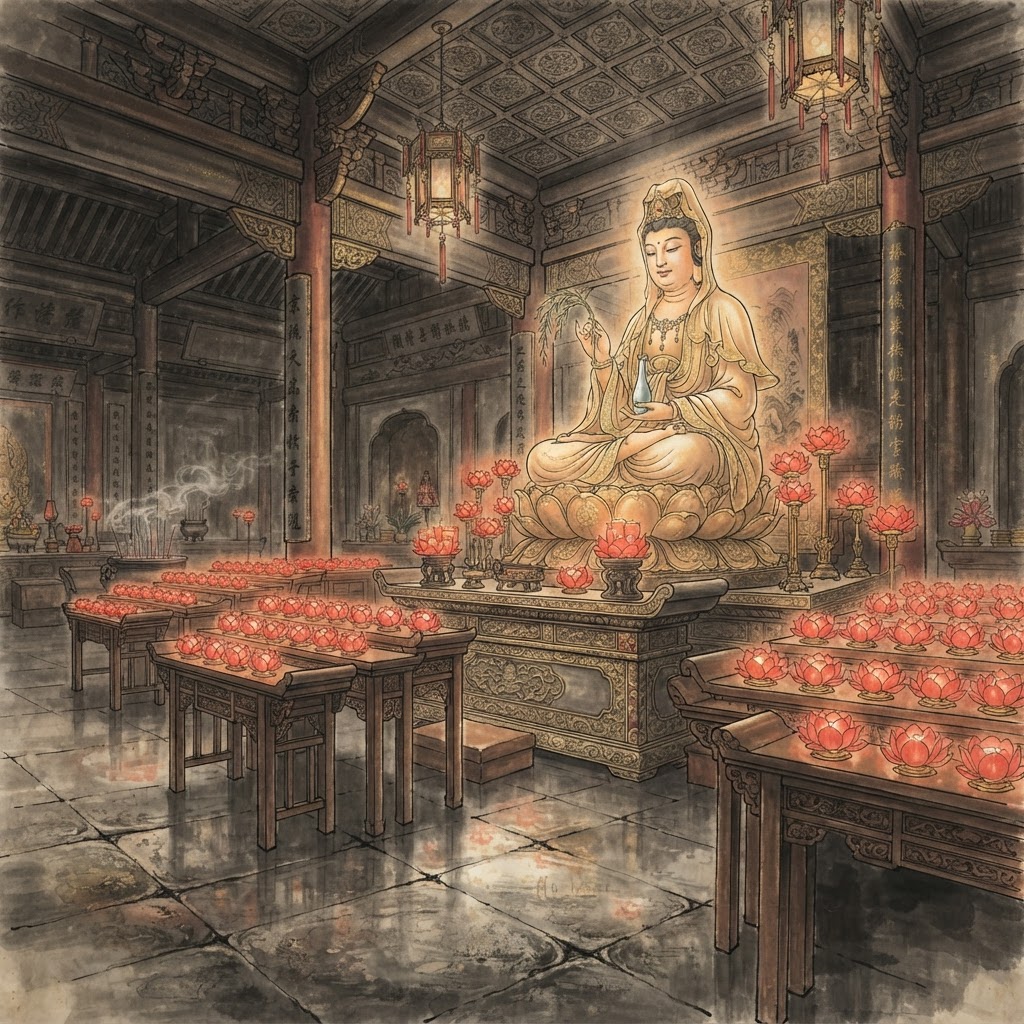
The principal worship here is Kwan Im, spelled Kuan Yin or Guan Yin depending on the system you learned (the temple’s own name uses the Hokkien form, Kwan Im), known in Sanskrit as Avalokitesvara, the Bodhisattva of Mercy. Devotees believe that praying to her here brings blessings and good fortune, and the temple holds a significant place in the Chinese Singaporean Buddhist community. Behind the main figure there is also a statue of the Tathagata Buddha, and a figure of Cundi, a manifestation of Kwan Im, is venerated here as well. The Four Heavenly Kings have their places on the altar too.
The temple also venerates two figures people often walk past without knowing: Damo and Hua Tuo.
Damo is Bodhidharma, the sage credited with bringing Chan (Zen) meditation from India to China around the 5th or 6th century. The myths around him are wonderful: the legend that he sat facing a wall in a cave for nine years, and the famously fierce face painted on daruma dolls. When you see his image in the temple, you are looking at the patriarch of the meditation tradition.
Hua Tuo is a different kind of figure entirely. He was the legendary physician of the late Han era, the doctor whose skill was so famous that his name is still invoked today by practitioners of Chinese medicine, and he is venerated as a patron of healing. People pray to him for health, which tells you a lot about what the people who built this temple were worried about, and what they hoped for.
The story of Kwan Im herself comes to the temple through the classic Xiang Shan Bao Juan (香山宝卷), the tale of the princess who chose compassion over position and became the Bodhisattva of Mercy. She is depicted holding a vase of pure water and a lotus, purity and compassion in two simple images. It is worth reading her story properly at least once, because it explains why so many different kinds of people feel comfortable praying to her. She is, in the tradition’s own telling, the one who listens.
The Cross-Worship With Sri Krishnan Temple
One of my favorite things about this spot is across the street. The Sri Krishnan Temple, a Hindu temple, sits within a few minutes’ walk, and over the decades an organic practice of cross-worship grew up between the two congregations: devotees of one temple regularly pay respects at the other. It is a genuinely Singaporean thing, two polytheistic traditions sharing a street and, eventually, sharing worshippers.
The story that captures it best: in the late 1980s, a Hainanese chicken rice vendor gave the Sri Krishnan Temple a large urn worth about $1,000, so that Chinese devotees would have a proper place to keep their joss sticks. The temple’s administrators went further, installing a statue of Guanyin on their grounds and setting aside an area where Chinese worshippers could light incense and pray. When I explain Singapore to foreigners, I tell this story. It does more work than a paragraph of civic education.
What People Actually Pray For
Sit near the entrance long enough, and you learn what a city is worried about. People do not come here to discuss theology. They come with specific requests, and the requests have stayed remarkably stable across the decades.
The big themes, in roughly the order I hear them from readers and see on the street:
- Work and business. Contracts, deals, difficult bosses, whether to take the job, whether to quit the job. Singapore is a working city, and this is the most common prayer by a distance.
- Marriage and family. Singles praying for a partner, couples praying for harmony, parents praying for children, and a steady stream of prayers for reconciliation after arguments that everyone involved would rather not discuss.
- Health. Prayers for aging parents, for operations to go well, for test results. The temple tradition is clear and sensible here: pray, and also see a doctor. Nobody at a temple worth its incense will tell you otherwise.
- Exams and study. Before every national examination season, students and their mothers arrive in numbers. The lots drawer takes extra punishment in those months.
- Safe passage. Travel, new ventures, moving house, the start of anything. Drawing a lot before a launch is one of the oldest uses of this temple.
What I find moving, after years of visiting, is how little people ask for themselves and how much they ask for others. Watch the person in front of you at the censer, and you will see their lips moving through a list of names. Parents, children, a spouse, a sibling overseas. The temple’s whole atmosphere is built from that.
And here is the practical thing I always add, from my business side. People ask me whether praying for a deal works, as if the temple were a vending machine. The way I have come to see it, drawing a lot before a big decision does two useful things regardless of what you believe. It forces you to state your question out loud and clearly, which most people never actually do before committing money. And the lot you draw gives you a mirror, a poem that tells you to push, wait, repair, or let go, and you react to that mirror with your own gut, which is often where the real answer was sitting all along. Used that way, the practice sharpens decisions. I have seen it do exactly that, many times, in boardrooms after temple visits.
Divination at Kwan Im Temple: Drawing a Guan Yin Lot
This is the part most of my readers care about, so let me give it the space it deserves. The temple is famous for its qiu qian, drawing Guan Yin lots, the numbered fortune sticks that many Singaporeans swear by. Over the years, a steady stream of visitors has come here to ask a question, draw a lot, and later return to give thanks when things worked out. Whether you read the lots as divine guidance or as a mirror for your own thinking is up to you, and I have written about both views elsewhere. The practice itself is worth learning properly.
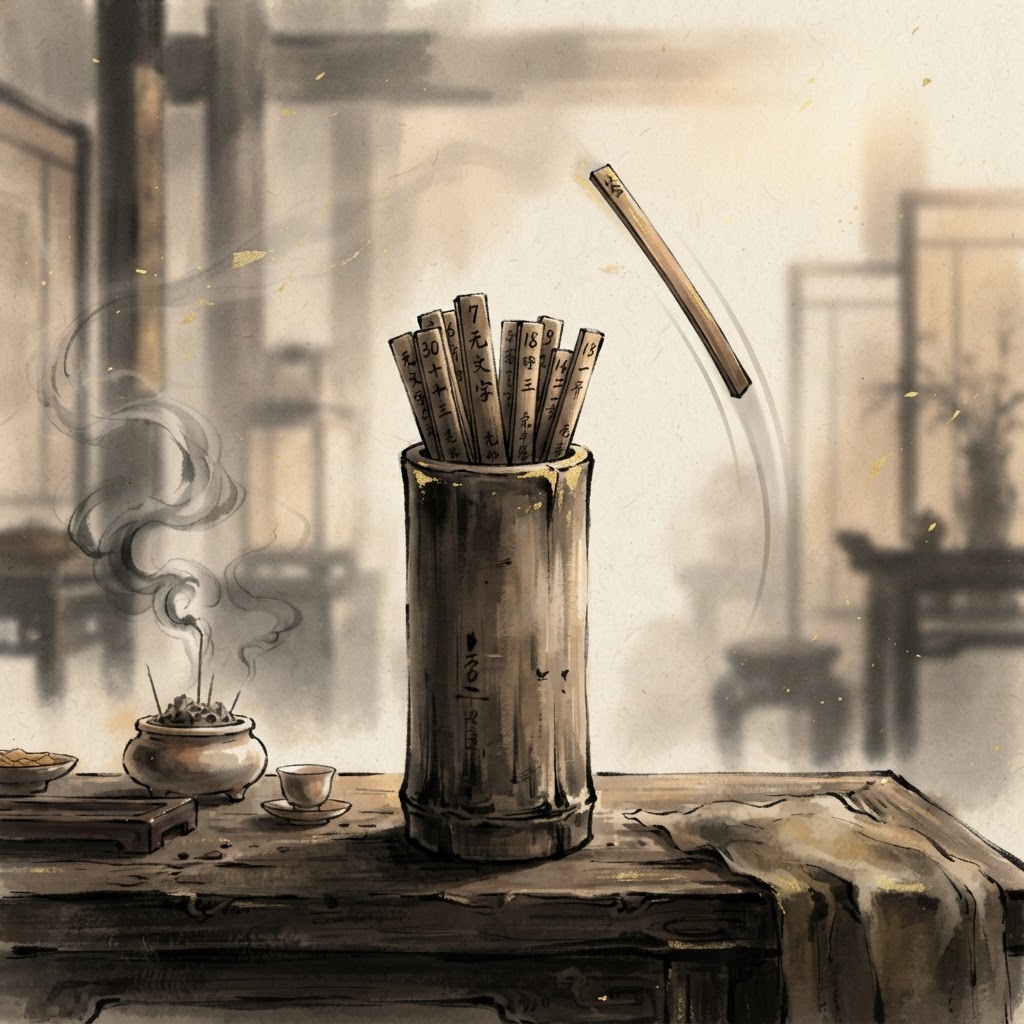
Here is the traditional procedure, step by step:
- Hold the container of fortune sticks, kneel before Kwan Im, and state your question clearly and honestly. Tradition says to give your name and your matter plainly, no vagueness, no testing of the deity.
- Shake the cylinder gently while keeping your mind on your question. The sticks are wooden, numbered, and one of them will eventually work its way out.
- If more than one stick falls at once, put them all back and shake again. The lot is only valid when a single stick falls.
- Check the number on the stick and collect the corresponding paper slip from the temple’s rack of printed lots.
- Read the slip. If the classical language is hard to follow, ask for help, or read the lot online.
That last step used to be the weak link for English speakers, which makes this next fact genuinely important: in 1990, the temple became the first in Singapore to offer its divination slips with English readings, so tourists and English-first devotees could draw a lot and actually understand it. That single decision is a big part of why the temple’s divination reputation spread beyond the Chinese-speaking community.
One more thing, and yes, this is a small plug, but it is an honest one. I have written up the complete Guan Yin lot readings, all 100 lots with their classical poems, plain-English interpretations, and guidance on what each lot actually suggests you do next, in my Guan Yin Lots collection here on this site. If you draw a lot at the temple and want a proper reading rather than squinting at the slip on the street, that is where to look. A lot of my readers photograph the slip, come home, and look up the number the same evening.
The 100 Lots, a Closer Look
Since the lots are the temple’s signature, let me go deeper than the step-by-step and explain what you are actually holding when that stick falls.
The temple uses the classical system of one hundred Guan Yin lots. Each lot has a number, a poem, and a traditional commentary attached to it. The poems are not random happy verses. They are compressed classical Chinese images: a traveler at a river crossing, a farmer watching weather, a minister out of favor at court. The art of reading a lot is taking that image and mapping it onto your question, and the tradition has rules for how the mapping goes.
The hundred lots are conventionally grouped into grades, and the temple’s own slips and the wider tradition mark them:
- Upper superior lots, the strongest answers, typically blessings arriving, plans ripening, effort about to be recognized.
- Superior and superior-middle lots, good answers with conditions attached: proceed, but mind a named detail, or wait a named interval.
- Middle lots, mixed news. Something is forming but not yet formed. The advice is usually patience with preparation.
- Middle-lower and lower lots, caution answers. Reconsider, repair, delay, or change the plan. In the tradition, a lower lot is not a curse. It is a warning light on the dashboard, and warning lights exist to be heeded, not feared.
Two things people get wrong. First, a “bad” lot is not a verdict on your fate, it is advice about a specific question asked at a specific hour. Ask a different, better-formed question and the answer changes. Second, drawing lots rapidly in a row until you get an answer you like is, in the tradition’s own terms, exactly what you are not supposed to do. The first valid lot is the reading. If the stick falls sideways or several at once, that draw never happened, shake again. Otherwise, one question, one lot.
Where do you go after the slip is in your hand? The slip’s classical language can feel like reading weather from a ship’s log. That is precisely why I spent so long writing up the complete Guan Yin lot readings on this site, all one hundred, each with the poem, a plain-English reading, and what the lot suggests you actually do. Draw your lot here, read it properly there, and the temple’s system suddenly becomes usable rather than exotic. Plenty of my readers keep that collection bookmarked for the drive home from Waterloo Street.
Reading Your Lot: a Worked Example
Let me make the lot system concrete with a worked example, the way I teach it in class, because the procedure I described earlier only becomes real when you see the interpretation step.
Picture a realistic case, and it is a composite of many I have seen, not any one client’s business. A founder is deciding whether to sign a distribution agreement with a partner whose capital she needs but whose reputation she half-trusts. The deal has a deadline. She has done her diligence and the numbers work, and yet she hesitates, which is usually the sound of something real that diligence cannot price. She visits the temple before signing, states the question plainly, is this agreement beneficial for my company at this time, and draws.
Out falls a middle lot. Now, a middle lot is not a no. In the traditional grading, a middle lot says: matters are forming but not yet formed, conditions attach, look for the named detail. The classical poems carry images, and suppose the images in her lot are of a river crossing and a boat that arrives late but whole. The reading, done honestly, sounds like this. The crossing, meaning the deal, is possible. Late but whole, meaning benefits arrive but not on the schedule promised. The detail to mind: the poem’s late boat implies verifying what happens in the gap, so she goes back and negotiates payment terms that do not assume instant delivery, milestones instead of a lump transfer, penalties for delay, exactly the clauses a half-trusted partner would resist and a trustworthy partner would sign without complaint.
Notice what the lot actually did there. It did not tell her yes or no. It gave her a structured mirror, and her own judgment, activated by the mirror, produced the exact clause a lawyer friend would have suggested. This is the honest mechanics of the practice as I experience it, and I say it as someone who works with QMDJ charts daily: the value of a divination system is measured by the quality of the decision it helps you make, not by the mystery of its source. The Guan Yin lots have survived 140 years of Singapore traffic because they are good mirrors, and the temple that keeps them is the room where people slow down enough to look into one.
If you draw a lot and cannot map it to your question, that gap is information too. Either the question was vague, in which case restate it and draw on another day, or the matter is not ripe, in which case the correct reading is the one the tradition has always given: wait, and keep your powder dry. And if you want the full treatment for your specific number, that is what my hundred-lot collection is for. Draw here, read there, decide well.
Opening Hours and the Busy Days
The temple is open daily from 6:00am to 6:30pm. On festival days it opens one to two hours earlier and closes about thirty minutes later. The busiest occasions are Kwan Yin’s birthday, her Enlightenment Day, her Renunciation Day, and the first and fifteenth days of each lunar month, when the whole street hums.
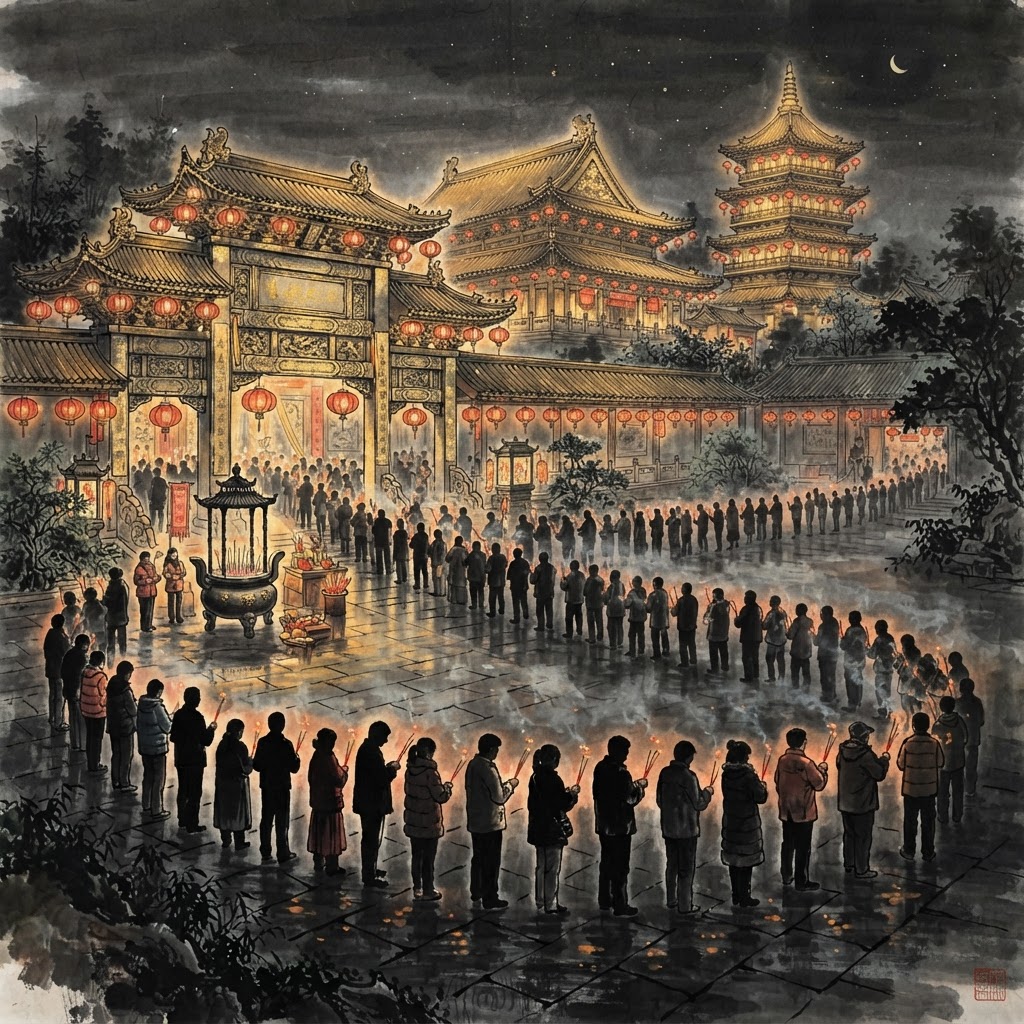
The single biggest night of the year is the eve of Chinese New Year, when the temple stays open all night and the queue runs deep into the street, everyone wanting to offer the year’s first incense to the Goddess of Mercy. If you want quiet, avoid those dates. If you want to see the temple at its most alive, that is exactly when to go, and go early.
The Festival Calendar
If you want to see the temple at full power, time your visit to its calendar. Here is the year as the temple lives it:
The first and fifteenth of every lunar month are the temple’s regular heartbeats. The first is when families mark the month’s opening with fresh offerings, the fifteenth the full moon days when the hall fills from early morning. Neither requires festival-level stamina, and both give you the true working atmosphere.
Chinese New Year is the peak of the entire year. On the eve, the temple stays open through the night, and the queue to offer the first incense of the year runs the length of the street, the crowd thinning and refilling from before midnight to dawn. If you only ever visit once at full intensity, this is the night. Go very early or expect to stand.
Guan Yin’s three great days follow the lunar calendar, all falling on the nineteenth: her birthday on the nineteenth day of the second lunar month, her enlightenment day on the nineteenth of the sixth month, and her renunciation day on the nineteenth of the ninth month. These three days belong to her, and this being her temple, they draw the year’s most devoted crowds outside the New Year period. Vegetarian offerings are traditional on these days, and the shops outside know it.
The Hungry Ghost month, the seventh lunar month, changes the street’s texture, with worshippers paying respects to ancestors alongside the usual flow, and more joss paper in the braziers. The temple’s own practice stays centered on Guan Yin, and visitors are welcome as always.
Mid-Autumn brings the Albert Mall stretch to life with lanterns and bazaars, so a temple visit can be combined with the festival street in one evening, which is one of the nicer ways to see the district.
Practical advice across all of it: on festival days the temple opens one to two hours earlier and closes about half an hour later, but do not cut it fine. Arrive early for any festival you care about, wear comfortable shoes, and keep your valuables close in the crowd, the way you would at any large gathering in any city.
The Temple’s Charity Work
I mentioned that the temple was built to serve, and its modern record backs that up in numbers. The temple is a significant contributor to Singapore’s social, educational and arts sectors, and the list is long enough that I keep a mental file of it.
- In 2002, the temple was named Patron of the Arts for its contributions to the Singapore arts community.
- Since 1997, it has funded the Association of Women for Action and Research (AWARE) and its services supporting the reduction of gender barriers in Singapore.
- In 1995, it was recognized for reaching across communities with a donation to the Singapore Indian Education Trust, a self-help group granting bursaries and scholarships to underprivileged Indian students.
- In 2016, it gave $5 million to the Nanyang Academy of Fine Arts (NAFA) Development Fund, supporting infrastructure, library materials, the Kwan Im Thong Hood Cho Temple Student Relief Fund, and a fellowship. NAFA’s library is now named the Kwan Im Thong Hood Cho Temple Library.
- It has long supported the National Kidney Foundation (NKF), financing the establishment and operation of two dialysis centres, and in 2000 it gave $15 million to the NKF’s free health screening programme.
Why does a divination guide spend paragraphs on charity? Because it tells you what kind of place you are standing in. The same temple where people ask for personal luck gives away millions to health and education every decade. In my experience, that combination is the whole tradition in miniature: ask for mercy, then be merciful.
How to Get to Kwan Im Temple, Bugis
Here is the practical block, the part people screenshot. The temple sits at 178 Waterloo Street, Singapore 187964, in the Bugis district.
| Address | 178 Waterloo Street, Singapore 187964 |
|---|---|
| Opening hours | Daily, 6:00am to 6:30pm (extended on festival days) |
| Admission | Free |
| Nearest MRT | Bugis station (DT14 / EW12), about a 10 minute walk via Bugis Street |
Driving and parking
Take Middle Road to Queen Street, then turn left into the open parking lot. If that is full, the nearby malls have parking: Fortune Centre, The Bencoolen, Fu Lu Shou Complex and Bugis+. Motorcyclists can use the open lot the same way, park along Queen Street in the bays in front of Bugis+, or use the mall carparks at Fu Lu Shou Complex, Burlington Square and Bugis Junction.
By bus
- Bus stop 07517, opposite Burlington Square: buses 64, 65, 131, 139, 147, 166, 857
- Bus stop 07518, Fortune Centre: buses 56, 980
- Bus stop 07551, Fu Lu Shou Complex: buses 48, 57, 170, 851, 960, 980
- Bus stop 01112, opposite Bugis Junction: buses 7, 12, 63, 80, 175, 197, 851, 960, 980
A Morning at the Temple, a Walkthrough
Let me walk you through a normal weekday morning, because knowing the flow removes all the first-timer awkwardness.
You come up from Bugis MRT via Bugis Street, and the street noise changes before the temple comes into view. Waterloo Street slows everything down. The shops outside sell flowers and fruit in ready-made offering bundles, small enough to carry in one hand, and if you have not prepared anything, you buy here, for a few dollars, exactly what everyone else is carrying.
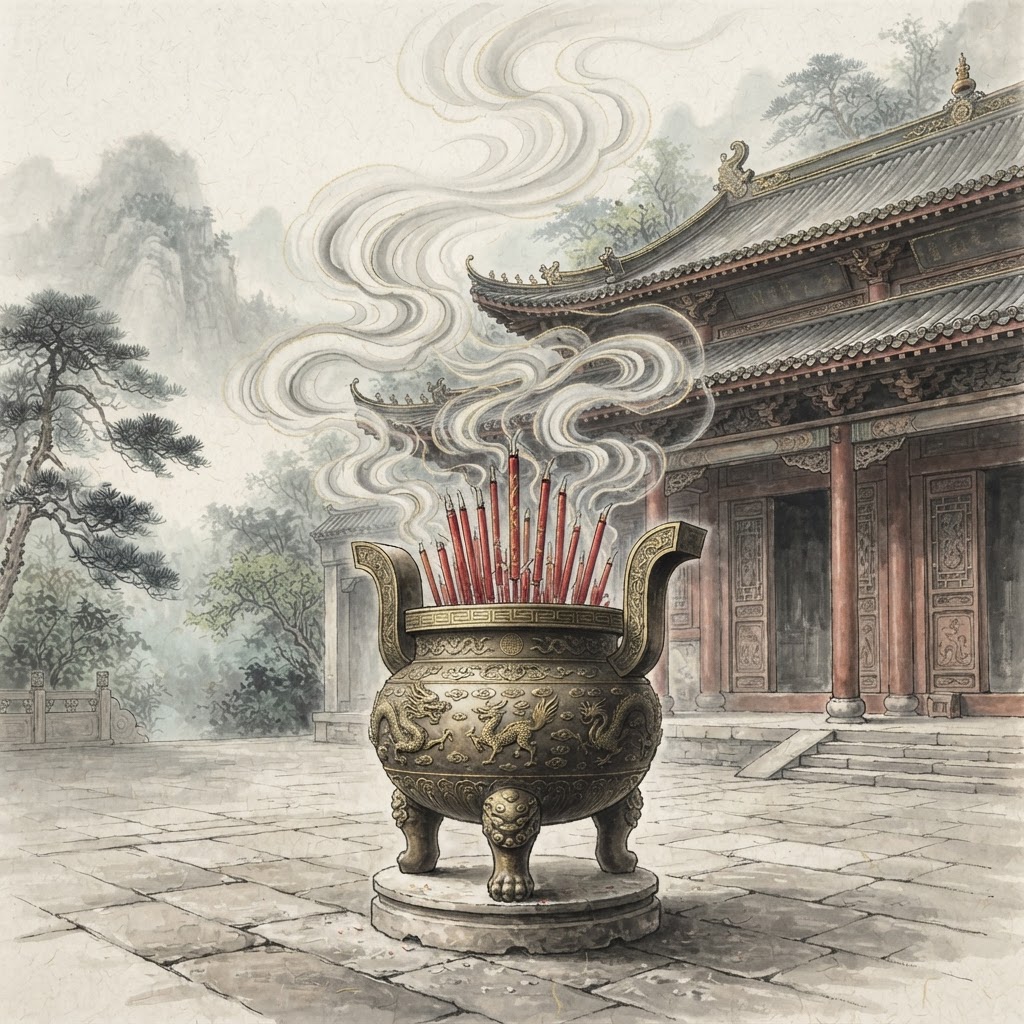
The incense urn sits in front of the hall, and this is the first station. You light your three sticks, and if you have never done it, watch one person ahead of you and you will have the whole ritual, which is less a ritual than a courteous gesture. Hold the sticks at chest height, bow slightly, and say whatever you came to say. Then plant them in the urn, points down, and let them burn. The urn is outside by design, so the hall stays clean and the roof stays unstained, and the whole queue moves through the same motion in a few minutes.
Inside, the hall is quieter than the street by an order of magnitude. The main figure dominates, and people stand or kneel in front of her in no particular order. Some stay seconds, some stay long minutes. Nobody supervises, nobody hurries anyone, and the only etiquette that really matters is that you do not stand in front of someone who is praying in order to take a photograph. To the sides, you will notice the figures I described earlier, and older regulars will be giving each of them a moment in turn.
Off to the side is the lot-drawing area with its cylinders of sticks. The procedure is the one I detailed earlier: kneel, state your question plainly, shake gently while holding the question in mind, wait for a single stick to fall, take the matching slip. Do this after your prayer at the main hall, which is the traditional order: greet her first, then ask.
Then, and I mean this genuinely, go eat something. Albert Centre is minutes away, the char kway teow man has been there longer than some of the office towers in the skyline, and a morning that starts with incense and ends with good hawker food is the correct Singapore sequence.
The Temple’s Daily Life and Keepers
Temples do not run themselves, and part of appreciating this one is noticing the quiet machine behind it. The temple’s day starts before six, before the first regular arrives, with the hall swept, the lamps lit and the offerings arranged. Through the morning, volunteers keep the urn area clear and the lot slips restocked, the endless small maintenance that a place taking thousands of visitors a festival day requires.
The temple’s administration, the board that runs the charity millions I described earlier, works the way the best old institutions in Singapore work: with minimum ceremony. There is no visitor center, no gift shop, no suggested donation sign, because the temple’s model is not tourism. Its model is a working place of worship that happens to fund schools and dialysis centers with what the community gives. I respect that arrangement more than I can put into a visitor guide.
If your visit is during a festival, you will also see the stewards managing the queue, and you will notice that the crowd manages itself mostly, with an unspoken etiquette: elders go first at the censer, nobody shoves at the lot cylinders, and everyone somehow gets their turn. Waterloo Street has been practicing this for a hundred and forty years.
Around the Temple: What Else Is on the Street
Do not rush off after your visit, because the streets around the temple are half the experience. Albert Street and Albert Mall, together with Waterloo Street, were pedestrianized in 1992 largely because of the sheer number of visitors to this corner, and the area still turns into a proper street bazaar during Lunar New Year and Mid-Autumn Festival, with decorations that stay up for weeks.
The temple’s fame has shaped the local economy for a century. Shops along Waterloo Street and in Cheng Yan Court, The Bencoolen, Fu Lu Shou Complex and Fortune Centre cater to worshippers: flowers, fruit, incense, religious goods, and the small services a temple district needs.
And then there is the food, which I would be neglecting my duty as a Singaporean not to mention. Albert Centre Market and Food Centre sits within walking distance of both the temple and Sri Krishnan Temple, and it pulls worshippers and traders all day. Expect the classics: Hainanese chicken rice, char kway teow, Hokkien mee, yong tau foo, wonton noodles, fish soup, bak chor mee, Muslim and Indian food, dessert stalls, and drinks from sugarcane and soya bean to grass jelly. A morning temple visit followed by a good hawker lunch is, in my honest opinion, one of the best mornings Singapore offers.
Visiting With Family: Children and Elders
A practical word for families, because this temple is one of the few major sights in Singapore that genuinely works for three generations at once.
Bringing elderly parents, especially visiting relatives from Malaysia or farther afield, is close to a guaranteed success, and many families make it an annual stop precisely because the older generation often still runs on the lunar calendar and knows this temple’s name even if they know nothing else about Singapore. Let them set the pace, buy the offerings they choose, and accept that they may want to stay longer than the schedule allows. The temple rewards patience with memories.
Children are welcome, and in the morning lulls the hall is calm enough that a stroller causes no trouble. The rules for kids are the same as for adults, quiet inside, no flash, no running, and the stakes are lower than parents fear, because a child watching incense smoke rise and a hundred numbered sticks tumble is not misbehaving, they are having one of their first encounters with wonder. If yours wants to know why everyone is shaking a can of sticks, tell them the truth: people are asking a very old lady for help, and she answers in poems. That explanation has satisfied every child I have met, and more than a few adults.
Planning Your First Visit: Three Ways to Do It
People plan temple visits the way they plan everything else in this city, so let me give you the three standard patterns I recommend, having walked all of them more times than I can count.
The half-hour visit. Come on a weekday mid-morning, straight off Bugis MRT, ten minutes’ walk. Buy a small offering bundle outside, three incense sticks at the censer, a minute or two at the main hall, then draw a single lot for whatever matter is actually on your mind, photograph the slip with your phone, and leave. Total time inside the temple, thirty comfortable minutes. This is the version for a layover, a lunch break, or a first taste, and it is a complete visit. Nobody is keeping score.
The full morning. Arrive before nine, do the half-hour version slowly, then stay. Watch the regulars and copy whichever habits feel natural to you, sit at the rear of the hall and let the room work on you for a while, then read your lot properly over coffee, and finish with a hawker lunch at Albert Centre. This is the version I give friends, because it converts a sight into an experience, and because the lot read unhurried is worth three lots read in a hurry.
The festival night. Only for the second visit onward. Pick your occasion, the New Year eve vigil if you want the full symphony, or one of Guan Yin’s three days for a more devotional crowd, arrive early, expect queues at every station, and keep the evening loose. You will not see every part of the temple at your own pace, and you will not care, because you will be inside the loudest, warmest expression of the tradition this side of a family reunion. Eat beforehand, wear flat shoes, and keep your phone charged for the slip photo.
Whichever pattern you pick, the temple meets you there. It has been hosting all three kinds of visitor since before the MRT existed, which is, when you think about it, the whole review in one sentence.
Tips for Praying at the Temple
If it is your first time, here is the etiquette in plain terms. Take three incense sticks, light them, and pray to the Goddess of Mercy, then place the sticks in the large censer outside the hall. Remember the rule from earlier: the incense urn is outside the main hall by design, so the hall stays clean and the roof stays unstained, so follow the flow and do not carry burning sticks indoors.
Bringing offerings is welcome but not compulsory. Flowers and fruit are the traditional choices, and the shops outside the temple sell ready-made bundles, so there is no need to prepare in advance. Each offering carries a meaning, and people choose accordingly:
- Apples: peace (the word echoes ping’an)
- Oranges: good fortune
- Pomegranates: fertility
- Peaches: longevity
- Grapes: blessings for children and family
- Melons: family unity
- Pomelo: a wish for a son
- Lotus flowers: purity (Kwan Im is depicted seated on a lotus)
A few smaller courtesies: dress modestly, keep your voice down inside the hall, do not photograph people mid-prayer without asking, and if the temple is crowded on a festival day, move with the queue rather than against it. Nobody will police you, but the regulars notice, and courtesy in a house of worship is its own kind of offering.
Offerings and Etiquette, the Deeper Layer
Earlier I gave you the basics, three incense sticks, flowers or fruit, modest dress. Here is the fuller etiquette picture, the parts that regulars quietly notice.
On offerings: buy from the shops outside without embarrassment, everyone does. Present what you bring at the altar, and understand that the tradition is not transactional bribery, it is courtesy. You would not visit a mentor’s home empty-handed, and this is the same instinct. Fruit and flowers are standard. Meat and alcohol are not offered at Buddhist temples, and the shops outside will not try to sell you any. If in doubt, oranges. Nobody in the history of this temple has gone wrong with oranges.
On incense: three sticks is the standard, held level, and the urn outside the hall is the only place for them. Do not carry burning sticks indoors, not because anyone will scold you, but because the whole design of the rebuilt hall assumes you will not, and the ceiling you are admiring is still unstained because of that agreement between the builders and the visitors.
On behavior: quiet voices inside the hall, phones on silent, no flash photography, and no photographing people mid-prayer, ever. Photography of the architecture from the rear of the hall is tolerated with a camera that respects the room. If you want the confident version of the rule, ask yourself whether the oldest person in the hall would find your behavior acceptable, and you will have the temple’s unwritten rulebook.
On what not to bring: nothing dramatic, just leave the loud tour energy at the door. This is not the pagoda on the postcard tour, it is the room where someone’s grandmother asks for her husband’s surgery to go well at seven in the morning. Match the room, and you will be welcome forever.
A note on lot etiquette: draw one lot for one question, read it honestly, and do not re-roll for a better answer. The tradition treats repeat-rolling the way a card player treats redealing when they dislike their hand, and the regulars at the cylinders can always tell. There is no shame in a hard lot. Every serious practitioner I know, myself included, has drawn plenty of them, and the hard ones were the useful ones.
Guan Yin Beyond the Temple: Singapore and the Region
Waterloo Street is one address, but Guan Yin worship is a regional ocean, and understanding a little of it deepens any visit.
Guan Yin traveled with the Chinese diaspora everywhere the diaspora went, and in every port she took local form. In Singapore and Malaysia she sits at the center of Chinese religious life, and nearly every traditional temple, whatever its main dedication, keeps a place for her, because a temple without the Goddess of Mercy is a house without a door. In the region you find her in Penang’s great clan temples, in Bangkok’s Guan Yin shrines with Thai and Chinese worship blending seamlessly, in Manila’s Seng Guan Temple, in every Chinatown from Yokohama to San Francisco. The Kwan Im spelling on this temple’s nameplate is the Hokkien pronunciation, the same name Bangkok’s wildly popular Wat Mangkon Kamalawat uses, Kwan Im in Hokkien, Guan Yin in Mandarin, Avalokitesvara in Sanskrit, and the same figure under all three.
That regional spread is why the temple feels international in a way its size does not suggest. On any given morning you will hear Mandarin, Hokkien, Cantonese, Malay, Indonesian, Thai-accented Chinese and English at the censer, and the temple’s decision in 1990 to print its lot slips in English was, in hindsight, the moment it joined the modern conversation. A deity described as the one who hears the cries of the world, per the meaning of her name, was always going to end up with a multilingual queue.
For my own students, the useful point is this. When you draw a lot here, you are doing something continuous with a tradition that stretches from Singapore to temples across the whole of East and Southeast Asia, and back through dynasties. The slip in your hand is not a Singapore novelty. It is one local working example of a system that has been answering people for centuries, and that is exactly why I teach people to read the lots properly rather than treat them as souvenirs.
Frequently Asked Questions About Kwan Im Thong Hood Cho Temple
What are the Kwan Im Thong Hood Cho Temple opening hours?
6:00am to 6:30pm daily. On major festival days such as Kwan Yin’s birthday, Enlightenment Day and Renunciation Day, and the first and fifteenth of each lunar month, the temple opens one to two hours earlier and closes about thirty minutes later. On Chinese New Year eve it stays open all night.
Do I need to pay to enter the temple?
No. Admission is free. There is no ticket, no suggested donation, and no expectation. If you wish to give, the temple has donation channels, and given its charity record, your money goes to genuinely good use.
Can non-Buddhists or visitors who do not speak Chinese draw a lot?
Yes. Anyone may pray and draw a lot, and since 1990 the temple has offered English translations of its divination slips, the first temple in Singapore to do so. For a deeper reading of the lot you draw, look up its number in my Guan Yin Lots guide once you are home.
How do I read the lot I drew?
The paper slip contains a classical poem and a short reading, and the number corresponds to one of the 100 Guan Yin lots. The temple’s slips include English. If you want the full interpretation, the tradition’s own commentary on the lot’s meaning, search your lot number in the Guan Yin Lots collection on this site, where all 100 are written up in plain English.
What is the best time to visit?
Weekday mornings are quiet and pleasant, and you will have space to look at the architecture and pray unhurried. Festival days and the first and fifteenth of the lunar month are crowded but electric, and the Chinese New Year eve open house is something you will remember for years. Pick based on whether you want calm or atmosphere.
Can I draw more than one lot in a visit?
Yes, one per distinct question. The tradition’s rule is one question, one lot, asked properly. Two different matters, two lots is fine. The same question asked until the answer improves is not fine.
What do I do with the paper slip afterward?
Take it home, read it properly in my Guan Yin lots collection, and keep it as long as it is useful. There is no required ritual for disposal, though some regulars return spent slips to the temple’s paper collection. The reading matters more than the paper.
Is the temple wheelchair and stroller accessible?
The rebuilt hall sits at street level with a level entrance, which makes it one of the more accessible old temples in the city. Festival crowds are the exception, when movement of any kind slows to the queue’s pace.
What is the best day for a first visit?
A weekday morning between Tuesday and Thursday, outside the first and fifteenth of the lunar month. You will have space to look at the architecture, pray without queue pressure, and draw a lot unhurried. Save the festival experience for your second visit, when you know the layout.
Do I need to understand Chinese to visit properly?
No. The temple has served English-speaking visitors since it pioneered English lot slips in 1990, the signage’s essentials are navigable, and the practice itself, incense, a moment of silence, a numbered stick, requires no language. Reading your lot deeply afterward is where my English write-ups come in.
Are there vegetarian options nearby for festival days?
Yes, the Fortune Centre across the district is known for its vegetarian stalls, and the shops around the temple stock festival-period vegetarian offering bundles. On Guan Yin’s festival days, eating vegetarian is the traditional practice, and Waterloo Street makes it easy.
A Small Glossary for the Temple Visitor
A few terms you will encounter on this page and around the temple, collected in one place:
- Kwan Im: the Hokkien name for Guan Yin, the Bodhisattva of Mercy, from the Sanskrit Avalokitesvara. Same figure as Kuan Yin, Guan Yin, Guanshiyin.
- Qiu qian: drawing a fortune lot, the stick-and-cylinder practice this temple is famous for.
- Qian: the fortune stick itself, numbered, one of one hundred.
- Lot slip: the printed paper matching your stick’s number, carrying the lot’s poem and short reading.
- Censer: the large bronze urn holding incense, here standing outside the main hall to protect the interior from soot.
- Joss stick: the fragrant incense stick offered in threes at the censer.
- Four Heavenly Kings: the four guardian figures of the Buddhist world, present on the altar.
- Damo: Bodhidharma, the meditation patriarch, also venerated here.
- Hua Tuo: the legendary Han-era physician venerated as a patron of healing, also venerated here.
- Upper, middle, lower lots: the traditional grade bands of the hundred-lot system, indicating the tone of the answer rather than a fixed fate.
- First and fifteenth: the opening and full-moon days of each lunar month, the temple’s regular busy days.
With these words in hand, everything else on the street explains itself.
A Final Word
I have been around Waterloo Street a long time, in different capacities, as a young man, a businessman bringing clients, and now as a teacher bringing students. The temple has not changed its character through any of it. People come with problems, they ask for mercy, they draw lots, and many of them come back happier. That continuity is worth something in a city that rebuilds itself every decade.
Go once quietly and once on a festival night, draw a lot if the practice calls to you, and read it properly afterward. And if you want to understand the lot tradition in depth, from its poems to its decision logic, the full Guan Yin lot readings are here on this site, all one hundred of them.
One last thing I tell every first-timer, and it is the single most useful sentence on this page. The temple does not care whether you believe. It cares whether you came with a sincere question and left with a clearer head. Everything else, the architecture, the history, the charities, the hundred numbered sticks, exists to help those two things happen. Go with the question, and the rest of it will make sense by itself, the way it has for everyone since 1884.
More Photos of Kwan Im Thong Hood Cho Temple 四马路观音庙


Leave a Reply
You must be logged in to post a comment.