
Introduction: Why the Question Matters

We have all stood at the crossroads of a big decision and wished for a reliable map. For centuries people in East Asia have turned to traditional systems for that map, and Qi Men Dun Jia is one of the most mysterious and alluring. When someone asks, “Is Qi Men Dun Jia real”, they are really asking two distinct things: does it have measurable, repeatable predictive power, and can it offer useful guidance in everyday decisions? Those are practical questions, not just academic ones, and they deserve a clear, down-to-earth answer.
In this article I want to go beyond sensational claims and folklore. I will walk you through the history and core principles of Qi Men Dun Jia, examine the kinds of evidence available, show real-world examples of how people use it today, and give you actionable ways to test and evaluate it for yourself. We will treat Qi Men Dun Jia as an applied practice: a system with inputs, methods, outputs, and outcomes that can be measured and assessed. If you are curious, skeptical, or ready to try, this is a practical guide to help you decide whether it belongs in your decision-making toolkit.
Section 1: Origins and Core Principles of Qi Men Dun Jia

Historical Roots and Cultural Context
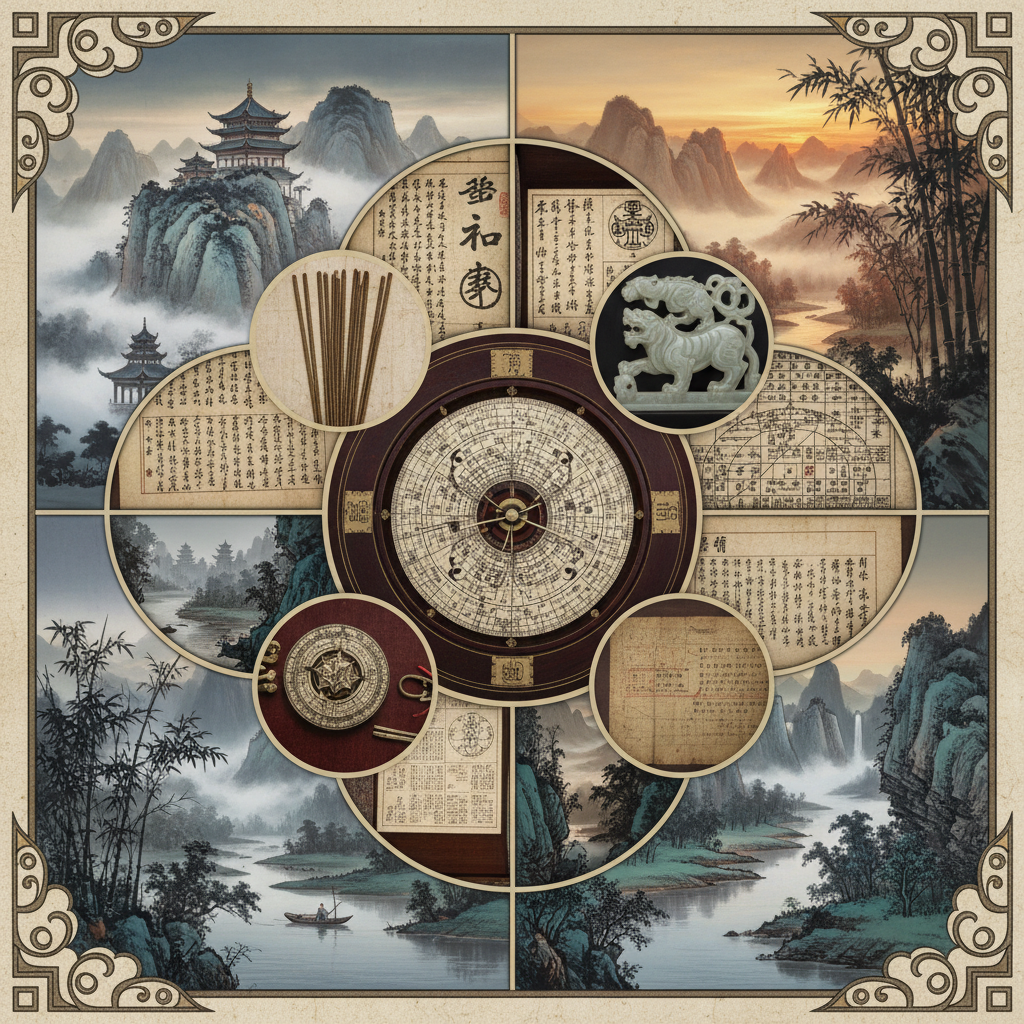
Qi Men Dun Jia is part of the Chinese metaphysical umbrella that includes feng shui, ba zi (four pillars), and other divinatory arts. Its name roughly translates to “Mysterious Gates Hiding Jia,” where “Jia” can refer to an initiating stem or the first spirit. The system rose to prominence during the Warring States period and later became associated with strategic planning in the Han and Tang eras, though many of the famous attributions are folkloric and layered over centuries of practice.
Historically it was used by generals, state advisors, and local leaders to choose auspicious times and strategies, and it was considered a strategic tool rather than merely a personal fortune-telling method. Over time the practice evolved and split into different schools and styles, some emphasizing calendrical calculations and others emphasizing spatial-temporal charts used for decision-making. When we look at Qi Men today we are seeing a living tradition shaped by thousands of years of adaptation.
Key Components: Time, Space, Gates, and Stars

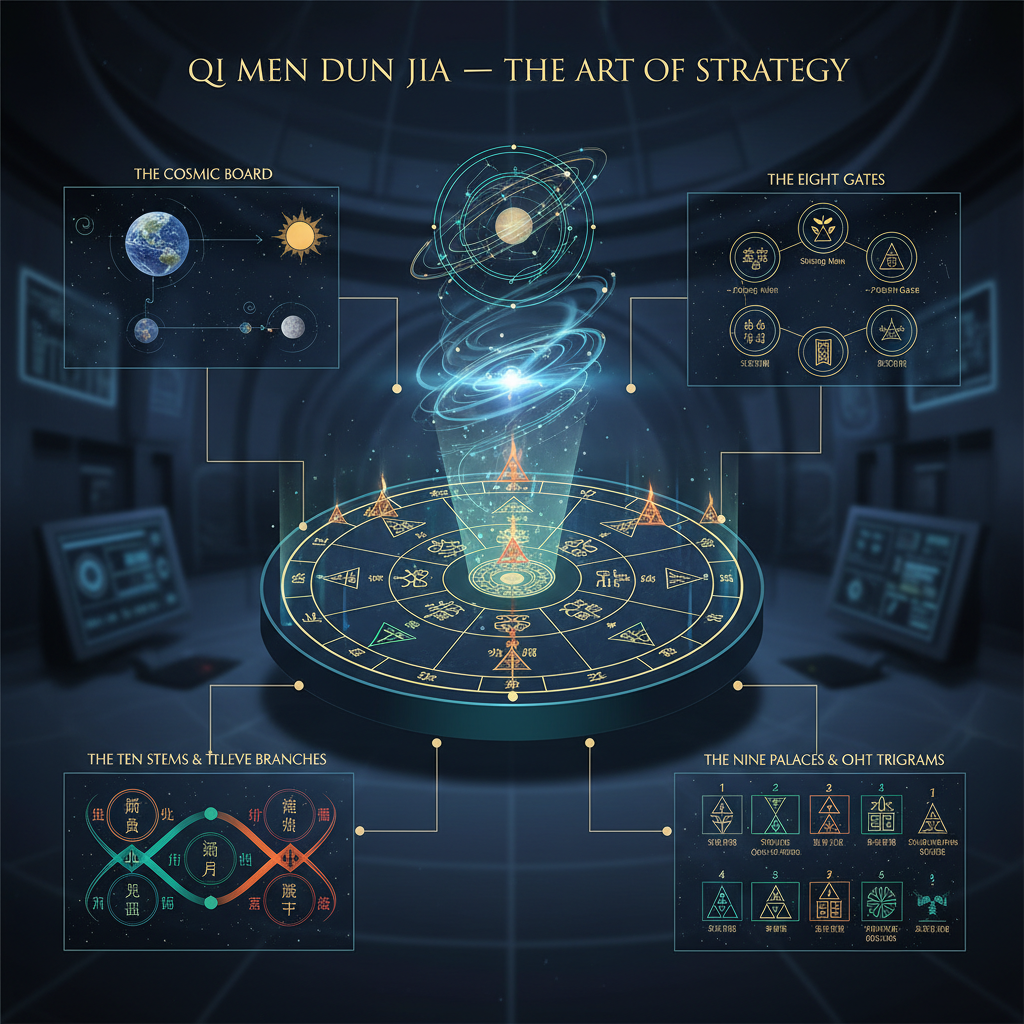
Qi Men Dun Jia is built on several interlocking concepts that turn an event into an interpretable chart. The basic inputs are a specific moment in time (a date and time), a location, and the context of the question. From these inputs a practitioner constructs a chart that maps a 3-by-3 palace grid containing elements like Doors (Men), Stars (Xing), Deities, Eight Trigrams, and Stems and Branches. Each component has defined meanings and interactions.
- Doors (Men): Represent types of outcomes or the nature of actions, such as open opportunities, obstacles, harm, or victory.
- Stars (Xing): Symbolize influencing factors or energies that modify how a door will behave; some stars are favorable, others unfavorable.
- Deities and Spirits: Personified forces that can protect, assist, or obstruct; they add narrative nuance to predictions.
- Stems and Branches: The traditional Chinese calendrical elements that synchronize time with the chart structure.
- Palaces and Directions: Spatial positions that relate to specific sectors of life or action; placement matters.
Interpreting a chart means reading the relationships and interactions among these elements: which door is paired with a strong star, which deity sits opposite an inauspicious stem, and so forth. It is a layered language that turns a moment into a structured story of potential outcomes.
Philosophical Framework: Causality, Synchronicity, and Decision Support

Qi Men Dun Jia operates within a worldview that mixes cyclical time, correspondences between macro and micro environments, and the idea that timing and configuration influence outcomes. Practitioners often speak in terms of alignment: certain windows of time are congruent with the energies necessary for specific actions. This is not always presented as deterministic; many practitioners emphasize probability, advantage, and timing rather than absolute fate.
Two conceptual lenses are useful when evaluating the claims. The first is causal: if Qi Men charts consistently correlate with outcomes even when variables are controlled, that suggests a repeatable mechanism, even if we do not yet understand it in scientific terms. The second lens is synchronicity: meaningful coincidences that guide decisions without implying direct causation. In practice many experienced practitioners blend these lenses, treating the system as a decision-support framework that increases the odds of favorable outcomes when used properly.
Section 2: Evidence, Case Studies, and How to Test Claims
Historical Anecdotes and Documented Uses

Qi Men Dun Jia has a rich collection of historical anecdotes. Stories attribute its use to military strategists and political advisors, claiming that the system helped choose battle times, spy missions, and political maneuvers. These narratives are valuable for cultural context, but as evidence for predictive validity they are weak because they are often retrospective and selectively preserved.
That said, the consistent historical role of Qi Men as a strategic tool is important: it demonstrates that generations of decision-makers found practical value in the method. If nothing else, that long-standing use suggests Qi Men provided structure, timing frameworks, and psychological confidence that could have improved decision quality even where supernatural mechanisms were not present.
Modern Case Studies: Business Decisions, Personal Timing, and Conflict Resolution

In contemporary practice Qi Men Dun Jia is applied in several domains. Business leaders consult it for launch timing, negotiations, and choosing partners. Individuals use it for relationship timing, job interviews, and travel safety. I have reviewed numerous practitioner case reports and client testimonials. While testimonials are not controlled evidence, they provide insight into how the system is used and what outcomes look like in real life.
Example 1: A small tech startup consulted a Qi Men practitioner to pick a launch date and to structure a product demo. The recommended time yielded a demo to a high-value investor who happened to be available that day. The startup received an introduction and later secured funding. Was this intervention causal, or was it a pragmatic advantage because the practitioner suggested aligning schedules and messaging? It is likely a mix: the chart provided a timing window and protocol that increased the odds of a beneficial encounter.
Example 2: A sales team tracked Qi Men-based timing for a three-month campaign. They reported a 15 percent improvement in lead conversion in weeks aligned as favorable by the charts. The team also adjusted scripts and roles based on Door and Star readings. While this result is interesting, the team lacked proper controls and blinding, so we cannot attribute causality with certainty. However the example shows how Qi Men can function as a system to structure experiments and iterative improvements.
How to Design a Rigorous Test You can Run Yourself

If you want to evaluate Qi Men Dun Jia personally, you can design a pragmatic experiment that balances feasibility with rigor. Below is an actionable, step-by-step protocol to test predictive power in a way that minimizes bias and yields interpretable results.
- Define the outcome clearly: Choose a binary or numeric outcome that can be measured, such as “deal closed within 30 days” or “percentage increase in sales.” Avoid vague outcomes like “better luck.”
- Collect a baseline: Track the outcome for a defined period without Qi Men intervention, for example three months, to establish baseline rates.
- Pre-register your test: Write down the exact protocol, sample sizes, time frames, and success criteria. Pre-registration prevents moving the goalposts later.
- Use randomized timing or controlled assignment: If possible, randomly assign similar actions to Qi Men-aligned times versus control times. For example, schedule half of your negotiations on chart-recommended windows and half on randomly chosen windows.
- Blind the evaluators: Keep those who measure outcomes unaware of which actions were Qi Men-guided to reduce observer bias.
- Run for sufficient sample size: Small samples amplify noise. Aim for at least 30-50 comparable events per condition, or scale expectations realistically if that is not possible.
- Analyze with simple statistics: Compare conversion rates, mean outcomes, or use chi-square or t-tests when appropriate. If you are unfamiliar with statistics, use online calculators or consult a statistician.
- Document everything: Keep original charts, practitioner notes, timestamps, and communications. Document any extra actions that might influence outcomes.
As an illustrative calculation, imagine a sales process where baseline conversion is 20 percent. After applying Qi Men-guided timing to 100 sales calls, conversion is 30 percent. The difference is 10 percentage points. A chi-square test can examine whether this change is likely due to chance. If it is statistically significant, that is evidence in favor of the practice; if not, it suggests outcomes were within expected randomness. Repeating the experiment increases confidence.
Accounting for Biases and Confounding Factors

Interpreting results requires caution because a number of cognitive and procedural biases can produce false positives. Common sources of error include:
- Confirmation bias: Noting successes and ignoring failures
- Selection bias: Choosing events where Qi Men is most likely to succeed and excluding others
- Placebo and confidence effects: Acting differently because you believe the timing is auspicious, which can change outcomes
- Post hoc rationalization: Rewriting the story after an outcome to make it fit the chart
Mitigations include pre-registration, transparent record keeping, randomized assignment, and including skeptical controls. Think of Qi Men as a protocol for decision support that must be stress-tested like any other tool. When practitioners and clients maintain disciplined methods, we get clearer signal from noise.
Section 3: Practical Applications, Learning the System, and Evaluating Practitioners

Where Qi Men Dun Jia can be Most Useful
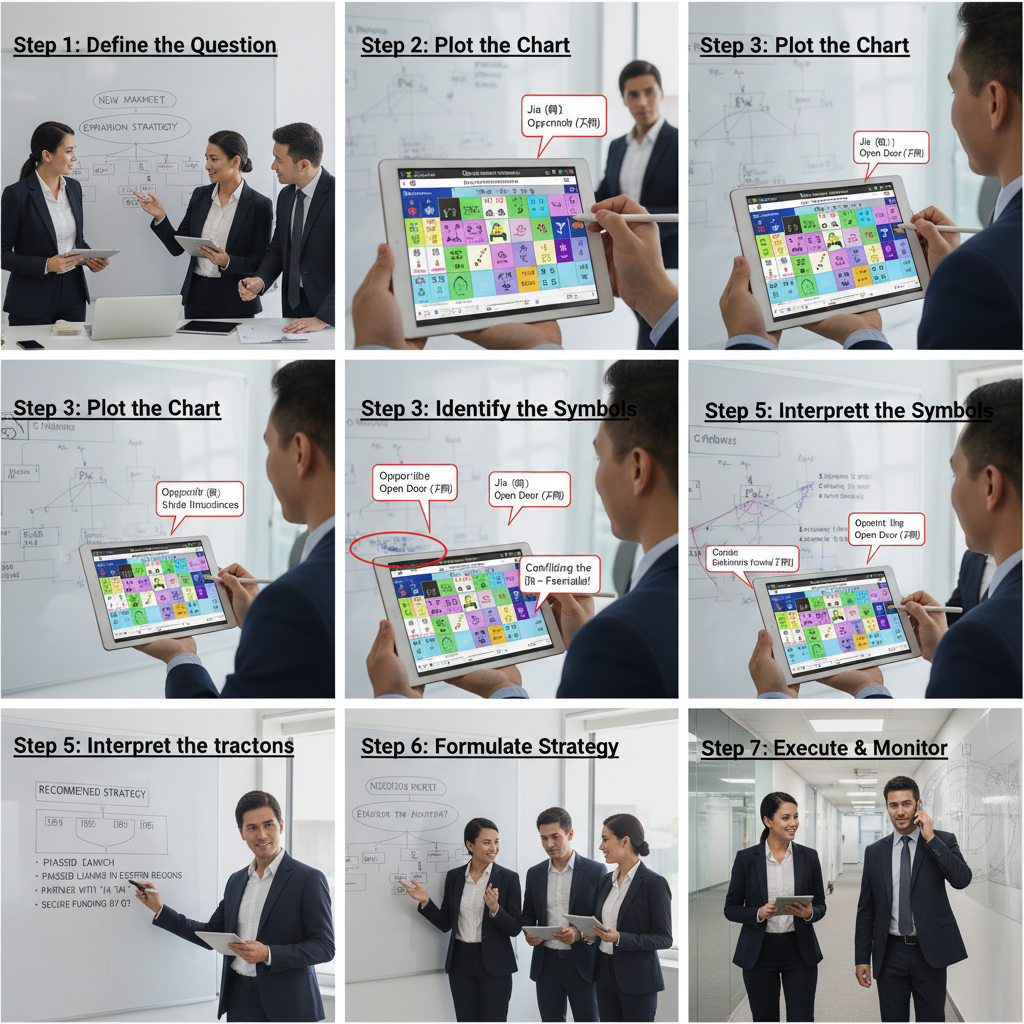
From my experience and from interviews with long-time practitioners, Qi Men Dun Jia tends to be most useful in contexts that share three characteristics: timing matters, options exist, and human behavior can be influenced by small advantages. Examples include:
- Negotiations and deal timing, where an hour or a day can influence attendance and mood
- Project launches and product releases that benefit from coordination and momentum
- Travel and logistics planning, where safety margins and lead times are relevant
- Conflict mitigation and mediation, when selecting moments to approach a sensitive party
In these contexts the system functions as a structured decision aid. It forces you to think in terms of windows, to align resources, and to plan contingencies. Even if the metaphysical claims are disputed, that procedural value can produce better outcomes by improving focus and coordination.
Step-by-step: Using Qi Men Dun Jia for a Business Decision

Here is a practical sequence you can follow if you decide to apply Qi Men to a business scenario, such as pitching to an investor or negotiating a contract.
- Clarify the objective: Write a specific question, for example “Will Investor A sign a term sheet within 30 days if we pitch on Date X?”
- Gather exact inputs: Note the precise date, time, and location, and collect any known details about the other party.
- Consult a reputable practitioner or learn the basics: Either have a trained Qi Men practitioner cast a chart, or use verified software that follows recognized methods; ensure the practitioner documents the chart and interpretation.
- Translate chart advice into actions: If a chart indicates an “Open Door” with a helpful Star, plan to be proactive and prepared. If a “Closed Door” appears, consider postponing, adding mitigation steps, or arranging backups.
- Prepare operationally: Use the recommended windows to align schedules, brief the team, rehearse messaging, and handle logistics.
- Execute and record outcomes: Track attendance, investor reactions, follow-up commitments, and final results for at least 30 days.
- Review and iterate: Compare outcomes against the chart’s guidance and refine your approach. Keep a log of charts, interpretations, and outcomes for longitudinal analysis.
This process treats Qi Men as an actionable planning tool rather than a mystical oracle. It focuses on converting interpretive advice into measurable operations and learning from feedback over time.
Choosing and Evaluating a Practitioner

If you work with a practitioner, treat it like hiring any professional. Ask for:
- Training and lineage: How did they learn Qi Men, and from whom? What schools or methods do they follow?
- Documentation: Will they provide the chart, calculations, and written interpretation?
- References and case examples: Can they share anonymized client outcomes or reproducible examples?
- Trial engagement: Start small with a single decision and clear metrics rather than a high-stakes commitment.
- Transparency on limits: A good practitioner will acknowledge uncertainty and propose ways to monitor results rather than promising guaranteed outcomes.
Beware of red flags: practitioners who refuse to document their methods, promise certainty, or charge exorbitant fees for unverifiable claims. Ethical practitioners will frame Qi Men as a probability-enhancing tool and discuss how to test its recommendations practically.
Metrics and Record-keeping: How to Know If it Helped

To objectively evaluate whether Qi Men influenced outcomes, adopt the following record-keeping and metrics strategy:
- Maintain a chart log: Save the raw charts, time stamps, and the exact advice given for each decision.
- Define outcome metrics up front: What counts as success, and by when? Examples: signed contract within 30 days, 10 percent increase in sales month over month, successful negotiation without concessions.
- Track process variables: Document actions taken because of Qi Men advice, such as rescheduling, changing venue, or altering team composition.
- Compare against baseline and control groups: When possible, run parallel attempts or compare against previous similar events without Qi Men guidance.
- Use simple statistical checks: Calculate conversion rates, listen for patterns, and resist over-interpreting single successes.
Over time this evidence base becomes your personal dataset. If your conversion rates meaningfully improve following Qi Men guidance and you have controlled for obvious confounders, that is practical evidence that the system adds value for your context.
Final Practical Cautions
Qi Men Dun Jia is a tool, not a substitute for planning, skill, or ethics. Here are practical cautions to keep in mind:
- Do not ignore operational fundamentals; an auspicious time cannot fix a weak product or poor execution.
- Do not outsource moral responsibility; use charts to inform choices, not to abdicate accountability.
- Expect noise and failures; any decision support system will sometimes be wrong, especially with small samples.
- Balance belief and skepticism; allow results to shape your view rather than dogma or dismissal alone.
With disciplined application and careful measurement, Qi Men Dun Jia can function as a structured decision support system. Whether you ultimately conclude it is “real” in a supernatural sense or not, you can determine if it reliably improves outcomes in your context by treating it as an experimentable tool and collecting honest data.
How Qi Men Dun Jia Works: Basic Components and Mechanics
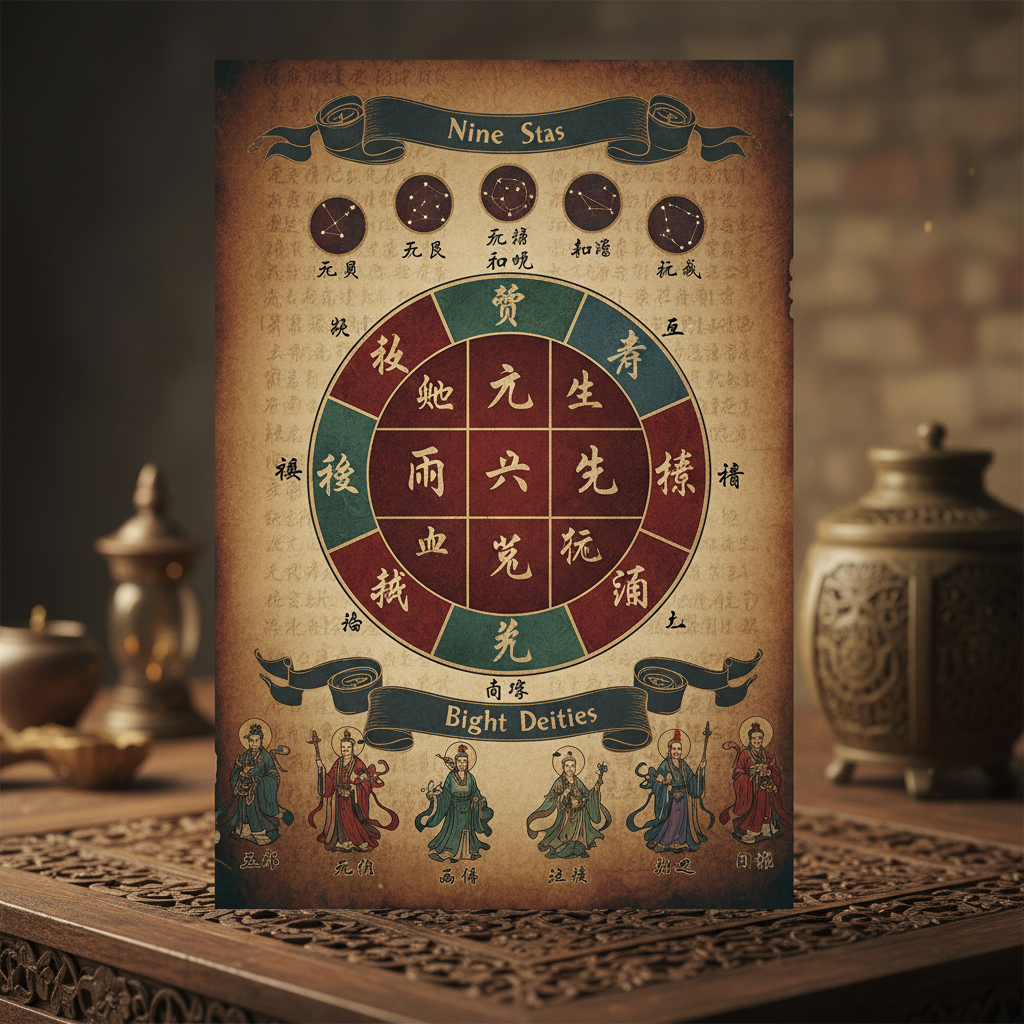
Qi Men Dun Jia is often described as a time-and-space based decision system, built on a classical Chinese cosmology that integrates the calendar, the eight trigram directional system, and symbolic elements such as stars, doors, and deities. To make practical use of it we first need to understand the pieces that form a Qi Men chart. I will walk you through the major components in plain language, using examples so you can visualize how the system is read and applied.
The Nine Palaces, Eight Gates, Nine Stars, and Eight Deities
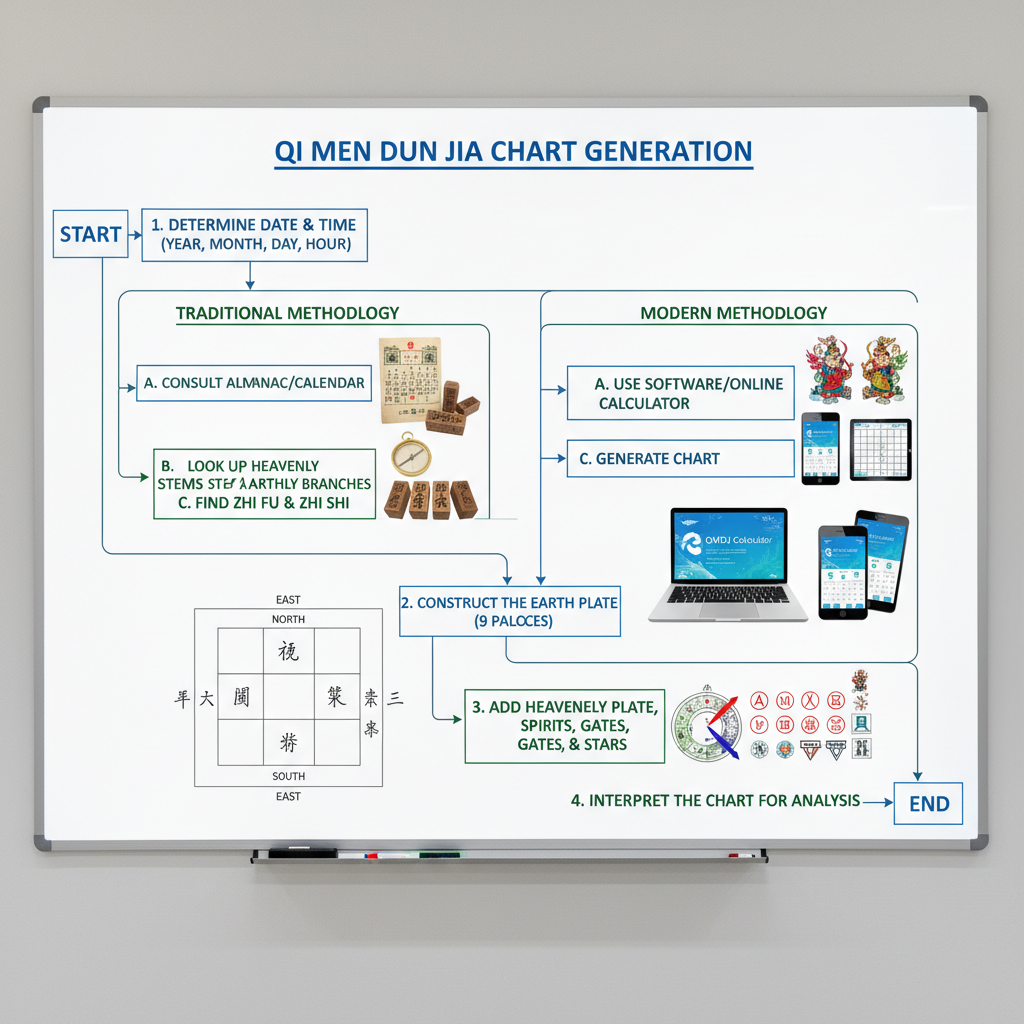
At the heart of a Qi Men Dun Jia board are spatial sectors, commonly called palaces. There are nine palaces arranged on a 3×3 grid, each associated with directions and numeric values. Around those palaces we locate the eight gates, eight deities, and nine stars, each carrying symbolic meanings that are used to interpret opportunities and risks.
- Palaces, the grid positions, act like “locations” where elements land; they represent the context of an event, such as a negotiation table, a battlefield, or the physical direction of travel.
- Gates describe the nature of an outcome: some gates suggest openings, growth, and progress, while others denote obstacles, secrecy, or endings.
- Stars add quality and potency. Certain stars indicate support and beneficial influences, others point toward confusion or resistance.
- Deities symbolize energetic players or forces; they are usually read as either supportive or obstructive personalities or cosmic influences.
When these elements converge in the same palace you read their combined meaning. For example, a palace with a “Victory Gate,” a benevolent star, and a supportive deity at the time of an important decision is read as a high-probability opportunity. Conversely, a palace that houses an “Obstruction Gate,” a malevolent star, and a conflicting deity suggests delay or risk.
How a Chart is Generated, in Practical Terms
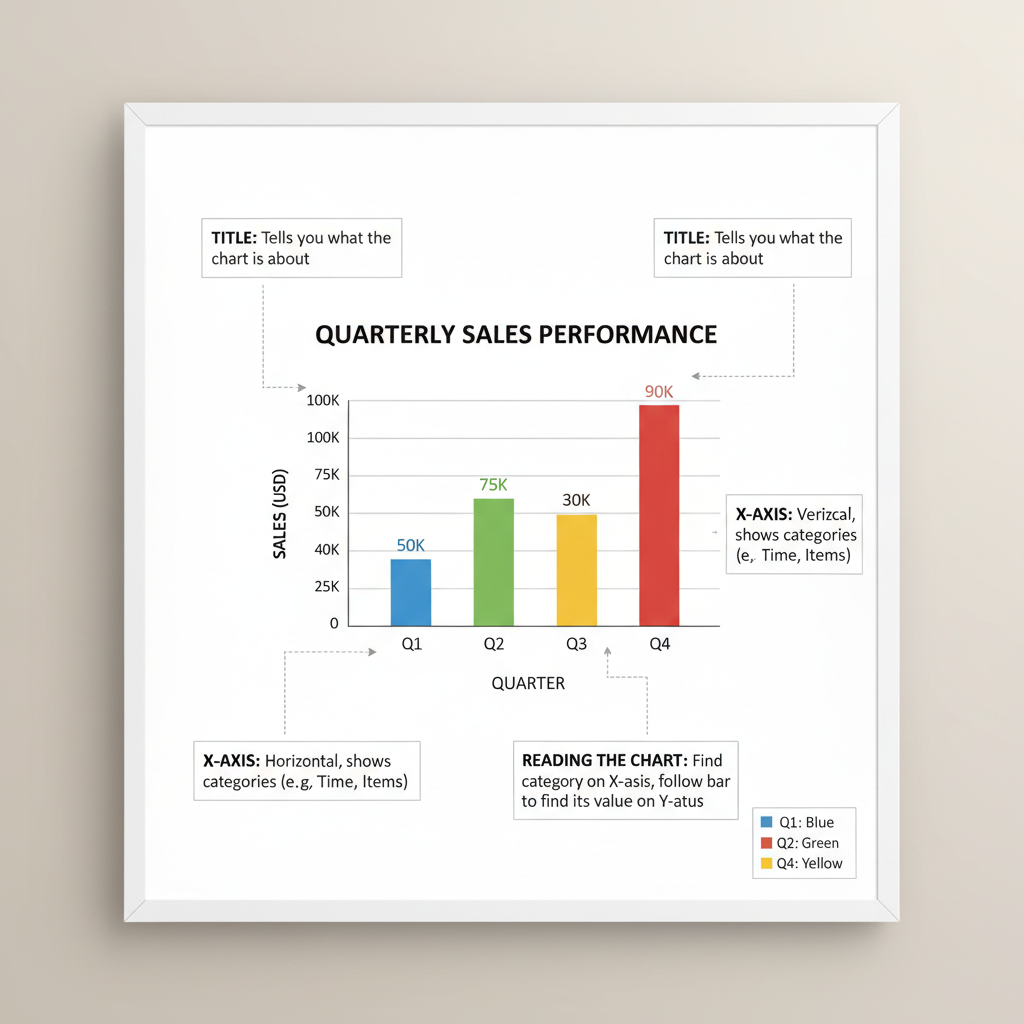
Practically speaking, a Qi Men chart is generated for a specific date and time. The system uses the Chinese lunisolar calendar, the sexagenary cycle (heavenly stems and earthly branches), and a set of time divisions to compute where each element falls on the nine-palace board. In modern practice most people use software or online calculators because the manual calculations require a fair amount of calendrical math.
Here is a simplified, step-by-step overview of how a practitioner goes from a current moment to an actionable chart:
- Select the exact date and time for the question or event. Precision matters, because charts change by hour, and in some schools every two-hour block can shift the configuration.
- Convert the civil date and time to the Chinese lunar date and the corresponding heavenly stem and earthly branch. This step anchors the chart to the sexagenary cycle.
- Apply the Qi Men calendrical rules to position the Eight Doors, Nine Stars, and Deities into the nine palaces. In classical texts each stem-branch combination and each time block has a rule to determine placement; modern software automates this mapping.
- Interpret the combination in the palace relevant to your question. You focus on the palace that represents the person, place, or sector involved, then read the gate, star, and deity together to form a judgment.
Because the system is time-sensitive, changing the hour can change the entire prognosis. That is why ancient commanders were said to check Qi Men boards before starting maneuvers; the idea is to align action with favorable temporal windows.
An Example: Reading a Basic Chart

Let us walk through a small, hypothetical example so the mechanics feel less abstract. Suppose you want to test the outcome of a sales pitch scheduled for April 10 at 10:00 in your city. You enter the date and time into an online Qi Men tool or a mobile app. The chart that returns shows the following at the palace corresponding to the pitch location:
- Gate: Open Gate, which suggests ease of communication and receptivity.
- Star: Tian Xi, a star that indicates luck and support for beginnings.
- Deity: Prosperity deity, meaning favorable economic conditions.
Putting it together you might read the situation as favorable: the audience is likely receptive, the timing supports initiation, and economic conditions are benign. That reading is not a guarantee; it is a probability-tilted input. In practice you might proceed with the pitch but adjust your preparation and risk exposure based on the chart. For example, you could schedule backup follow-ups, prepare stronger closing materials, or open the presentation with a particular framing that aligns with “Open Gate” themes, such as transparency and invitation.
Evidence, Skepticism, and a Scientific Perspective

When people ask Is Qi Men Dun Jia real, they are usually looking for an evidence-based answer. We can separate this into two kinds of evidence: historical and anecdotal, and empirical, controlled evidence. Both matter, but they are different in how we evaluate reliability and application.
Historical Accounts and Anecdotal Results

Qi Men Dun Jia has a long traditional history and many stories of successful use in warfare, politics, and private life. These accounts are compelling as cultural evidence: they show the method was valued and repeatedly used across centuries. Practitioners and clients today still report striking results, especially in areas such as timing and psychological insight.
However, anecdotal evidence has limits. Success stories are subject to confirmation bias; failures may go unreported. That does not mean the practice is without merit, but it does mean we should be cautious about accepting anecdote as proof of predictive power without methodical testing.
What Modern Science Says, and What is Missing

From a scientific standpoint the situation is clearer: there are very few peer-reviewed, large-scale studies showing Qi Men Dun Jia produces predictive outcomes beyond chance. Most contemporary evaluations of divination systems find that results can often be explained by cognitive effects such as selective memory, the Barnum effect, and the tendency to reinterpret ambiguous guidance after outcomes are known.
That said, absence of evidence is not definitive proof of absence. Traditional systems can contain practical decision rules that, when used alongside experience, produce better outcomes than random choice. A plausible mechanism is that structured symbolic frameworks improve framing, risk assessment, and timing in ways that aid human decision-making. For example, the practice of explicitly identifying favorable and unfavorable windows can lead to better resource allocation and reduced impulsivity.
Cognitive Biases That Shape Perceived Effectiveness

We should be honest about the psychological forces at play, because these can inflate perceived success. Important biases include:
- Confirmation bias, where we remember successes more vividly than failures.
- Hindsight bias, where outcomes are reinterpreted to fit the original forecast.
- Vagueness and reinterpretation, where symbolic language can be fit to many outcomes after the fact.
When I first started studying Qi Men, I noticed how easy it was to tailor interpretations to match events. Recognizing that tendency is the first step to a more rigorous, honest practice.
How to Test Qi Men Dun Jia Yourself, in a Scientific Manner

If you want to move from anecdote to evaluation, you can design simple experiments that reduce bias and produce data. Here is an actionable protocol you can run over a period of weeks or months.
- Define clear, binary questions, such as: “Will this deal close by June 30?” The simpler the outcome, the easier it is to score objectively.
- Decide the decision rule for interpretation before you see the outcome. For example, define which gates, stars, and deity combinations you will read as “yes” versus “no.” Write this down.
- Time-stamp and document each reading including the date, time, the chart screenshot, your interpretation, and any action you took based on it.
- Collect outcomes over an adequate sample size. For a basic binary test you want a minimum of 30 trials to start seeing meaningful patterns; larger is better.
- Analyze the results. Use a binomial test if your outcomes are yes/no. For example, if random chance is 50 percent and you get 22 correct out of 30, that result would be statistically unlikely under chance alone, suggesting your method has predictive value.
Running this kind of disciplined trial will either strengthen your confidence or reveal that the system performs at chance for your questions. Either outcome is useful. One practical tip: use an independent observer or timestamped, third-party logging to minimize the temptation to adjust the record later.
Practical Applications Today: Business, Negotiation, Travel, and Strategy
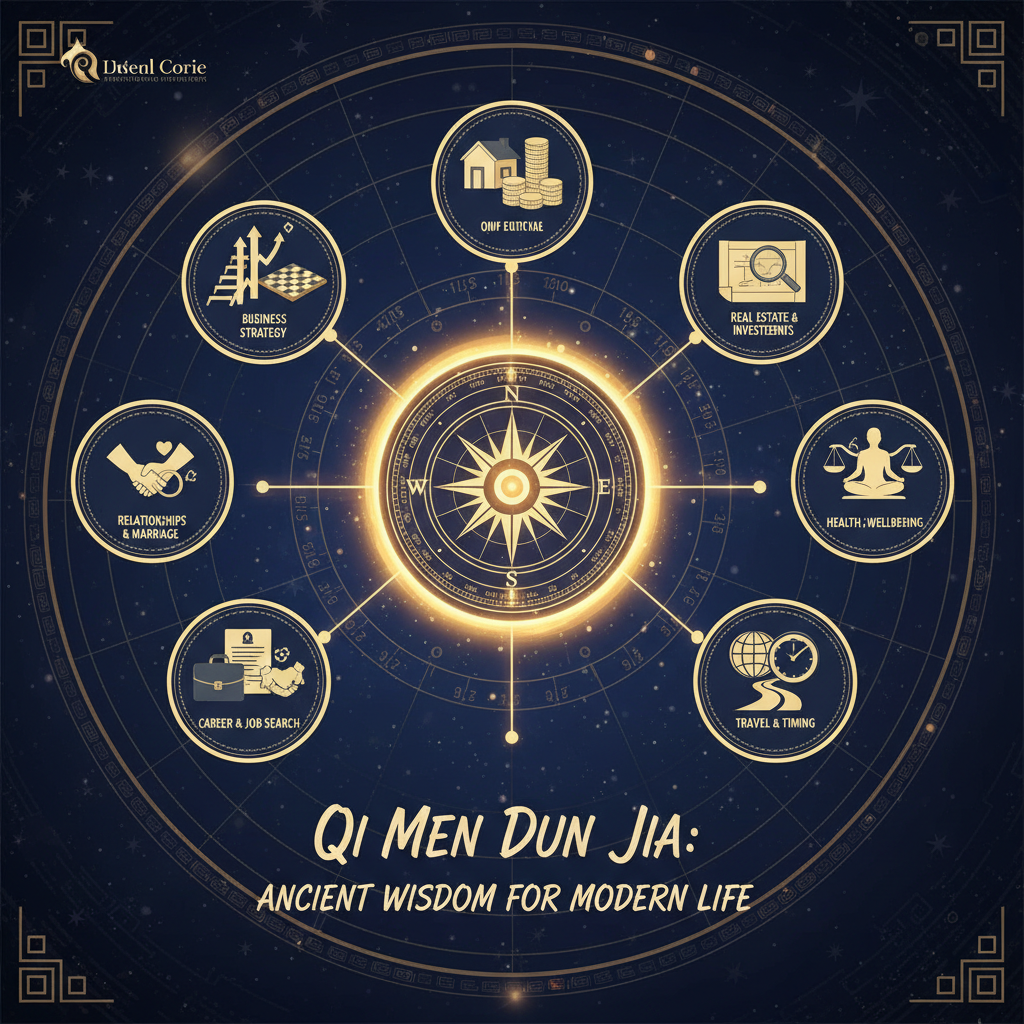
Regardless of whether you accept Qi Men as a metaphysical truth, many people find practical value in using it as a structured decision support tool. Below I outline common modern applications, give examples, and offer concrete ways to incorporate Qi Men thinking into ordinary decisions.
Common Use Cases and Concrete Examples

- Business timing and launches: Companies sometimes consult Qi Men to choose launch windows or major rollouts. For example, rather than picking a random date for product release, a team can compare several candidate dates and choose the one that aligns with “opening” gates and favorable stars. The practical effect is reduced likelihood of launching on a date plagued by logistical delay, because the process forces teams to think about timing and contingency.
- Negotiations and meetings: Readings prior to high-stakes meetings can suggest whether the moment favors persuasion or patience. If the chart favors short, clear proposals, you might lead with a concise offer and a simple close. If the chart indicates resistance, you may choose to gather more information first.
- Travel and logistics: Some practitioners use Qi Men to pick safe travel dates or shipping windows. Even if the system does not affect weather or mechanical reliability, it can influence planning choices such as booking redundancy or adjusting itineraries to avoid busy or risky windows.
- Personal life decisions: People use Qi Men for career choices, relationship timing, and health planning, often as one input among many. For these areas, the biggest value tends to be clarity and a ritualized decision process, which reduces indecision and second guessing.
Hypothetical Case: a Product Launch Decision

Imagine you lead a small software company preparing for a major update. You have three candidate dates, each with different marketing and operational implications. You run Qi Men charts for each date:
- Date A: Open Gate, supportive star, moderate deity. Interpretation: favorable for public communications, high press receptivity.
- Date B: Closure Gate, mixed star suggestive of delay. Interpretation: likely to face resistance; not ideal for initial launch.
- Date C: Victory Gate but accompanied by a tricky deity implying internal distraction. Interpretation: good for product demo to a niche audience, not wide release.
Based on these readings, you choose Date A for the external launch and use Date C for a focused beta demo to select clients. The Qi Men insight here did not create technical advantages, but it structured your decision process so you optimized timing and audience segmentation. You also scheduled additional QA the week before to hedge against unforeseen technical problems, turning divination into a prompt for concrete risk management.
Setting Realistic Expectations and Risk Management

Use Qi Men as an input, not an oracle. The most successful practitioners I know treat it like a forecasting tool that provides directional probabilities, not certainties. Here are practical rules to manage risk:
- Never make irreversible decisions based only on a chart. Use it to time, plan, and prioritize, but keep contractual and legal safeguards in place.
- Combine with quantitative measures, such as market research, financial projections, or A/B testing. When Qi Men and data agree, you get stronger confidence; when they diverge, investigate why.
- Predefine stop-loss rules for decisions you make based on a chart. If a marketing campaign fails by a certain metric, have a plan to cut losses instead of doubling down based on symbolic rationale.
Learning, Practicing, and Evaluating Your Skills

Mastery of Qi Men Dun Jia requires a blend of technical application and interpretive skill. The technical side is the correct generation of charts and basic symbol meanings. The interpretive side is pattern recognition, situational sensitivity, and disciplined testing. Below I provide a learning roadmap, practical exercises, and suggestions for tools and ethical practice.
A Step-by-step Beginner Practice Regimen

Start with a structured 12-week plan that balances reading, practice, and evaluation. Here is a condensed regimen you can follow.
- Weeks 1 to 2, foundation: Learn the nine palaces, eight gates, nine stars, and eight deities. Memorize one sentence meaning for each symbol so you can read quickly. Practice by examining charts for random dates and describing the mood of each palace in short phrases.
- Weeks 3 to 4, chart generation: Practice converting dates to Qi Men charts using an online tool. Verify charts against multiple calculators to ensure fidelity. Start making simple yes/no predictions about immediate, low-stakes events such as whether a delayed parcel will arrive today.
- Weeks 5 to 8, interpretation and feedback: Make a series of documented predictions with explicit scoring rules. Aim for at least 20 logged predictions. Each time, note the palace and the key elements used for the call, then track the outcome. Keep a learning journal of patterns you notice.
- Weeks 9 to 12, refining and integrating: Compare your predictions to baseline probabilities and adjust your interpretation rules. Start applying Qi Men to one real decision per week, but keep stakes manageable. Continue logging and begin a simple statistical analysis of your hit rate.
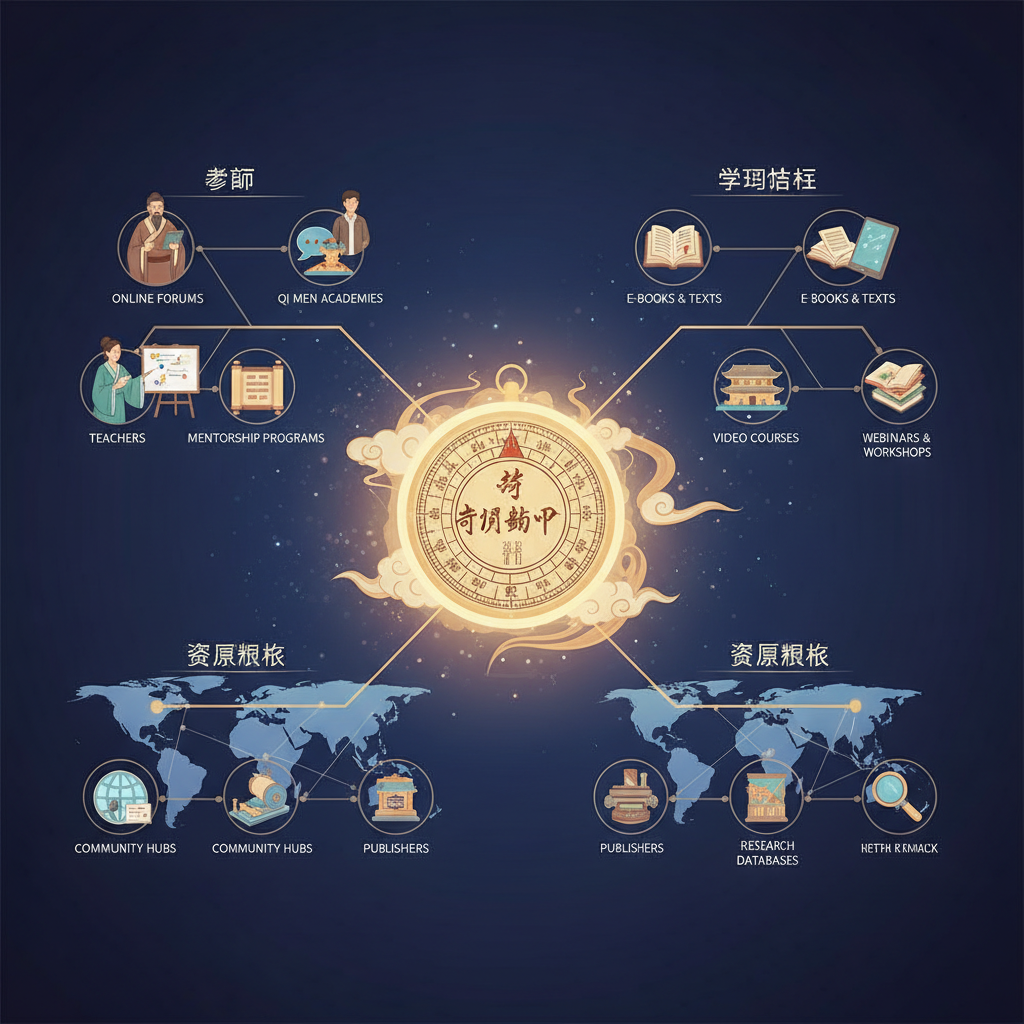
Tools, Courses, and Communities
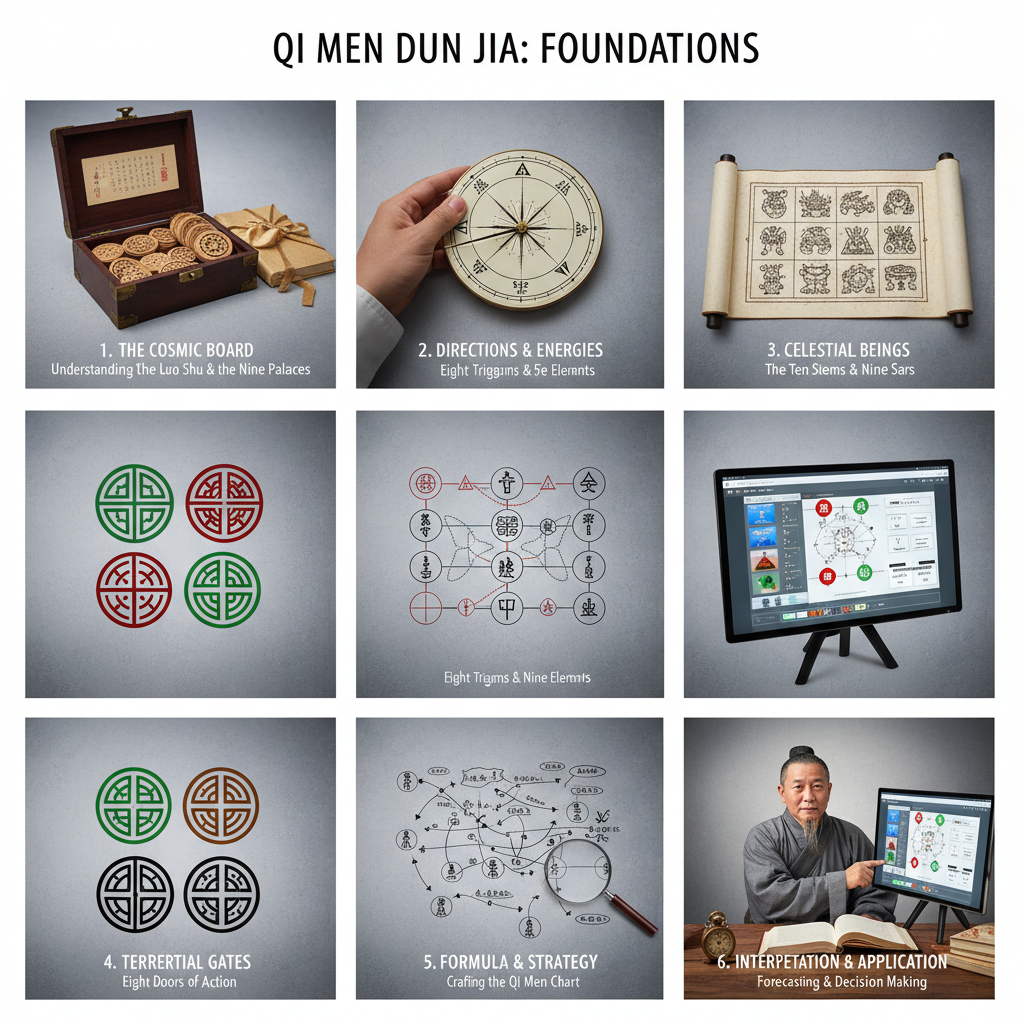
In the modern era there are several kinds of tools that make learning Qi Men more accessible. Look for:
- Online calculators and mobile apps that generate charts from a timestamp. Use these early and often; they reduce the friction of calendar math so you can focus on interpretation.
- Books and translated classical texts that explain symbol meanings and historic rules. Read a mix of classical sources and contemporary practical guides to get both the foundations and modern applications.
- Practitioner communities and study groups, where you can compare interpretations and receive critical feedback. Peer review helps reduce interpretive drift and overfitting to confirmation bias.
When selecting courses or teachers, prioritize those that provide structured feedback, documented case studies, and ethical guidelines. Avoid anyone who promises guaranteed results or asks you to make high-risk financial decisions based solely on a chart.
Ethical Considerations and Common Pitfalls
We owe it to ourselves and to clients to apply Qi Men responsibly. Some practical ethical rules to follow:
- Disclose limitations when advising others. Be transparent about anecdotal nature, and encourage clients to use Qi Men as one input among many.
- Avoid deterministic claims about health, legal, or life-or-death matters. Direct people to professionals for medical, legal, or financial emergencies.
- Keep records of your predictions and recommendations. Transparency reduces the temptation to reinterpret outcomes after the fact and builds trust with clients.
A common pitfall is overconfidence. As we gain experience, our confidence often grows faster than our predictive skill. The remedy is continuous testing, peer review, and conservative advice when stakes are high.
Practically speaking, after a few months of disciplined practice you will have a clearer picture of whether Qi Men contributes meaningful insight for the kinds of questions you care about. For many of us the result is that Qi Men becomes a structured intuition tool, useful for timing and framing, rather than a miraculous answer machine.
How to Learn and Practice Qi Men Dun Jia: Practical Steps and Tools

If you are curious and want to move beyond reading about Qi Men Dun Jia to actually practicing it, I will lay out a practical roadmap I have used and taught others to follow. The learning curve is steep, but with structured practice and the right tools you can make steady progress. Below I cover what to study first, how to find a teacher, useful software and charts, a suggested beginner exercise, and an example of a simple real-world application.
Foundations to Study First

Qi Men Dun Jia is built from a number of classical Chinese metaphysical building blocks: the ten Heavenly Stems, twelve Earthly Branches, nine palaces, eight gates, nine stars, and the system of time-keeping that maps moments to configurations. Before attempting readings, you should be comfortable with:
- Basic calendar conversion: understanding the Chinese sexagenary cycle (stems and branches), and converting Gregorian dates and times to the corresponding day-hour units
- The nine palaces layout and how the charts are constructed (mapping stems, stars, and doors into palaces)
- Core meanings of the nine stars and eight gates, and how combinations influence interpretation
- Historical context and terminology, so you can read classic texts and modern commentaries with comprehension
Spend a month on these basics, using reference books and practice charts. I recommend keeping a learning journal where you record each chart you build and your interpretation attempts, together with outcomes.
Finding a Teacher and Learning Resources

Qi Men Dun Jia is traditionally taught through apprenticeship or formal instruction. A teacher can drastically shorten the learning curve, because much of the skill lies in applying rule-sets flexibly, spotting nuances, and avoiding common interpretive traps. When choosing a teacher, look for:
- Transparency about training lineage and how long they have practiced
- Sample charts and case studies they have documented, ideally with dates and outcomes
- A willingness to teach fundamentals and to let you practice with supervision
- References or testimonials you can verify, especially from students who started as beginners
If a live teacher is not available, use classic texts (translated where necessary), modern textbooks, and reputable online courses that include chart exercises and feedback. Forums can be useful, but use discerning judgment, because unverified claims circulate widely.
Essential Tools: Software, Charts, and Date Converters
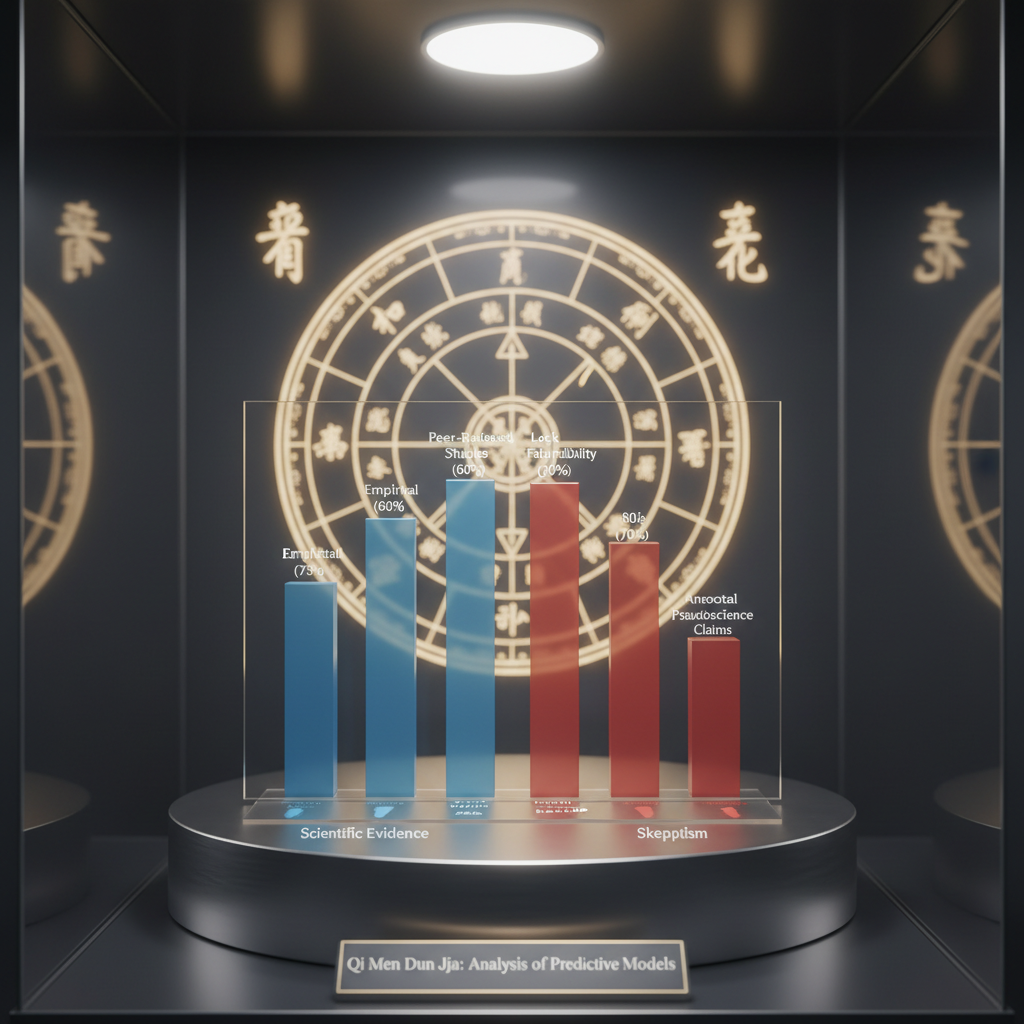
Building accurate charts by hand is excellent training, but modern practitioners often use software for speed and to remove mechanical errors. Essential tools include:
- A reliable Chinese calendar converter for stems and branches (some free web tools are accurate, others are not)
- Qi Men Dun Jia charting software or apps that let you generate the nine-palace layouts from a timestamp
- A digital or printed set of reference tables for star, gate, and palace meanings
- A spreadsheet or database to log readings, predictions, and outcomes for later analysis
Actionable tip: before trusting any software, cross-check 10 randomly chosen charts by hand against the software output to ensure it uses the same conventions as your study materials.
Beginner Exercise: One-week Experiment

Here is a concrete, low-risk exercise you can do in one week to get hands-on experience and collect evidence about how useful Qi Men Dun Jia is for you.
- Day 1: Learn to construct the chart for an hourly timestamp. Make three charts for three different hours that day by hand.
- Day 2: Use software to build the same three charts. Compare results, note any discrepancies, and research why they occur.
- Day 3: Pick a simple, binary decision you can test, for example, whether a particular small investment will rise today, or whether a phone call will be successful. Record your prediction based on the chart, including your confidence level.
- Days 4-6: Repeat the prediction process for two new small decisions each day. Log timestamps, chart configurations, your interpretation, the outcome, and your confidence.
- Day 7: Review your seven to ten predictions, calculate a simple success rate, and journal what patterns you noticed in your interpretations. Did you rely on certain stars or gates? Did your confidence correlate with accuracy?
This hands-on log becomes valuable evidence for your own learning, and it is the first step toward building a testable approach to Qi Men Dun Jia rather than relying on anecdote.
Example Application: Short-term Business Timing

One practical application many modern users try is business or negotiation timing. For example, suppose you face two possible days to launch a product update. You construct Qi Men charts for the start times of both days. Day A shows the Victory Gate with the Star of Jian in a favorable palace, while Day B shows the Obstacle Gate and the Star of Du in that palace. Interpreting those configurations, you might choose Day A as higher probability for a smooth launch.
Actionable advice: use Qi Men Dun Jia as one component of your decision matrix, not the sole determinant. Combine its insight with market data, technical readiness checks, and stakeholder alignment. Over repeated cycles you can measure whether chart-guided timing correlates with smoother launches in your context.
Scientific Evidence, Testing Methods, and Common Skepticisms
When people ask, “Is Qi Men Dun Jia real,” they are often seeking two different answers: does it have historical authenticity and cultural validity, and does it produce reproducible, testable results under scientific scrutiny? I will address both angles, and describe how you can design experiments to assess claims yourself.
Historical and Cultural Basis
Qi Men Dun Jia has a well-documented place in Chinese history, with references to its use in military strategy and court decision-making dating back centuries. That historical lineage is real; texts and commentaries exist, and the system evolved over time. Cultural validity means it is meaningful and useful in contexts where practitioners share the same symbolic framework and training.
Historical data is not the same as scientific proof of efficacy. A system can be culturally significant and still fail to demonstrate reproducible effects under controlled conditions. That distinction is important when deciding how to weigh Qi Men Dun Jia in modern decision-making.
Designing Experiments: How to Test Claims Rigorously
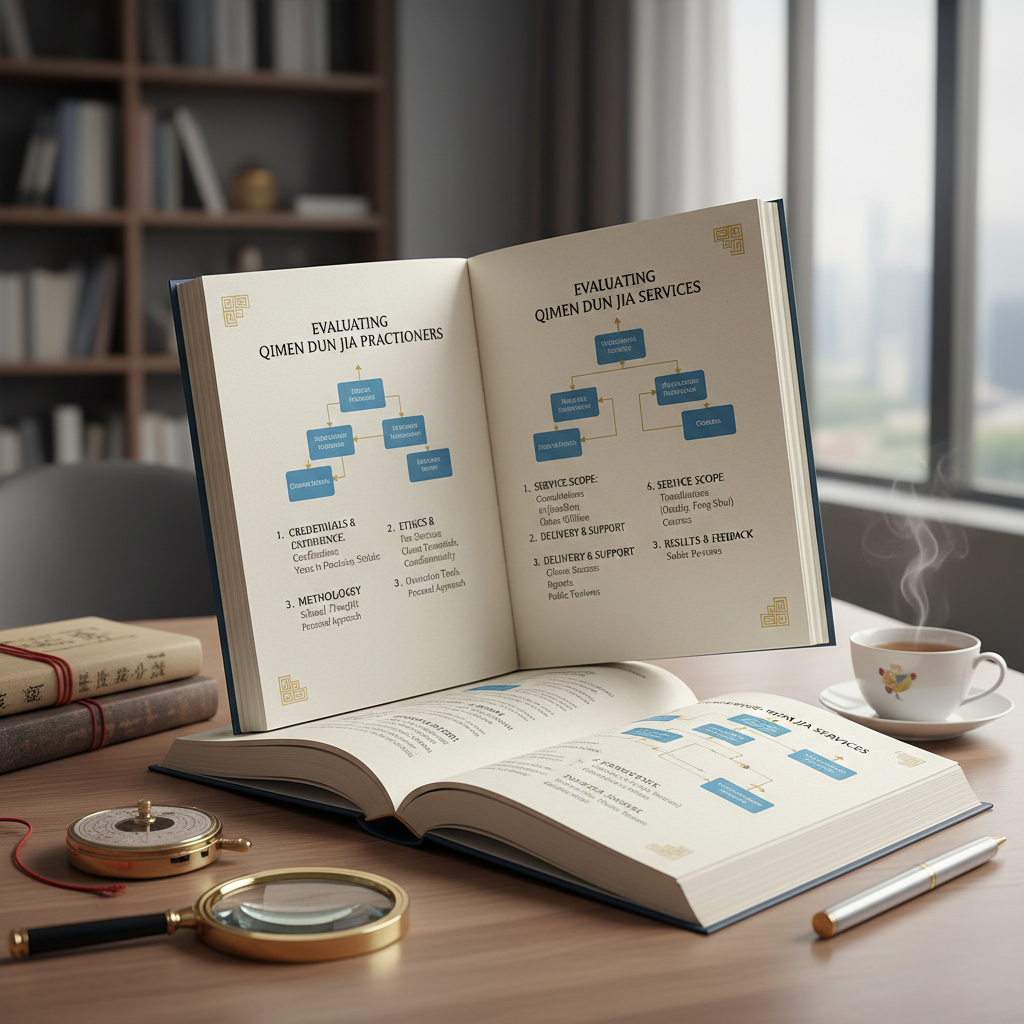
If you want to evaluate Qi Men Dun Jia empirically, treat it like any hypothesis-driven test. Here are practical steps I recommend, with specific metrics and methods you can implement yourself.
- Define a clear, testable hypothesis. For example: “Qi Men Dun Jia charts interpreted by Practitioner X predict the binary outcome of short-term stock direction better than chance.”
- Choose a measurable outcome and time horizon. Binary outcomes are simplest: yes/no, up/down, success/failure. Decide how far ahead you make the prediction (hour, day, week).
- Pre-register the experiment if possible. Record the prediction method, decision rules, and number of trials before you begin to avoid post-hoc rationalization.
- Collect a sufficient sample size. Small sample sizes produce noisy results. For binary outcomes, 30 to 100 trials gives some ability to detect moderate effects; larger samples improve power.
- Use blind or double-blind conditions when feasible. For example, have someone else generate timestamps and keep outcomes unknown to the interpreter until after recording predictions.
- Analyze statistically. For binary predictions with expected chance of 50 percent, a binomial test or simple proportion test determines whether the success rate significantly exceeds chance.
Example calculation: suppose you make 100 binary predictions and you get 62 correct. Using the normal approximation to the binomial distribution, expected mean is 50, standard deviation is about 5, so the observed result is 12 points above expectation, which corresponds to a z-score near 2.4, and a one-sided p-value around 0.008. That suggests the result is unlikely due to chance alone, provided there was no data snooping and the experiment was conducted blind.
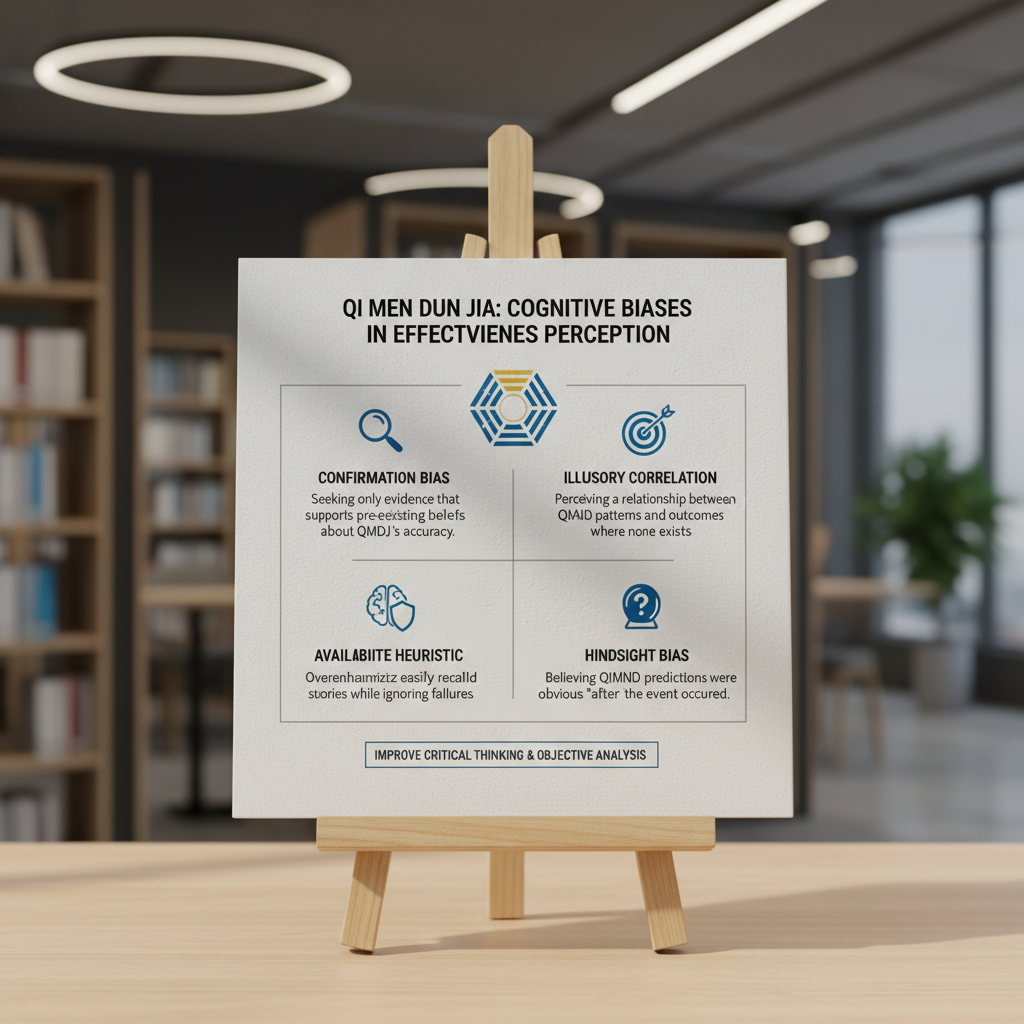
Common Cognitive Biases and How They Affect Perceived Effectiveness

Many of the positive reports about Qi Men Dun Jia are consistent with known human biases. Here are the usual suspects and how to guard against them:
- Confirmation bias, where we remember hits and forget misses. Guard this by logging every prediction and outcome.
- Selection bias, where practitioners publish successful case studies but not failures. Require full logs for fair evaluation.
- Postdiction, interpreting outcomes after the fact to make them fit. Use pre-registered predictions to avoid this.
- Regression to the mean, where extreme events are naturally followed by more ordinary outcomes. Don’t attribute normalizing events to the chart without controls.
Actionable tip: keep a spreadsheet with date, time, chart image, exact prediction text, confidence rating, outcome, and notes. Review quarterly and calculate objective success metrics.
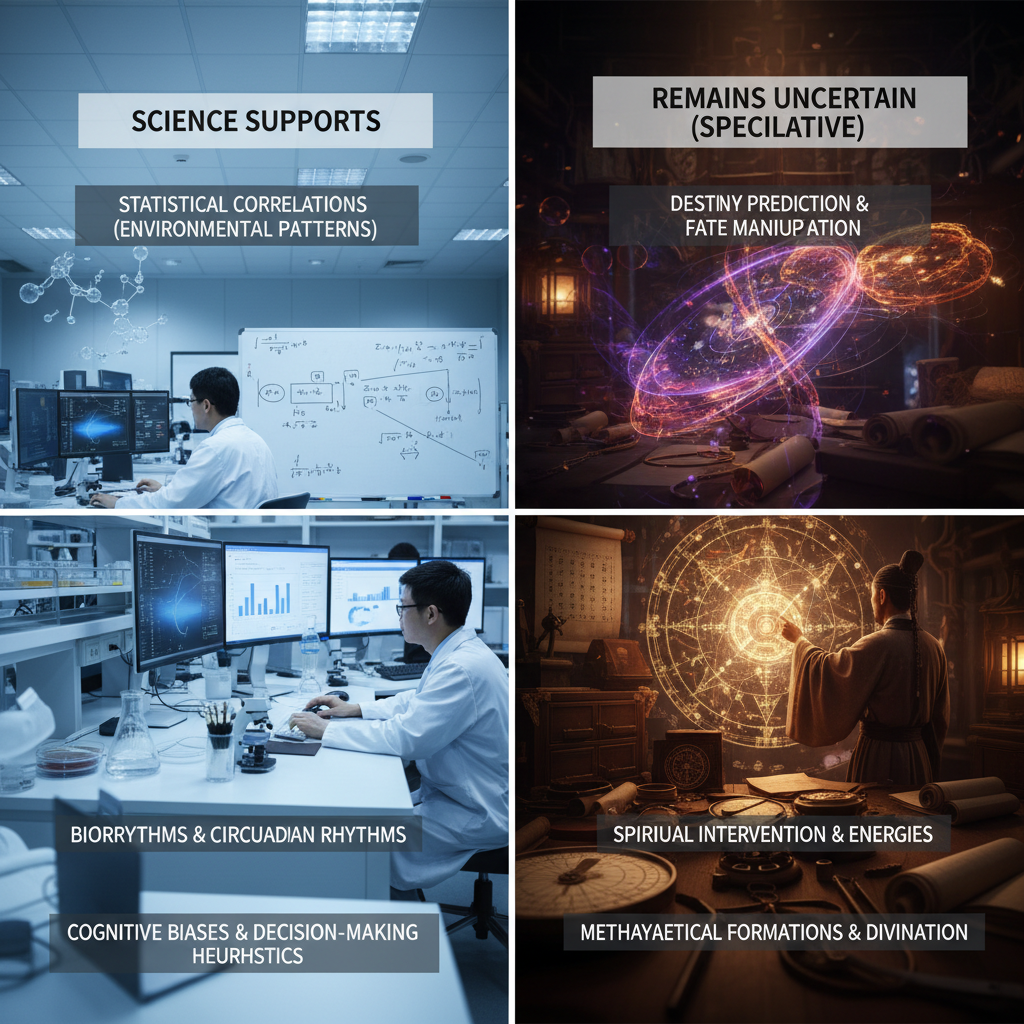
What Science does and does Not Say
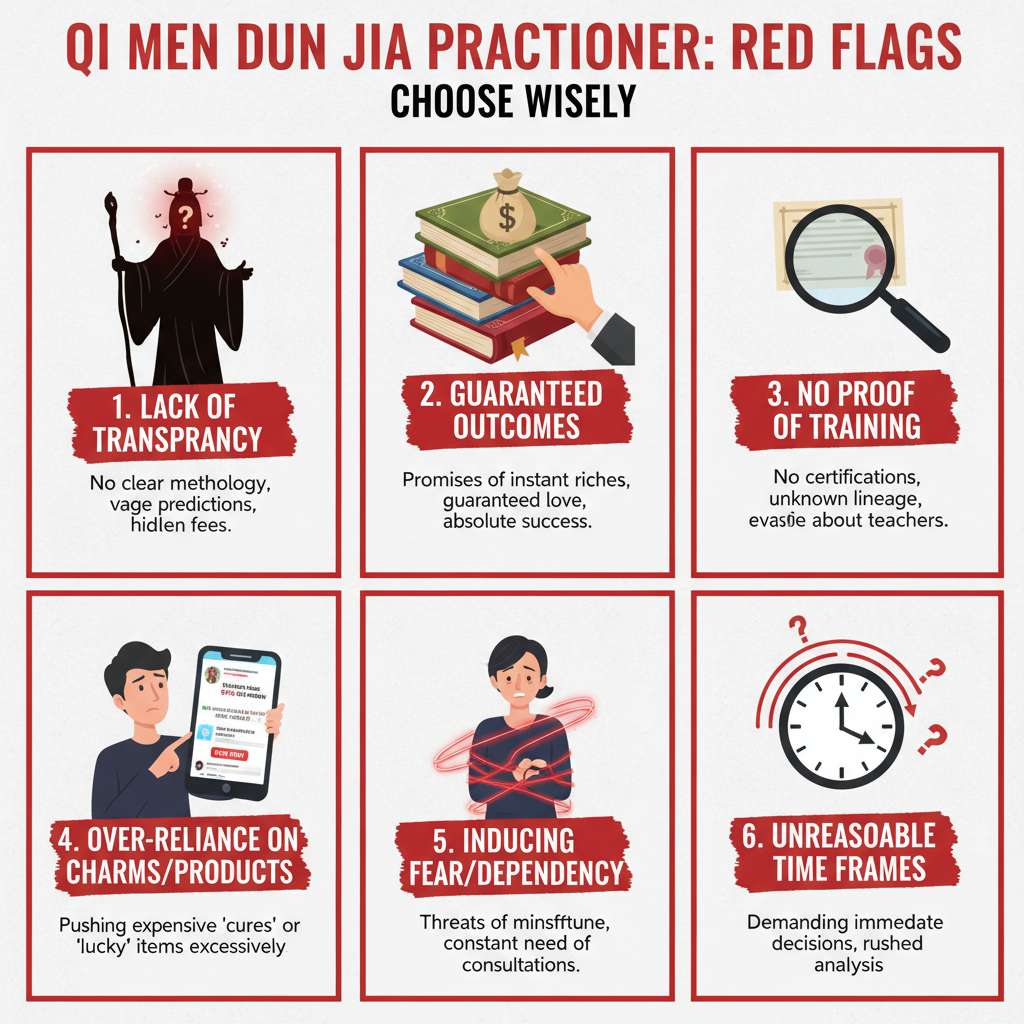
There are few peer-reviewed studies directly testing Qi Men Dun Jia. Research in paranormal or divinatory methods often suffers from small samples, lack of controls, or publication bias. That said, rigorous experimental frameworks exist, and anyone can apply them. The lack of abundant scientific validation does not necessarily mean the practice is useless; it means that robust, replicated evidence is not widely available in mainstream journals.
From a practical standpoint, Qi Men Dun Jia functions for many people as a decision-support system. Even if its predictive power is not proven, its structured symbolic framework can help clarify thinking, prompt contingency planning, and reduce decision paralysis. That psychological utility is real, measurable, and valuable even if metaphysical claims remain debated.
Practical Guidelines for Evaluating Practitioners and Services

If you decide to consult a Qi Men Dun Jia practitioner, approach the interaction like hiring any professional service. Here are concrete criteria and red flags.
Criteria for Choosing a Practitioner

- Transparency: The practitioner provides clear methodology, sample case records, and a description of their interpretation framework.
- Accountability: They are willing to agree to a small, testable reading where you can verify outcomes, and they are open to feedback.
- Reasonable promises: They explain possibilities and probabilities rather than promising absolute outcomes.
- Ethical boundaries: They do not demand excessive fees for repeated consultations, do not push guaranteed cures, and respect confidentiality.
Red Flags
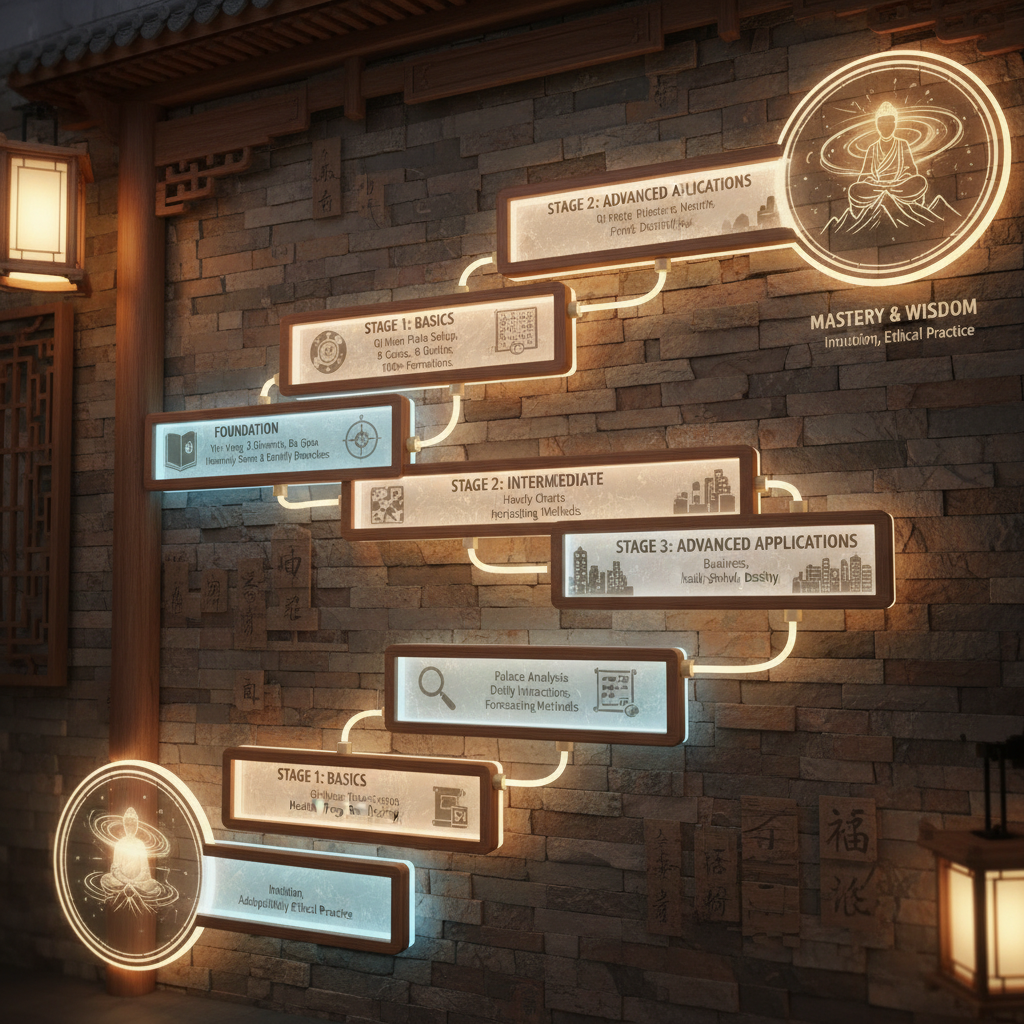
- Claims of 100 percent accuracy or guaranteed results
- Requests for large sums upfront for “special” charts with no documented evidence
- Lack of willingness to provide references or case histories
- High-pressure tactics to coerce you into immediate decisions
If you see red flags, step back and apply your own experimental test before committing resources.
Frequently Asked Questions
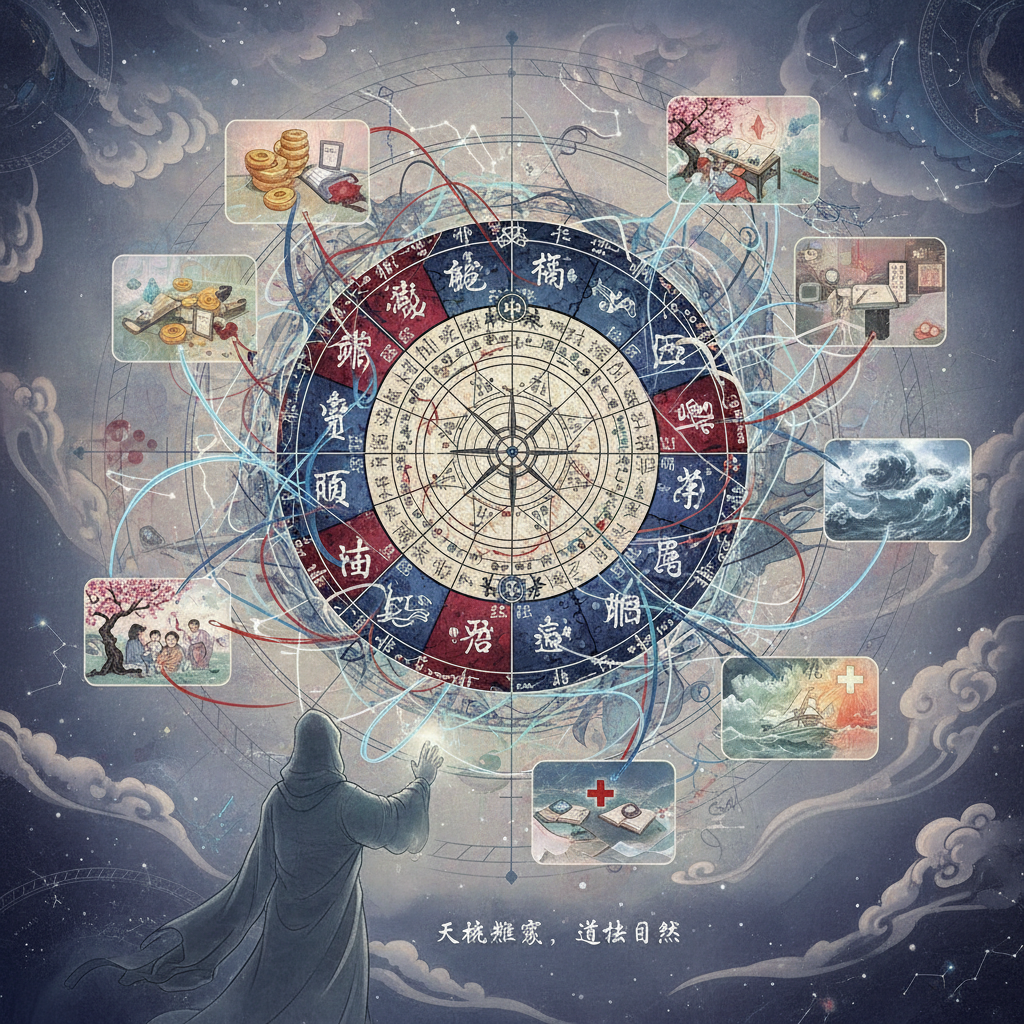
Q: is Qi Men Dun Jia Real?

A: Qi Men Dun Jia is historically real as a Chinese metaphysical system with a long cultural tradition. Whether it produces reproducible, predictive results depends on how you test it; scientific validation is limited, but many practitioners and students find it useful as a decision-support tool. The most reliable approach is to test it in your own context with controlled, logged trials.
Q: How Long does it Take to Become Competent?

A: Basic competence, meaning you can construct charts and offer simple interpretations, typically takes several months of disciplined study. True expertise, the kind that allows flexible, high-quality readings and pattern recognition, can take years and benefits greatly from mentorship. Practice with feedback shortens the timeline considerably.
Q: can Qi Men Dun Jia Predict the Future Exactly?

A: No system, including Qi Men Dun Jia, can predict the future with absolute certainty. The system offers probabilities and tendencies based on symbolic configurations. In practice, it is best treated as guidance that highlights risks, opportunities, and timing advantages, not as a crystal ball.
Q: is it Safe to Use Qi Men Dun Jia for Important Decisions Like Health or Law?
A: Use caution. For high-stakes areas such as medical, legal, or significant financial decisions, Qi Men Dun Jia can complement professional advice but should not replace licensed experts. Consider it a source of additional perspective, and always consult appropriate professionals for critical issues.
Q: can I Learn Online, or do I Need a Teacher?

A: You can learn the foundations online, and many quality resources exist. However, given the interpretive complexity, an experienced teacher or mentor accelerates learning and helps you avoid common errors. If you learn online, seek feedback forums or periodic mentoring sessions.
Q: How should I Test a Practitioner’s Claims?

A: Ask for a blind test where outcomes are recorded independently. Define the prediction format and time horizon beforehand, require a pre-registered log, and examine their historical success rate if available. Small-scale, repeatable tests are more informative than anecdotal success stories.
Q: What are Common Mistakes Beginners Make?

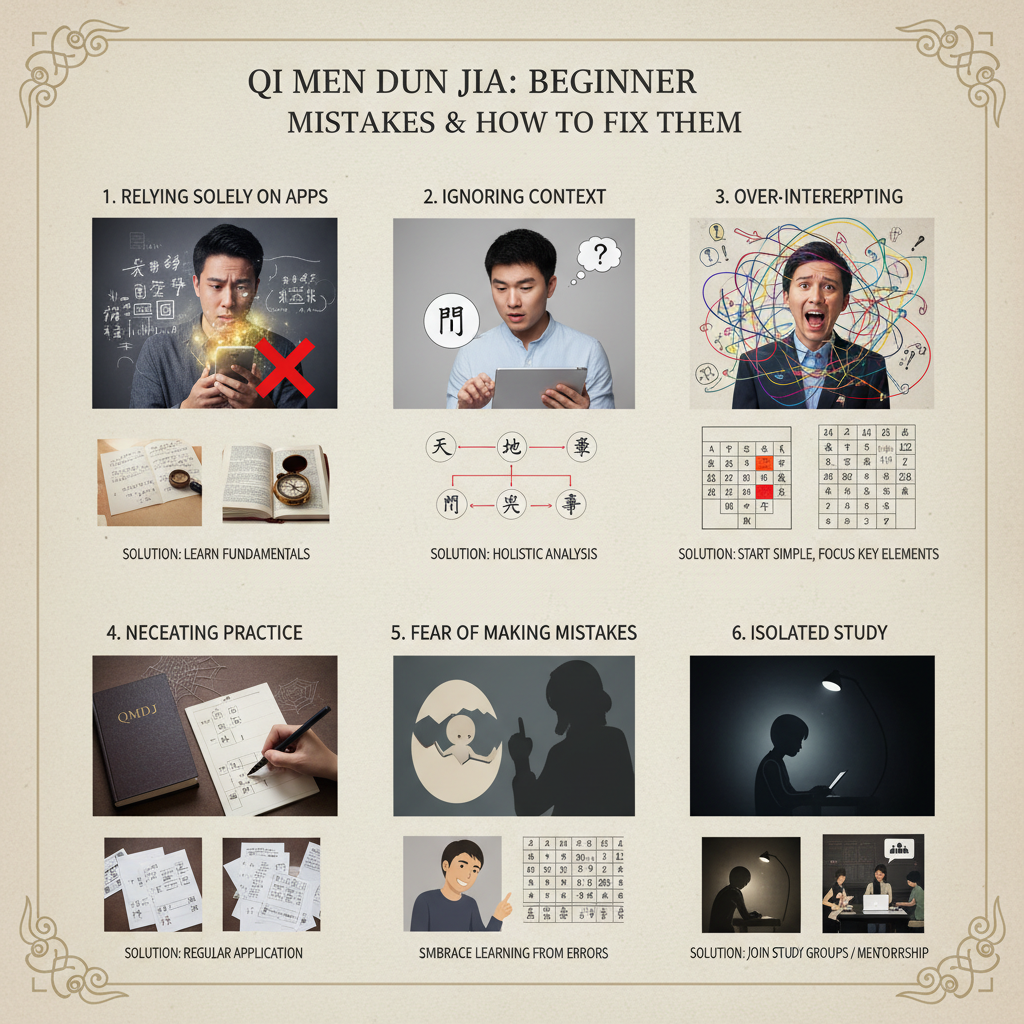
A: Beginners often rely on cookbook interpretations without context, overinterpret single charts, ignore time-zone and calendar conversion errors, and fail to log failures. The antidote is deliberate practice, rigorous logging, and humility about uncertainties.
Q: can Modern Tools Improve Accuracy?

A: Software and data analysis tools reduce calculation errors and make logging and statistical evaluation easier. They cannot, however, replace interpretive skill. Use software to build charts and manage data, while cultivating interpretive judgment through supervised practice.
Conclusion

Qi Men Dun Jia is a fascinating, historically grounded system that offers a structured way to approach timing, strategy, and short-term decision-making. The tradition is real, and many practitioners attest to its utility, but scientific evidence supporting universal predictive power is limited. That does not render it useless. For most people, the greatest value lies in its role as a decision-support framework that forces clarity, encourages contingency planning, and can reveal timing advantages when combined with other data.
If you are interested in exploring Qi Men Dun Jia, here are my final, actionable recommendations based on what I and the communities I work with have found effective:
- Start with the fundamentals: learn stems and branches, palace layouts, star and gate meanings, and time conversion. Spend at least four to six weeks on these foundations.
- Keep meticulous logs of every chart and prediction, including explicit pre-registered predictions and outcomes. This is the single best way to assess whether the system helps you.
- Design small, controlled experiments with clear hypotheses and sufficient sample sizes; use basic statistics to evaluate results, and beware of cognitive biases.
- Use Qi Men Dun Jia as one input among many. Combine its insights with empirical data, expert opinions in relevant domains, and your own situational analysis.
- Choose practitioners who are transparent, accountable, and willing to be tested. Treat the relationship as professional consulting rather than mystical guarantee.
In short, treat Qi Men Dun Jia with respectful curiosity, methodical testing, and pragmatic skepticism. If you do, you will either find it a valuable complement to your decision-making toolbox, or you will build the evidence you need to move on. Both outcomes are productive. I encourage you to try the one-week experiment outlined above and see how the results inform your view.
Leave a Reply
You must be logged in to post a comment.