The History of Kwan Im Thong Hood Cho Temple: Waterloo Street’s Eternal Sanctuary
When you walk down the vibrant pedestrian pavement of Waterloo Street in Singapore, the sweet fragrance of burning sandalwood incense fills the morning air long before you reach the front entrance of Kwan Im Thong Hood Cho Temple (观音堂佛祖庙). For generations of locals, this sanctuary is lovingly known in Hokkien as Si Beh Mah Guan Yim Miu (四马路观音庙), or the Four Horses Road Guanyin Temple. Having spent over 30 years in business across Singapore before focusing my work on teaching Qi Men Dun Jia and analyzing spiritual energy patterns, I’ve watched our island nation transform at a breathtaking pace. Glass skyscrapers replace heritage shop-houses, corporate quarters expand, and modern technology reshapes daily routines. Yet, through every economic shift and urban renewal campaign, this modest temple on Waterloo Street remains a constant heart for millions seeking solace, direction, and spiritual comfort.
The story of Kwan Im Thong Hood Cho Temple isn’t merely an account of brick, mortar, and ornate roof tiles. It’s a living record of Singapore’s immigrant spirit, communal resilience during wartime hardship, and the enduring human desire for compassionate guidance. Most accounts agree that the temple began as a modest shrine in the late nineteenth century, created by early Chinese settlers who brought their deep devotion to Guanyin, the Bodhisattva of Universal Compassion. Over the decades, it grew into one of the most visited and revered places of worship in Southeast Asia. Whether devotees come to offer fresh lotus buds, pray for their family’s health, or shake the famous bamboo divination cylinders during pivotal life decisions, the temple offers a quiet haven in the midst of a bustling commercial district.
In this comprehensive historical study, I want to take you through the fascinating evolution of Kwan Im Thong Hood Cho Temple. We’ll explore its modest 1880s origins, its miraculous survival during the aerial bombardments of World War II, its major rebuilding in the early 1980s, and its sacred qiu qiam lot divination traditions. We’ll also look at how this sacred hall fits into Singapore’s broader inter-religious harmony and why places of sincere worship continue to hold such profound spiritual power in our modern world.
1. Origins and Early Beginnings in the 1880s
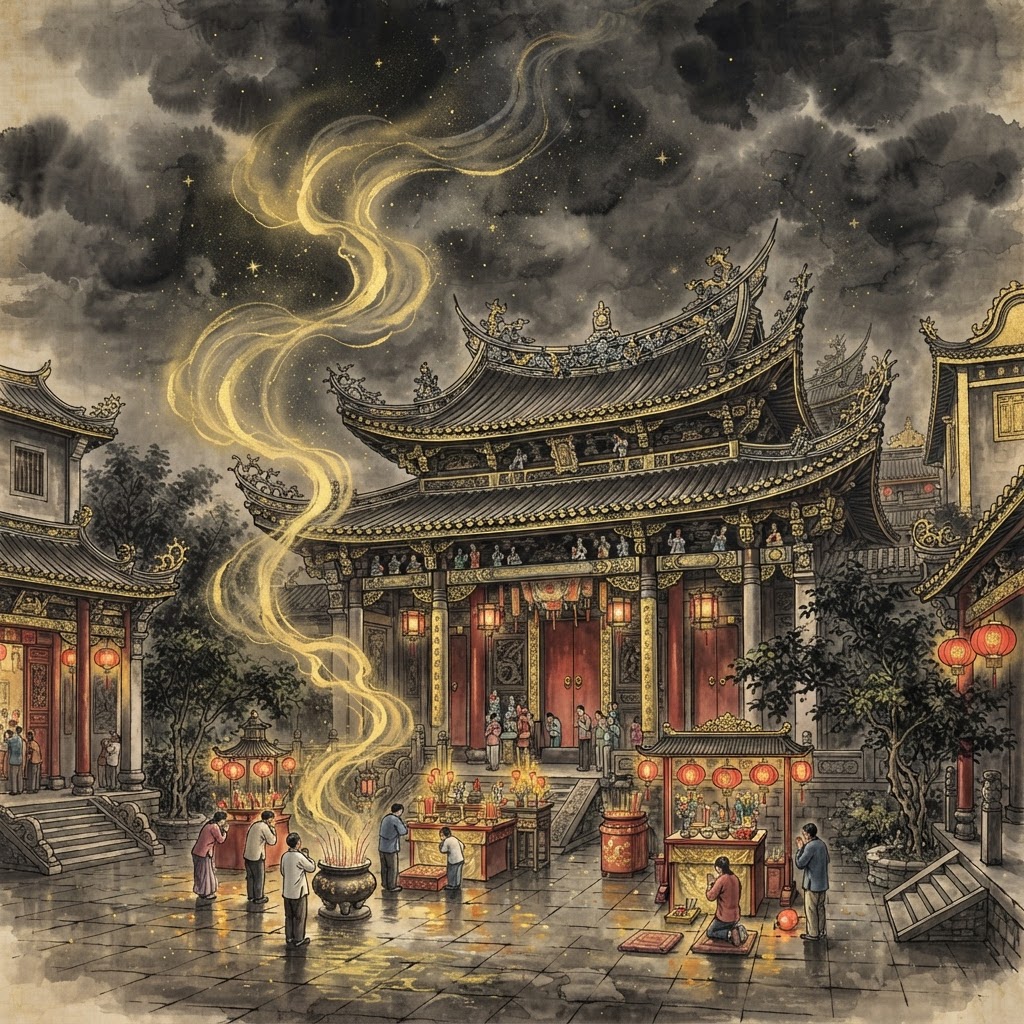
To understand how Kwan Im Thong Hood Cho Temple became such a central landmark in Singapore, we have to look back to the late nineteenth century. During the 1870s and 1880s, Singapore was experiencing rapid growth as a vital maritime trading hub under British colonial administration. Thousands of Chinese immigrants from Guangdong and Fujian provinces sailed across the South China Sea, seeking work as coolies, tradesmen, artisans, and merchants. They stepped ashore into a challenging new environment filled with unfamiliar diseases, hard physical labor, and uncertainty. Naturally, they carried their ancestral faith with them, establishing small alters and incense burners wherever they settled to seek protection from Guan Yin (Goddess of Mercy) and Sakyamuni Buddha.
Most accounts date the formal founding of Kwan Im Thong Hood Cho Temple to around 1884. Historical records suggest that a group of Cantonese and Hokkien devotees originally established a modest wooden shrine on Waterloo Street. The location was chosen deliberately, as Waterloo Street sat at the periphery of the growing commercial center, offering a tranquil plot where worshippers could gather without blocking the heavy traffic of downtown commercial avenues. The original structure was humble, built primarily with timber beams, clay roof tiles, and traditional masonry. Despite its small physical footprint, the temple quickly gained a reputation for answered prayers, drawing workers from nearby harbour docks, markets, and residential quarters.
The name Kwan Im Thong Hood Cho itself carries rich spiritual symbolism. “Kwan Im” (观音) honors Guanyin, the Bodhisattva who hears the cries of the world and embodies boundless mercy. “Thong” (堂) signifies a hall or sanctuary of worship. “Hood Cho” (佛祖) refers to Sakyamuni Buddha, the enlightened teacher. Together, the name reflects a dual reverence for the compassionate Bodhisattva and the historical Buddha, establishing a foundation that seamlessly blends Mahayana Buddhist devotion with traditional Chinese folk practices. As word spread throughout Singapore’s Chinese community that prayers offered at the Waterloo Street shrine brought emotional relief, healing, and business success, donations began to pour in, laying the financial groundwork for future expansions.
In those early decades, the temple served a dual role as both a spiritual refuge and a social support node for newly arrived immigrants. In a era before public healthcare, formal social welfare departments, or state insurance, religious halls were often the only places where impoverished workers could find comfort, charitable rice distribution, and community support. The temple committee organized basic relief efforts, distributed medicine to the sick, and provided burial assistance for destitute laborers who died without family in Singapore. This deep commitment to community welfare established a philanthropic legacy that continues to define the temple’s operations today.
By the turn of the twentieth century, the initial wooden shrine had undergone several minor renovations to replace rotting timbers and expand the altar space. Devotees donated carved wooden statues, bronze incense burners, and calligraphic plaques praising the Bodhisattva’s grace. The main altar housed statues of Guanyin flanked by Bodhidharma and Ksitigarbha, creating a sacred sanctuary where believers from different dialect groups could pray side by side without friction or division.
Table 1: Historical Timeline of Kwan Im Thong Hood Cho Temple
| Historical Era | Approximate Period | Key Milestone / Historical Development | Community Impact |
|---|---|---|---|
| Early Settlement | c. 1884 | Establishment of a modest wooden and tile shrine on Waterloo Street by Chinese immigrants. | Provided a spiritual sanctuary and community support node for Cantonese and Hokkien laborers. |
| Early 20th Century | 1895–1930s | First major structural upgrades; addition of carved altars and expanded prayer halls. | Grew into a popular central pilgrimage site for merchants, families, and street vendors. |
| World War II Era | 1942–1945 | Surviving heavy Japanese aerial bombing intact while surrounding shop-houses collapsed. | Served as an emergency sanctuary, medical aid post, and symbol of miraculous protection. |
| Post-War Expansion | 1950s–1970s | Surge in daily visitors; establishment of formal charitable trusts and educational grants. | Expanded public welfare programs and funding for local hospitals and schools. |
| Grand Reconstruction | 1980–1982 | Complete rebuilding of the temple complex, expanding capacity tenfold with modern engineering. | Created the grand palace-style sanctuary seen today, accommodating thousands of daily worshippers. |
| Modern Era | 2000s–Present | Integration into Waterloo Street pedestrian mall; multi-million-dollar annual charity giving. | Stands as an iconic national heritage landmark and philanthropic cornerstone in Singapore. |
2. Why Devotees Call It “Si Beh Mah Guan Yim”: The Story of Four Horses Road
If you ask an elderly Singaporean for directions to “Kwan Im Thong Hood Cho Temple,” they’ll certainly know what you mean, but if you mention Si Beh Mah Guan Yim Miu (四马路观音庙), their eyes light up with immediate recognition. The phrase Si Beh Mah translates literally from Hokkien as “Four Horses Road,” a colloquial name deeply woven into Singapore’s urban identity. To understand why this sacred site carries such a distinct local name, we must explore how nineteenth-century Chinese immigrants mapped out colonial Singapore’s street network.
In the early decades of British rule, formal English street names like High Street, Victoria Street, Queen Street, and Waterloo Street were difficult for non-English-speaking laborers to pronounce and remember. Consequently, local dialect communities devised a numerical system based on the parallel roads running through the European and Kampong Glam sectors. High Street was designated as First Road (头马路), Victoria Street as Second Road (二马路), Queen Street as Third Road (三马路), and Waterloo Street as Fourth Road (四马路). The term Beh Mah referenced horse-drawn carriages and livery stables that operated along these thoroughfares before electric tramways and motor vehicles dominated the city.
During the late 1800s and early 1900s, Waterloo Street was home to prominent horse stables, coach builders, and livery businesses serving the colonial administration and wealthy merchants. The constant presence of horse-drawn buggies gave Fourth Road a lively, bustling character. When the Guanyin shrine was established on Waterloo Street, locals naturally dubbed it Si Beh Mah Guan Yim Miu, anchoring the Bodhisattva’s temple to the well-known street name. Over a century later, long after horses disappeared from Singapore’s avenues, the dialect moniker endures as a proud symbol of local heritage.
As the decades progressed, Waterloo Street evolved from a quiet carriage lane into a vibrant cultural artery. Peddlers set up wooden carts selling joss sticks, fresh yellow chrysanthemums, lotus flowers, and traditional vegetarian pastries outside the temple gates. Fortune tellers, calligraphers, and palm readers established small folding tables along the sidewalks, offering advice to visitors before or after they prayed inside. This streetscape created a unique community ecosystem where commerce, spirituality, and social interaction merged seamlessly.
In my 30+ years in business, I’ve observed that the most resilient brands and cultural institutions are those deeply rooted in local identity. Kwan Im Thong Hood Cho Temple never severed its connection to the everyday working class of Singapore. Whether you speak Hokkien, Cantonese, Teochew, Mandarin, or English, the temple on Four Horses Road remains an accessible sanctuary where anyone, regardless of background or status, can step off the pavement and find immediate peace.
3. The Miracle of World War II: Surviving the 1942 Air Raids
Among the many chapters in the temple’s rich history, none is remembered with greater awe than its miraculous survival during World War II. In early February 1942, as Japanese forces advanced down the Malayan Peninsula toward Singapore, Japanese bomber squadrons launched relentless aerial bombardments targeting vital infrastructure, military bases, and dense urban districts. The area surrounding Waterloo Street, Bencoolen Street, and Malabar Street took direct hits, as high-explosive bombs smashed into adjacent shop-houses, reducing entire blocks to blazing rubble and twisted timber.
Most accounts agree that during one particularly fierce air raid in mid-February 1942, bombs detonated on both sides of Waterloo Street. Shop-houses immediately across the road and along neighboring lanes collapsed, claiming many lives and scattering debris across the pavement. Yet, despite bombs landing mere meters from its entrance, Kwan Im Thong Hood Cho Temple sustained virtually no structural damage. The wooden beams remained firm, the tiled roof stayed intact, and the principal statues on the main altar stood undisturbed amid the surrounding devastation.
Local oral traditions record that hundreds of terrified residents had rushed into the temple courtyard and inner prayer hall as the air raid sirens screamed. They huddled together before the altar of Guanyin, praying fervently for protection as explosions shook the ground beneath their feet. When the smoke finally cleared and survivors ventured outside, they were stunned to discover that while neighboring buildings were flattened, everyone inside the temple hall had survived unharmed. News of this wartime event spread rapidly across the island, solidifying the belief among locals that the temple enjoyed divine protection.
“When bombs fell across Waterloo Street in 1942, reducing brick shop-houses to rubble, the temple stood untouched. To generations of elderly Singaporeans, that wartime miracle proved that divine compassion had established an immovable sanctuary right in the heart of our island.”
Throughout the dark years of the Japanese Occupation (1942–1945), Kwan Im Thong Hood Cho Temple became an invaluable beacon of hope and physical relief. Food was strictly rationed across Singapore, medical supplies were scarce, and widespread fear gripped the civilian population. The temple trustees and volunteers organized soup kitchens in the courtyard, distributing hot porridge, herbal tea, and basic remedies to starving families. Worshippers gathered daily to light joss sticks and pray for missing relatives, peace, and the end of foreign occupation.
The wartime experience reshaped the temple’s place in Singapore’s collective memory. It was no longer just a neighborhood shrine; it became a national symbol of endurance and spiritual sanctuary. The belief that the temple possesses protective energy continues to draw visitors today, especially elderly devotees who recall their parents and grandparents recounting the harrowing events of 1942.
Diagram 1: Eras of Structural and Cultural Resilience
Modest timber-and-tile hall serving regional dialect groups, establishing core philanthropic practices and street-side cultural vendors.
Surviving 1942 air raids unharmed amidst destroyed shop-houses; acting as a critical shelter, soup kitchen, and medical aid post during the Occupation.
Complete architectural expansion expanding capacity tenfold while preserving traditional Chinese imperial motifs and sanctuary aesthetics.
Anchor of Waterloo Street arts and heritage district, funding national healthcare, university scholarships, and social welfare programs.
4. Post-War Growth, Modern Rebuilding (1982), and Present Standing
Following the Allied liberation of Singapore in 1945, the island embarked on a prolonged period of economic recovery and social rebuilding. As Singapore transitioned from a British crown colony to self-governance in 1959 and full independence in 1965, the population expanded rapidly. Industrialization, public housing projects by the Housing & Development Board (HDB), and commercial growth transformed the city’s demographic landscape. Yet, despite families relocating to newly built satellite towns like Toa Payoh, Ang Mo Kio, and Bedok, thousands continued to make regular pilgrimages back to Waterloo Street.
By the mid-1970s, the original historic building was severely strained by the sheer volume of daily worshippers. On peak days, such as the 1st and 15th days of the lunar month, Chinese New Year, and Guanyin’s anniversary festivals, the narrow hall became so overcrowded that devotees stood packed shoulder-to-shoulder, spilling out onto the road and blocking traffic on Waterloo Street. The temple management recognized that a comprehensive structural overhaul was essential to ensure safety, improve ventilation, and accommodate future generations.
In 1979, the temple management committee unveiled an ambitious redevelopment plan. They acquired adjacent land parcels, secured municipal permits, and commissioned a total reconstruction of the complex. The old building was carefully dismantled in 1980, and construction began on a grand new hall designed in the traditional Chinese imperial palace style. The new architectural plan featured soaring double-tier roofs covered in golden glazed tiles, intricate granite wall carvings, polished marble flooring, and expansive open-plan interiors that eliminated central supporting pillars, maximizing space for praying crowds.
The rebuilt Kwan Im Thong Hood Cho Temple officially opened its doors in May 1982. The new structure expanded the interior floor area tenfold, providing comfortable prayer space for thousands of visitors simultaneously. At the central altar, a magnificent gold-leaf statue of Guanyin sat enthroned, flanked by Sakyamuni Buddha, Bodhidharma, and Ksitigarbha. High ceilings equipped with state-of-the-art ventilation systems helped disperse the thick smoke generated by thousands of burning joss sticks, creating a brighter, cleaner environment without sacrificing traditional spiritual ambiance.
Today, Kwan Im Thong Hood Cho Temple stands as one of the most visited religious landmarks in Southeast Asia. On Chinese New Year Eve, an estimated 10,000 to 20,000 devotees queue along Waterloo Street before midnight, eagerly waiting to rush inside to plant their first stick of incense (抢头香) to secure blessings for the coming year. Beyond its religious functions, the temple operates one of Singapore’s most generous charitable trusts, donating tens of millions of dollars annually to public hospitals, kidney dialysis centers, university research funds, and eldercare homes without regard to race or religion.
Table 2: Major Festivals and Annual Observances at Waterloo Street
| Festival / Observance | Lunar Calendar Date | Spiritual Significance | Devotional Atmosphere & Crowd Level |
|---|---|---|---|
| Chinese New Year Eve (Incense Rush) | Last Day of 12th Lunar Month | Offering the first stick of incense (抢头香) for auspicious blessings in the new year. | Extremely high; police barricades and controlled queue lines stretching across Waterloo Street. |
| Guanyin’s Birthday | 19th Day of 2nd Lunar Month | Celebrating the physical birth of the Bodhisattva of Compassion into the world. | Very high; influx of flower offerings, vegetarian vows, and continuous lot divination. |
| Guanyin’s Enlightenment Day | 19th Day of 6th Lunar Month | Commemorating the day Guanyin achieved full spiritual enlightenment and Buddhahood. | High; spiritual chanting sessions, lotus offerings, and community charity distributions. |
| Guanyin’s Renunciation Day | 19th Day of 9th Lunar Month | Honoring Guanyin’s decision to leave worldly royalty and dedicate her life to saving sentient beings. | High; solemn devotional prayers, intense qiu qiam consultation, and family visits. |
| 1st & 15th Days of Lunar Month | Bi-Monthly (New & Full Moon) | Regular spiritual cleansing, vegetarian fasting, and renewal of personal vows. | Moderate to high; steady flow of working professionals, homemakers, and seniors throughout the day. |
5. The Sacred Qiu Qiam Tradition: Divination Lots and Spiritual Guidance
Among the many spiritual practices conducted at Kwan Im Thong Hood Cho Temple, none is more famous than the drawing of Chinese divination lots, known locally in Hokkien as qiu qiam (抽籤) or qiu qeng. For over a century, believers facing difficult life choices, career crossroads, health crises, or family dilemmas have visited Waterloo Street to seek direct guidance from Guanyin through this sacred ritual.
The temple utilizes a standardized set of 100 numbered bamboo sticks, housed inside tall cylindrical wooden containers. Each bamboo stick corresponds to a specific printed lot slip containing a classical Chinese poem, an ancient historical allegory, and brief commentaries regarding various life domains such as business, marriage, travel, health, and lawsuits. The traditional ritual follows a precise sequence that demands focus, humility, and clear intent from the seeker.
To perform the ritual, a devotee first lights three sticks of incense, kneels before the central altar, and presents their offerings of lotus flowers or fruit. Holding the incense at chest height, the devotee silently introduces themselves by stating their full name, date of birth, current address, and the specific question they wish to present. Clarity is paramount; veterans of the temple advise focusing on a single, well-defined query rather than asking vague, open-ended questions.
After inserting the incense into the main bronze burner, the seeker takes a bamboo cylinder containing the 100 numbered lots. Holding the container at a slight forward tilt with both hands, the devotee gently shakes it in a rhythmic, continuous motion. As the wooden sticks slide against one another, momentum causes a single lot to rise above the rest and fall onto the carpeted floor. If multiple sticks drop simultaneously, the devotee returns them all to the cylinder and resumes shaking until exactly one stick falls out alone.
Before accepting the number on the fallen stick, the devotee must validate the result using sheng buai (胜杯), pair of crescent-shaped wooden divining blocks. The seeker holds the two blocks together, states the lot number drawn, and drops them gently onto the floor. If one block lands flat side up and the other curved side up (a combination known as a sheng buai or divine affirmative), the lot is confirmed. The devotee then proceeds to the collection counter inside the hall to retrieve the matching printed lot slip.
In my work teaching Qi Men Dun Jia and analyzing Chinese metaphysical systems, I often explain to students that divination tools like qiu qiam act as mirrors for energetic probabilities. A lot slip does not dictate an unalterable fate; rather, it provides a snapshot of the current momentum surrounding your situation. When a seeker approaches the altar with a calm mind, the synchronization between their internal intention and the physical movement of the bamboo sticks offers valuable perspective, helping them navigate complex decisions with greater clarity.
Table 3: Anatomy of a Qiu Qiam Session at Kwan Im Thong Hood Cho Temple
| Ritual Step | Traditional Term | Action Performed | Spiritual Purpose & Mindset |
|---|---|---|---|
| 1. Purification & Greeting | Shang Xiang (上香) | Lighting 3 sticks of incense; offering lotus flowers at the altar. | Cleansing personal energy and showing respect to the Bodhisattva. |
| 2. Petition & Intent | Bing Gao (秉告) | Stating name, birth date, address, and one specific question clearly. | Establishing a direct spiritual line of inquiry with clear mental focus. |
| 3. Shaking the Cylinder | Yao Qiam (摇籤) | Tilting and shaking the bamboo cylinder until one stick drops. | Allowing physical momentum to align with internal spiritual energy. |
| 4. Divine Block Confirmation | Zhi Jiao (掷筊) | Dropping the wooden sheng buai blocks to verify the lot number. | Confirming that the drawn stick represents a valid divine response. |
| 5. Slip Retrieval | Ling Qiam Zhi (领籤纸) | Collecting the corresponding printed paper slip from temple counters. | Obtaining the written poetic commentary and historical precedent. |
| 6. Analysis & Reflection | Jie Qiam (解籤) | Reading the verse or consulting local fortune tellers outside. | Applying the symbolic guidance to practical decision-making in daily life. |
6. Syncretism and Cross-Community Devotion on Waterloo Street
One of the most remarkable aspects of Kwan Im Thong Hood Cho Temple is how it embodies Singapore’s organic model of inter-religious syncretism and multicultural harmony. Directly adjacent to the temple stands Sri Krishnan Temple, an iconic Hindu place of worship established in 1870. Rather than operating as isolated religious enclaves, these two sacred sites share a dynamic spiritual precinct that fascinates visitors and cultural historians alike.
Every single day, you can observe Hindu worshippers entering Kwan Im Thong Hood Cho Temple to light joss sticks and pay respects to Guanyin, whom many view as a manifestation of universal motherly grace or Goddess Lakshmi. Similarly, Chinese Buddhist and Taoist devotees step next door to Sri Krishnan Temple to light oil lamps and offer prayers before the shrine of Lord Krishna. To accommodate this cross-faith devotion, Sri Krishnan Temple even installed a dedicated incense burner outside its main gate specifically for Chinese worshippers who wish to offer joss sticks.
This cross-community reverence extends beyond individual worshippers. During major religious festivals, such as Chinese New Year, the Guanyin anniversaries, and Deepavali, both temple management committees coordinate crowd management, share security arrangements, and exchange festive greetings. This neighborly cooperation showcases a harmonious spirit where different traditions flourish side by side, enriching Singapore’s social fabric.
Diagram 2: Waterloo Street Sacred Harmony Ecosystem
Mahayana Buddhist and Taoist sanctuary honoring Guanyin and Sakyamuni Buddha; welcomes Hindu, Peranakan, and international visitors daily.
South Indian Hindu temple honoring Lord Krishna; features a dedicated exterior joss stick burner for Chinese devotees.
Communal pavement housing flower sellers, fortune tellers, vegetarian bakeries, and heritage arts institutions.
Joint participation in charitable outreach, civic harmony events, and shared neighborhood heritage preservation.
In a world where religious differences frequently cause friction, the peaceful co-existence on Waterloo Street offers a profound model of mutual respect. The universal appeal of Guanyin, whose vows emphasize listening to the suffering of all beings regardless of status or background, creates a welcoming atmosphere where visitors of any faith feel safe and respected.
7. Devotional Customs, Etiquette, and Practical Visitor Guide
If you’re planning your first visit to Kwan Im Thong Hood Cho Temple or bringing friends from overseas, knowing the traditional etiquette ensures a smooth and meaningful experience. Because the temple handles thousands of visitors each day within a compact footprint, daily operations follow well-organized protocols designed to maintain safety and quiet reverence.
When entering the main hall, visitors should remove hats and sunglasses as a sign of respect. Modest attire is recommended; while formal clothing isn’t mandatory, shoulders and knees should be covered. Inside the hall, photography and video recording are strictly prohibited to protect the privacy of praying devotees and preserve the sacred atmosphere of the sanctuary.
The traditional offering consists of fresh yellow or pink lotus flowers, available from the licensed flower vendors positioned along Waterloo Street. Devotees light exactly three sticks of incense at the outdoor preparation tables before stepping up to the main incense burner. Inside the hall, burning incense isn’t permitted to prevent excessive smoke accumulation; instead, worshippers hold their unlit offerings or lotus buds while kneeling before the altar.
Table 4: Traditional Etiquette and Devotional Guidelines
| Category | Recommended Practice | Traditional Custom / Rationale | Action to Avoid |
|---|---|---|---|
| Attire & Footwear | Wear neat, modest clothing covering shoulders and knees; clean footwear. | Demonstrates personal humility and respect in a sacred hall. | Avoid sleeveless tops, short shorts, or wearing hats inside the main hall. |
| Incense Offering | Light 3 sticks at outdoor burners; place them in the main outdoor burner. | Three sticks symbolize the Buddha, the Dharma, and the Sangha. | Do not carry lit incense sticks into the interior prayer hall. |
| Floral Offerings | Offer fresh yellow or pink lotus flowers bought from sidewalk vendors. | Lotus flowers symbolize spiritual purity rising above worldly dirt. | Avoid bringing wilted flowers or non-vegetarian food offerings. |
| Photography | Take photos outside on the pedestrian mall; keep camera stored inside. | Protects worshipper privacy and maintains sanctuary tranquility. | Never take flash photos or videos inside the main prayer hall. |
| Divination Etiquette | Ask one clear, single question per qiu qiam lot session. | Ensures focused spiritual intent and unambiguous lot interpretation. | Do not rush the shaking process or bypass divine block validation. |
8. Dougles Chan’s Perspective: Why Sacred Spaces Endure in Modern Singapore
Having spent over three decades navigating the corporate landscape, founding businesses, and advising leaders before dedicating myself to Qi Men Dun Jia instruction, I often look at Singapore through a dual lens. On one hand, we are a hyper-efficient, forward-looking global metropolis driven by technological innovation, financial markets, and rapid urban redevelopment. Old buildings are routinely demolished to make way for smarter infrastructure, and efficiency is prized above almost everything else.
Yet, when you stand in the courtyard of Kwan Im Thong Hood Cho Temple on a humid Tuesday morning, you witness a completely different rhythm. You see corporate executives in tailored suits standing side by side with elderly hawkers, young university students, trishaw drivers, and foreign visitors. All of them bow quietly toward the golden image of Guanyin, lighting incense and seeking an anchor in an unpredictable world. This contrast highlights a vital truth: no matter how advanced a society becomes, the human heart consistently craves spiritual grounding, peace, and compassionate sanctuary.
“In business, we measure success in quarterly earnings and market expansion, but standing on the courtyard of Kwan Im Thong Hood Cho Temple reminds us that true longevity belongs to places that quiet the heart and serve the community without pretense.”
In Qi Men Dun Jia, we study how energy (Qi) flows through space, time, and human decisions. Sacred sites like the Waterloo Street temple do not endure merely because of their physical construction; they endure because millions of sincere prayers, acts of gratitude, and charitable intentions have charged the location with harmonious energy for over 140 years. That accumulated spiritual resonance creates an atmosphere where visitors immediately feel a sense of calm, mental clarity, and hope upon entering.
As Singapore continues to evolve, places like Kwan Im Thong Hood Cho Temple remind us of who we are and where we came from. They connect us to the courage of our immigrant forefathers who survived hard labor and war, while offering timeless wisdom for navigating the challenges of tomorrow. Protecting and honoring such spaces ensures that future generations will always have a haven to quiet their minds, align their spirit, and remember the power of universal compassion.
Frequently Asked Questions
What are the opening hours for Kwan Im Thong Hood Cho Temple?
The temple is typically open to the public daily from 6:00 AM to 6:00 PM. Admission is completely free. During major lunar festivals and Chinese New Year Eve, operating hours are extended to accommodate large crowds, often staying open late into the night or overnight.
How do I draw a qiu qiam divination lot at the temple?
First, light three sticks of incense outside and present your offerings. Kneel before the altar, state your name, birth date, and one specific question. Shake a bamboo cylinder until a single stick falls out. Then, confirm the lot by dropping the wooden sheng buai divining blocks until you receive one flat and one curved side up. Finally, collect your printed lot slip from the counter.
Can non-Buddhists or tourist visitors enter Kwan Im Thong Hood Cho Temple?
Yes, visitors of all religious backgrounds, nationalities, and cultures are welcome to enter. The temple asks only that guests dress modestly, behave respectfully, remove hats inside the hall, and refrain from taking photographs or videos inside the main prayer sanctuary.
Why is Waterloo Street called “Si Beh Mah” in Singapore dialect?
In the 19th century, non-English-speaking immigrants numbered parallel roads in colonial Singapore. High Street was First Road, Victoria Street was Second Road, Queen Street was Third Road, and Waterloo Street was Fourth Road (Si Beh Mah in Hokkien). The reference to horses stems from the livery stables and horse-drawn carriages that operated along Waterloo Street in the late 1800s.
Is photography permitted inside Kwan Im Thong Hood Cho Temple?
No, photography and video recording are strictly forbidden inside the main prayer hall to maintain sanctuary tranquility and protect worshipper privacy. You may take photos outside on the pedestrian mall, including the temple’s exterior entrance and roof tiles.
Did the temple really survive World War II aerial bombing unharmed?
Yes, during the Japanese air raids of February 1942, bombs detonated directly across Waterloo Street, destroying neighboring shop-houses. The temple sustained no major structural damage, and residents who sought shelter inside survived uninjured. This event is remembered as a miraculous wartime protection.
How does Kwan Im Thong Hood Cho Temple handle donations?
All public donations placed in temple donation boxes or contributed by devotees are managed by a registered charitable trust. The trust distributes millions of dollars annually to Singaporean hospitals, educational bursaries, kidney dialysis centers, arts initiatives, and social welfare charities regardless of race or religion.
Leave a Reply
You must be logged in to post a comment.