Yi, the Art of Healing in Chinese Metaphysics
When I spent over thirty years running corporate businesses and recruitment firms in Singapore, health was something I usually thought about only when I got sick. Like many business owners, I treated my body as a machine that needed to keep producing results. I drank coffee to stay awake, worked late nights, ignored minor aches, and assumed that a doctor’s prescription would fix whatever broke down. It was only later in my life, when I transitioned into studying and teaching Qi Men Dun Jia and classical Chinese metaphysics, that I began to understand how shortsighted that approach really was.
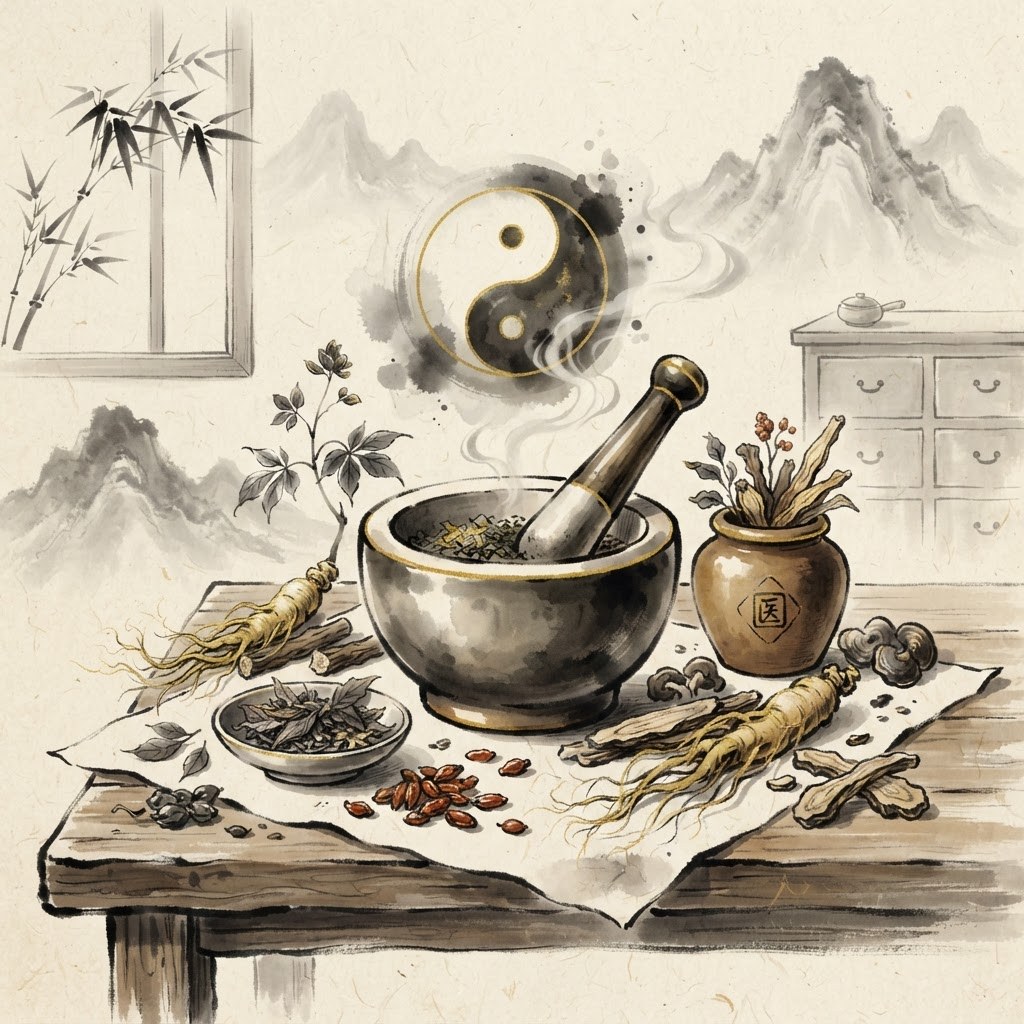
In the classical tradition of Chinese metaphysics, healing is not an isolated medical specialty. It is known as Yi (医), one of the fundamental branches of the Five Arts (五术: 山医命卜相). The ancient scholars recognized that no matter how sharp your mind is, or how favorable your destiny chart might be, an exhausted or imbalanced physical body will prevent you from reaching your true potential. If your energy is drained, your judgment suffers, your decision-making becomes reactive, and your daily life loses its joy.
Before we explore the principles of Yi, I want to state something clearly and plainly right at the start. Classical Chinese healing arts and metaphysics are meant to complement modern medical care, never to replace it. If you have a fever, an infection, an injury, or any physical symptom, your very first step should always be to consult a licensed medical doctor or qualified health professional. Metaphysics offers a way to understand constitutional tendencies, environmental influences, and lifestyle rhythms. It does not replace clinical diagnosis, laboratory tests, or medical treatments. I always tell my students in Singapore and around the world to use common sense and treat modern medicine as an essential ally.
This guide is one of five in my complete series on the Five Arts of Chinese Metaphysics.
The Classical Taxonomy: Where Yi Fits Among the Five Arts
To appreciate what Yi represents, we need to look at how the classical masters organized human knowledge. They grouped the practical sciences of life into five distinct categories, collectively called the Five Arts or Wu Shu (五术). Each art addresses a specific dimension of existence, and together they form a comprehensive framework for living in alignment with natural law.
The first art is Shan (山 – Cultivation), which focuses on personal development, spiritual discipline, martial arts, meditation, and longevity practices. It is the foundation of inner strength and mental clarity.
The second art is Yi (医 – Healing), which encompasses Traditional Chinese Medicine, acupuncture, herbal therapy, food therapy, and moxibustion. Yi focuses on restoring and maintaining the physical vehicle so that life force can flow without obstruction.
The third art is Ming (命 – Destiny), which analyzes a person’s birth timing through systems like Bazi (Four Pillars of Destiny) to map out lifetime energetic patterns, innate strengths, and potential vulnerabilities.
The fourth art is Bu (卜 – Divination), which uses methods like Qi Men Dun Jia, Yi Jing (I Ching), and Da Liu Ren to assess specific situations, answer immediate questions, and time important strategic actions.
The fifth art is Xiang (相 – Observation), which evaluates physical forms, including Feng Shui (environmental topography and architecture), face reading (Mian Xiang), and palmistry (Shou Xiang).
Notice where Yi sits in this taxonomy. It connects inner cultivation (Shan) with external analysis (Ming, Bu, and Xiang). Without physical health, you cannot practice deep cultivation, nor can you effectively execute the strategic guidance provided by destiny or divination charts. Ancient scholars viewed the body as a micro-cosmos, reflecting the exact same laws of Yin, Yang, and the Five Elements that govern the stars, the seasons, and the earth.
The Lay Foundations of Classical Chinese Medicine
When modern readers first encounter Traditional Chinese Medicine (TCM) and the healing branch of metaphysics, the terminology can sound abstract or mystical. Words like “qi,” “meridians,” and “dampness” are often misunderstood as metaphorical ideas. In reality, classical Chinese medicine is a deeply practical observation system developed over thousands of years of clinical practice and empirical study.
Unlike Western medicine, which often focuses on isolating specific pathogens or analyzing microscopic cellular structures, classical Chinese healing focuses on relationships, patterns, and systemic balance. Neither approach is superior; they simply look at the human organism through different lenses. Understanding the basic building blocks of Yi allows you to make sense of how your body responds to stress, diet, climate, and emotional changes.
Yin and Yang: The Dynamic Balance of Life
The concept of Yin and Yang is the cornerstone of all Chinese metaphysics, and it applies directly to human physiology. Yin represents the cooling, nourishing, moistening, quiet, and substantial aspects of the body. Yang represents the warming, activating, moving, transforming, and energetic aspects.
Health exists when Yin and Yang are in dynamic equilibrium. This does not mean a static fifty-fifty split, but rather a flexible harmony that adjusts to your activities and surroundings. For example, during daytime work, your Yang energy naturally rises to provide focus and stamina. At night, Yang subsides so that Yin can nourish your tissues, repair cellular damage, and restore your reserves through quiet sleep.
When this balance breaks down, two primary types of imbalance occur: excess and deficiency. An excess of Yang leads to internal heat, inflammation, restless agitation, and high fever. A deficiency of Yang leaves you feeling cold, sluggish, fatigued, and prone to fluid retention. Conversely, an excess of Yin causes stagnation, coldness, and heavy mucus, while a deficiency of Yin creates night sweats, dry skin, chronic anxiety, and internal burn-out.
In my corporate career, I saw hundreds of business executives suffering from chronic Yin deficiency. They pushed their Yang energy to the limit every single day with caffeine, high-stakes meetings, and minimal sleep. Over time, their cooling Yin reserves dried up, leaving them wired yet exhausted, irritable, and vulnerable to burnout. They thought they needed stronger stimulants, but what their bodies desperately needed was Yin nourishment and rest.
Qi, Blood, and the Meridian System: The Rivers of Life
To understand how Yi operates, we must examine the primary forces that sustain life within the body: Qi (气) and Blood (Xue – 血). In Chinese metaphysics and medicine, Qi is the invisible functional energy that animates, warms, protects, and transforms. Blood is the tangible liquid substance that hydrates, carries nutrients, and anchors the mind.
An ancient saying in TCM states: “Qi is the commander of Blood; Blood is the mother of Qi.” This means that Qi provides the propulsion for Blood to circulate through the vessels, while Blood provides the physical nourishment that keeps Qi from dispersing into nothingness. If your Qi is weak, your Blood stutters and pools, causing sluggish circulation, cold extremities, and chronic stiffness. If your Blood is deficient, your Qi lacks a solid anchor, leading to dizziness, insomnia, pale complexion, and mental instability.
How do Qi and Blood travel throughout the body? They move through a complex network of channels known as Meridians (Jingluo – 经络). You can visualize meridians as an intricate irrigation system running through every layer of tissue, organ, and limb. There are twelve primary meridians, each linked to a specific internal organ system, along with extraordinary pathways that act as deep energy reservoirs.
When meridians are open and clear, energy flows smoothly, tissues receive nourishment, and waste products are evacuated efficiently. However, when emotional distress, improper diet, bad posture, or environmental cold and dampness block these pathways, stagnation occurs. In classical metaphysics, stagnation is the root cause of physical pain and illness. The famous dictum reads: “Where there is flow, there is no pain; where there is pain, there is no flow” (通则不痛,痛则不通).
In my years advising clients and students, I have noticed that people often treat their bodies like machines. When a warning light flashes, they want to cut the wire instead of asking why the engine overheated.
Acunpuncture, moxibustion, tuina massage, and qigong exercises all work directly with the meridian network. By stimulating specific points along these pathways, a skilled practitioner can unblock energetic bottlenecks, direct Qi to deficient organs, and clear stagnant fluids. This is why an acupuncturist might insert a needle into your foot to relieve a throbbing headache; they are adjusting the flow along the Liver or Gallbladder meridian that travels all the way up to your head.
The Five Elements (Wu Xing) in Human Physiology
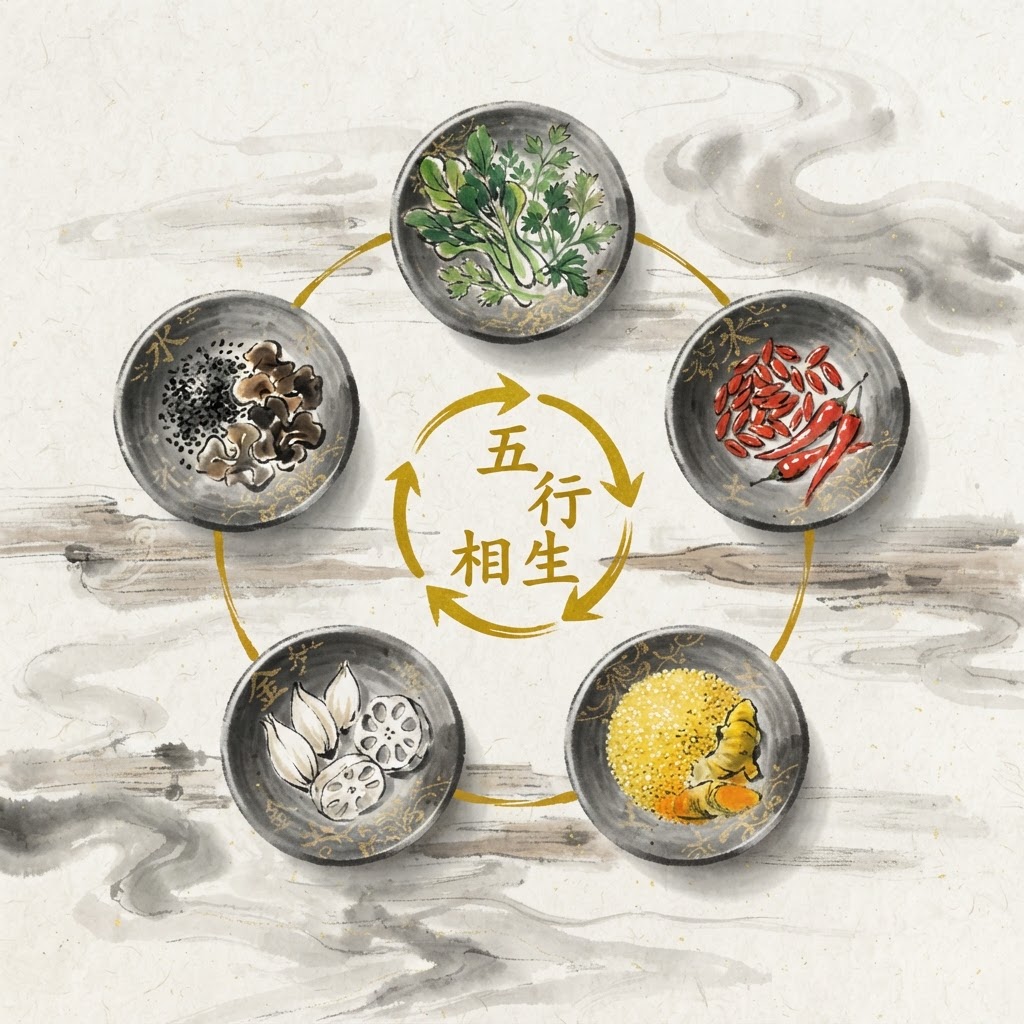
Just as Chinese metaphysics uses the Five Elements (Wood, Fire, Earth, Metal, and Water) to interpret destiny charts and environmental layouts, the healing art of Yi applies these same five phases to internal human organ systems. Each element corresponds to a pair of Zang-Fu organs (one solid Yin organ and one hollow Yang organ), a sensory opening, a tissue type, an emotion, a flavor, and a natural season.
Understanding this internal elemental ecosystem gives you a practical framework for self-observation. When one element becomes overactive or severely weakened, it creates a ripple effect across the entire system according to the generating (Sheng) and controlling (Ke) cycles.
Wood (Mu – 木) governs the Liver and Gallbladder. It represents growth, flexibility, free movement, and vision. In bodily terms, the Liver stores blood and ensures the smooth flow of Qi. Its sensory organ is the eye, and its tissue is the tendons. When Wood is balanced, you feel creative, decisive, and calm. When Wood is constrained or overheated by chronic stress, it produces frustration, anger, migraines, tight shoulders, and brittle nails.
Fire (Huo – 火) governs the Heart and Small Intestine. It represents warmth, animation, consciousness, and joy. The Heart is considered the monarch of the organs, housing the Shen (spirit and mind). Its sensory opening is the tongue, and its tissue is the blood vessels. Balanced Fire manifests as warmth, clear speech, healthy sleep, and enthusiasm. Excess Fire causes insomnia, mouth sores, anxiety, heart palpitations, and emotional volatility.
Earth (Tu – 土) governs the Spleen and Stomach. It represents transportation, transformation, stability, and nourishment. The Spleen is responsible for digesting food and turning it into fresh Qi and Blood. Its sensory opening is the mouth and lips, and its tissue is the muscles. Balanced Earth yields robust digestion, clear thinking, and physical stamina. Weak Earth causes bloating, loose stools, chronic fatigue, brain fog, and obsessive worrying.
Metal (Jin – 金) governs the Lungs and Large Intestine. It represents refinement, boundary, intake, and elimination. The Lungs govern respiration and control the defensive Qi (Wei Qi) that protects the skin against external viruses and cold. Its sensory opening is the nose, and its tissue is the skin and hair. Balanced Metal brings strong immunity, healthy skin, and the capacity to process grief. Imbalanced Metal produces frequent colds, asthma, eczema, dry skin, and lingering sadness.
Water (Shui – 水) governs the Kidneys and Urinary Bladder. It represents core reserves, vital essence (Jing), willpower, and fluid balance. The Kidneys are the foundation of all Yin and Yang in the body, storing the innate constitutional energy inherited from your parents. Its sensory opening is the ears, and its tissue is the bones and teeth. Balanced Water confers resilience, strong lower back and knees, sharp hearing, and steady courage. Deficient Water results in lower back pain, knee weakness, premature graying, tinnitus, and chronic fear.
Below is a summary table showing how these classical elements map directly onto human physiology and daily life:
| Element | Yin Organ (Zang) | Yang Organ (Fu) | Emotion | Flavor | Season | Physical Indicator |
|---|---|---|---|---|---|---|
| Wood (木) | Liver | Gallbladder | Anger / Frustration | Sour | Spring | Tendon flexibility, eye health |
| Fire (火) | Heart | Small Intestine | Joy / Agitation | Bitter | Summer | Complexion, blood vessel tone |
| Earth (土) | Spleen | Stomach | Worry / Overthinking | Sweet (natural) | Late Summer | Muscle tone, lip moisture |
| Metal (金) | Lungs | Large Intestine | Grief / Sadness | Pungent / Spicy | Autumn | Skin health, respiratory strength |
| Water (水) | Kidneys | Bladder | Fear / Anxiety | Salty | Winter | Bone density, lower back, hearing |
Seasonal Living and Traditional Food Therapy (Shi Liao)
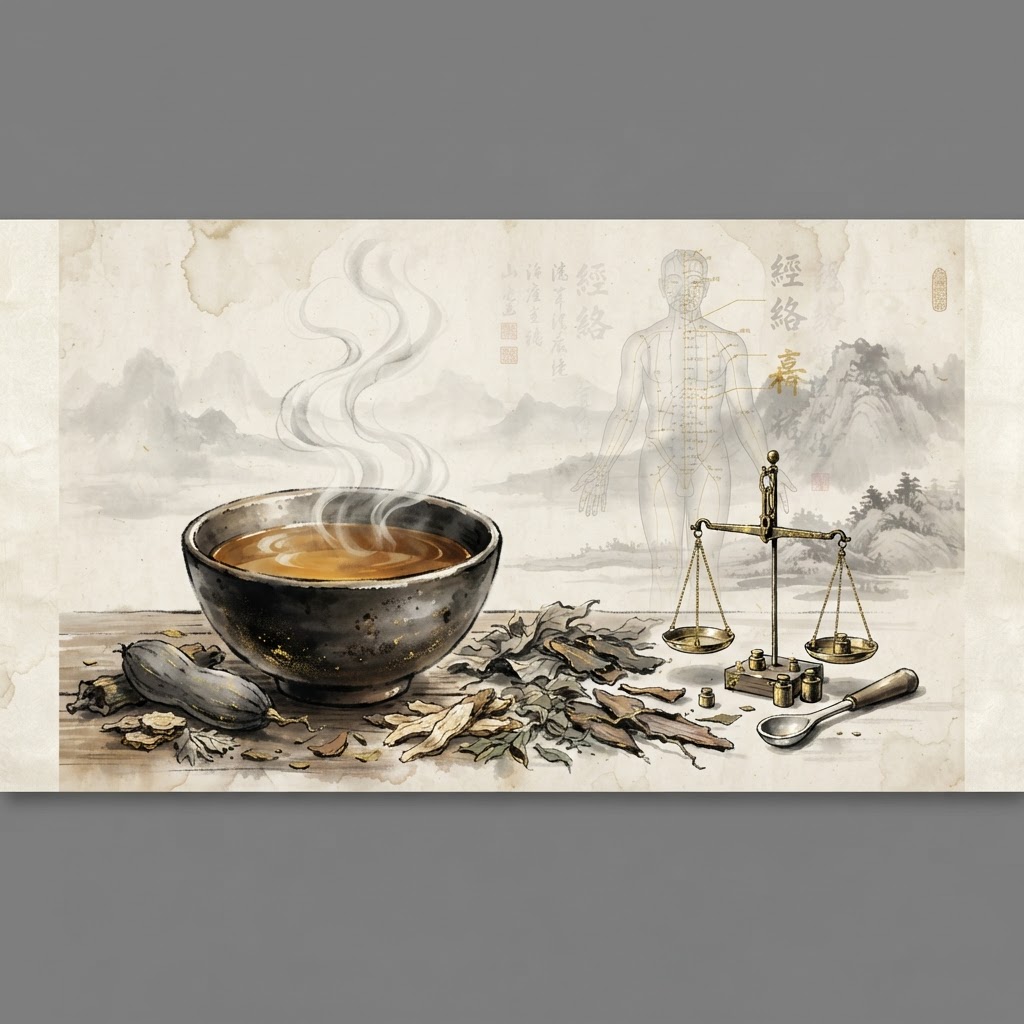
One of the most practical aspects of Yi is Shi Liao (食疗), or traditional food therapy. Long before modern dietary science began analyzing food down to calories and isolated micronutrients, classical Chinese healers evaluated foods based on their energetic temperature (cold, cool, neutral, warm, hot), their taste profiles, and which organ meridians they enter.
The guiding philosophy of seasonal living is simple: aligned living requires eating foods that match the energetic demands of the season. In tropical environments like Singapore, where hot and humid conditions persist year-round, or in temperate regions with dramatic seasonal swings, adjusting your diet prevents environmental extremes from overwhelming your internal organ balance.
During Spring, Wood energy expands. Nature wakes up, and the Liver needs space to circulate Qi freely. This is the ideal time for fresh greens, sprouts, young shoots, and mildly pungent herbs like spring onions and mint that disperse winter stagnation. Excessively rich, greasy, or heavy foods during spring stifle Liver Qi, causing sluggishness and seasonal allergies.
During Summer, Fire energy reaches its peak. Yang energy expands outward, making the body warm and prone to sweat. To protect your Heart and prevent dehydration, classical food therapy recommends light, cooling foods such as cucumber, mung bean soup, watermelon, lotus root, and green tea. However, drinking ice-cold beverages should be avoided because cold liquids shock the Stomach and Spleen, crippling your digestive fire.
During Autumn, Metal energy gathers inward. The air turns dry, and the Lungs become vulnerable to dry coughs and skin irritation. Food therapy shifts toward moistening, lung-nourishing ingredients such as white pears, snow fungus (银耳), honey, steamed lily bulbs, and almonds. These foods coat mucosal membranes and protect internal fluids.
During Winter, Water energy consolidates deep inside. Yang energy retreats into the body’s core to preserve vitality. This season demands warm, rich, stewed foods that build Kidney Jing and warm the digestive fire. Ingredients like black sesame, walnut, black beans, slow-cooked bone broths, ginger, and lamb soup provide the deep sustenance required during cold months.
The following table outlines the practical seasonal living principles and recommended food therapy choices across the four seasons:
| Season | Primary Organ Focus | Recommended Beneficial Foods | Foods to Minimize | Lifestyle Focus |
|---|---|---|---|---|
| Spring (Wood) | Liver & Gallbladder | Leafy greens, spinach, sprouts, mint, goji berries, citrus peel | Heavy fried foods, excessive alcohol, heavy dairy | Early morning walks, stretching, releasing mental frustration |
| Summer (Fire) | Heart & Small Intestine | Mung beans, cucumber, lotus leaf, watermelon, green tea, bitter melon | Iced drinks, spicy hotpots, excessive deep-fried meat | Pacing activity, protecting sleep, keeping calm emotions |
| Autumn (Metal) | Lungs & Large Intestine | White pears, snow fungus, honey, lotus root, lily bulbs, walnuts | Raw cold salads, excessive acrid chilies, dehydrating snacks | Breathing exercises, organizing space, letting go of grief |
| Winter (Water) | Kidneys & Bladder | Black sesame, black beans, lamb stew, bone broth, walnuts, ginger | Raw cold foods, frozen desserts, excessive physical overexertion | Adequate rest, warming lower back, conserving vital reserves |
Diagram 1: The Seasonal Energy Cycle & Organ Relationship
Spring (Wood / Liver) → Expands Qi, requires gentle movement and fresh green foods.
Summer (Fire / Heart) → Peaks Yang, requires light cooling foods and emotional calmness.
Transition / Late Summer (Earth / Spleen) → Harmonizes digestion, requires warm whole grains and cooked vegetables.
Autumn (Metal / Lungs) → Contracts Qi, requires moistening foods like pears and snow fungus.
Winter (Water / Kidneys) → Stores Jing, requires slow-cooked stews, black foods, and deep rest.
How Yi Connects Historically to Other Metaphysical Arts
In modern education, subjects are divided into isolated silos. You study biology in one building, economics in another, and psychology somewhere else. Classical Chinese scholars worked in the exact opposite way. To them, human life was a single unified field. The branch of Yi was never practiced in a vacuum; it operated alongside Bazi destiny analysis, Qi Men Dun Jia divination, and Feng Shui environmental design.
When an ancient scholar examined a person’s life, they looked at the interaction between time (destiny chart), space (environment), and body (health). If a person faced health challenges, the master would cross-reference all three fields to identify where the primary resistance lay.
Bazi (Ming) and Constitutional Vulnerability
Your Bazi birth chart is essentially an energetic snapshot of the elemental forces present at the exact moment of your first breath. Because nobody receives a perfectly balanced distribution of Wood, Fire, Earth, Metal, and Water, every individual carries specific constitutional strengths and vulnerabilities.
For instance, if a person’s chart contains heavy, blazing Fire and completely lacks Water, the Fire element overpowers the system. In classical medicine, Water corresponds to the Kidneys, adrenal system, fluids, and reproductive organs. When such a chart enters a ten-year Luck Pillar dominated by additional Fire or Earth, the Water element experiences intense pressure.
I recall consulting for a senior corporate manager in Singapore several years ago. When we analyzed his destiny chart using Bazi reading principles, I noticed his current decade pillar created a severe elemental imbalance. His chart was flooded with aggressive Fire, while his Water element was completely dried up. He admitted that over the past two years, he suffered from chronic insomnia, severe lower back pain, high blood pressure, and persistent anxiety.
Instead of guessing what was wrong, I advised him to make an immediate appointment with his medical doctor for a thorough clinical examination. At the same time, from a metaphysical lifestyle perspective, we discussed how his prolonged corporate stress and late-night habits were further depleting his already fragile Kidney Water energy. By combining his doctor’s medical treatment with food therapy (consuming nourishing black sesame, lotus seeds, and herbal broths) and strictly prioritizing early sleep, his stamina steadily returned over the following months.
Furthermore, when performing a broader Bazi reading under Qi Men Dun Jia, a practitioner can evaluate both the stationary birth chart and the dynamic temporal stars to see when specific organ systems require extra care. If the chart indicates a period of weak Wood energy, the person should proactively protect their Liver and eyes by avoiding late-night drinking and reducing dietary fats before symptoms ever manifest.
Qi Men Dun Jia (Bu) for Health Strategy and Timing
While Bazi provides a long-term constitutional map, Qi Men Dun Jia serves as an immediate tactical tool. Historically, Qi Men Dun Jia was used for military strategy, but masters quickly recognized its value for assessing health trends and choosing optimal timing for recovery.
In a Qi Men Dun Jia chart, specific palaces correspond to different body regions and organ functions. The Tian Rui star (芮星), for example, traditionally indicates physical sickness or energetic blockage. By inspecting which palace Tian Rui occupies and which doors or deity spirits accompany it, a trained practitioner can gain insight into the underlying nature of an energetic disturbance.
For example, if an individual is planning an elective surgery, a major lifestyle shift, or a period of intensive physical rehab, examining a Qi Men Dun Jia hour chart helps identify auspicious time windows when environmental energy supports resting and healing. Selecting a day and time when supportive stars govern the medical palace allows the body to assimilate treatment with minimal resistance.
Feng Shui (Xiang) and Environmental Rest
The third major connection is between Yi and Feng Shui (environmental observation). You spend approximately one-third of your entire life sleeping in your bedroom. If your bedroom environment is cluttered, exposed to sharp external environmental structures (Sha Qi), or aligned with harmful energetic sectors, your physical body pays the price.
I once audited a client’s home where the husband suffered from chronic migraines and restless sleep for over eighteen months. Medical scans showed no structural damage, but he felt constantly drained. When I inspected his bedroom layout, his bed headboard was positioned directly under a massive exposed overhead beam, and the bedroom door opened straight onto his head. In Feng Shui terms, this created intense downward pressing energy (压顶) that disrupted his head and neck meridian circulation during sleep.
We shifted the bed to a stable solid wall, adjusted the lighting, and improved room ventilation. Within three weeks, his sleep quality improved dramatically, and his morning headaches vanished. This was not magic; it was simply removing a constant environmental stressor so his body’s natural self-healing mechanisms could function properly.
Metaphysics provides a map of probabilities and environmental influences, but your daily habits, diet, and medical advice determine how that map unfolds in your physical body.
How Yi Differs From Modern Western Medicine
A major point of confusion for modern readers is understanding how classical Yi fits alongside Western medicine. Some people mistakenly assume they must choose one and reject the other. That is a false dilemma. Both systems have extraordinary value, but they operate on different principles and solve different problems.
Modern Western medicine is built on reductionism, biochemistry, microbiology, and acute intervention. If you break a leg in a car accident, have an acute appendicitis attack, contract a severe bacterial infection, or require emergency cardiac surgery, Western medicine is unmatched. Its diagnostic technology (including MRI scans, blood tests, ultrasound, and genetic sequencing) provides precise physical measurements that save millions of lives every year.
Classical Yi, on the other hand, is built on systemic relationships, functional energetics, and preventative lifestyle balance. It looks at the body as an interconnected landscape where a symptom in one area is often caused by an imbalance in a distant organ system. Instead of asking “What pathogen or organ is broken?”, Yi asks “What systemic imbalance allowed this vulnerability to develop in the first place?”
The table below provides an honest, side-by-side comparison of how these two distinct approaches evaluate and treat human health:
| Comparison Dimension | Classical Yi (TCM & Metaphysics) | Modern Western Medicine |
|---|---|---|
| Core Philosophy | Holistic balance of Yin, Yang, Qi, and Five Elements | Biochemical, cellular, and anatomical precision |
| Primary Strength | Chronic functional restoration, preventative lifestyle, root balance | Acute emergency care, surgery, trauma, infection control |
| Diagnostic Method | Pulse taking, tongue inspection, symptom pattern matching | Laboratory blood tests, MRI, CT scans, tissue biopsy |
| Treatment Tools | Herbs, acupuncture, food therapy, moxibustion, Qigong | Pharmaceutical drugs, surgical procedures, synthetic therapies |
| View of Symptoms | Signals of broader systemic imbalance across meridians | Specific localized pathologies to be suppressed or removed |
| Best Application | Long-term vitality, seasonal alignment, digestive/sleep balance | Immediate life-threatening crises, physical trauma, structural repairs |
The smartest approach is integration. If you experience alarming physical symptoms, always visit a medical doctor first to rule out serious structural or organic disease. Once you have a clear medical evaluation, you can use the principles of Yi, such as seasonal diet adjustments, stress management, and meridian care, to support your body’s recovery and maintain long-term vitality.
Understanding Dampness and Heat in Everyday Health
To make the principles of Yi concrete for daily life, let us examine two of the most widespread pathological concepts in classical Chinese medicine: Dampness (Shi – 湿) and Internal Heat (Re – 热). If you live in a warm, humid environment like Singapore, or if you work long hours in air-conditioned offices while consuming modern processed food, these two factors almost certainly affect your energy levels on a weekly basis.
In classical theory, Dampness is described as heavy, sticky, lingering, and downward-sinking. It develops when the Spleen’s digestive capacity is overwhelmed and fails to transform fluids efficiently. Instead of clean nutrient fluids circulating smoothly, excess moisture settles into tissues and meridians like muddy water in a sluggish river. If you want to understand the deep mechanics of fluid retention and sluggishness, reading about dampness in classical Chinese health provides crucial insights into how everyday habits accumulate internal moisture.
Common symptoms of internal Dampness include a persistent feeling of heaviness in the limbs, foggy mental focus upon waking, bloating after meals, a thick or greasy coating on the tongue, sticky stools, and swollen ankles. Modern lifestyles accelerate Dampness through several habits: drinking large amounts of iced beverages, eating ice cream or heavy dairy products late at night, consuming raw icy salads, and sitting still for eight hours in air-conditioned spaces without physical movement.
Internal Heat, on the other hand, is warm, rising, inflammatory, and consuming. It can stem from external heat exposure, excess consumption of spicy or deep-fried foods, alcohol, or chronic emotional frustration that causes Liver Qi to stagnate and transform into fire. Symptoms of Internal Heat include recurring mouth ulcers, dry throat, bloodshot eyes, facial acne, dark yellow urine, irritability, and difficulty falling asleep.
When Dampness and Heat combine inside the body, they form Damp-Heat (湿热), which is notoriously stubborn to clear. Damp-Heat feels like wearing a heavy, wet wool sweater on a sweltering summer afternoon. It causes skin break-outs, greasy facial skin, digestive discomfort, and chronic low-grade fatigue.
Clearing Dampness and Heat requires consistent lifestyle adjustments rather than quick fixes. Classical food therapy recommends consuming warm barley water, adzuki bean soup, winter melon, lotus leaf tea, and cooked green vegetables. Simultaneously, you must protect your Spleen by drinking warm liquids instead of iced water and avoiding heavy, oily suppers before sleep.
The table below summarizes common metaphysical health patterns, their physical signs, and practical natural countermeasures:
| Pattern Name | Primary Causes | Typical Physical Symptoms | Practical Countermeasures |
|---|---|---|---|
| Spleen Qi Deficiency with Dampness | Raw cold food, iced drinks, overthinking, sedentary work | Heavy limbs, brain fog, abdominal bloating, loose stools | Warm cooked foods, ginger tea, adzuki beans, moderate daily walks |
| Liver Qi Stagnation with Heat | Chronic stress, suppressed anger, late nights, high pressure | Tight shoulders, migraines, irritability, bitter taste in mouth | Chrysanthemum tea, rosebud tea, deep breathing, early bedtime |
| Yin Deficiency with Internal Fire | Overwork, chronic sleep deprivation, excessive caffeine | Night sweats, dry throat, restless insomnia, warm palms/soles | Goji berries, white fungus, lily bulbs, reducing stimulants |
| Kidney Yang Deficiency | Aging, excessive physical exhaustion, cold exposure | Cold feet and hands, lower back weakness, frequent urination | Warming spices (cinnamon, ginger), walnuts, keeping feet warm |
Diagram 2: Damp-Heat Accumulation & Clearance Flow
Primary Causes: Iced drinks + fried foods + chronic emotional stress + late nights.
↓
Internal Mechanism: Spleen fails to transform fluids → Dampness accumulates. Liver Qi stagnates → Internal Heat ignites.
↓
Resulting Symptoms: Heavy limbs, facial acne, mouth ulcers, digestive bloating, sticky tongue coating.
↓
Practical Clearance Path: Drink warm barley tea → Eat steamed winter melon → Sleep before 11 PM → Avoid iced drinks → Consult a medical doctor for persistent symptoms.
The Other Four Arts
- Shan, the Art of Cultivation in Chinese Metaphysics
- Ming, the Art of Destiny in Chinese Metaphysics
- Bu, the Art of Divination in Chinese Metaphysics
- Xiang, the Art of Observation in Chinese Metaphysics
Frequently Asked Questions
How does Yi differ from standard TCM practiced in clinics today?
Yi is the classical overarching branch of healing in Chinese metaphysics that includes Traditional Chinese Medicine (TCM), food therapy, moxibustion, and energetic cultivation. Modern clinical TCM focuses primarily on herbal prescriptions, acupuncture, and physical diagnosis within a clinical setting. Classical Yi places these medical practices within the broader framework of the Five Arts, taking into account seasonal rhythms, personal Bazi birth charts, and environmental Feng Shui factors.
Can I use Chinese food therapy while taking modern prescription medication?
In most cases, mild food therapy principles, such as consuming warm barley tea, cooked vegetables, and seasonal soups, are safe and complementary to modern medical treatments. However, if you are taking prescription medications, especially blood thinners or immunosuppressants, you should always inform your medical doctor before taking strong therapeutic herbs or concentrated botanical remedies to prevent potential drug interactions.
How can I tell if my body suffers from excess Dampness or Internal Heat?
Dampness manifests primarily as heaviness, swelling, brain fog, sluggish digestion, and a thick coating on the tongue. Internal Heat manifests as warmth, redness, mouth ulcers, dry throat, facial acne, irritability, and dark urine. Many individuals experience a combination of both, known as Damp-Heat. Checking your tongue in the morning and observing your energy levels after eating provides valuable clues about your internal state.
What role does emotional stress play in classical Chinese healing?
In classical Chinese medicine, emotions and internal organs share a direct two-way relationship. Anger and frustration affect the Liver, excessive worry damages the Spleen, grief impairs the Lungs, fear weakens the Kidneys, and extreme agitation impacts the Heart. Unresolved emotional stress causes Qi to stagnate, which eventually leads to physical stiffness, digestive trouble, or sleep disturbances.
Is it safe to combine acupuncture with Western physical therapy?
Yes, acupuncture and Western physical therapy often work exceptionally well together. Western physical therapy targets muscle group strength, joint range of motion, and structural rehabilitation. Acupuncture helps reduce localized inflammation, release tight trigger points along meridians, and promote blood circulation to injured tissues. Always coordinate care between your licensed acupuncturist and physical therapist.
How often should I adjust my diet according to seasonal changes?
Seasonal diet adjustments do not require drastic overhauls every week. Instead, tune into major seasonal transitions (Spring, Summer, Autumn, and Winter) or notice changes in weather and humidity. In tropical climates, pay attention to hot days versus rainy, damp periods. Adjusting your food temperature, cooking methods, and ingredient choices every few months keeps your internal system aligned with nature.
How can a Bazi chart warn me about potential health issues before they occur?
A Bazi birth chart maps the balance of Wood, Fire, Earth, Metal, and Water present at your birth. By analyzing elemental excesses or severe deficiencies, a practitioner can identify organ systems that naturally possess lower energetic reserves. When future ten-year Luck Pillars or annual cycles clash with those elements, proactive health care, such as improving diet, protecting sleep, and scheduling routine medical checkups, helps mitigate potential physical strain.
Related Reading
To deepen your understanding of how Chinese metaphysics interconnects health, destiny, timing, and environmental harmony, explore the following guides from our library:
- Bazi Reading: The Ancient Art of Fortune Telling – Learn how your birth chart reveals elemental tendencies, lifetime opportunities, and constitutional health balances.
- Bazi Reading Under Qi Men Dun Jia – Discover how combining Bazi with Qi Men Dun Jia offers deeper strategic clarity for life decisions and health timing.
- Qi Men Dun Jia Hour Chart Explained – Understand how hourly energy charts provide real-time strategic insights for business, wellness, and personal timing.
- Understanding Dampness in Classical Health – Read our practical guide on recognizing, preventing, and clearing internal dampness through diet and lifestyle shifts.
Final Thoughts on Cultivating Lifelong Harmony
Throughout my corporate career, I spent decades measuring success by financial metrics, company expansion, and business growth. It was only when I stepped into the world of Chinese metaphysics that I recognized health as the true currency of life. The classical art of Yi reminds us that living well is not about fighting against your body, but rather learning to listen to its signals and living in harmony with natural cycles.
By respecting the balance of Yin and Yang, honoring seasonal shifts, eating wholesome foods, maintaining clear meridians, and placing your trust in qualified medical professionals whenever illness arises, you build a resilient foundation for long-term vitality. Metaphysics offers a profound map for understanding life, but the daily choices you make at the dining table, in your rest routine, and in your self-care determine how brightly your life force burns.
Explore More: Deep Dives into Yi, the Art of Healing
This guide is part of the Five Arts of Chinese Metaphysics series. For a practical deep dive into each topic covered here, explore these related articles:
- Yin and Yang Balance in Traditional Chinese Medicine
- The Five Elements and Human Organ Systems
- Qi and Blood Circulation in Chinese Healing
- Seasonal Living and Traditional Food Therapy
- Clearing Dampness and Internal Heat Naturally
- BaZi Destiny Charts and Constitutional Health
- Feng Shui Bedroom Design for Physical Recovery
- Integrating Classical Yi with Modern Western Medicine
For the full Five Arts framework, see the pillar page on the Five Arts of Chinese Metaphysics.
Leave a Reply
You must be logged in to post a comment.