Xiang, the Art of Observation in Chinese Metaphysics
Over my thirty years in corporate recruitment, business management, and executive hiring in Singapore, I’ve spent thousands of hours sitting across boardroom tables, quiet coffee shop corners, and interview desks. In those three decades, I’ve interviewed thousands of job candidates for senior leadership roles, evaluated potential business partners, and negotiated complex commercial contracts. When you spend that much time observing people under pressure, you quickly realize that human beings communicate constantly through their posture, facial structures, eye presence, and personal energy long before they ever answer a single interview question.
Later in my career, I transitioned into teaching Qi Men Dun Jia and traditional Chinese metaphysics, eventually founding an academy and mentoring students across Singapore and internationally. I want to make one thing completely clear right from the start: I don’t claim decades of professional face reading or metaphysical consulting practice. My foundation began in practical, real-world corporate recruitment. What fascinated me as I studied classical Chinese metaphysics was how the ancient branch known as Xiang (相), often translated as the Art of Observation or Form Analysis, systematically explained the exact observational patterns that experienced business leaders develop over years of trial and error.
In classical Chinese metaphysics, all foundational knowledge is traditionally organized into the Five Arts (五术: Wu Shu). These five branches form a comprehensive framework for understanding human potential, physical health, time cycles, and natural environments:
- Shan (山 – Cultivation): The art of self-improvement, physical training, breathwork, meditation, and inner alchemy designed to build physical endurance, mental resilience, and spiritual clarity.
- Yi (医 – Healing): Traditional Chinese Medicine, acupuncture, herbal prescription, pulse diagnosis, and bodywork focused on restoring internal organ balance and unblocking qi circulation.
- Ming (命 – Destiny): Analytical systems such as Bazi (Four Pillars of Destiny) and Zi Wei Dou Shu (Purple Star Astrology) that calculate birth timing to map inherited personality traits, natural talents, and timing cycles.
- Bu (卜 – Divination): Strategic forecasting tools such as Qi Men Dun Jia, Yi Jing (I Ching), and Da Liu Ren that answer specific tactical questions to guide decision-making during moments of uncertainty.
- Xiang (相 – Observation): The systematic study of visible forms, physical shapes, environmental landforms, facial features, palm structures, and names to evaluate underlying energy and character.
While Shan builds your internal constitution, Yi heals physical imbalances, Ming outlines your inherited roadmap, and Bu resolves immediate tactical dilemmas, Xiang focuses entirely on the present physical reality. It is the observational engine of Chinese metaphysics. It takes the abstract principles of Yin-Yang, the Five Elements (Wood, Fire, Earth, Metal, Water), and Qi, and grounds them in what you can directly see, hear, touch, and measure in the physical world.
This guide is one of five in my complete series on the Five Arts of Chinese Metaphysics.
The Core Philosophy of Xiang: As Within, So Without
The Chinese character for Xiang (相) carries several interconnected meanings in classical texts. It refers to appearance, physical form, posture, image, phase, and mutual interaction. In ancient philosophy, Xiang rests on a foundational premise expressed in the classic adage: “Yu zhong xing yu wai” (有诸内者,必形诸外). This translates to: whatever takes root on the inside will inevitably manifest on the outside. Nothing internal remains completely hidden forever.
To an untrained observer, a person’s face or an office building’s physical layout might appear entirely random or purely aesthetic. To someone trained in Xiang, physical structures serve as a visible barometer of invisible forces. A person’s internal organ health, emotional habits, mental focus, and stress levels gradually sculpt their physical body over time. Repeated thoughts and emotional patterns carve distinct muscle memory into the face, affect posture, alter vocal timbre, and shape how a person carries themselves. In the exact same manner, the physical contours of natural landforms, mountain ridges, water pathways, and architectural shapes dictate how atmospheric energy (qi) settles or dissipates within a given environment.
Classical Metaphysics divides Xiang into two complementary categories: static forms and dynamic forms. Understanding the distinction between these two realms is essential for any practitioner or business leader:
Static Forms (Jing Xiang 静相): These include permanent or slowly changing physical structures such as bone formations, skull shape, ear placement, finger proportions, natural mountain contours, and Chinese character stroke counts. Static forms represent your baseline constitutional foundation, inherited talents, and long-term structural capacities.
Dynamic Forms (Dong Xiang 动相): These encompass real-time, rapidly shifting physical signals such as micro-expressions, vocal pitch, speech tempo, breathing depth, walking gait, eye clarity (Shen), muscle tension, and the shifting energy of a physical room. While static forms reveal baseline tendencies, dynamic forms reveal real-time vitality, emotional sincerity, immediate stress levels, and active intentions.
The Five Element Shapes in Physical Forms
In classical observation, physical shapes are classified according to the Five Elements (Wu Xing 五行). Every human body, face, hand, and building displays a primary elemental signature:
- Metal Forms (Jin): Characterized by clean, square, sharp, and highly structured shapes. Metal faces have clear jawlines, firm bone structure, and neat features. In business, Metal signatures represent discipline, organization, compliance, and strong boundary setting.
- Wood Forms (Mu): Defined by long, tall, rectangular, and upright proportions. Wood faces feature high foreheads, straight noses, and slender bone structures. Wood signatures represent strategic thinking, rapid growth, intellectual curiosity, and long-range planning.
- Water Forms (Shui): Recognized by soft, rounded, fleshy, and fluid contours. Water faces possess full cheeks, smooth features, and expressive eyes. Water signatures signify adaptability, emotional intelligence, diplomacy, and resourcefulness.
- Fire Forms (Huo): Characterized by pointed, angular, triangular, and expressive features. Fire faces often have prominent cheekbones, pointed chins, and animated eyes. Fire signatures represent passion, public charisma, sales ability, and high energy.
- Earth Forms (Tu): Defined by thick, heavy, wide, and solid physical shapes. Earth faces feature broad jaws, thick earlobes, and solid bone density. Earth signatures embody patience, endurance, grounded stability, and practical execution.
In real life, very few individuals or buildings exhibit a single pure element. Most people carry a combination of elements, such as Wood-Metal (strategic yet structured) or Earth-Water (grounded yet adaptable). Understanding these element combinations allows an observer to evaluate how different personality aspects balance or clash within an executive team.
| Sub-Art of Xiang | Primary Subject | Key Focal Points | Practical Business Application |
|---|---|---|---|
| Mian Xiang (面相) | Human Facial Physiognomy | Three Courts, Twelve Palaces, bone structure, eye clarity (Shen), skin tone, facial lines | Evaluating emotional stamina, leadership suitability, and stress indicators during executive interviews |
| Kan Yu / Feng Shui (勘舆/风水) | Land & Building Physiognomy | Dragons (mountains), Water flows, main entrance (Ming Tang), desk alignment, spatial flow | Selecting office locations, arranging commercial workspaces, and improving employee focus and retention |
| Shou Xiang (手相) | Palmistry & Hand Structure | Five Element hand shapes, palm lines, mounts, grip firmness, finger flexibility | Gauging decision-making speed, practical execution style, and physical energy baseline |
| Ming Xiang (名相) | Name & Symbol Analysis | Stroke counts, Five Element character balance, phonetic cadence, logo structure | Selecting corporate brand names, domain titles, and organizational identity balance |
| Behavioral Observation (察言观色) | Dynamic Human Signals | Micro-expressions, vocal pitch, posture shifts, eye movements, walking cadence | Detecting incongruence between spoken claims and genuine feelings during corporate negotiations |
In my recruitment business, I noticed early on that candidates who looked perfect on paper often performed drastically differently once hired into senior management roles. A resume highlights achievements and polished credentials, but it can’t show you how a manager reacts when a critical project fails at midnight. Learning to observe physical cues, vocal stability, eye spirit, and environmental presence gave me an extra layer of awareness that helped me ask far better, deeper interview questions.
Mian Xiang (面相): Reading the Human Face
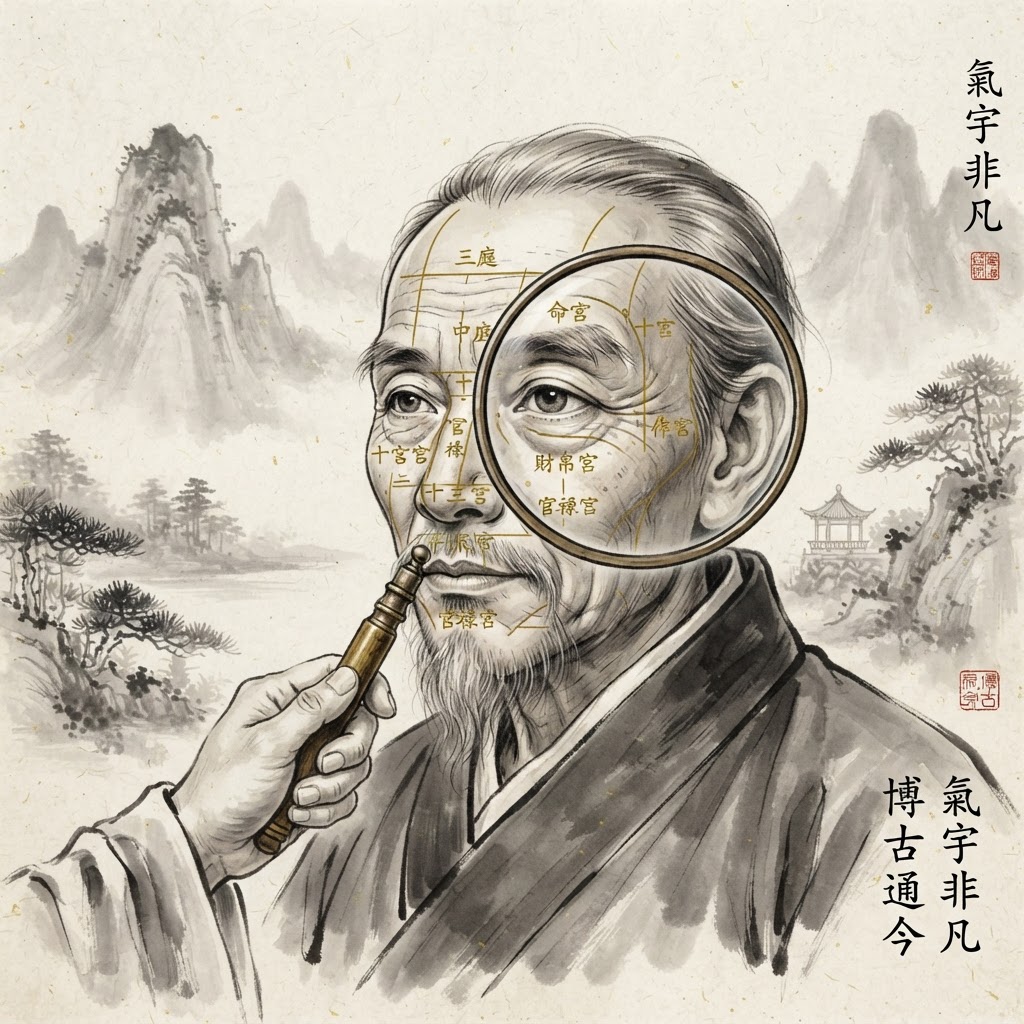
Among all the sub-branches of Xiang, face reading (Mian Xiang) remains the most widely studied and practical field for interpersonal interaction. The human face acts as a living canvas where past habits, current vitality, and emotional health leave distinct marks. In classical Mian Xiang, masters analyze the face through two primary structural maps: the Three Courts (San Ting 三停) and the Twelve Palaces (Shi Er Gong 十二宫).
The Three Courts divide the face vertically into three distinct zones that correlate with specific stages of life and psychological orientations:
1. The Upper Court (Shang Ting 上停): Spanning from the natural hairline down to the eyebrows, this region governs youth (approximately ages 15 to 30), intellectual inheritance, analytical capacity, and early guidance from parents or mentors. A broad, full, unblemished forehead suggests strong cognitive agility and early educational opportunities. A narrow, flat, or heavily scarred forehead indicates that an individual had to fight hard for early opportunities without much guidance.
2. The Middle Court (Zhong Ting 中停): Extending from the eyebrows down to the tip of the nose, this zone governs middle age (ages 31 to 50), personal drive, career execution, emotional management, and financial accumulation. The eyebrows, eyes, nose, and cheekbones reside here. When this section is well-balanced, prominent, and flesh-supported, the individual possesses strong personal agency and execution power during their prime earning years.
3. The Lower Court (Xia Ting 下停): Running from the base of the nose down to the bottom of the chin, this area governs later life (ages 51 and beyond), physical stamina, emotional grounding, and the ability to manage teams or subordinates. A broad, firm jawline and well-fleshed chin indicate strong endurance and late-life stability, whereas a weak, sharply receding chin can signal difficulty sustaining efforts under prolonged hardship.
The Twelve Palaces of the Face (Shi Er Gong 十二宫)
Beyond the Three Courts, classical face reading maps twelve specialized “palaces” across facial geography. Each palace governs a specific dimension of life, career, and personal energy:
- Life Palace (Yin Tang 印堂): Located directly between the eyebrows. This is the central gateway of your life energy. A wide, smooth, elevated Yin Tang (about two fingers wide) indicates open-mindedness, emotional resilience, and clear life flow. A narrow, constricted, or deeply furred Yin Tang signals high anxiety, impatience, and internal stress.
- Career Palace (Guan Lu Gong 官禄宫): Positioned on the upper central forehead. A smooth, rounded Career Palace reflects high professional standards, organizational respect, and smooth advancement in management structures.
- Wealth Palace (Cai Bo Gong 财帛宫): Centered on the nose tip and nostrils. It measures financial stewardship, asset accumulation, and resource generation.
- Property Palace (Tian Zhai Gong 田宅宫): Located on the upper eyelids between the eyebrows and eyes. Broad, smooth eyelids indicate spatial appreciation, real estate stability, and emotional tranquility.
- Subordinate Palace (Nu Pu Gong 奴仆宫): Positioned along the jawline and lower cheeks. It reflects team loyalty, leadership authority, and your ability to manage staff effectively.
- Health Palace (Ji Bing Gong 疾厄宫): Located on the bridge of the nose between the eyes. A smooth, clear nose bridge signals strong constitutional immune response and digestive health.
Classical Age Mapping Across the Face (The 100 Years Map – Bai Sui Liu Nian)
In classical Mian Xiang, the face acts as a chronological clock spanning one hundred years of life energy (Bai Sui Liu Nian 百岁流年). Energy moves across specific facial locations as an individual matures through different life stages:
- Ages 1 to 14 (The Ears): Childhood vitality, parental protection, and early health are read on the outer ear rims (Tian Lun) and inner ear ridges (Ren Lun).
- Ages 15 to 30 (The Forehead): Educational opportunities, early career choices, and mental development reflect across the upper forehead down to the hairline.
- Ages 31 to 34 (The Eyebrows): Emotional maturity, peer relationships, and social collaboration focus along the eyebrow ridges.
- Ages 35 to 40 (The Eyes): Leadership clarity, mental presence, and emotional focus concentrate within the eyes and surrounding eye sockets.
- Ages 41 to 50 (The Nose): Core wealth generation, mid-career execution, and financial consolidation center upon the nose bridge, nose tip, and cheekbones.
- Ages 51 to 60 (Philtrum and Mouth): Life communication, mentorship, legacy building, and vitality center around the philtrum and lip structure.
- Ages 61 and Beyond (Chin and Jawline): Late-life stability, retirement security, physical stamina, and subordinate support manifest along the jawline and chin base.
Key Facial Features and Their Classical Meanings
When evaluating a face, classical practitioners don’t look at features in isolation. They examine how individual elements work in harmony with one another. Here are the core features I pay attention to when observing business executives and job applicants:
- Forehead (The Career Foundation): A high, wide forehead reveals a person who processes abstract concepts quickly and enjoys strategic planning. When interviewing senior executives, a clear forehead without deep horizontal lines at a young age often correlates with calm mental organization.
- Eyebrows (The Sibling and Peer Palace): Eyebrows reflect emotional temperament, passion, and how one relates to peers. Smooth, neatly aligned eyebrows indicate emotional balance and collaborative spirit. Conversely, individuals with thin eyebrows meaning in face reading often demonstrate sensitive emotional boundaries, meticulous attention to detail, and a preference for independent work over noisy group settings.
- Eyes and Shen (The Mind Palace): The eyes are the single most crucial feature in all of Mian Xiang. More than eye shape, classical readers evaluate Shen (神), which translates to spirit, eye brightness, and mental presence. A person with focused, clear Shen looks at you with calm intensity and transparency. When Shen is scattered, cloudy, or excessively sharp, it indicates internal fatigue, hidden conflict, or lack of emotional stability. Understanding facial features indicating confidence starts with recognizing clear, steady Shen during conversation.
- Nose (The Wealth and Self Palace): In classical face reading, the nose bridge (Sheng Guang) represents self-confidence, physical health, and personal drive, while the nose tip (Zhun Tou) and nostrils (Wing Palaces) represent cash flow and asset protection. A straight nose bridge with a rounded, fleshy tip signals strong financial stewardship and personal drive. Nostrils that flare excessively wide or open forward can suggest generous spending habits or difficulty holding onto liquid capital.
- Cheekbones (The Authority Palace – Quan Gu 颧骨): Cheekbones represent personal authority, administrative control, and how much support you receive from peers and subordinates. High, rounded cheekbones covered with healthy skin suggest a natural ability to command respect and lead teams. Flat or sunken cheekbones indicate someone who prefers individual contributor roles rather than managing corporate politics.
- Chin and Jawline (The Subordinate Palace): The chin reveals endurance, willpower, and late-life stability. When conducting executive assessments, comparing a strong chin vs weak chin face reading comparison reveals valuable clues about how a candidate handles high-stakes pressure. A strong, broad chin reflects tenacity and emotional resilience, while a receding chin suggests a person who prefers quick wins and may struggle during long turnaround projects.
- Ears (The Health and Foundation Palace): Ears reflect childhood health, early constitutional strength, and risk tolerance. Thick, firm ears positioned higher than the eyebrow line suggest sharp listening ability, quick comprehension, and strong natural vitality. Examining attached ear lobes meaning in face reading provides insight into personal independence, budget discipline, and how pragmatically someone manages personal relationships.
- Mouth and Philtrum (Ren Zhong 人中): The philtrum (the vertical groove between nose and upper lip) and mouth represent communication honesty, speech integrity, and longevity. A deep, clear philtrum and firm lip closure signal clear communication and emotional self-control, while thin, tightly pinched lips can indicate overly critical speech habits under stress.
Facial Qi Color and Micro-Expressions (Qi Se 气色)
In addition to permanent bone structure, classical face readers pay close attention to Qi Se (气色), which refers to the transient luster, skin tone shifts, and micro-expressions of the face. While bone structure shows long-term character tendencies, Qi Se reveals real-time health, recent luck, and immediate psychological states.
A healthy, thriving individual exhibits a warm, bright, clear glow beneath the skin, particularly across the forehead and nose tip. When someone experiences chronic exhaustion, severe anxiety, or impending burnout, their facial skin loses its natural luster, taking on a dull, grayish, or pale yellow cast. Dark circles under the eyes indicate kidney exhaustion and sleep deprivation, while sudden redness across the nose bridge signals high stress and financial friction. Observing Qi Se during executive interviews allows business owners to assess whether a candidate possesses the active physical vitality required for demanding corporate roles.
In my thirty years of interviewing executives and entrepreneurs, I’ve learned that a person’s face tells you where their energy has been spending time. Features suggest inclinations, but character is revealed in how they handle pressure.
Practical Application in 30 Years of Hiring
I want to offer a very honest piece of advice for anyone interested in face reading: never make a hiring, firing, or investment decision based solely on a facial feature. In my recruitment practice, if I saw a candidate with a thin nose bridge or a slightly receding chin, I didn’t write them off. That would be completely foolish and unfair.
Instead, I used face reading as a practical diagnostic tool to guide my interviewing strategy. For example, if a candidate applied for a high-stress sales director position but displayed extreme jaw tension, scattered eye spirit, and nervous fidgeting, I would pay extra attention to their past performance metrics under crisis. I would ask detailed behavioral questions about how they managed team burnout, budget cuts, and tight deadlines. Mian Xiang alerted me to potential stress vulnerabilities so I could verify them through objective questions and reference checks.
| Facial Court / Zone | Associated Age Range | Key Features Located | Executive Interview Observation |
|---|---|---|---|
| Upper Court (Shang Ting) | Ages 15 to 30 | Forehead, hairline, temple area, Career Palace | Evaluates strategic thinking, abstract reasoning, and openness to executive coaching |
| Middle Court (Zhong Ting) | Ages 31 to 50 | Eyebrows, eyes, nose, cheekbones, Life Palace | Gauges mid-career execution power, financial management style, and personal drive |
| Lower Court (Xia Ting) | Ages 51 and beyond | Philtrum, lips, chin, jawline, Subordinate Palace | Assesses long-term operational stamina, team management, and late-life stability |
| Spirit Indicator (Shen) | All Ages (Continuous) | Eye clarity, pupil focus, eye whites balance | Measures emotional sincerity, mental focus, fatigue levels, and inner conviction |
Kan Yu (勘舆) & Feng Shui: The Xiang of Place and Environment
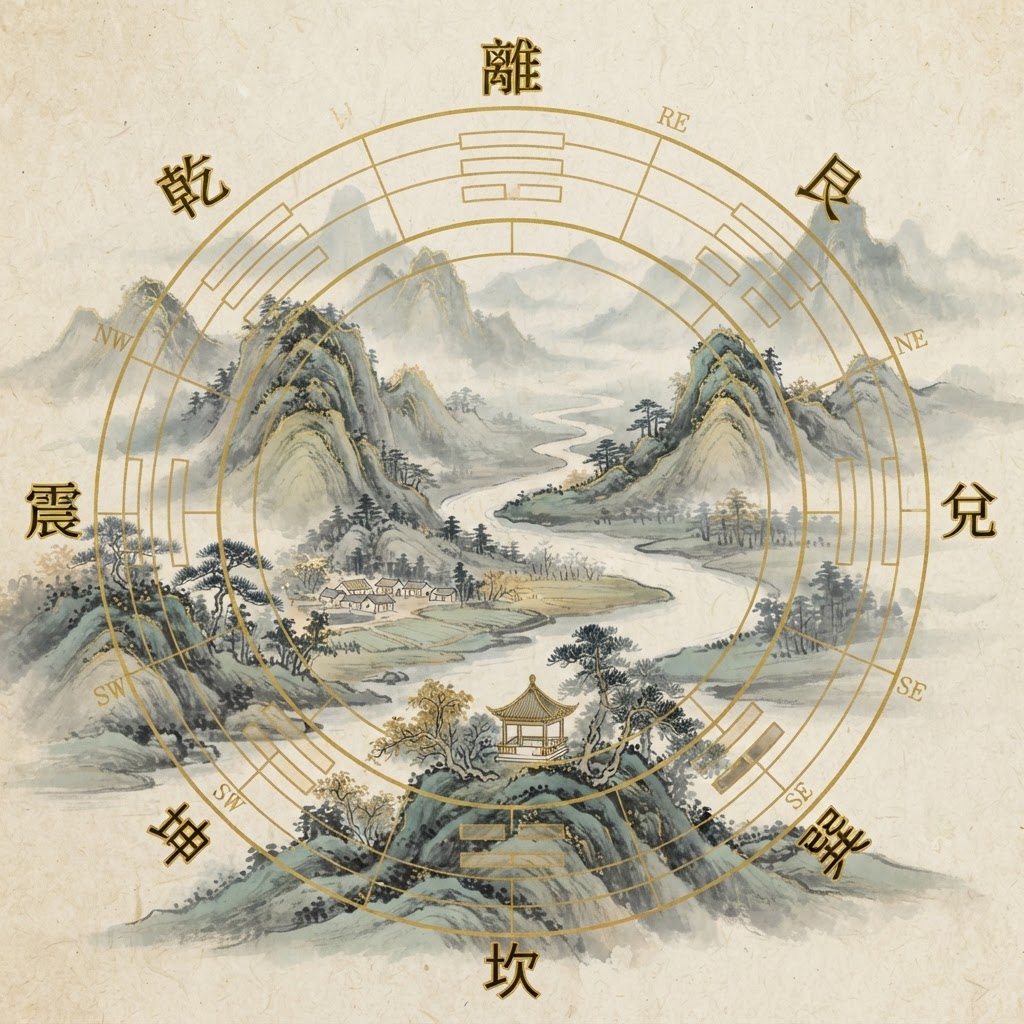
While Mian Xiang focuses on the human face, Kan Yu (勘舆), commonly known as Feng Shui, represents the Xiang of land, geography, and physical architecture. In classical metaphysics, Feng Shui is literally called Di Xiang (地相 – Land Physiognomy). Just as a face reader reads the features of a human countenance, a Feng Shui practitioner reads the physical face of the earth and the man-made structures built upon it.
Environment and mind exist in a continuous feedback loop. When you walk into a well-designed, harmonious office space, your posture opens up, your mind calms down, and your focus sharpens naturally. When you sit in a dark, cluttered, noisy room with your back turned to an open corridor, your nervous system remains in subtle, constant fight-or-flight mode. Environmental Xiang studies how spatial geometry, natural light, entry pathways, ventilation, and surrounding structures shape human behavior and corporate performance.
Macro Environmental Xiang vs. Micro Office Layouts
In classical Feng Shui, observation operates at two distinct scales: macro geography and micro spatial design.
Macro Environmental Xiang: This involves examining the surrounding physical landscape. In traditional terms, practitioners observe Mountain Dragons (Shan Long 山龙) and Water Dragons (Shui Long 水龙). In modern urban settings like Singapore, high-rise buildings act as artificial mountains, while roads, highways, expressways, and pedestrian pathways act as water rivers. A commercial office building backed by stable, well-designed structures receives solid environmental support, whereas a building positioned at the sharp intersection of fast-moving highways experiences aggressive, erratic energy flow.
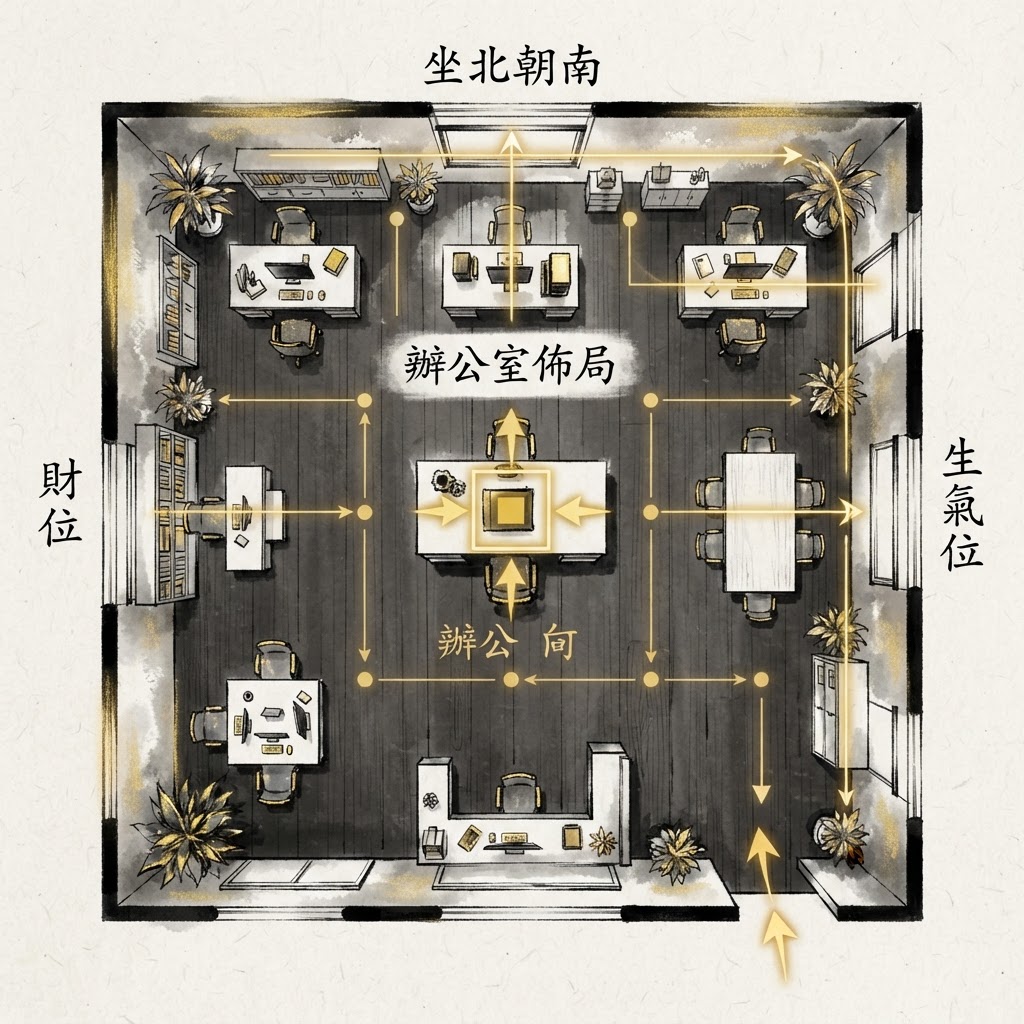
Micro Environmental Xiang: This focuses on the interior layout of offices, boardrooms, reception areas, and individual desks. The most important area in any business workspace is the Ming Tang (明堂 – Bright Hall), which refers to the open area directly in front of the main entrance or executive desk. A spacious, well-lit, uncluttered Ming Tang allows energy and prospective opportunities to collect naturally. Conversely, an entrance blocked by tall partitions, dark corridors, or storage boxes restricts growth and creates operational friction.
The Four Celestial Animals Model in Spatial Xiang
Classical Feng Shui uses four symbolic creatures to describe ideal spatial positioning for executive desks, workstations, and corporate buildings:
- Black Tortoise (Rear Support): A solid wall directly behind your desk providing physical stability, privacy, authority support, and psychological security.
- Green Dragon (Left Side): Higher or active structures on your left representing leadership authority, strategic planning, and supportive advisors.
- White Tiger (Right Side): Slightly lower or quieter structures on your right representing operational execution, risk control, and administrative detail.
- Crimson Phoenix (Front View): A clear, open space in front of your desk allowing broad vision, long-term strategic foresight, and opportunity flow.
During my thirty years in corporate business, I visited hundreds of company offices across various industries in Southeast Asia. I repeatedly observed that companies suffering from high employee turnover, internal politics, and chronic project delays almost always operated in poorly laid-out spaces. Desks were jammed against high-traffic doorways, executive seats backed onto glass corridors with constant foot traffic, and main entrances felt cramped and gloomy. Adjusting physical placement won’t fix a broken business model, but creating a harmonious workspace removes constant subconscious friction for your team.
| Workspace Zone | Positive Xiang Markers | Negative Xiang Indicators | Business Impact |
|---|---|---|---|
| Main Entrance (Ming Tang) | Bright lighting, open clear space, welcoming corporate signage | Dark narrow hallway, immediate wall obstruction, trash or storage clutter | Influences client first impressions, lead generation, and incoming business momentum |
| CEO / Executive Desk | Solid wall behind seat, clear line of sight to entrance, spacious front view | Back facing doorway, seating under sharp overhead beam, direct wall facing | Affects executive clarity, stress management, and decision-making authority |
| Team Workspace | Generous walking aisles, ample natural light, organized cable management | Cramped desks, harsh glare, chaotic loose cables, noisy corridor placement | Impacts employee daily focus, collaboration speed, and staff retention rates |
| Meeting Room Layout | Balanced rectangular table, clear entry, comfortable natural air flow | Low ceilings, cramped seating, glass walls exposed to heavy office traffic | Influences negotiation results, team alignment, and meeting productivity |
Shou Xiang (手相) & Ming Xiang (名相): Palmistry and Name Analysis
In addition to face reading and environmental assessment, the classical taxonomy of Xiang includes two other specialized sub-arts: Shou Xiang (手相 – Palmistry) and Ming Xiang (名相 – Name and Symbol Analysis).
Shou Xiang (Palmistry) in Executive Interaction
Palmistry in Chinese metaphysics goes far beyond predicting marriage dates or lucky lottery numbers. Classical Shou Xiang analyzes hand structure, skin texture, finger flexibility, palm mounts, and primary line pathways to understand an individual’s behavioral tendencies, cognitive style, and practical execution habits.
In classical hand classification, hands are categorized according to Five Element structural types:
- Metal Hands: Square palms with short, firm fingers. Metal-handed individuals are systematic, structured, disciplined, and excel in compliance, operations, and rule enforcement.
- Wood Hands: Long, rectangular palms with slender, knobby fingers. Wood-handed individuals possess strong analytical curiosity, strategic vision, and thrive in research, writing, and high-level strategy.
- Water Hands: Soft, fleshy, flexible palms with smooth fingers. Water-handed individuals are highly intuitive, emotionally empathetic, flexible, and excel in public relations and diplomacy.
- Fire Hands: Conical palms with pointed fingers and reddish skin tones. Fire-handed individuals are energetic, passionate, charismatic, and thrive in public speaking, sales, and creative leadership.
- Earth Hands: Thick, heavy, square palms with short fingers. Earth-handed individuals are grounded, pragmatic, patient, and excel in construction, logistics, and hands-on execution.
In business settings, a simple handshake offers immediate physical observations. A firm, warm, dry grip accompanied by a flexible thumb signals open communication, confidence, and pragmatic adaptability. A limp, cold, clammy handshake often reflects low physical vitality, hidden anxiety, or cautious hesitation. When examining palm lines, the three primary lines: the Life Line (vitality baseline), Head Line (thinking style and mental focus), and Heart Line (emotional boundaries) provide supplementary clues about how an individual processes stress and manages interpersonal boundaries.
Ming Xiang and Xing Ming Xue (Name Analysis)
Ming Xiang, often called Xing Ming Xue (姓名学), is the study of names, Chinese characters, acoustic sounds, and brand symbols. In traditional Chinese thought, a name is far more than an arbitrary label. It operates as an acoustic and structural formula that gets repeated thousands of times over a lifetime.
Practitioners analyze names using Chinese character stroke counts (using the classical 81 stroke grid), Five Element character balance, phonetic cadence, and visual symmetry. When selecting a business name or brand title, founders look for structural balance that aligns with their industry’s element. For instance, a technology company benefits from dynamic Fire and Water character resonance, whereas a commercial real estate firm thrives with grounded Earth and Metal character balance.
Observation as a Trainable Business Skill
Many people assume that classical observation requires an innate psychic gift or decades of esoteric training. In reality, observation is a practical, trainable discipline built on focused attention, emotional calm, and structured habits. Over my thirty years in corporate hiring and business leadership, I’ve seen how managers who deliberately practice observation make significantly better hiring decisions, build stronger teams, and avoid costly partnership mistakes.
To turn observation into a daily operational skill, business leaders should cultivate four core habits:
1. Disciplined Attention: Most people spend conversations thinking about what they want to say next. True observation requires quiet, total presence. Pay attention to small details that others miss: how a candidate sits when asked a tough question, whether their vocal pitch shifts under pressure, how they treat the receptionist, and whether their physical body language matches their spoken enthusiasm.
2. Deliberate Patience: Avoid forming instant conclusions within the first thirty seconds of meeting someone. First impressions are heavily biased by your own personal preferences and background. Allow physical signals, facial expressions, and vocal cues to accumulate naturally over forty-five minutes before forming an initial hypothesis.
3. Active Auditory Observation: Observation isn’t limited to visual input; it includes listening to sound cadence, speech tempo, long pauses, and emotional tone. A person who speaks with steady, grounded vocal resonance projects inner conviction, while rapid, erratic speech often signals anxiety or defensive posture.
4. Fact Verification: This is where modern business discipline meets ancient metaphysics. Always test your observational impressions against objective facts. If a candidate’s facial cues suggest hesitation around financial management, verify that observation by examining their past project budgets, profit-and-loss track record, and reference responses.
True observation requires setting aside your ego. When you stop trying to impress the person across the table, you finally start noticing who they actually are.
The 4-Step Professional Observation Loop
To avoid snap judgments and leverage Xiang effectively in management, follow this structured four-step feedback loop:
- Observe Signals: Note static features, eye spirit (Shen), body posture, vocal timbre, and environmental cues without immediate judgment.
- Contextualize: Evaluate those signals against the environment, industry demands, age court, and specific situational pressure.
- Verify Facts: Cross-reference your observational hypotheses against objective data, work samples, financial numbers, and references.
- Decide & Act: Make balanced business decisions based on verified reality rather than ungrounded intuition or superficial impressions.
| Observation Pitfall | Root Cause | Disciplined Metaphysical Approach | Long-Term Business Result |
|---|---|---|---|
| Superficial Bias | Judging someone purely on physical attractiveness or expensive attire | Focus on deep features: eye spirit (Shen), bone structure, and emotional stability | Avoids hiring charismatic talkers who lack real operational execution skills |
| Confirmation Bias | Searching only for signals that confirm your pre-existing assumptions | Actively search for counter-evidence and test hypotheses with objective questions | Maintains objective assessment standards across all interview candidates |
| Deterministic Judgments | Assuming a single negative facial feature dooms a person to failure | Understand that features suggest tendencies, while choice and character decide outcome | Gives capable team members fair opportunities to grow and perform |
| Ego Distraction | Focusing on dominating the conversation rather than listening and watching | Practice quiet presence, active listening, and relaxed physical observation | Gathers accurate, subtle intelligence during critical corporate negotiations |
The Honest Limits of Xiang: Appearances Suggest, They Never Decide
As much as I respect the depth of classical Chinese metaphysics, I always emphasize its limits to my students and corporate clients. Physical forms, facial features, and land arrangements provide valuable baseline information, but they never dictate ultimate human destiny. In classical metaphysics, this truth is expressed in the profound spiritual rule: “Xiang you xin sheng, xiang sui xin mie” (相由心生,相随心灭). This means: physical form arises from the mind, and physical form transforms as the mind transforms.
A person born with challenging facial features or weak palm lines is not condemned to a difficult life. When an individual engages in serious self-cultivation, adopts strong moral character, practices emotional discipline, and works with relentless commitment, their entire physical presence transforms over time. Their eye spirit (Shen) becomes clear and steady, their facial micro-expressions shift from tension to calm confidence, their skin tone brightens, and even their fine palm lines change over years of disciplined action.
Conversely, someone blessed with ideal facial proportions and strong wealth palaces can easily ruin their prospects through arrogance, laziness, or unethical conduct. Physical appearance suggests natural energy tendencies, emotional inclinations, and physical health baselines, but personal choices, moral character, and hard work always hold final veto power.
When you approach Xiang with this balanced perspective, it becomes a tool for empathy, self-improvement, and respectful observation rather than superficial judgment. Use it to understand people better, create harmonious environments, and guide your business decisions with humility and wisdom.
The Other Four Arts
- Shan, the Art of Cultivation in Chinese Metaphysics
- Yi, the Art of Healing in Chinese Metaphysics
- Ming, the Art of Destiny in Chinese Metaphysics
- Bu, the Art of Divination in Chinese Metaphysics
Frequently Asked Questions
What is the difference between Xiang and Bazi (Ming)?
Bazi (Four Pillars of Destiny) belongs to the Ming (Destiny) branch of the Five Arts and uses your exact birth date and time to calculate your inherited energy blueprint and life timing cycles. Xiang (Observation) evaluates your current physical reality: your face, hands, body posture, vocal tone, and physical office environment. While Bazi maps out your birth birth chart, Xiang reads how that energy has actually manifested in your physical life today.
Can a person change their facial features or palm lines over time?
Yes, absolutely. While underlying bone structures remain relatively fixed after adulthood, skin tone, facial micro-expressions, muscle tension, eye spirit (Shen), and fine palm lines change significantly across a lifetime. As your internal thoughts, emotional habits, physical health, and lifestyle change, your external Xiang reflects those changes accordingly.
Does face reading mean judging people by their looks?
No, classical Mian Xiang is completely different from superficial cosmetic judgment. It doesn’t care whether a face meets modern beauty standards. Instead, Mian Xiang analyzes structural balance, symmetry, clarity of the eyes (Shen), skin vitality, and emotional markers. A person who doesn’t fit conventional media beauty standards often possesses extraordinary facial markers of leadership, integrity, and operational stamina.
How does Feng Shui fit under the branch of Xiang?
In traditional Chinese metaphysics, Feng Shui is formally categorized as Di Xiang (Land Physiognomy). Just as face reading observes the features of a human face to assess health and character, Feng Shui observes the landforms, water flows, building entries, and room arrangements to assess how environmental energy impacts human well-being and business productivity.
Why is eye spirit (Shen) considered the most important factor in face reading?
In classical Mian Xiang, the eyes represent the Mind Palace and serve as the direct window to an individual’s spirit (Shen) and organ health. You can have perfect nose proportions and strong cheekbones, but if your eye spirit is dull, scattered, or chaotic, your clarity and execution power will suffer. Steady, clear Shen indicates internal alignment, mental focus, and emotional transparency.
Can business owners use Xiang during job interviews legally and ethically?
Business leaders should never use Xiang as a sole hiring criterion or discrimination tool. Ethically and legally, hiring decisions must be based on job-related qualifications, skills, and verified performance. However, observing body posture, eye presence, and stress cues can help interviewers ask better, more targeted behavioral questions to verify candidates’ actual capabilities.
How long does it take to learn practical observation skills in Chinese metaphysics?
Understanding the basic theoretical principles of Three Courts, Twelve Palaces, and Five Element hand types takes a few weeks of study. However, developing genuine observational mastery requires years of consistent, mindful practice. By actively observing people in daily business settings and testing your observations against real-world outcomes, you continuously sharpen your observational accuracy over time.
How can one begin practicing environmental Xiang in an existing corporate office?
Start with the Ming Tang (bright hall) at your office entrance. Ensure that the doorway is clean, brightly lit, and free from obstructing storage boxes or tall partitions. Next, evaluate key executive desk positions to ensure solid backing walls (Black Tortoise support) and clear forward vision (Crimson Phoenix space), removing clutter and harsh overhead glare to improve daily employee focus.
Related Reading
What Facial Features Indicate Confidence: A Complete Face Reading Guide
Strong Chin vs Weak Chin: Personality, Wealth, and Love Meaning Compared
Thin Eyebrows Meaning: Personality, Wealth, Career, and Love in Face Reading
Attached Ear Lobes Meaning: Personality, Wealth, Career, and Love in Face Reading
Further Reading: Child Guides
Each of the following guides explores a specific aspect of Xiang in greater depth:
- Mian Xiang Three Courts and Twelve Palaces: A Practical Face Reading Guide
- Reading Eyes and Shen: How Spirit and Clarity Reveal Character in Face Reading
- Facial Features for Wealth and Career: Nose, Cheekbones, and Chin Analysis
- Di Xiang and Feng Shui: Reading Landforms, Building Exteriors, and Office Layouts
- Shou Xiang Palmistry: Five Element Hand Types and Business Handshake Cues
- Xing Ming Xue: The Xiang of Names, Character Strokes, and Brand Resonance
- Micro-Expressions, Posture, and Voice Tone: Training Dynamic Observation Skills
- Ethics and Limits of Face Reading: Free Will, Mindset, and Responsible Business Use
All eight child guides link back to this parent guide and to the Five Arts pillar page. Together they form the complete Xiang observation curriculum.
Leave a Reply
You must be logged in to post a comment.