
How to Interpret Changing Lines in an I Ching Reading
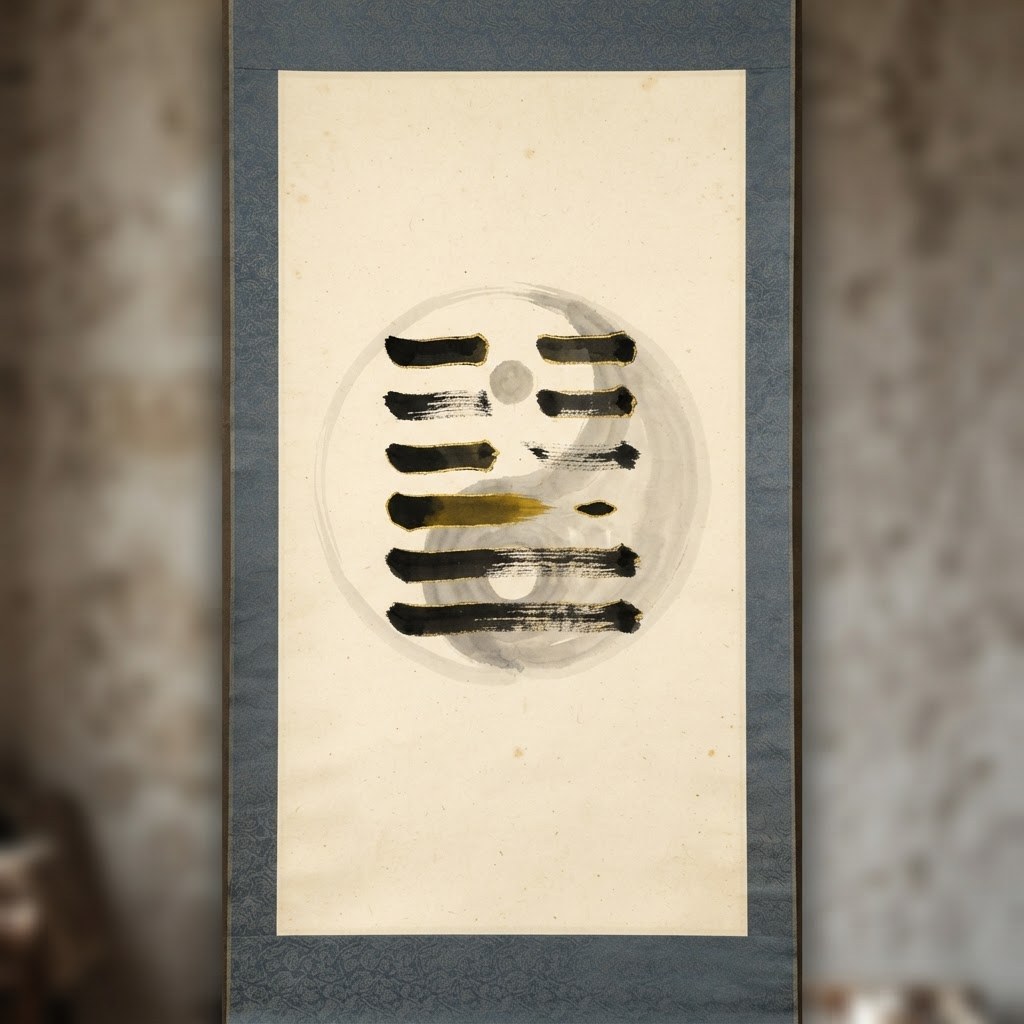
I remember the first time someone showed me an I Ching reading that had changing lines. My first thought was: this just got complicated. My second thought, which came about thirty seconds later, was: this is where the real wisdom lives.
If you have read my guide on how to cast an I Ching reading, you know the basics. You toss coins or sort stalks, you build a hexagram from the bottom up, and you look up the answer. But sometimes, individual lines within that hexagram change from yin to yang or yang to yin. When that happens, you get two hexagrams instead of one: the starting situation and where it is heading. That is where the I Ching stops being a fortune cookie and starts being a genuine advisory tool.
I have spent years working with Chinese metaphysics, from Qi Men Dun Jia to the I Ching itself, and changing lines are the part that separates a surface reading from a real one. Let me walk you through it in plain language.
What Is a Changing Line?
Each of the six lines in a hexagram is either yin (broken, two short segments) or yang (solid, one long segment). When you cast using coins, a line can also be “changing” if the coins produce a specific combination. In the coin method:
| Coin result | Line type | Changing? | Meaning |
|---|---|---|---|
| 3 heads | Yang (old) | Yes, changes to yin | Active energy about to turn passive |
| 3 tails | Yin (old) | Yes, changes to yang | Passive energy about to turn active |
| 2 heads, 1 tail | Yang (young) | No | Stable, active, holding |
| 2 tails, 1 head | Yin (young) | No | Stable, passive, holding |
Think of it like a tide. A young yang line is high tide holding steady. An old yang line is high tide that has peaked and is about to recede. The change is the turning point, and the I Ching commentary singles it out as the most dynamic part of your reading.
The Two-Hexagram Method in Brief
When one or more lines change, you read both hexagrams:
- The primary hexagram (before the change) describes your current situation.
- The relating hexagram (after the change) describes where things are heading.
- The changing line texts are the bridge between them. They tell you what to watch and what to do.
Lines that do not change are background context. Lines that change are the story.
The changing lines are not decoration. They are the I Ching pointing at the exact spot where your situation is most alive and most uncertain.
Reading the Line Texts
In the traditional I Ching, each hexagram has a Judgment (the overall statement) and an Image (a metaphor, often from nature). But each of the six lines also has its own text, and when a line changes, that line’s text becomes your specific guidance for this reading.
The lines are numbered from bottom to top: line 1 through line 6. The bottom lines talk about beginnings and foundations. The middle lines talk about the heart of the matter and the people involved. The top lines talk about outcomes, excess and what happens when something runs its course.
| Line position | Theme | Typical concern |
|---|---|---|
| Line 1 (bottom) | Beginning | Should you act yet? Usually: not quite. |
| Line 2 | First real step | Entering the situation, finding your role. |
| Line 3 | Transition | The awkward middle, risk of missteps. |
| Line 4 | Adjustment | Stepping up, navigating others. |
| Line 5 | Authority | The position of influence, the key decision. |
| Line 6 (top) | Outcome | Beyond the situation, excess, or resolution. |
In my own work advising business owners, I treat line 5 as the executive line and line 3 as the operations line. If line 3 changes, I tell them: something in the execution is shifting, pay attention to the middle of your project. If line 5 changes, the leadership decision itself is in motion. That framing is mine, not classical, but it helps make the texts practical.
A Worked Example: Hexagram 15 With a Changing Line 5
Let us say you are weighing whether to take a modest approach in a business negotiation. You cast and get hexagram 15, Qian (Modesty). Line 5 is changing.
Hexagram 15 as a whole says: modesty brings success. Do not push. Let the work speak. That is the Judgment context.
Line 5 of hexagram 15, in the traditional text, talks about not boasting about wealth or position but using it to influence through humility. The changing line says: the way you handle your advantage right now, by not throwing it around, is what will win the outcome. After the change, the relating hexagram (the result) becomes hexagram 62, Xiao Guo (Small Exceeding), which suggests: keep things small, do not overreach, pay attention to the details now rather than the grand gesture.
So the reading moves from “be modest” (the situation) to “keep it small and do not overreach” (the destination) with the changing line telling you: the specific thing to watch is how you wield your advantage at the top level. That is a genuine piece of advisory guidance, not a parlor trick.
Multiple Changing Lines
When two or more lines change, things get richer. The traditional approach (there are several) I use is this: read each changing line as a sequence of developments, bottom to top. The lowest changing line is what is happening now. The next one up is what follows. The relating hexagram is where the whole thing lands.
Some practitioners say: if all six lines change, read only the Judgment of the relating hexagram. If no lines change, read only the Judgment of the primary hexagram. I have found this practical, and it keeps you from drowning in commentary when the answer is actually straightforward.
| Number of changing lines | What to read first | Then |
|---|---|---|
| 0 | Primary hexagram Judgment + Image | No relating hexagram needed |
| 1 | That line’s text | Primary Judgment, then relating hexagram |
| 2 | Both line texts, bottom to top | Relating hexagram as destination |
| 3+ | All changing line texts in order | Relating hexagram as overall movement |
| 6 (all change) | Relating hexagram Judgment only | Situation is in total transformation |
Common Mistakes With Changing Lines
I see a few patterns repeatedly, both in students and in my own early practice:
- Ignoring the relating hexagram. People read the changing line and stop. But the relating hexagram tells you where the line is pointing. Without it, you have half a compass.
- Over-weighting every line. Non-changing lines are context, not command. If you treat every line as equally important, the reading becomes noise.
- Casting repeatedly until you get a “good” line. This is the worst habit. The I Ching answers the question you brought, not the question you wish you had brought. Cast once, sit with it.
- Rushing to a verdict. The line texts are often oblique. They describe a situation, not a command. Give yourself time to see how the metaphor maps to your actual life before deciding what it means.
How This Connects to My Broader Practice
In Qi Men Dun Jia, I look at charts that show where energy is moving and how it will shift. The I Ching’s changing lines do something similar in a more intimate, personal register. They flag the exact line where stillness is becoming movement or movement is becoming stillness. That is a skill worth developing, whether you use coins, stalks, or an app.
I spent decades in business before I came to metaphysics, and I can tell you: the ability to read where a situation is turning is the single most valuable skill a decision maker can have. The I Ching is one of the oldest training tools for exactly that.
A Deeper Look: What the Numbers Actually Do
People sometimes ask me why the coin method and the yarrow stalk method give different probabilities for changing lines. It is not superstition. It is math, and it matters for how you read.
In the coin method, each line has a 1 in 8 chance of being an old yang (changing) and a 1 in 8 chance of being an old yin (changing). That is a 25% chance per line of a change, and with six lines, the probability of at least one changing line is roughly 82%. In other words, most coin readings will have at least one changing line. That shapes the whole character of coin-based practice: you are almost always reading about a situation in motion.
The yarrow stalk method is different. It gives old yang a probability of about 3 in 16 and old yin about 1 in 16. So yang changes are three times more likely than yin changes in the stalk method. This means yarrow readings skew toward situations where active energy is peaking and about to settle, rather than passive energy about to stir. Practitioners who use both methods often notice this difference without knowing the numbers behind it, and it affects how they frame their readings.
| Method | P(old yang) | P(old yin) | Chance of at least 1 changing line | Character of readings |
|---|---|---|---|---|
| Three coins | 1/8 (12.5%) | 1/8 (12.5%) | ~82% | Most readings in motion |
| Yarrow stalks | 3/16 (18.75%) | 1/16 (6.25%) | ~88% | Shifts skew toward yang-to-yin |
I bring this up because it affects interpretation. If you use the stalk method and get an old yin (changing to yang), that is a rarer and more significant event than getting the same result with coins. The mere fact that passive energy is about to move is itself part of the message: something that has been dormant is stirring. The rarity of the event gives it interpretive weight.
A changing line is the I Ching’s way of saying: look right here, at this exact line, at this exact shifting point. Everything else is scenery. This is where your decision lives.
Reading the Direction of Change
A change from yang to yin means something active is settling down. A change from yin to yang means something passive is waking up. This directional reading is simple but it tells you a lot about timing:
- Yang to yin (old yang, 3 heads): A peak that has been reached. The energy has done its work. Now it is time to let it settle, consolidate, and move into a resting phase. In business terms: the campaign worked, now build the infrastructure to sustain what you gained.
- Yin to yang (old yin, 3 tails): Something that has been quiet is about to move. Energy that was held back is pressing forward. In business terms: a situation you have been watching and waiting on is about to become active, whether you are ready or not.
The position of the changing line tells you where in the situation this shift is happening (beginning, middle, leadership, outcome). The direction tells you what kind of shift it is. Put the two together and you have a surprisingly specific piece of guidance.
Frequently Asked Questions
What happens if I get no changing lines?
Read the Judgment and the Image of the hexagram you received. The situation is stable, and the guidance is about working within it rather than navigating a shift.
Can a changing line be bad news?
Not necessarily. A changing line simply means energy is in motion. Some changing lines point to opportunity. Some point to caution. The text of the line tells you which it is, in context.
What is the difference between old yin and old yang?
Old yang (3 heads) is active energy that is about to become passive. Old yin (3 tails) is passive energy that is about to become active. Both are changing lines, but they move in opposite directions.
Do I need to memorize all the line texts?
No. Use a good translation (Burton Watson’s or Richard John Lynn’s are solid). The line texts are there to be looked up, like looking up a legal precedent. You learn the patterns over time, but you do not need to carry them all in your head.
How do changing lines relate to the Five Elements?
The I Ching’s trigrams and lines correspond to elements (Heaven is metal, Earth is earth, Water is water, Fire is fire, and so on). Some advanced practitioners read changing lines as element interactions: metal changing to water, for instance, suggests output and flow. This is optional and adds another layer, but it is not necessary for a solid reading.
Related Reading
This article is part of my series on the I Ching / Book of Changes. For the casting process, see how to cast an I Ching reading. For the full hexagram reference, see the 64 hexagrams explained. For the connection to my primary discipline, see Qi Men Dun Jia.
Deep Dives Into I Ching Casting Methods
Once you know the basics from this guide, these articles take each aspect further:
- The Three Coin Method: Probability, History, and Advanced Casting Technique
- The Traditional Yarrow Stalk Method: A Step-by-Step Practical Manual
- How to Formulate Clear Questions for the I Ching: Business and Personal Guidance
- How to Interpret Changing Lines in an I Ching Reading
- The Eight Trigrams (Bagua): Elemental Energies and Hexagram Structure
- How to Keep an I Ching Divination Journal to Track Strategy and Outcomes
- I Ching Divination vs. Qi Men Dun Jia Hour Charts: Choosing the Right Tool
- Deciphering the Judgment and Image Texts: Ancient Wisdom for Modern Decision Making
Or explore the I Ching pillar page for the full overview.
Leave a Reply
You must be logged in to post a comment.