Guan Yin Lot Categories Explained: The Six Tiers of Oracle Divination
The Guan Yin lot system (Guan Yin Ling Qian, 觀音靈籤) organizes one hundred divination poems into distinct categories based on their overall auspiciousness. When you draw a lot at a Guan Yin temple, the poem you receive carries both a narrative and a classification that tells you whether the response leans favorable, mixed, or challenging. Understanding these categories transforms a mysterious oracle draw into a structured reading that you can interpret with clarity and confidence.
This guide walks through the six classical categories used in the Guan Yin lot tradition, explains how each tier is determined, what kinds of poems appear in each, and how to interpret your lot number within its category. Whether you have drawn a lot recently or are preparing for a temple visit, knowing the categories helps you contextualize whatever poem the oracle delivers.
The Six Classical Categories of Guan Yin Lots
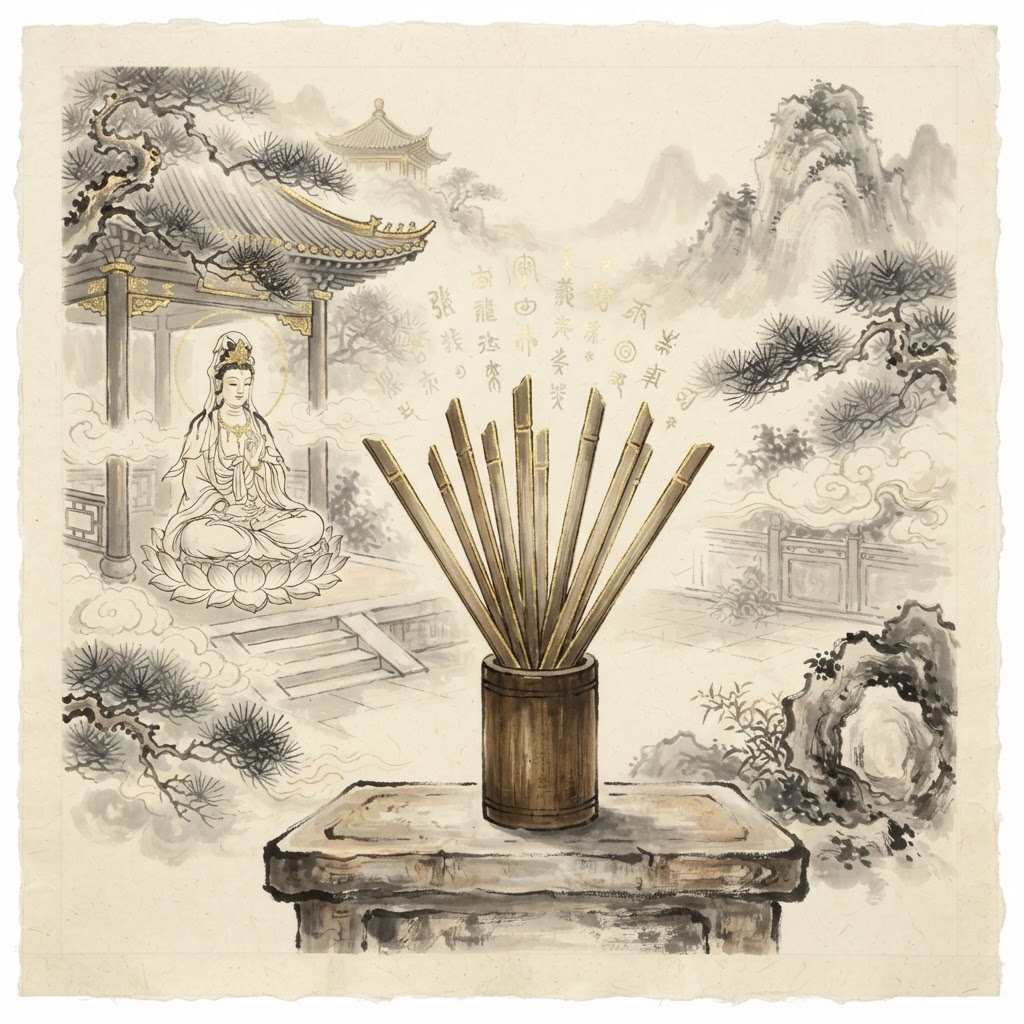
The one hundred Guan Yin lots are divided into six categories, arranged from most auspicious to least. This hierarchical structure is not arbitrary. It follows a classical Chinese divination logic that grades oracle responses by the degree of favorable energy they convey, combined with the practical difficulty described in the poem’s narrative.
Each category contains a different number of lots, and the distribution is deliberately uneven. More lots cluster in the middle ranges, reflecting the classical understanding that most life situations are mixed rather than purely good or purely bad. Here are the six categories:
Table: The Six Guan Yin Lot Categories
| Category | Chinese Name | Lot Numbers | Count | Overall Meaning |
|---|---|---|---|---|
| Upper Superior | 上上籤 (Shang Shang) | Selected lots | ~8 | Best possible outcome; rare and highly favorable |
| Superior | 上籤 (Shang) | Selected lots | ~12 | Favorable outcome with some conditions |
| Superior Middle | 上中籤 (Shang Zhong) | Selected lots | ~20 | Generally favorable with moderate effort needed |
| Middle | 中籤 (Zhong) | Selected lots | ~24 | Mixed; equal favorable and challenging elements |
| Middle Lower | 中下籤 (Zhong Xia) | Selected lots | ~20 | Challenging but not hopeless; requires patience |
| Lower | 下籤 (Xia) | Selected lots | ~16 | Difficult period; caution and reflection needed |
Upper Superior Lots: The Rarest Blessing
Upper superior lots (Shang Shang Qian) represent the highest tier of the Guan Yin oracle. When you draw one of these lots, it signals exceptional alignment between your question and the cosmic energies surrounding your situation. These lots are the rarest in the system, and for good reason. The classical tradition holds that drawing an upper superior lot means the timing, conditions, and inner readiness all converge favorably.
The poems in this category typically reference stories of unexpected fortune, sudden recognition, or obstacles dissolving without effort. A common motif is the arrival of help from an unexpected direction. Another is the resolution of a long-standing difficulty that seemed permanent until suddenly it was not. The narrative energy of upper superior lots is one of relief, joy, and effortless progress.
In practical interpretation, an upper superior lot does not mean you should stop all effort. It means your effort will be met with unusually strong support. The classical advice for upper superior lots is to proceed with confidence, to trust the favorable wind, and to act on the question you asked rather than second-guessing the answer because it seems too good to be true.
For a detailed example of a specific upper superior lot, the Lot 1 analysis on this site provides a complete poem breakdown showing how a top-tier lot reads in practice.
Superior Lots: Favorable With Conditions
Superior lots (Shang Qian) are favorable but come with explicit conditions or qualifications. Unlike the effortless blessing of upper superior lots, superior lots often include a phrase like “if you maintain your integrity” or “after a brief delay.” The favorable outcome is not in question, but the poem clarifies that certain conditions must be met.
This conditional favorability makes superior lots among the most practically useful in the system. They affirm your direction while also alerting you to the specific qualities or actions needed to realize the favorable outcome. A superior lot about a business question might affirm the venture’s potential while advising patience in the early stages. A superior lot about a relationship might confirm compatibility while noting that trust must be built gradually.
The stories referenced in superior lot poems often involve historical or literary figures who achieved success through perseverance, wisdom, or moral integrity. The poem uses their story to mirror your situation and suggest the quality you need to cultivate for the favorable outcome to manifest.
Superior Middle Lots: Generally Favorable, Effort Required
Superior middle lots (Shang Zhong Qian) form the transitional tier between clearly favorable and mixed. These lots suggest a generally positive trajectory but emphasize that the outcome depends significantly on your own effort and timing. The favorable elements are present, but they are not automatic. You must work for them.
This is the category where the Guan Yin oracle’s practical wisdom shines most clearly. Rather than a simple yes or no, superior middle lots provide nuanced guidance that acknowledges both the favorable circumstances and the work required to realize them. The poems in this category often describe situations where initial conditions are challenging but persistence leads to a good outcome.
If you draw a superior middle lot, the interpretation focuses on identifying the specific effort the poem highlights. Is it patience? Is it a change in approach? Is it seeking help from a particular direction? The poem’s story typically contains the clue, and the interpretation involves mapping the story’s resolution to your question.
The superior middle category represents the classical middle path in divination: neither unearned blessing nor hopeless struggle, but the realistic territory where most human endeavor actually unfolds.
Middle Lots: The Mixed Signal
Middle lots (Zhong Qian) are the most neutral category and contain the largest number of lots. A middle lot tells you that the situation is genuinely mixed. There are both favorable and challenging elements, and the outcome depends heavily on how you navigate the balance.
Middle lots are not bad lots. They are honest lots. They tell you that the path ahead has both support and obstacles, that some aspects of your question will resolve well while others require adjustment. The classical tradition treats middle lots as the most common oracle response because most life situations genuinely are mixed.
Interpreting a middle lot requires identifying which aspects of the poem lean favorable and which lean challenging. The poem’s four lines typically contain both elements. The first two lines often describe the current situation, while the last two hint at the resolution or the quality needed to shift the balance favorably.
Table: Interpreting Each Tier in Practice
| Category | Key Question | Best Response | Common Misread |
|---|---|---|---|
| Upper Superior | Is this truly aligned? | Proceed confidently | Overconfidence, ignoring practical details |
| Superior | What conditions must I meet? | Identify and fulfill conditions | Assuming it is automatic without effort |
| Superior Middle | What effort is required? | Commit to sustained effort | Fading momentum when initial excitement ends |
| Middle | Which elements are favorable vs challenging? | Navigate the balance deliberately | Treating it as simply “neutral” and ignoring nuance |
| Middle Lower | What is the lesson here? | Patience and adaptability | Despair, assuming the situation is hopeless |
| Lower | What needs to change? | Reflection, change of direction | Ignoring the warning and proceeding anyway |
Middle Lower Lots: Challenging But Not Hopeless
Middle lower lots (Zhong Xia Qian) signal a genuinely challenging period or situation, but with an important caveat: they are not the lowest category. The poem typically describes obstacles that are real and significant but not insurmountable. The classical interpretation emphasizes patience, timing, and the willingness to adapt your approach.
Middle lower lots often appear when the timing is off rather than the direction. You may be on the right path, but the moment is wrong. The poem’s story frequently involves a figure who faced setbacks but eventually found their way through, not by forcing the issue but by waiting for conditions to improve and acting when the time was right.
When you draw a middle lower lot, the practical guidance is to slow down. Do not abandon your plans, but do not rush them either. Reassess the timing. Consider whether the conditions the poem describes as missing are things you can cultivate or whether you need to wait for external circumstances to change. For more detailed guidance on what to do when you receive a challenging lot, see the companion article on drawing divination lots at Kwan Im Thong Temple.
Lower Lots: A Call for Change
Lower lots (Xia Qian) represent the most challenging category in the Guan Yin lot system. A lower lot does not mean disaster. It means the current direction, timing, or approach is not aligned with favorable outcomes, and significant change is needed. The oracle is delivering a clear signal that continuing as you are will lead to difficulty.
The classical tradition treats lower lots with great respect rather than fear. The reasoning is that a clear warning is more valuable than a vague affirmation. Knowing that the current path is unfavorable gives you the opportunity to change course before real damage is done. Many practitioners consider a lower lot more practically useful than a favorable lot because it demands honest reflection and course correction.
Lower lot poems often reference stories of decline, loss, or misdirection. But within the classical understanding, even these stories carry the seed of resolution. The poem may end with a hint about what would need to change, or it may simply describe the consequences of current behavior as a mirror for the querent to see themselves clearly.
How the Category System Relates to the Drawing Process
The category of the lot you draw is determined by the lot number itself, not by the drawing method. When you draw a numbered stick (bamboo stick) from the lot holder at a Guan Yin temple, the number on the stick corresponds to a specific poem and its category. The randomness of the draw is what gives the oracle its divinatory power, but the structure of the categories gives the result its interpretive framework.
The detailed guide to drawing Guan Yin divination lots covers the physical process of drawing lots at a temple. The prayer guide for Kwan Im Thong Temple explains the devotional context in which the drawing takes place. Understanding the category system adds a layer of interpretive depth to both of these practical guides.
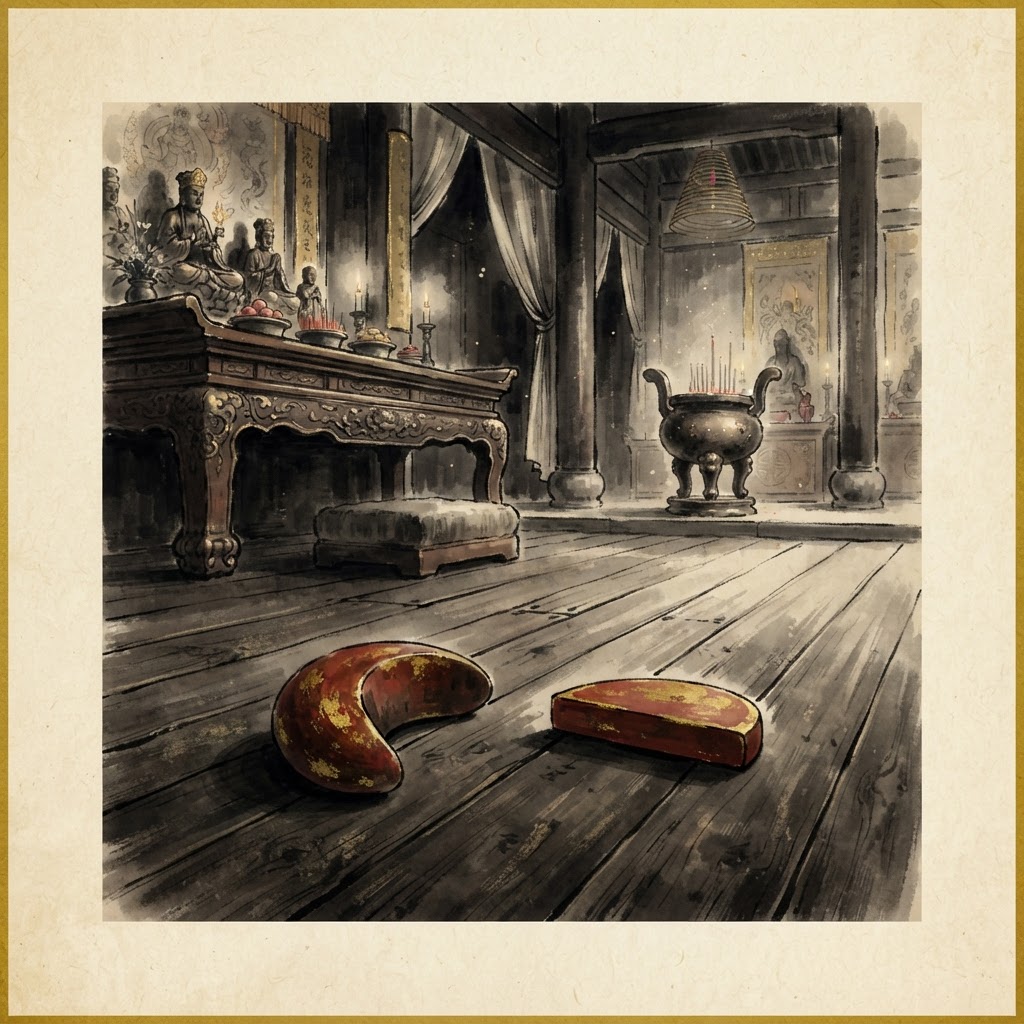
The drawing process itself is sacred in the temple context. It involves lighting incense, stating your question clearly in your heart, shaking the lot holder until a single stick falls, and then confirming the result with two crescent-shaped divination blocks (Jiao Bei, 筊杯). This two-step confirmation process ensures that the drawn lot is not accidental. Only when the blocks give the correct response (one face up, one face down, three times in a row) is the lot considered confirmed.
The Historical Origins of the Category System
The six-tier category system has roots in much older Chinese divination traditions. The I Ching (Yi Jing), the oldest Chinese oracle text, uses a binary system of favorable and unfavorable judgments, but the Guan Yin lot tradition elaborated this into a more nuanced six-tier structure that allows for finer interpretive distinctions. This elaboration likely occurred during the Song dynasty (960-1279 CE) when standardized versions of the hundred Guan Yin lots began circulating widely.
The choice of six tiers is not accidental. In classical Chinese numerology, six represents completeness in the earthly realm (as opposed to the heavenly number nine). The six categories map onto a spectrum of earthly experience from most fortunate to least, creating a comprehensive gradation that can accommodate virtually any life situation.
For those interested in the broader context of Guan Yin devotion in Singapore, the history of Kwan Im Thong Hood Cho Temple provides the local historical background for how this divination tradition took root in Singapore.
Category Interpretation Across Different Question Types
The category of a lot interacts with the type of question you asked. A superior lot drawn for a business question carries different practical implications than the same superior lot drawn for a relationship question. The category energy remains the same, but the application shifts based on the domain of inquiry.
Business and Career Questions
For business questions, upper superior and superior lots suggest strong market conditions and good timing. Superior middle lots indicate that the venture has potential but requires sustained execution. Middle lots suggest a mixed market with both opportunities and risks. Middle lower and lower lots may indicate poor timing, wrong approach, or external obstacles that need to be addressed before proceeding.
Relationship Questions
For relationship questions, the categories interpret differently. A middle lot in a relationship context often means the relationship is workable but requires honest communication and mutual effort. A lower lot might not mean the relationship is doomed, but rather that a fundamental change in dynamic is needed. The relational dimension of lot interpretation requires reading the poem through the lens of human connection rather than material outcome.
Health Questions
For health questions, the categories should never replace medical advice. The lot’s category in a health context can suggest the overall trajectory of recovery (favorable conditions vs challenging period) but should not be used as a diagnostic tool. The classical tradition itself treats health-related lot questions with caution, recommending that physical symptoms be addressed through medical practice while the lot provides emotional and spiritual guidance.
Table: Category Meanings by Question Domain
| Category | Business/Career | Relationship | Health |
|---|---|---|---|
| Upper Superior | Strong timing, proceed | Excellent alignment | Favorable conditions for recovery |
| Superior | Good with conditions met | Compatible with building trust | Good prognosis with care |
| Superior Middle | Potential needs execution | Workable with effort | Recovery requires sustained care |
| Middle | Mixed market, navigate carefully | Needs honest communication | Stable but monitor closely |
| Middle Lower | Wrong timing, reassess | Significant work needed | Extended recovery, patience |
| Lower | Change direction needed | Fundamental change required | Seek thorough medical attention |
The Role of the Jiao Bei (Divination Blocks) in Confirmation
The category system does not function in isolation. It is embedded within the complete drawing process that includes the Jiao Bei (moon blocks) confirmation step. After drawing a lot stick, the querent casts the two crescent-shaped blocks to confirm whether the drawn lot is the correct one. Three consecutive “sheng bei” results (one flat side up, one round side up) confirm the lot.
This confirmation step adds a layer of validation to the random draw. It prevents the querent from simply picking the lot they want and calling it divination. The blocks ensure that the oracle, not the querent’s preference, determines which lot is read. This is why the Guan Yin lot tradition is considered divination rather than self-selection.
Common Questions About Categories
Many people who come to Guan Yin lot divination have questions about how the categories work and what their specific lot means within its tier. Here are the most common questions that arise in practice.
Can I draw the same lot category twice?
Yes. Some people draw multiple lots (for different questions) in a single visit and receive the same category more than once. This is not a coincidence. When the same category repeats across different questions, it may indicate a consistent overall theme in your current life phase. If you draw two superior lots for two different questions, the overall energy is favorable across multiple areas of your life.
Is a lower lot ever good news?
Surprisingly, yes. A lower lot can be the most valuable oracle response if you are considering a decision that needs honest assessment. The lower lot’s warning may prevent you from making a costly mistake. In the classical tradition, the attitude toward lower lots is gratitude for the honest warning rather than fear of the unfavorable reading.
How do I know which category my lot is in?
The category is typically printed on the lot paper that you receive from the temple, alongside the poem. If you draw the lot digitally or do not have the category indicated, you can look up the lot number in a reference that lists the categories for all one hundred lots. The individual lot analyses on this site include the category for each lot.
Do different temples use different category systems?
The six-tier system is remarkably consistent across temples that use the standard hundred-lot Guan Yin system. Minor variations exist in which specific lot numbers fall into which category, but the six-tier structure itself is standard. Temples that use different divination systems (such as different numbers of lots or different oracles entirely) will obviously use different category structures.
The Broader Divination Context
The Guan Yin lot category system exists within a broader landscape of Chinese divination methods, each with its own response structure. The I Ching uses a different approach entirely, with each hexagram containing its own judgment text that ranges from favorable to challenging. For those interested in how different Chinese oracle systems compare, the interplay between lot divination and other methods provides a fuller picture of classical Chinese metaphysical practice.
The guide to Guan Yin temples in Singapore and the Waterloo Street temples neighborhood guide provide practical information about visiting temples where you can draw lots. Understanding the category system before you visit enhances the experience, as you will be able to interpret your lot immediately rather than wondering what the designation means.
The six categories are not a grading system for your life. They are a map of the oracle’s energy reading at the moment of your question. Each category, favorable or challenging, offers specific guidance that helps you navigate your path with greater awareness.
Classical Stories Behind Each Category
Each Guan Yin lot poem references a classical Chinese story, usually from history, literature, or mythology. These stories are not decorative. They are interpretive tools. The poem uses the story as a metaphor for the querent’s situation, and the category determines whether the story’s resolution is favorable, mixed, or challenging. Understanding the story tradition behind each category deepens the reading practice considerably.
Upper superior lots tend to reference stories of sudden elevation: a scholar who passes the imperial exam after years of failure, a general who wins an impossible battle through divine intervention, a poor person who discovers hidden treasure. These stories share a common thread: the favorable outcome arrives through forces beyond the protagonist’s control, aligned with their virtuous conduct or sincere devotion.
Superior lots reference stories where the protagonist achieves success through a combination of favorable circumstances and their own effort. The story acknowledges both the external support and the internal work. A merchant who succeeds through both market timing and honest trading practices. A couple whose marriage endures because of both compatibility and mutual commitment.
Middle lots often reference stories of ambiguity: a historical figure who experienced both triumph and defeat, a literary character whose结局 was neither fully happy nor fully tragic. The story holds both possibilities simultaneously, just as the querent’s situation contains both favorable and challenging elements that could tip either way depending on how they are navigated.
Lower lots reference stories of loss, misdirection, or moral failure. A general who lost a battle through poor judgment. A ruler whose arrogance led to downfall. The story serves as a mirror, inviting the querent to examine whether similar patterns are at work in their own situation. The purpose is not to predict doom but to illuminate the cause of difficulty so it can be addressed.
Table: Example Stories and Their Category Lessons
| Category | Story Type | Narrative Arc | Interpretive Lesson |
|---|---|---|---|
| Upper Superior | Divine favor, unexpected fortune | Long struggle resolves suddenly | Trust the favorable opening; it is real |
| Superior | Earned success with support | Effort meets good timing | Fulfill the conditions; the outcome follows |
| Middle | Mixed legacy, ambiguous result | Both triumph and setback | Navigate the balance; quality determines direction |
| Middle Lower | Righteous struggle, poor timing | Worthwhile path, wrong moment | Wait for better conditions |
| Lower | Miscalculation, misdirection | Error leads to consequence | Change course before real damage occurs |
The Cultural Significance of Category Tiers in Chinese Society
The six-tier lot category system reflects a broader Chinese cultural understanding of fortune that goes beyond simple good-or-bad binary. In classical Chinese thought, life experience unfolds on a spectrum, and the lot categories map this spectrum with remarkable precision. This is why the system has endured for centuries: it mirrors the actual texture of human experience more accurately than a simple favorable-or-unfavorable binary ever could.
In Singapore specifically, the Guan Yin lot tradition holds particular cultural resonance because it bridges Chinese immigrant heritage with modern multicultural practice. The temples where lots are drawn, particularly Kwan Im Thong Hood Cho Temple on Waterloo Street, serve as cultural anchors where this divination tradition is practiced alongside contemporary Buddhist and Taoist devotion. The category system provides a framework that makes the oracle accessible to both devout practitioners and curious visitors who may be drawing a lot for the first time.
For first-time visitors, the six-tier system can feel intimidating. But the beauty of the structure is its intuitive logic. Upper is favorable. Lower is challenging. Middle is mixed. The subcategories refine these basic directions. You do not need years of study to understand the framework. You need honesty about your question, openness to the response, and willingness to engage with whatever category the oracle delivers.
Practical Application: Reading Your Lot in Context
After understanding the category system, the next step is applying it to your own lot. Here is a step-by-step approach that synthesizes the category energy with the poem’s content and your personal question.
Step 1: Identify the category. When you receive your lot paper at the temple, the category is usually printed alongside the poem. If not, look up the lot number in a reference guide. Note the category name and what it generally signifies (favorable, mixed, challenging).
Step 2: Read the poem for its narrative. The poem tells a story, often in four lines of classical Chinese verse. What is the story about? Who is the protagonist? What happens to them? The narrative contains the metaphor for your question.
Step 3: Connect the story to your question. How does the story’s resolution match your situation? If the category is superior and the story is about someone who succeeded after patience, the oracle may be telling you that your favorable outcome requires patient timing.
Step 4: Identify the actionable guidance. Every lot, regardless of category, contains actionable guidance. For favorable lots, the action is to proceed confidently. For mixed lots, the action is to navigate the balance. For challenging lots, the action is to change course or wait. The specific action is embedded in the poem’s narrative resolution.
Step 5: Consider the timing. The lot describes energy at the moment of drawing. If the category is middle lower, the timing is poor now. If the category is superior, the timing is good. Timing advice is one of the most practical aspects of the Guan Yin lot system, as it helps you determine what to do and when to act.
This interpretive framework works across all six categories. The category provides the energy context. The poem provides the specific narrative. Your question provides the personal application. Together, they create a complete reading that respects both the oracle’s wisdom and your own judgment.
The Relationship Between Lot Categories and Other Divination Systems
The Guan Yin lot category system does not exist in isolation within the Chinese metaphysical tradition. Other major divination systems, including Qi Men Dun Jia divination and BaZi destiny reading, use different classification structures, but the underlying principle of grading responses by favorable energy is shared across methods. In QMDJ hour chart divination, for example, the combination of doors, stars, and deities creates a spectrum of outcomes from excellent to poor, somewhat analogous to the six lot tiers. The key difference is that QMDJ calculates the cosmic pattern for a specific moment, while the Guan Yin lot system delivers an oracle response through random selection guided by the querent’s sincere question.
Some practitioners who work across multiple Chinese metaphysics systems find that Guan Yin lots provide a complementary perspective to chart-based methods. Where a BaZi chart reading shows the underlying destiny pattern, a Guan Yin lot reading provides a real-time energy snapshot for a specific question. Where QMDJ identifies the optimal timing and direction for an action, a Guan Yin lot confirms whether the overall energy is favorable for proceeding. The category system is what makes this comparison possible: knowing that a lot falls in the superior middle tier allows the practitioner to cross-reference it with other readings and form a more complete picture.
Frequently Asked Questions
How are the categories determined, and by whom?
The category assignments for each of the hundred lot numbers were established centuries ago and have been transmitted through standardized editions of the Guan Yin lot text. The original classification likely emerged from scholars and practitioners who assessed each poem’s overall energy and assigned it to a tier. Over time, the assignments became standardized across editions used in major temples throughout the Chinese cultural sphere.
If I draw a middle lot, should I be concerned?
Not particularly. Middle lots are the most common category and reflect the reality that most life situations contain both favorable and challenging elements. A middle lot invites you to look carefully at the poem’s specific lines to identify which aspects of your question are favorable and which need attention. It is not a negative reading. It is an honest, balanced one.
Can the category change if I ask the same question again later?
If you draw a lot for the same question on a different day, you may receive a different lot number and category. This reflects the temporal nature of divination. The oracle reads the energy of the moment, and energy shifts with time. A lower lot today does not mean the situation will always be unfavorable. It means the current moment carries challenging energy, which may change as circumstances evolve.
Should I avoid drawing lots if I am afraid of getting a bad category?
The classical tradition encourages drawing lots with an open heart, regardless of the category you might receive. The purpose of divination is guidance, not reassurance. If you only want favorable answers, the oracle’s honesty becomes less useful. Approach the drawing with the understanding that every category carries valuable guidance, and even a challenging lot can steer you toward better outcomes than false comfort would.
Can I interpret the category without reading the full poem?
The category gives you the general energy direction, but the poem provides the specific guidance. Reading only the category is like knowing the weather is partly cloudy without knowing whether it will rain. The category tells you the overall tone, but the poem tells you what to do about it. For complete interpretation, always read the poem alongside the category.
What is the significance of drawing an upper superior lot?
Drawing an upper superior lot is considered a rare blessing in the classical tradition. It suggests exceptional alignment between your question and the current cosmic energies. However, it should not lead to complacency. The lot encourages confident action, not passive expectation. Proceed with the favorable wind, but still do the practical work the situation requires.
Leave a Reply
You must be logged in to post a comment.