
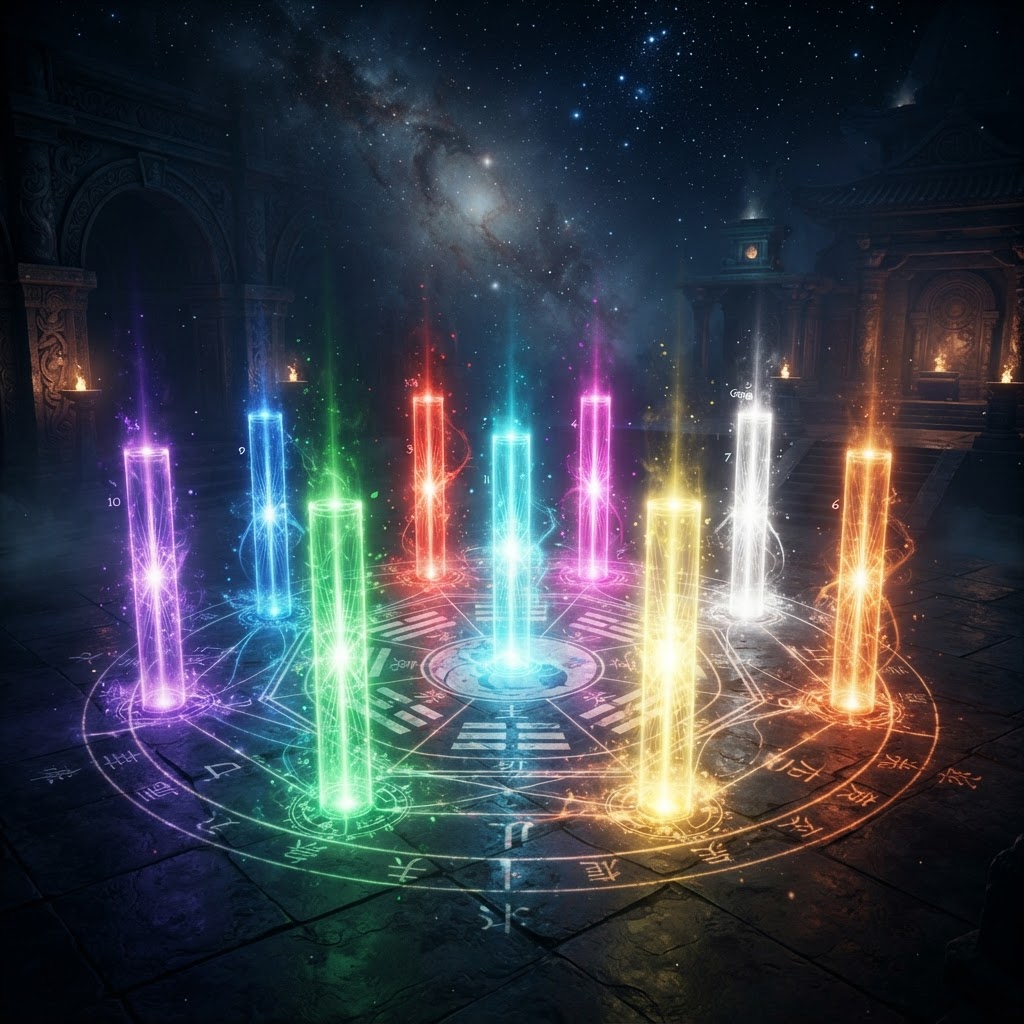
New practitioners cast constantly, then burn out and cast never. Both are the same mistake wearing different clothes. This article is about finding a sustainable casting rhythm and the rules that keep the practice honest. The full Qi Men Dun Jia guide covers the system end to end, and this article stays on one topic so it can go deep.
The honest rhythm
Cast when you have a decision, not when you have a feeling. A daily question that is genuinely a question earns a daily chart. Casting every morning for reassurance is horoscope behavior, and it teaches your ear to ignore the readings you do not like, which is the most expensive habit in this field.
The rules that keep it clean
One question, one cast, with a few days between recasts of the same question. Do not cast twice in an hour because you did not like the first answer. Write each question down, because the paper trail is what turns casting into a practice with a track record instead of a slot machine.
A sustainable pattern
Most experienced practitioners settle into a few casts a week: decisions that clear the bar, plus an occasional deliberate practice cast on a past situation for calibration. That rhythm keeps the skill warm without turning the tool into a dependency.
From the practice
Questions from friends will come, and they are good practice if handled with boundaries. Read for people who ask, with their question and their knowledge, and keep the reading where it belongs: one window, one decision, honestly hedged where the layers disagree. Reading to impress is the death of accuracy, and the tradition’s old warnings about fortune telling theater exist precisely because every generation rediscovers that temptation.
The community around this practice matters more than newcomers expect. Find one or two readers whose conclusions you can check against outcomes, and trade notes. The internet is full of confident symbol talkers and short on people willing to say what happened after the window. Small honest circles of practice beat large audiences of theory, in this field as in most.
Reading it with timing windows is the skill that turns theory into decisions. A favorable feature does not stay favorable forever: it belongs to the moment the chart was cast for. Practitioners treat the reading as valid for a window, usually days to a few weeks, and they act inside the window rather than admiring it. When clients tell me a good reading did nothing for them, the question I ask first is when they acted on it. The answer is usually after the weather changed.
One habit I borrowed from business years before I studied this system formally: write the question down before casting, and write the one sentence answer after. Between those two lines sits the whole reading. What gets lost in long chart descriptions is usually the decision itself, and decisions, not descriptions, are what people came for. Keep the note, date it, and revisit it when the window passes. A small notebook of dated one liners will teach you more than any course.
A note on precision, because it matters here more than people expect. The system answers the question that was actually cast, with its subject, its decision and its window. Change the window and you must cast again. Change the decision and you must cast again. Readers who treat one chart as a general portrait of their year are reading tea leaves. The discipline of the question is what separates a strategic tool from a mood.
Where the layers disagree, believe the layers rather than your hope. In my experience the disagreement itself is the information: a bright feature over a weak foundation says the opportunity is real but not ready, and a modest feature over a strong foundation says the situation outgrows its packaging. Beginners average the layers into a mushy middle. Practitioners read the argument between them and time their move accordingly.
There is a difference between studying this system and using it, and the difference is reps. Study one feature properly, then watch it in every chart you cast for a month: where it sits, what it does with the neighbors it meets, how its week played out. That deliberate noticing is how the meanings stop being flashcards and start being instincts. It is also how you discover which features matter most for the kinds of questions you personally ask.
Whatever the chart says, the follow through stays yours. The strongest favorable window does not sign the contract for you, and a cautious reading does not forbid the move forever; it forbids this week’s version of the move. I have watched too many people freeze on a slow reading or overspend a fast one. The chart informs the choice of moment. The choice, and the work, were always yours.
The system rewards patience with itself. Features that confuse you today will sit down and explain themselves after a few months of charting, the way grammar clicks for a language learner who keeps reading. What confuses forever is skipping ahead, memorizing verdicts and reciting combinations without ever sitting with a single chart and one honest question.
A last note on respect, because the tradition earns it. These readings descend from a practice used for statecraft, agriculture, medicine and war: decisions with real stakes and no second chances. The men and women who built it over centuries were not seeking mysticism, they were seeking a disciplined way to think about timing. Treating the craft with that seriousness is the only tradition worth inheriting.
Two cautions keep this honest. First, a reading describes a window, not your worth or your fate. Second, the reading you do while emotionally flooded is the reading you should redo tomorrow. The tradition itself is remarkably consistent about this: the same discipline that makes the question precise makes the interpreter calm, and calm is a method, not a mood.
Keep a one line log of your questions and outcomes. The practitioners who improve fastest are not the ones with the best memory for symbols; they are the ones with a notebook. Six months of entries tells you what kinds of questions the charts answer well for you, which windows you habitually misread, and where your hopes keep bending your readings. That personal calibration is worth more than another beginner course.
Questions from friends will come, and they are good practice if handled with boundaries. Read for people who ask, with their question and their knowledge, and keep the reading where it belongs: one window, one decision, honestly hedged where the layers disagree. Reading to impress is the death of accuracy, and the tradition’s old warnings about fortune telling theater exist precisely because every generation rediscovers that temptation.
The community around this practice matters more than newcomers expect. Find one or two readers whose conclusions you can check against outcomes, and trade notes. The internet is full of confident symbol talkers and short on people willing to say what happened after the window. Small honest circles of practice beat large audiences of theory, in this field as in most.
Frequently Asked Questions
The honest rhythm?
Cast when you have a decision, not when you have a feeling.
The rules that keep it clean?
One question, one cast, with a few days between recasts of the same question.
A sustainable pattern?
Most experienced practitioners settle into a few casts a week: decisions that clear the bar, plus an occasional deliberate practice cast on a past situation for calibration.
Where can I learn the full system?
Start with the complete QMDJ guide, then follow the deep dive articles in the category you use most.
Further reading: the parent article on this topic and the complete QMDJ guide.

Leave a Reply
You must be logged in to post a comment.