
Cultural Differences in Reading Confident Faces
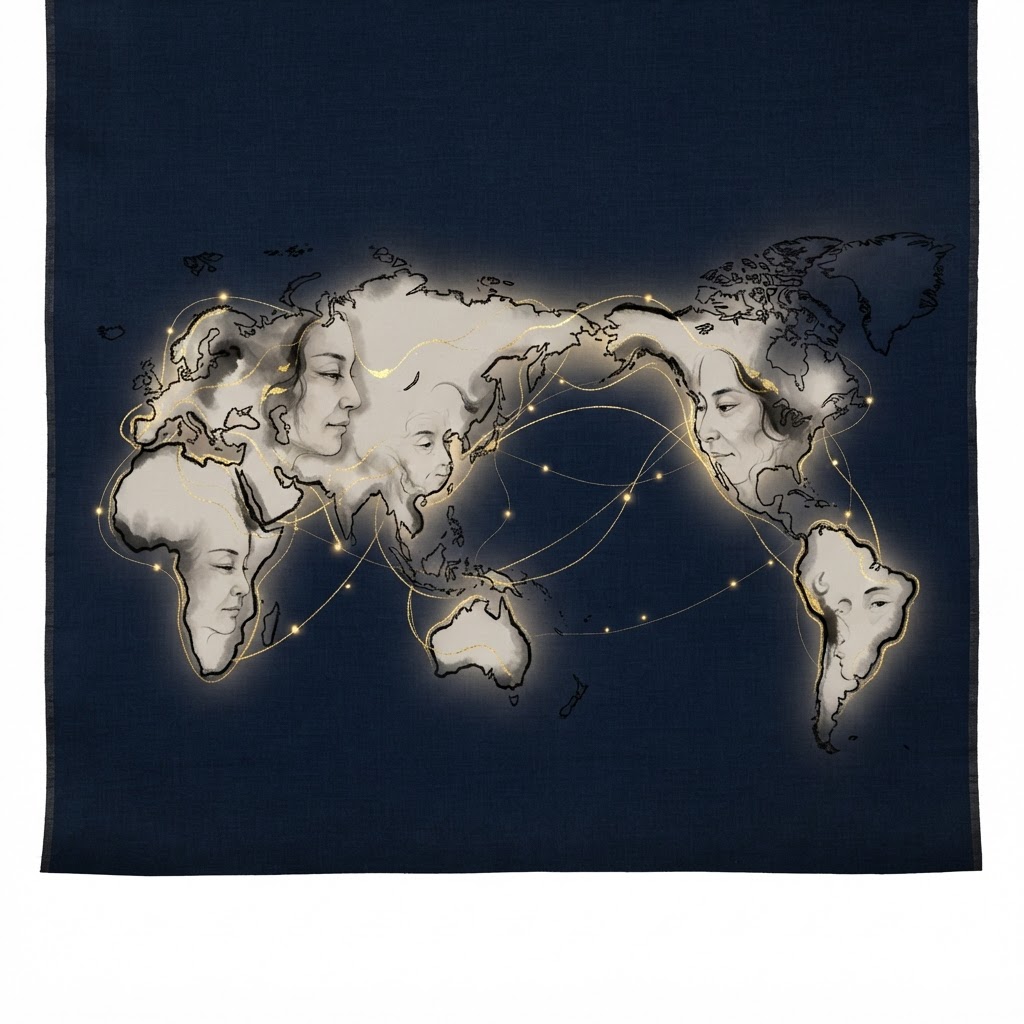
Confidence looks different depending on where you grew up. A confident expression in a Western boardroom may read as aggressive in a East Asian tea house. A reserved, modest face that signals quiet authority in Chinese culture may read as insecure in an American setting. When I teach face reading to international audiences, this is one of the first things we address. If you read faces through only one cultural lens, you will misread people from other traditions, and those misreads can be costly in business, relationships, and hiring.

This article is part of my Can Confidence Show on Your Face series. For the foundational guide, see What Facial Features Indicate Confidence. Sibling articles include The Confident Negotiator Face Reading Guide and Body Language vs Face Reading.
Why Culture Changes the Confidence Reading
Culture shapes two things that directly affect how confidence reads on the face: display rules and feature valuation. Display rules are the unwritten norms about which emotions are appropriate to show and how intensely. Feature valuation is the cultural preference for which facial features signal authority and which signal weakness. Both of these vary significantly across cultures, and both can lead you astray if you are not aware of them.
In cultures that value individual assertion (broadly, Western and particularly American), confidence is displayed openly. Direct eye contact, firm jaw, open smile, expansive gestures. The face is encouraged to broadcast. In cultures that value collective harmony (broadly, East Asian), confidence is often displayed through restraint. Measured eye contact, relaxed jaw, subtle smile, contained gestures. The face is encouraged to modulate. Reading the first as confident and the second as passive is one of the most common cross-cultural face reading errors.
| Feature | Western Confidence Read | East Asian Confidence Read |
|---|---|---|
| Eye contact | Direct, sustained = strong | Measured, deferential = respectful authority |
| Jaw | Firm and forward = decisive | Relaxed and set = inner calm |
| Smile | Wide and showing teeth = open confidence | Closed, subtle = controlled confidence |
| Brow | Raised and active = engaged | Level and still = composed |
| Volume | Projecting voice = authority | Measured tone = depth of knowledge |
The East Asian Confidence Face
In Chinese, Japanese, and Korean cultures, the confident face is often the face that does not need to announce itself. The classical ideal is the person whose authority is felt rather than displayed. This shows in several specific facial patterns.
The eyes are steady but not piercing. The gaze holds without locking. There is a quality of warmth combined with distance that reads as approachable authority. In mian xiang, this eye quality is called “clear water eyes,” and it is considered one of the highest indicators of balanced shen (spirit). The person has strong internal energy but does not need to project it outward constantly.
The jaw is set but not clenched. The masseter muscle is toned from use but relaxed at rest. This is different from the clenched jaw of Western performed confidence. The East Asian confidence jaw looks like it could bite down hard if needed but chooses not to. It signals capability held in reserve.
The smile is closed-mouth and subtle. A broad, tooth-showing smile in a serious East Asian business context can actually read as nervous or deferential. The confident smile is a slight upturn at the corners, barely visible, that signals self-possession without aggression. This is what I call the “silk smile,” soft on the surface but backed by steel.
In Western cultures, confidence says “look at me.” In East Asian cultures, confidence says “I do not need you to look at me.” Both are real. They just travel in opposite directions.
The Western Confidence Face
In American and Northern European cultures, the confident face is designed to be read at a distance. The signals are larger, more mobile, and more intentional. The cultural logic is that confidence should be visible so that others know where you stand.
The eyes make direct, sustained contact. This is taught from childhood as a sign of honesty and engagement. In a Western business meeting, the person who avoids eye contact is read as evasive, regardless of their actual confidence level. The brow is active, lifting to emphasize points, knitting to show seriousness. The face works as a communication tool, not just a display surface.
The jaw is forward and firm. The “strong jaw” is a Western cultural archetype that maps directly onto face reading. The jaw projects outward, the chin is held level or slightly raised. This reads as assertiveness and dominance, which in Western contexts is often equated with confidence.
The smile is broad and involves the mouth and eyes together (the Duchenne smile). A closed-mouth smile in Western business settings can read as guarded or insincere. The cultural expectation is that confidence comes with warmth and openness, and the smile is the primary signal of both.
The Cross-Cultural Trap
The problem arises when people from one culture read faces from another using their own cultural defaults. Here are the three most common misreads I see in practice.
First, the “passive Asian” misread. A Western hiring manager interviews an East Asian candidate whose face shows quiet composure: measured gaze, relaxed jaw, subtle smile. The manager reads this as lack of confidence and passes on the candidate. What the manager missed is that the candidate was displaying high-level cultural confidence, the confidence of someone who does not need to perform to be sure of themselves.
Second, the “arrogant Westerner” misread. An East Asian business partner meets a Western executive whose face shows direct gaze, firm jaw, broad smile. The Asian partner reads this as aggressive and possibly disrespectful. What they missed is that the executive was displaying standard Western professional confidence, not personal dominance.
Third, the “both cultures misread the mixed face” problem. People who have grown up between cultures, say a second-generation Asian American, often develop a blended facial expression pattern. They may hold direct eye contact (Western) with a subtle smile (East Asian). This can confuse readers from both traditions. The Western reader sees the subtle smile as guarded. The Asian reader sees the direct gaze as aggressive. In reality, the mixed face is its own confidence pattern, and it needs to be read on its own terms.
A Cross-Cultural Reading Case
A multinational company asked me to assess two candidates for a Singapore-based regional director role. Candidate A was American, with a classic Western confidence face: direct gaze, firm jaw, broad smile, active brow. Candidate B was Singaporean, with a classic East Asian confidence face: measured gaze, relaxed jaw, subtle smile, still brow. The Western interviewers overwhelmingly favoured A. The Asian interviewers favoured B. I was brought in to break the tie. My reading: Candidate A’s confidence was performative and energy-intensive. His jaw clenched when pressed on failure experiences. Candidate B’s confidence was structural and sustainable. His eyes stayed clear under the same pressure. The company hired B. Two years later, A had burned out in a different role. B had successfully expanded the regional operation.
How to Read Across Cultures
The solution to cross-cultural misreading is not to abandon your cultural instincts but to add a second layer of calibration. Here is the method I teach.
Step one: identify the person’s cultural background. This is not about nationality but about which cultural tradition shaped their facial expression norms. A third-generation Chinese American may have Western display rules with some Asian features. Ask yourself which culture taught them how to show confidence.
Step two: calibrate your reading against that culture’s confidence pattern. If the person is operating in an East Asian mode, look for silk-smile confidence, measured gaze, and relaxed jaw as positive signals. If they are operating in a Western mode, look for direct gaze, firm jaw, and broad smile. Do not apply the wrong template.
Step three: check the micro-expressions. This is where culture stops mattering. Micro-expressions are universal. A jaw clench is a jaw clench in any culture. An eye retract is an eye retract. If the person’s cultural confidence display looks perfect but their micro-expressions leak anxiety, the performance is the same fake confidence regardless of culture. For the full micro-expression guide, see Micro-Expressions That Reveal Fake Confidence.
| Step | What to Do | Why |
|---|---|---|
| 1. Identify culture | Determine which tradition shaped their display rules | Sets the correct reading template |
| 2. Calibrate display | Apply the matching cultural confidence pattern | Avoids false positive/negative on surface signals |
| 3. Check micro-expressions | Look for universal tells beneath the display | Micro-expressions bypass culture entirely |
Frequently Asked Questions
Is one cultural confidence style better than another?
No. Each style evolved to serve its cultural context. Western display confidence is effective in contexts that reward visibility and self-promotion. East Asian restraint confidence is effective in contexts that reward harmony and long-term relationship building. The most skilled communicators can switch between styles depending on the context, which is its own form of cultural intelligence.
Can face reading work on people from cultures that did not develop mian xiang?
Yes. The bone structure and muscle patterns that mian xiang reads are human universals. What changes across cultures is the display layer, not the structural layer. The jaw still holds willpower regardless of whether the person is Chinese, German, or Brazilian. The eyes still show shen. What you need to adjust is how you interpret the held expression on top of the structure, not the structure itself.
How do I read someone who has adapted to multiple cultures?
Look for which cultural mode they default to under pressure. People can perform any cultural style when relaxed, but under stress, they revert to their earliest learned patterns. If someone grew up in an Asian household in a Western country, their default under pressure will likely be the Asian restraint pattern. That is the more honest reading. The Western display is the adaptation.
Does globalisation make cultural differences in face reading less relevant?
Partially, but not entirely. Younger professionals who work in international contexts are developing more blended expression patterns. But the underlying cultural norms still shape the baseline. A 30-year-old who grew up in Singapore and works for a US company will still have different default display rules than a 30-year-old who grew up in New York, even if both can code-switch. The differences are smaller than they were 50 years ago, but they have not disappeared.
South Asian and Southeast Asian Confidence Patterns
Beyond the East Asian and Western binary, there are other distinct cultural confidence patterns that face readers should be aware of. South Asian cultures, including Indian and Sri Lankan traditions, often blend expressive warmth with hierarchical respect. A confident South Asian face may show animated brows and a ready smile (signals that read as Western) combined with a slight head tilt and measured eye contact (signals that read as East Asian). This hybrid pattern can confuse readers who try to force it into one category.
Southeast Asian cultures, including Thai, Vietnamese, and Filipino traditions, have their own display norms. In Thai culture, the confident face is one that maintains equanimity (what Thais call jai yen, cool heart). The face stays calm and pleasant even under pressure, which can read as either deep confidence or emotional suppression depending on the reader’s cultural lens. Understanding these regional variations prevents the kind of sweeping generalisation that makes cross-cultural face reading unreliable. For more on how facial composure under pressure reveals confidence, see my guide on Confidence and Wealth Features in Face Reading.
Leave a Reply
You must be logged in to post a comment.