
We have all met someone who seems to possess an invisible, unfair advantage. They stumble into the perfect career opportunity, meet their soulmate in a chance encounter at a mundane coffee shop, or consistently find themselves in the right place at the right time. We shrug and label them “lucky.”
But what if luck isn’t an erratic, mystical force distributed by the cosmos to a chosen few? What if luck is a measurable, predictable byproduct of specific behaviors, psychological frameworks, and choices?
The scientific study of luck reveals exactly that. Luck is less about rolling dice and more about building a net that is wide enough, and strong enough, to catch unpredictable opportunities. By shifting your mindset, restructuring your daily routines, and altering how you interact with the world, you can radically increase what scientists call your surface area of opportunity.
This article breaks down the mechanics of luck and provides an actionable blueprint to transform you into a magnet for good fortune.
1. The Science of Luck: Blind vs. Psychological Luck

To master luck, we must first separate it into two distinct categories:
- Blind Luck (Constitutive Luck): This involves events completely outside your control. Being born into a specific family, winning a pure-chance lottery, or getting struck by a meteorite are forms of blind luck. You cannot engineer this.
- Psychological/Behavioral Luck: This is the luck that alters the trajectory of your career, relationships, and personal growth. It is driven by human behavior, perception, and action. This can be engineered.
The pioneer of this research is Dr. Richard Wiseman, a psychologist at the University of Hertfordshire. He conducted a definitive decade-long study to analyze the differences between self-proclaimed “lucky” and “unlucky” people.
Wiseman discovered that lucky people aren’t inherently blessed by fate. Instead, they think and behave in ways that naturally maximize good fortune. His research crystallized into four core pillars of luck:
- Maximizing chance opportunities.
- Listening to lucky hunches (intuition).
- Expecting good fortune (optimism).
- Turning bad luck into good.
Let’s dive into how you can operationalize these principles in your life.
2. Expanding Your Luck Surface Area

The formula for behavioral luck can be simplified into a concept created by entrepreneur Jason Roberts: Luck Surface Area (LSA).
Roberts posited that the amount of luck you experience is directly proportional to two factors: Doing (the actions you take) and Telling (how many people you communicate those actions to).
The LSA Equation
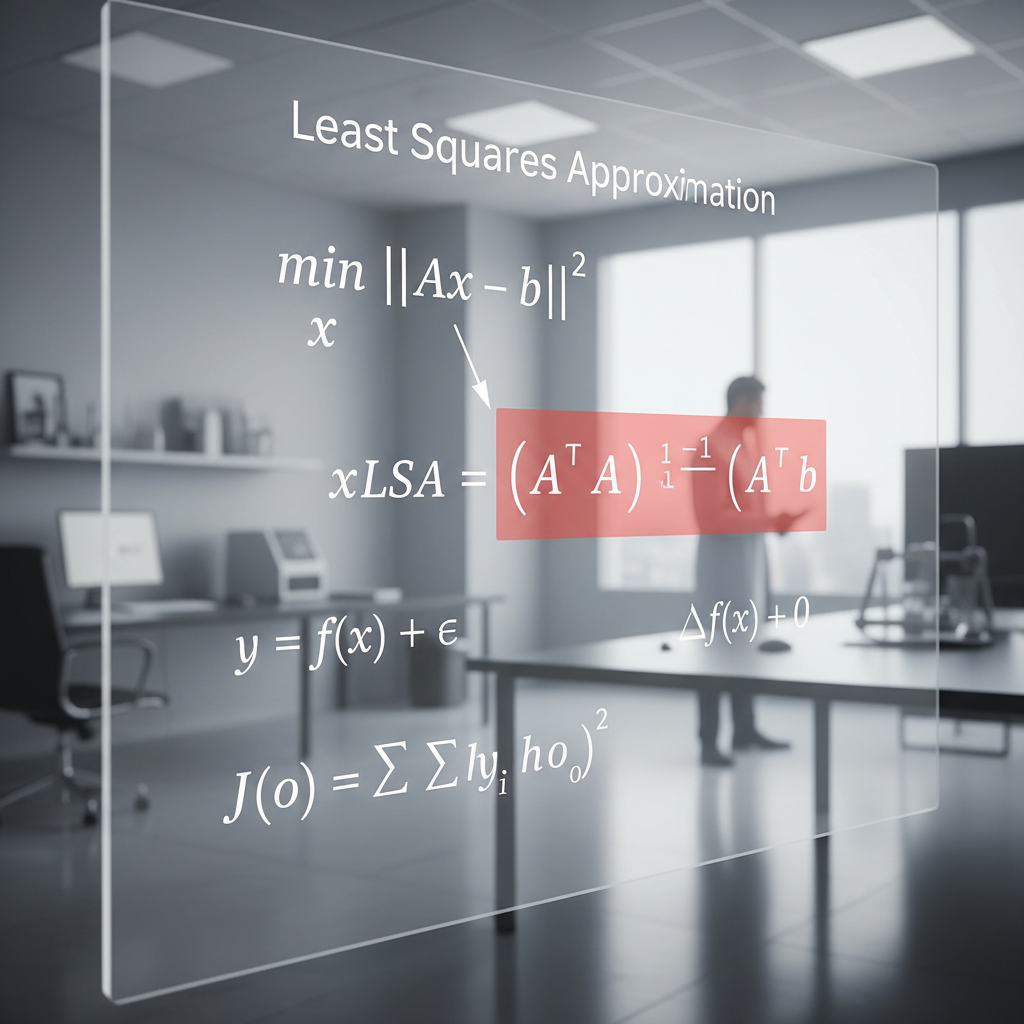
If you work quietly in a room and never show your work, your surface area is tiny. If you do fascinating work and actively share it with the world, you create an immense surface area for serendipity to strike.
Low Activity + Low Exposure = Small Luck Surface Area
High Activity + High Exposure = Massive Luck Surface Area
Actionable Strategies to Expand Your Surface Area:

- Say “Yes” More Often (Within Reason): Unlucky people crave rigid predictability. They decline invitations to events outside their comfort zone or turn down projects because they don’t perfectly align with their current skill set. Lucky people say yes to the coffee invite, the strange workshop, or the cross-departmental project. Every new environment is a fresh canvas for chance encounters.
- Talk to Strangers: The “strength of weak ties” – a concept popularized by sociologist Mark Granovetter – shows that breakthrough opportunities rarely come from your inner circle of close friends. Your friends know the same people and information you do. It is acquaintances, or people you meet fleetingly, who bridge you to entirely new networks, industries, and ideas.
- Publish Your Work Online: In the digital age, “telling” has never been easier. Write essays, share your code on GitHub, post insights on LinkedIn, or build a portfolio. Your digital presence acts as a 24/7 worker generating luck for you while you sleep.
3. The Psychology of Perception: Training the Reticular Activating System

Have you ever decided to buy a specific model of car, and suddenly you see that exact car on every street corner? The cars didn’t multiply overnight; your Reticular Activating System (RAS) simply started filtering them into your conscious awareness.
The RAS is a bundle of nerves at our brainstem that filters out useless data so we don’t get overwhelmed. Unlucky people train their RAS to look for threats, obstacles, and reasons why things won’t work. Lucky people train their RAS to search for opportunities.
In one of Wiseman’s famous experiments, he gave both lucky and unlucky people a newspaper and asked them to count the photographs inside.
- The unlucky people took about two minutes to carefully count them.
- The lucky people found the answer in seconds.
Why? Because on the second page of the newspaper, a massive block of text read: “Stop counting. There are 43 photographs in this newspaper.” The unlucky people missed it because they were hyper-focused on counting. The lucky people were relaxed and open to peripheral information.
How to Reprogram Your RAS for Luck:
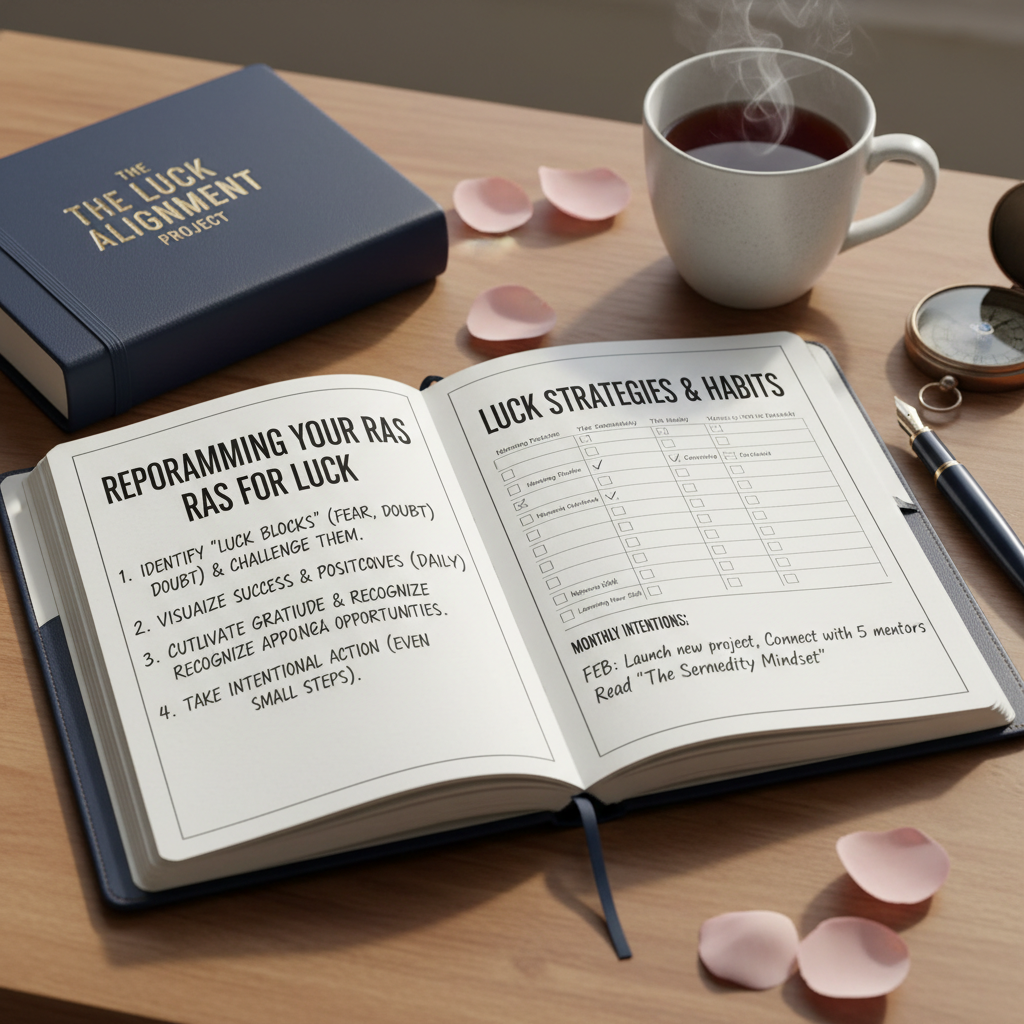
- Daily Micro-Journaling: At the end of every day, write down three small wins or unexpected positive moments. This forces your brain to actively scan your environment for positive data points throughout the day, altering your baseline perception.
- The “What’s Good Here?” Reframing Exercise: When a minor crisis occurs (a missed flight, a canceled meeting), consciously ask yourself: “What unique opportunity does this delay or cancellation unlock?”
4. Building Cognitive Flexibility and Embracing “The Flâneur” Mindset

To be lucky, you cannot be overly married to a rigid plan. Nassim Nicholas Taleb uses the concept of the flâneur – a deliberate stroller who experiences the world without an urgent destination.
If your schedule is packed from 6:00 AM to 10:00 PM with back-to-back tasks, you leave zero room for variance. Luck requires a small amount of intentional inefficiency.
| Attribute | The Rigid Mindset (Low Luck) | The Flexible Mindset (High Luck) |
| Reaction to Chaos | Frustration, anxiety, retreat | Curiosity, pivot, exploration |
| Networking Style | Transactional (Only talks to useful people) | Relational (Open to everyone) |
| Problem Solving | Follows the established playbook strictly | Looks for lateral connections across fields |
| Time Management | 100% optimized, zero free blocks | Intermittent blocks of unscheduled exploration |
When you build buffer time into your life, you grant yourself permission to follow a sudden curiosity, research an tangential topic, or stay an extra hour at a networking event where an amazing connection might happen.
5. The Habit Loop of Luck: Turning Ritual into Serendipity

Luck is sustainable only when it is systematized into your habits. Charles Duhigg’s framework of the Habit Loop (Cue, Routine, Reward) can be applied directly to manufacturing opportunities.
By designing routines that naturally put you in harm’s way of good fortune, you don’t have to exert willpower to “be lucky” every day.
Designing a “Luck Habit”

1.Establish a Serendipity Cue:Trigger Action.
Identify an existing daily anchor. For example, opening your laptop first thing on Friday morning, or buying your morning coffee at 9:00 AM.
2.Execute a Low-Friction Routine:The Habit.
Perform a minor, high-leverage action. Send a short, genuine appreciation email to someone whose work you admire, or introduce two people in your network who could mutually benefit from knowing each other.
3.Identify the Immediate Reward:Reinforcement.
Focus on the shot of dopamine from being generous, or track your expanding network in a simple document. This reinforces the behavior loop in your subconscious mind.
Over a single year, this simple habit yields 52 cold outreaches or network connections. Even if 90% lead nowhere, the remaining 10% (around 5 high-value outcomes) will make you look staggeringly lucky to outside observers.
6. Resilience and the Art of Psychological Alchemy

The final component of increasing your luck is changing your relationship with bad luck. Truly lucky people are not immune to misfortune; they just interpret it differently. They practice psychological alchemy – the art of turning lead into gold.
Consider two people who get into a minor car accident that damages their front bumper.
- The Unlucky Person reflects: “Just my luck. Things like this always happen to me. This has completely ruined my entire week.”
- The Lucky Person reflects: “I am so incredibly fortunate that the impact missed the engine block and that nobody was hurt. It’s a great reminder to slow down.”
This isn’t just empty toxic positivity. The lucky person’s interpretation protects their psychological peace, keeping their mood buoyant and their RAS open to discovering opportunities. The unlucky person’s interpretation triggers a downward spiral of stress that closes down their awareness, causing them to miss subsequent positive opportunities.
Techniques for Psychological Alchemy:
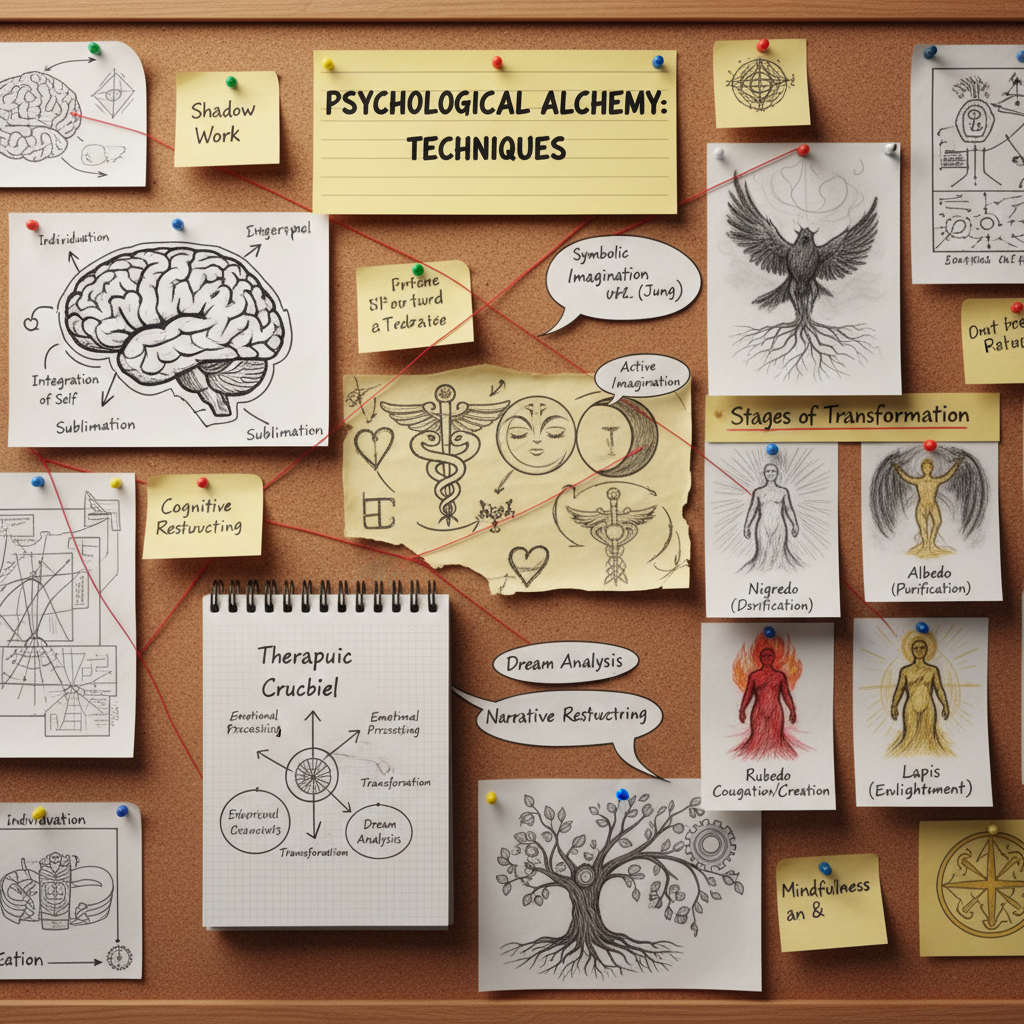
- Counterfactual Thinking: When something goes wrong, imagine how much worse it could have been. This immediately shifts your emotional baseline from resentment to relief.
- The Delayed Evaluation Rule: Avoid labeling an event as “good” or “bad” for at least 30 days. Many of history’s greatest lucky breaks began as catastrophic rejections, layoffs, or failures that forced a necessary and brilliant redirection.
Summary Blueprint: Your Daily Luck Checklist
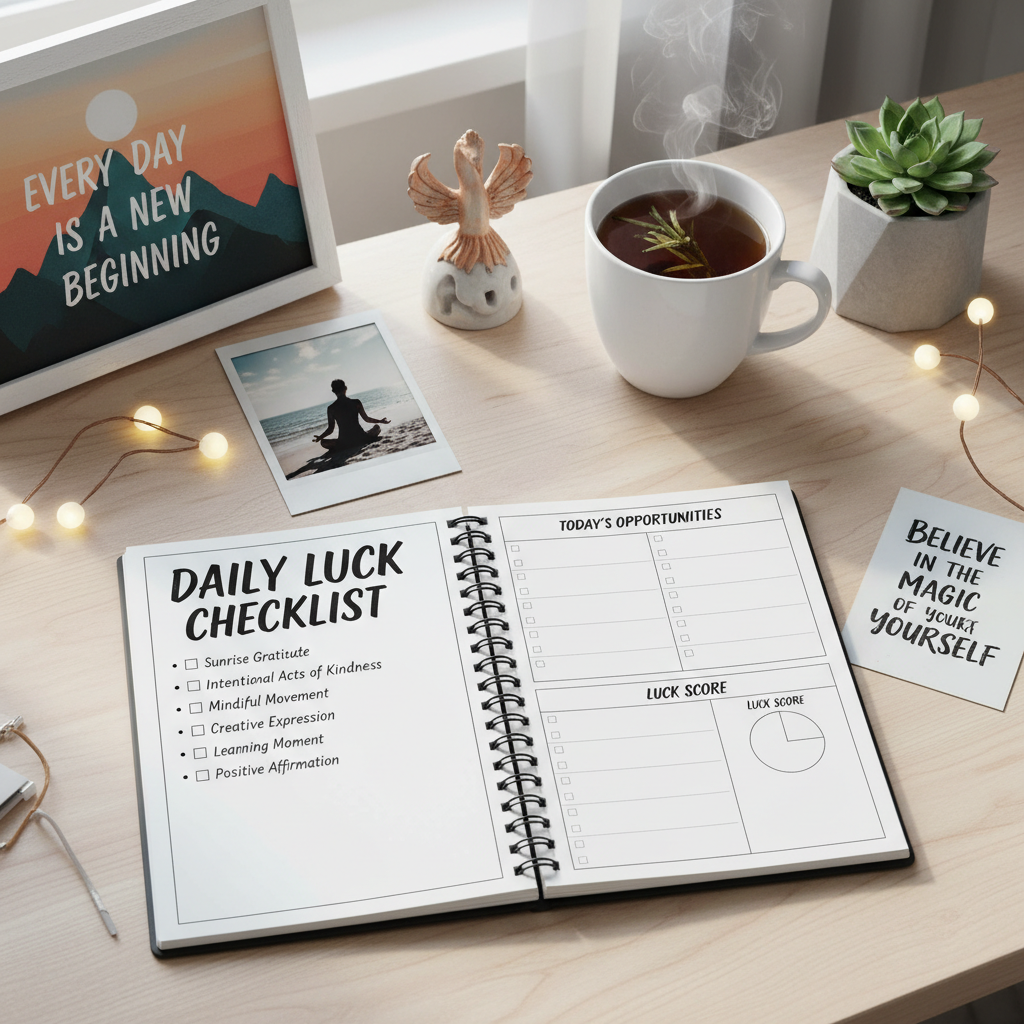
Becoming lucky is a deliberate practice. To jumpstart the process, integrate these daily guidelines into your lifestyle:
- [ ] Perception: Spend two minutes tracking wins or positive events every evening to program your RAS.
- [ ] Proximity: Put yourself in a fresh physical or digital environment at least once a week.
- [ ] Generosity: Make one unprompted introduction or offer a piece of praise to an acquaintance weekly.
- [ ] Velocity: When a curious thought or minor opportunity arises, act on it within 5 seconds before overthinking paralyzes you.
Luck is not an unpredictable cloudburst of magic. It is an active state of engagement. By showing up, sharing your journey, keeping your eyes open, and remaining resilient through setbacks, you effectively bend the statistical curve of life in your favor.
How to create an automated system to track your Luck Surface Area

To track and systematically grow your Luck Surface Area (LSA), you need a system that acts less like a cold sales tracker and more like a Serendipity Dashboard. The goal is to monitor your inputs (Doing and Telling) without letting the administration of the system become a chore.
Here is a blueprint for building a high-impact, low-maintenance Personal CRM using a spreadsheet (Google Sheets or Excel) or a minimalist database (Notion).
The “Luck Engine” Dashboard Architecture

Your tracker should be split into two main sections: The Network Ledger (the people and connections) and The Output Log (the projects and thoughts you share publicly).
1. The Network Ledger (Tracking “Weak Ties”)

Instead of tracking every single contact, focus heavily on your weak ties – acquaintances, mentors, or peers in adjacent industries who act as bridges to new worlds.
| Name | Collision Point | Last Contacted | Archetype / Industry | Next Action / Context |
| Sarah Jenkins | FinTech Event 2026 | May 14, 2026 | Operator / AI Tech | Send her the article on automated agent scaling. |
| Marcus Tan | LinkedIn Comment | June 02, 2026 | Creative / Design | Invite for a quick 15-minute virtual coffee chat. |
| Elena Rostova | Cold Outreach | June 15, 2026 | Investor / Web3 | Follow up when the new whitepaper is published. |
The Metric to Watch: Days Since Last Collision. If a high-value weak tie goes beyond 90 days without a touchpoint, your surface area with them shrinks.
2. The Output Log (Tracking “Telling”)

This section tracks how often you are putting your ideas, work, and projects into the world. It ensures you aren’t just creating value in a vacuum.
- Date: The day it went live.
- Medium: (e.g., LinkedIn, Personal Blog, Newsletter, Public Github, Speaking Event).
- Core Idea: A one-sentence summary of what you shared.
- Serendipity Captured: Any unexpected inbound messages, DMs, or invitations that resulted from this specific post (even weeks later).
The Weekly Routine: Operating the System
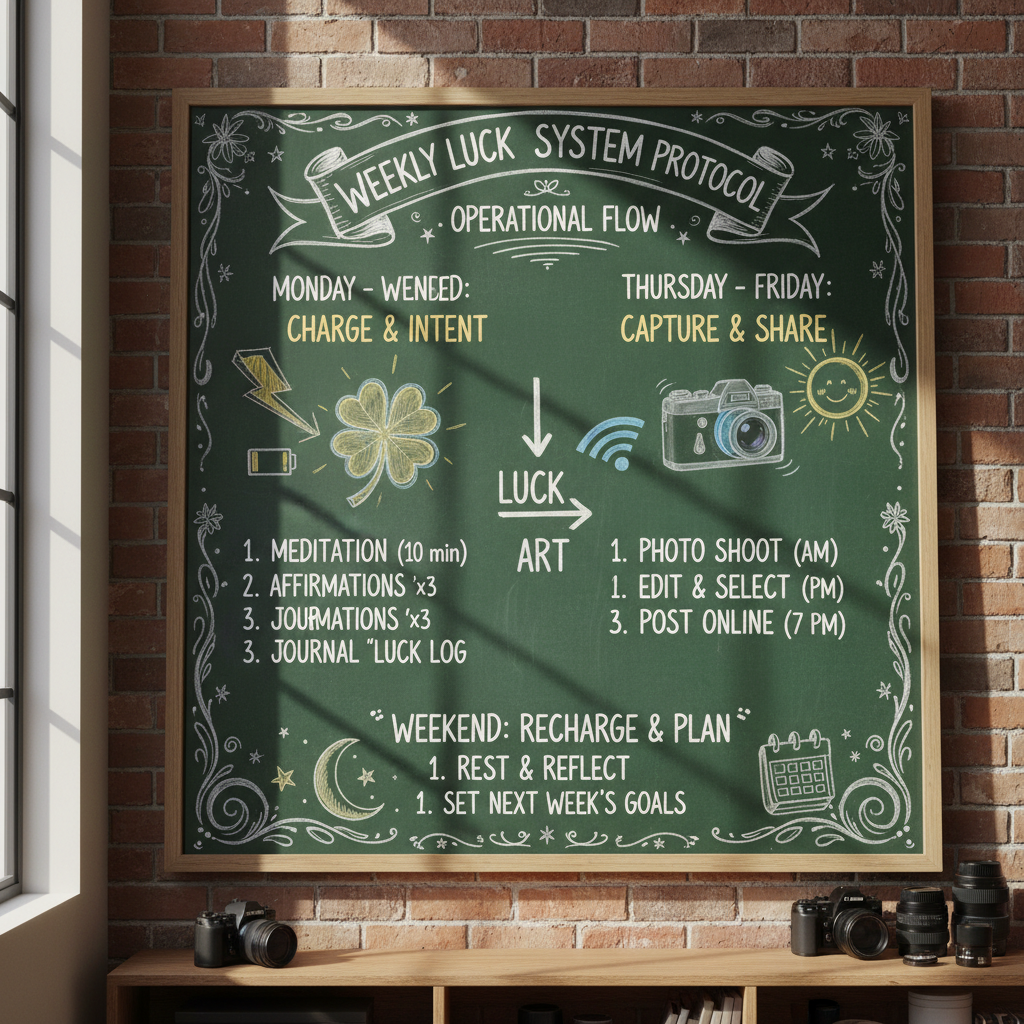
A CRM is only as good as its usage. To prevent it from feeling like work, limit your maintenance to 15 minutes once a week (e.g., Friday afternoons).
[Friday 4:00 PM]
   │
   ├── Step 1: Log any notable new conversations from the week.
   ├── Step 2: Record any public content or ideas shared.
   └── Step 3: Pick 2 people from the Ledger and send a "no-strings-attached" high-value message.
The 3 “No-Strings-Attached” Message Templates

When executing Step 3, never reach out to “catch up” without a purpose, and never ask for a favor. Use these high-probability serendipity triggers instead:
- The Resource Share: “Hey [Name], saw this piece on [Topic] and immediately thought of our conversation at [Event]. No need to reply, just thought you’d find it interesting!”
- The Unprompted Win Celebration: “Hey [Name], just saw your update about [Project/Promotion]. Staggering work, really well deserved. Cheering you on from over here!”
- The Bridge Introduction: “Hey [Name A] and [Name B], I was thinking about [Topic] today and realized you are both tackling this from brilliant angles. I’ll let you two take it from here if there’s synergy.”
3 Core KPIs for Luck
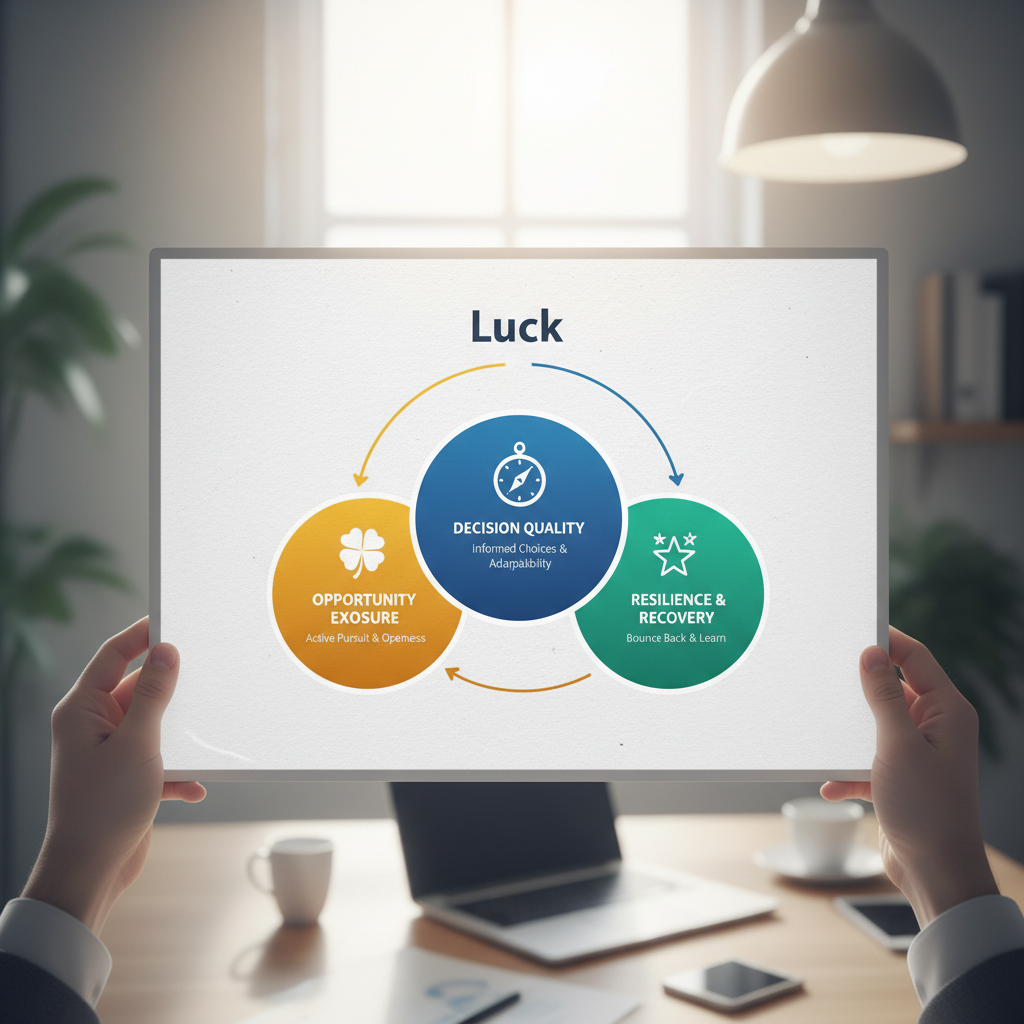
To know if your luck surface area is expanding, look at these three indicators at the end of every month:
- Inbound Velocity: How many unsolicited opportunities, messages, or invitations did you receive this month compared to last month?
- Diverse Collisions: How many people did you interact with who are completely outside your primary industry or social circle?
- Ship Rate: How many times did you hit “Publish” or “Send” on an idea, project, or pitch?
By keeping this simple ledger, you stop guessing whether you are being proactive. You gain a visual representation of your luck net, and the larger it grows, the more inevitably fortune lands in it.
Leave a Reply
You must be logged in to post a comment.