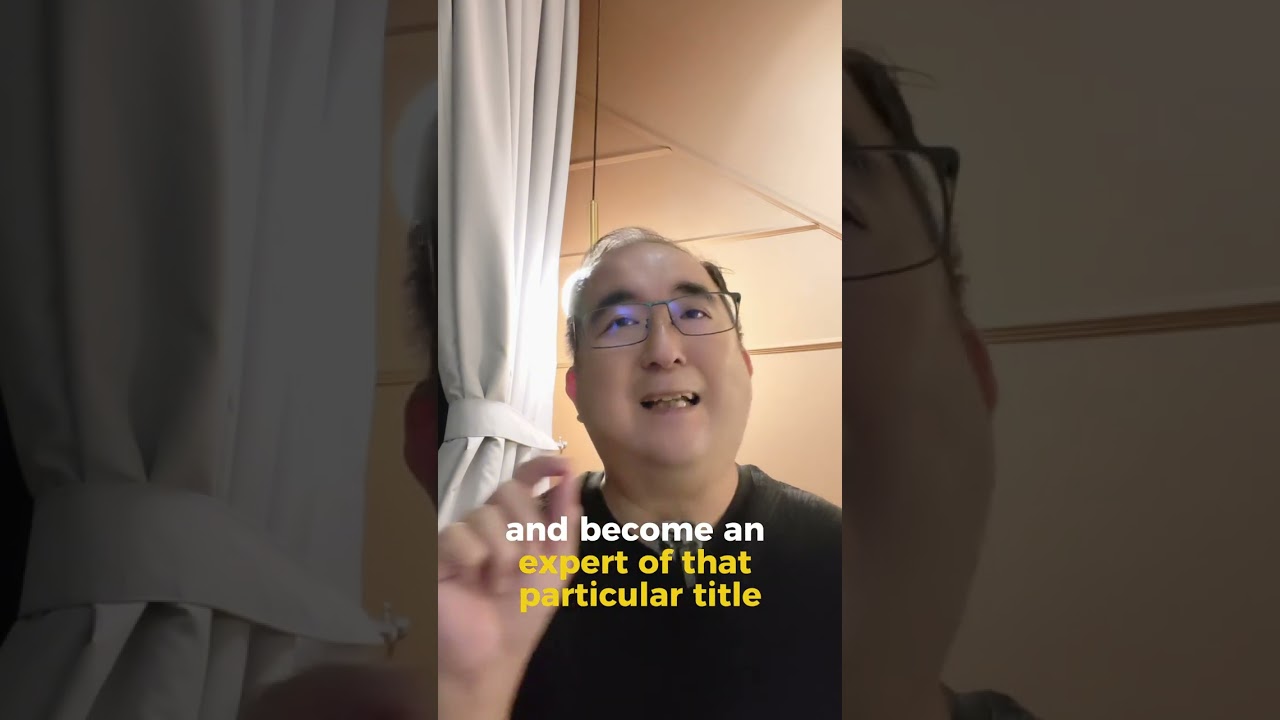
In this video, Mr. Dougles Chan explains the learning method he used to develop deep practical expertise in Qi Men Dun Jia. The process took years, but it allowed him to progress faster than people who only memorise theories or move repeatedly from one teacher to another without mastering the foundations.
When he first began learning Qi Men Dun Jia, he faced the same difficulties as many students. The formulas were confusing, different concepts became mixed together, and much of the material was difficult to remember.
He also struggled to understand how the information should be applied in real situations. At several points, he felt like giving up.
The real problem was that the knowledge was fragmented. Different teachers used different terminology, emphasised different methods, and sometimes contradicted one another.
Mr. Dougles Chan therefore developed a structured learning formula that can also be used for other complicated subjects.
The first principle is to break a large subject into very small parts.
Instead of trying to master the entire system at once, he divided Qi Men Dun Jia into chapters, subtopics, and individual questions.
For example, the first topic might simply be: What is Qi Men Dun Jia?
He would then study only that question. He searched through books, videos, questions.
For example, the first topic might simply be: What is Qi Men Dun Jia?
He would then study only that question. He searched through books, videos, blogs, websites, and explanations from different teachers.
He compared how each source defined the subject, what applications they mentioned, and which ideas were repeated across different schools.
Only after developing a clear understanding of that small topic would he move to the next one, such as the history of Qi Men Dun Jia, its major schools, its traditional uses, or the meaning of one Heavenly Stem.
A student does not need to understand every Door, Star, God, palace, stem, formation, and timing method on the first day. The goal is to become competent in one small area before adding the next layer.
Mr. Dougles Chan also recommends researching through multiple sources.
Different search engines, websites, books, videos, languages, and teachers may reveal different pieces of the same topic.
Today, artificial intelligence can accelerate this process, but AI should not be treated as the only authority. Information should still be compared, questioned, and tested.
The second principle is the 20% theory and 80% practice method.
Theory provides the vocabulary, structure, and formulas. Practice shows whether the reader truly understands how the system works.
After learning a concept, Mr. Dougles Chan began offering free readings to friends and people who were willing to participate.
He practised through face-to-face meetings, messaging platforms, online consultations, and real questions.
The purpose was not to appear correct every time. The purpose was to collect experience, observe outcomes, recognise mistakes, and identify repeating patterns.
A formula may look simple in theory, but the practitioner must still identify the correct subject, select the right reference point, understand the question, interpret the surrounding symbols, and communicate the conclusion responsibly.
As the number of cases increased, patterns became easier to recognise.
Mr. Dougles Chan refined the methods, removed ideas that did not work consistently, and developed practical interpretations for modern questions involving careers, business, relationships, money, health, education, and personal development.
This is how practice creates expertise.
The third principle is to focus on application rather than collecting knowledge.
Some students spend years learning additional formulas but rarely use them. They may know many technical terms while remaining unable to answer a real question.
Mr. Dougles Chan’s method asks two questions: Do you understand the concept, and can you apply it correctly?
If either answer is no, the topic has not been mastered.
The fourth principle is refinement.
After every reading, compare the interpretation with what eventually happened. Determine which signals were useful, which assumptions were wrong, and how the process could be improved.
Accuracy grows through repeated observation, correction, and honest review—not through confidence alone.
Qi Men Dun Jia can offer a metaphysical framework for understanding tendencies, timing, choices, and potential risks. It should not replace professional medical, legal, or financial advice.
The larger lesson applies far beyond metaphysics.
Choose one skill. Break it into small parts. Research each part deeply. Learn the theory, practise repeatedly, review the results, and improve the system.
Practice makes progress, but deliberate practice creates expertise.
Leave a Reply
You must be logged in to post a comment.