How to read qi men dun jia chart + 2 case studies By Dougles Chan – Qi Men Dun Jia Grandmaster
www.dougleschan.com
For consultation : +65-93880851 (Whatapps)
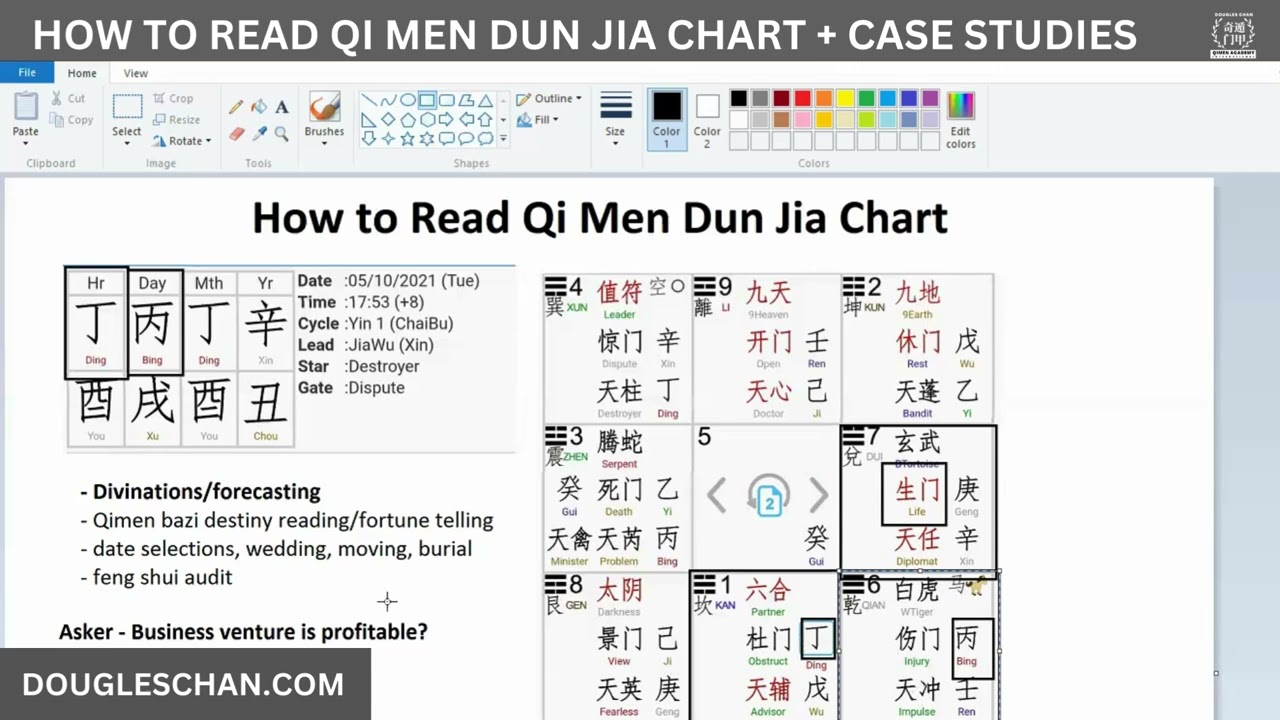
Qi Men Dun Jia is a versatile Chinese metaphysics tool used for divination, forecasting, reading a person’s destiny, date selection, and Feng Shui audits. To begin using it for divination and forecasting, you must first understand how to navigate a dissected chart consisting of nine different boxes.
1. Identifying the Key Reference Points
The first step in reading a chart is to base the analysis on a specific question, with the chart itself being plotted according to the current time and date when the question is asked. You then look at the “four pillars” of that time to find two primary symbols:
- The Asker (Subject): Look for the symbol under the Day Stem. This symbol represents the person asking the question.
- The Answer (Target): Look for the symbol under the Hour Stem. This symbol indicates where the outcome or answer is located within the nine boxes.
Note on multiple symbols: If a symbol appears in two different boxes, or twice in one box (one at the top and one at the bottom), you generally take reference from the one located at the top.
2. Basic Symbol Interpretation
Once you locate the boxes for the asker and the answer, you analyze the symbols inside them. A simplified way for beginners to interpret these is by their color:

- Red Symbols: Generally indicate good or positive meanings. Common positive symbols include “Partner,” “Advisor,” “Open Door,” and “Leader”.
- Black Symbols: Generally indicate obstacles or negative situations. These include symbols like “Obstruct,” “Destroyer,” “Injury,” and “Black Tortoise”.
3. Understanding the Five Elements and Harmony

The relationship between the asker and the answer is determined by the Five Element relationship of the boxes they occupy. Colors within the boxes often denote their element:
- Gray represents Metal.
- Purple represents Water.
- Brown represents Earth.
Harmony occurs when the asker and the answer are in boxes of the same element, which is considered a good sign. Production is also significant; for example, if the answer’s box (Earth) produces the asker’s box (Metal), it suggests the situation or outcome will come to the person, though specific symbols like “Injury” might mean this outcome brings some form of distress.
4. Using Specific Reference Points
Depending on the nature of your question, you should look for specific symbols:
- Business Profitability: Look for the “Life” symbol, as it specifically equates to money and profit in a business context.
- Job Offers and Careers: Look for the “Open Door,” which represents the job itself.
- Interviewers: The “Advisor” symbol often represents the interviewer or a mentor figure.
5. Managing Expectations
Qi Men Dun Jia provides a specific guide or direction rather than an absolute 100% certainty. A reading typically offers 70% to 90% accuracy, depending on the reader’s ability to decipher the information correctly and the various external factors involved, such as the asker’s own attitude and actions.
Leave a Reply
You must be logged in to post a comment.