
Introduction: Why Qi Men Dun Jia can Change the Way You Make Decisions

There are two kinds of people who come to Qi Men Dun Jia: those looking for mystical answers, and those wanting a practical system to improve timing and decision making. If you are here, you may be a bit of both. I started learning Qi Men out of curiosity, then realized its value as a decision-support tool you can practice and test. If you’re searching for a Qi Men Dun Jia beginner guide for complete beginners, this article will walk you through the essential concepts, show you how to start reading simple charts, and give you actionable exercises so you can begin applying the method right away.
In this introduction we will set realistic expectations. Qi Men Dun Jia is not a magic switch that guarantees outcomes. It is a multilayered Chinese metaphysical system developed for strategic planning and timing, historically used in areas such as military operations, personal strategy, negotiation, and auspicious timing. Learning the language of Qi Men takes time, pattern recognition, and disciplined practice. In exchange you get a nuanced map that combines time, space, symbolic archetypes, and subtle interactions. Over the next sections we will break down the complexity into manageable pieces, give you hands-on steps to generate and read a basic board, and provide exercises you can do today.
Section 1: What Qi Men Dun Jia Is, and Why it Works
1.1 a Brief, Practical History

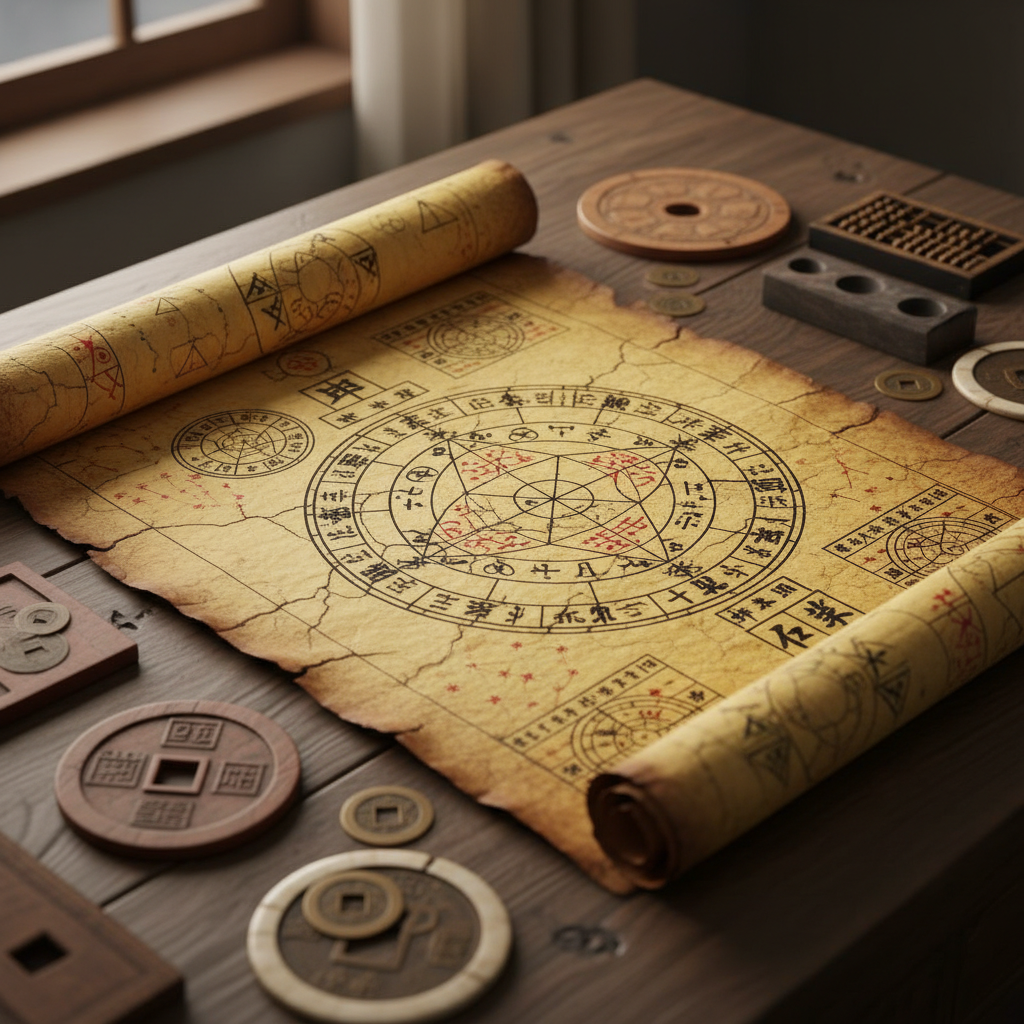
Qi Men Dun Jia is an ancient Chinese strategic science. In plain terms, it is a time-space matrix that maps energetic influences onto a nine-palace grid, so you can interpret moments and directions for specific intentions. Traditionally, the technique was used for military decisions, strategic planning, and elite problem solving. Over centuries it evolved and branched into multiple schools; today many people use Qi Men for modern needs such as business timing, career decisions, relationship strategy, and even short-term forecasting.
Why does it still matter? Because it gives a structured way to combine objective inputs, such as date, time, and location, with symbolic archetypes, like doors and stars. The result is a reproducible chart that you can learn to read. Unlike vague fortune-telling, Qi Men produces detailed boards that change hour by hour, which makes testing and verification possible.
1.2 Core Idea in One Paragraph
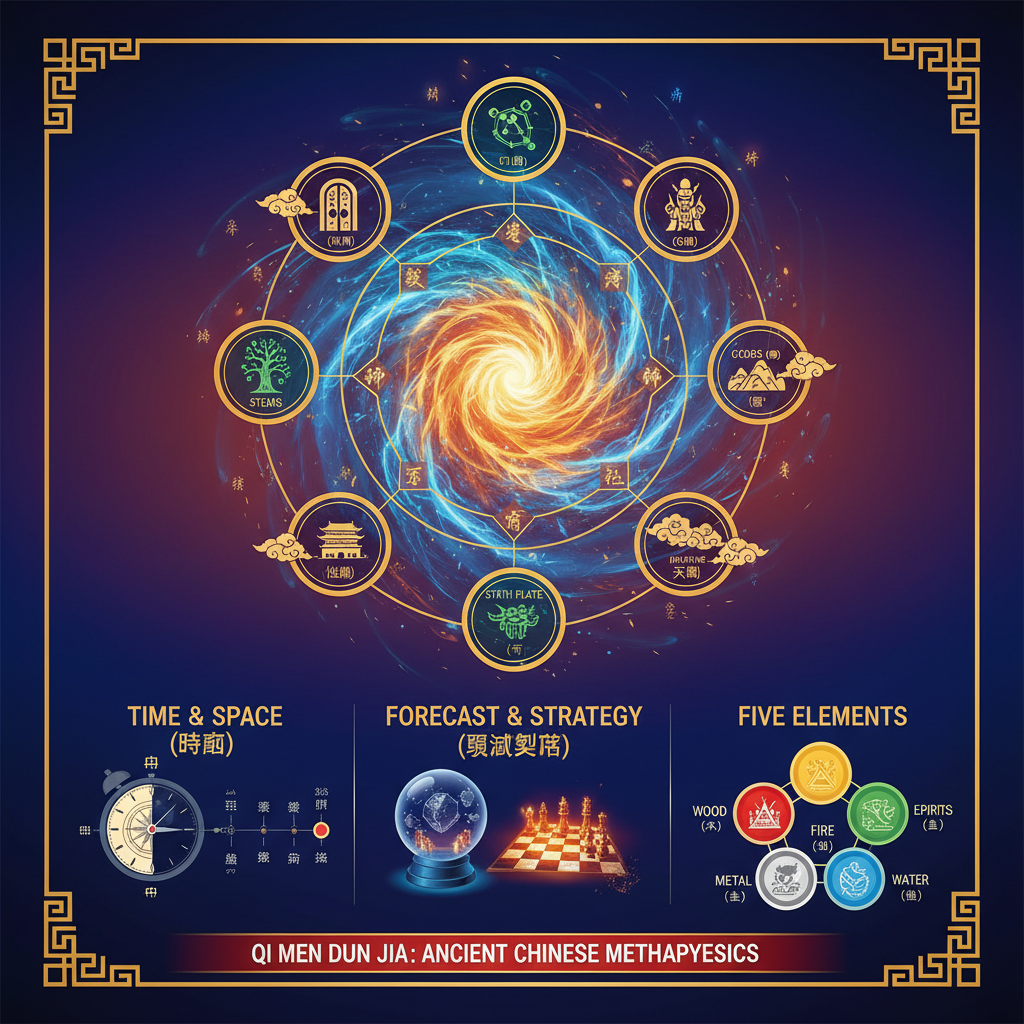
At its simplest, Qi Men is a 3 by 3 grid, the nine palaces, where each palace contains a set of symbolic elements. These elements include doors, stars, stems, deities, and sometimes hexagrams. We map a specific moment in time to a board by following calendrical rules. Once the board is created, you interpret the relationships between elements in the palace relevant to your question. The system relies on consistent rules and a mixture of symbolic meaning plus elemental correspondences, so with practice you can produce repeatable interpretations and test them against outcomes.
1.3 What Qi Men can and Cannot Do

Qi Men excels at short-term timing and tactical decisions. For example, it can help you choose the best hour to send a proposal, decide whether a negotiation will be favorable, or identify a direction for travel that improves the odds of success. It is less suited to deterministic predictions of long-term personality traits or fixed life paths. In other words, Qi Men is best used as a decision-support system, not as a cosmic decree. When we use it that way, we can measure performance, adjust, and improve our interpretations.
1.4 Who should Learn Qi Men and What to Expect

Qi Men is appropriate for people who like systems, patterns, and active learning. If you enjoy chess, probability, or strategy games, you will likely appreciate the discipline and reward of Qi Men. Expect an initial learning curve: the first weeks are memorization and familiarization with the nine palaces and the eight gates. By the third month you will start recognizing recurring patterns, and in six to twelve months you can reach a practical level where you confidently read simple boards. The most reliable path is daily micro-practice combined with recording outcomes.
Section 2: the Building Blocks You must Master First
2.1 the Nine Palaces: Your Basic Map
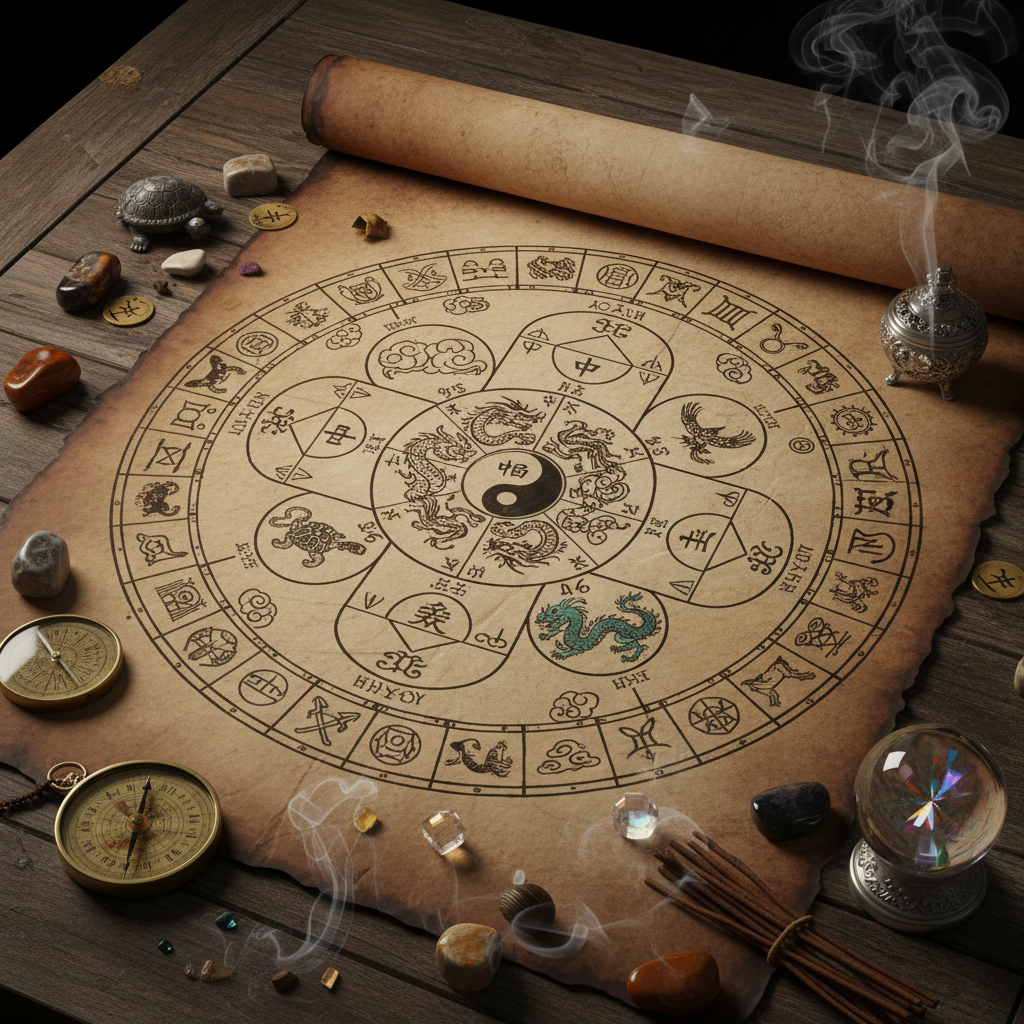
The nine palaces form a 3 by 3 grid that we use to place all the symbolic elements. Think of the palaces as rooms or compass sectors. Each palace has a directional correspondence, a set of elemental influences, and a place in the reading hierarchy. Practically, you will learn the grid layout, then label the palaces with compass directions so you can apply the board to real-world locations and choices. Memorize the grid visually; many learners draw the 3 by 3 every time they practice in the beginning.
Actionable tip: Draw a fresh nine-palace grid each morning for 30 days. Label the directions (north, northeast, east, etc.) and write the palace numbers. This builds the mental scaffold you will use constantly.
2.2 the Eight Doors: Immediate, Actionable Meanings
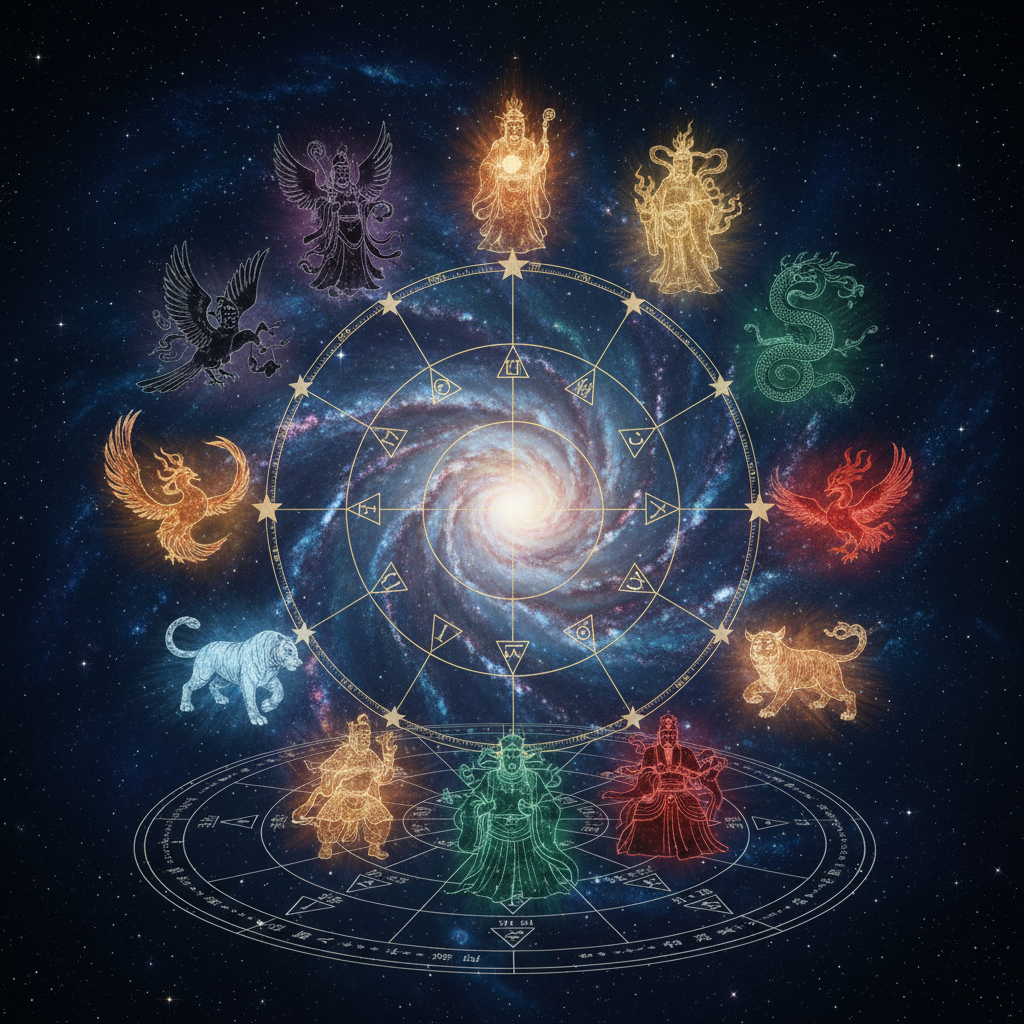
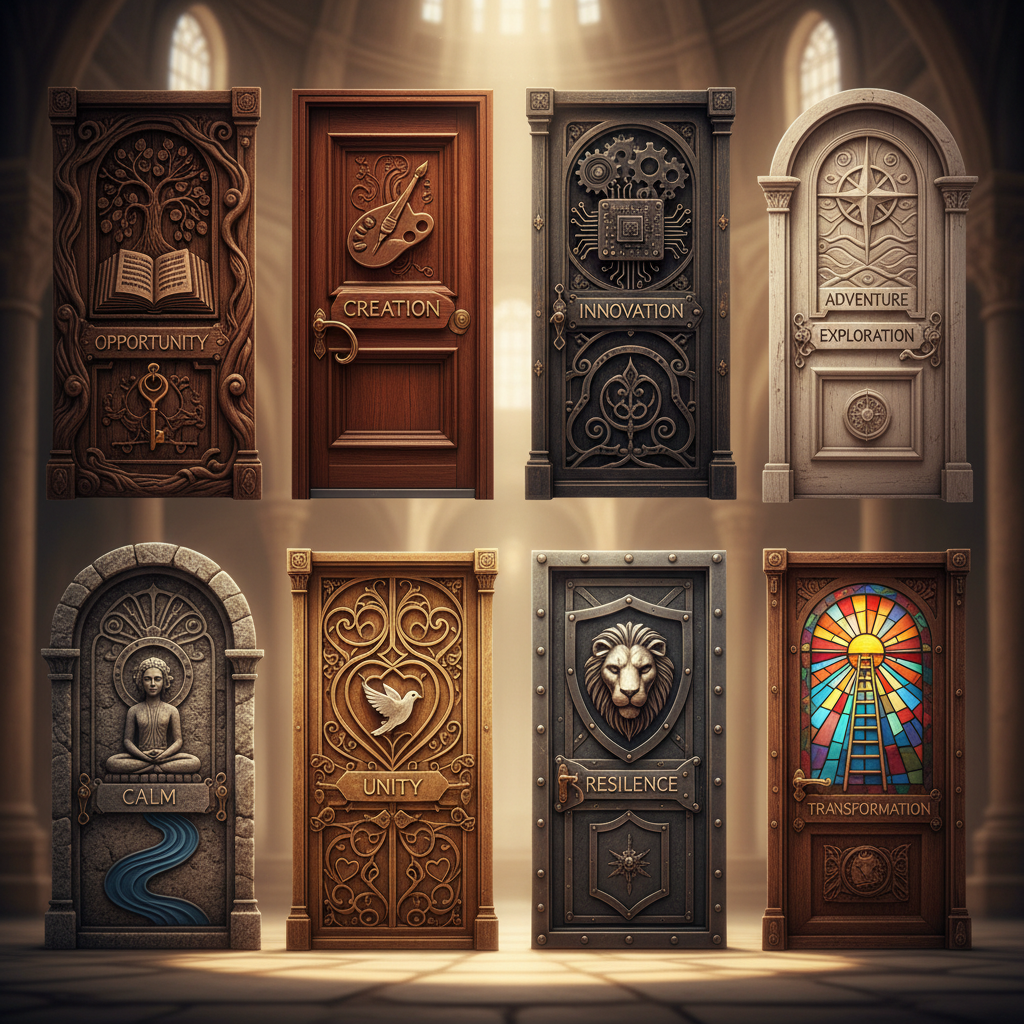
The eight doors are among the most practical elements. They represent types of outcomes or modes of action. The commonly used eight doors and their concise practical meanings are:
- Open (開): Entry, initiative, opportunities to begin, favorable for taking action.
- Rest (休): Recuperation, low energy, repair, good for healing or pausing.
- Life/Prosperity (生): Growth, resource acquisition, financial and health improvement.
- Harm (傷): Wounds, risk of conflict, not ideal for negotiations; handle cautiously.
- Stop/Obstacle (杜): Barriers, restrictions; used when containment or stopping is required.
- View/Scene (景): Visibility, reputation, publicity, good for presentation or exposure.
- Death (死): Endings, completions, closures; sometimes appropriate for terminating projects.
- Shock (驚): Surprise, instability, rapid change; can be harnessed for disruption or avoided for steady plans.
These door meanings are your first interpretive toolkit. When a palace contains Open and you are asking about launching a product, that palace looks promising. Conversely, if Harm or Stop is dominant and you ask about starting a partnership, you would be cautious and consider delaying or choosing another strategy.
2.3 Stars, Deities, and Elemental Influences
Alongside doors, Qi Men uses stars and sometimes deities to color the quality of an outcome. Stars often indicate how the door will express itself, for example whether a favorable door yields wealth, authority, travel, or negotiation luck. Deities (spiritual-like labels) add nuance such as protection or harassment. Underlying all of these are the ten heavenly stems and twelve earthly branches, which connect Qi Men to the Chinese calendrical system and the five elements. In practical terms, the elemental inclinations (wood, fire, earth, metal, water) help you evaluate compatibility between the palace and your intention.
Actionable framework: When you read a palace, ask three questions in order: (1) Which door is present, (2) Which star modifies it, and (3) What stem or element is dominant. This triad gives you a concise, repeatable interpretation method.
2.4 Time Slices and Why Timing Matters
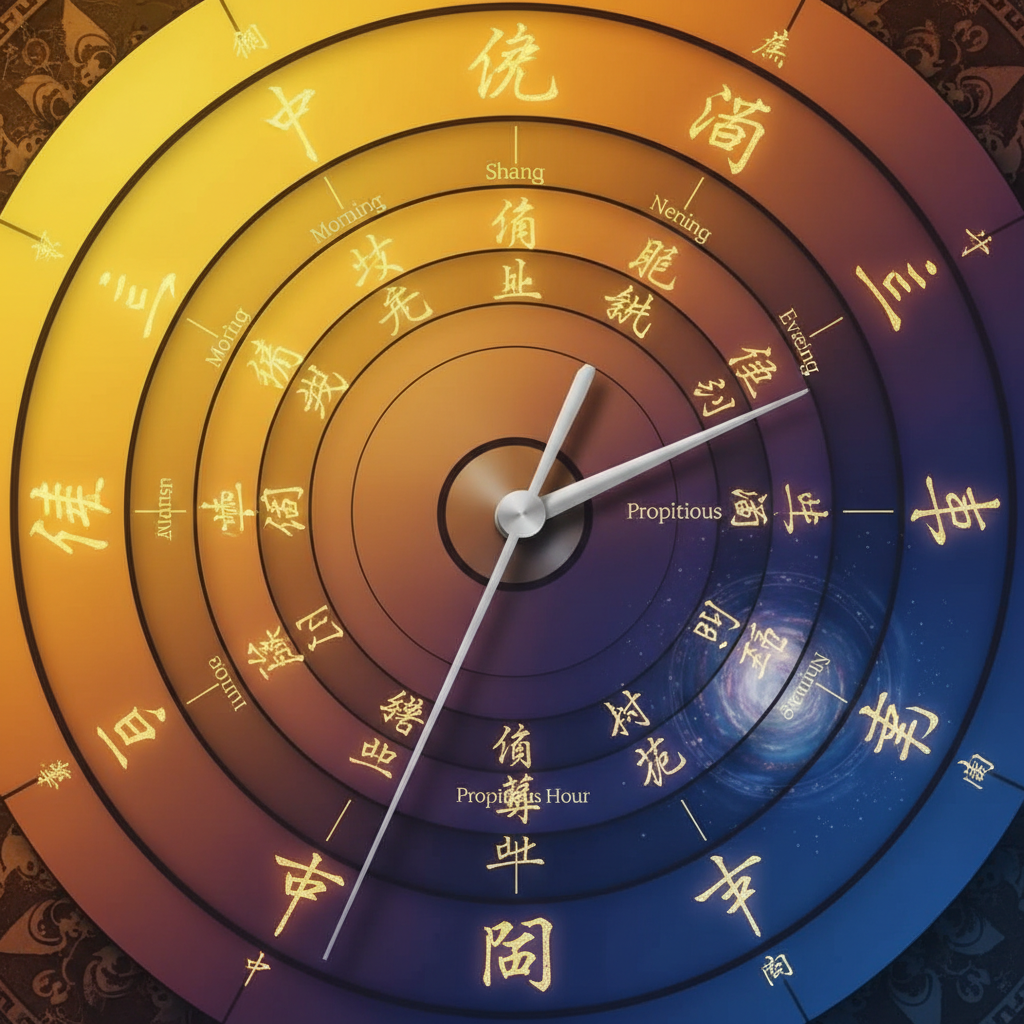
Qi Men boards change rapidly. Traditional practice maps boards to defined time slices, such as double-hours of the traditional Chinese system. In practical modern use, most practitioners consider the hour and minute when generating a board; many advanced users work with charts that update every couple of hours. The point is, small timing differences can alter a board and therefore the advice. For decisions that are time-sensitive, generate a board for the exact planned time, or for several candidate times to compare options.
Actionable tip: When planning an important activity, generate boards for at least three candidate hours within the same day, then compare the presence of favorable doors and supporting stars. Choose the hour with the most coherent supportive readings.
2.5 Practical Memorization Plan
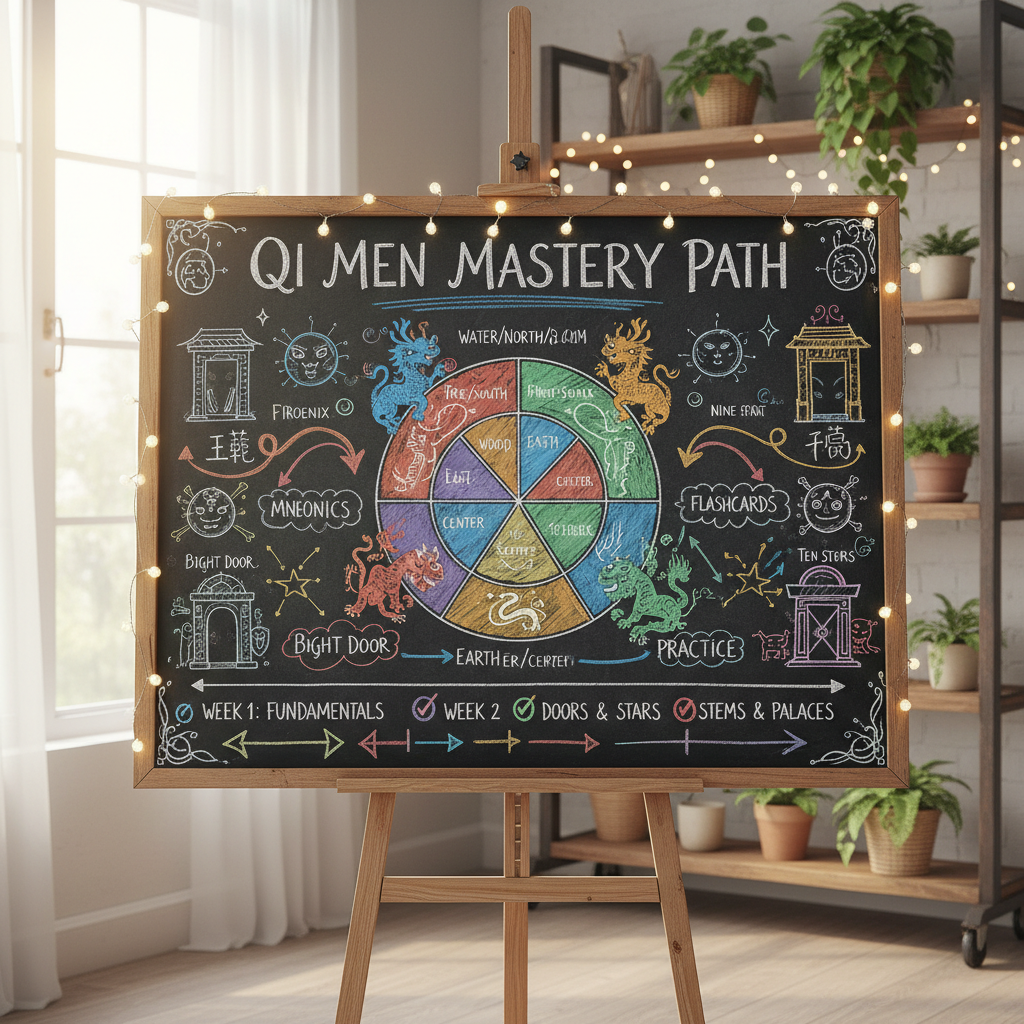
Memorization can be the bottleneck. Here is a simple plan you can follow in your first 30 days:
- Days 1-7: Memorize the nine-palace grid and compass correspondences. Draw and label daily.
- Days 8-14: Memorize the eight doors and short practical meanings. Test yourself with flashcards.
- Days 15-21: Learn the general nature of the nine stars and their basic themes, without getting bogged down in esoteric names.
- Days 22-30: Practice creating boards from an online generator or app, then identify the door-star-stem triad in one palace each day and record a short interpretation.
By the end of month one you will have a working vocabulary. After that, focus on pattern recognition by logging outcomes and revisiting your interpretations.
Section 3: How to Read a Basic Qi Men Board Step by Step
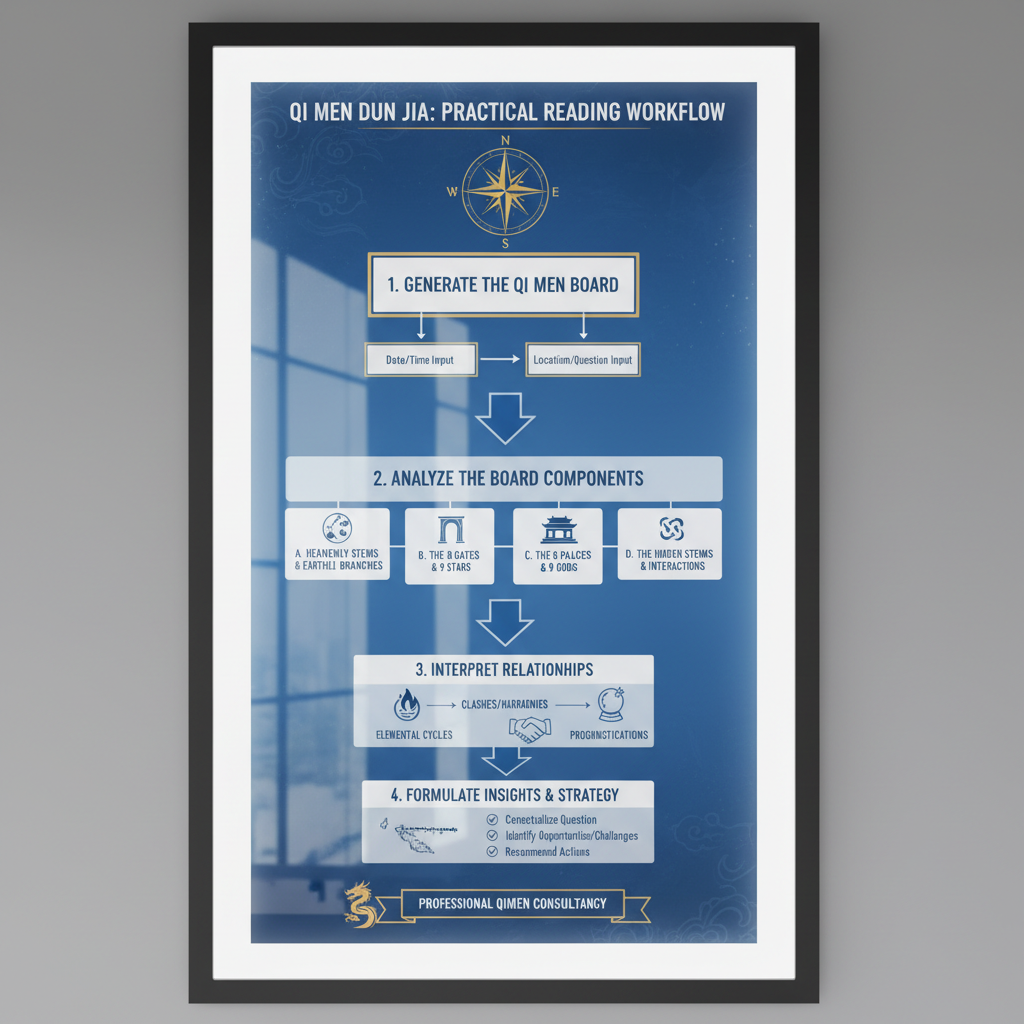
3.1 the Practical Workflow
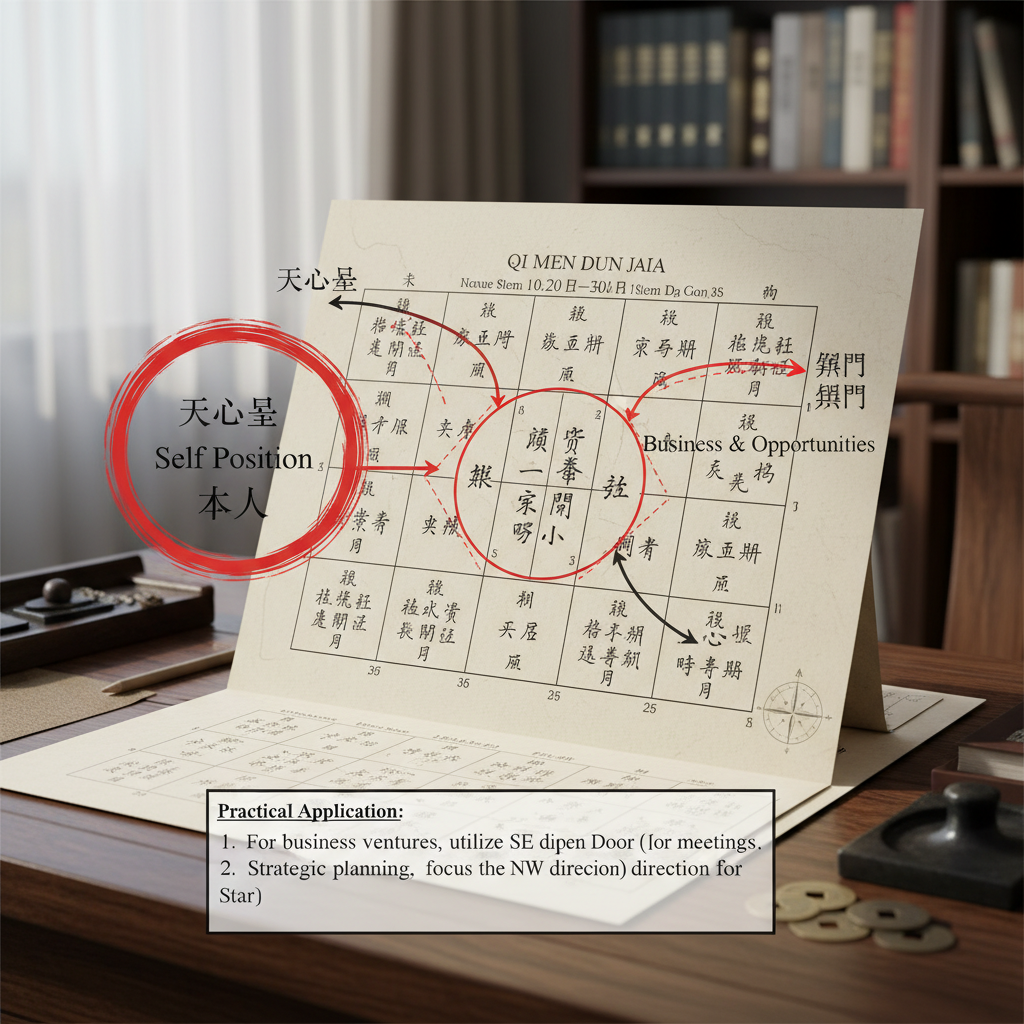
Reading a board is procedural. Over time, the steps become automatic. Below is a workflow you can use on any reading, with explanations and small actions you can take immediately.
- Step 1: Define the question and scope: Be specific. Are you asking about a two-hour window for a sales call, or about whether this week is good for signing a lease? The sharper the question, the clearer the palace choice.
- Step 2: Collect objective inputs: Record the exact date, local time, and location coordinates if possible. Accuracy is important because the board changes with time and place.
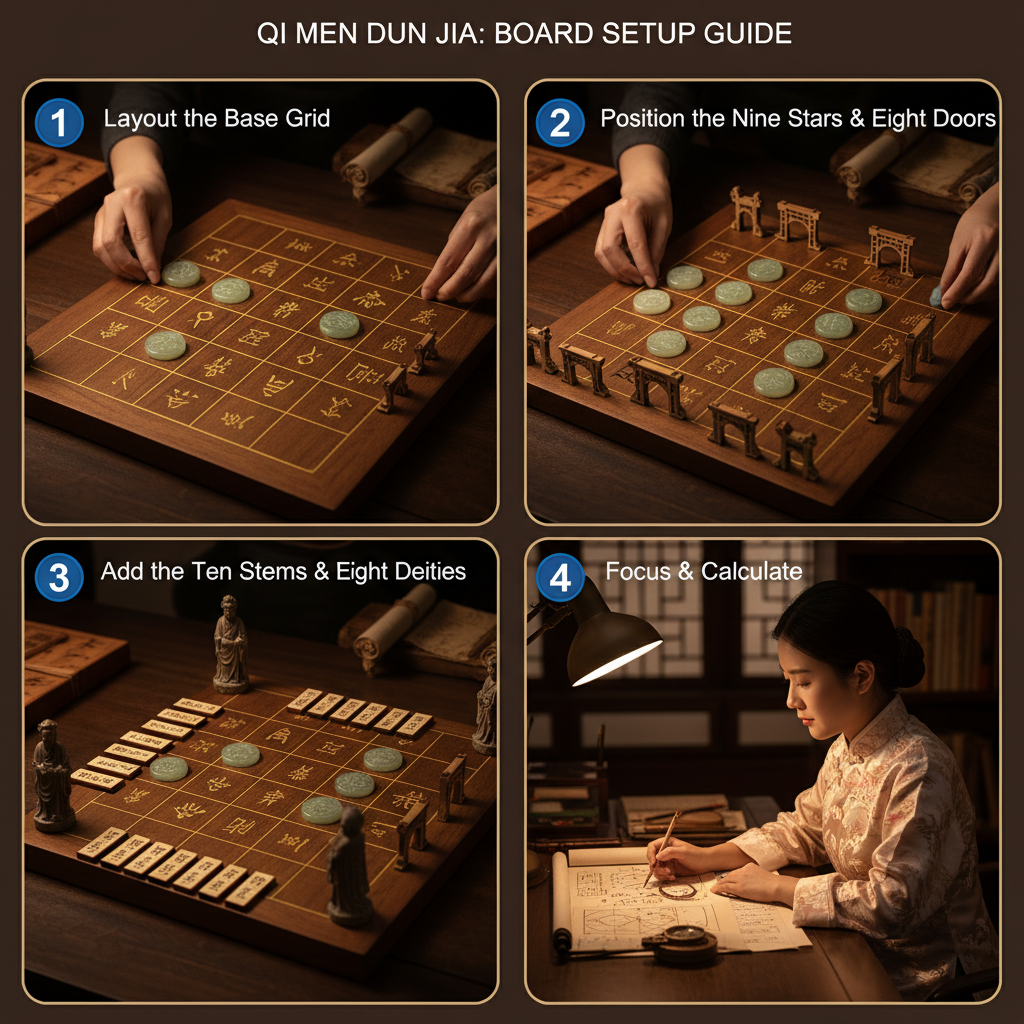
- Step 3: Generate the board: Use a reliable Qi Men generator or software to map the inputs into the nine palaces. If you prefer manual learning, start by using an app while you learn the mechanics.
- Step 4: Locate the primary palace: Decide which palace represents the heart of your question. For personal action, the palace associated with the hour or the door that the querent faces may be primary. For location questions, use the palace whose direction matches the physical site.
- Step 5: Read door, star, and stem: Apply the triad method from Section 2.3. Note whether the door signals action, rest, growth, or obstacle; whether the star supports the door’s nature; and whether the stem’s element aligns or conflicts with your intention.
- Step 6: Synthesize into advice: Translate the symbolic reading into a practical recommendation. For example, if Open with View appears and the stems support the element of metal (communication and contracts), your recommendation might be to present your proposal publicly during that hour.
- Step 7: Record and test: Log the board, your interpretation, the chosen action, and the outcome. Over time you will refine meaning associations and calibrate your judgments.
3.2 a Simple Example You can Replicate
Rather than produce an exact historical chart, here is a hypothetical but realistic scenario that illustrates the method. Suppose you want to schedule a high-stakes pitch and you have three candidate hours on the same day. You generate three Qi Men boards for those hours. One board shows Open in the southeast palace with a supportive star indicating publicity and a stem whose element is harmonious with your project. The second shows View in the center but accompanied by Harm in the palace associated with negotiation. The third shows Stop and a conflicting element.
Interpretation: The first hour, with Open plus publicity, is likely the best window to make an initial presentation because it favors entry and visibility. The second suggests that public reception might be okay, but negotiation details could become problematic; plan to postpone contract signing during that slot. The third is least favorable; avoid it entirely. This example shows how you synthesize multiple palace signals into a practical decision: choose the slot that best matches the required action stage, not merely the most superficially positive label.
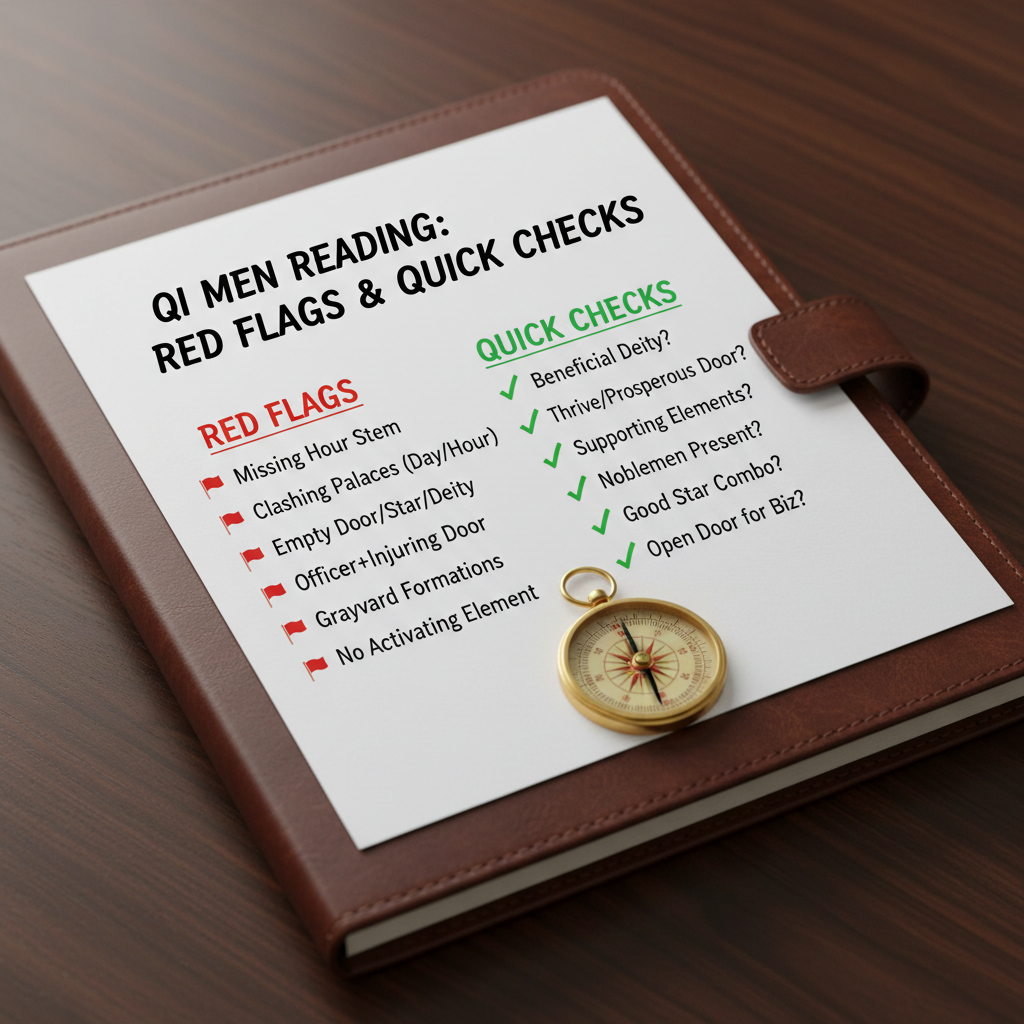
3.3 Quick Checks and Red Flags

When you read a board, watch for the following red flags that should prompt caution rather than immediate action:
- Strong presence of Harm or Stop in the palace directly linked to your question, especially if stars provide no mitigation.
- Conflicting elemental signs that create tension; for instance, water element demands when your project requires fire element activities.
- Multiple instability indicators such as Shock combined with volatile star signs; this combination suggests unpredictable results.
Actionable response: When a red flag appears, either delay, choose a different direction or hour, or plan mitigation steps such as preparatory backup measures for risk management.
3.4 Exercises to Build Reading Skill
The fastest way to improve is structured practice. Try this 30-day mini-experiment:
- Each day for 30 days, pick one short yes/no query or one planned action (sending an email, making a call, attending a meeting).
- Generate the Qi Men board for the exact planned moment, then write a one-paragraph interpretation focusing on the door-star-stem triad.
- Take the action and record the outcome truthfully: was the result favorable, mixed, or unfavorable?
- At the end of each week, review patterns. Note which door types correlated most with positive outcomes for each action type.
Data-driven note: Aim to log at least 50 events before claiming reliable mastery. With that dataset you can begin to compute crude frequencies, for example, how often Open + supportive star resulted in a positive outcome for negotiation versus for product launch. These small statistics calibrate intuition and help you avoid overconfidence.
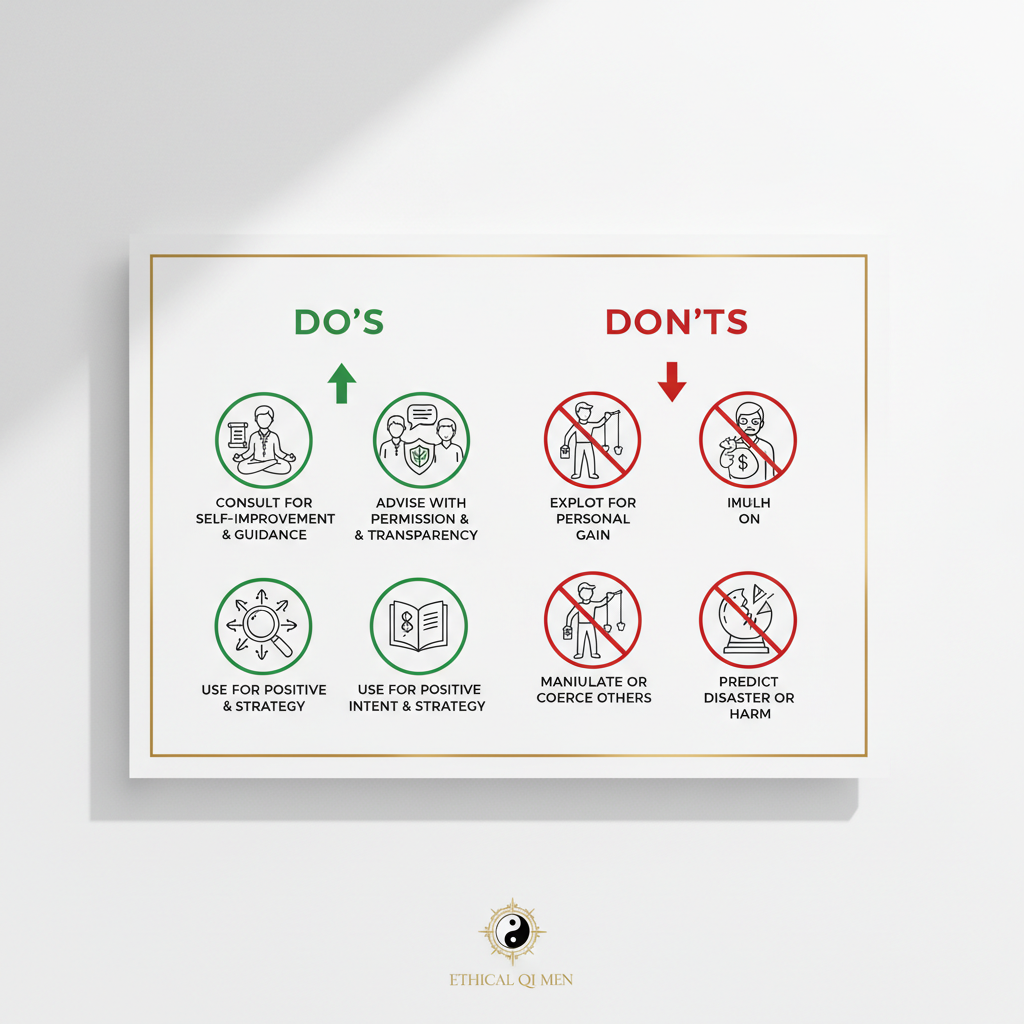
3.5 Ethical Use and Practical Boundaries
Use Qi Men as a decision aid, not a replacement for ethics or common sense. Never use it to manipulate people or evade legal responsibilities. We find the most durable results when Qi Men interpretations are combined with thorough human preparation: clarity of goals, contingency planning, and transparent communication. Treat the board as one source of input among others, and always validate with real-world testing.
By following this step-by-step approach and committing to disciplined practice, you will convert symbolic knowledge into practical skill. In the next sections we will cover intermediate techniques, case studies, and a list of commonly used troubleshooting methods to deepen your reading ability.
Preparing to Practice Qi Men: Tools, Calendars, and the Right Mindset
Before we open charts and start interpreting symbols, there are a few practical steps we should take to make practice efficient and meaningful. If you are following a Qi Men Dun Jia beginner guide for complete beginners, you will benefit from a small set of tools, a consistent ritual for preparation, and a clear mindset for learning and testing. The goal is not to collect every gadget; rather, to establish reliable inputs and reduce noise in your readings.
Essential Tools and Software

Historically, Qi Men charts were calculated by hand using almanacs and time-keeping methods. Today, a modern beginner needs just a few essentials:
- Accurate time source: a time app or atomic clock to capture the exact moment of the event you are reading for, ideally to the minute.
- Qi Men software or app: several reputable programs generate Qi Men charts instantly once you input date, time, and location. Examples include desktop programs used by practitioners in China and mobile apps that produce standard nine-palace charts. Try at least two apps to verify consistency for the same input.
- Chinese metaphysical calendar or ephemeris: for cross-checking day stems and branches, solar terms, and any local time corrections such as daylight saving.
- Notebook or digital spreadsheet: for logging readings, predictions, outcomes, and notes on your interpretive choices. A simple spreadsheet with columns for date, event, chart elements, prediction, result, and confidence is invaluable.
- Reference books and cheat sheets: keep a short one-page summary of the nine doors, eight gates, nine stars, deities, and the stems and branches, so you can avoid stopping the flow of interpretation to look up basics.
Physical and Mental Preparation
Qi Men is an art that responds to precision and calm. Before every reading we should align the external and internal conditions.
- Environment: choose a quiet location, remove distractions, and ensure your charting device is correctly set to the event timezone and coordinates.
- Ritual: a brief centering routine of two to five minutes is helpful. I find that closing my eyes, focusing on a single breath, and mentally stating the question brings clarity and reduces projection.
- Question framing: Qi Men works best with a specific, time-bound question (for example, “Will the contract be signed within 30 days?” instead of “Will I be successful?”). Write the question down verbatim before you generate the chart.
- Ethics and consent: when reading for others, obtain consent and be transparent about the nature of the reading. Avoid attempting to answer questions about life-or-death medical issues unless you are trained and ethically permitted to do so.
How to Log and Evaluate Practice Sessions
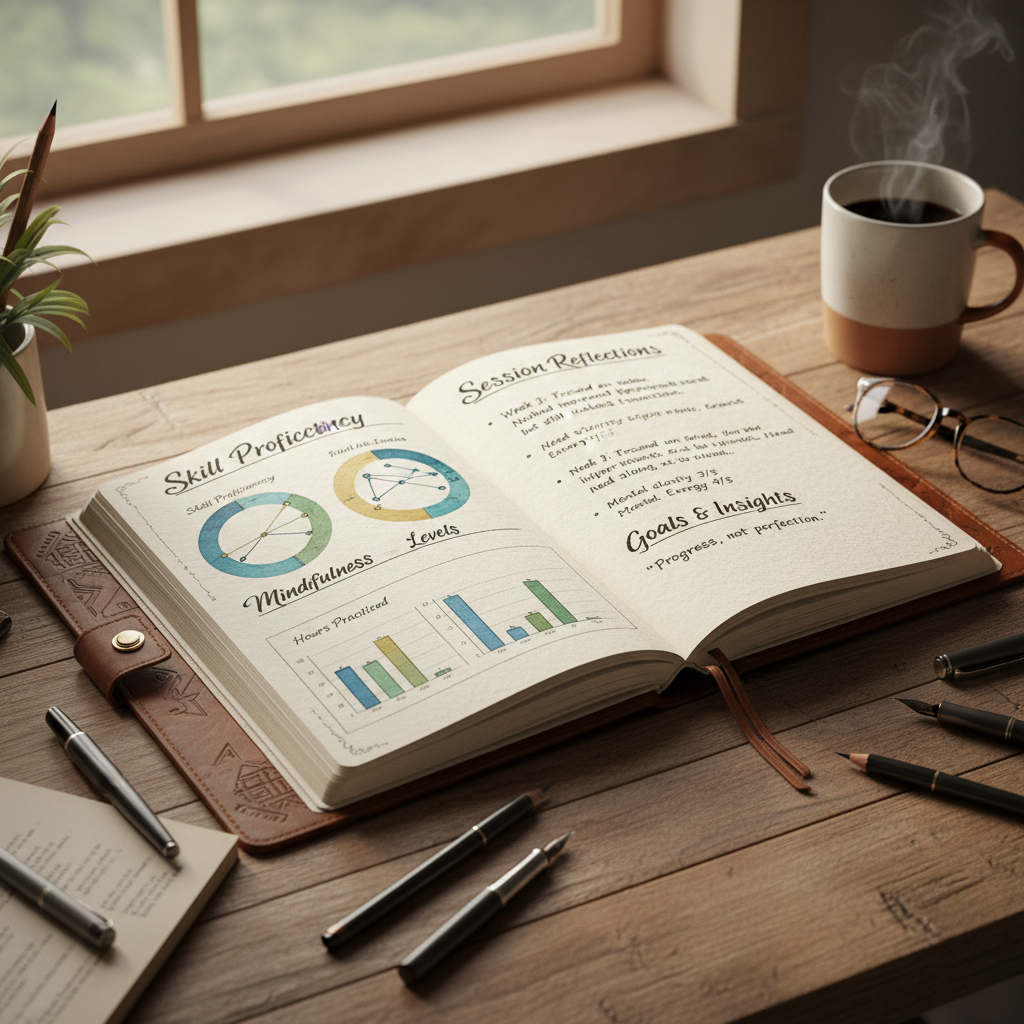
One of the fastest ways to improve is to treat your practice like an experiment. I recommend creating a simple tracking system and committing to it for at least 50 readings. This provides statistical feedback so we can objectively evaluate strengths and weak spots.
- Suggested spreadsheet columns: Date, Time/Location, Question, Chart Snapshot (palaces summary), Key Elements (door, deity, star, stem), Interpretation, Action/Advice given, Outcome, Days to Outcome, Accuracy Score (0-100), Notes/Lessons.
- Target metrics: in early practice, aim for consistent reasoning rather than high accuracy – expect 50-60 percent alignment with outcomes. After 50 tracked readings, review patterns: which doors or deities correlate with accurate predictions, and which types of questions give clearer results.
- Calibration routine: every 10 readings, review and annotate mistakes. Ask yourself whether errors arose from incorrect chart setup, poor question framing, or misinterpretation of symbols.
Understanding the Chart: Palaces, Deities, Doors, Stars, Stems, and Branches
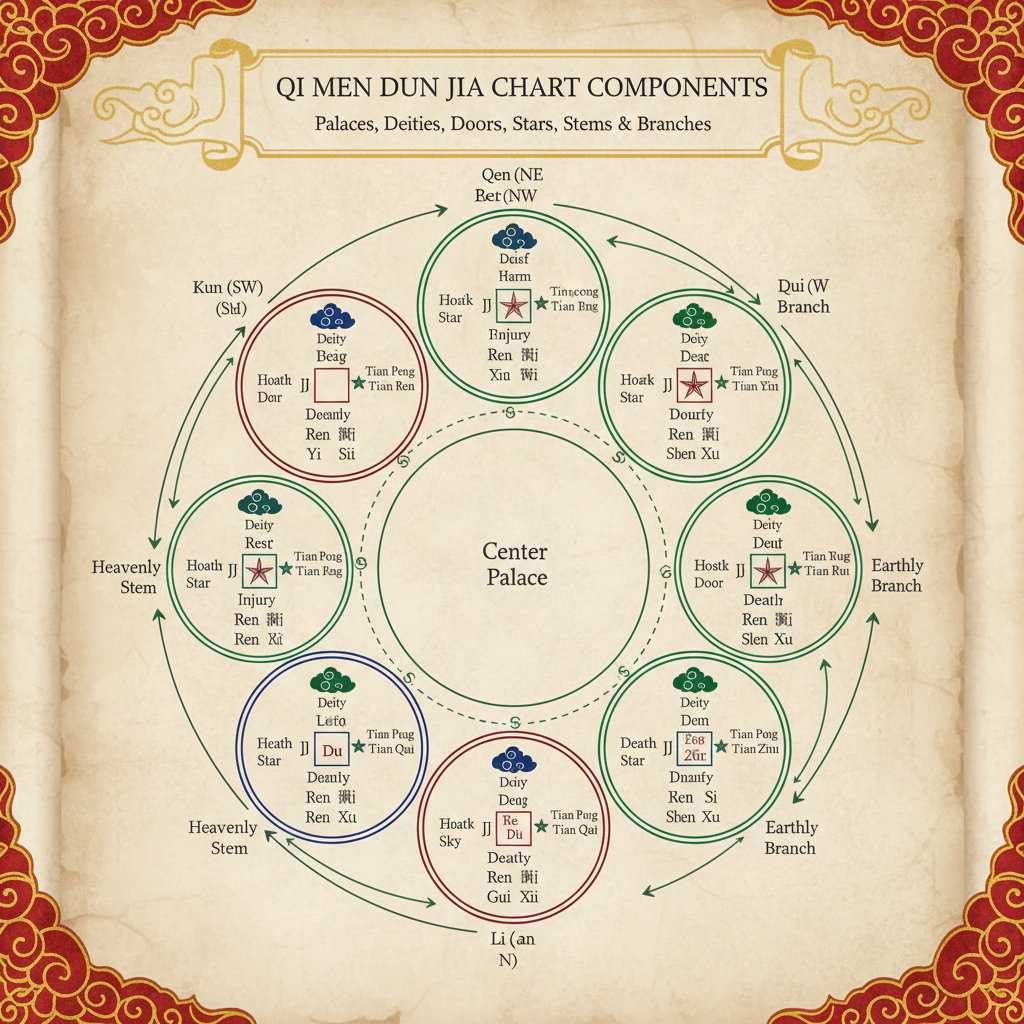
Interpreting a Qi Men chart means learning to read relationships between multiple layers of symbolism. The chart is a snapshot of energetic forces at a specific moment; we synthesize these layers to create a coherent narrative. Below I walk through each major element and provide practical rules of thumb you can use immediately in readings.
The Nine Palaces and Directional Logic

A standard Qi Men chart is organized into nine palaces arranged like a tic-tac-toe grid: center, north, northeast, east, southeast, south, southwest, west, and northwest. Each palace contains a door, a star, a deity, and a heavenly stem among other markers. Think of palaces as the “scenes” where actions occur; the location matters because doors and deities behave differently by direction.
- Center palace: often functions as the heart of the chart; its condition colors the entire reading.
- Cardinal palaces (north, east, south, west): align with major life domains in many traditions; for example, south tends to convey action and visibility, north can be secretive or introspective, east is associated with beginnings and movement, west often relates to outcomes and completion.
- Diagonal palaces: subtle but important, these palaces frequently indicate background forces, allies, or hidden obstacles.
Actionable step: when you open any chart, list palaces in this order: center, south, north, east, west, then the four diagonals. Jot a one-line summary for each palace before you interpret relationships; this prevents early bias toward a favorite palace.
Doors and Their Practical Meanings
Doors (gates) are critical because they describe how energy expresses: opportunities, obstacles, communication, and endings. Commonly used doors include Open, Rest, Life, Harm, Delusion, Death, and others depending on the tradition. Here are concise practical correspondences:
- Open door: opportunity, clarity, movement. Favored in negotiations and travel.
- Life door: growth, vitality, health, beginnings; useful for initiatives and recovery.
- Rest door: pause, concealment, recovery; good for healing and reflective strategies.
- Harm and Death doors: signal risk, endings, or need for careful handling; not always negative if paired with appropriate stars or deities.
- Delusion door: illusions, misunderstandings; exercise caution with promises or claims.
Practical rule: treat the door as the manner in which the answer will manifest. For example, an Open door in the palace related to finance suggests a clear, public opportunity to make money, while a Life door in the same palace suggests steady growth over time.
Stars and Deities: Personality and Flavor
Stars carry character qualities that shade events, while deities indicate actors or archetypal energies. Some stars bring wealth and fame, others bring danger or deception. Deities can be protective, aggressive, or neutral.
- Example stars: Chief Star might represent leadership and clarity, while a Star like Snake may imply stealth and hidden advantage. Learn the three to five most commonly encountered stars first, because they will appear often in beginner charts.
- Example deities: Door gods or ancestral deities can provide auspicious influence, whereas aggressive deities demand caution or assertiveness from the querent.
Actionable tip: after identifying the door, immediately note the star and deity in the same palace. Ask, “How does this star modify the door’s expression?” and “What role might the deity play in the outcome?” Answering these two questions simplifies complex combos into a short narrative.
Heavenly Stems and Earthly Branches: Timing and Cycles
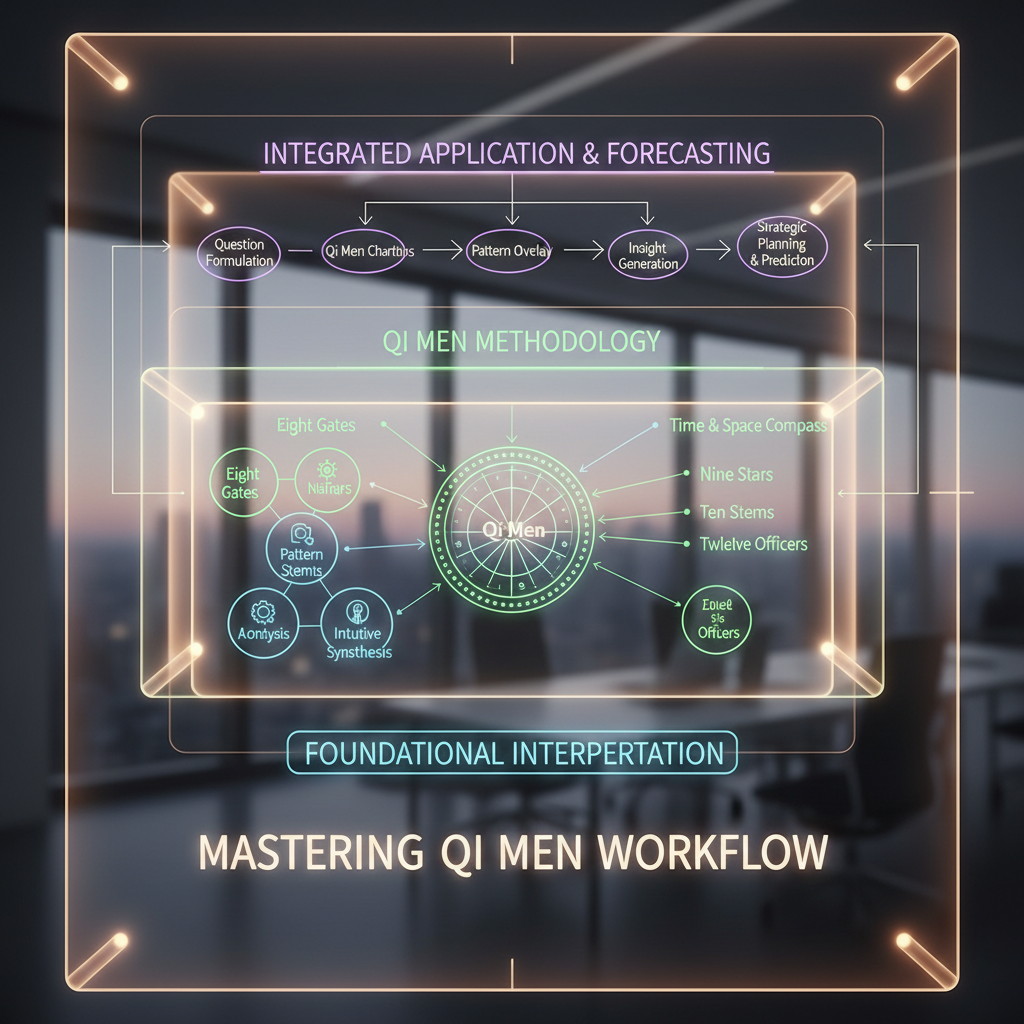
Stems and branches provide temporal and energetic context. Stems are ten repeating celestial energies that govern tone, while branches are the twelve earthly animals that give cyclical context. Combined, they inform timing and compatibility.
- Stems indicate elemental qualities such as wood, fire, earth, metal, and water, plus their yin or yang polarity. For example, a Yang Wood stem in the palace of action suggests outward growth and assertive energy.
- Branches (the twelve animals) reveal cycle points: a Rat branch may indicate new beginnings, an Ox implies slow steady progress, a Monkey suggests cleverness and maneuvering.
Practical approach: use stems and branches to adjust the timing sensitivity of your reading. If a palace has compatible stem-branch combination with the querent’s current year or month, the outcome can accelerate; incompatible combinations suggest delays or obstruction.
Combining Layers: a Quick Workflow for Interpretation

To avoid paralysis when all elements crowd a chart, follow this sequence I use in practice, it works for confident, consistent results:
- 1) Identify the question and the target palace(s) related to the query.
- 2) Note the door in the target palace; ask what type of manifestation this door implies.
- 3) Check the star and deity in that palace; modify the door meaning with their personalities.
- 4) Look at the heavenly stem and branch for timing and elemental interactions.
- 5) Scan adjacent palaces for supportive or obstructive influences, especially the center and the palace opposite the target.
- 6) Formulate the narrative: is the situation likely to be quick or slow, public or private, risky or safe?
Example: If you ask about a job interview linked to the southeast palace and find an Open door, a benevolent star, and a supportive deity, with a compatible stem, the narrative is strong for a clear and positive outcome. If the same palace had the Death door and a Delusion star, you would advise caution, contingency planning, and perhaps delay.
Practical Techniques: Formulas, Timing, and Asking Precise Questions

Moving from understanding symbols to using them effectively requires a set of practical techniques. These include standard formulaic checks, timing strategies, and question framing. The techniques below are the building blocks for consistent readings that are actionable in daily life.
Standard Formula Checks: Speed, Clarity, and Risk

When I begin a reading, I run the same three checks every time. They take under two minutes and dramatically improve interpretive consistency.
- Speed: Is the outcome likely to occur quickly or slowly? Check the stem/branch compatibility and whether the door indicates movement. Open and Life doors plus compatible stems usually imply speed; Rest or Death doors imply delay.
- Clarity: Will the result be obvious or ambiguous? An Open or Life door with a clear star gives high clarity. Delusion or Rest doors often deliver ambiguous signals.
- Risk: Is there a danger or hidden cost? Harm and Death doors, or aggressive deities, raise the risk flag. Even an auspicious door accompanied by a harmful star means the opportunity contains strings attached.
Action: Create a one-line summary for each check and present it to the querent. For example, “Speed: quick; Clarity: medium; Risk: low.” This short form communicates practical expectations before we discuss details.
Timing Strategies: When to Act and When to Wait
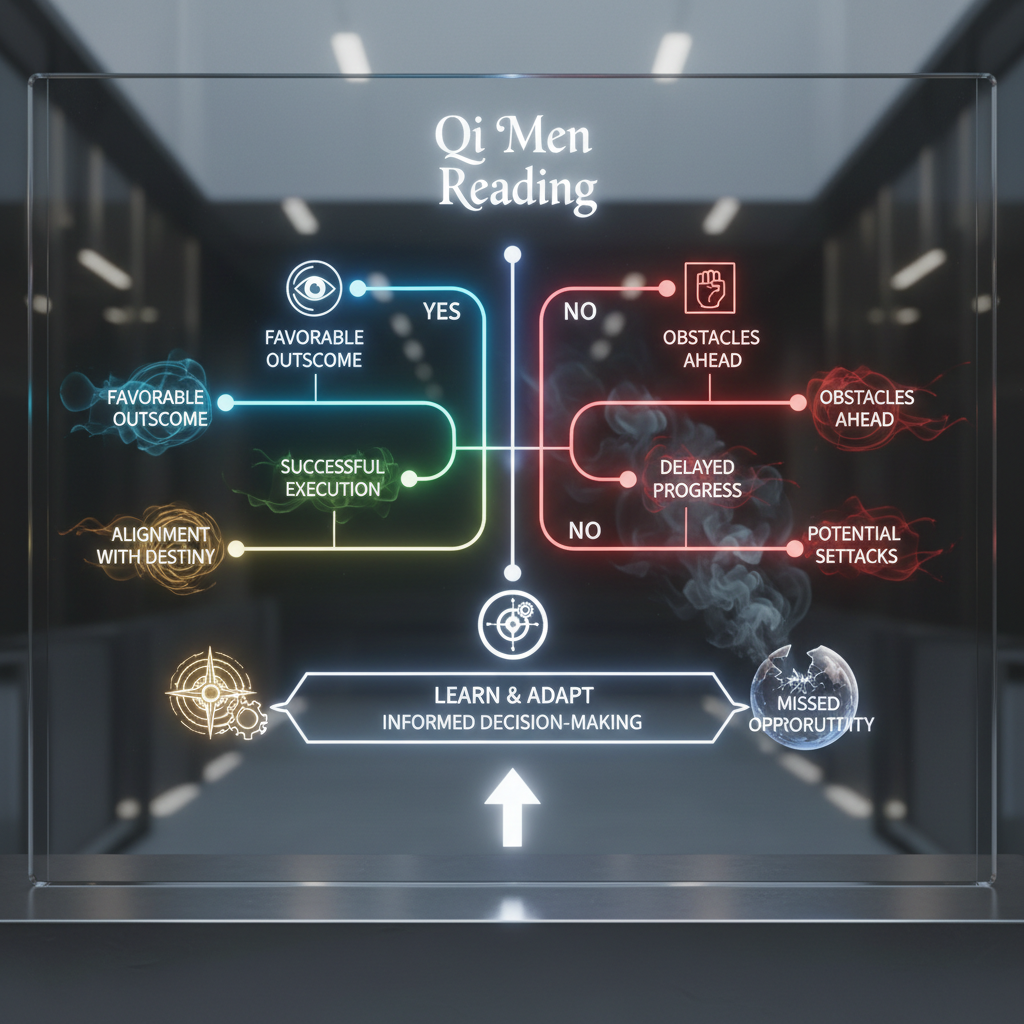
Timing is one of Qi Men’s greatest strengths, but many beginners misuse it by demanding precise dates when the system often prefers windows. Here are realistic timing methods:
- Use palace stems and branches to determine short-term timing (days to months), cross-referencing the current month and year pillars. For immediate events, a stem that matches the monthly stem suggests activity within days or weeks.
- For medium-range timing (months to a year), look for supportive palaces that align with seasonal elements. For instance, a metal-heavy configuration is most active during late autumn months in the Chinese seasonal cycle.
- When the door suggests delay (Rest, Death), advise a buffer window. Instead of giving an exact date, provide a 30- to 90-day window and recommend contingency plans.
Example: If negotiating a contract and the palace shows an Open door with a favorable star, and the stem matches the current month, advise starting immediate outreach and expecting a decision within two to six weeks.
Yes/no and Weighted Answers
Beginners often want binary answers. Qi Men can provide practical yes/no responses, but it is more honest to provide weighted answers based on the balance of factors.
- Yes factors: Open or Life doors, supportive stars, benevolent deities, compatible stems. Count how many of these positive markers are present in the target palace and adjacent palaces.
- No factors: Death, Harm, Delusion doors, aggressive stars, conflicting stems. Count these negatives too.
- Weighted response method: subtract negatives from positives to produce a score. For example, if you count 3 positives and 1 negative, the weighted result is +2, which might translate into “Likely, proceed but keep precautions.” If negatives outnumber positives, advise delay or reassessment.
Practical exercise: build a simple scoring rubric for your practice spreadsheet. Assign +1 for each positive factor, -1 for each negative, and 0 for neutral. After 30 readings, check how well the scores correlate with actual outcomes. Adjust weightings if needed.
Question Framing: How to Ask for Useful Answers

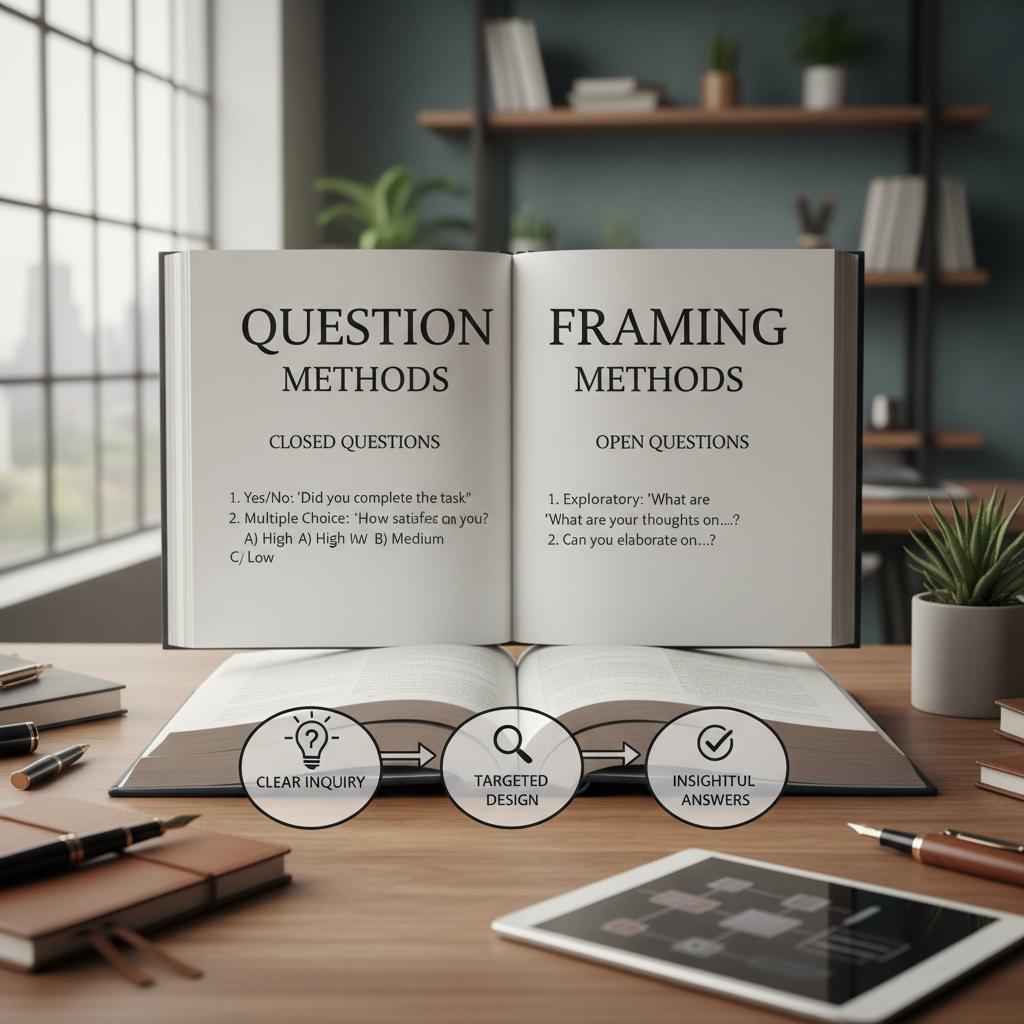
Quality of answer depends on quality of question. We should guide querents to frame questions that are testable, specific, and time-bound.
- Testable: “Will my client sign by August 31?” is testable. “Will they like my proposal?” is vague.
- Specific: identify the subject or target. Rather than asking “Will I get rich?” ask “Will this investment generate a 10 percent return within 12 months?”
- Time-bound: include a reasonable deadline or season, because Qi Men excels at timing windows.
When you receive a badly worded question, politely reframe it aloud and confirm with the querent. This improves both your accuracy and their satisfaction.
Integrating External Information

Qi Men is not a vacuum system; it interacts with real-world facts. Use relevant external data to enrich readings without letting facts override the chart’s energy-based insights.
- Practical example: if reading about a business deal, collect the timeline, key decision makers, and current obstacles. Then run a chart focused on the moment the decision is likely to be made, and cross-check the personalities in the chart with the actual people involved.
- When technical timelines or legal constraints apply, use them to refine timing windows suggested by stems and doors. Real-world constraints sometimes force outcomes to compress or delay, which Qi Men will reflect in adjacent palace conflicts.
Case Studies and Exercises: Learn by Doing

Theory improves with practice. Below are three case studies I used as part of my training, each with step-by-step reasoning, recommended actions, and outcomes. After the case studies, you will find exercises and a suggested practice plan to consolidate learning.
Case Study 1: Job Offer Decision
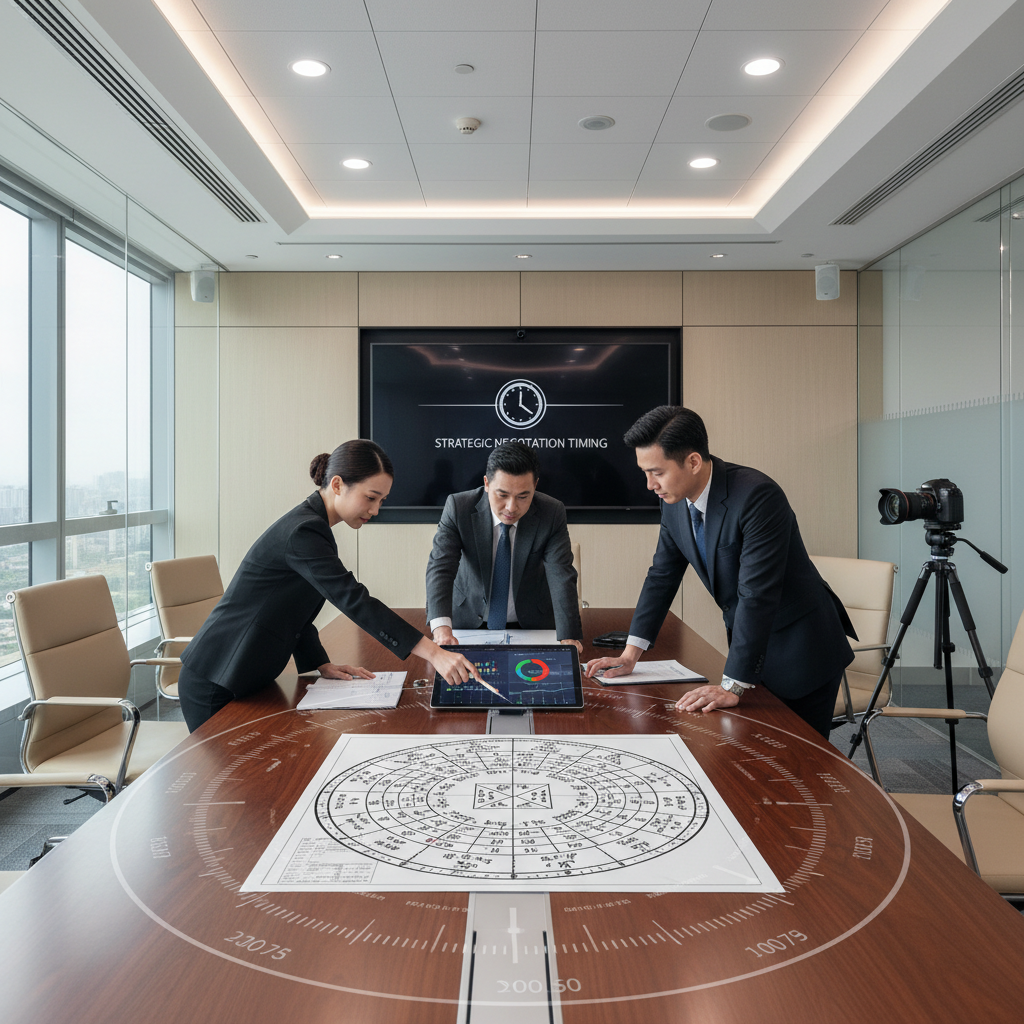
Scenario: A client asks if they should accept a job offer within the next 30 days. The target palace is southeast, linked to career opportunity in this tradition.
- Chart snapshot: Southeast palace contains the Open door, a supportive wealth star, and a neutral deity. The stem in the palace matches the current monthly stem. Opposite palace (northwest) contains a Delusion door with a tricky star.
- Interpretation: The Open door and matching stem suggest a clear opportunity likely to materialize quickly, within days to weeks. The opposite Delusion door flags potential miscommunication or unrealistic promises in the offer details.
- Advice given: Accept the offer tentatively, but request written confirmation of key terms and a short cooling-off period to review the contract. Negotiate a start date that allows two weeks for verification.
- Outcome: The client accepted the offer with a clause to confirm bonus terms. The employer later clarified and honored the bonus. Outcome aligned with the chart because we combined a positive Yes signal with a practical caution prompted by the Delusion door.
Case Study 2: Timing a Negotiation Meeting

Scenario: A small business owner wants to know the best day within the next month to meet a potential partner for negotiation.
- Chart snapshot: We generate three charts for three candidate dates. Date A shows a Life door in the west palace with a benevolent deity, Date B has a Harm door in the same palace, and Date C shows the Open door but with a conflicting stem.
- Interpretation: Date A provides the most auspicious conditions for peaceful growth and partnership. Date B is risky; expect conflict. Date C could work but requires careful communication because of the stem conflict.
- Advice given: Aim for Date A. If Date A is not possible, reschedule rather than proceed on Date B. Prepare written agenda and clarifying questions for Date C to reduce misunderstanding.
- Outcome: The partner accepted Date A, negotiation proceeded smoothly, and an initial agreement was signed. Using multiple date charts helped avoid a poor timing choice and provided clear rationale for rescheduling.
Case Study 3: Locating a Misplaced Item
Scenario: A querent asks about the likely location of a lost piece of jewelry, providing the time they last remember seeing it.
- Chart snapshot: The west palace is highlighted, containing the Rest door and a quiet, protective deity. A branch suggests indoor placement near metallic objects.
- Interpretation: The Rest door and deity lean toward a hidden, stationary location, likely indoors near metal, possibly within furniture or a container commonly used to store small items.
- Advice given: Search indoors in metal containers, drawers, and pockets in clothing stored near the west side of living spaces; look especially in areas used for temporary storage.
- Outcome: The client checked a metal jewelry box tucked into a drawer on the west side of the bedroom and found the item. This case highlights Qi Men’s practical usefulness for searches when combined with logical search strategy.
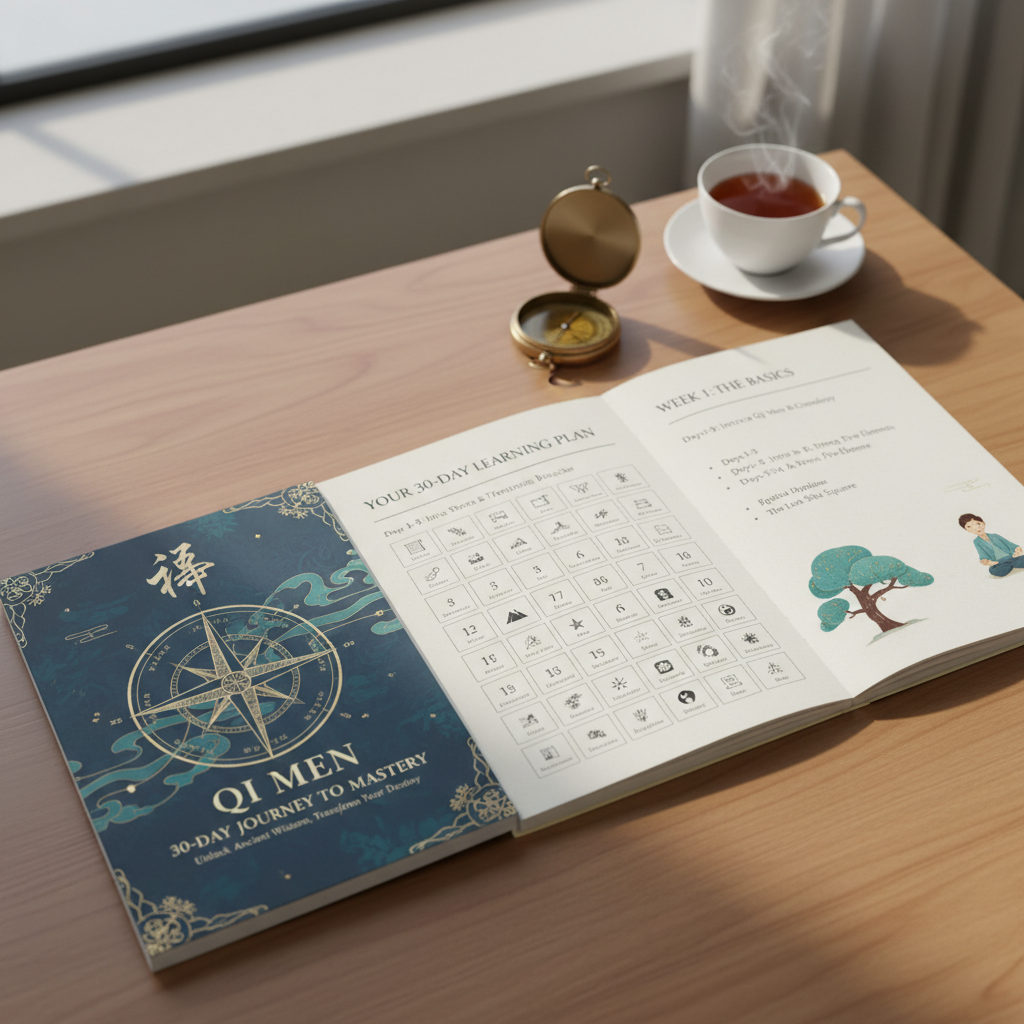
Practice Exercises and a 30-day Learning Plan
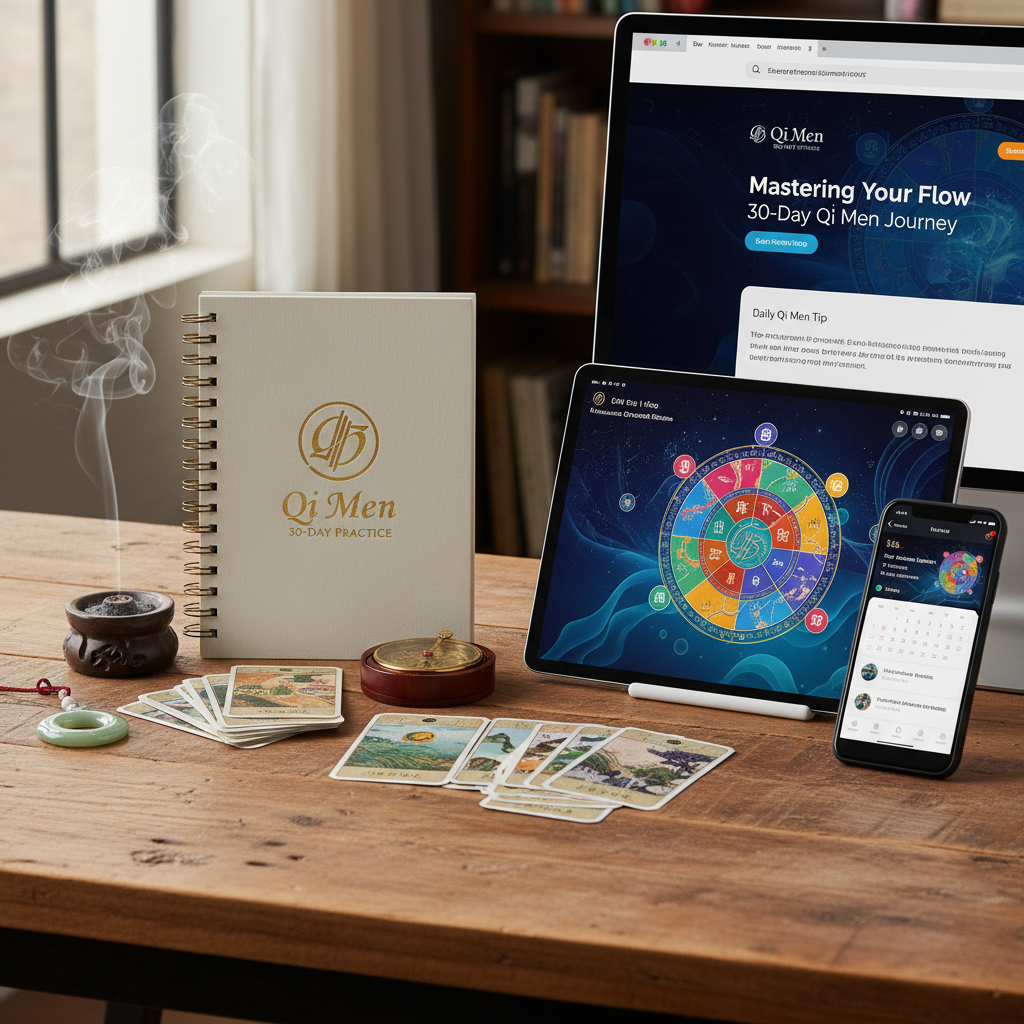
To move from theory to competence, commit to a structured practice plan. Below is a flexible 30-day regimen that balances learning, application, and reflection.
- Days 1-5: Study core elements. Memorize the nine doors and the five most common stars. Create flashcards and test yourself daily for 10 minutes.
- Days 6-10: Practice chart setup. Use three different software/apps to generate charts for the same moments, ensuring you understand time zones and daylight saving adjustments. Log discrepancies and clarify the correct conversion rules.
- Days 11-15: Do 10 short readings for low-stakes questions (weather, whether a meeting runs on time, small purchases). Log predictions and outcomes.
- Days 16-20: Focus on timing. Generate multiple charts for the same query across different dates and practice selecting the best date based on stems and doors. Record decisions and track outcomes.
- Days 21-25: Do five medium-stakes readings for friends or family, with clear consent. Use your scoring rubric and aim to improve clarity in summaries.
- Days 26-30: Review your log of 30 readings. Analyze where you were most and least accurate. Adjust your scoring weights, revise your one-line summaries, and set goals for the next 30 readings.
Tools to accompany the plan: a spreadsheet template (columns listed earlier), a folder for screenshots of each chart, and a daily practice journal where you note interpretive insights. After 60 to 100 readings, patterns will emerge and you will be able to rely more on intuition informed by systematic feedback.
With consistent practice, careful logging, and the practical approaches given above, Qi Men moves from an intimidating system into a reliable decision-support method we can use in business, relationships, travel, and strategic planning. In the next sections we will look at advanced techniques, ethical considerations, and how to integrate Qi Men with other Chinese metaphysical methods for a holistic approach to forecasting and decision-making.
Practical Exercises, Tools, and a 30-day Practice Plan

If you arrived here through our Qi Men Dun Jia beginner guide for complete beginners, this section gives you a clear, hands-on practice plan and toolset to move from theory to usable skill. The most common barrier for learners is knowing how to start practicing without becoming overwhelmed. Below I lay out a simple, realistic routine you can follow for 30 days, along with drills, a sample case study, and recommended tools.
Why Structured Practice Matters

Qi Men Dun Jia is a system of pattern recognition, symbolic mapping, and strategic decision-making. Like learning a language, it requires repeated exposure, active recall, and applied use. In general you should expect these learning milestones: basic literacy in 3 to 6 months with regular practice, practical competence in 6 to 18 months, and deeper mastery over several years. The 30-day plan helps you build momentum, create a habit, and generate early feedback on outcomes.
Essential Drills for Beginners
- Drill 1, Palace Identification (10 minutes daily): Print or draw the nine-palace grid. Shuffle sample charts or use an app, then practice locating the ruling palace for a given date and hour. Repeat until you can do this without looking up intermediate steps.
- Drill 2, Element and Door Association (15 minutes): Create flash cards for the eight gates, nine stars, and five elements associations. Test yourself, then apply the associations to simple hypothetical questions such as “Will my meeting go well?” or “Is this a good time to sign a contract?”
- Drill 3, One-Line Readings (20 minutes): Once a day practice a micro-reading: choose a real, low-stakes question (for example, whether to call a friend now) and perform a quick palace-star-door check. Record predictions and real outcomes in a journal.
- Drill 4, Reflection and Journal (10 minutes): Note three things: the chart snapshot, your interpretation in plain language, and the result. After two weeks you will have useful data for calibration.
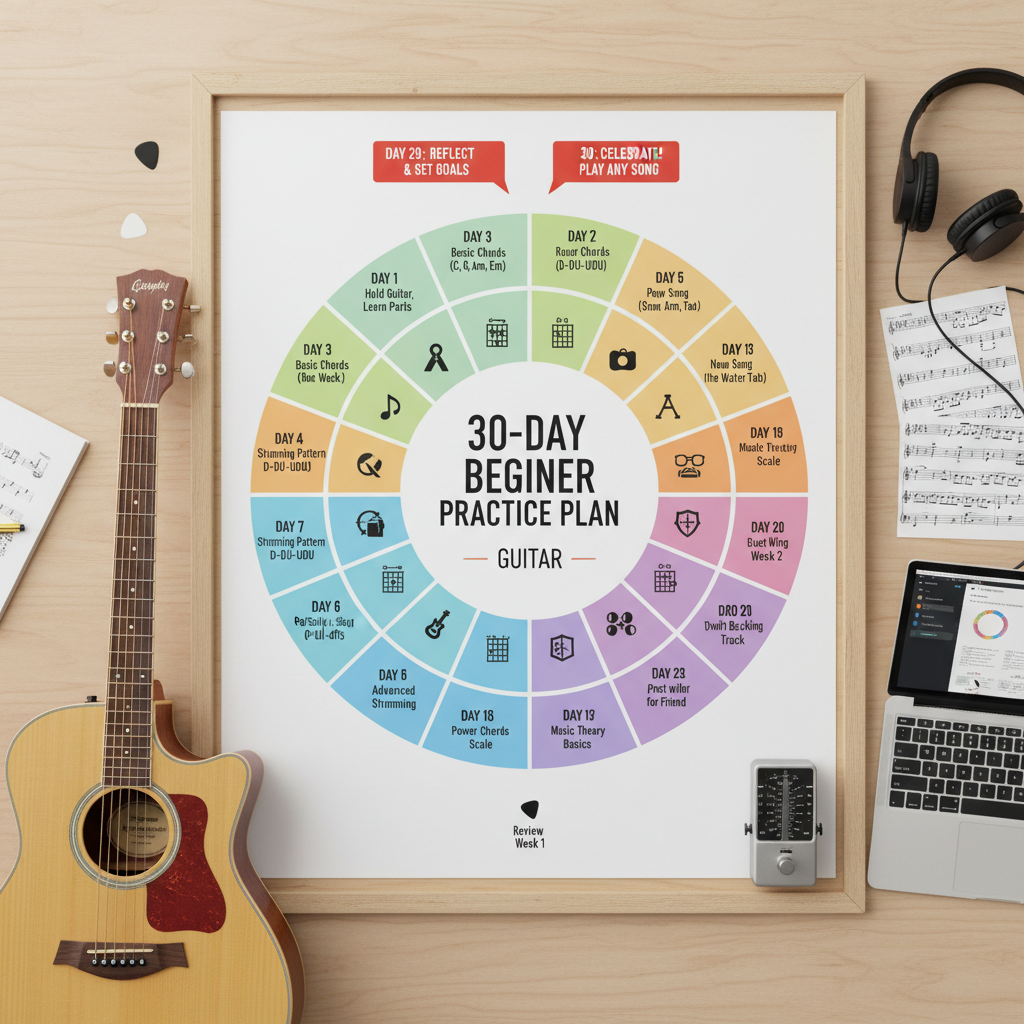
30-day Beginner Practice Plan (sample)

- Week 1, Focus: Familiarity. Spend 45 minutes daily on palace mapping, gates, and stars flash cards. Make a simple one-page cheat sheet for immediate reference.
- Week 2, Focus: Short readings. Do one-line readings twice daily, log results, and spend one evening watching tutorial videos or reading one chapter from a recommended text.
- Week 3, Focus: Applied scenarios. Pick three real-life, time-bound questions (job interview time, client meeting, negotiation). Create full mini-readings with actionable advice and compare outcomes.
- Week 4, Focus: Review and refine. Revisit your journal entries, identify recurring patterns or misinterpretations, and adjust your cheat sheet. Start a simple case log where you record successful interpretations and why they worked.
This plan asks for about 45 to 60 minutes per day. If that is too much, scale to 20 to 30 minutes daily but be consistent. The key is regular, reflective practice rather than sporadic marathon sessions.
Sample Case Study: Planning for a Job Interview
Here is a hypothetical, step-by-step example to show how a beginner might use Qi Men Dun Jia as a decision tool for a job interview. I keep this intentionally conceptual so you can apply it with the specific chart data you generate with your preferred method or app.
- Step 1, Define the question, “Is tomorrow morning a good time to have my interview?” Be specific about time, location, and the type of outcome you want (e.g., impressing the hiring manager, securing a second interview).
- Step 2, Generate the chart, use a reliable Qi Men chart generator or software to produce the nine-palace layout for the proposed date and hour.
- Step 3, Identify the ruling palace, note the palace that houses the question or the palace that corresponds to the interviewer’s sector if you have that mapping.
- Step 4, Read the door and star, if the palace shows a favorable door such as “Open” and a supportive star such as a ‘victory’ or ‘helper’ type, the sign is positive. If the door is ‘Closed’ and the star is obstructive, consider rescheduling.
- Step 5, Check the deity and element interactions, deities or elemental clashes may indicate interpersonal friction or logistical problems, in which case you adjust tactics: prepare extra documents, rehearse answers, or bring visual proof of achievements.
- Step 6, Create an action plan, translate the chart into practical steps: choose early morning if the chart favors start-of-day energy; bring supporting evidence if the chart suggests you must compensate for weaker interpersonal energy; ask specific, leading questions if the chart favors assertive strategy.
- Step 7, Log the outcome, after the interview, write down what happened, how the chart’s advice matched reality, and any ways to sharpen your interpretation next time.
Over several cases you will start to see which signals are most reliable for your style: maybe doors give you timing cues, while stars predict interpersonal tone. Use those insights to refine your practice focus.
Tools and Resources You should Try
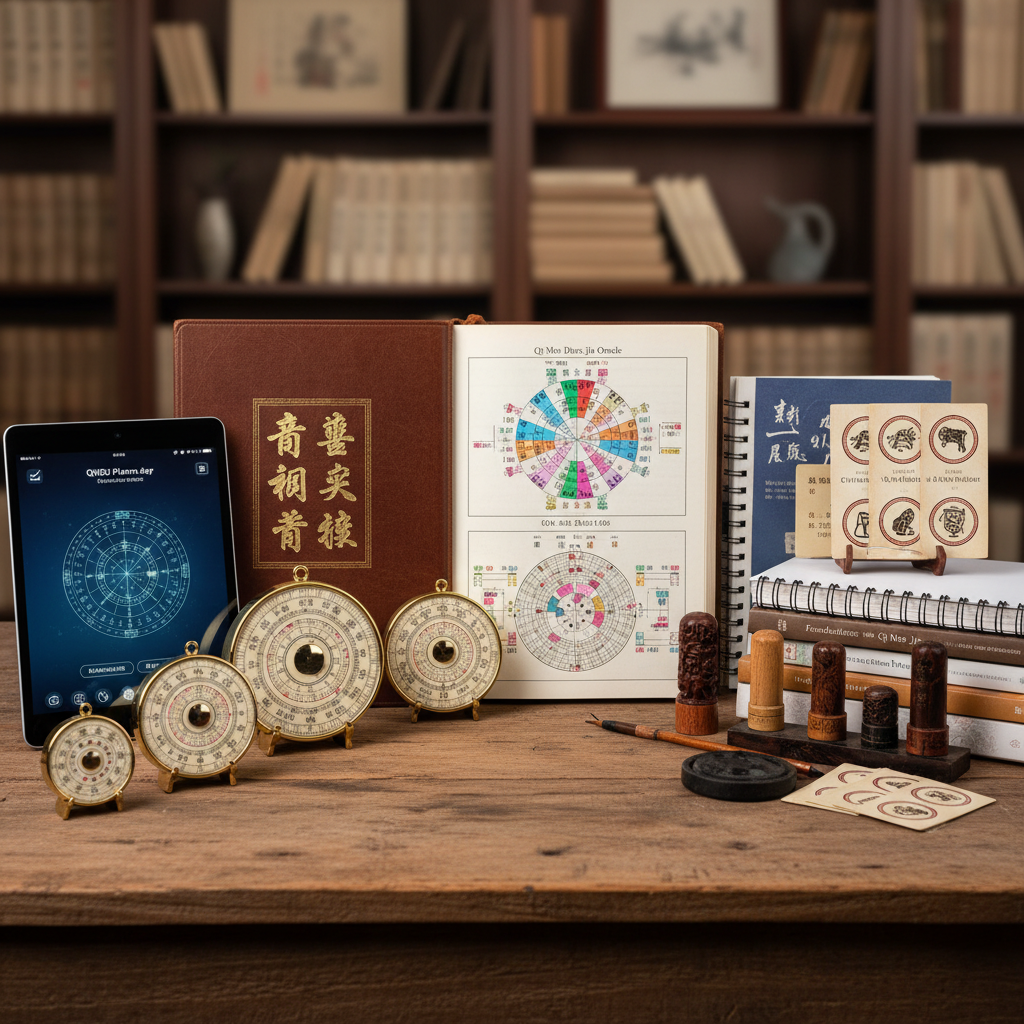
- Paper charts, drawing layouts by hand forces familiarity. I recommend printing a blank nine-palace grid and writing a legend on the side.
- Software, free Qi Men chart generators and mobile apps save time and let you test many dates quickly. Use them for practice, but always verify the outputs and learn how the software derives the chart, otherwise you remain dependent on a black box.
- Flash cards, create digital or paper flash cards for the gates, stars, and deities; spaced repetition helps retention.
- Community, join forums or local study groups. Discussing three to five charts per week with others speeds learning and provides feedback on interpretations.
- Reference texts, pick one foundational book and one modern teacher whose style resonates with you. Many learners start with a concise practical manual, then move to deeper classical texts.
Common Mistakes, Troubleshooting, and Ethical Considerations

As you practice, you will inevitably make mistakes. That is the fastest path to learning when you treat errors as data. Below are common pitfalls, how to fix them, and ethical guidelines I recommend following.
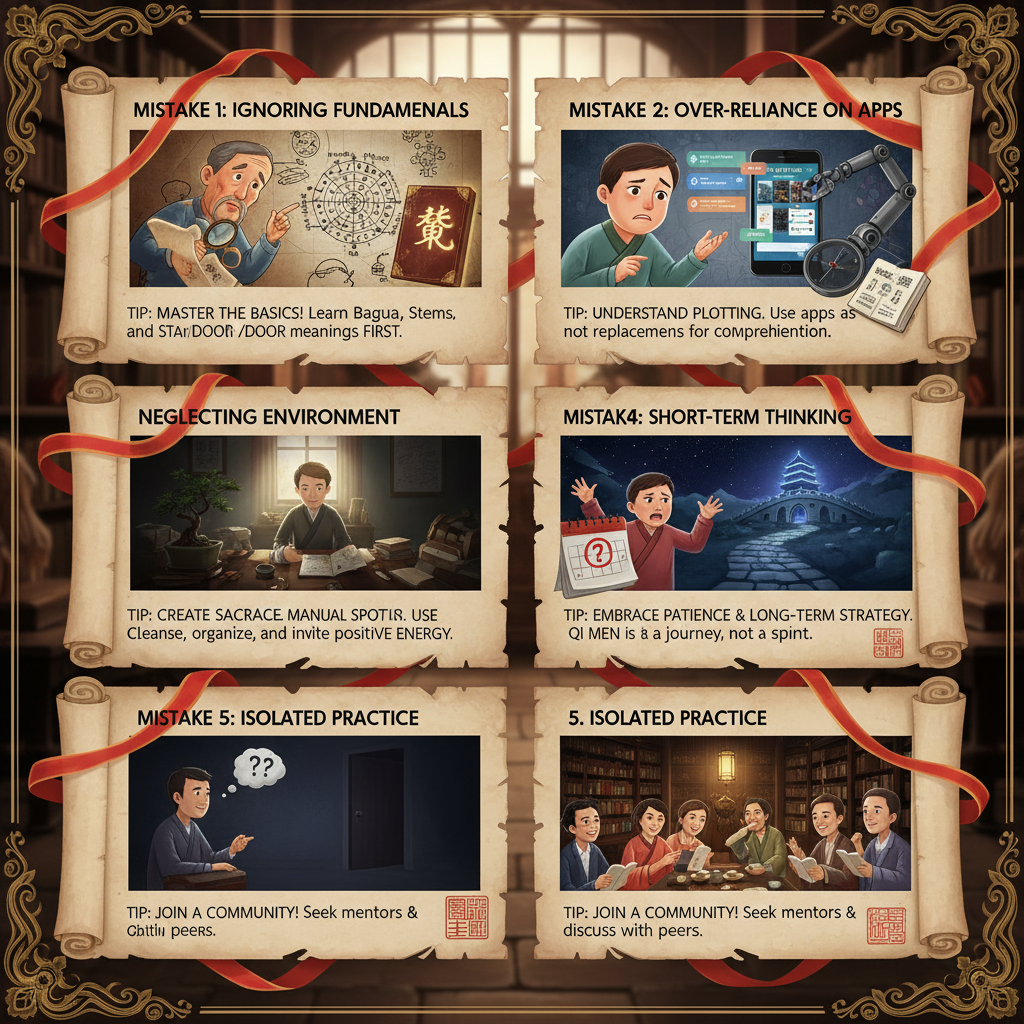
Top Beginner Mistakes and How to Avoid Them
- Relying solely on software outputs, Problem: Students accept app charts without understanding how they were generated. Fix: Use apps for speed, but manually verify one or two elements each time until you can reproduce the chart elements by hand.
- Overinterpreting a single symbol, Problem: Reading one favorable symbol as a guarantee, or one negative sign as doom. Fix: Always interpret combinations; consider context, questions, and the balance of signs in the entire grid.
- Asking vague questions, Problem: Vague questions produce vague answers. Fix: Frame questions precisely, with time windows, measurable outcomes, and clear intent.
- Ignoring practical constraints, Problem: Using charts to demand outcomes without considering logistics. Fix: Combine chart advice with real-world planning: if a chart says a meeting isn’t ideal, use that time to rehearse or prepare alternatives.
- Neglecting journaling and feedback, Problem: No record means no learning curve. Fix: Keep a simple case log with date, question, chart snapshot, actions taken, and results.
Troubleshooting Ambiguous Charts
Sometimes charts look neutral or contradictory. Here are practical strategies to resolve ambiguity:
- Look for the strongest signal: if a single palace shows multiple supportive signs, prioritize its guidance.
- Check timing windows; a weak current now may become strong within a 2 to 3 hour window, so consider shifting the timing rather than ignoring the chart.
- Combine with BaZi or basic feng shui checks for confirmation. If multiple systems agree, confidence increases.
- When in doubt, take conservative action: small moves, contingency plans, and clear communication reduce downside risk.
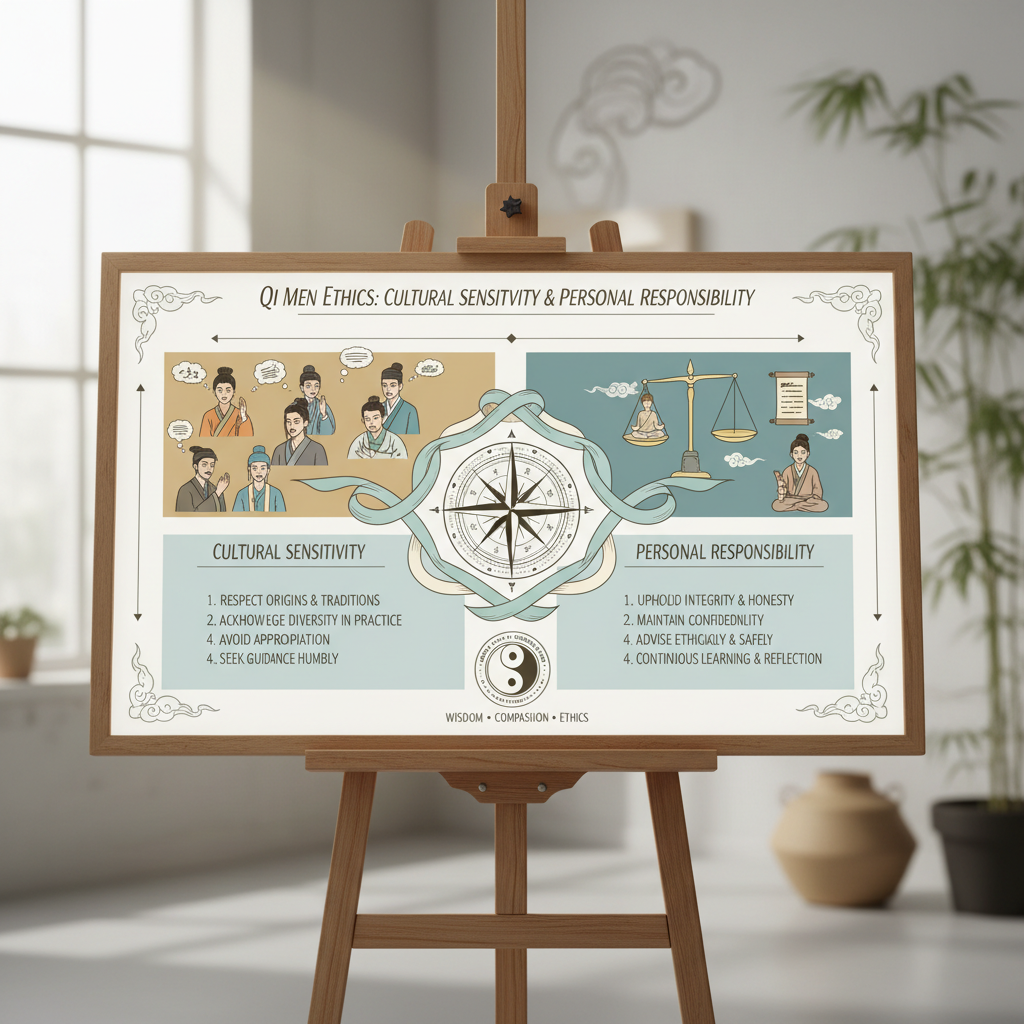
Ethics, Cultural Sensitivity, and Personal Responsibility

Qi Men Dun Jia has deep cultural roots and powerful psychological effects. Approach it responsibly:
- Respect tradition, learn classical meanings and modern applications, and credit sources where appropriate.
- Avoid determinism, use the charts to inform strategy, not to remove human agency. Never use Qi Men as the sole basis for life-altering decisions without corroborating information.
- Confidentiality, if you work with others, keep client data private and obtain consent before sharing case examples publicly.
- Do not offer medical, legal, or financial guarantees, unless you hold professional qualifications; use Qi Men as an advisory tool and recommend professional services when necessary.
- Be transparent about limitations, tell clients or friends that predictions are probabilistic and that outcomes depend on multiple factors.
Practicing ethically builds trust, encourages accurate evaluation of the system, and prevents harm. In my experience, practitioners who combine technical competence with clear ethical boundaries have better long-term reputations and more reliable results.
Frequently Asked Questions (faq)
Q1: How Long will it Take Me to Become Competent?
Competence varies with effort and prior background. If you study 4 to 7 hours per week with focused practice and journal your results, you can expect practical competence in about 6 to 12 months. Mastery and deep intuitive skill can take several years of continuous use. The important factor is deliberate practice: short, focused sessions with feedback beat long, unfocused study.
Q2: do I Need to Know Chinese or Classical Texts to Learn Qi Men?
No, you do not need to read Classical Chinese to begin. Many modern teachers present Qi Men in English and provide transliterations and practical mappings. That said, studying original terms and classical concepts enriches understanding over time. Learn the functional meanings first, and add language study later if you want deeper context.
Q3: can Qi Men Dun Jia Predict the Future with Certainty?
No system predicts with absolute certainty. Qi Men is a strategic tool that maps energetic tendencies and timing windows. It helps you choose favorable actions and reduce risk. Good outcomes require appropriate actions, context awareness, and sometimes luck. Treat Qi Men as a decision support system, not a crystal ball.
Q4: are There Free Tools I can Use to Practice?

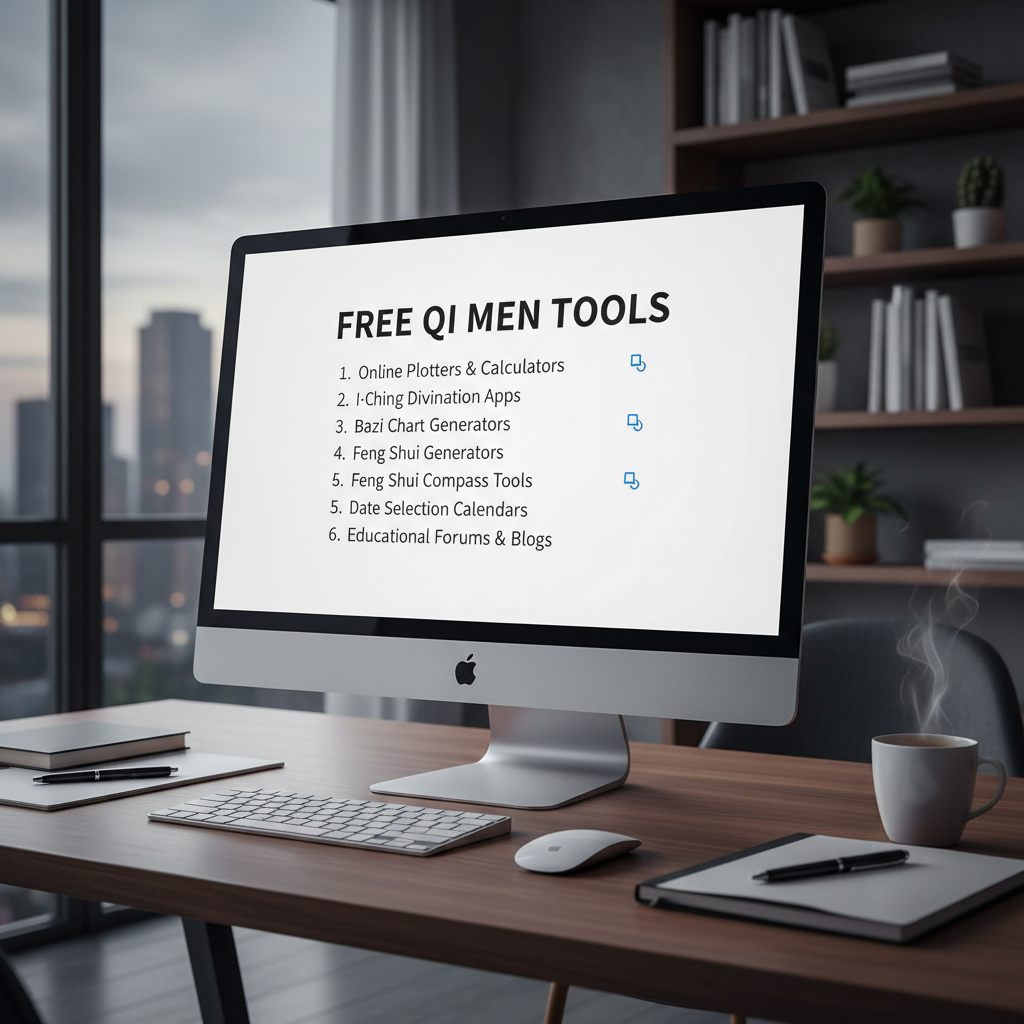
Yes, there are reputable free Qi Men chart generators and mobile apps that produce the nine-palace layout given date and time. Use them for drill work and to practice interpretation. I recommend cross-checking outputs among different tools and learning how the tools calculate the palace positions so you are not overly dependent on a single source.
Q5: How do Qi Men Readings Differ from Feng Shui or Bazi?

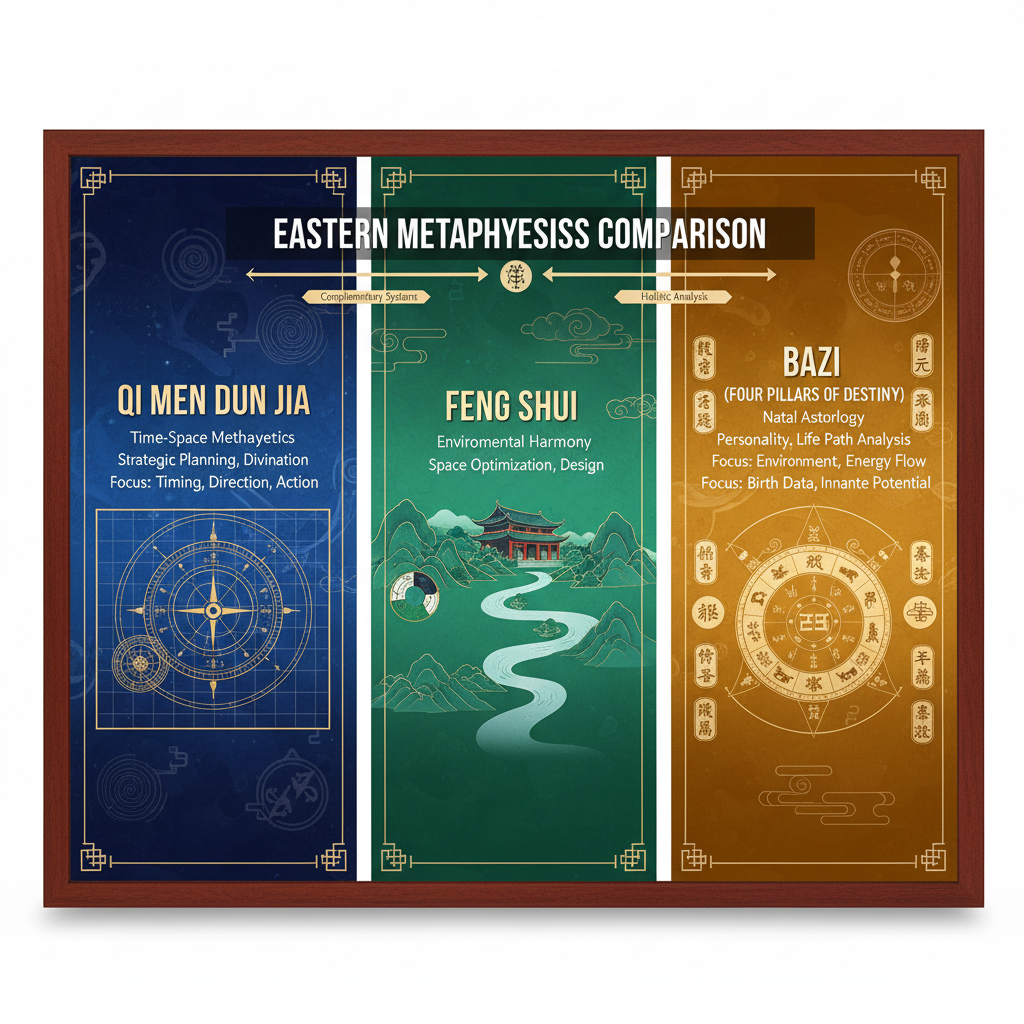
Qi Men is primarily an event- and timing-oriented system for short-term strategy and decision-making. BaZi (Four Pillars) focuses on long-term destiny and personal tendencies, while feng shui emphasizes spatial energy in living or working environments. Use Qi Men for immediate timing and tactical decisions, BaZi for character and life trajectory insights, and feng shui for environmental optimization. They complement each other.
Q6: is it Ethical to Read for Friends or Family?

Yes, with conditions: obtain consent, be transparent about your skill level, avoid making guarantees, and keep sensitive information private. If a question involves serious matters such as legal disputes, health, or major financial commitments, advise seeking appropriate professional services in addition to a Qi Men consultation.
Q7: What is the Best Way to Test Accuracy of My Readings?

Keep a structured case log. For each reading include question, chart snapshot, actions advised, and outcome with a simple success metric. After 30 to 50 logged cases you will detect patterns, biases, and the types of questions where your interpretations are most reliable. Use this feedback loop to refine your methods.
Q8: can Beginners Use Qi Men for Win/loss Decisions Like Gambling?

While Qi Men can offer timing and risk insights, using it for gambling is risky and ethically problematic. Outcomes in gambling are stochastic and often involve factors beyond Qi Men’s scope. Many traditional teachers advise avoiding gambling and using Qi Men to improve life outcomes rather than to chase quick wins.
Q9: should I Learn by Taking Courses, Reading, or Mentorship?

A mixed approach works best. Start with an introductory course or a concise book to get the structure. Complement that with hands-on practice, community feedback, and, if possible, mentorship from an experienced practitioner who can critique your readings. Mentorship accelerates learning because it gives you real-time correction and nuanced interpretation tips.
Q10: can Qi Men be Combined with Modern Tools Like Analytics and Project Planning?

Yes, Qi Men is flexible. Use it to identify auspicious windows for launches, negotiations, or campaigns. Integrate its timing cues with project management checklists: if Qi Men favors a launch window, ensure technical readiness, marketing assets, and contingency plans are in place. Combining ancient timing wisdom with modern execution systems tends to produce the best practical results.
Conclusion: How to Move from Beginner to a Confident Practitioner

Qi Men Dun Jia rewards consistent, reflective practice. Start small: commit to a daily 20 to 60 minute routine, keep a simple journal, and aim for steady progress rather than instant mastery. Use tools and apps to speed your learning, but verify outputs manually until you can reproduce key elements by hand. Focus on asking clear, specific questions, interpret combinations rather than single symbols, and always translate chart signals into concrete actions that you can test and measure.
Be patient with the process. In my experience students who track outcomes, actively seek feedback, and treat misreads as learning opportunities become reliable practitioners faster than those who only consume information. Finally, remember that Qi Men is a guide for smarter choices: pair it with common sense, preparation, and ethical practice. If you want a practical next step, pick a low-stakes question right now, run a one-line reading using a printed palace grid, and log the outcome for comparison. That first data point is the start of your real education.
Good luck, and enjoy the journey. If you would like, I can provide a printable one-page cheat sheet, a sample 30-day journal template, or a short list of beginner-friendly books and apps to get you started.
Leave a Reply
You must be logged in to post a comment.