
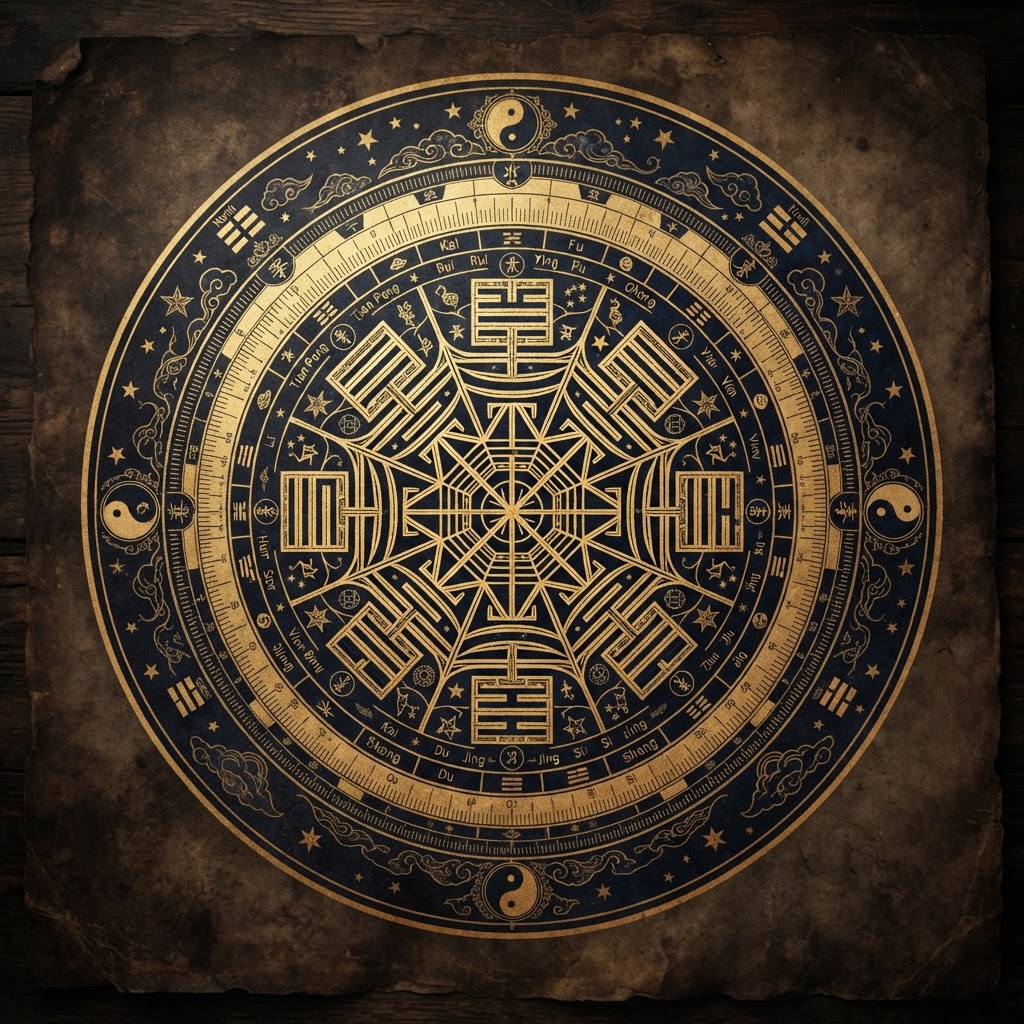
Every Qimen chart carries eight doors, and the open door, 开 (Kai), is one of the ones people ask me about most. It is classed as auspicious and it governs openings, new starts, career moves, launches, meeting important people. If you have read the full guide to the eight doors, this article goes the other way: it takes one door and follows it into every corner of a reading, so you know exactly what to do when it lands in your palace.
Before we go deep, the short version. Open door belongs to the Metal element and the Northwest direction. In a chart it signals openings. Practitioners reach for it when starting a business, job interviews, openings of any kind, travel for opportunity. And they hold back when it can also expose what was hidden, so keep private plans private while it is active.
If you are new to Qimen Dun Jia generally, start with the complete QMDJ guide first, because the doors only make sense once you know how a chart is laid out. This article assumes you know what a palace is and how to find your own.
What the open door actually is
The doors are not symbols floating free. Each one is a label for a quality of movement in the situation you charted. 开 (Kai) shows up when the situation carries the energy of openings. That sounds abstract until you see it live. A client asks whether to accept a transfer, the open door sits on the offer palace, and suddenly the transfer question is a openings question. The chart has reframed the decision, which is half the value of casting one.
In classical texts the door is described by its element, Metal, and its home direction, Northwest. Those are not decoration. The element tells you which other chart features feed it or drain it, and the direction tells you where its influence is strongest in space. When a practitioner tells a client to face Northwest for a particular meeting, this is the logic underneath.
Where it works best
Ask ten experienced readers what they use the open door for and you will get ten variations of the same shortlist: starting a business, job interviews, openings of any kind, travel for opportunity. The common thread is that each of those situations is fundamentally a openings situation. Match the door to the nature of the question and the reading holds together. Force the door onto a question it does not fit and you get noise.
| Situation | Is this door favorable | Why |
|---|---|---|
| Starting something new | yes | the door governs openings |
| Negotiations and meetings | depends on the palace | check which palace hosts it and what sits opposite |
| Long quiet projects | use with a deadline | It can also expose what was hidden, so keep private plans private while it is active |
| Confrontations | generally no | the door carries openings energy, and confrontations amplify it |
The honest caution
Every door has a shadow, and pretending otherwise is how beginners get hurt. For the open door, the shadow is this: it can also expose what was hidden, so keep private plans private while it is active. I have watched readers get excited about a favorable door and ignore the palace it sits in, the star above it and the stem underneath it. A door is one layer. Read it with the star, the stem and the god before you commit money or reputation to a timing decision.
Reading it with the rest of the chart
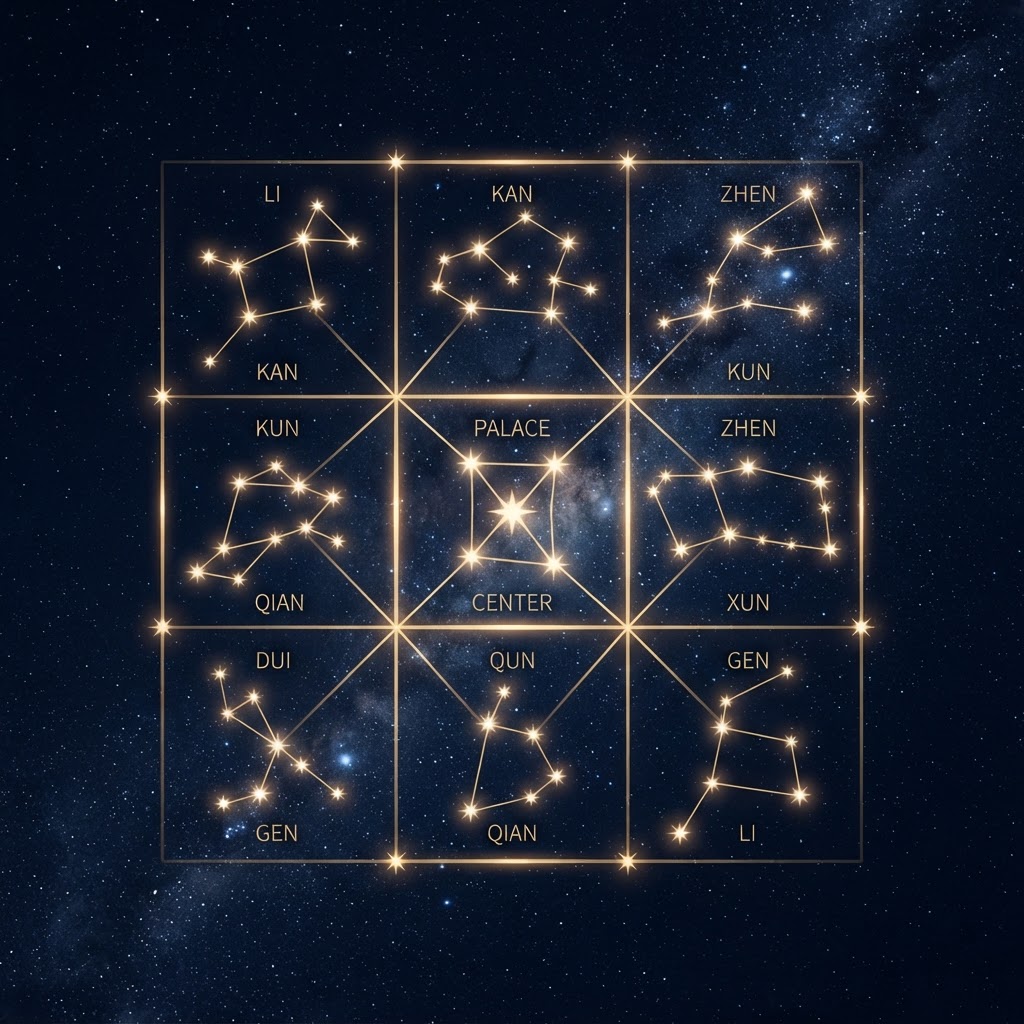
Two patterns come up constantly with 开 (Kai). The first is the door supported by a friendly star: the reading strengthens and the advice is simply to act within the window. The second is the door fighting its stem or sitting under an unhelpful god, and then the advice changes from act to prepare. Most of the practical wisdom in Qimen is knowing which of those two pictures you are looking at.
My own habit, formed over years of business decisions before I ever taught this, is to write the question in one sentence and then read the chart as a yes, no or not yet. The open door leans toward openings, so if the question is about openings, lean with it. If the question is about something else entirely, treat the door as background weather and read the door that actually matches the question.
From the practice
Reading it with timing windows is the skill that turns theory into decisions. A favorable feature does not stay favorable forever: it belongs to the moment the chart was cast for. Practitioners treat the reading as valid for a window, usually days to a few weeks, and they act inside the window rather than admiring it. When clients tell me a good reading did nothing for them, the question I ask first is when they acted on it. The answer is usually after the weather changed.
One habit I borrowed from business years before I studied this system formally: write the question down before casting, and write the one sentence answer after. Between those two lines sits the whole reading. What gets lost in long chart descriptions is usually the decision itself, and decisions, not descriptions, are what people came for. Keep the note, date it, and revisit it when the window passes. A small notebook of dated one liners will teach you more than any course.
A note on precision, because it matters here more than people expect. The system answers the question that was actually cast, with its subject, its decision and its window. Change the window and you must cast again. Change the decision and you must cast again. Readers who treat one chart as a general portrait of their year are reading tea leaves. The discipline of the question is what separates a strategic tool from a mood.
Where the layers disagree, believe the layers rather than your hope. In my experience the disagreement itself is the information: a bright feature over a weak foundation says the opportunity is real but not ready, and a modest feature over a strong foundation says the situation outgrows its packaging. Beginners average the layers into a mushy middle. Practitioners read the argument between them and time their move accordingly.
There is a difference between studying this system and using it, and the difference is reps. Study one feature properly, then watch it in every chart you cast for a month: where it sits, what it does with the neighbors it meets, how its week played out. That deliberate noticing is how the meanings stop being flashcards and start being instincts. It is also how you discover which features matter most for the kinds of questions you personally ask.
Frequently Asked Questions
What does the open door mean in a Qimen chart?
It marks situations involving openings. Its element is Metal and its home direction is Northwest.
Is the open door auspicious?
It is classed as auspicious. That classification is a starting point; the palace, star and stems around it decide the final reading.
Can a Qimen door change a decision on its own?
No. A door is one layer of a chart. Sound practice reads the full combination before committing to timing advice.
Which direction should I face for a favorable door?
The classical home direction for this door is Northwest. Practitioners use it for timing and facing advice, always alongside the rest of the chart.
Related reading: the eight doors complete guide, Qi Men Dun Jia complete guide.
Leave a Reply
You must be logged in to post a comment.