
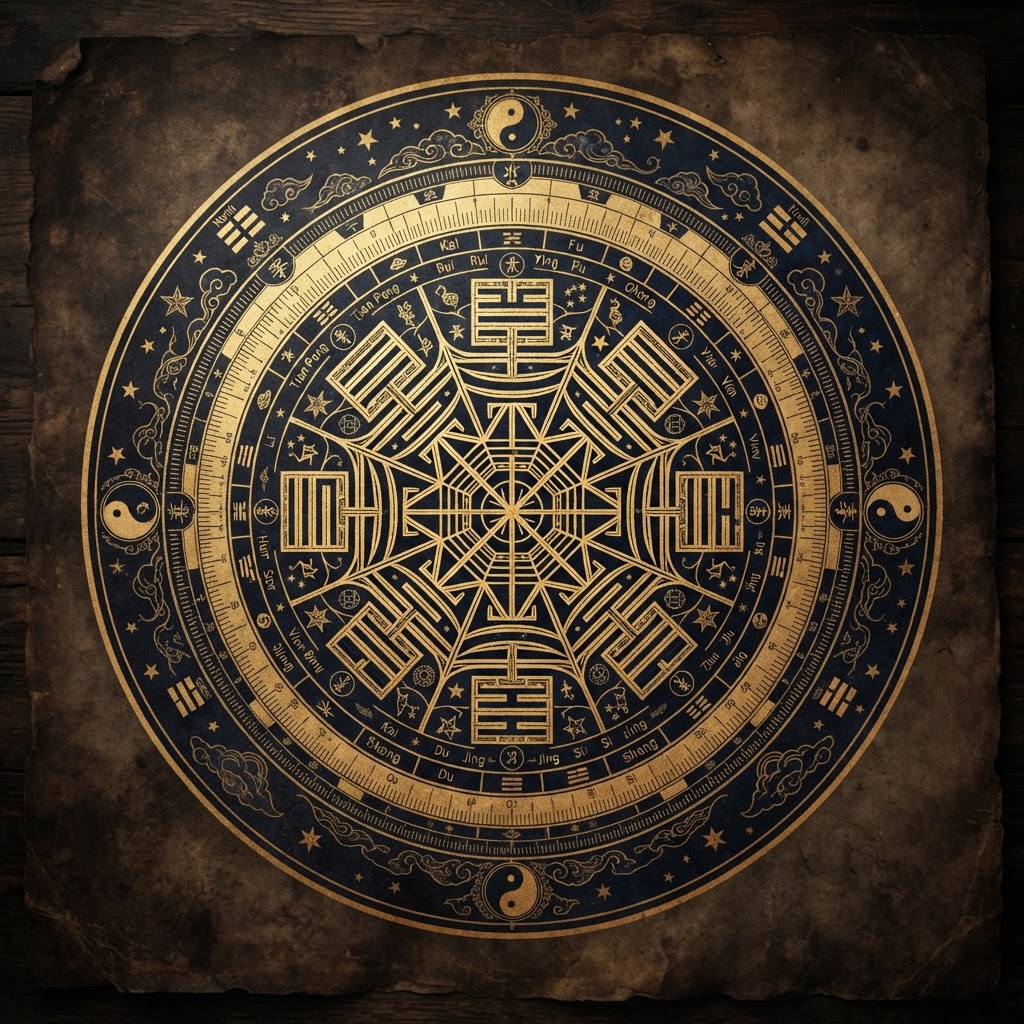
The eight trigrams are the oldest furniture in the house of Chinese metaphysics, older than Qimen Dun Jia itself, and every one of them appears in your chart as a palace. The Li trigram, 离 (Li), is the middle daughter, clarity and beauty: Li is fire. If you have read the complete guide to the eight trigrams, this article takes one palace and follows it through what it means for real decisions.
Li is fire: clarity, vision, beauty and recognition. Its palace favors visibility, presentations and anything that must be seen, with the classic fire caution of burnout and attachment.
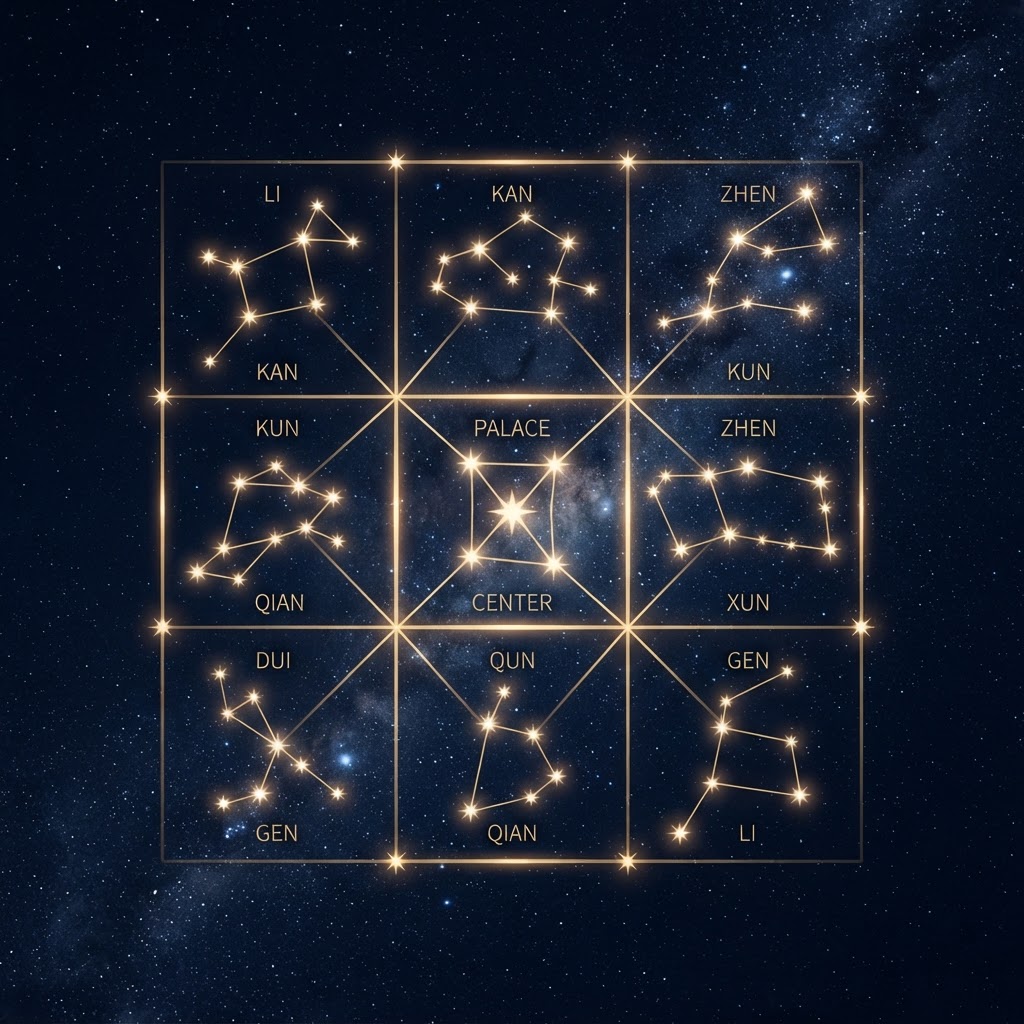
In the chart, Li sits in the South direction and carries the Fire element. Those two facts drive everything practical: which doors feel at home there, which stars are strengthened or drained, and which kinds of questions that palace answers well. When a question about leadership lands in the Li palace, you read it with the palace’s own nature in mind, not as a neutral box.
What the Li palace carries
Each palace gives its contents a bias. A door sitting in the Li palace is colored by Fire energy and the middle daughter, clarity and beauty themes. A stem there behaves like that stem working for the middle daughter. This is why two charts with the same doors can read differently: the same door in different palaces is the same word in different sentences.
When I teach this, the exercise that lands is simple: take one door you know, say the Open door, and walk it through all eight palaces in your notes. The Open door in the Li palace reads as opportunity arriving through the middle daughter channels, or through matters of fire. That exercise, done once, permanently changes how you see the chart.
| Feature | What it means for the Li palace |
|---|---|
| Element | Fire |
| Direction | South |
| Classical person | the middle daughter, clarity and beauty |
| Questions it answers well | matters matching its element and person themes |
| Watch for | doors and stars that clash with fire energy |
Reading it honestly
The trap with trigram study is turning it into trivia: memorized personalities divorced from function. The function is that the palace is the foundation under the symbols. A favorable door in a palace whose nature fights it is weaker than it looks. A modest door in a supportive palace performs above its pay grade. Experienced readers check the palace before they get excited about any headline symbol.
If you are building your foundation, start with the complete QMDJ guide, then the trigram guide this article links to, then single palace deep dives like this one. It is the order that worked for me and the order I teach.
From the practice
There is a difference between studying this system and using it, and the difference is reps. Study one feature properly, then watch it in every chart you cast for a month: where it sits, what it does with the neighbors it meets, how its week played out. That deliberate noticing is how the meanings stop being flashcards and start being instincts. It is also how you discover which features matter most for the kinds of questions you personally ask.
Whatever the chart says, the follow through stays yours. The strongest favorable window does not sign the contract for you, and a cautious reading does not forbid the move forever; it forbids this week’s version of the move. I have watched too many people freeze on a slow reading or overspend a fast one. The chart informs the choice of moment. The choice, and the work, were always yours.
The system rewards patience with itself. Features that confuse you today will sit down and explain themselves after a few months of charting, the way grammar clicks for a language learner who keeps reading. What confuses forever is skipping ahead, memorizing verdicts and reciting combinations without ever sitting with a single chart and one honest question.
A last note on respect, because the tradition earns it. These readings descend from a practice used for statecraft, agriculture, medicine and war: decisions with real stakes and no second chances. The men and women who built it over centuries were not seeking mysticism, they were seeking a disciplined way to think about timing. Treating the craft with that seriousness is the only tradition worth inheriting.
Reading it with timing windows is the skill that turns theory into decisions. A favorable feature does not stay favorable forever: it belongs to the moment the chart was cast for. Practitioners treat the reading as valid for a window, usually days to a few weeks, and they act inside the window rather than admiring it. When clients tell me a good reading did nothing for them, the question I ask first is when they acted on it. The answer is usually after the weather changed.
One habit I borrowed from business years before I studied this system formally: write the question down before casting, and write the one sentence answer after. Between those two lines sits the whole reading. What gets lost in long chart descriptions is usually the decision itself, and decisions, not descriptions, are what people came for. Keep the note, date it, and revisit it when the window passes. A small notebook of dated one liners will teach you more than any course.
A note on precision, because it matters here more than people expect. The system answers the question that was actually cast, with its subject, its decision and its window. Change the window and you must cast again. Change the decision and you must cast again. Readers who treat one chart as a general portrait of their year are reading tea leaves. The discipline of the question is what separates a strategic tool from a mood.
Where the layers disagree, believe the layers rather than your hope. In my experience the disagreement itself is the information: a bright feature over a weak foundation says the opportunity is real but not ready, and a modest feature over a strong foundation says the situation outgrows its packaging. Beginners average the layers into a mushy middle. Practitioners read the argument between them and time their move accordingly.
There is a difference between studying this system and using it, and the difference is reps. Study one feature properly, then watch it in every chart you cast for a month: where it sits, what it does with the neighbors it meets, how its week played out. That deliberate noticing is how the meanings stop being flashcards and start being instincts. It is also how you discover which features matter most for the kinds of questions you personally ask.
Whatever the chart says, the follow through stays yours. The strongest favorable window does not sign the contract for you, and a cautious reading does not forbid the move forever; it forbids this week’s version of the move. I have watched too many people freeze on a slow reading or overspend a fast one. The chart informs the choice of moment. The choice, and the work, were always yours.
Frequently Asked Questions
What is the Li trigram in Qimen Dun Jia?
One of the eight trigrams, 离 (Li), element Fire, direction South, classically the middle daughter, clarity and beauty.
Why do palaces matter if the doors and stars are the same?
The palace is the foundation: it biases everything placed in it. The same door in different palaces reads differently.
Should I face the direction of a trigram?
Direction advice is a real part of classical practice, but it always comes after the full chart reading, never before.
How do the trigrams connect to the doors and stars?
Through the palace. Each palace hosts a trigram, and the door, star, stem and god placed there inherit its element bias.
Related reading: the eight trigrams complete guide, Qi Men Dun Jia complete guide.
Leave a Reply
You must be logged in to post a comment.