
How Anxiety Affects Your Resting Face Over Time
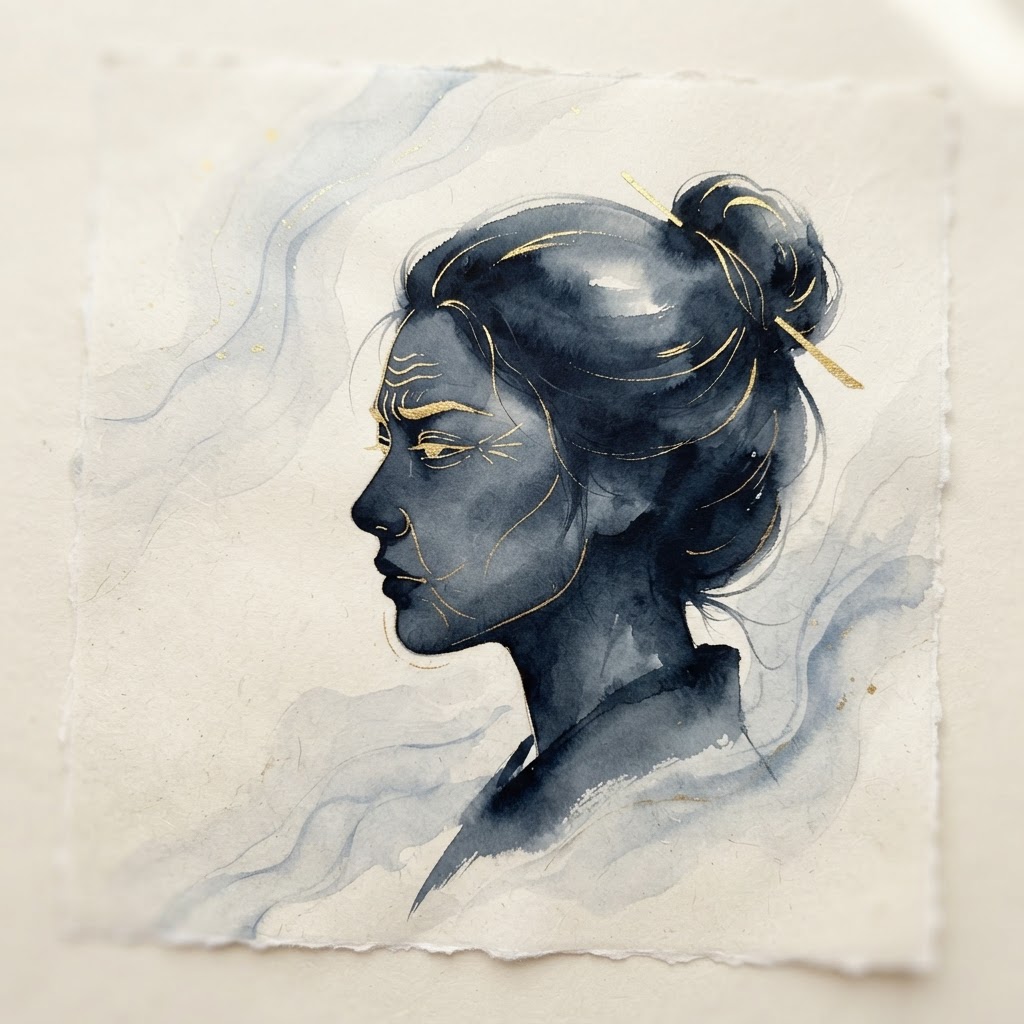
Your resting face is not just the face you were born with. It is the face your nervous system has sculpted through years of repeated emotional patterns. Chronic anxiety leaves visible traces in the facial muscles, skin quality, and even bone structure over time. This is something both modern psychology and classical Mian Xiang recognize, though they describe it in different languages.
This article is part of my Can Confidence Show on Your Face series. For the foundational guide, see What Facial Features Indicate Confidence. Sibling articles include How Confidence Changes After 40 in Face Reading and Body Language vs Face Reading.
What Chronic Anxiety Does to Facial Muscles
Modern research has identified specific facial muscle patterns associated with chronic anxiety. The corrugator muscles between the brows become chronically contracted, creating permanent vertical furrows even when the person is at rest. The masseter muscles in the jaw tighten, which over years can widen the jaw through muscular hypertrophy while simultaneously creating tension lines at the mouth corners. The orbicularis oculi, the muscle around the eyes, develops a pattern of partial contraction that narrows the eye aperture even when the person is not consciously squinting.
In Mian Xiang, these same changes are described through the language of facial zones and Five Elements. The brow area is the Fire Palace, governing expression and outward energy. Chronic contraction there suggests Fire element stagnation, the person’s expressive energy is being suppressed rather than flowing freely. The jaw is governed by Earth, and chronic jaw tension suggests Earth element excess, the person is holding on too tightly, unable to release control.
| Anxiety Pattern | Muscle Affected | Visible Change | Mian Xiang Reading |
|---|---|---|---|
| Chronic worry | Corrugator (brow) | Vertical furrows, permanent frown | Fire stagnation, suppressed expression |
| Teeth grinding | Masseter (jaw) | Widened jaw, tension lines | Earth excess, control issues |
| Hypervigilance | Orbicularis oculi (eyes) | Narrowed eye aperture, crow’s feet | Wood overactivity, constant scanning |
| Chronic fear | Mentalis (chin) | Dimpled chin, chin tension | Earth weakness, foundation instability |
The Timeline of Facial Change
Anxiety does not reshape your face overnight. The changes accumulate over months and years. In my readings, I can often estimate how long someone has been carrying chronic anxiety by the depth of the muscular patterns in their face. Light brow furrowing that softens when the person relaxes suggests a recent pattern, perhaps months. Deep vertical lines between the brows that do not disappear even during relaxed conversation suggest years of sustained contraction.
The timeline matters because it affects the prognosis. A face that has carried anxiety for six months can recover its natural resting expression with a few months of sincere behavioral work. A face that has carried it for ten years has deeper structural adaptations that take longer to shift. The bone itself does not change, but the muscular patterns, skin quality, and fascial tensions that formed over years require sustained effort to release.
The face is a record of your nervous system’s history. Every night of poor sleep, every month of sustained worry, every year of unmanaged stress writes itself into the muscles and skin. The good news is that the record is editable, if you change the habits that wrote it.
The Face of Recovered Confidence
One of the most rewarding aspects of face reading is observing how faces change when someone resolves their anxiety and rebuilds natural confidence. The brow furrows soften. The jaw releases. The eyes open wider. The skin tone improves as chronic muscle tension releases and circulation improves. These changes can be visible within months of effective anxiety treatment, whether through therapy, meditation, lifestyle changes, or all three.
I have watched this transformation in clients over the course of a year or two. When I first read their face, the anxiety markers were prominent: deep brow lines, tight jaw, narrowed eyes. When they returned after sustained inner work, the changes were striking. The brow was smoother. The jaw was more relaxed, giving the face a softer, more approachable quality. The eyes had opened, creating a characteristic that the classical texts call “bright spirit” or “open shen.” This is the face of recovered confidence, and it reads very differently from the face of someone who was always confident naturally.
Natural vs Recovered Confidence in the Face
Natural confidence shows as relaxed, open facial structure that has never been tightened by chronic anxiety. Recovered confidence shows as open facial structure with subtle traces of former tension that have been released through deliberate work. You can often tell the difference by looking at the direction of the brow lines. Natural confidence has no brow furrows. Recovered confidence may have faint vertical lines that have softened but not fully disappeared. The difference matters less than you might think. Both states project genuine confidence. The recovered version often carries more wisdom.

Five Elements and Anxiety Patterns
In Five Elements theory, anxiety typically involves an imbalance in the Wood and Earth elements. Wood governs the nervous system, vision, and the capacity to plan and project into the future. When Wood is overactive, the person projects too far ahead, generating worry about outcomes that have not arrived. Earth governs grounding, stability, and the capacity to feel safe. When Earth is weak, the person lacks the internal foundation to absorb and contain the Wood-generated worry.
The result is a face where Wood features (brows, eyes, temples) show tension and overactivity, while Earth features (chin, jaw, lower cheeks) show depletion or instability. A BaZi chart analysis often confirms this pattern, showing a day master that is either too weak to control Wood or too strongly rooted in Wood with insufficient Earth to ground it.
For practitioners, understanding this elemental pattern helps guide recommendations. Strengthening Earth through grounding practices, stable routines, and connection to physical place can help. Reducing Wood overactivity through meditation, limiting future-oriented thinking, and managing stimulants can also help. The face reading shows where the imbalance manifests. The BaZi chart shows why. The lifestyle recommendations address both.
| Element | Role in Anxiety | Facial Sign | Recovery Practice |
|---|---|---|---|
| Wood (overactive) | Excessive future projection, racing thoughts | Tense brows, darting eyes, temple tension | Meditation, reducing stimulation, present-moment focus |
| Earth (depleted) | Lack of grounding, instability, insecurity | Weak chin, thin lower cheeks, pale coloring | Stable routines, physical activity, nourishment |
| Fire (stagnated) | Suppressed expression, emotional holding | Brow furrows, tight mouth, flushed or pale face | Expressive practices, creative work, emotional release |
Practical Recovery and Face Reading
If you are working on anxiety recovery and want to track your progress through face reading, there are specific markers to watch. The brow area is the most responsive. As chronic worry decreases, the vertical furrows between the brows soften first. The eyes open next, as the hypervigilant contraction around the eye muscles releases. The jaw takes longer because the masseter is one of the strongest muscles in the body and chronic tension there builds deep patterns.
I recommend clients take monthly photos in consistent lighting and compare them over time. The changes are gradual and hard to see day to day, but month to month, the softening becomes visible. This is encouraging feedback that the inner work is producing visible results.
Anxiety Face Recovery Timeline:

Month 1-3:  -> Brow furrows begin softening
             -> Skin tone improves slightly
             -> Eyes slightly more open

Month 3-6:  -> Brow noticeably smoother
             -> Mouth tension releasing
             -> "Bright spirit" beginning to show

Month 6-12: -> Jaw tension releasing
             -> Overall face more relaxed at rest
             -> Subtle traces of former patterns remain

Month 12+:  -> Recovered confidence face
             -> Open, relaxed, approachable
             -> Faint traces show the journey
The Connection Between Anxiety and Confidence Features
Understanding how anxiety shapes the resting face directly connects to the broader question of confidence reading. When I read a face for confidence, I am always asking: is the facial pattern I see constitutional, or is it the product of chronic emotional stress? This distinction matters enormously for the accuracy of the reading. A naturally confident face that has been tightened by anxiety will read differently from a face that structurally lacks confidence features.
The Shy vs Confident Facial Features article covers the structural comparison in detail. But the key insight here is that shyness and anxiety are different things. Shyness is a personality trait that shows in the facial structure. Anxiety is an emotional pattern that overlays onto whatever structure exists underneath. A person can be constitutionally shy (delicate features, thin brows, narrow jaw) and yet free of chronic anxiety. Their face will read as gentle but relaxed. Another person can have strong confidence features that have been distorted by anxiety into a tense, guarded expression.
This is why I always take time to distinguish between structural and functional patterns in a reading. The structural features tell me who the person is. The functional patterns tell me what they are going through. Both are important. Both deserve attention. And the path to helping someone is different depending on which type of pattern dominates.
Frequently Asked Questions
Can anxiety completely change your face shape?
What role does the BaZi chart play in understanding anxiety patterns?
The BaZi chart provides the constitutional context for understanding why certain people are more prone to chronic anxiety than others. A chart with a weak day master and strong Seven Killings star, for instance, often corresponds to someone whose nervous system is constitutionally more reactive to stress. A chart with heavy Fire and minimal Water may indicate someone whose emotional intensity runs hot without sufficient cooling mechanisms. The chart does not cause anxiety, but it shows the underlying energetic tendencies that make certain emotional patterns more likely. Combined with face reading, the chart gives you both the why and the what: why the person is prone to this pattern, and what it looks like on their face. For more on this connection, see the Beginner Guide to Reading a BaZi Chart.
Anxiety does not change your bone structure, but it can significantly alter the muscular and soft tissue patterns that define your resting face. Over years, chronic jaw clenching can widen the jaw through muscle hypertrophy. Chronic brow furrowing creates permanent lines. These changes can make the face look quite different from its natural baseline, though the underlying bone structure remains the same.
How quickly do anxiety facial changes reverse?
Brow and eye area changes can begin reversing within weeks of effective anxiety management. Jaw tension takes longer, often months, because the masseter muscle builds deep patterns. Full softening of chronic facial tension typically takes 6 to 18 months of sustained anxiety recovery work. The face responds faster than most people expect once the underlying pattern shifts.
Can face reading diagnose anxiety?
Face reading can identify patterns consistent with chronic anxiety, but it should never replace professional mental health assessment. The facial markers I describe are observational patterns from a classical system. If you are experiencing anxiety, please consult a qualified mental health professional. Face reading can complement treatment by providing insight into your patterns, but it is not a diagnostic tool.
Does a naturally anxious-looking face mean the person is anxious?
No. Some people are born with facial features that look anxious to others: thin brows, narrow eyes, a receding chin. These are structural features, not anxiety markers. True anxiety markers are muscular patterns: tension, furrowing, contraction. I always distinguish between structural features that look similar and functional patterns caused by chronic emotional states. For more on this distinction, see Confidence and Wealth Features in Face Reading.
What role does the BaZi chart play in understanding anxiety patterns?
The BaZi chart provides the constitutional context for understanding why certain people are more prone to chronic anxiety than others. A chart with a weak day master and strong Seven Killings star, for instance, often corresponds to someone whose nervous system is constitutionally more reactive to stress. A chart with heavy Fire and minimal Water may indicate someone whose emotional intensity runs hot without sufficient cooling mechanisms. The chart does not cause anxiety, but it shows the underlying energetic tendencies that make certain emotional patterns more likely. Combined with face reading, the chart gives you both the why and the what: why the person is prone to this pattern, and what it looks like on their face. For more on this connection, see the Beginner Guide to Reading a BaZi Chart.
Leave a Reply
You must be logged in to post a comment.