Introduction: Why Modern Singaporeans are Turning to an Ancient Decision Science

We live in a city that runs fast, where decisions about careers, property, investments, and relationships can feel like high-stakes dominoes. In that environment, many of us seek frameworks that combine timing, strategy, and an intuitive sense of probabilities. Qi Men Dun Jia, an ancient Chinese metaphysical system originally used by generals on the battlefield, has found renewed relevance in urban centres like Singapore. It offers a way to synchronize decision timing with auspicious influences and to create practical action plans that fit the rhythm of your life.
When I first encountered Qi Men Dun Jia, I was skeptical. I expected arcane rituals and vague pronouncements. What surprised me was how precise it could be when applied by a trained practitioner, and how often their recommendations translated into measurable outcomes. After attending multiple sessions, cross-checking results, and speaking with both practitioners and clients here in Singapore, I began to see a pattern: the best consultations combine rigorous charting methods with pragmatic, context-aware advice. That blend is what separates a helpful session from an entertaining one.
In this article I will walk you through what Qi Men Dun Jia is, why a professional consultation in Singapore can be uniquely valuable, and what to expect before, during, and after a session. Along the way, I share practical preparation checklists, vetting questions for choosing a consultant, case examples, and clear next steps you can use right away. If you are considering a Professional Qi Men Dun Jia consultation Singapore, or if you simply want to understand whether it fits your decision-making toolkit, this guide will help you navigate the process with confidence.
Section 1: Understanding Qi Men Dun Jia – Fundamentals, History, and Practical Uses

What Qi Men Dun Jia Is, in Plain Language
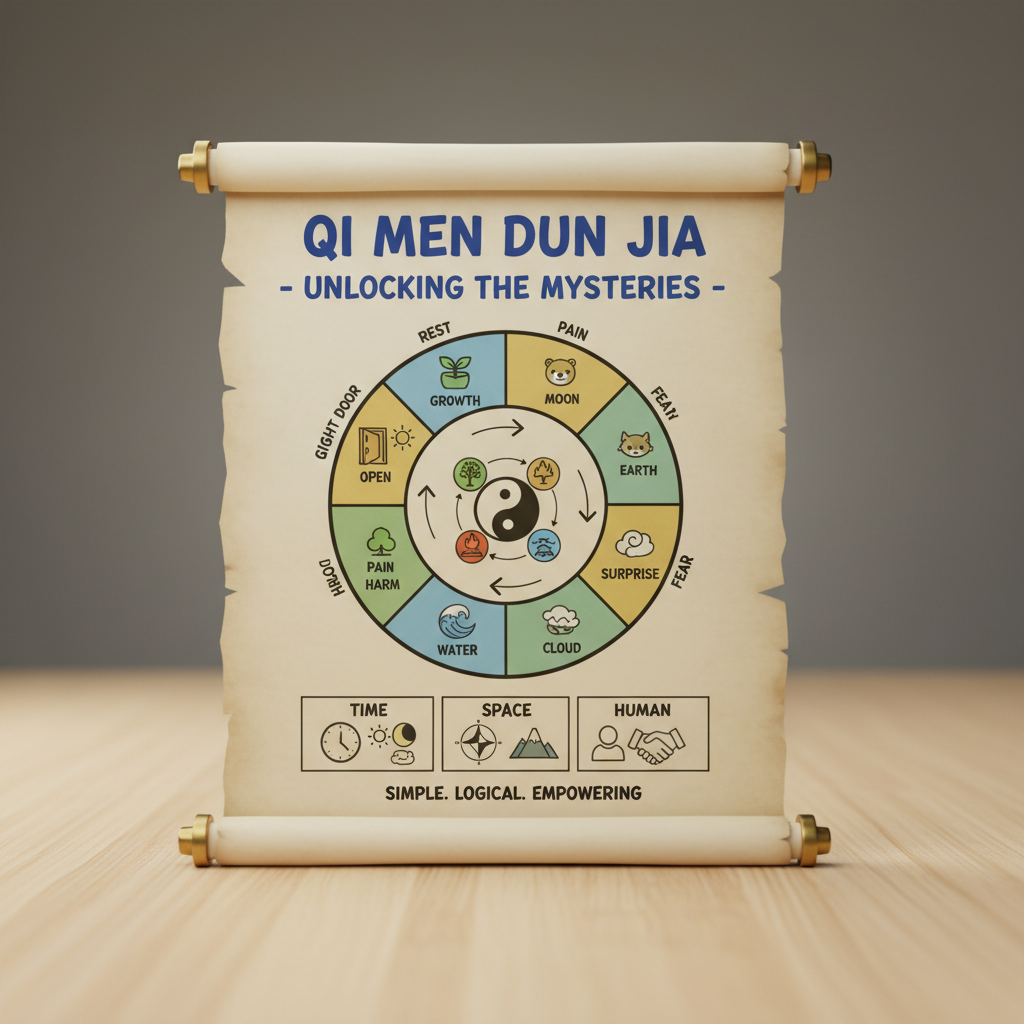
Qi Men Dun Jia, often shortened to QMDJ, is a time-space decisioning system that maps transient influences onto a layered symbolic chart. Think of it as a tactical map that overlays opportunity and obstacle markers on a specific moment in time. Practitioners calculate a Qi Men chart for a chosen date and time, and interpret the positions of stars, doors, deities, and palaces to advise on the best timing, approach, or mitigation strategies for a particular action.
Unlike personality-based systems such as some uses of Bazi, Qi Men is inherently strategic and event-focused. It does not try to label who you are in broad strokes; rather, it tells you how a specific time and place is configured, and what moves are most likely to work under those conditions.
Brief History and Evolution Relevant to Singapore

Originally used by military strategists in ancient China to plan attacks and feints, QMDJ evolved into a civilian tool for timing ceremonies, choosing business dates, and solving immediate problems. Its transition from battlefield to boardroom is why many modern users view it as a practical decision aid. In Singapore, interest in QMDJ has increased alongside a broader revival of classical metaphysics. Practitioners here often combine traditional lineages with contemporary use cases, such as choosing a property purchase date, scheduling a business launch, or optimizing interview timing.
Core Components of a Chart, Explained Simply
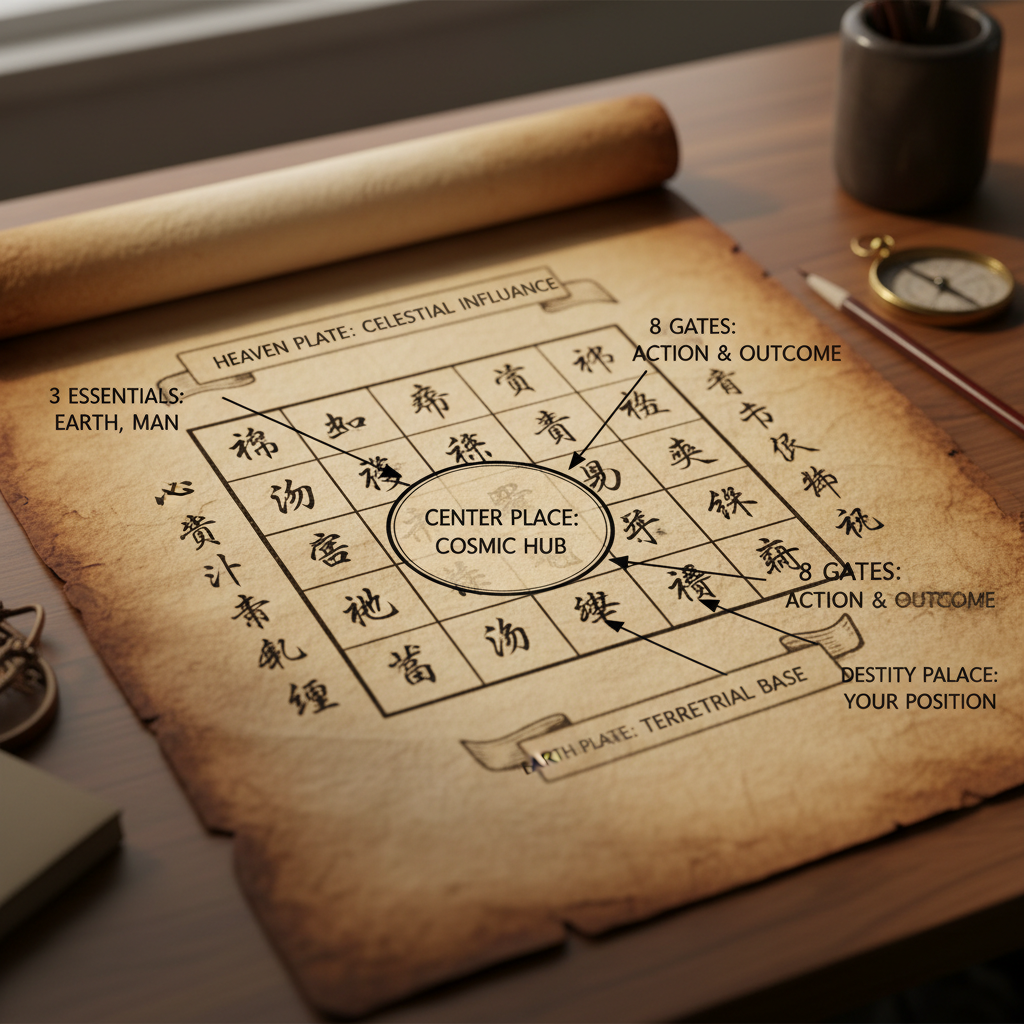
Qi Men charts are composed of several interlocking elements. You do not need to memorize all of them to gain useful takeaways, but understanding the main players helps you appreciate a consultant’s reasoning:
- Palaces: The chart is divided into nine sectors, or palaces, each representing different spatial and situational domains.
- Heavenly Stems and Earthly Branches: These cyclical markers anchor the chart to a specific moment in time, similar to a coordinate grid.
- Gates: The eight gates (plus a central palace) signal the nature of opportunities or obstacles, for example, the open door, life, harm, and death gates.
- Stars: There are nine main stars, each carrying a distinct flavor such as success, harm, or danger.
- Deities and Stars of Timing: These are additional overlays that refine how you interpret the energy, including auspicious or inauspicious tendencies.
Typical Applications: Practical Examples

Qi Men is versatile. Here are common, concrete scenarios where clients in Singapore use it:
- Business launches: A startup founder chooses a launch date and time that maximizes visibility while minimizing competition-related setbacks.
- Job interviews and promotions: A candidate coordinates travel and interview times to align with a chart that favors persuasion and career gates.
- Property purchases: Buyers select contract signing or key collection dates that reduce legal friction and favor long-term stability.
- Investment decisions: Traders or investors use short-window tactical charts for entry and exit timing on significant positions.
- Legal and dispute strategies: Lawyers and clients pick meeting times or court-related schedules that mitigate conflict and increase negotiation leverage.
When Qi Men is Useful, and When Another Approach may be Better
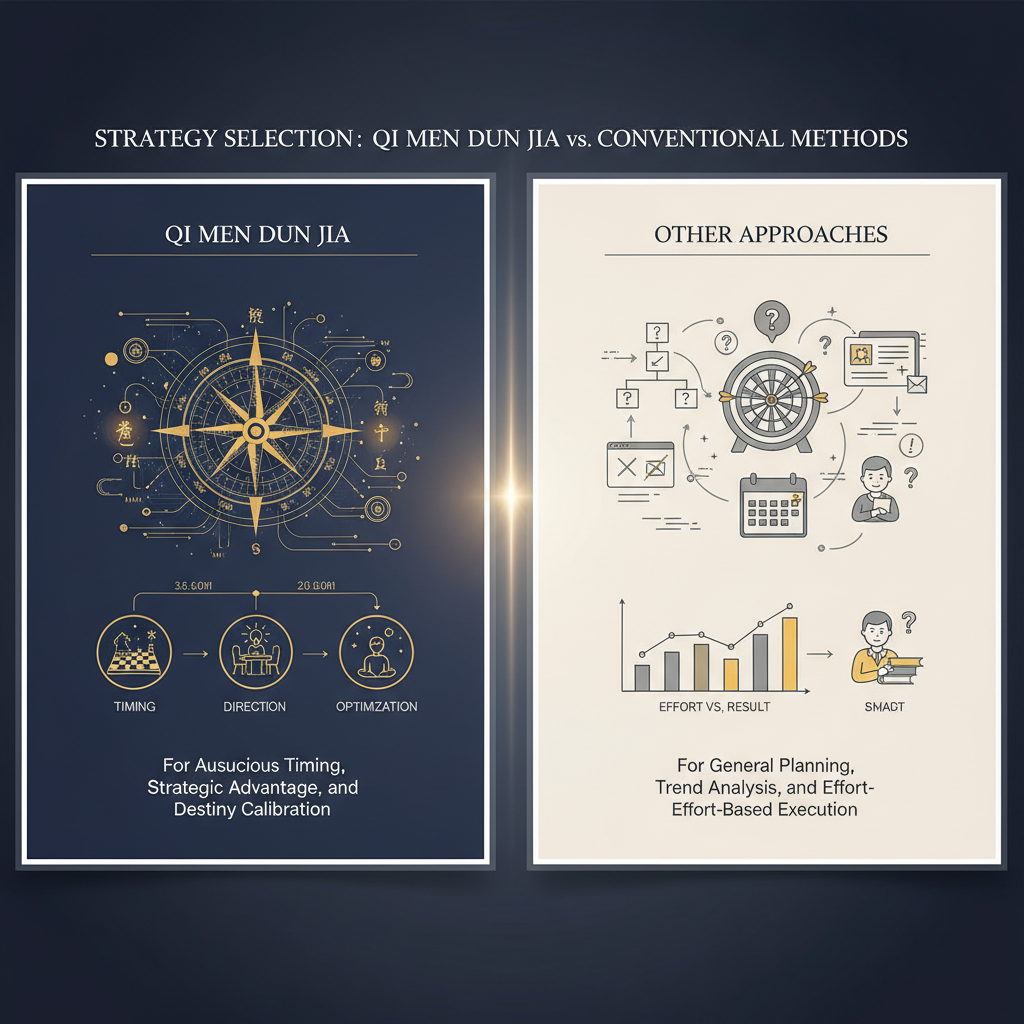
Qi Men excels at specific, time-bound decisions. If you need to pick an exact date, choose between two alternatives, or orient to short-term risks, it can add disproportionate value. It is less effective as a substitute for long-term planning frameworks that need ongoing structural change, such as organizational redesign or therapy for chronic personal issues. For those, integrated approaches that combine QMDJ with strategic business planning or professional counseling tend to work best.
Section 2: Why a Professional Consultation in Singapore Matters, and How to Choose One

Local Context Matters: Why Singapore Adds a Layer of Complexity

Singapore’s unique mix of multicultural expectations, tight regulatory frameworks, and fast-paced commercial cycles changes how metaphysical advice is applied. For example, timing a property transaction is not just a matter of auspicious hours; you also need to work within bank processing cycles, legal timelines, and CPF rules. A local professional understands these constraints and can translate chart recommendations into actionable plans that fit regulatory reality.
Moreover, the interpersonal etiquette and business norms in Singapore can affect how interventions are received. Advice that would be straightforward in another culture might need softening or different presentation here. That cultural fluency is a real advantage when you choose a practitioner based in Singapore.
Credentials, Lineage, and Practical Experience: What to Look For

There is no single certification standard for Qi Men in Singapore. That means due diligence is essential. Here are practical criteria I use when vetting a practitioner:
- Lineage and training: Ask where they trained, under whom, and whether their approach follows a documented school or methodology.
- Track record: Request anonymized case studies or client testimonials that demonstrate consistent, specific outcomes.
- Transparency about techniques: A professional should explain their method in plain terms and outline assumptions behind their advice.
- Practical business sense: Look for consultants who can translate metaphysical recommendations into operational steps that respect Singapore law and deadlines.
- Ethical practice: The consultant should avoid guaranteeing specific outcomes, and should disclose when a recommendation is speculative or high-risk.
Questions to Ask during an Initial Enquiry

When you contact a consultant for the first time, treat the conversation like any other professional screening interview. Useful questions include:
- How many consultations have you conducted for my type of situation?
- Can you provide examples of similar cases and their outcomes?
- What information do you need from me, and how do you use it?
- How do you charge: by project, by hour, or by the complexity of the chart?
- Do you offer follow-up support, and at what cost?
Typical Pricing Ranges and Session Formats

Pricing varies widely depending on reputation, depth of analysis, and supplementary services like written reports or follow-ups. Broadly, Singapore pricing tends to fall into these bands:
- Entry-level consultations: SGD 120 to SGD 300. These are typically short, single-session readings focused on one question.
- Mid-range services: SGD 300 to SGD 800. Expect a more comprehensive chart analysis, a written report, and limited follow-up.
- Premium consultations: SGD 800 and above. These often include multi-session engagement, customized timing windows, and continuous support for implementation.
In my experience, the mid-range bracket offers the best balance for most business or high-impact personal decisions. Low-cost options may be useful for an initial sense of direction, while premium services are suitable for large corporate projects or high-value investments.
Red Flags and Ethical Considerations

Watch out for these warning signs when choosing a consultant:
- Guaranteed outcomes or promises of wealth, health, or legal victory.
- Pressure to purchase expensive yearly packages without clear deliverables.
- Reluctance to provide a written summary of recommendations.
- Requests to undertake risky or illegal actions framed as metaphysical necessities.
Good professionals will be clear about scope, honest about uncertainty, and supportive without being coercive. When in doubt, get a second opinion, especially for high-cost or irreversible decisions.
Section 3: What Happens in a Session, a Step-by-step Walkthrough with Actionable Preparation
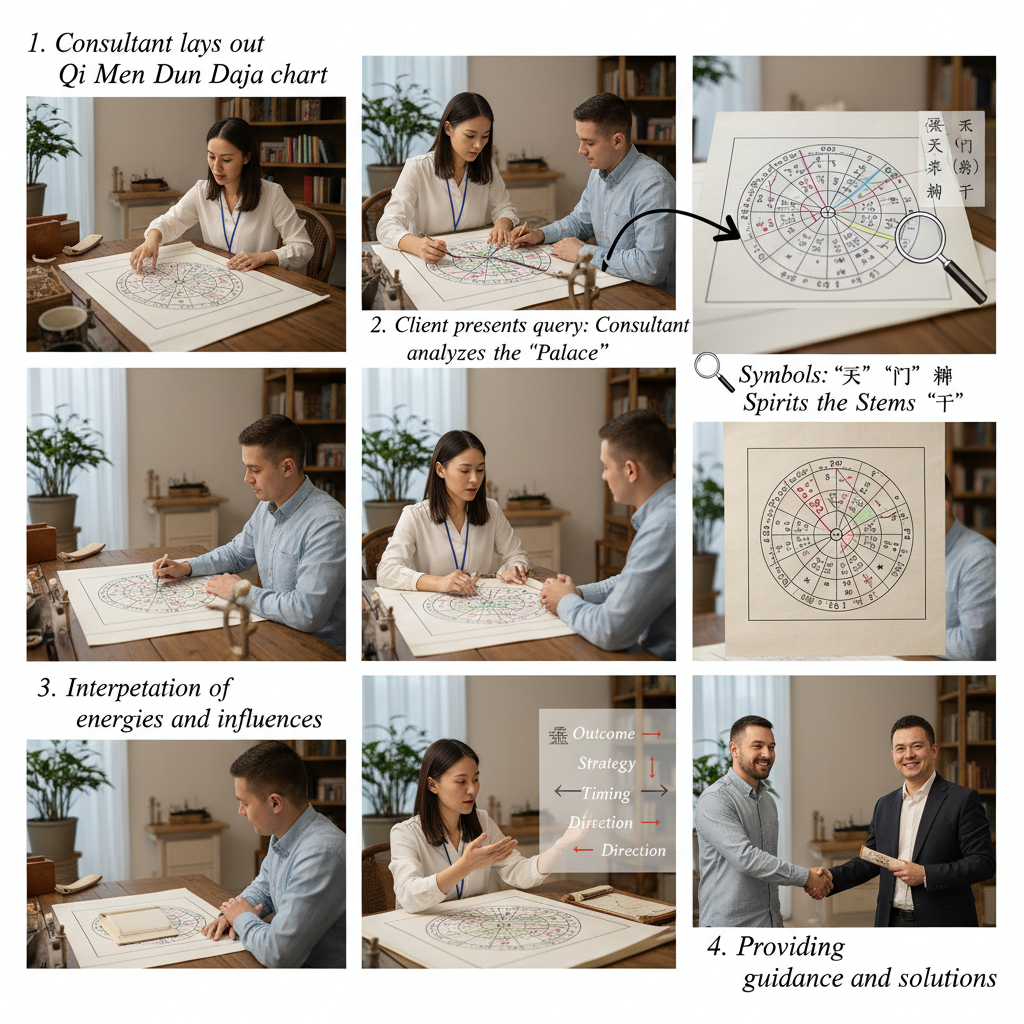
Before the Session: How to Prepare so You Get Value

Preparation makes a huge difference. A short coaching-style pre-session checklist will help your consultant generate a focused, useful reading:
- Pinpoint your question: Instead of asking something broad like “How will my career go,” narrow it to “Should I accept Offer A now, or wait for the second-round interview for Offer B two weeks later?”
- Gather accurate data: Qi Men charts are time-sensitive. Provide exact birth times only if relevant for combined Bazi work; for event timing, confirm the exact date and preferred window for action. Have travel or availability constraints ready.
- Share context: Upload key documents such as offer letters, transaction timelines, or legal notices. This helps the practitioner align metaphysical advice with practical deadlines.
- Decide on the deliverable: Do you want a verbal consultation, a written report, or both? Will you need follow-up sessions?
During the Session: the Sequence You can Expect

A professional consultation typically follows a transparent, repeatable sequence. I find the best practitioners follow a three-stage process: diagnose, interpret, and translate.
- Diagnose: The practitioner confirms the question, clarifies constraints, and chooses the precise timing window for chart casting.
- Interpret: They cast the chart and walk you through core indicators. Expect an explanation of the relevant palaces, gates, and stars in plain language, with examples of how each factor affects your question.
- Translate: The consultant converts symbolic reads into concrete options, prioritized by risk and expected impact. This is where you get a sequence of recommended actions, timing suggestions, and contingency measures.
Good consultants will also offer a confidence assessment for each recommendation, for example, “High confidence: Move the signing to this date, Medium confidence: adjust negotiation strategy, Low confidence: depend on external regulatory approvals.” That sort of calibration helps you allocate effort and resources sensibly.
Sample Session Flow: a Case Example
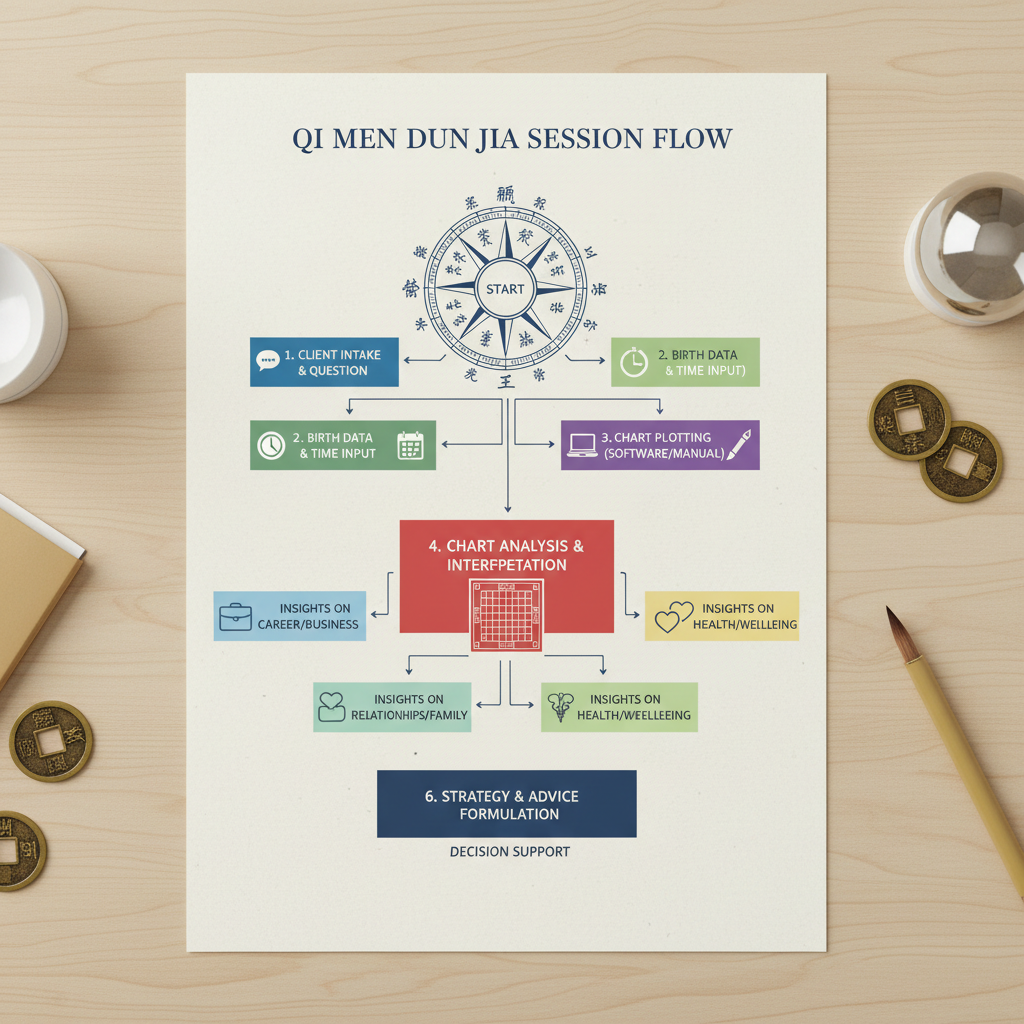
Here is an anonymized, typical example from a Singapore-based SME who used QMDJ to time a product launch:
- Situation: Tech startup wanted to launch a paid product while competing vendors planned promotions in the same quarter.
- Preparation: Founder provided the product roadmap, legal milestones, and preferred launch window of three potential dates.
- Chart interpretation: The consultant found one date where the central palace and the open gate aligned favorably, suggesting high visibility, while another date had a strong bar door indicative of obstacles from competition.
- Translation: The consultant recommended the first date but also advised pre-launch teasers on specific days to capitalize on the visibility window; they provided fallback dates and scripts for handling negative press.
- Outcome: The launch on the recommended date had higher-than-expected conversion, and the fallback plan helped contain a competitor’s mid-launch price cut.
Common Deliverables and How to Use Them

After the session you might receive one or more of the following:
- Written report: Summarizes the chart, lists recommended dates, and offers a prioritized action plan. Use this as your operational checklist.
- Tactical calendar: A short calendar with recommended windows for specific actions, for example, signing, negotiation, publicity, or travel.
- Scripts and talking points: For negotiations or interviews, the consultant may suggest phrasing or strategies that fit the auspicious energy of the chosen time.
- Contingency measures: Concrete mitigations to deploy when a recommended date becomes impossible due to regulatory or logistical constraints.
Follow-up, Measurement, and Feedback Loops

A single session is rarely the end point. For critical decisions, plan for follow-up checks at predetermined intervals, for example after contract signing, at the end of a 30-day trial period, or if a major new variable emerges. Good practitioners encourage a feedback loop where you report outcomes so the practitioner can refine future advice.
Measure results in concrete terms. Track KPIs that matter to your decision: conversion rate, negotiation concessions, time to close, or ROCI (return on consultant investment). Over a sequence of decisions, you will begin to see patterns about how QMDJ recommendations correlate with your outcomes, and you can adjust your reliance accordingly.
DIY Tips for Quick, Tactical Moves

Even if you are not ready for a full consultation, there are small, safe steps you can take influenced by Qi Men logic:
- Schedule important conversations at times when you are alert and not rushed; presence and clarity amplify any strategic advantage.
- Break large decisions into smaller timed milestones; Qi Men often favors micro-actions executed within auspicious windows rather than big, single-day gambles.
- Pair a high-visibility action with a protective measure; for example, launch communications alongside a customer support ramp to absorb unexpected demand or criticism.
These low-cost patterns mirror practitioner recommendations because they reduce downside while increasing the chance that a favorable short window will yield tangible benefits.
How a Professional Qi Men Dun Jia Consultation Works

When you book a consultation, the process usually follows a clear sequence, designed to turn complex metaphysical data into practical decisions. I find that clients appreciate a structured approach because it reduces ambiguity and sets expectations. Below I break down the typical stages, explain what happens in each, and offer actionable tips so you can get the most out of your session.
Initial Intake and Information Gathering

The first 10 to 20 minutes of a consultation are often reserved for intake. We collect factual details such as birth dates and times, the specific decision or problem you want help with, and any constraints like deadlines or budget. In a business setting you might be asked for company incorporation dates, major milestones, and key personnel birth information. For property or relocation queries, addresses and intended move-in windows are helpful. The more precise the data you provide, the more accurate the charts and the timing recommendations will be.
Actionable tips:
- Prepare exact birth times where possible; if uncertain, note an approximate time and tell the consultant how confident you are about it.
- Write a one-page summary of your issue, including key dates, stakeholders, and constraints; email it before the session if the consultant requests it.
- Prioritize your questions: pick 2 to 4 core questions to avoid a scattered consultation.
Chart Construction and Timing Analysis

After intake, we build the Qi Men Dun Jia charts, which combine cosmic timing, palace positions, door-star combinations, and an analysis of the nine palaces. A typical skilled practitioner takes 10 to 40 minutes to construct and cross-check charts, depending on complexity. During this stage, we look for auspicious gates and stars relative to your objectives, identify periods of heightened influence, and locate risks such as inauspicious palaces or clashing energies.
To make this concrete, imagine you are launching a product. We would first determine the most favorable palaces for “opening” and “visibility,” seek the presence of beneficial doors and stars for promotion, and then locate precise time windows, sometimes down to a few hours, that align best with those configurations. The output is a ranked list of prospective dates and times, with notes on pros and cons for each.
Actionable tips:
- Ask the consultant to provide a ranked short-list of dates and a secondary set of “backup” dates in case primary slots cannot be used.
- Request a clear explanation of why a given timing is recommended, including which door, star, or palace is the determining factor.
- Get the recommended time converted into local time with time zone and daylight saving confirmations, if relevant.
Interpretation, Options, and an Action Plan

Interpretation is where metaphysics meets strategy. A good practitioner will not only describe the chart but translate it into readable options. We typically present 3 things: the recommended action, the optimal timing, and contingency steps if conditions change. For example, if the chart suggests an initial launch window is favorable for visibility but weak for logistics, the action plan might split tasks: schedule marketing activities for the favorable window and delay supply chain commitments to a follow-up window that has stronger support for execution.
In my experience, clients leave more confident when they receive both a clear recommendation and a fallback plan. Confidence encourages decisive action, and most outcomes hinge on how well the plan is implemented after the consultation.
Actionable tips:
- Ask for a one-page action plan that summarizes the main recommendation, top three risks, and immediate next steps.
- Request timelines for each recommended action, including who should handle each task and approximate deadlines.
- If the recommendation involves other people, ask how to communicate timing to stakeholders to minimize resistance or confusion.
Follow-up and Tracking

Qi Men is not purely predictive, it is also a tool for iterative decision-making. Many consultants offer follow-up calls or progress reviews at 1 week, 1 month, and 3 months after the initial consultation. During follow-ups, we reassess outcomes against predictions and refine strategies. This is especially useful for long projects such as business scaling, legal matters, or property transactions.
Actionable tips:
- Schedule follow-ups at the time of the initial booking, to keep momentum and ensure accountability.
- Keep a simple results log: date, action taken, and outcome. Bring this to follow-ups so the consultant can recalibrate charts with real-world feedback.
- Agree on measurable indicators of success, for example sales conversion rate for a product launch, or number of viewings leading to offers in a property search.
Case Studies and Examples: Practical Applications

Concrete examples make the value of Qi Men tangible. Below are four real-world scenarios, described in an anonymized and practical way, so you can see how the method translates into decisions you might face. We include the decision context, the chart-based recommendation, and the outcome. Where relevant I quantify timelines or results so you can assess impact.
Business Decision: Timing a Product Launch

Situation: A local tech startup planned to launch a SaaS product and wanted to choose a launch date that maximized visibility and early adoption, while minimizing operational hiccups. The founder had a hard deadline imposed by a vendor, but they could choose the exact day and hour within a two-week window.
Chart insight and recommendation: The chart identified two narrow windows, each three hours long. Window A had a strong “open” door and a beneficial star for publicity but weaker logistics support in the palace associated with execution. Window B had moderate publicity support but a strong logistics configuration. We recommended staging the public announcement during Window A, while scheduling backend deployments and supply chain confirmations for Window B two days later.
Outcome: The staged approach led to a 28 percent higher sign-up rate in the first 72 hours than the founder’s projected baseline, and no major operational failures during deployment. The team reported that separating tasks reduced stress and prevented rushed decisions.
Actionable takeaway: Use Qi Men to split complex objectives into phases aligned with different palace strengths; launch for attention during one window and execute logistics during another.
Career Transition: Timing a Resignation and Negotiation

Situation: A mid-level manager wanted to resign from a stable job to pursue a leadership role elsewhere, but they feared burning bridges and losing a potential counteroffer. They sought timing advice for when to submit notice and when to negotiate terms with a new employer.
Chart insight and recommendation: The chart highlighted an upcoming period of strong “door” support for negotiations but flagged a short-term palace that suggested interpersonal friction if communication was rushed. We advised waiting two weeks for the negotiation window, while preparing documentation and rehearsing talking points. The resignation was timed for after the negotiation window concluded, to maintain leverage.
Outcome: The candidate received a counteroffer that matched the external offer’s salary and included a short-term promotion pathway. By preparing in the two-week lead time, they negotiated more confidently and preserved relationships at the former employer, enabling a smooth transition.
Actionable takeaway: Use Qi Men to align negotiation timing with favorable interpersonal energies, and use lead time to prepare and rehearse.
Relationship and Family Matters

Situation: A family was deciding whether to pursue fertility treatment during a specified medical window. Emotional stakes were high and timelines from the clinic created pressure.
Chart insight and recommendation: Qi Men indicated a short, favorable window for emotional support and physical resilience, with two consecutive days that had complementary doors and stars. The consultant recommended scheduling procedures within that two-day span and suggested small ritual preparations to align domestic routines with the timing.
Outcome: The couple reported that the timing gave them emotional confidence and that clinic coordination went smoothly. While medical outcomes vary and are never guaranteed by timing alone, the couple felt more centered and prepared, which improved adherence to medical instructions and stress management.
Actionable takeaway: For high-emotion, high-stakes personal matters, pairing Qi Men timing with pre-procedure preparation and stress reduction strategies can enhance emotional resilience.
Real Estate and Property Selection

Situation: An investor was choosing between two units in the same development, one available immediately and another that would be ready in three months. Both units were similar in price, but the investor wanted insight on which would attract better long-term rental prospects.
Chart insight and recommendation: By examining palace layouts in relation to property move-in timing, the consultant found that the immediate unit aligned with a short-term palace favorable for tenant attraction but had a potential mid-term clash that could cause tenant turnover. The three-month unit aligned with a palace that projected better sustained rental stability. The recommendation was to select the three-month unit if the investor could wait; otherwise, accept the immediate unit with an action plan to mitigate turnover risk.
Outcome: The investor opted to wait and later reported steadier occupancy and fewer tenant disputes over the first two years compared with peers who chose immediate availability. The investor attributed part of this to better alignment between the unit’s timing and market demand cycles.
Actionable takeaway: When property timelines are flexible, Qi Men can identify which option is more likely to support long-term stability versus short-term gains; pair the timing insight with tenant screening and property management plans.
Choosing the Right Consultant in Singapore: Qualifications, Red Flags, and Questions to Ask
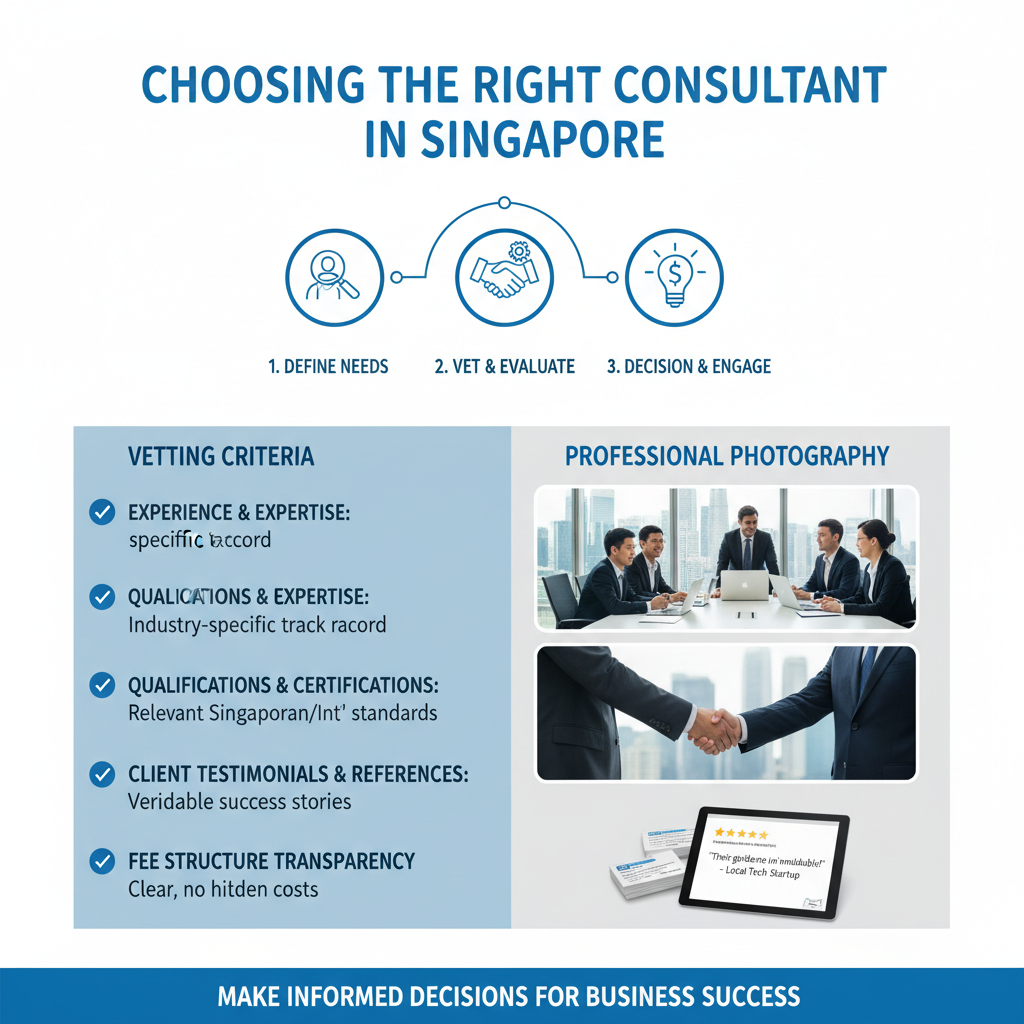
When you are looking for a professional consultation in Singapore, making the right choice matters. Singapore is home to a range of practitioners, from hobbyists to deeply trained professionals. Here I outline what to look for, how to evaluate claims, and a practical interview script you can use when vetting options. If you are specifically searching for a Professional Qi Men Dun Jia consultation Singapore, these points will help you separate experienced practitioners from those who offer vague or unreliable advice.
Credentials and Experience to Look For
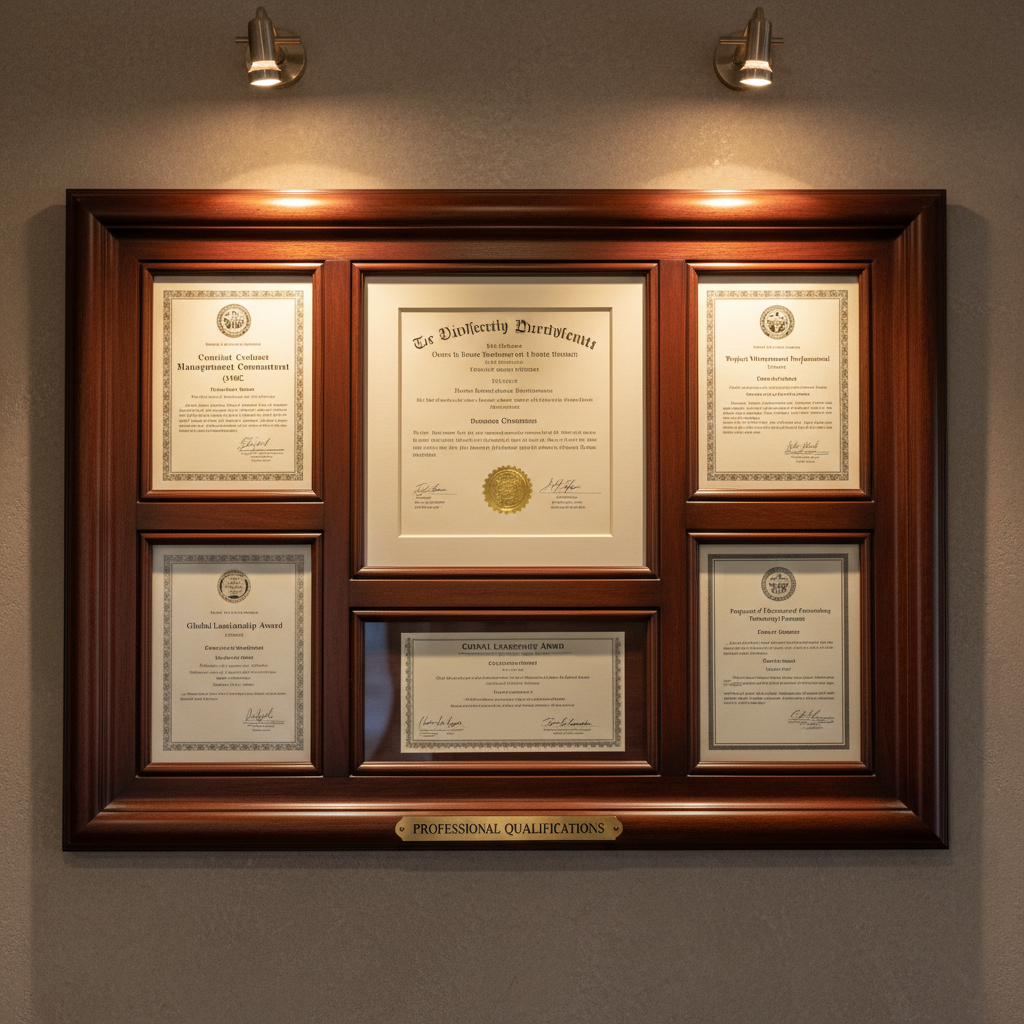
Qi Men Dun Jia has layers of complexity, and different practitioners emphasize different traditions. Look for consultants who can explain their lineage, training, and how long they have been practicing. Helpful signs of credibility include:
- Formal apprenticeship or training under a recognized master, or a documented study history in traditional schools.
- Several years of client work, with case studies or testimonials that provide specifics rather than vague praise.
- Published articles, speaking engagements, or workshops that demonstrate depth of knowledge.
- Systems and tools, such as clear deliverable formats (timed recommendations, written action plans, follow-up schedules).
If a consultant cannot clearly explain their process, or treats every case as the same template, consider that a red flag. Qi Men requires customization, and good consultants tailor sessions to your specific context.
Pricing, Packages, and ROI Considerations

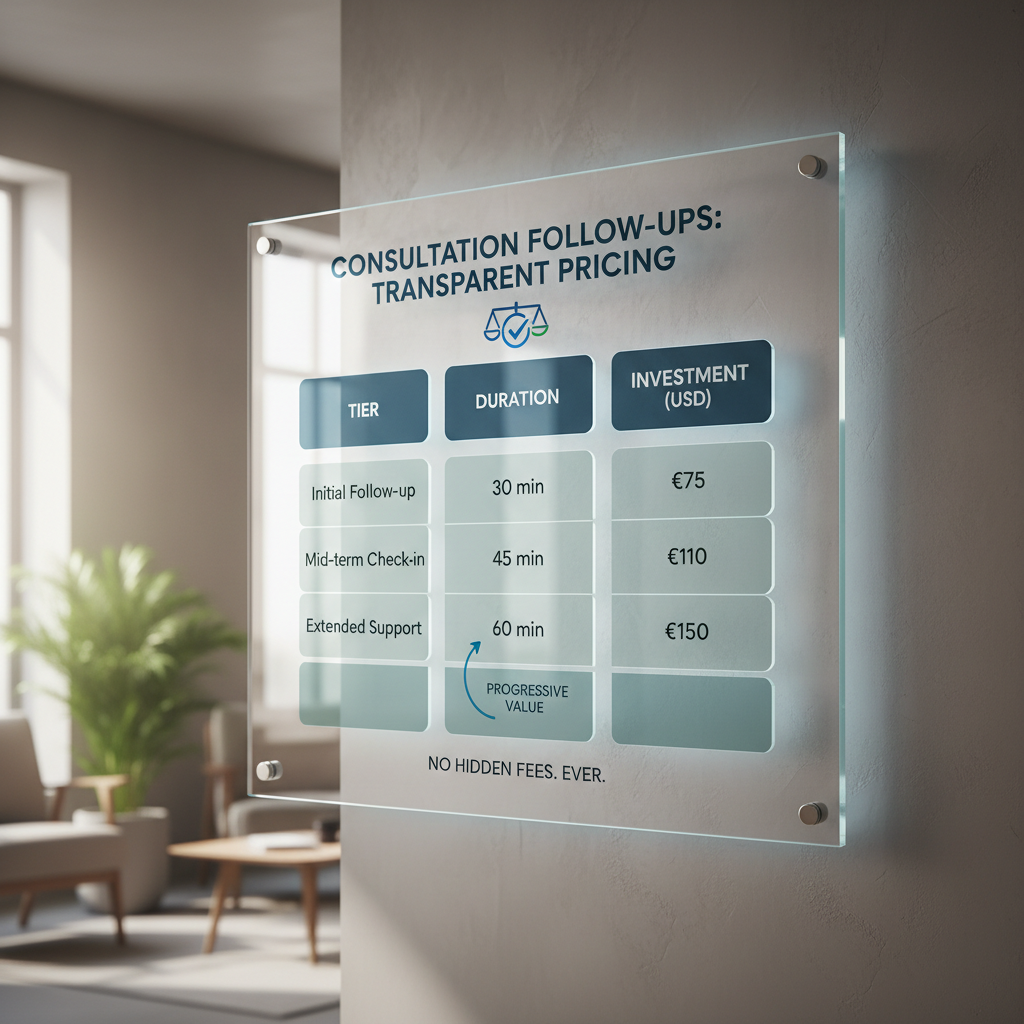
Pricing in Singapore varies. For context, introductory consultations may range from modest fees for short phone sessions to premium rates for in-depth, multi-hour engagements with written deliverables. In assessing value, focus on outcomes and the clarity of the deliverable rather than absolute price. Ask how many actionable items are included in the fee, whether follow-ups are bundled, and if there is any written guarantee about deliverables such as a written timing schedule or recorded session.
Actionable evaluation method:
- Estimate the potential financial impact of the decision you are consulting about. For example, choosing the optimal product launch date that increases first-week revenues by even 10 percent can cover consultation fees many times over.
- Compare packages by deliverables: a higher fee with a comprehensive written plan and follow-up calls may be better value than a cheaper one-off reading.
- Ask for a clear refund or redo policy if the consultant promises specific outcomes; be skeptical of guaranteed results, since Qi Men informs probability rather than guarantees.
Red Flags and Guarantees

Be wary of practitioners who guarantee outcomes such as “I will make sure you will get X” or those who ask for large upfront sums tied to guarantees. Qi Men increases probabilities and clarifies timing, it does not control every external variable. Other red flags include pressure to commit immediately, refusal to share methodology, or requesting access to personal financial accounts or confidential legal documents without clear purpose.
Good consultants are transparent about limitations and outline how timing and human choice interact. They will also be comfortable providing references and examples of past work that align with your type of decision.
Sample Interview Questions and Checklist

Before you hire, use these questions when speaking with a potential consultant. You can copy-paste this list into an email or use it in a short phone interview.
- How long have you practiced Qi Men Dun Jia, and who did you train under?
- Can you describe a recent case similar to mine and the outcome?
- What is included in your fee? Will I receive a written timing plan and a follow-up session?
- How do you handle uncertain birth times or incomplete data?
- Do you offer a money-back guarantee or a redo if my questions are not addressed?
- What is your typical timeline from intake to deliverable?
- Can you provide two references or testimonials with contactable details?
Use the answers to compare practitioners. Prioritize transparency, clear deliverables, and a willingness to explain the rationale behind recommendations.
Preparing for Your Consultation and Maximizing Outcomes

Preparation is one of the single biggest levers you have to increase the value of a consultation. The more organized and focused you are, the more precise the consultant can be with timing and recommendations. Below is a practical checklist, a recommended question framework, and a roadmap for implementing the advice you receive.
What Information to Gather Beforehand

Collecting accurate, relevant data saves time and sharpens results. Here is a checklist I give clients before their sessions, which I recommend you follow.
- Exact birth times, dates, and places for any individuals involved, if applicable. If exact birth time is unavailable, note the degree of uncertainty.
- Clear statement of the decision or problem in one paragraph, including desired outcomes and constraints.
- Relevant dates and deadlines imposed by external parties, such as contract expiry dates, vendor windows, or clinic schedules.
- A list of stakeholders and their roles; identify who must approve a decision and who will execute it.
- Any prior attempts, timelines, and outcomes related to the decision, to provide historical context.
How to Set Goals and Frame Questions
Effective questions are specific, time-bound, and actionable. Vague questions yield vague answers. Instead of asking “Will I succeed?” consider framing your question as “What is the most auspicious date in the next 90 days to launch product X to maximize early adoption while minimizing logistics risk?” This gives the consultant boundaries and clarifies your priorities.
Prioritize questions into three tiers:
- Tier 1, critical: Questions that must be answered for you to move forward.
- Tier 2, important: Helpful for optimization and sequencing.
- Tier 3, exploratory: Nice to know, but not immediate.
Bring the Tier 1 questions to the consultation and keep Tier 2 and Tier 3 as follow-up topics if time allows.
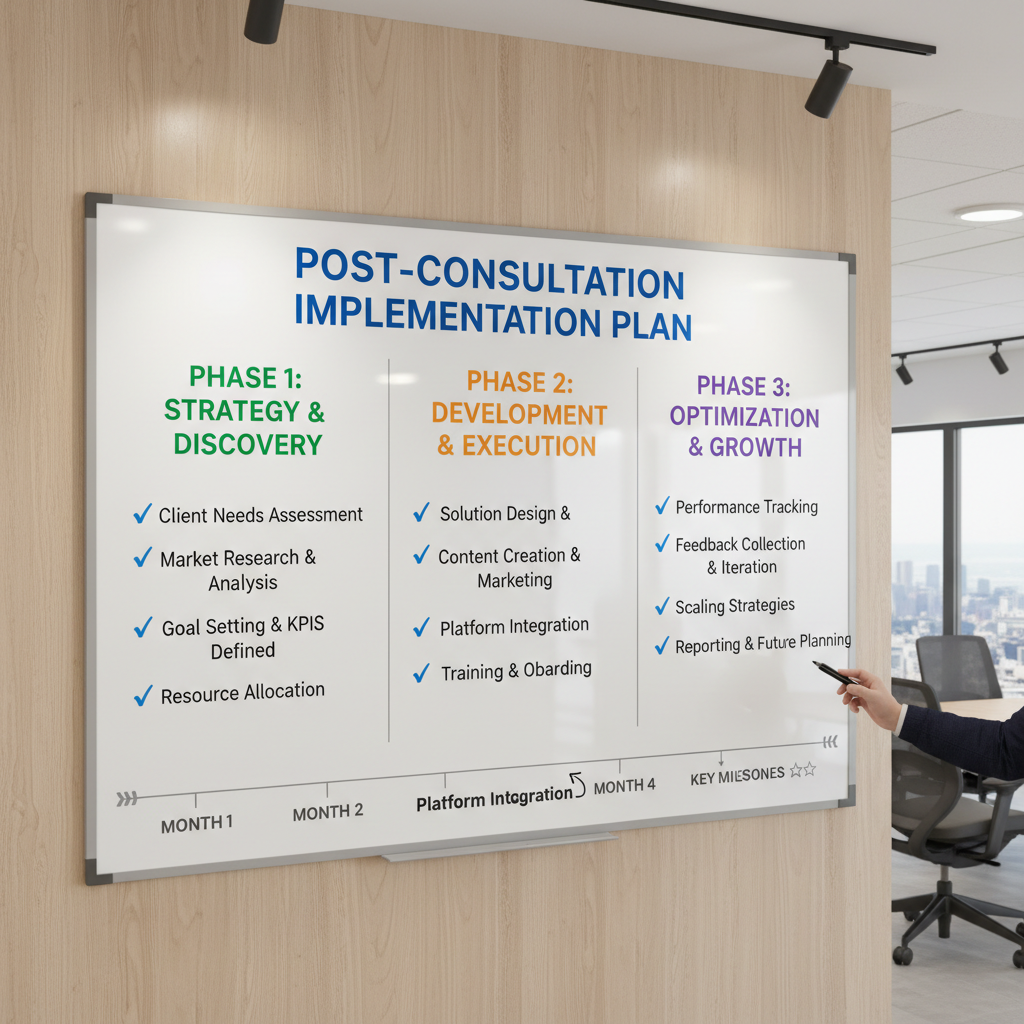
Post-consultation Implementation Plan

A well-crafted implementation plan turns recommendations into results. Ask your consultant to provide the plan in writing and to flag the first three actions you should take within 24 to 72 hours. For example, if a recommended launch window is identified, immediate actions might include confirming bookings for press releases, scheduling a production dry run, and informing key vendors of the tentative date with conditional holds.
Actionable steps for implementation:
- Create a simple project timeline with the recommended dates highlighted, and assign ownership for each task.
- Set calendar reminders for the recommended time windows, including buffer periods for preparation and contingency.
- Communicate timing to stakeholders with context, for example: “We are targeting this date based on strategic timing consultation to maximize visibility.”
Tracking Results and Iterating

Finally, decision-making is iterative. Track outcomes against the indicators you and your consultant agreed upon. Use a simple spreadsheet or notebook to log actions and results. During follow-ups, share this record to enable recalibration. Over time you will see patterns that refine your use of Qi Men for future decisions.
Actionable tracking template:
- Date of action taken
- Action description
- Outcome metric (for example revenue, conversion, offer rate)
- Deviation from expected result and possible reasons
- Next steps recommended
By preparing thoroughly, asking focused questions, and committing to a documented implementation and tracking process, you maximize the probability that your consultation leads to meaningful, measurable outcomes.
What to Expect during a Professional Qi Men Dun Jia Consultation Singapore

Booking a Qi Men Dun Jia consultation can feel like stepping into a new language, and when we first looked into it we had plenty of questions. In practical terms, a typical session is a focused, methodical conversation built around a charting system that maps time, space, and intent. Expect a mix of analytical explanation and pragmatic recommendations, with outcomes that are designed to help you make better decisions in defined windows of opportunity.
Here is a typical flow you will see across reputable practitioners, with realistic time and cost expectations you can use when planning:
- Pre-session intake: Before the session most consultants will ask for your full name, birth date and time, and the specific question or area you want help with (career, legal matter, health decision, important meeting date, travel timing). This lets the consultant prepare the appropriate chart, and it reduces time spent on administrative items during your appointment.
- Session length: Consultations commonly run 60 to 120 minutes. A standard introductory session is usually around 60 to 90 minutes, while strategic planning or multi-issue consultations can take 120 minutes or more.
- Fees: In Singapore, fees vary widely depending on the practitioner’s reputation, qualifications, and the depth of the analysis. For reference, expect a range roughly between S$150 and S$800 per session. Packages that include follow-up or implementation support will be at the higher end.
- Format: Most consultants offer both in-person and online sessions. Online options are effective when the practitioner is experienced, because Qi Men Dun Jia is a time-space calculation system that transfers well to digital communication; however, in-person consultations may include additional rituals or spatial analysis if the focus is feng shui related.
- Deliverables: A professional session typically ends with a clear set of recommendations: optimal dates and times for decisions, steps to execute, contingency plans, and sometimes a short written summary or audio recording for you to review later.
- Follow-up: Many practitioners offer short follow-up check-ins at reduced rates, or they include a 7 to 30 day follow-up to adjust plans based on new developments.
Actionable preparation steps you can take before your appointment
- Write down one primary question you want answered. Qi Men Dun Jia is most precise when focused on a single decision or event.
- Gather objective details related to your question: contract dates, names, birth data for people directly involved, exact times for important events. The more accurate the input, the better the output.
- Set realistic goals for the session. Decide whether you want purely timing advice, strategy and timing, or a combined strategic plan with follow-up implementation support.
- Prepare a list of practical constraints you cannot change: fixed deadlines, budget caps, immovable appointments. This helps the practitioner give applicable advice.
What good advice looks like after the consultation
A strong Qi Men Dun Jia report will not simply predict outcomes. Instead, it will present a prioritized action plan that includes best and alternate dates, a rationale tied to the charting logic, and a list of practical next steps you can implement immediately. For example, instead of saying “avoid travel next month,” a professional report might recommend “postpone signing until the 12th, and if signing is unavoidable between the 5th and 10th, take action A and B to mitigate risk.”
How to Choose the Right Practitioner in Singapore

Choosing a consultant is the single most important factor that determines your experience and results. Unlike conventional services, Qi Men Dun Jia relies heavily on the practitioner’s analytical skill, depth of practical experience, and ethical approach. When we evaluated practitioners, we found a combination of credentials and real-world examples worked best to separate hobbyists from professionals.
Key Selection Criteria and a Quick Vetting Checklist

- Training and lineage: Ask where they trained and who their mentors were. Lineage matters because Qi Men Dun Jia has several methods and interpretive schools. A credible practitioner will describe their training path clearly.
- Years of practice: Look for at least three years of consistent client work and ideally hundreds of consultations if the practitioner claims expertise in complex business or legal decisions.
- Case studies: Reputable consultants will share anonymized case studies that demonstrate their reasoning and outcomes. Ask for examples similar to your situation.
- Client references and reviews: Search for reviews on independent platforms and request references for recent clients. Be cautious with sites that only contain glowing testimonials without third-party validation.
- Transparency about fees and scope: A professional will clearly outline pricing, what is included in the session, and the terms for follow-up. Hidden fees are a red flag.
- Ethics: Avoid consultants who promise guaranteed results, demand large upfront fees for indefinite programs, or insist on rituals that require additional purchases without clear purpose.
Questions to Ask during Your First Consultation Inquiry

- How many Qi Men Dun Jia consultations have you performed? Can you share anonymized examples relevant to my situation?
- What method or school of Qi Men Dun Jia do you follow, and how does that influence your recommendations?
- What is included in the fee, and do you offer any follow-up after the session?
- How do you measure success, and what outcomes can I realistically expect?
- What information do you need from me to prepare a chart? How confidential is my data?
Red flags to watch for
- Grandiose promises of guaranteed wealth, relationships, or instant cures.
- Pressure to buy unrelated products or services as part of the consultation.
- Lack of clear explanation for how a recommendation connects to the charting logic.
- Unwillingness to provide references, credentials, or examples of past work.
Real-life Case Studies and Practical Examples

We learn best from examples. Below are three anonymized and realistic case studies that illustrate how Qi Men Dun Jia can be used for different objectives. These examples include the problem, the intervention, and the practical outcomes to help you anticipate how a session might translate into real decisions.
Case Study 1: Timing a High-stakes Business Negotiation
Situation: A mid-sized Singapore company planned to renew a supplier contract that would lock in prices for three years. The CEO wanted to negotiate better terms but had multiple stakeholders and a looming deadline with penalties for delay.
Intervention: The consultant prepared a Qi Men Dun Jia chart for the specific decision date and recommended three windows in the next month that were most favorable for negotiation, each associated with a different strategy: a collaborative opening, a firm leverage position, and a concession-structured closure. The consultant also suggested preparatory steps tied to each window, such as who should be in the room and which documents to highlight.
Outcome: The company chose the second window featuring negotiated leverage. By aligning internal approvals and choosing an experienced negotiator for that date, they secured a contract with a 7 percent improvement in pricing and added service protections. The consultant’s contingency advice helped them avoid a rushed signing during a less favorable period.
Case Study 2: Personal Career Pivot
Situation: An individual planning to switch careers from finance to digital marketing was uncertain about timing. They had a job offer timeline and needed to decide whether to accept, counter, or delay while exploring other opportunities.
Intervention: The Qi Men Dun Jia consultant charted key dates over three months, identifying the optimal time to accept an offer if their goal was stability, and a later date to trigger if they sought an aggressive pivot. The consultant also recommended micro-actions to prepare a portfolio and suggested an interview day that would align with favorable energies for persuasive communication.
Outcome: The client used the recommended interview date, which coincided with improved interview performance. They secured a role that incorporated both finance and digital marketing, allowing a smoother transition. The timing advice prevented them from rushing into a role that would have limited future opportunities.
Case Study 3: Choosing a Surgery Date with Minimized Recovery Risk

Situation: A patient needed elective surgery and wanted to reduce stress and potential complications. They were not comfortable relying solely on astrology or chance for timing.
Intervention: The consultant worked with the patient and medical team’s schedule to chart several possible surgery dates. The advice focused on minimizing disruptive energies and suggested practical pre- and post-operative steps, such as arranging key caregiving support and avoiding travel for a defined recovery period.
Outcome: The patient chose a date suggested by the charting, felt less anxious, and reported a smoother recovery period. Importantly, the consultant’s practical checklist ensured the patient had adequate support at home, which likely contributed to the positive outcome.
Lessons from the examples
- Qi Men Dun Jia is most effective when paired with practical planning and logistical preparation.
- It provides actionable timing windows rather than deterministic predictions.
- Follow-up and flexibility matter; the best consultants build contingency plans into their recommendations.
Frequently Asked Questions (faq)

1. What is the Difference between Qi Men Dun Jia and Feng Shui or Bazi?

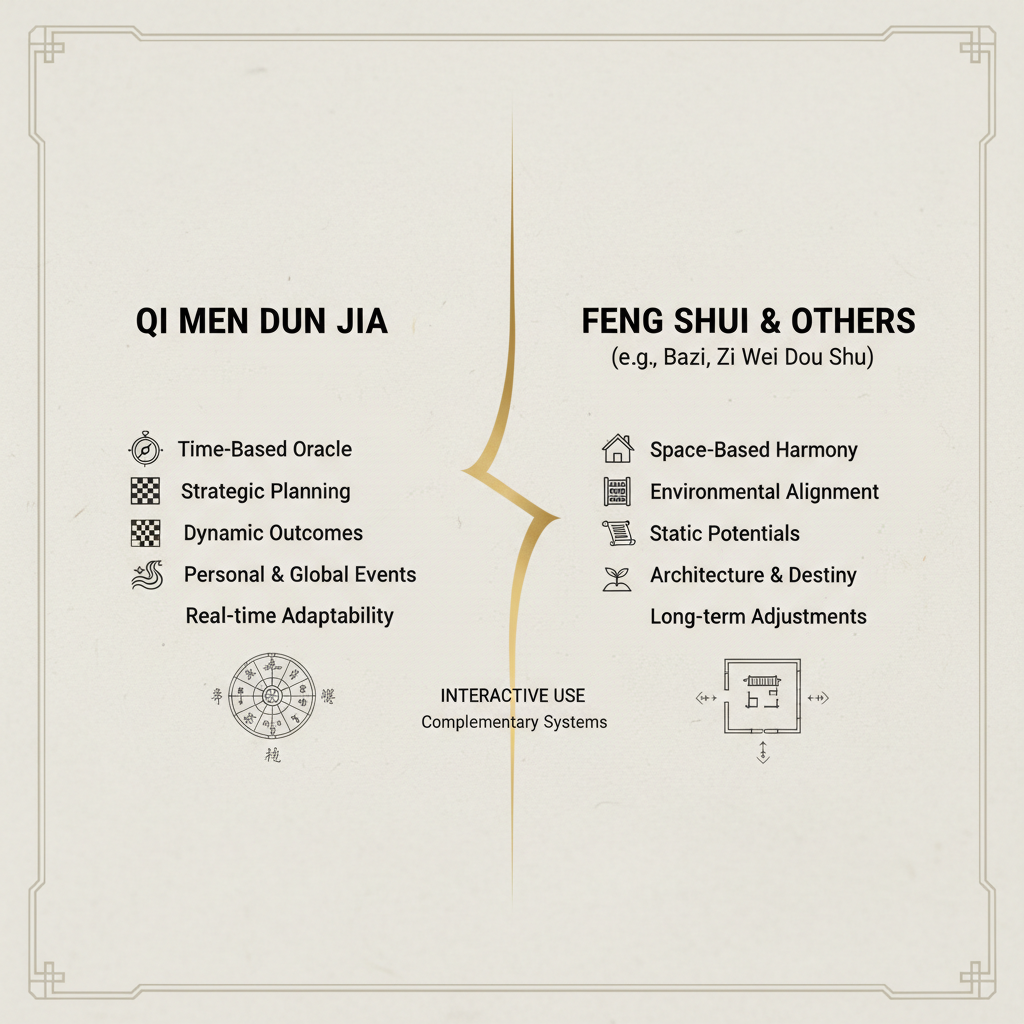
Qi Men Dun Jia is primarily an applied timing and decision-making system that maps the best moment and strategy for a specific action. Feng shui focuses on spatial arrangement and the flow of energy in living or working spaces, while BaZi (Four Pillars of Destiny) analyzes a person’s natal chart to reveal long-term tendencies and potential. They complement one another, but Qi Men Dun Jia is unique in its emphasis on immediate timing and tactical planning.
2. How Accurate is a Qi Men Dun Jia Consultation?

Accuracy depends on several factors: the practitioner’s skill, the specificity of the question, the precision of the input (such as birth time), and your follow-through on recommended actions. We find that specificity increases usefulness. If you provide exact dates and a clear decision, the chart provides a pragmatic timing window with associated strategies. It is not a guarantee of outcome, but a tool to increase the probability of a favorable result.
3. can Qi Men Dun Jia Predict Exact Events or Outcomes?

No system can reliably predict exact events with 100 percent certainty. Qi Men Dun Jia is a probabilistic tool; it identifies favorable and unfavorable energies tied to specific times. Think of it like choosing the best weather window to launch an outdoor event rather than having complete control over the weather. The system helps you stack odds in your favor.
4. do I Need to be in Singapore to Consult a Singapore-based Practitioner?

Not necessarily. Many Singapore consultants offer online video sessions. The calculations are time-based and transfer digitally. However, if your question involves site-specific feng shui or physical rituals, an in-person visit may be required for accurate spatial assessment.
5. How Soon will I See Results after Following the Recommended Timing?

Results vary depending on the nature of the decision. For timing decisions like signing a contract or scheduling an event, the impact can be immediate or apparent within weeks. For longer-term goals, such as business growth or relationship development, you may see changes over several months. What matters is whether the decision made during the recommended window leads to fewer obstacles and better leverage.
6. is Qi Men Dun Jia Compatible with Modern Business Planning?
Yes. We routinely see business leaders integrate Qi Men Dun Jia into negotiation timing, product launches, investment decisions, and personnel moves. The system complements market analysis by adding a timing layer that helps optimize when to act. Always use it alongside data-driven research and risk assessment.
7. What should I Bring to My First Consultation?

Bring a clear, specific question; accurate birth information (date and time) for any people involved; relevant documents (contracts, timelines); and a list of immovable constraints. If the session is online, ensure you have a quiet space and a stable internet connection so you can focus fully on the discussion.
8. are There Any Ethical or Regulatory Issues I should be Aware of in Singapore?

Qi Men Dun Jia consultations are classified as advisory and not medical or legal services. A professional practitioner will be transparent about the scope of advice and will not claim to replace medical or legal professionals. If your issue involves health, legal, or financial risk, use Qi Men Dun Jia as a supplementary tool and consult licensed professionals for diagnoses or binding agreements.
9. How do Consultants Charge for Follow-up or Changes in Timing?

Many consultants include a short follow-up in their initial fee, typically a 7 to 30 day check-in. Additional follow-ups, new charts, or plan revisions are often charged at a reduced hourly rate or as part of a package. Clarify these terms upfront to avoid surprises.
10. can Beginners Learn Qi Men Dun Jia to Use it Themselves?

Basic principles can be learned, and there are training courses for lay practitioners. However, mastery requires study and practice; most individuals find it more effective to consult an experienced practitioner for high-stakes decisions while learning the system gradually if they are interested. If you decide to learn, look for structured courses with mentorship and practical case studies.
Conclusion

If you are considering a Professional Qi Men Dun Jia consultation Singapore offers experienced practitioners who blend traditional technique with modern, pragmatic advice. The most valuable consultations we have seen are those that combine precise timing windows with clear, executable steps that respect your constraints. Whether your focus is a critical business negotiation, a career pivot, or personal life decisions, the right practitioner will equip you with a decision roadmap rather than a vague forecast.
Before you book, take these final practical steps: clarify your primary question, vet the consultant using the checklist above, and prepare objective details that will allow for precise charting. During the session, aim for clear, actionable recommendations, and request a brief written summary for reference. After the session, implement the recommended steps and track outcomes for at least one full decision cycle so you can evaluate the consultant’s effectiveness.
Qi Men Dun Jia is a tool for improving decision timing and strategy, not a substitute for diligence. Use it as a complement to careful planning, and you will increase your odds of better outcomes. If you want help identifying potential consultants or preparing your intake information, we can guide you through the next steps and provide a checklist to ensure your session is efficient and productive.
Leave a Reply
You must be logged in to post a comment.