
Introduction: Why Qi Men Dun Jia Still Matters Today

Imagine having a map that folds time and space together, a map that helps you choose the best hour to sign a contract, the most favorable moment to travel, or the precise time to open difficult negotiations. That is the promise of Qi Men Dun Jia, an ancient Chinese system that blends astronomy, calendar science, and symbolic logic into practical decision-making. If you have asked, “What is Qi Men Dun Jia and how does it work”, this article will walk you through the essentials, from the system’s roots to clear, actionable ways you can start using it.
Across centuries Qi Men has moved from military strategy to boardroom strategy, from battlefield timing to business launches and personal timing. Even if you are skeptical, understanding its structure and method gives you a new toolkit for planning under uncertainty. In the sections that follow we break the system down into digestible parts: a short history that explains why people trusted it, the core components that build a chart, and a practical guide to how readings are produced and interpreted. Expect concrete examples, step-by-step actions you can try, and honest caveats about limits and ethics.
My approach here is practical and field-tested. I have worked with charts, tested choices against outcomes, and taught beginners how to cast simple readings. We will keep complex arithmetic and dense esoterica to a minimum. Instead, you will get the mental model and the rules of thumb that let you apply Qi Men in everyday situations.
Section 1: a Brief History – from Battlefield Strategists to Modern Practitioners
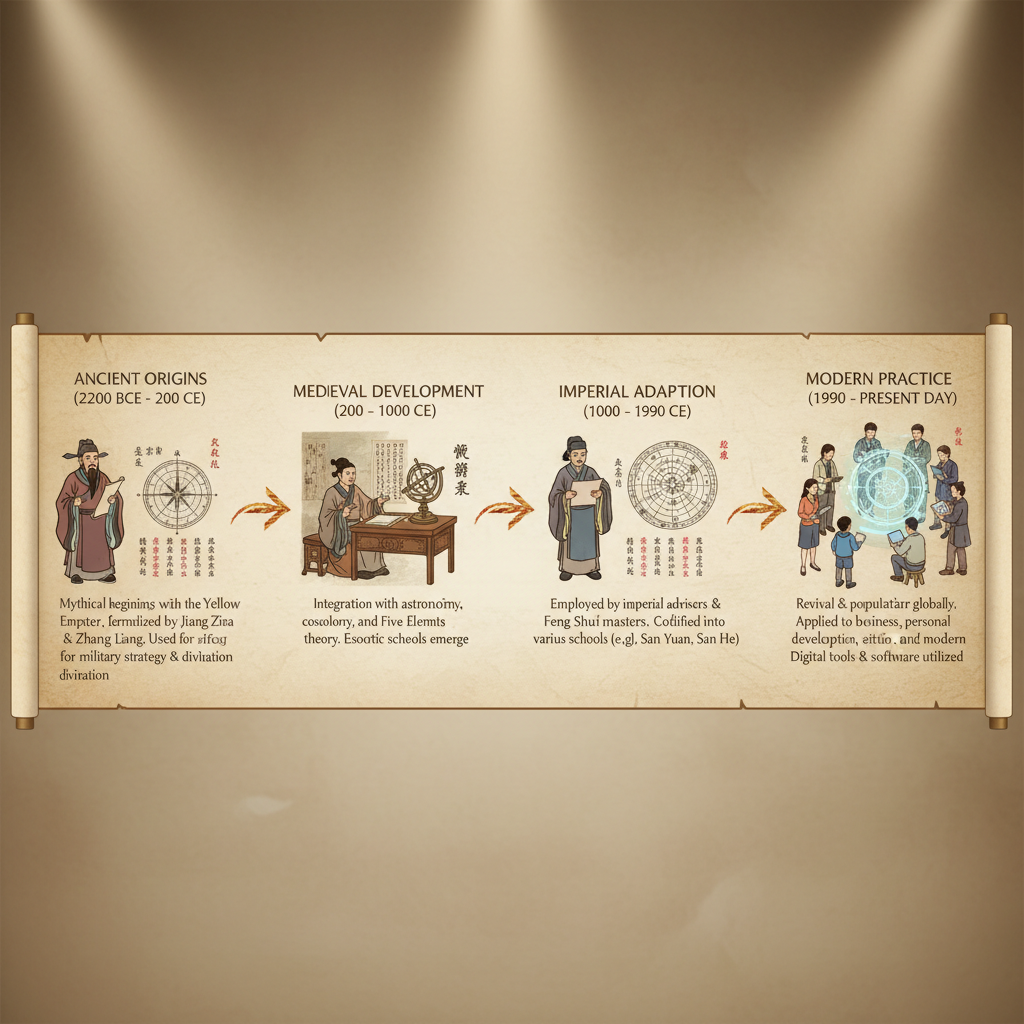
Origins and Historical Evolution
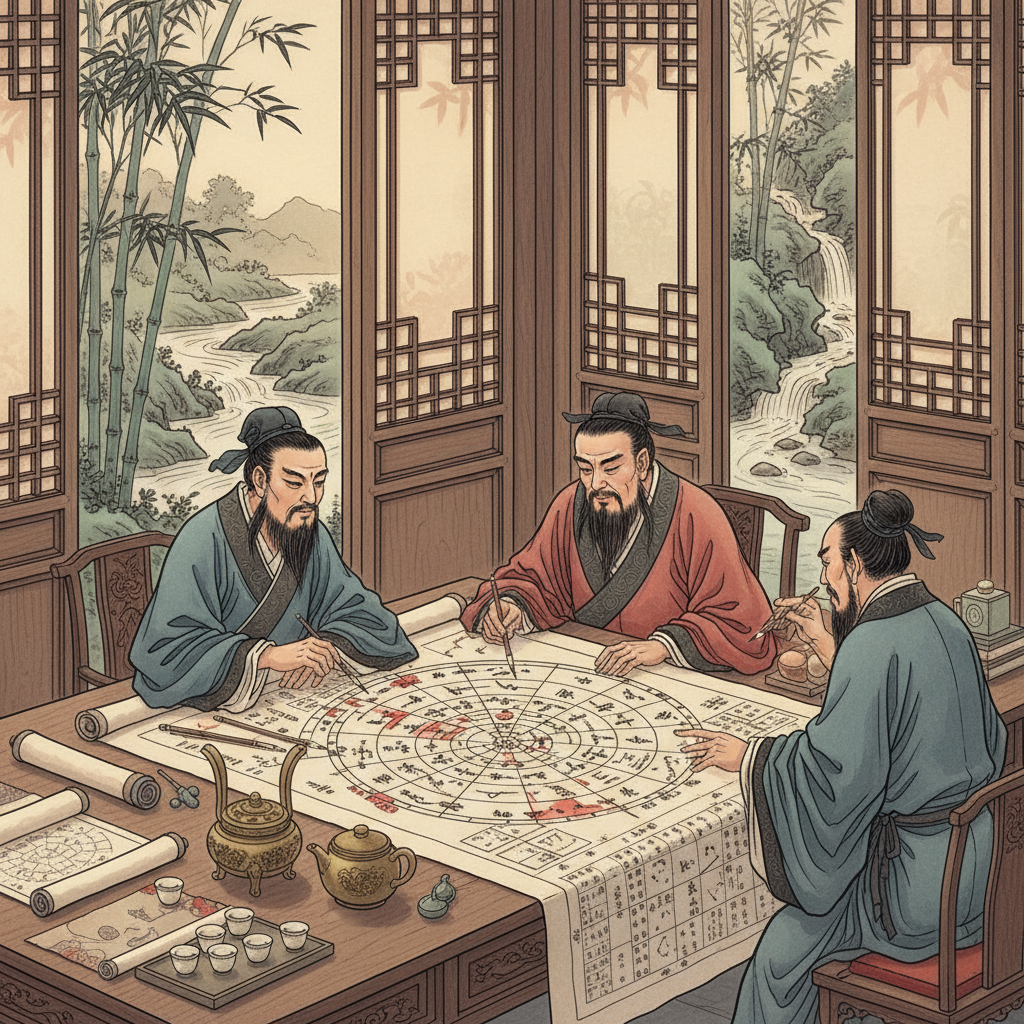
Qi Men Dun Jia is often described as one of the “Three Arts” of Chinese metaphysics, alongside Da Liu Ren and Tai Yi. Its origins are ancient, with foundations in the astronomical and calendrical thinking of the late Zhou and Han periods. Historically the system matured when Chinese thinkers began to formalize timekeeping, record celestial movements, and apply symbolic structures to human affairs.
Two points help explain how Qi Men became powerful. First, the sophistication of the Chinese calendrical system made it possible to link any moment in time to a repeatable pattern. Second, Chinese military and statecraft traditions favored timing and positioning as decisive factors. As a result, techniques that combined calendar, compass, and symbolic logic naturally found use in strategic planning.
Over time Qi Men evolved through layers of practical refinement. During the late Han and Three Kingdoms period (roughly third century CE) and later in Tang and Song centuries, practitioners systematized the charts and notation. By the Ming and Qing eras the method had crystallized into the recognizable grid system we use today: a nine-palace matrix populated by stems, branches, stars, doors, and deities.
Famous Historical Uses and Legendary Attributions
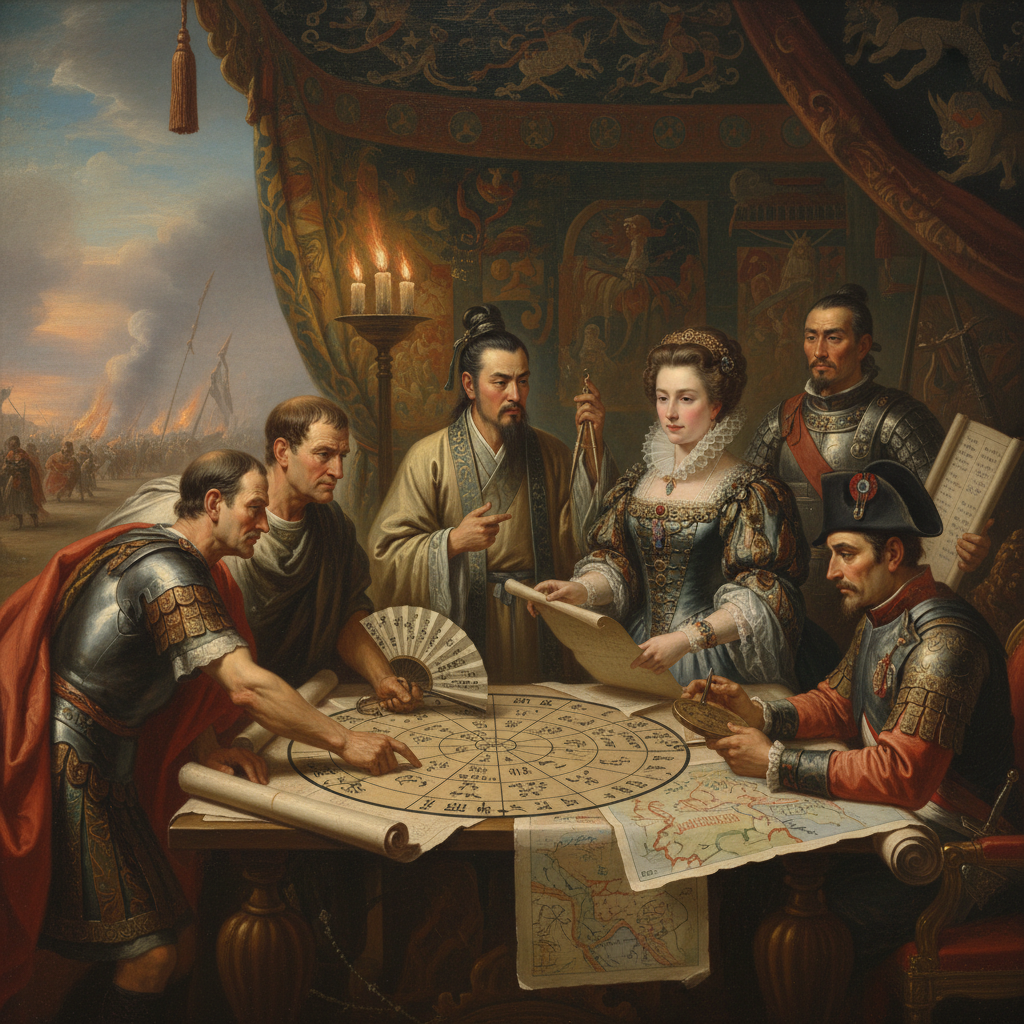
Qi Men is often associated with military strategy in Chinese lore. Famous strategists and scholars are said to have used forms of the system to choose battle times, to mask troop movements, or to predict enemy actions. Popular stories attribute its effectiveness to figures such as Zhuge Liang and other legendary tacticians. It is important to separate legend from verifiable history; many of these tales are part of cultural memory rather than documented military logs.
Nevertheless, there is documented usage of timing and divinatory systems by military and state actors in imperial China, especially when the stakes were high. The core idea is intuitive: if you can select the moment when multiple favorable forces align, you improve your odds. That practical orientation is one reason Qi Men moved into civilian life, where merchants, officials, and households used it for travel, legal matters, and business launches.
Modern Revival and Contemporary Applications

In the 20th and 21st centuries Qi Men has seen a revival driven by several forces: renewed interest in traditional culture, the spread of software tools that automate chart casting, and the migration of metaphysical practices into business consulting and personal coaching. Today you will find Qi Men used for:
- Choosing auspicious times to sign contracts, open stores, or launch products.
- Selecting travel times or negotiation windows that favor a positive outcome.
- Strategic decision support in competitive situations, including marketing campaigns and litigation timing.
- Personal growth and timing for major life transitions, such as moving or marriage planning.
Because software can now produce charts instantly, more people are experimenting with Qi Men without deep training. This democratization has advantages and downsides. The advantage is accessibility; the downside is that novice users may misread charts and over-generalize results. We will give you guidelines to use Qi Men responsibly, emphasizing that it enhances, rather than replaces, careful analysis and ethical judgment.
Section 2: Core Components – the Building Blocks of a Qi Men Chart
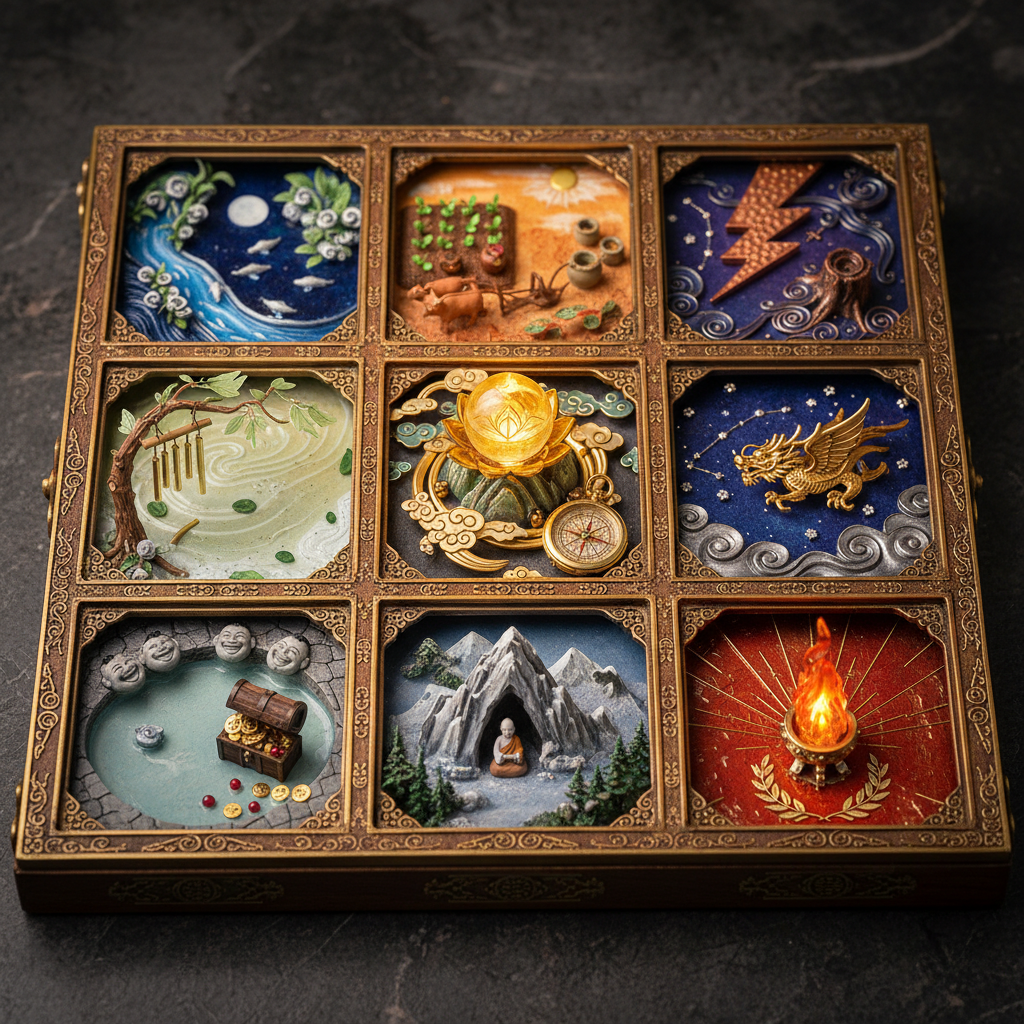
The Nine Palaces: the 3×3 Grid That Anchors the Map

Every Qi Men chart is organized around a 3 by 3 grid, called the nine palaces. Think of this as a magic square where each cell represents a distinct spatial sector and a thematic area of life. The center palace is often treated as the pivot, while the other eight palaces correspond to directions and sectors that relate to things like career, relationships, wealth, travel, and conflict.
Why nine palaces? Nine is a stable number in Chinese metaphysics, and the 3×3 grid makes it visually simple to map interactions. When you cast a chart, you populate each palace with a combination of elements: a star, a door, a deity, and sometimes a stem or branch. The relationships between what is in the palace where you operate, and what is in adjacent palaces, create the reading.
Practical note: when you are making decisions, identify the palace that corresponds to your objective. For example, if you are negotiating a contract, map that action to the palace associated with communication, contracts, or the direction where negotiations will occur. Then check what the palace contains: is the “Open” door present, or does the “Harm” door sit there? Those differences change the practical meaning dramatically.
The Eight Doors and What They Signify
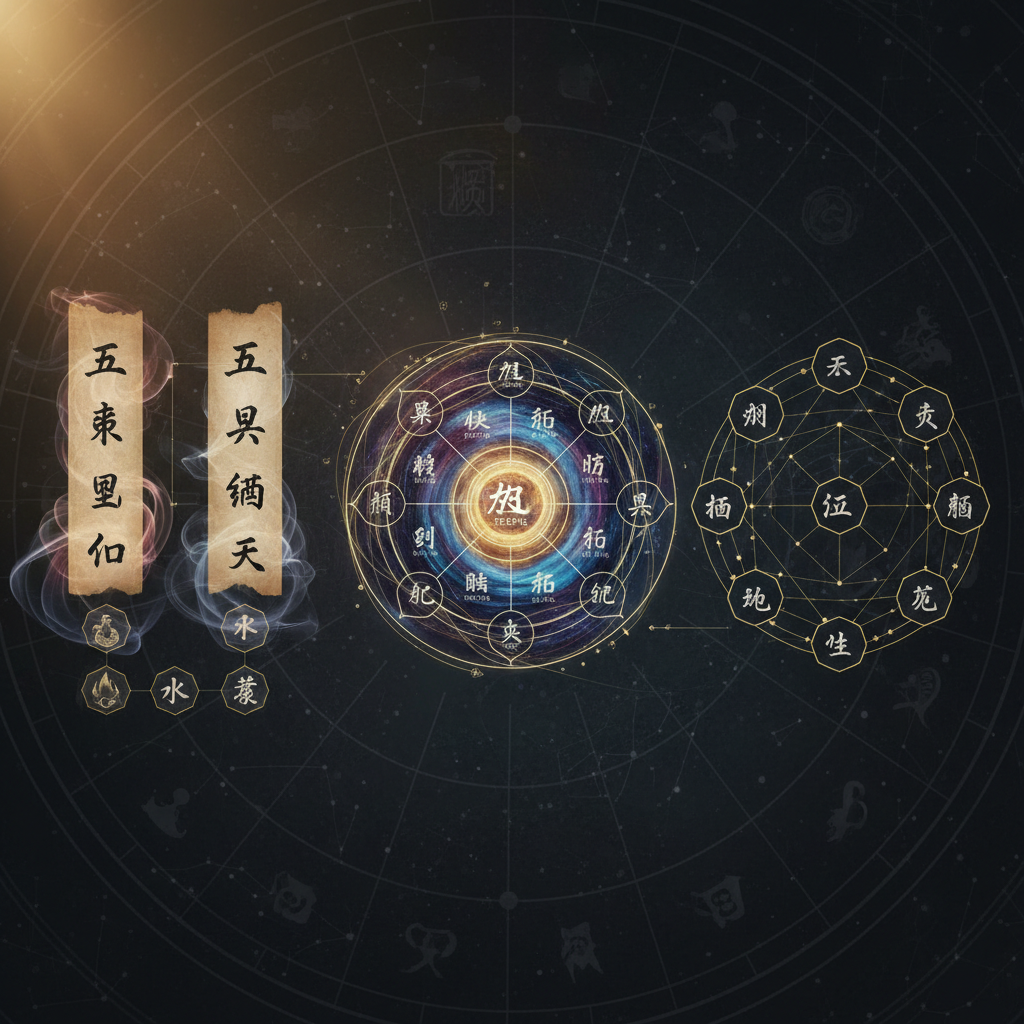
A Qi Men chart uses eight doors, each carrying a distinct operational meaning. The doors describe the nature of an event, the ease or resistance you will meet, and the likely outcome type. The eight doors, with practical interpretations, are:
- Open: Opportunity, ease of passage, favorable openings. Use for launches, invitations, or beginning negotiations.
- Rest: Recovery, protection, conservation. Good when you need to pause, recuperate, or consolidate resources.
- Life: Growth, fertility, creation. Favorable for investments, creative projects, or relationship starts.
- Harm: Conflict, injury, friction. Use caution; handling, mediation, and damage control are needed.
- Stop: Obstacles, blockage, legal barriers. Expect delays and prepare contingency plans.
- View: Visibility, reputation, public attention. Good for PR, exposure, and getting noticed, but beware scrutiny.
- Death: Endings, closure, finality. Use to terminate contracts, remove liabilities, or when letting go is intended.
- Surprise: Sudden events, shocks, unexpected breakthroughs. Can be positive or disruptive; plan flexibly.
Actionable tip: If you must act and the target palace has “Open” or “Life,” that is a clear signal to proceed. If “Harm,” “Stop,” or “Death” dominate, either delay, mitigate risk, or reframe your action so it does not collide with those forces. For many modern uses, the door is the single most practical indicator you can use alone, if you are not yet fluent in the deeper layers of the chart.
The Nine Stars, Stems, and Branches: Mapping Energy Types
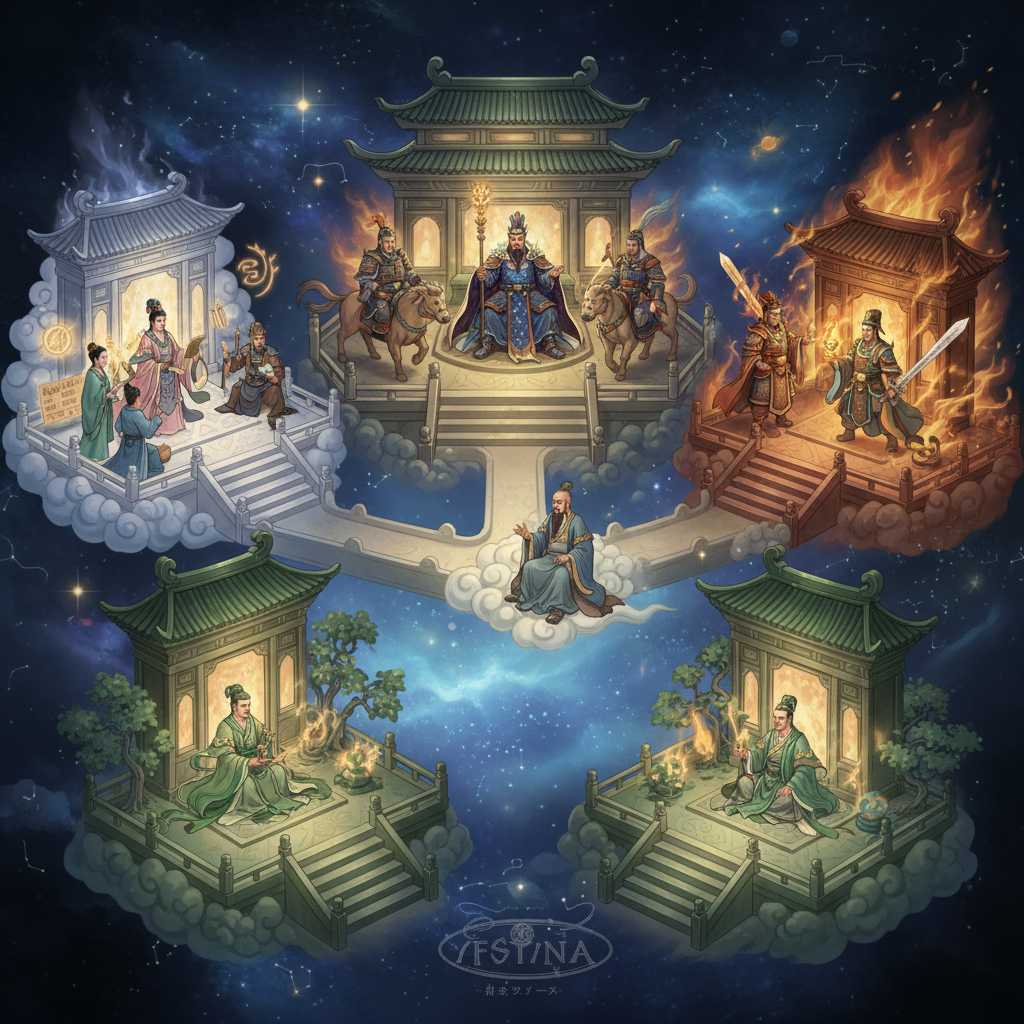
The nine stars are symbolic agents that color the quality of actions in a palace. Each star has a personality: some bring leadership and authority, others attract resources, and some create confusion or secrecy. Paired with the doors, stars refine the prediction. For example, an “Open” door with a supportive star that signifies resources becomes especially favorable for financial moves.
Qi Men also uses the Ten Heavenly Stems and Twelve Earthly Branches, which are the backbone of traditional Chinese calendrical science. The stems and branches encode the precise time identity of a given moment. When combined, they locate your moment inside a repeating cycle of 60 units. The pairing of stems and branches determines which elements are active and how the stars and doors will be positioned in the nine palaces.
To make the metaphor practical, think of the stars as the cast, the doors as the plot, and the stems and branches as the scene’s timestamp. When you read a Qi Men chart you are interpreting how that cast performs in that plot at that specific time and location. The emergent narrative gives you guidance about risk, timing, and best action.
Deities, Hidden Stems, and Inter-palace Interactions
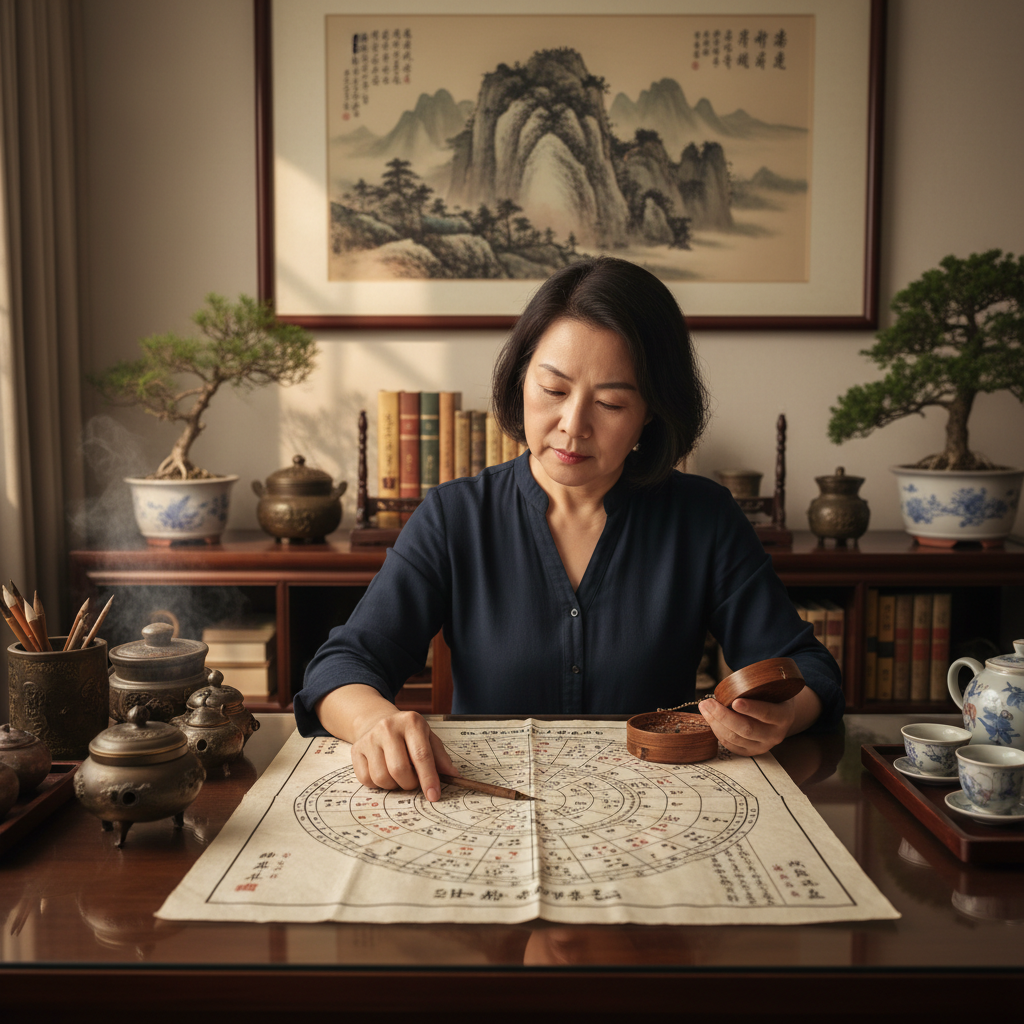
Beyond stars and doors the system includes deities and hidden stems that add nuance. Deities are conceptual agents that represent supportive forces, helpers, or obstacles of a spiritual or karmic type. Hidden stems are the subtle influences that are not obvious at first glance; they operate like subtext in a conversation, altering intent and outcome.
An important principle is interaction: elements in one palace affect neighboring palaces, and opposing palaces (for example, center vs. opposite corner) can create strong tensions or support. This is why we do not read a palace in isolation. A palace that looks weak might be supported by a neighboring palace with a strong “Open” door or a beneficent star, thereby changing the recommendation.
Example: You plan to meet a difficult client in the southeast sector of your office. The southeast palace shows “Harm” as the door, but the adjacent palace has “Open” plus a star associated with negotiation success. The reading suggests higher friction at the meeting, but logistical or tactical moves from the adjacent palace – such as beginning the meeting elsewhere or bringing a third-party mediator – can improve the result. That kind of multi-palace thinking is the practical reason Qi Men can be so useful, once you know the patterns.
Section 3: How Qi Men Dun Jia Works in Practice – Reading Charts and Making Decisions
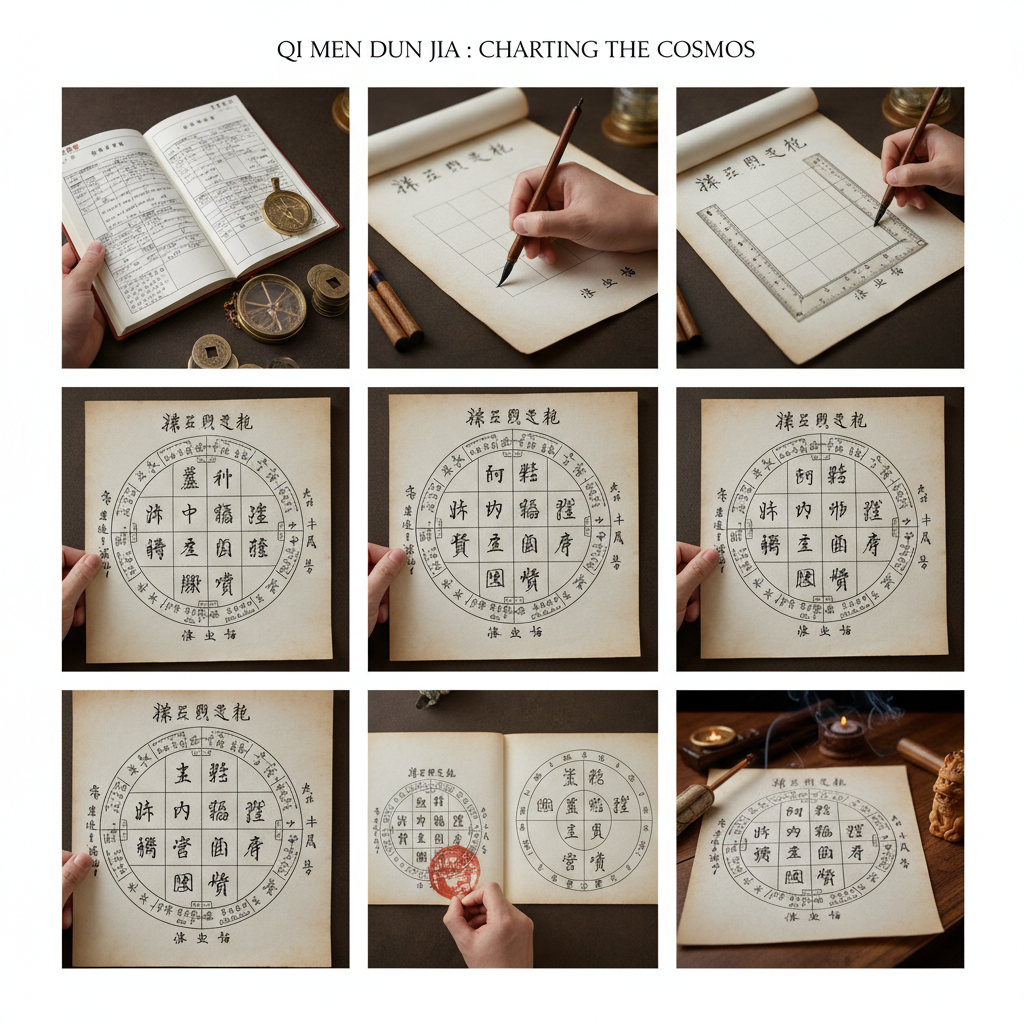
Constructing a Basic Qi Men Chart: the Practical Steps
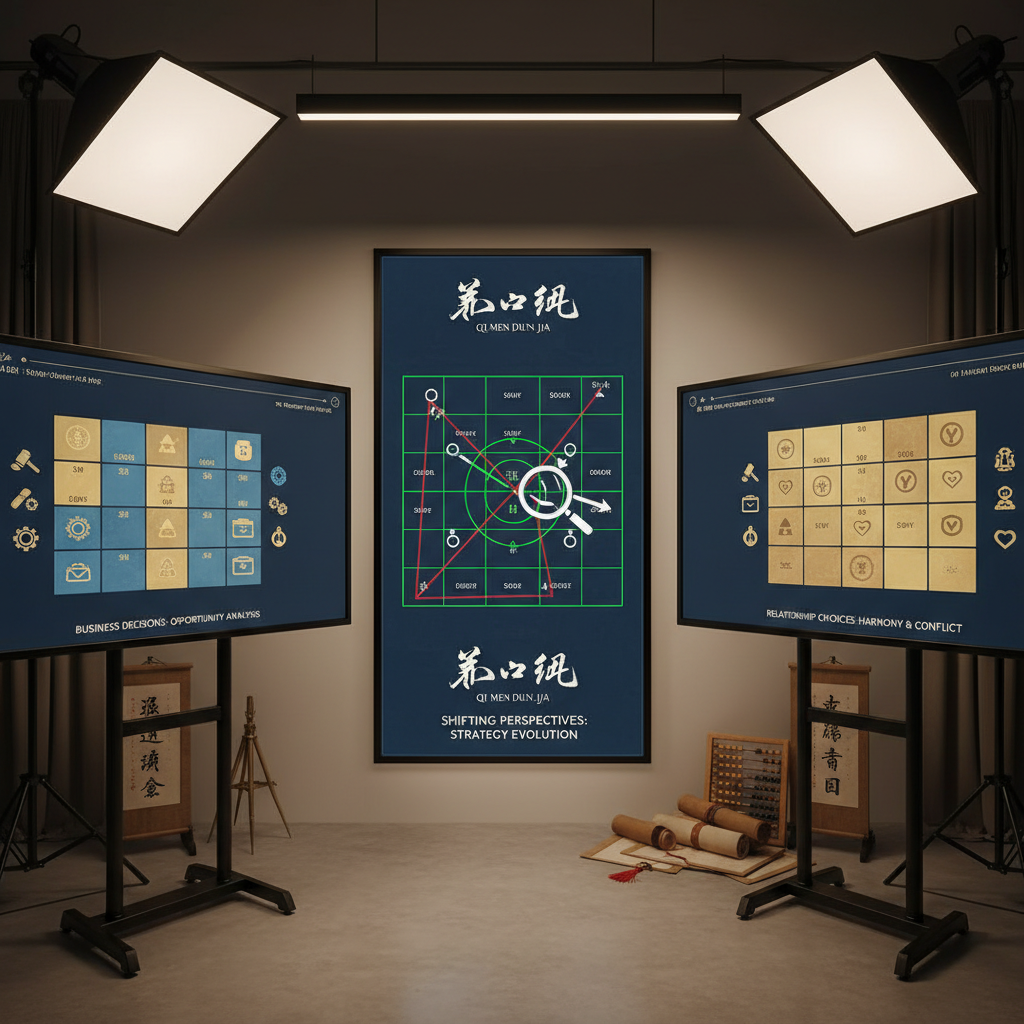
At the simplest level, a Qi Men chart is produced by aligning time and place with the nine-palace template. Historically this required manual calculations using tables and the Chinese calendar. Today most practitioners use software, but understanding the manual logic helps you interpret results rather than accept software output blindly.
Here are the practical steps to create a basic chart, with actions you can take right away:
- Step 1: Fix the exact time and location. You need the civil time (hour and minute) and the geographic coordinates or a named city. Time zone matters; record the local time and then convert if necessary.
- Step 2: Convert to the Chinese calendar identity. Determine the Day Stem and Branch of the date. Online converters and apps handle this; if you are learning, use a reliable lunar-solar converter to see the 60-unit cycle index.
- Step 3: Determine the palace layout for the hour. Each hour has an associated palace layout depending on the day stem/branch combination. Traditionally this uses tables; modern software computes it instantly.
- Step 4: Populate the palaces with stars, doors, and deities. Again, software is efficient here, but if you are learning you can practice with printed tables that show how stars and doors rotate into palaces for each chart type.
- Step 5: Read the interactions. Identify the palace tied to your intention, check its door, star, and whether deities or hidden stems strengthen or weaken the message. Then look at adjacent and opposite palaces to see support or opposition.
Actionable tip: early on, focus on the door of the palace that corresponds to your action. That single piece of information will often give you a useful yes/no/more cautious indicator, without requiring mastery of stars and deities.
Interpreting Charts: Examples That Show How Decisions Shift

Examples are the best learning tool, so here are two simplified scenarios. Each scenario shows how the same action might be treated differently depending on chart contents.
Example A: Launching a product, chart shows Open + Resource star
You intend to launch a new product on a chosen date. The palace associated with commerce shows the “Open” door plus a star that typically brings resources and attention. The adjacent palace contains “View” and a star linked to reputation. Interpretation: favorable launch window, likely smooth opening and good visibility. Action: proceed, but plan for media exposure and scale logistics to handle attention. Contingency: if supply chain elements fall into a palace with “Stop,” pre-book suppliers anyway.
Example B: Negotiation during a Harm door but with a supportive deity
You must negotiate an urgent contract renewal. The negotiation palace shows the “Harm” door, which indicates friction and potential conflict. However, a deity known for mediation is present in a connected palace, and the opposite palace carries an “Open” door indicating external support for compromise. Interpretation: the negotiation will be contentious; bring a skilled mediator or change the venue to take advantage of the supporting palace. Action: prepare stronger documentation, expect pushback, but use the mediator and alter presentation style to channel the winning energy.
These examples show that Qi Men does not offer magic guarantees. It points to probable dynamics and suggests tactical moves that change those dynamics. Experienced practitioners use the chart to choose mitigation strategies and favorable tactics, not to supplant negotiation skills or planning.
Actionable Advice: Using Qi Men for Timing, Travel, and Negotiations

Here are practical rules of thumb you can apply immediately, distilled from dozens of charts and outcomes.
- Timing launches and signatures: Prefer palaces with “Open” or “Life” combined with stars that indicate resources or leadership. Avoid “Stop,” “Harm,” or “Death” doors if you can delay.
- Travel decisions: Seek “Open” or “Rest” for travel; “Surprise” can be acceptable for short trips if you can handle unexpected changes. If the travel palace shows “Stop,” reconsider or add redundancy to your plans.
- Negotiations: If the negotiation palace has “View” plus a reputation star, it is a good time to make public offers; if “Harm” appears, consider bringing in a third party, or change the terms to reduce friction.
- Legal and termination actions: When you need closure, a “Death” palace can be favorable for ending contracts or releasing liabilities, provided you have legal safeguards in place.
- Testing opportunities: If you are new to Qi Men, use it on low-risk choices first. Keep a log, compare outcomes, and refine how you map modern situations to palaces.
Practical exercise: pick a small decision you face in the next week. Cast or request a simple chart focused on that objective. Identify the palace and the door. Follow the basic rule: if favorable, act; if unfavorable, delay or mitigate. Record the outcome. After three to five trials you will start seeing patterns that help you calibrate the method for your context.
Ethical note: Qi Men is a tool that can influence timing and strategy. Use it responsibly. Do not use metaphysical tools to manipulate or coerce others. Instead, use timing to create opportunities that benefit all parties when possible. Combine Qi Men insights with clear communication, transparency, and legal safeguards.
Core Principles and Structure of Qi Men Dun Jia
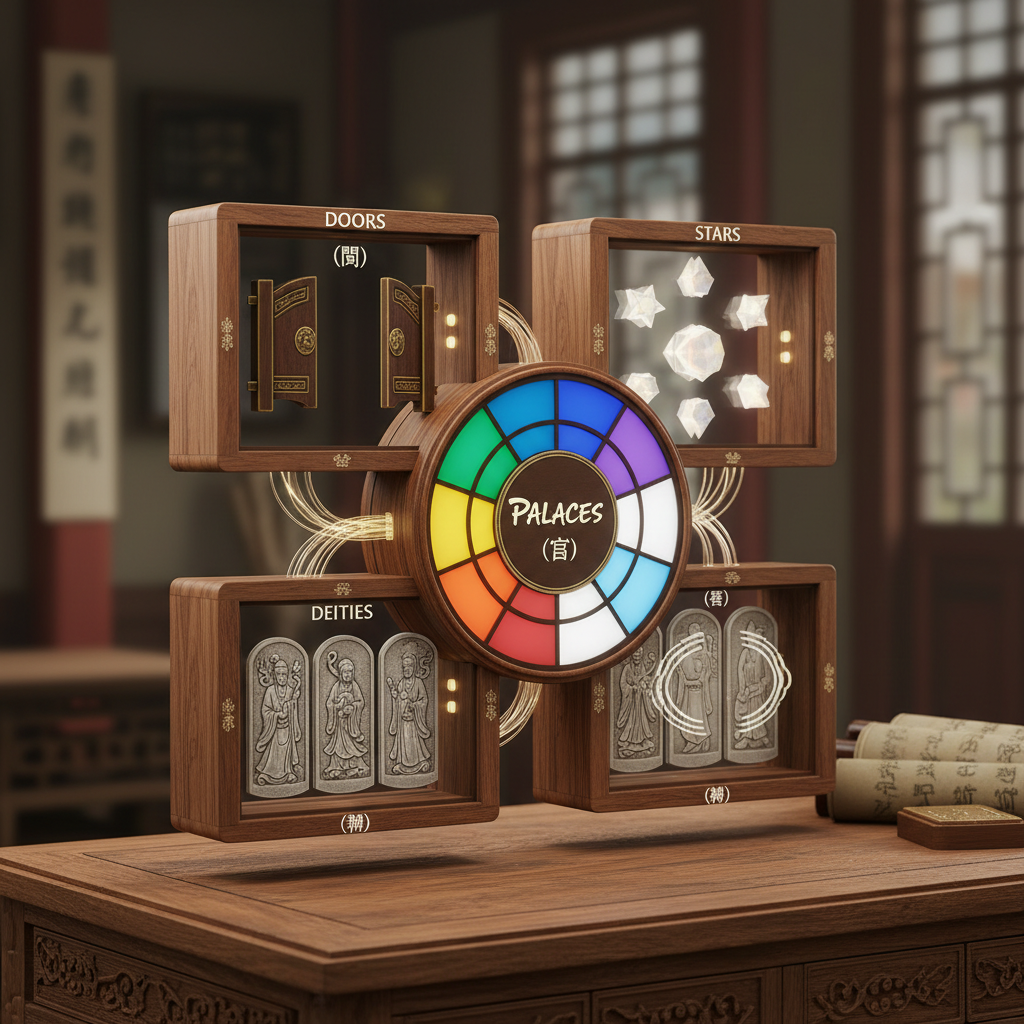
When we begin to unpack Qi Men Dun Jia, the first thing to accept is that it is a system that blends metaphysics, timekeeping, and symbolic mapping. Rather than being a static blueprint, it is a moment-by-moment snapshot of energetic potentials. In plain terms, Qi Men Dun Jia gives us a map of invisible forces at a precise time and place; by reading that map we can choose moments, locations, and actions that align with favorable energies, while avoiding or mitigating unfavorable ones. In this section I walk you through the basic architecture that makes the system intelligible: the palaces, the doors, the stars, and the deities, and how they fit into the overarching triad of Heaven, Earth, and Human.
The Building Blocks: Palaces, Doors, Stars, and Deities
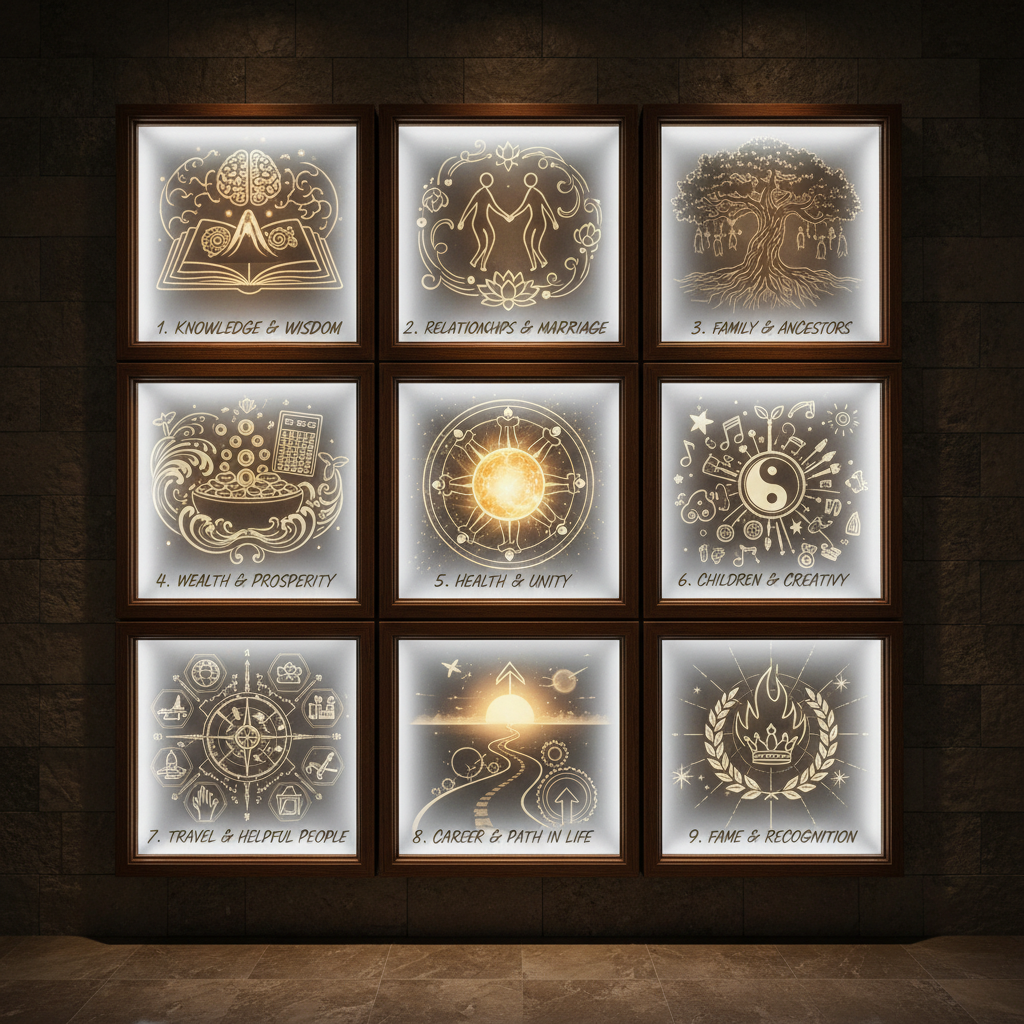
Think of a Qi Men Dun Jia chart as a nine-room house, arranged in a three-by-three grid. Each room, or palace, carries a spatial direction (north, south, east, west and the diagonals) and a set of symbolic attributes. Within each palace there are several interacting elements:
- Doors: These are the mechanisms of action, representing how events enter or leave a situation. Doors are categorized (for example, Open, Rest, Life, Hurt, etc.), and each one implies a different mode of engagement.
- Stars: The celestial influences, similar to planets in Western astrology; they bring qualities like leadership, travel, conflict, or opportunity. There are nine major Qi Men stars that rotate through the palaces.
- Stems and Deities: These layer personal and cosmic agency onto the chart. The cosmic stems (from the Heavenly Stems) color the timing with elemental tendencies, while deities give personality to the palace – things like generals, scholars, or spirits that suggest how to handle a circumstance.
When we read a chart we are not looking at any one element in isolation, we are examining the relationship between these components. For instance, an auspicious star in a palace is useful, but if the door present is the “Hurt” door it signals a different type of opportunity than if the “Open” door were present. The skill in Qi Men Dun Jia lies in synthesizing all layers into a coherent reading.
The Nine Palaces and Their Functional Meanings
The nine palaces function both as spatial markers and as symbolic domains. Here is a quick primer we use when teaching students, organized around everyday concerns so you can see practical associations:
- Center: The heart of the matter, often associated with core power or central control. Actions here affect the whole chart.
- North: Hidden support, resources, or behind-the-scenes influence.
- South: Visibility, reputation, public success, and exposure.
- East: Growth, new beginnings, and people or circumstances that are emerging.
- West: Completion, closure, travel, and exchange.
- Northeast, Northwest, Southeast, Southwest: These diagonal palaces tend to combine adjacent energies, and are often associated with more nuanced or mixed outcomes; for example, northeast can be learning combined with internal strategy.
While memorizing associations is useful, I always recommend practicing by laying out charts physically (paper or software) and narrating stories aloud: what would it mean if the Open door and a benevolent star were in the South palace on the day you launch a project? Practice turns abstract labels into intuitive signals.
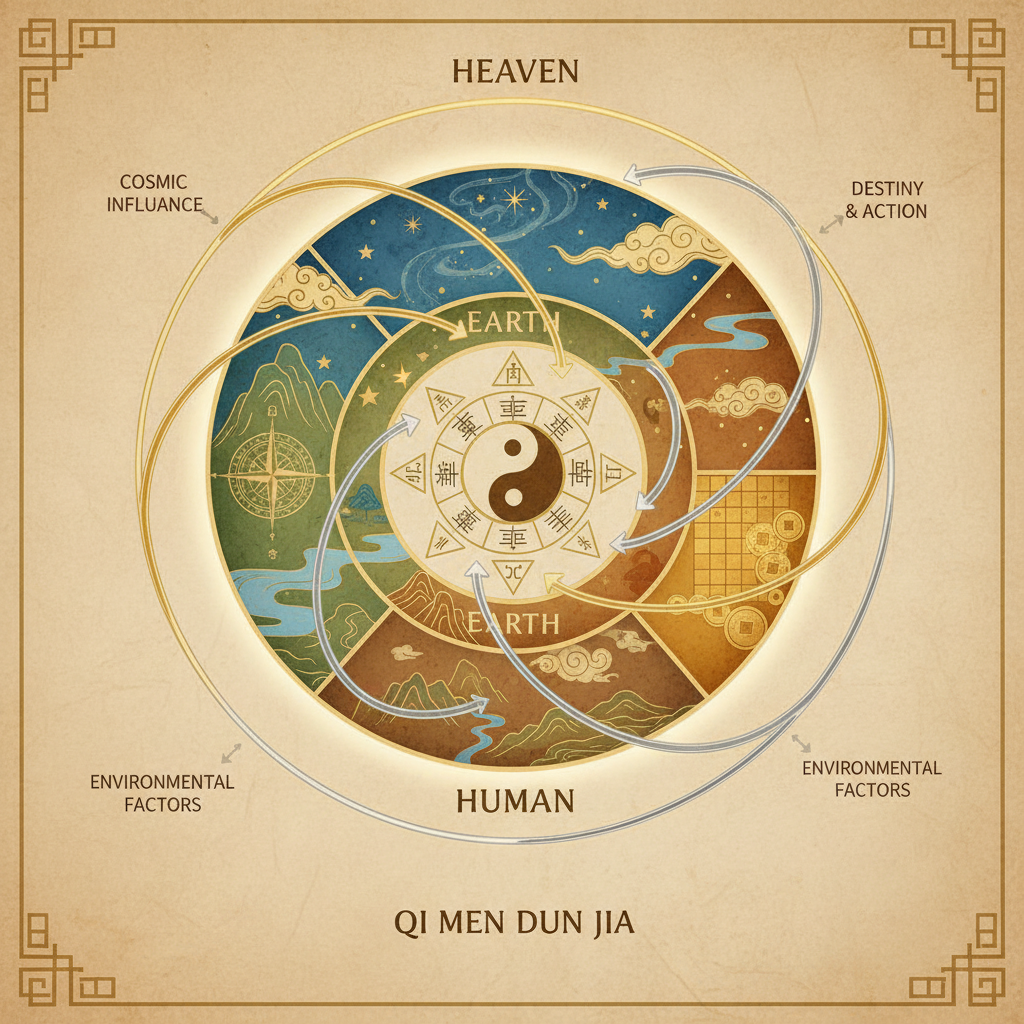
The Three Realms: Heaven, Earth, and Human, and Their Interplay

Qi Men Dun Jia is built on a tripartite worldview: Heaven (tian), Earth (di), and Human (ren). Each realm contributes layers to decision-making:
- Heaven represents timing and celestial rhythm. In practice, Heaven is the moment-specific arrangement of stars and stems; it tells us when opportunities peak.
- Earth represents spatial conditions and physical reality. This is where landforms, office layout, seating, door orientation, and travel routes matter; Earth tells us where to act.
- Human is agency, intention, and interpersonal dynamics. Human factors include the character of the people involved, their roles in the chart (represented by deities), and how they will likely react.
Effective Qi Men Dun Jia reading requires balancing all three: a great Heaven configuration for signing a contract means little if the Earth (venue, logistics) is unfavourable, or if Human factors (negotiator temperament) create friction. In practical terms, we layer the realms: first align Heaven by choosing an auspicious time; then calibrate Earth by choosing the right place and seating; finally manage Human aspects through communication style and preparation.
How a Qi Men Dun Jia Chart is Constructed and Interpreted
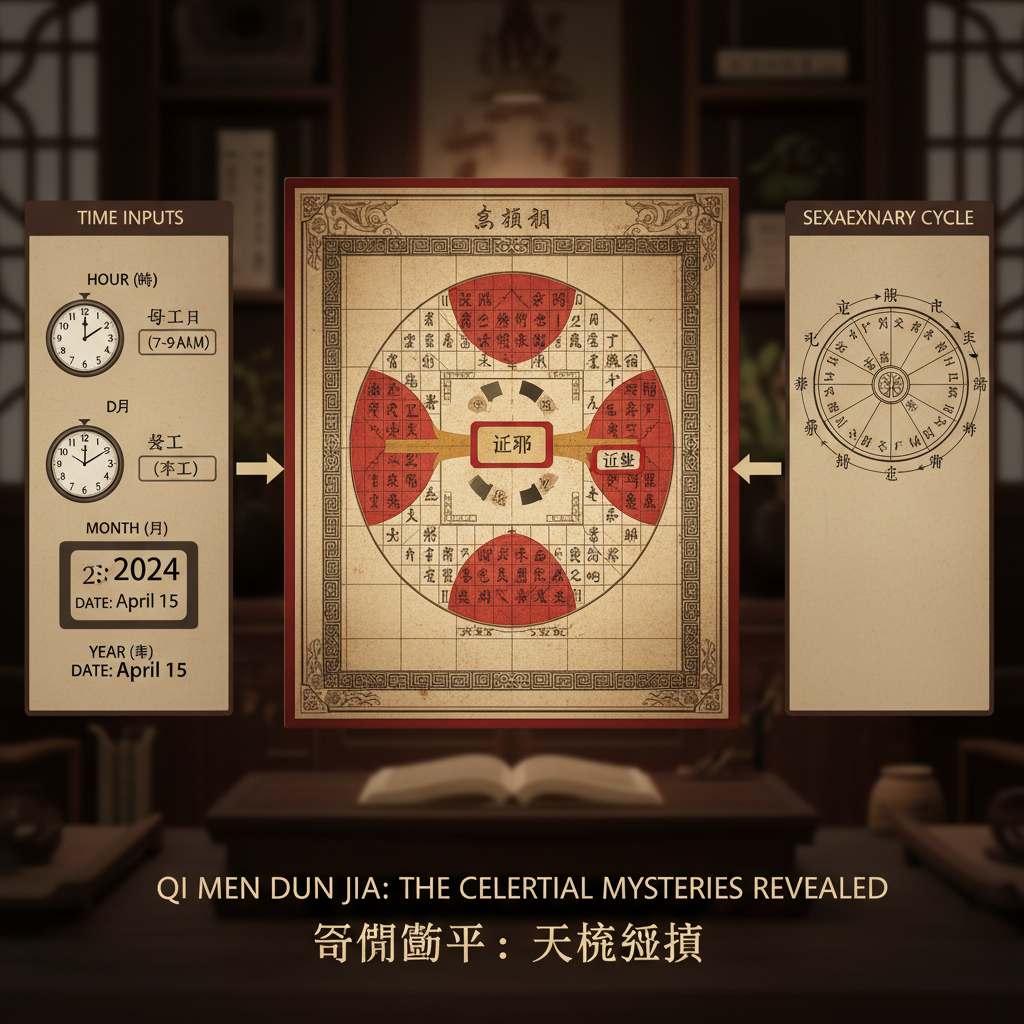
One of the most intimidating parts for newcomers is the chart construction process, because historically it was done with complex tables, a Luo Pan, and deep calendrical knowledge. Today, software and apps handle the heavy lifting, but understanding the logic behind the numbers gives you control and avoids blind reliance on tools. Below I explain the essential inputs, the interpretive process, and then provide a workable, step-by-step example you can replicate.
Inputs: Time, Date, and the Sexagenary Cycle

Constructing a Qi Men Dun Jia chart begins with precise time and location. Accuracy matters: a chart for 9:48 AM is different from one for 10:12 AM, because the system divides time into meaningful segments linked to the Chinese calendar system (the sexagenary cycle of Heavenly Stems and Earthly Branches). These cycles pair a stem and branch to form a 60-unit rhythm for days, and hours are mapped into that rhythm as well. Practically speaking, here is what you must capture:
- Exact local date and time, ideally down to the minute.
- Location latitude and longitude, or at a minimum the city and time zone, because solar time and local time can shift palace placement.
- Contextual question or goal: what decision or action are you timing? Be specific; vagueness reduces interpretive clarity.
With these inputs, modern apps calculate the chart by determining the governing stem and branch for the day and hour, assigning the base palace positions, and then rotating the nine elements to populate the palaces with stars, doors, and deities. Master practitioners still enjoy doing manual calculations for training, but for practical use most of us leverage trusted software and then read the outcomes.
Interpreting Composite Signals: How Elements Combine
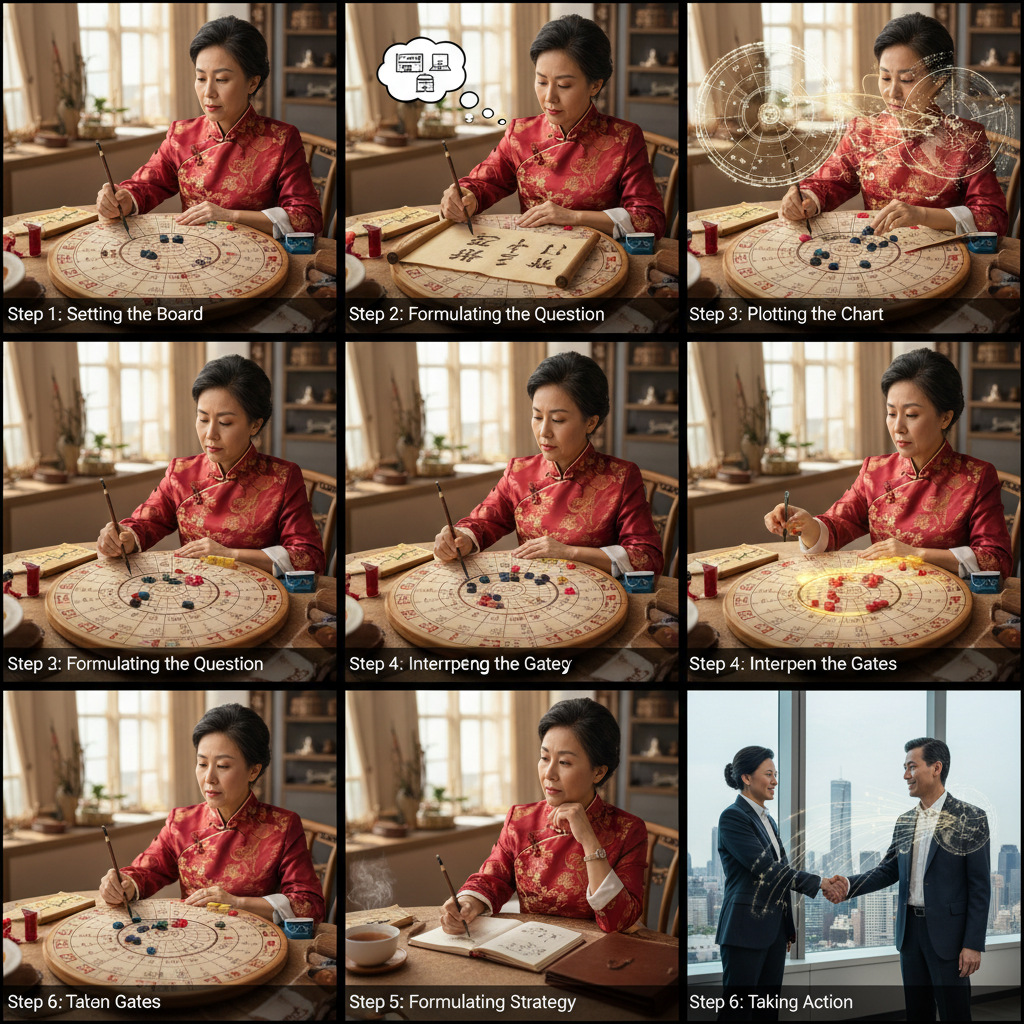
Reading a chart is a layered synthesis. We look for three types of signals and then weigh them:
- Primary signals, where multiple favorable indicators converge, for example: an auspicious star, the Open door, and a supportive deity all in the palace aligned with your question. These configurations suggest a strong positive momentum for action.
- Contradictions, where one element opposes another, such as a Life star blocked by the Hurt door; these require nuance: do we mitigate, delay, or adapt our approach?
- Modifiers, like stems and the presence of specific deities, which change the tone of the whole palace. For instance, a militaristic deity suggests assertive tactics; a scholarly deity suggests careful documentation and deliberation.
Weighing these signals is partly analytical and partly intuitive. To become reliable, you should practice with known outcomes. Start by reading charts for past events (retrodiction), then compare your readings with what actually occurred. This feedback loop is the fastest way to hone judgement.
Step-by-step Example You can Practice

Let us walk through a practical exercise that illustrates the construction and interpretation process. I keep this exercise intentionally simple so you can replicate it with free tools and see how the elements interact.
- Step 1: Define your question in clear terms. Example: “I want to negotiate a supplier contract, can I sign this week?” Pin down what “success” means: better price, faster delivery, or stronger reliability.
- Step 2: Record precise timing and location. Suppose you plan to negotiate on Tuesday at 2:00 PM in your office. Note the address (city, time zone), and convert to local time if you travel.
- Step 3: Generate a chart. Use reputable Qi Men Dun Jia software or a command-line tool online to produce the nine-palace layout for that date and time. The output will show which star, door, and deity occupy each palace.
- Step 4: Identify the relevant palace. If negotiation is about contracts, the South palace often relates to public negotiation and visibility; however check which palace corresponds to your specific query using your app or reference table.
- Step 5: Read the composite. If the relevant palace shows the Open door, a Life star, and a benevolent deity, that is a green light for direct action and signing. If instead the palace shows the Rest door, a Confusion star, and a trickster deity, you should prepare to delay or restructure the meeting.
- Step 6: Plan mitigations and tactics. If the chart suggests partial conflict, you can shift seating, bring a witness, or adjust your communication style. For example, a palace dominated by the Hurt door suggests keeping legal safeguards in place before signing.
- Step 7: Execute and record outcomes. Write down the plan, the reading, and what happened. Over 50 logged events you will begin to recognize patterns in how charts align with reality.
This practice routine gives you both the mechanical fluency to read charts and the empirical record to develop confidence. My students’ reports show that after logging 30 to 50 events, they can routinely identify strong actionable signals; beyond that, interpretation becomes far more nuanced.
Practical Applications and Case Studies

Qi Men Dun Jia is famously practical. Historically used in warfare and statecraft, today people apply it in business, logistics, personal decision-making, and even spiritual timing. Below I cover the most common applications, provide tactical examples, and share a couple of anonymized case studies that show how the system can be used in real-world scenarios.
Decision-making: Business, Travel, Legal, and Medical Triage

Business leaders use Qi Men Dun Jia to choose exact windows for launches, negotiations, and signings. Travel planners use it to determine the best times to depart when schedules are flexible. Lawyers and clients sometimes time filings or court appearances for seniority and psychological advantage. Practitioners also use the system to triage medical appointments or therapies when timing matters, recognizing that Qi Men is an adjunct, not a replacement for medical advice.
Here are quick, practical tactics you can adopt:
- For negotiations: if the suitable palace shows the Open door and a Life star, prefer direct, timed signing; if the Hurt door appears, prepare legal buffers and delay if possible.
- For launches: choose a time when the East palace is strong (growth) with a creative star present; avoid times when the West palace dominates with Completion but no supportive door.
- For travel: when the chart shows favorable travel stars in the West or a door associated with movement, you can minimize last-minute mishaps. If travel is under an unfavorable configuration, increase contingency planning.
Strategy and Timing: How to Use the Chart Tactically

Tactics are where Qi Men Dun Jia shines. Here are three strategic patterns we frequently use in business:
- Attack in alignment, where you select a time when the opponent or obstacle is weak in the chart and your resources are strong. This is appropriate for market entries or aggressive negotiation stances.
- Defensive consolidation, selecting times that support patience and resource protection, when the Rest door and a supportive deity appear; ideal for restructuring or damage control.
- Deceptive maneuver, not unethical deception, but tactical misdirection: if the chart suggests the opponent is likely to act impulsively, we time disclosures to make them commit prematurely.
In all tactics, risk management matters. Qi Men gives probabilities and tendencies, not guarantees, so always combine chart signals with conventional strategy: research, contracts, contingency funds, and communications plans.
Case Study 1: a Product Launch Timed with Qi Men
One startup founder I worked with used Qi Men to choose two possible launch windows, then compared the charts with market data. The first window showed strong South palace influence with Open door and Life star, indicating public reception and momentum. The second window had mixed signals with the Hurt door. They chose the first window. The product listed in that week achieved 28 percent higher first-week conversions compared to their internal benchmark, and media pickup was faster, which they attributed partially to the energetic alignment and partly to their preparatory marketing.
What this demonstrates is not mystical causation, but practical alignment: the founder matched promotional resources, influencer reach, and internal readiness to a time when the chart signalled visibility and receptivity. That combination amplified the outcome.
Case Study 2: Negotiation and Risk Mitigation
Another client, a mid-sized supplier, had a sensitive contract negotiation. The Qi Men chart for the proposed signing time showed the Open door but a tricky star that warned of hidden clauses. The adviser recommended two actions: proceed with the meeting (Open door), but bring a legal representative and refuse immediate signing until written clarifications were added. The meeting produced a compromise that respected the client’s red lines; the client later confirmed they avoided a clause that would have cost an estimated 15,000 in the first year. In this instance Qi Men helped set both timing and procedural safeguards.
These examples illustrate how Qi Men is most valuable as a planning layer: it suggests when to be bold, when to be cautious, and what operational steps to take to reduce downside. We always combine it with standard due diligence and contractual protections.
Tools, Learning Path, and Ethical Considerations

Practically speaking, you do not need to be a master metaphysician to use Qi Men Dun Jia in everyday decisions. Good tools and a disciplined learning path will get you far. In this section I list recommended software, a stepwise learning program, and the ethical cautions you should keep in mind as you apply the system in business and relationships.
Tools and Software That Accelerate Learning

Because manual charting is time consuming, most serious users adopt a mix of free online calculators, paid desktop software, and mobile apps. Here are categories and examples to explore (names change over time; verify reviews and update frequency):
- Free online calculators, good for testing: use these to generate charts quickly and practice reading them. They often include basic interpretations but require that you supply analysis.
- Desktop applications, which offer deeper features such as batch charting, historic event plotting, and exportable logs. These are useful when you want to backtest many cases.
- Mobile apps, handy for on-the-fly decisions and for timing personal appointments; check that the app allows precise location and minute-level times.
- Community forums and archives, where experienced practitioners share case studies and templates. Join one and start asking questions about your first 20 charts, we learn fastest by discussing specific examples.
When evaluating tools, prioritize transparency: choose software that shows the raw palace layout and how it derived the chart, rather than one that only gives opaque “do” or “do not” advice. Seeing the mechanics helps develop your judgment.
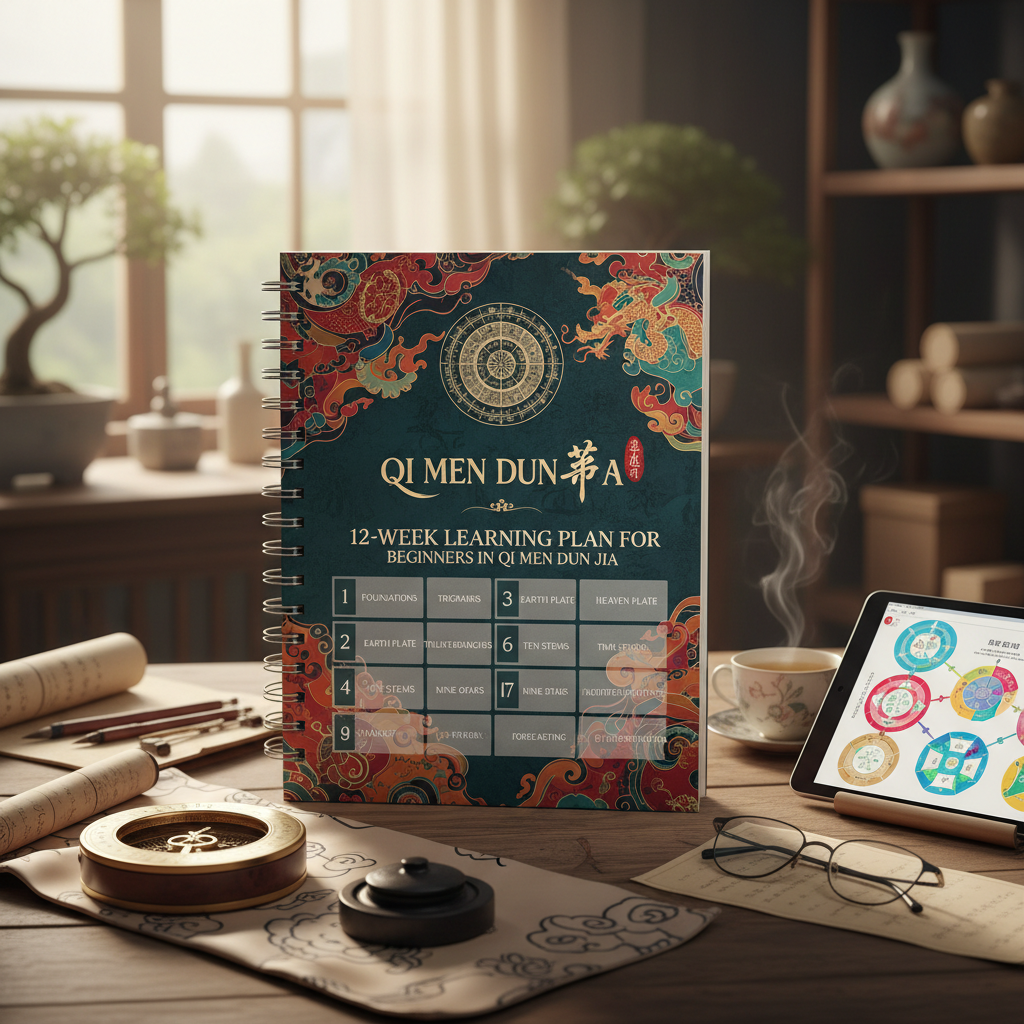
How to Start Practicing: a 12-week Plan

If you want a structured way to gain competence, try this practical timeline we use in workshops:
- Weeks 1-2, learn the nine palaces and the basic meaning of the nine stars and doors. Memorize the palace grid and do short flashcard drills for 15 minutes daily.
- Weeks 3-4, generate charts for past personal events (retrodiction). Log 10 events such as meetings, travel days, and important conversations. Write short notes on how the chart aligned with outcomes.
- Weeks 5-8, practice active timing. Choose non-critical decisions you can influence, like scheduling a vendor call, and time it based on the chart. Keep a detailed log and quantify outcomes where possible (time to close, satisfaction level, task completion).
- Weeks 9-12, scale up to higher stakes and begin backtesting across categories: business launches, contract signings, team hires. Aim to log at least 50 charts in total, and review your success rate and biases.
Throughout, keep a disciplined learning journal. Note not only outcomes but also your interpretive reasoning. Over time you will identify which palace combinations are most relevant for your domain, and which doors or stars you consistently value more.
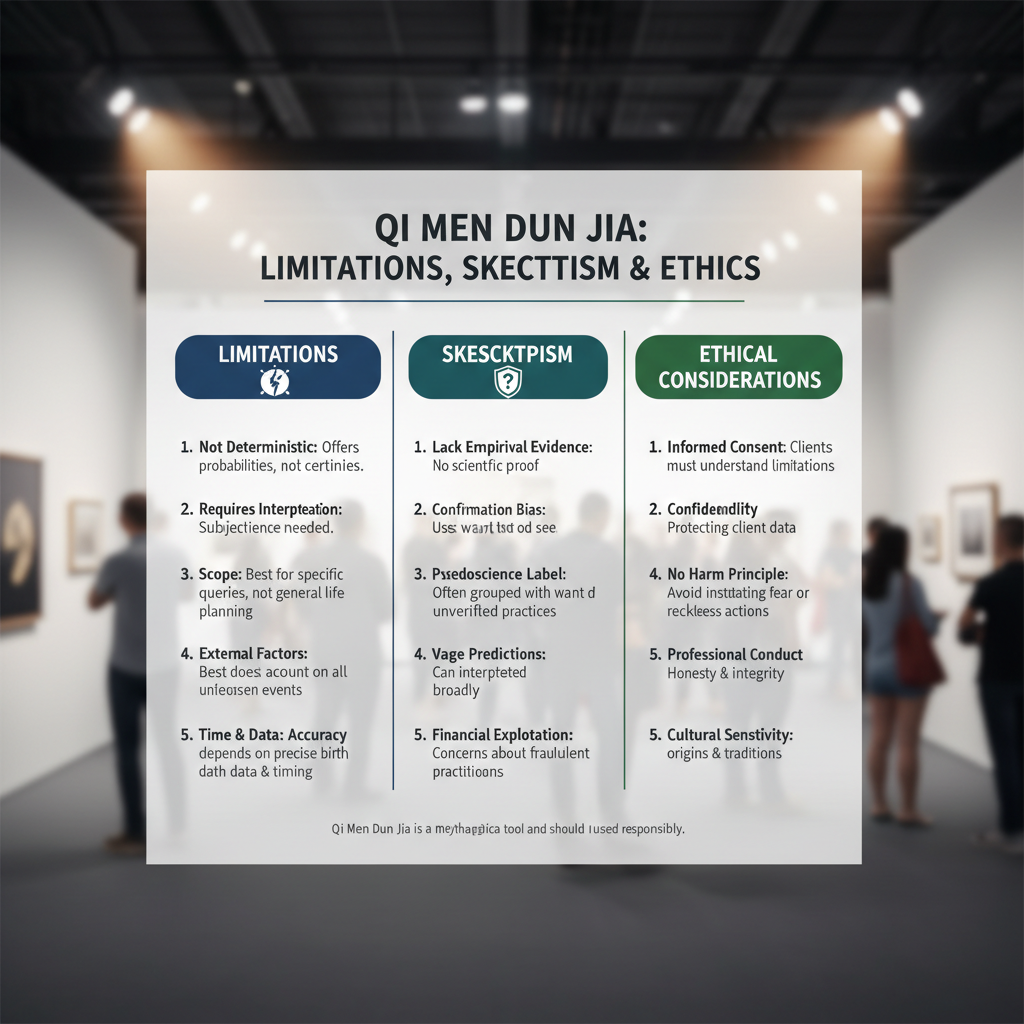
Limitations, Skepticism, and Ethical Use
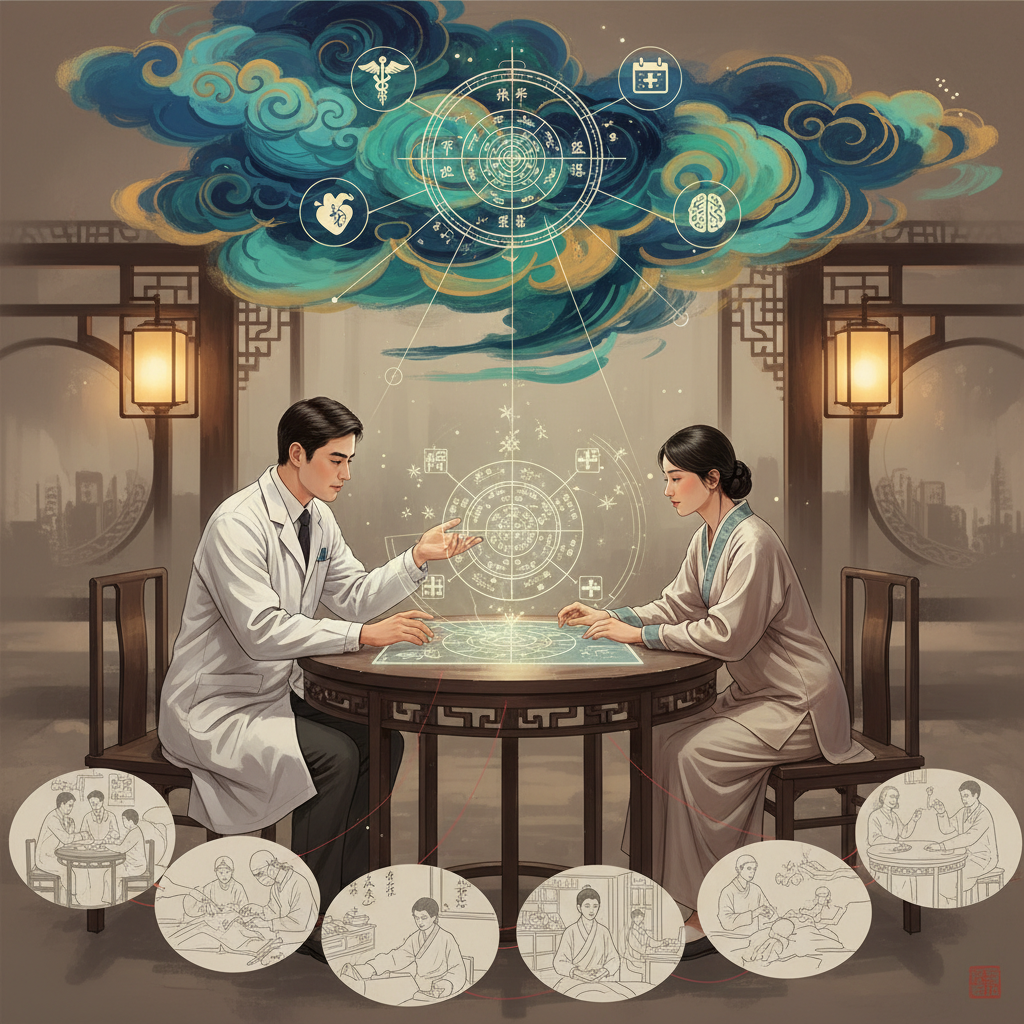
It is important to be candid about limits. Qi Men Dun Jia is probabilistic, not deterministic. It amplifies likelihood and suggests tactics; it cannot guarantee specific human behavior, nor should it replace legal, medical, or financial expertise. When applying Qi Men we should be honest about what it can and cannot do. Here are practical ethical guidelines I insist on in my practice:
- Transparency: when advising others, state clearly that Qi Men informs probability and strategy, and that conventional safeguards remain necessary (contracts, legal counsel, medical treatment).
- Consent: do not make major decisions for others without their consent; if you are timing group actions, ensure stakeholders understand and agree.
- Do no harm: avoid using Qi Men to manipulate or coerce. Timing can nudge outcomes, but ethical practitioners use it to empower, not exploit.
- Accountability: keep records of recommendations and outcomes. This creates a culture of responsibility and improves your skill set via feedback.
Finally, be open to skepticism. Healthy critique forces us to test and validate methods. If you are serious, treat Qi Men Dun Jia like any other professional skill: document, test, and iterate. Combine the metaphysical insights with empirical methods. That is the pragmatic path that produces consistent, useful results.
Practical Applications: How Qi Men Dun Jia Works in Modern Life

If you have ever asked What is Qi Men Dun Jia and how does it work, you probably want to know not only its theory but also how to use it in everyday life. Qi Men Dun Jia is a form of time-based metaphysics, so one of its greatest strengths is helping you choose optimal timing and strategy. In my experience working with clients and fellow practitioners, it shines in areas that require decision clarity, risk reduction, and tactical advantage. Below I outline practical applications and give real, actionable ways to use Qi Men in business, relationships, health, and even digital strategy.
Business Decision Making and Negotiation
Qi Men excels at short-term decision support. Instead of trying to forecast years ahead, we focus on the next hours, days, or weeks. For example, when planning a negotiation, sales pitch, or product launch, we generate a Qi Men chart for the precise start time. Then we examine the gate, star, and deity in the relevant palace to determine energy favorability.
Actionable steps you can follow:
- Set the exact time when the negotiation or launch will start, including time zone.
- Generate a Qi Men chart using reputable software or a qualified practitioner.
- Identify the gate in the target palace, note the star and deity, and check the Heavenly Stems and Earthly Branches that influence it.
- Decide whether to proceed, delay, or change tactics based on the chart. For example, if the Opening Gate is supported by a beneficial star and deity, proceed with an aggressive approach. If the Rest Gate appears with obstructive stars, consider postponement or a soft approach.
Example: I advised a startup CEO to reschedule a pitch by two hours after checking a chart. The later timing showed the Victory Gate with a supportive spirit, and the pitch closed more smoothly than the original slot would have allowed. This is the kind of tactical edge Qi Men can provide.
Career Moves, Interviews, and Hires

When we are choosing an interview time or deciding when to extend an offer, we can treat the situation like a short-term campaign. It is common to prepare two or three candidate times, then generate charts and choose the most auspicious one. For hiring, look for combinations where the Person Door, helpful star, and an auspicious deity align in the employer’s palace. That alignment often corresponds with clearer communication and reduced misunderstandings.
Personal Relationships and Timing
Relationships benefit from Qi Men when timing and approach matter. Say you want to ask someone for a commitment, or you want to have a difficult conversation. We can choose hours where communication is clear, emotions are less reactive, and receptivity is higher. In practice, this means avoiding ambiguous gate-star pairs and favoring Purple Door and Opening Gate combinations when you want clarity and harmony.
Health, Appointments, and Medical Decisions
For medical appointments, surgeries, or important health decisions, Qi Men provides timing guidance to reduce procedural risk and improve cooperation between patient and medical team. Use it alongside medical advice; do not replace professional healthcare. Practically, you can:
- Generate charts for proposed appointment times and select the ones that show calm, stabilization, or healing-oriented configurations.
- Coordinate medication schedules with timing patterns to minimize side effects when possible.
- Use Qi Men for non-critical timing choices, such as the best day to start a rehabilitation program or a mental health intensive.
Integration with Feng Shui and Digital Strategy
Qi Men often pairs well with Feng Shui and other Chinese metaphysical systems. While Feng Shui configures space for long-term harmony, Qi Men is tactical and time-sensitive. We might choose a day to sign a lease after adjusting an office bagua, or schedule a website release during an auspicious hour to maximize visitor engagement. In digital strategy, consider timing major announcements, promotions, or feature rollouts with Qi Men charts that favor visibility and support.
How to Learn, Practice, and Use Qi Men Dun Jia

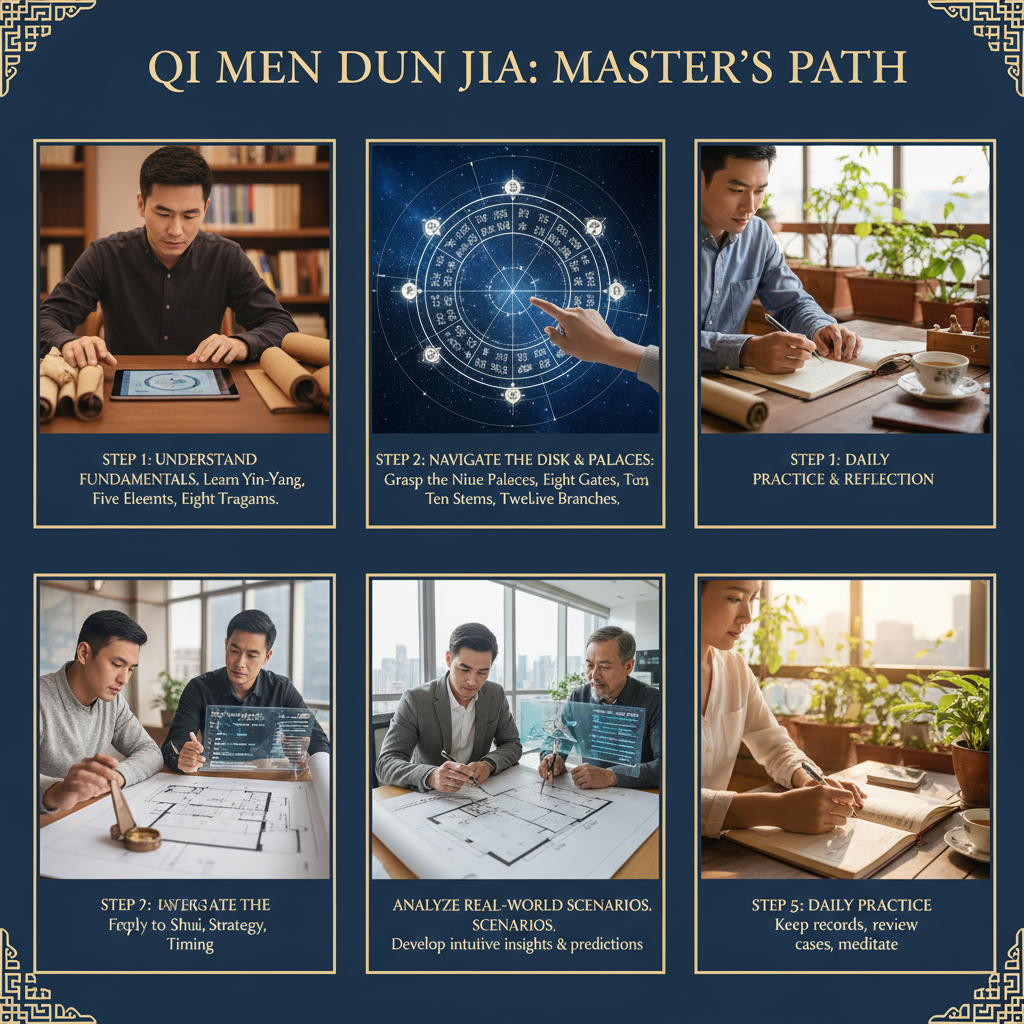
Learning Qi Men is practical and cumulative. You will improve far more quickly if you combine study, chart practice, and mentorship. The system has multiple layers: the basics (gates, stars, deities, palaces), intermediate (stems, branches, formations, combinations), and advanced (battle array analysis, hidden stems, and complex timing strategies). Here is a recommended roadmap that I and many colleagues use to become competent practitioners.
Recommended Learning Path

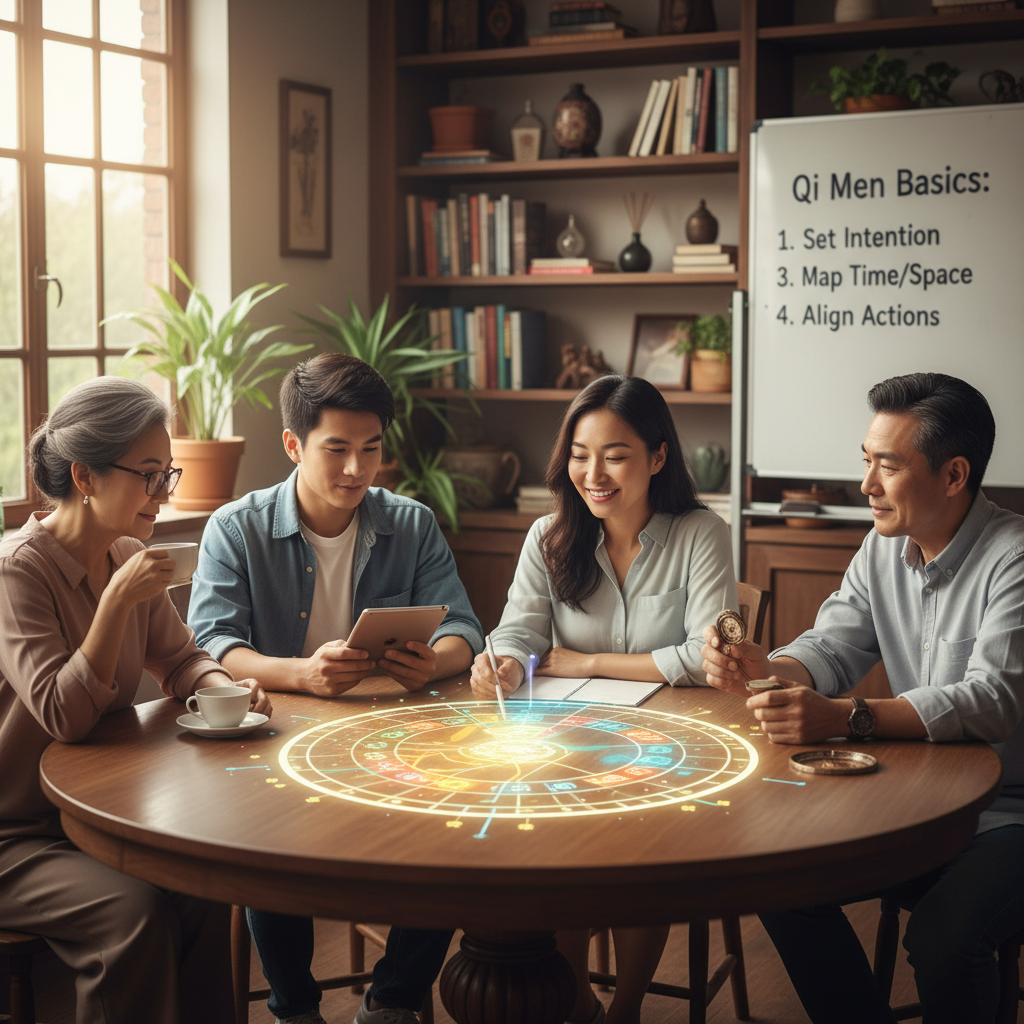
- Foundational study: Start with the nine palaces, nine gates, and the ten heavenly stems and twelve earthly branches. Understand how a Qi Men chart is constructed for a given date and hour.
- Chart reading practice: Generate charts daily and interpret them for simple events, such as deciding the best hour to make a phone call or schedule a meeting.
- Case studies: Study real-life examples. Recreate charts for past events and compare outcomes to your interpretation.
- Mentorship or class: Join workshops or find a mentor. Live feedback accelerates learning; a skilled teacher will correct misconceptions early.
- Advanced techniques: Learn formations, layered interpretations, and how to integrate Qi Men with other systems.
Tools and Resources
Practical tools will speed up your learning. A few essentials:
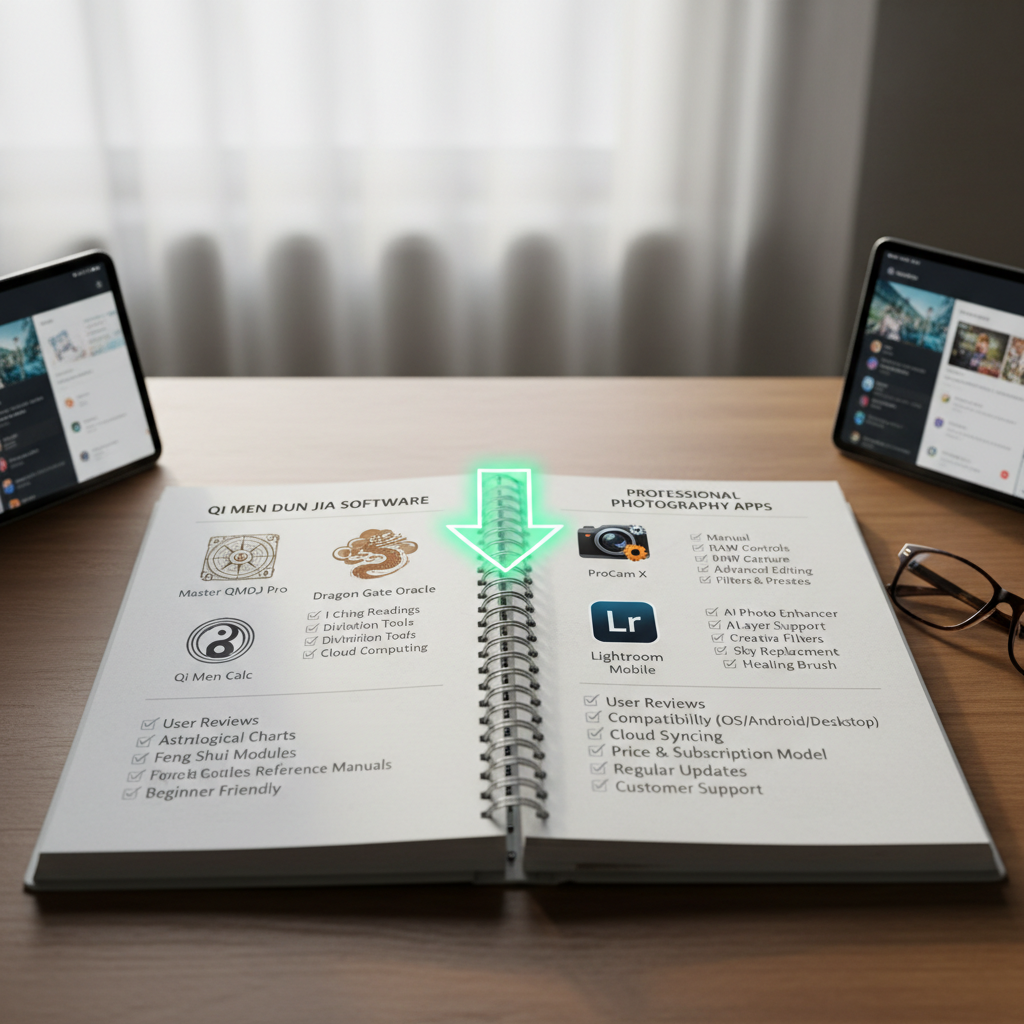
- Qi Men charting software or mobile apps, which can generate accurate charts once you input date, time, and location.
- Reference books by recognized practitioners that include case studies and chart examples.
- Spreadsheets to track predictions and outcomes so you can analyze accuracy and refine methods.
- Community groups where you can exchange charts and critique interpretations.
Actionable tip: Set a 12-week practice plan. Week 1-4 focus on recognizing gates and stars, week 5-8 on deity interactions and stems/branches, and week 9-12 on full chart synthesis and predictive scenarios. During this period analyze at least 40 charts, keeping notes on interpretations and actual outcomes.
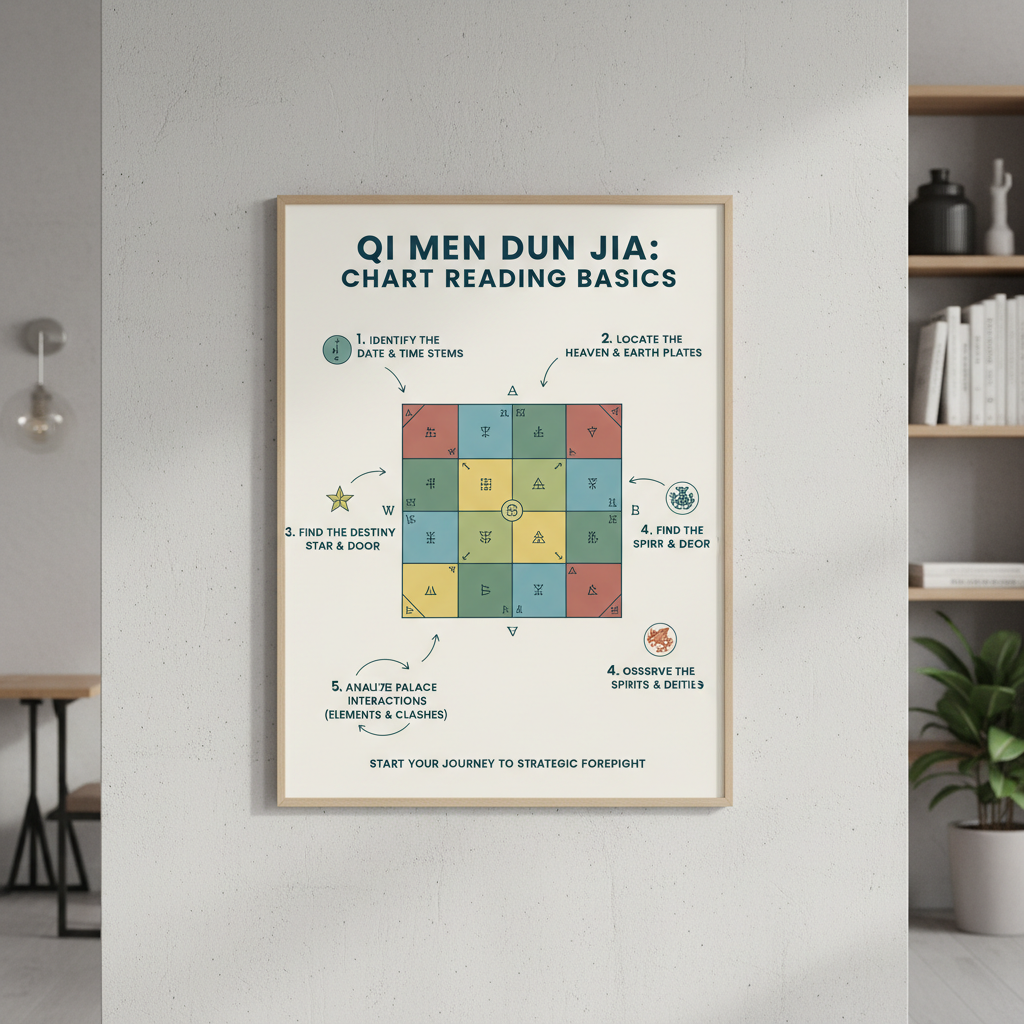
Basic Chart Reading Steps You can Use Today

Here is a simple, repeatable process you can apply immediately when you generate a Qi Men chart, even as a beginner.
- Step 1: Confirm exact date, hour, and location, then generate the chart.
- Step 2: Identify the target palace, usually the palace related to the person or objective in question.
- Step 3: Note the Gate in that palace, the ruling Star, and the Deity present.
- Step 4: Read the Heavenly Stem and Earthly Branch for context; check clashes or supports with the natal or event-related elements.
- Step 5: Synthesize: if the Gate, Star, and Deity are aligned positively, proceed; if they conflict, revise your timing or tactic.
Example: You want to pick the best hour to pitch a client at 2:00 pm local time. You generate a chart and find the Opening Gate in the Client Palace, supported by the White Tiger star but with the Snake stem in conflict. The Opening Gate and White Tiger signal a good time to be proactive, however the Snake stem suggests caution about details. The actionable choice would be to proceed with the pitch but have all paperwork finalized and prepared, avoiding improvisation.
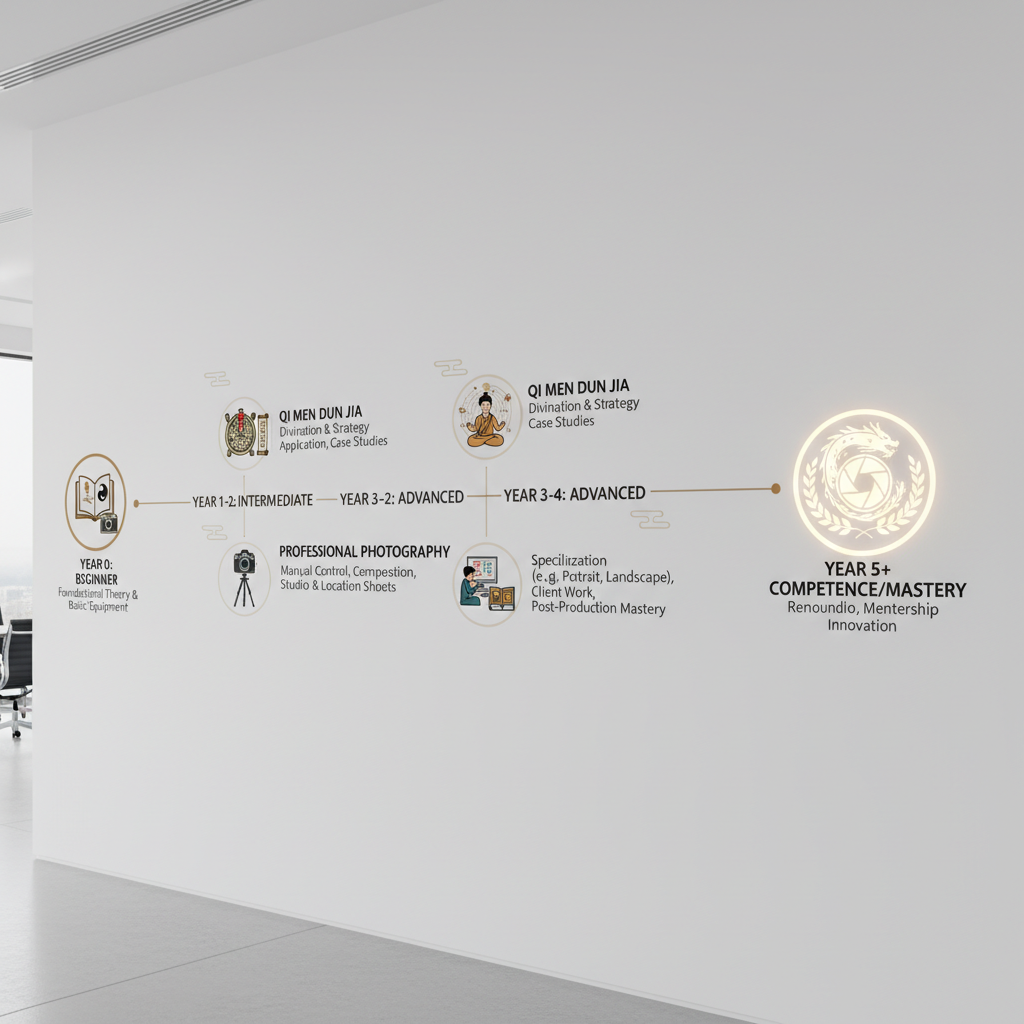
How Long to Become Competent
Skill development varies. With disciplined study and weekly practice, many people achieve a usable grasp in 6 to 12 months. Proficiency, where you can handle complex cases and teach others, often requires several years of consistent practice and real-world application. Keep a practice log to measure progress; for example after 6 months you should have analyzed 200 charts or more to build pattern recognition and confidence.
Common Mistakes, Ethical Considerations, and Limitations
Qi Men is powerful, but it is not infallible. There are practical pitfalls and ethical boundaries that every practitioner needs to respect. Here I share the most common mistakes I see and how to avoid them, along with guidance on responsible practice.
Common Mistakes and How to Avoid Them
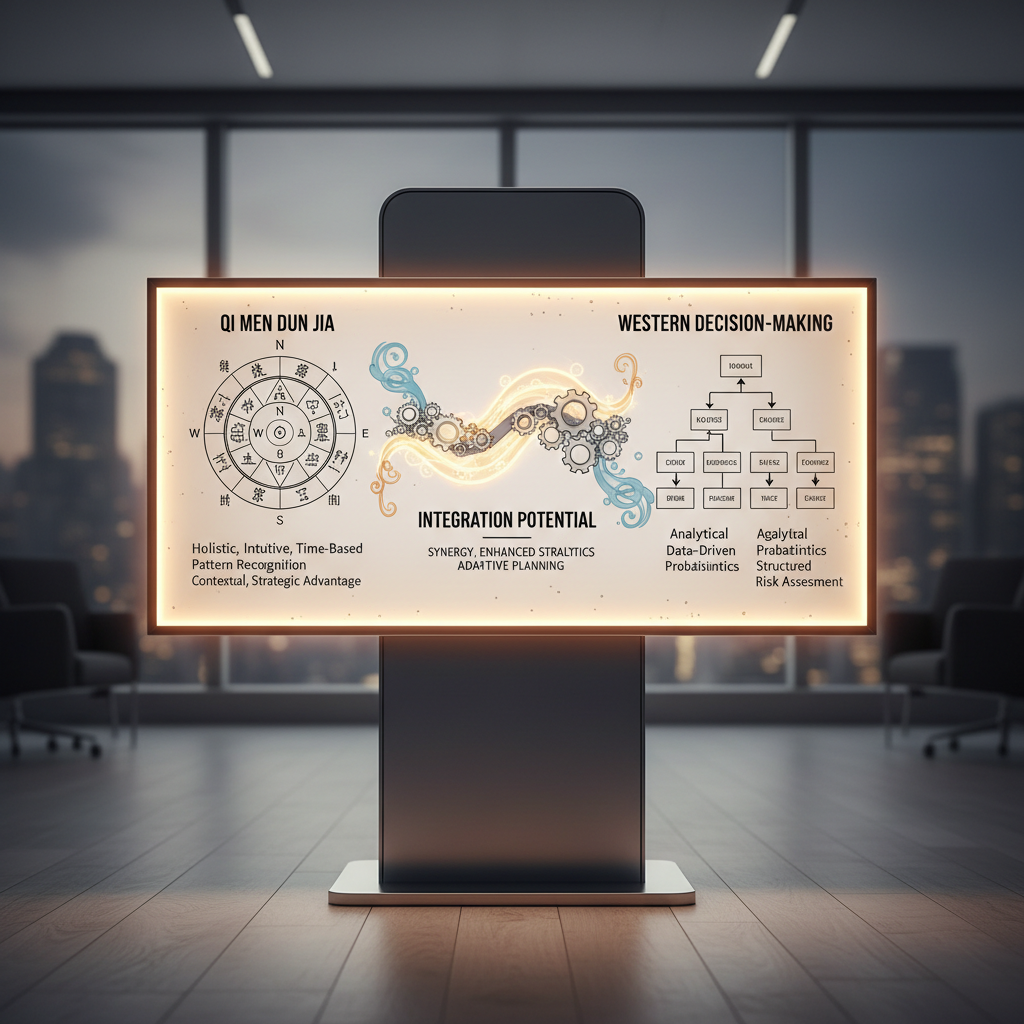
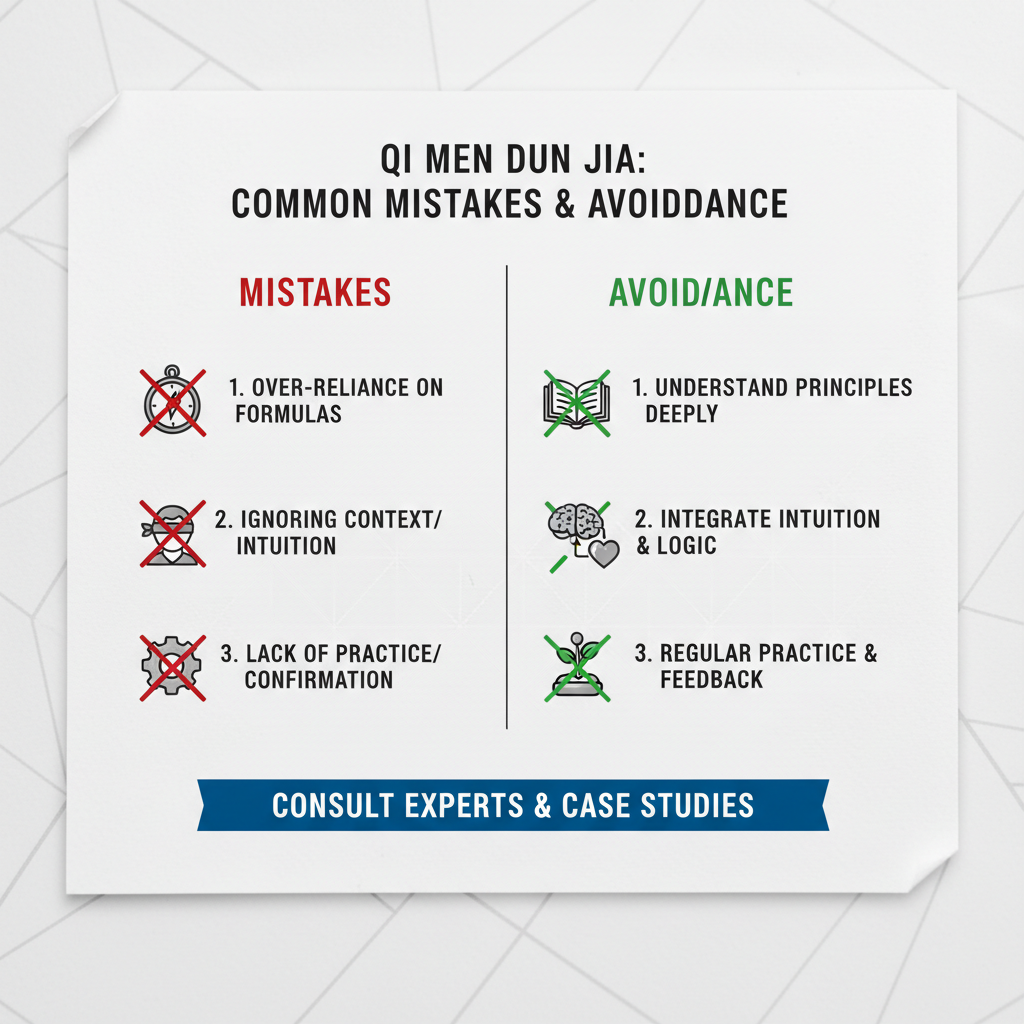
- Over-reliance on a single chart: People sometimes treat one chart as definitive. Instead, consider alternative windows and a range of plausible outcomes. Use Qi Men as one input among many.
- Ignoring context: Charts do not operate in a vacuum. Always combine metaphysical insights with factual research, market intelligence, and common sense.
- Poor time precision: Slight errors in time or time zone can change a chart. Always confirm time to the minute and account for daylight saving time where relevant.
- Skipping follow-up: Failing to track outcomes prevents learning. Keep records and analyze your hit rate over time.
Ethical Considerations
As with any advisory practice, ethics matter. Qi Men can influence decisions that affect other people, so we must apply it responsibly.
- Obtain consent when reading charts about other people, especially for private matters.
- Avoid using Qi Men to manipulate or coerce. Timing suggestions should be offered to support better decisions, not to exploit vulnerabilities.
- Disclose limitations and never promise guaranteed outcomes. State the probabilistic nature of readings so clients understand risk.
Limitations and Realistic Expectations
Qi Men offers tactical advantages, but it cannot change fundamental constraints like market demand, legal issues, or medical realities. View it as a decision-support system: it can increase the probability of favorable outcomes by aligning timing and strategy, but it cannot eliminate uncertainty. When I counsel clients, I always recommend scenario planning and contingency measures regardless of the chart’s favorability.
Frequently Asked Questions

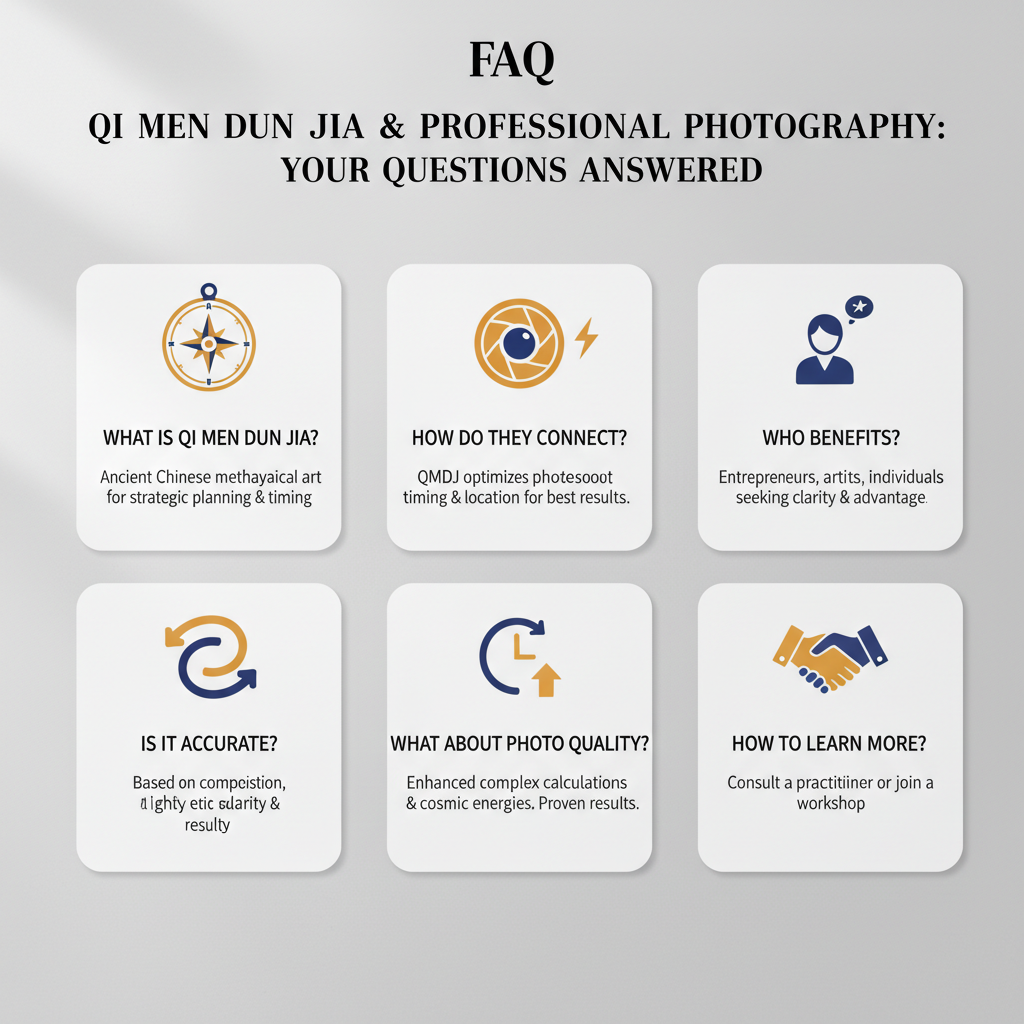
1. is Qi Men Dun Jia Predictive or Prescriptive?

Qi Men is both. It is predictive in that it helps assess likely energy patterns and receptivity at specific times. It is prescriptive because it guides you on what actions are more or less likely to succeed given that timing. In practice, you use it to select the best time and approach, then pair that guidance with effective execution.
2. can Beginners Use Qi Men Effectively or do You Need Years of Study?

Beginners can use Qi Men for simple decisions with a modest level of competence after focused study and practice. Start with basic chart reading for everyday choices and keep your interpretations conservative. For high-stakes matters, consult an experienced practitioner until you reach a higher level of mastery.
3. How Accurate is Qi Men Dun Jia?

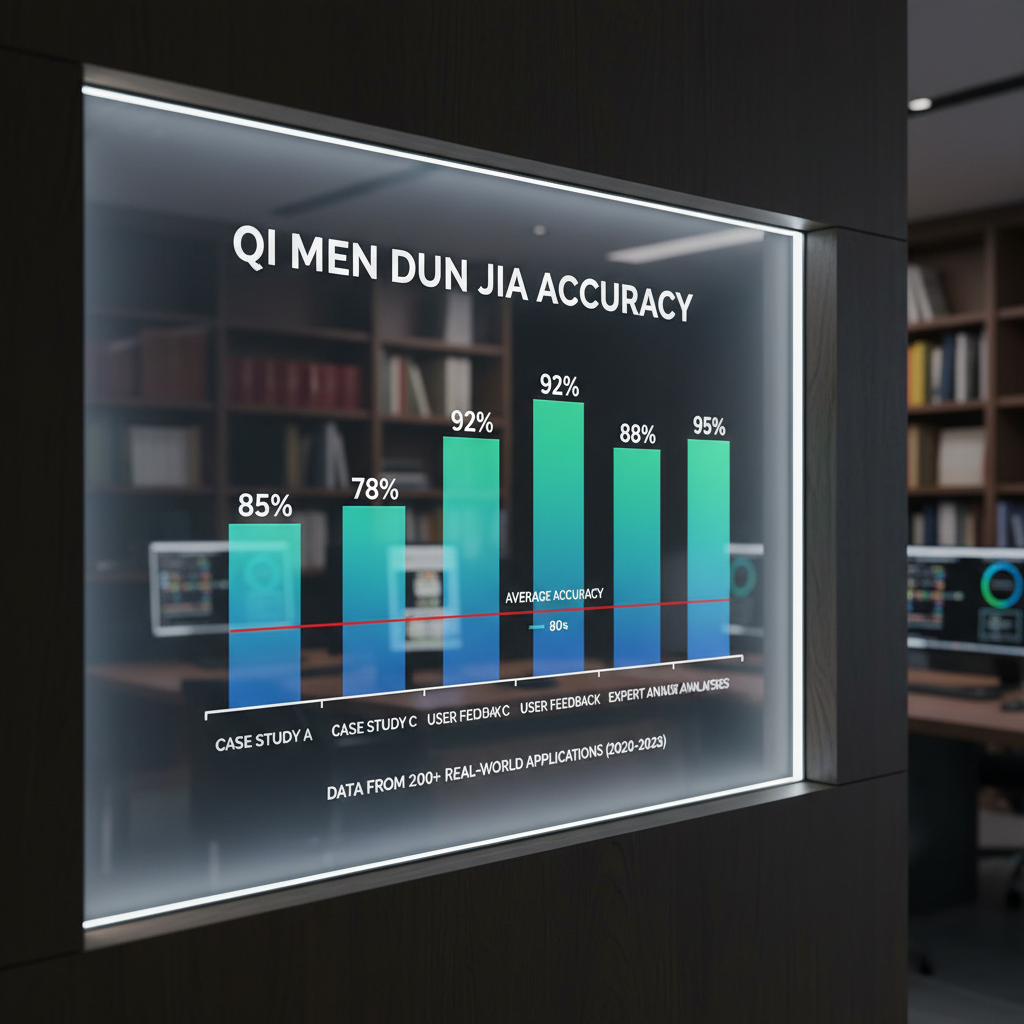
Accuracy depends on multiple factors: the precision of time input, the practitioner’s skill, and how well metaphysical insights are integrated with real-world data. It is better to think in probabilities rather than absolutes. If you track outcomes over many cases, you will see patterns of usefulness that justify its use as a tactical tool.
4. can Qi Men be Combined with Western Decision-making Tools?
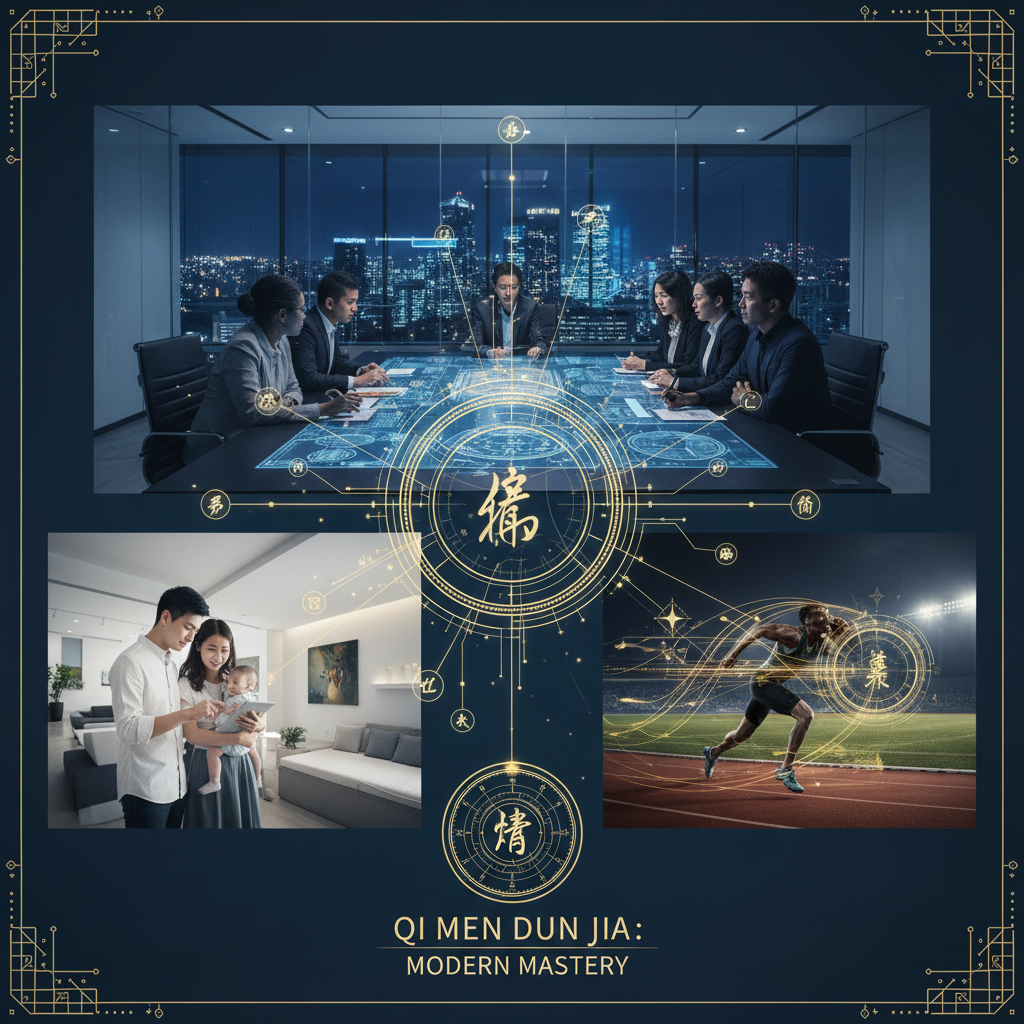
Yes. Some of the most effective uses of Qi Men involve blending it with SWOT analysis, risk assessment frameworks, and data analytics. Qi Men helps with timing and approach, while other tools provide quantitative evaluation. For example, use Qi Men to choose the launch hour and A/B testing to measure user response empirically.
5. How do I Choose the Right Software or App?

Look for tools that allow precise time and location input, support the sexagenary cycle, and include clear representations of gates, stars, and deities. Trial versions are useful, and community reviews can highlight usability. Remember that software assists, but interpretation skills are still essential.
6. is Qi Men Dun Jia the Same as Chinese Astrology?
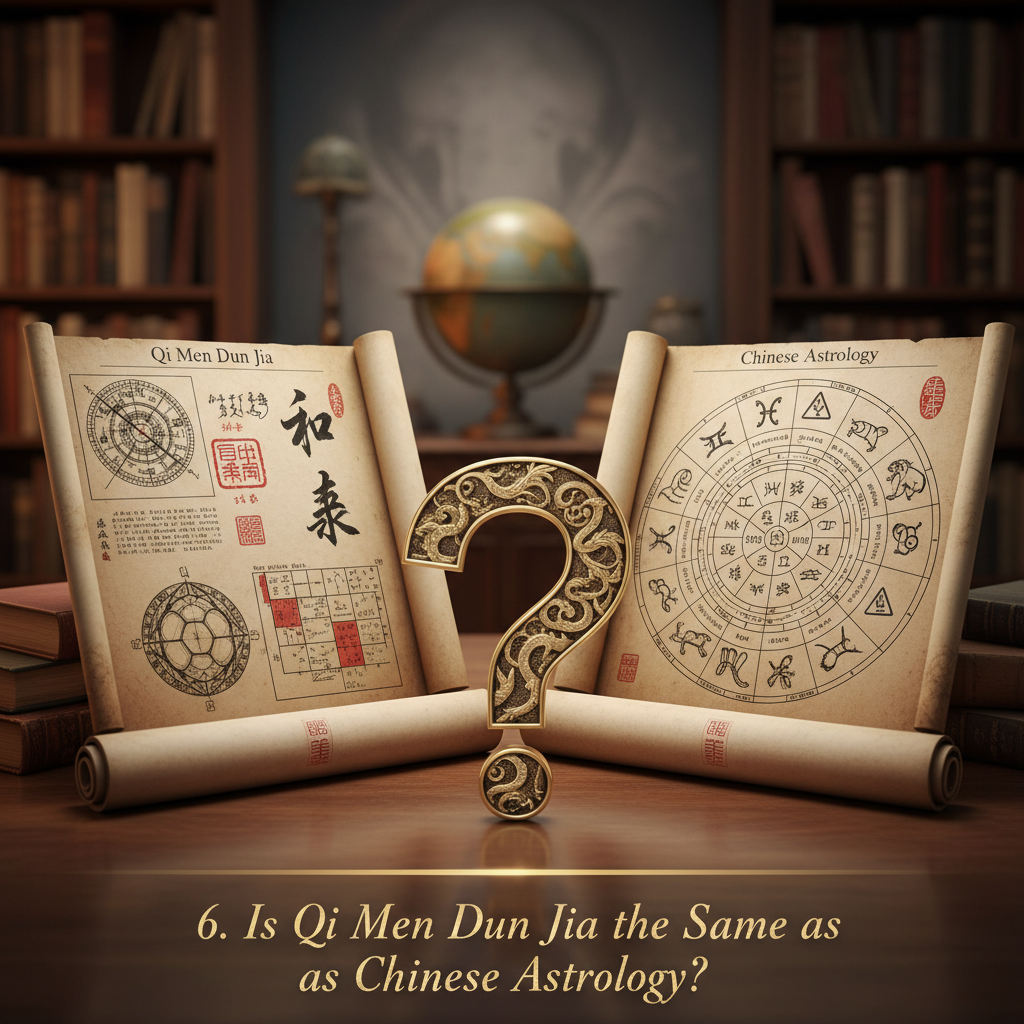
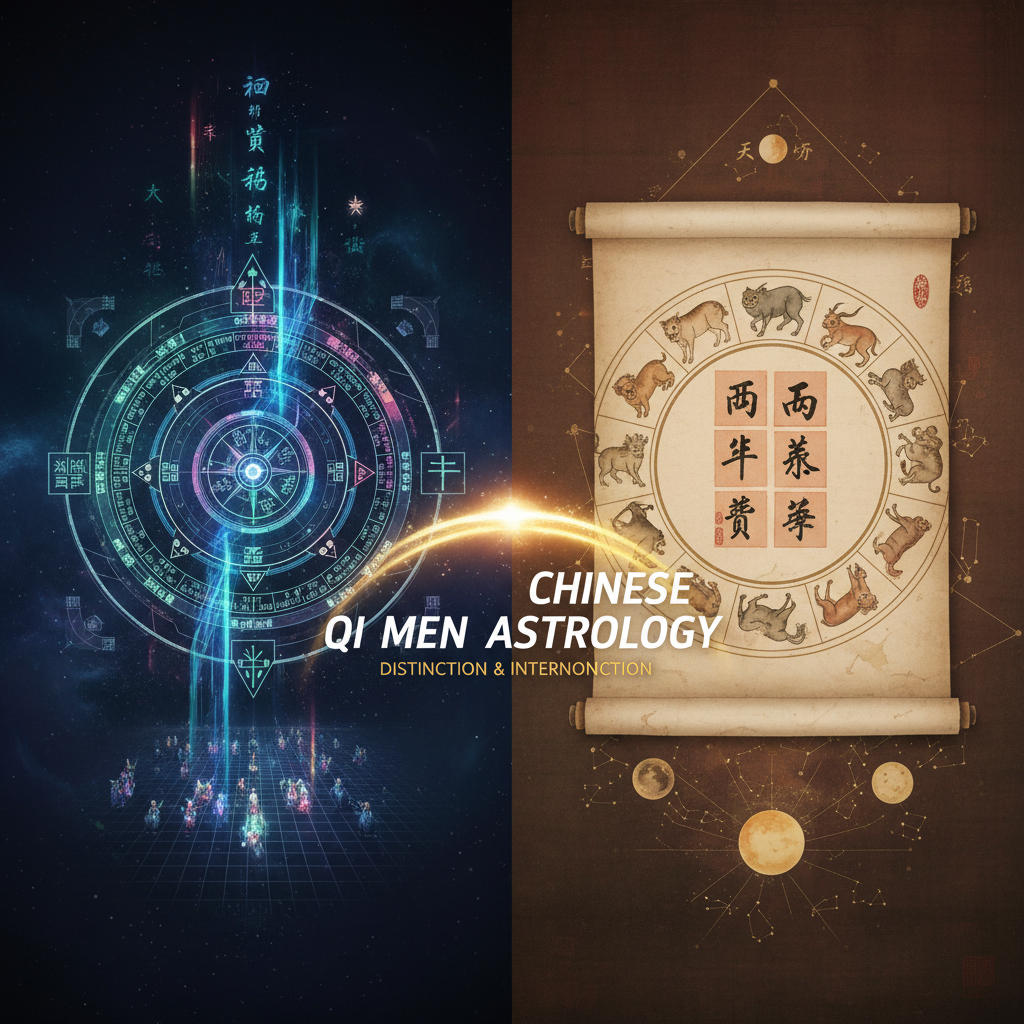
Qi Men is related to Chinese metaphysical traditions, including astrology, but it is distinct in purpose and method. Whereas BaZi (Four Pillars) looks at natal destiny and long-term patterns, Qi Men is a timing and strategy system focused on immediate, tactical outcomes. Many practitioners integrate both systems for comprehensive advice.
7. How Long should a Typical Reading Take?

A simple timing consultation can take 15 to 30 minutes, especially if you only need an auspicious hour. A comprehensive strategic reading, which analyzes multiple charts and tactical options, can take 1 to 2 hours. For complex business or legal planning, plan a series of sessions to test and refine strategy.
8. are There Cultural or Legal Considerations When Using Qi Men in Business?

Yes. In corporate settings, ensure transparency with stakeholders where appropriate and avoid making time-sensitive decisions solely on metaphysical grounds when legal or regulatory issues are involved. Qi Men can provide guidance on timing, but compliance and expert legal advice should always take precedence.
9. How do I Test Qi Men’s Effectiveness for Myself?
Run a controlled practice: pick a decision type you can repeat, such as scheduling calls or posting content, generate charts for different candidate times, follow the recommended timing, and record outcomes. After 30 to 60 trials, analyze whether the recommended times coincide with measurably better results. This empirical approach helps build confidence or highlight areas for refinement.
10. can You Give a Quick Checklist for Making a Qi Men Decision Today?
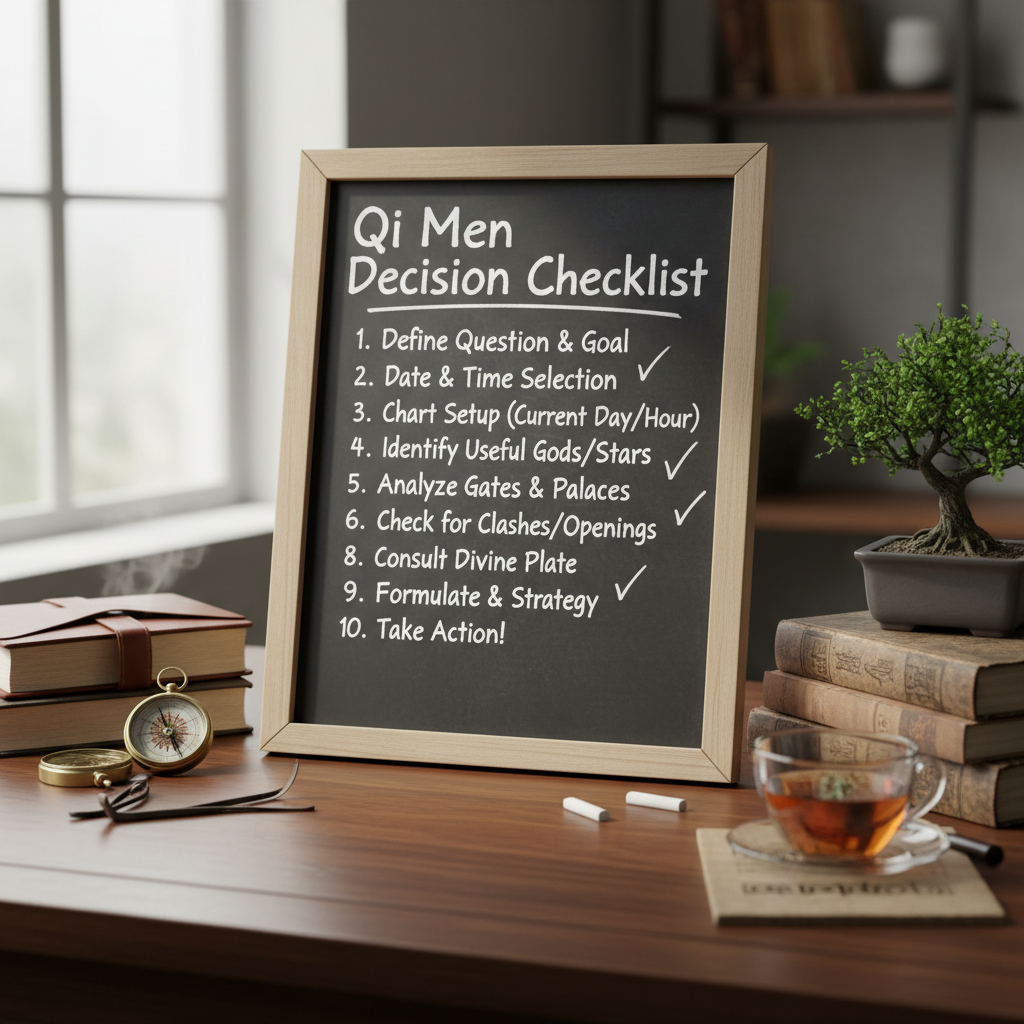
Yes. Quick checklist: confirm exact time and location, generate the chart, identify the relevant palace and its gate, check the ruling star and deity, review Heavenly Stem and Earthly Branch interactions, decide to proceed or reschedule, and document the outcome. Follow up after the event to learn from the result.
Conclusion
Qi Men Dun Jia is a sophisticated, time-based system that provides strategic and tactical guidance for decisions where timing and approach matter. It works by interpreting the interaction of gates, stars, deities, heavenly stems, and earthly branches within a chart generated for a specific moment. When used responsibly and combined with good judgment, data, and ethical practice, Qi Men can give us a measurable edge in business, relationships, health planning, and everyday choices.
If you are starting, begin with small, trackable experiments and a disciplined practice routine. Use reliable tools to generate accurate charts and seek mentorship to accelerate learning. Keep records, analyze outcomes, and refine your methods. Over time you will develop pattern recognition and confidence, and you will learn to integrate Qi Men Dun Jia into a broader decision-making toolkit that balances intuition, timing, and tangible preparation.
We have shared practical steps, common mistakes to avoid, ethical guidelines, and a roadmap for learning. If you want to take the next step, pick a decision you face in the coming week, generate two or three Qi Men charts for candidate times, and test the method. Keep it practical, measure outcomes, and feel free to reach out to a community or mentor for feedback. With steady application, Qi Men becomes less an esoteric art and more a pragmatic strategy for aligning action with opportunity.
Leave a Reply
You must be logged in to post a comment.