
Sima Tan and the Six Schools of Chinese Philosophy
The essay “On the Essential Meanings of the Six Schools” (论六家要旨) is one of the shortest yet most consequential texts in the history of Chinese thought. In a few hundred characters, Sima Tan, the father of Sima Qian, sorted the entire philosophical landscape of early China into six categories and ranked them. This classification shaped how every later scholar understood Chinese philosophy.
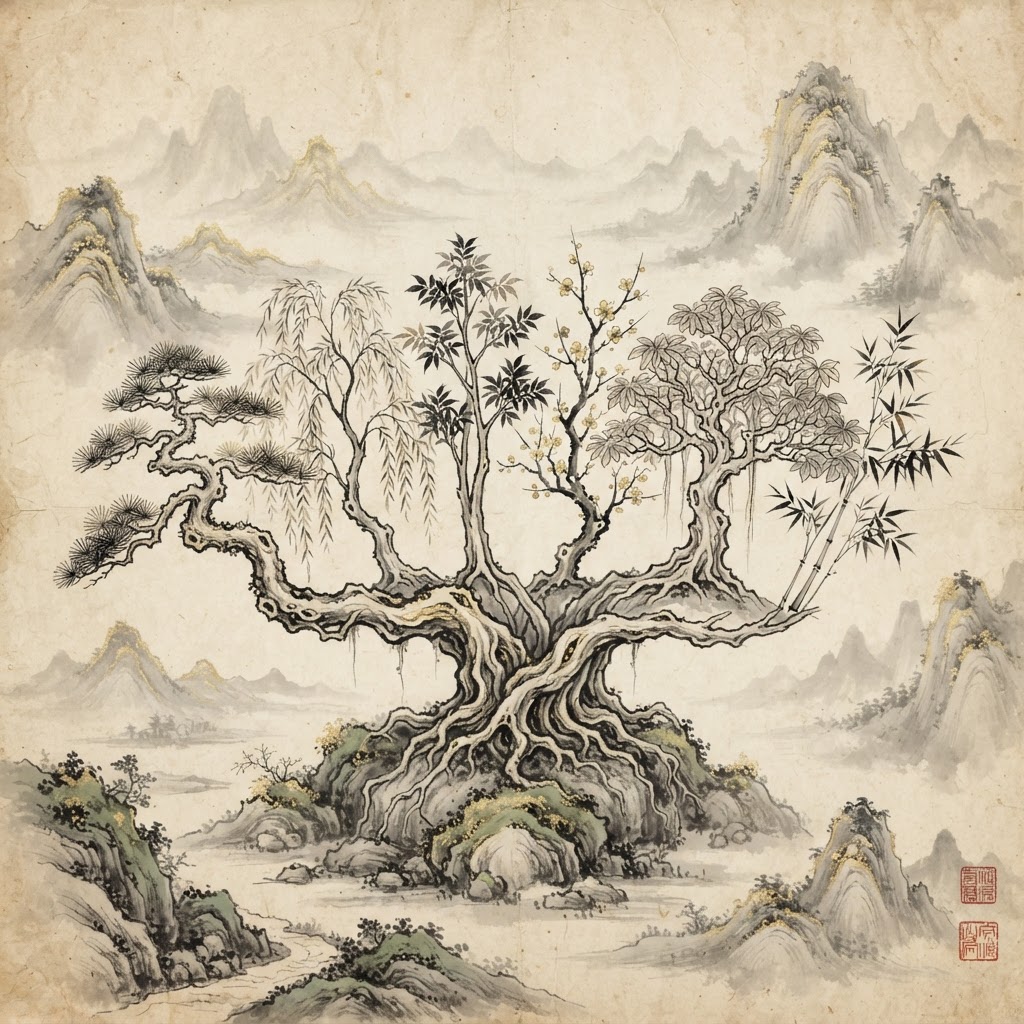
What makes this essay remarkable is not its length or its depth. It is its ambition. Sima Tan looked at the chaos of competing traditions, each claiming ancient wisdom, and said: there are essentially six approaches, here is what each one cares about, here is what each one gets right, and here is what each one misses. Then he quietly argued that his own tradition, the Daoist school, holds them all together.
Before this essay, nobody had tried this kind of systematic taxonomy. After it, every Chinese intellectual for two thousand years talked about “the six schools” or “the ten schools” as though these categories were natural features of the landscape. Sima Tan invented the map that everyone used to navigate Chinese thought.
Who Was Sima Tan?
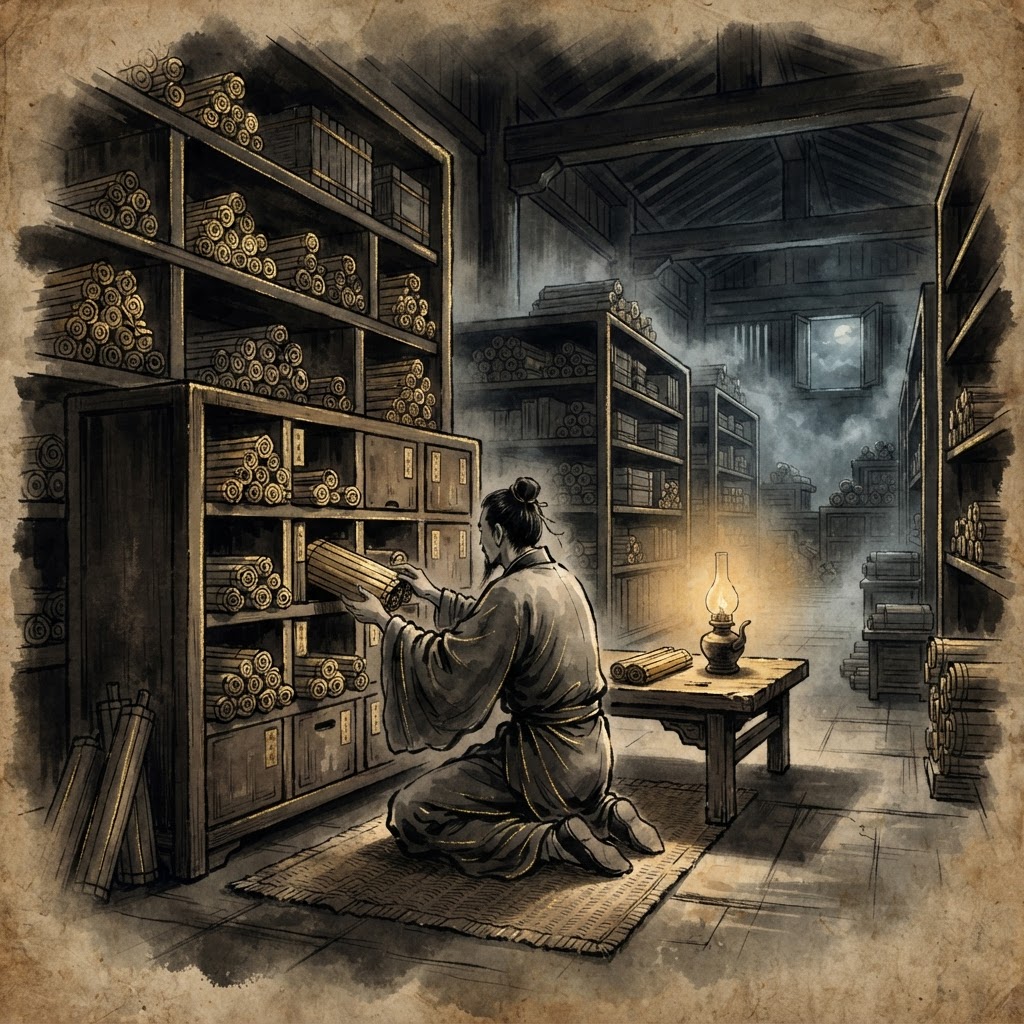
Sima Tan served as the Grand Astrologer (太史令) under Emperor Wu of the Han dynasty. This was not a glamorous court position. It was a technical role involving calendar calculation, ritual timing, and record keeping. But Sima Tan saw it as something more: the office of the historian was a sacred trust, a lineage of knowledge passed from one generation to the next.
He raised his son Sima Qian with one obsession: continue the work I started. The unfinished dream of writing a comprehensive history of China was Sima Tan’s gift and burden to his son. Sima Qian would complete it, but the father’s intellectual framework, including the six schools classification, became the backbone of the entire Shiji.
Sima Tan studied under three masters during his career. He learned astronomy from Tang Du, the Yijing from Yang He, and Daoist philosophy from Huang Zi. This breadth matters because the six schools essay reflects someone who had been trained across traditions rather than initiated into one. He could see the strengths of each school because he had sat at the feet of teachers from competing lineages.
“My predecessor was originally from Zhou. Too bad, too bad, I am too late!” Sima Tan reportedly said when he saw the old Zhou records fading. This sense of urgency, of knowledge slipping away, drove him to categorize and preserve.
The Six Schools Defined
Here is what Sima Tan actually said, in summary. He identified six traditions and gave each a one-sentence essence. The essay appears in Chapter 130 of the Shiji, the autobiographical postscript where Sima Qian records his father’s words.
The Six Schools at a Glance
| School (家) | Core Concern | Strength | Weakness |
|---|---|---|---|
| Daoist (道家) | Following the natural Way | Integrates all insights without forcing | Can seem passive or vague |
| Confucian (儒家) | Ritual, morality, hierarchy | Order and social cohesion | Struggles to adapt to change |
| Mohist (墨家) | Utility, equality, frugality | Practical and disciplined | Rigid uniformity, anti-diversity |
| Legalist (法家) | Law, rewards, punishments | Implements and executes policy | Lacks moral foundation |
| School of Names (名家) | Logic, definitions, distinctions | Catches linguistic errors | Focuses on trivialities |
| Yin-Yang (阴阳家) | Seasonal cycles, cosmology | Aligns with natural rhythms | Risks superstition and fatalism |
Notice the cleverness of Sima Tan’s approach. He does not attack any school directly. He praises each one for a genuine contribution and then notes where it breaks down. The Confucians understand social order but ignore larger patterns of change. The Mohists love efficiency but strangle diversity. The Legalists can execute but have no soul. The School of Names catches logical errors but misses the big picture. The Yin-Yang school reads the cosmos but can fall into astrology.
This method of criticism, praise followed by measured limitation, became a template for how Chinese scholars evaluated intellectual traditions. It is generous but not sentimental. It respects what each school contributes without pretending any one tradition has all the answers.
Why Sima Tan Ranked Daoism First
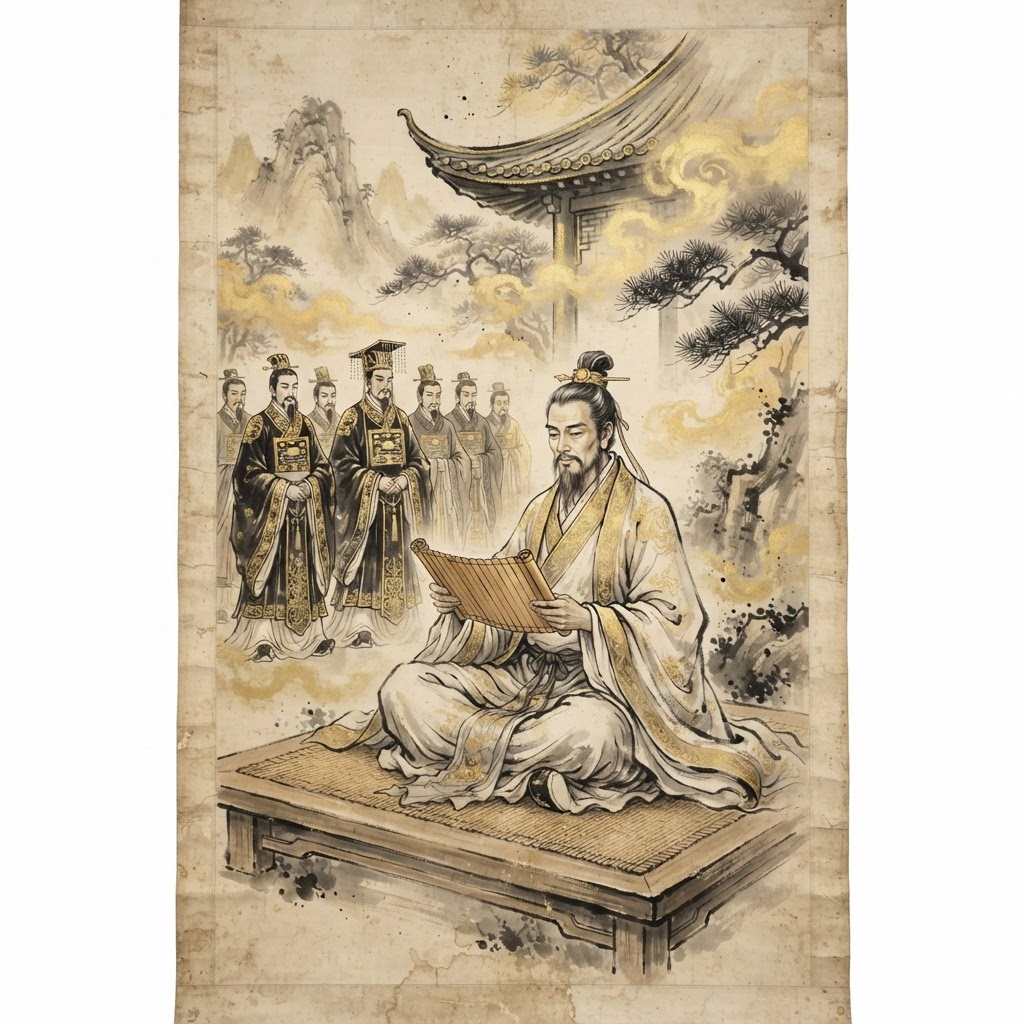
The most interesting and controversial part of the essay is Sima Tan’s conclusion. He argues that the Daoist school (道家) is not merely one school among six but the synthesis that makes the others useful. The Daoist does not insist on a single method. The Daoist borrows what works from each tradition and discards what does not fit the moment.
A quick note: Sima Tan’s Daoism is not the philosophical Daoism of the Zhuangzi with its wild stories and rejection of society. It is a practical, administrative Daoism that values flexibility, economy of effort, and non-interference in governance. Think of it as a management philosophy: hire good people, give them room, intervene only when necessary, and let the system self-organize.
This preference for Daoism is revealing. Sima Tan was a court official in an era when Emperor Wu was aggressively promoting Confucianism as the state ideology. By writing this essay, Sima Tan was quietly pushing back. He was saying: the Confucian revival you are enforcing is valuable, but it is not the whole picture. A state run purely on Confucian ritual is like a body with bones but no blood.
The political subtext is worth pausing on. Emperor Wu had elevated Confucian scholars to positions of power and sidelined other traditions. Sima Tan, as Grand Astrologer, occupied a liminal position: technically part of the bureaucracy but trained in multiple traditions. His essay is a diplomatic defense of intellectual pluralism at a time when the court was narrowing its ideological window.
The Lasting Impact on Chinese Thought
One way to measure the influence of Sima Tan’s essay is to look at how later scholars could not stop talking about it. The phrase “six schools” became shorthand for the Warring States intellectual world. When Liu Xin (刘歆) created his own classification in the Han dynasty, he borrowed and expanded on Sima Tan’s framework. When the Tang dynasty compiled the Sui Book of Research, it organized all of Chinese knowledge using categories descended directly from Sima Tan’s taxonomy.
The classification you use shapes what you can see. Sima Tan made six boxes, and for two thousand years, scholars kept putting thinkers into them. Some thinkers fit neatly. Others were crammed in. Some were left out entirely.
The thinkers who did not make Sima Tan’s list tell us something too. The military strategists (兵家) are absent. The agriculturalists (农家) are missing. The diplomats (纵横家) are nowhere to be found. The medical traditions (医家) are not included. Sima Tan chose six categories that he considered the backbone of political philosophy, the traditions a ruler needed to understand to govern well.
What you leave out of a classification matters as much as what you put in. The absence of military strategy is striking. Sunzi’s Art of War was well known in Han courts. But Sima Tan was writing about governance philosophy, not tactical manuals. Strategy belonged in the execution layer, not the philosophical foundation.
The question of accuracy is worth asking. Were these actual organized schools in the Warring States period, or were they Sima Tan’s convenient labels? The answer is mixed. Some thinkers, like the Mohists, did form organized groups with shared doctrine and leadership. Others, like the Yin-Yang tradition, were dispersed across court astronomers, ritual specialists, and calendar makers with no central authority. Sima Tan took a messy, overlapping field of intellectual practice and gave it a clean structure. The structure was useful precisely because the reality was tangled.
This is what good categorization does. It does not pretend the boxes are real. It acknowledges they are tools for thinking. The six schools are Sima Tan’s thinking tools, and they became everyone else’s because they were good ones.
How the Six Schools Map to the Shiji
The essay on the six schools is not a standalone piece. It sits inside the larger structure of the Shiji, and it works like a key that reveals Sima Qian’s editorial decisions throughout the text. When Sima Qian writes about Legalist ministers of Qin, he is dramatizing the strengths and weaknesses Sima Tan identified. When he writes about the Daoist hermits of early Han, he is showing the Daoist ideal in action.
Six Schools in the Shiji
| School | Key Shiji Chapter | What Sima Qian Shows |
|---|---|---|
| Confucian | Lives of Confucius and disciples | The nobility and the limits of moral persistence |
| Legalist | Basic Annals of Qin, Shang Yang biography | Law’s power to build and to destroy |
| Mohist | Biography of Mozi (fragmentary) | A tradition fading from relevance |
| Daoist | Lives of Laozi and Zhuangzi | Wisdom as the refusal to hold power |
| Naming | Lives of debaters | Logic as a double-edged skill |
| Yin-Yang | Treatise on Calendars | Cosmic measurement as statecraft |
What the Six Schools Essay Teaches Us Today
The essay works as a model for how to think about competing ideas without falling into tribal loyalty. Sima Tan did not say “Confucianism is wrong” or “Legalism is evil.” He said each one captures part of the truth and breaks down when pushed beyond its natural domain. That is a pretty good framework for evaluating any set of competing frameworks, whether in philosophy, business, or daily decisions.
The essay also teaches something about the discipline of naming. Before Sima Tan, the Warring States thinkers were a jumble of arguments and personalities. After him, they were six schools with clear positions. The act of naming gave the debate structure. It is the same instinct that drives a good consultant to walk into a messy organization and say: “I see three problems, not seventeen. Here they are in priority order.”
There is also a deeper lesson about intellectual humility. Sima Tan ranked his own school first, but he did not dismiss the others. He could see the beauty in a Legalist system even while noting its cruelty. He admired Confucian moral seriousness even while doubting its adaptability. That posture, respecting the partial truths of traditions you disagree with, is harder than it looks. Most people either adopt a framework wholesale or reject it wholesale. Sima Tan did neither. He collected.
Frequently Asked Questions
What are the six schools of Chinese philosophy?
The six schools identified by Sima Tan in his essay “On the Essential Meanings of the Six Schools” are: Daoist (道家), Confucian (儒家), Mohist (墨家), Legalist (法家), School of Names (名家), and Yin-Yang (阴阳家). He classified the major philosophical traditions of the Warring States period into these categories.
Why did Sima Tan rank Daoism above the other schools?
Sima Tan argued that Daoism is the most comprehensive because it borrows strengths from all other schools without being limited by any single approach. He saw it as a flexible, practical philosophy of governance that adapts to circumstances rather than imposing rigid rules.
What is the relationship between Sima Tan and Sima Qian?
Sima Tan was the father of Sima Qian. He served as Grand Astrologer under Emperor Wu and began the project of writing a comprehensive history of China. When he died, he asked his son to complete the work. Sima Qian fulfilled this by writing the Shiji (Records of the Grand Historian), incorporating his father’s framework, including the six schools classification.
How did the six schools classification influence later Chinese thought?
Sima Tan’s taxonomy became the standard framework for understanding pre-Qin philosophy. Later scholars like Liu Xin expanded it into ten schools, but the core structure remained. The classification is still used today in academic discussions of Chinese philosophy.
Related reading:
- The Shiji Pillar: Records of the Grand Historian
- Sima Qian: The Life and Legacy of China’s First Great Historian
- The Structure of the Shiji: Its Five Sections Explained
- The Greatest Chapters and Biographies of the Shiji
- The Records of the Grand Historian as Literature
- Shiji Lessons for Modern Leaders and Business Owners
Leave a Reply
You must be logged in to post a comment.