Why the Shiji Is More Than History
Most people hear “Records of the Grand Historian” and assume it is a reference book. A chronicle. Something you consult when you need a date or a name. I used to think the same thing. Then I sat down and actually read it cover to cover, and I realized something that scholars have known for two thousand years: Sima Qian was not just recording history. He was writing literature.
The Shiji (史记) is the work that created the genre of biographical writing in Chinese. It gave us character development, scene-setting, dialogue, dramatic tension, irony, and moral complexity long before those terms existed. It influenced every major writer in the Chinese tradition, from Ban Gu to Sima Guang to Luo Guanzhong. And if you read it today, with attention to how the stories are told rather than just what happened, you find a literary intelligence that rivals any novelist.
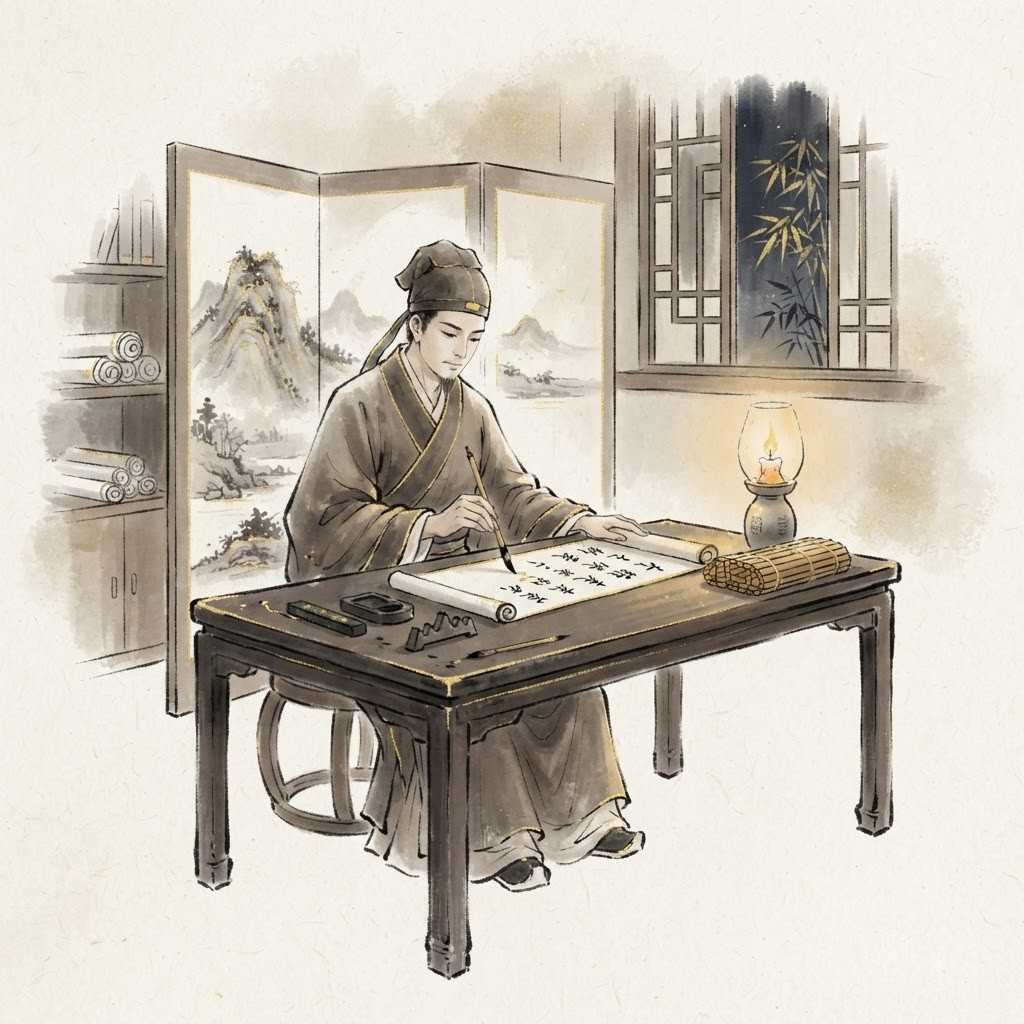
This article is a reader’s guide to the Shiji as literature. I am not going to summarize a thousand pages. I am going to show you the techniques Sima Qian used to turn historical record into enduring narrative, and why those techniques still matter for anyone who cares about storytelling, persuasion, or the way a well-told story can change how people think.
Sima Qian as Storyteller
Before we look at techniques, it helps to understand the mind behind them. Sima Qian (司马迁) lived around 145 to 86 BCE and served as the Grand Historian (太史令) of the Han court. His father Sima Tan held the same position before him and, on his deathbed, asked Sima Qian to complete a comprehensive history of China. That request became the Shiji.
What makes Sima Qian different from other historians of his era is that he had a thesis about every person he wrote about. He was not compiling a neutral database. He had opinions, and those opinions shaped how he selected details, structured chapters, and positioned characters. He used biography as a literary form to make arguments about virtue, ambition, loyalty, and the cost of power.
Read Sima Qian’s biography of Xiang Yu and then his biography of Liu Bang. You will notice that the same historical events appear in both, but the emphases are completely different. That is not carelessness. That is deliberate literary architecture. Sima Qian is telling you something different about each man through what he chooses to highlight.
If you want to dig deeper into the man behind the work, I wrote a full article about Sima Qian’s life and legacy. The five-section structure of the Shiji is explained in this companion piece, and the greatest chapters and biographies get their own detailed treatment here. The full pillar page lives at dougleschan.com/records-of-the-grand-historian-shiji/.
Technique One: Character as Destiny
The most powerful literary device in the Shiji is Sima Qian’s approach to character. He believed that a person’s character determined their fate, and he structured every biography to demonstrate that link. Not through editorial preaching, but through the selection and arrangement of events.
Take Xiang Yu (项羽), the tragic warlord who nearly won the empire before losing it to Liu Bang. Sima Qian does not say “Xiang Yu was arrogant and that destroyed him.” Instead, he places scene after scene where Xiang Yu’s pride overrides good counsel: he burns the Qin palace, he kills the surrendered king, he refuses to cross the river to safety. The reader arrives at the conclusion on their own, which makes it irrefutable. That is the literary method.
Liu Bang (刘邦), by contrast, is shown listening to advice, changing course when necessary, and sharing credit with his generals. Sima Qian never says “Liu Bang was humble.” He shows you Liu Bang acting humbly, and lets you decide.
| Technique | How Sima Qian Uses It | Modern Equivalent |
|---|---|---|
| Selective detail | Cherry-picks events that reveal character without editorializing | Show, do not tell (fiction rule) |
| Recurring motif | Repeats patterns across a biography to reinforce a trait | Leitmotif in opera or film |
| Comparative biography | Places contrasting lives in adjacent chapters to invite comparison | Parallel narratives in modern nonfiction |
| Omission as statement | Leaves out events that do not serve the thesis, creating emphasis through absence | Editing in documentary film |
Technique Two: The Justified Opinion
Every biography in the Shiji ends with a section called “The Grand Historian Says” (太史公曰), where Sima Qian explicitly offers his evaluation. This is editorial commentary, and it is the one place where he drops the mask of neutral narrator. But even here, he is subtle. He rarely states a straightforward verdict. He uses analogy, allusion, and abbreviation to signal a judgment that often sits in tension with the narrative he just presented.
Reading Tip: Sima Qian’s closing evaluations are not summaries. They are arguments. Sometimes they support the narrative’s apparent direction. Sometimes they subtly contradict it, adding a layer of irony. When the “Grand Historian Says” section praises someone the narrative showed failing, that contrast is the point. Read these sections twice.
The effect of this technique is that the reader is left to weigh the narrative against the commentary, and in doing so, constructs their own interpretation. Sima Qian trusted his readers enough to let them disagree with him. That trust is what makes the Shiji feel alive rather than encyclopedic.
Technique Three: Dialogue as Prophecy
Sima Qian’s use of dialogue is one of his most sophisticated literary tools. He could not possibly have recorded verbatim conversations from events centuries before his birth. Yet he included dialogue throughout the Shiji. Scholars have debated this for ages, but the literary purpose is clear: the dialogue serves as compressed characterization and thematic foreshadowing.
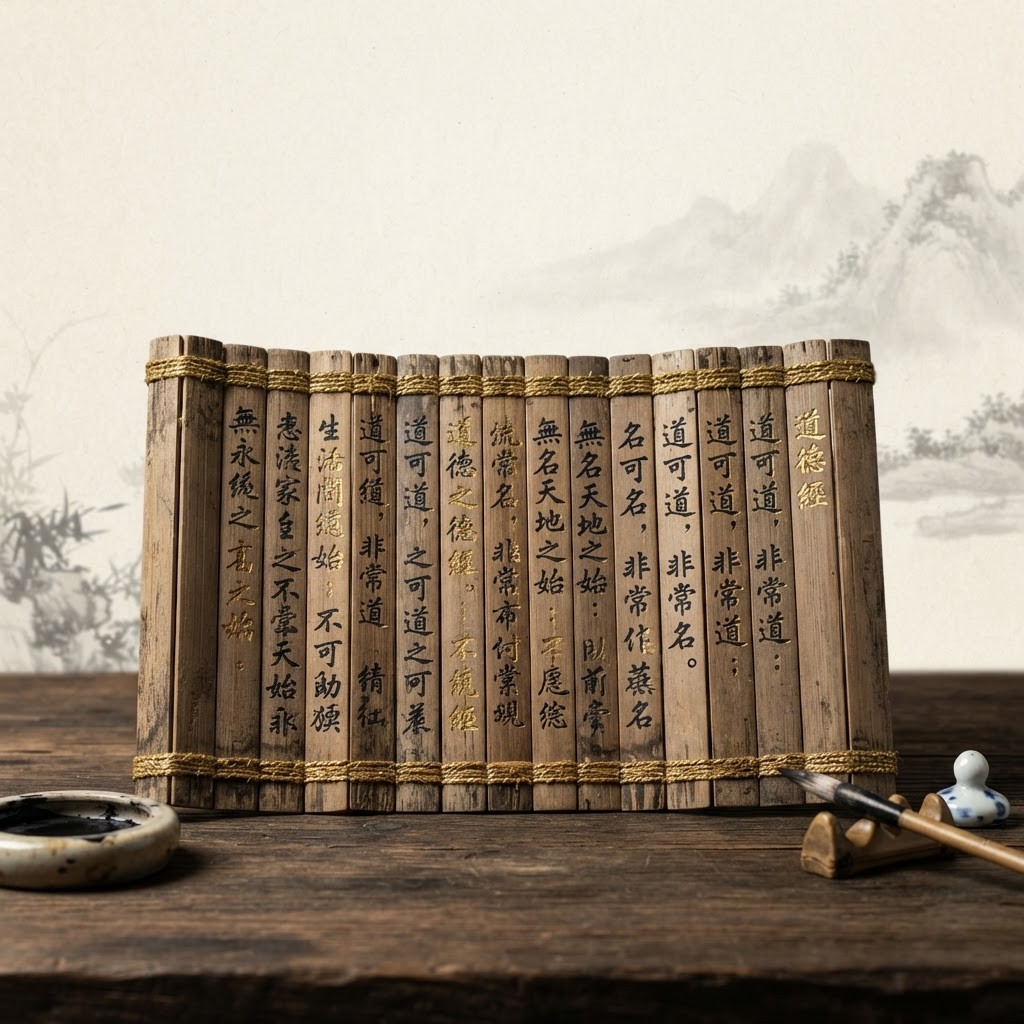
When Xiang Yu sees the First Emperor of Qin during his procession and says “I could replace him,” and Liu Bang says “A man should be like this,” Sima Qian is not pretending these exact words were spoken. He is planting the seed of each man’s destiny in a single line. Xiang Yu’s impulse is to supplant. Liu Bang’s impulse is to aspire. The entire arc of the Chu-Han contention is compressed into two lines of invented dialogue, and it works because the reader already knows the outcome.
This is the same principle the I Ching uses in a different register: a few words carry an entire structure of meaning. Sima Qian had an intuitive grasp of the idea that the most powerful writing uses compression, not expansion. A novelist today might spend a chapter building toward a revelation. Sima Qian could do it in a sentence.
Technique Four: The Tragic Structure
Many of the Shiji’s most memorable biographies follow a tragic arc: a person of extraordinary ability rises through talent and opportunity, reaches a peak, and then a specific character flaw brings about their fall. This is the same structure as Greek tragedy, but Sima Qian developed it independently and arguably with more psychological depth.
Han Xin (韩信) is the clearest example. He was a military genius who won every battle, advised Liu Bang on strategy, and was essential to the founding of the Han dynasty. Yet he lacked political instinct. He trusted where he should have been skeptical, hesitated when he should have acted, and ultimately was executed by the court he helped create. Sima Qian tells this story with a measured sympathy that makes the reader feel the loss without being told how to feel.
A quick note: The tragic structure in the Shiji is not about fate in the Western sense. Sima Qian’s tragic heroes are not victims of destiny. They are undone by specific, identifiable character traits. The tragedy is that they could have chosen differently. This is what makes the Shiji’s biographies feel modern rather than mythological.
The assassin biographies (刺客列传), which I cover in the companion article on great chapters, follow the same pattern. Jing Ke (荆轲) is brave, loyal, and determined, but he is also reckless, and his recklessness produces both his heroism and his failure. Sima Qian does not condemn him. He presents him with enough detail that the reader can admire the courage and lament the waste simultaneously.
Technique Five: Collective Biography as Social Critique
One of the Shiji’s most innovative features is the collective biography (列传), which groups people by type rather than chronology. Sima Qian wrote collective biographies of merchants, assassins, court jesters, harsh officials, and others. By grouping them, he was making statements about categories of human behavior.
The collective biography of merchants (货殖列传) is especially interesting. Sima Qian treated commerce with respect and economic activity with nuance at a time when most Chinese intellectuals regarded merchants with suspicion. He argued that the desire for profit is natural, that market forces operate regardless of government attempts to suppress them, and that wise rulers work with economic reality rather than against it.
| Collective Biography | Theme | Literary Purpose |
|---|---|---|
| Merchants (货殖列传) | Commerce and human nature | Economic philosophy as narrative |
| Assassins (刺客列传) | Loyalty and sacrifice | Tragedy and moral ambiguity |
| Harsh officials (酷吏列传) | Law and cruelty | Critique of state power |
| Jesters (滑稽列传) | Humor as truth-telling | Comedy as political commentary |
The Shiji and the Chinese Literary Tradition
The Shiji did not just influence historians. It became a foundational literary text that shaped how Chinese writers thought about narrative for the next two thousand years. Ban Gu’s Book of Han (汉书) borrowed the structure wholesale. Sima Guang’s Comprehensive Mirror (资治通鉴) engaged with it explicitly. The great classical novels, including Romance of the Three Kingdoms and Water Margin, drew on the Shiji’s techniques of characterization and dramatic pacing.
What Sima Qian gave Chinese literature was the idea that history is not just a sequence of events. It is a story, and the storyteller’s choices matter. Before the Shiji, Chinese historical writing was largely chronological and formulaic. After the Shiji, it became a literary art with room for voice, opinion, and structure.
The Zizhi Tongjian, which I cover in a separate pillar, is the most direct descendant. Sima Guang was a calmer, more politically conservative writer than Sima Qian, and his Comprehensive Mirror is more explicitly instructional. But its existence is unimaginable without the Shiji.
Why This Matters for Modern Readers
I am going to be direct: most people will never read the entire Shiji in the original Classical Chinese. Even in translation, it runs over a thousand pages. But you do not need to read the whole thing to benefit from its literary intelligence.
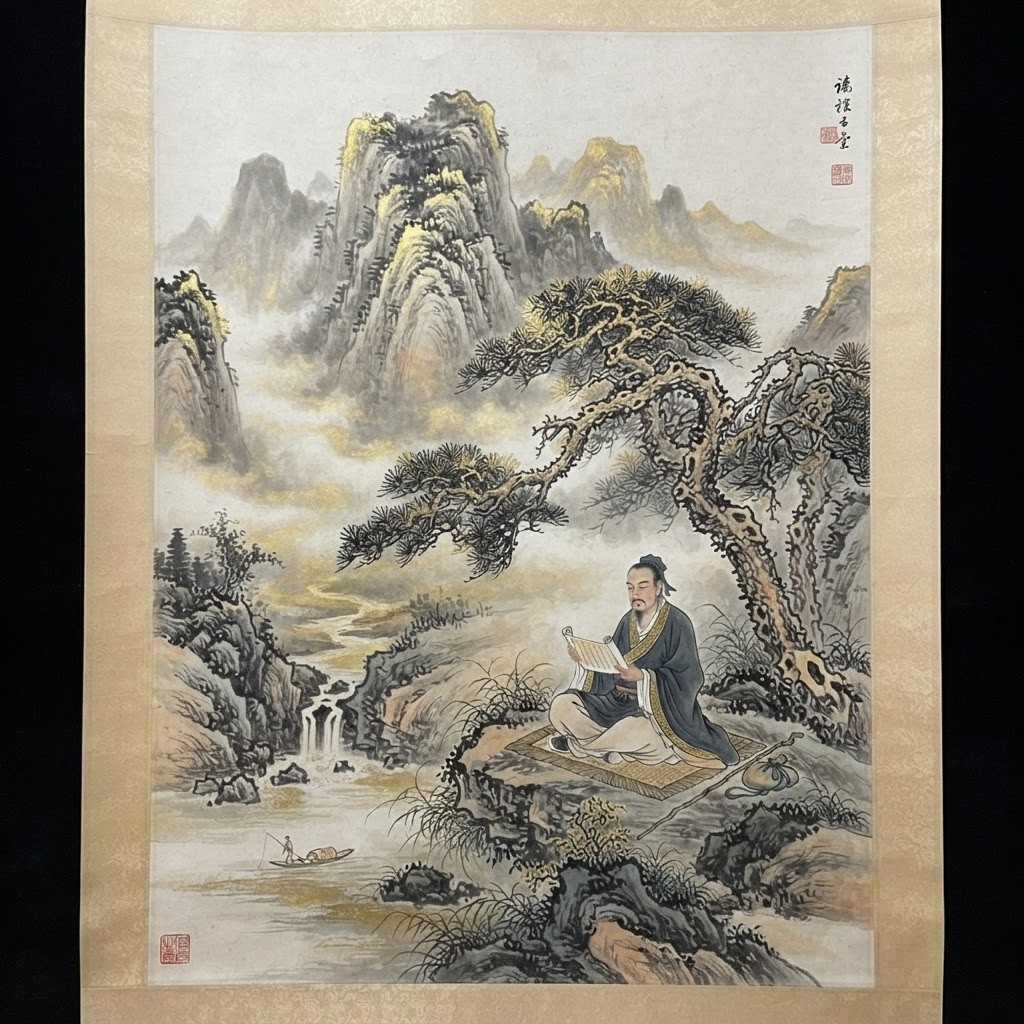
Here is my advice. Pick three biographies. Read them slowly. Notice the first scene, because Sima Qian almost always plants the thesis in the opening. Notice the recurring details, because they are motifs. And read the “Grand Historian Says” section last, as if it were a review of the biography you just read, and ask yourself whether you agree with it.
The Shiji rewards slow, attentive reading in a way few texts do. It also teaches you something about how stories work: that the most powerful effects come from what you choose to include, not from what you explain. A well-placed scene makes its point without commentary. A well-placed silence speaks louder than a thousand words. That is a lesson every writer, every business communicator, and every parent trying to teach a child about consequences can use.
Reading Plan for the Shiji as Literature:
1. Begin with Xiang Yu’s biography (the “Annals of Xiang Yu” is anomalous as an annal-for-a-non-emperor, which is itself a literary statement).
2. Then read Liu Bang’s biography for contrast.
3. Then read one collective biography (start with the assassins).
4. Then read the Merchant’s Biography for economic philosophy.
5. Then read the Letter to Ren An (报任安书) for Sima Qian’s own voice.
The Letter to Ren An: Sima Qian’s Most Literary Moment
The Letter to Ren An (报任安书) is not formally a chapter of the Shiji, but it is the key to understanding Sima Qian as a literary figure. In this letter, written to a friend who was condemned to death, Sima Qian explained his own suffering (he had been castrated after defending a defeated general), why he chose to live with that shame, and what he was trying to accomplish with the Shiji.
He wrote: “A person’s death may be weightier than Mount Tai or lighter than a feather.” The context is that he chose to live in disgrace to complete his work. The letter is the most personal writing we have from Sima Qian, and it reveals the inner drive that powered the Shiji: the conviction that a historical record, written well, could outlast the person who wrote it.
This is why the Shiji is literature. It was not produced by a detached archivist. It was produced by a man who had suffered enormously and channeled that suffering into a work that would outlive every emperor who ever dismissed him. The intensity of that motivation is visible on every page.
Translating a Literary Classic
If you want to read the Shiji in English, there are several options. Burton Watson’s translation of selected chapters, published in 1961 and revised thereafter, is the most literary English version. William Nienhauser’s ongoing translation project is more complete and more scholarly. Both are worth having. Watson reads better as literature; Nienhauser is more useful as reference.
The challenge of translating the Shiji is that Sima Qian’s prose is terse. He packs enormous narrative weight into short Classical Chinese sentences. Translators have to decide whether to preserve the compression (which can make English feel choppy) or expand (which can feel like over-interpreting). Watson tends to expand just enough to preserve the literary flow, which is why his version reads like literature rather than a reference work.
| Translator | Style | Best For |
|---|---|---|
| Burton Watson | Literary, flowing | Reading for pleasure and insight |
| William Nienhauser | Scholarly, annotated | Academic study and reference |
| Yang Hsien-yi and Gladys Yang | Elegant but partial | Sample selections |
The Shiji in the Context of Five Arts
The Shiji connects to the broader world of Chinese intellectual traditions in several ways. Sima Qian’s father Sima Tan wrote about the Six Schools of Chinese thought, an early attempt to classify philosophy that influenced everything that came after. The Shiji’s treatises on ritual, music, astronomy, and economics show that Sima Qian understood these domains as aspects of a single civilizational picture.
This holistic view connects to the Five Arts of Chinese Metaphysics, where Shan, Yi, Ming, Bu, and Xiang are not isolated disciplines but facets of a unified understanding of the world. Sima Qian’s approach to history, which integrates politics, economics, astronomy, and biography into one work, embodies the same integrative spirit.
Narrative Pacing: How Sima Qian Controls Time
One of the things that struck me most when I first read the Shiji was how Sima Qian handles pacing. He does what modern screenwriters call “compressing and expanding time.” Events that matter to the thesis get paragraph after paragraph of detail. Events that are merely chronological get a single sentence and a date. This creates a reading rhythm that feels natural because it follows the logic of significance rather than the calendar.
In the biography of the First Emperor of Qin (秦始皇), Sima Qian spends an extraordinary amount of space on the moment when the King of Qin decides to punish his mother’s lover Lao Ai for staging a rebellion. The political crisis, the investigation, the exposure, the aftermath, all get detailed treatment. But the years between this crisis and the king’s eventual unification of the six states are compressed into a few sentences listing which state fell when. This is not laziness. Sima Qian is telling you that the character-revealing moments matter more than the dates. The dates are checkable in the tables. The character moments are what make the biography work as literature.
Think about the last long email or report you read. The ones that hold your attention are not the ones that give equal time to everything. They are the ones that spend words where the writer wants you to focus and move quickly through the transitions. Sima Qian understood this principle two thousand years before anyone wrote a guide to business communication.
Irony and the Double-Edged Compliment
Sima Qian was a master of irony, and once you start looking for it, it appears everywhere. His technique is to write what appears to be praise while placing it in a context that makes the praise uncomfortable. This is subtle and easy to miss if you are reading for information rather than for literary effect.
For example, in his treatment of the First Emperor, Sima Qian describes the unification of the six states with genuine admiration for the achievement. But he follows it with detailed accounts of the same emperor burning books, burying scholars alive, and building a tomb so vast it bankrupted the state. The narrative structure places magnificence and tyranny side by side, and the reader is left to hold both in tension. That is irony in the classical sense: not sarcasm, but the juxtaposition of incompatible truths within a single narrative frame.
In modern terms, Sima Qian practiced “narrative irony.” He did not tell you what to think. He arranged the evidence so that the truth sat in the space between two facts, and you had to find it yourself. This is one of the hardest techniques in all of writing, and Sima Qian did it so naturally that it looks effortless, which is the surest sign of craftsmanship.
Humor in the Shiji
People do not usually associate the Shiji with humor, but it is there, and it is deliberate. The collective biography of jesters and humorists (滑稽列传) is not just about comedians. It is about the power of humor to speak truth to power. Sima Qian was interested in the people who could say forbidden things by wrapping them in jokes, because he himself was someone who had been punished for speaking too directly.
One of the most memorable stories in this chapter is about Chunyu Kun (淳于髡), a court wit who used riddles and jokes to give political advice. When the King of Qi was spending too much time hunting, Chunyu Kun performed a riddle about a bird that had not been seen for three years and had not been heard for three years. The king got the message and returned to governing. Sima Qian’s admiration for this kind of indirect persuasion is obvious, and it tells you something about his own preference for literary indirection over direct declamation.
The Language of the Shiji: Terse but Loaded
Sima Qian wrote in Classical Chinese (文言文), which is inherently terse. But even by the standards of Classical Chinese, his prose is remarkably efficient. He rarely uses two characters when one will do. A common structure is a short sentence introducing an event, a brief dialogue, and then a transition that implies the passage of time without stating it.
What makes this work as literature is that each sentence carries multiple functions. A single sentence can simultaneously advance the plot, reveal character, and comment on the political situation. For example, when Sima Qian writes that Xiang Yu’s troops “ate raw grain and drank water” after a forced march, he is not just describing their physical state. He is showing Xiang Yu’s willingness to accept hardship, his troops’ loyalty, and the exhaustion of the campaign, all in one image. Modern writers call this “efficient prose.” Sima Qian did not have the term, but he had the practice.
| Stylistic Feature | Example from the Shiji | Literary Effect |
|---|---|---|
| Terse narration | Single-sentence scene transitions | Creates rapid pacing and momentum |
| Loaded detail | “Ate raw grain, drank water” | One image carries multiple meanings |
| Formulaic openings | Place of origin, family background | Sets up expectations the narrative fulfills or subverts |
| Rhetorical questions in evaluations | Grand Historian Says section | Invites reader to participate in judgment |
| Contrastive pairing | Xiang Yu vs Liu Bang | Character traits emerge through juxtaposition |
The Shiji and Chinese Fiction
The line from the Shiji to the great Chinese novels is more direct than most people realize. Luo Guanzhong, the author of Romance of the Three Kingdoms, drew on the Shiji’s characterization techniques. The way Sima Qian humanized historical figures by giving them memorable lines and revealing gestures became the template for how Chinese novelists built characters.
Consider the architecture of a Shiji biography and the architecture of a Chinese novel chapter. Both open with a scene that plants the central tension. Both develop that tension through a series of incidents that reinforce a pattern. Both reach a crisis that reveals the character’s defining trait. Both close with an evaluation that asks the reader to pass judgment. The continuity is structural, not just thematic.
Even the Water Margin (水浒传), which is about outlaws rather than emperors and ministers, follows the Shiji pattern of building collective biography through individual portraits. Each outlaw gets a chapter that establishes their character, and the group dynamics emerge from how these characters interact. That is precisely Sima Qian’s method, adapted from history to fiction.
Reading the Shiji Aloud
Here is something I discovered by accident. Try reading a Shiji biography aloud. The prose has a rhythm that becomes obvious when spoken. Classical Chinese is inherently rhythmic, but Sima Qian went further. He varied sentence length deliberately to control pacing. Short sentences for tension, longer sentences for description, parallel structures for emphasis, and then a sudden break to signal a shift in the narrative.
This rhythmic prose is part of what makes the Shiji feel literary rather than documentary. When you read it silently, you process information. When you read it aloud, you feel the dramatic architecture. The silence after a short sentence, the flow of a longer one, the balance of parallel pairs: these are the sounds of a writer who heard his words before he wrote them.
Sound Architecture of Shiji Prose:
1. Short declarative sentences for action and crisis.
2. Four-character parallel phrases for emphasis and beauty.
3. Longer descriptive passages for scene-setting.
4. Rhetorical questions in the evaluation sections to open space for the reader’s thought.
5. Sudden tonal shifts from formal narration to vivid detail, creating the effect of a camera zooming in.
The Personal Cost Behind the Prose
I keep coming back to the Letter to Ren An because it is the one place where Sima Qian dropped the mask. In the body of the Shiji, his own voice is filtered through the conventions of historical narration. In the letter, he speaks directly, and what he says is devastating. He wrote that he chose to endure the shame of castration because his work was not yet finished, and that a life cut short before its purpose is fulfilled would be a waste. He compared himself to earlier writers who produced their greatest works in prison: “King Wen of Zhou elaborated the Book of Changes while imprisoned; Confucius wrote the Spring and Autumn Annals in adversity.”
This letter is not just autobiography. It is a literary manifesto. Sima Qian is saying that great writing comes from suffering, that the writer’s obligation to complete their work overrides personal dignity, and that a text outlasts the body that produced it. Every biography in the Shiji was written by a man who believed this with absolute conviction. The intensity shows.
When you read the biography of Qu Yuan (屈原), the poet who drowned himself in the Miluo River after being exiled, and you know that Sima Qian was writing about a man who chose death while Sima Qian himself chose to live in shame, the biographies take on a different resonance. Sima Qian did not name himself in these chapters, but his shadow falls across every page.
The Shiji as a Model for How to Tell the Truth
There is a paradox at the heart of the Shiji that makes it endlessly fascinating. Sima Qian was writing under imperial patronage. He depended on Emperor Wu of Han for his position, his safety, and his access to records. Yet he wrote biographies that were critical of emperors, that elevated rebels and assassins, that questioned official versions of events. How did he get away with it?
A quick note: The answer is partly that the Shiji was not published during Sima Qian’s lifetime in the usual sense. He wrote it and stored it, and it was his ambition that it survive and be read by posterity. He was writing to history, not to his immediate audience. That gave him a kind of freedom no court propagandist enjoys. He was speaking to the future, and the future is a demanding but forgiving reader.
The lesson here is about the relationship between truth-telling and survival. Sima Qian did not write reckless denunciations. He embedded his critique in the structure of the narrative, in the selection of details, in the comparative placement of biographies, and in the ironic distance between event and evaluation. He told the truth, but he told it indirectly. This is not cowardice. It is a literary method, and it is the method that the greatest truth-tellers in every tradition have used: not direct confrontation, but narrative architecture that makes the truth impossible to miss.
| Direct Truth-Telling | Sima Qian’s Indirect Method |
|---|---|
| State the critique plainly | Let the story make the case through arrangement |
| Risk punishment for explicit dissent | Embed critique in narrative structure |
| Reader receives a verdict | Reader arrives at their own conclusion |
| Can be dismissed as opinion | Persuades precisely because it does not preach |
What the Shiji Teaches About Empathy in Writing
If there is a single quality that elevates the Shiji above other early historical works, it is Sima Qian’s capacity for empathy. He wrote about losers with the same care he wrote about winners. He wrote about enemies with fairness. He wrote about people he disagreed with, or who were considered enemies of the state, with enough humanity that you understood them as people rather than as cardboard villains.
The biographies of the assassins are the best example. Jing Ke tried to kill the King of Qin and died for it. By any measure of state loyalty, he was a criminal. But Sima Qian wrote his biography with tenderness, describing his departure from the river with such precision that the scene has been reproduced in paintings and operas for two thousand years. Sima Qian did not approve of assassination. He approved of the human qualities, loyalty and courage, that made the assassin’s story worth telling, even though the act itself was doomed.
This balance is what makes the Shiji a model for empathetic writing. Sima Qian could see the human being inside the historical figure. He could hold the act and the person simultaneously, judging one while understanding the other. That is a literary skill that goes beyond technique into the realm of moral imagination, and it is the quality that, more than anything else, makes the Shiji a work of literature rather than a work of record-keeping.
Related Articles in This Series
This article is part of a five-article series on the Shiji. The other articles in this series are:
- Sima Qian: The Life and Legacy of China’s First Great Historian
- The Structure of the Shiji: Its Five Sections Explained
- The Greatest Chapters and Biographies of the Shiji
- Shiji Lessons for Modern Leaders and Business Owners
For the full treatment, visit the Shiji pillar page. For more on Chinese metaphysics and its interconnected traditions, see the overview of Chinese metaphysics.
Frequently Asked Questions
Is the Shiji considered literature or history?
It is both. In the Chinese tradition, the distinction was not always meaningful. Sima Qian wrote with literary intent, used literary techniques, and aimed for literary effects, but everything in the Shiji is grounded in historical research. The work belongs to both traditions and is studied by scholars in both fields.
Did Sima Qian invent the concepts he used?
He synthesized and elevated existing techniques. Biography existed before the Shiji, but Sima Qian turned it into a literary art form. The five-section structure was his innovation, as was the “Grand Historian Says” evaluation. Dialogue in historical writing predated him, but his use of it for characterization and foreshadowing was new.
How accurate is the dialogue in the Shiji?
Most scholars agree the dialogue is constructed rather than verbatim. Sima Qian drew on earlier sources, oral traditions, and his own literary judgment. The historical accuracy of the events is generally strong, especially for events near his own time. The dialogue is best understood as literary reconstruction in service of character development.
Which translation should I start with?
Burton Watson’s “Records of the Grand Historian” for the literary reading experience. William Nienhauser’s edition for completeness and scholarly apparatus. If you read Classical Chinese, the Zhonghua Book Company edition remains the standard.
How long does it take to read the Shiji?
The complete Shiji is around 526,000 Chinese characters. In English translation, it runs over a thousand pages. You do not need to read it all. Starting with five to ten biographies gives you a strong sense of Sima Qian’s literary method. The biographies were designed to be read individually, not just as part of a reference work.
Why does Sima Qian sometimes contradict himself between biographies?
This is often deliberate. When the same event appears in two biographies with different emphases, Sima Qian is showing the event from two perspectives. Each biography has its own thesis, and the contrasting views are part of the literary design. It can also reflect genuine uncertainty in his sources, especially for events from before the Han dynasty.
What is the relationship between the Shiji and later dynastic histories?
The Shiji established the template that nearly all later dynastic histories followed. The five-section structure (annals, tables, treatises, hereditary houses, biographies) was adopted, adapted, and institutionalized. Ban Gu’s Hanshu was the first to follow it explicitly. Every major dynastic history after that drew on the Shiji’s model.
Leave a Reply
You must be logged in to post a comment.