
The Letter to Ren An: Sima Qian’s Most Personal Writing
The “Letter to Ren An” (报任安书) is the most intimate document we have from Sima Qian. In it, the great historian explains why he did not kill himself after suffering the most humiliating punishment the Han court could inflict. The letter is the voice of a man who has been broken and who has decided, deliberately and with full awareness of the cost, to keep going.
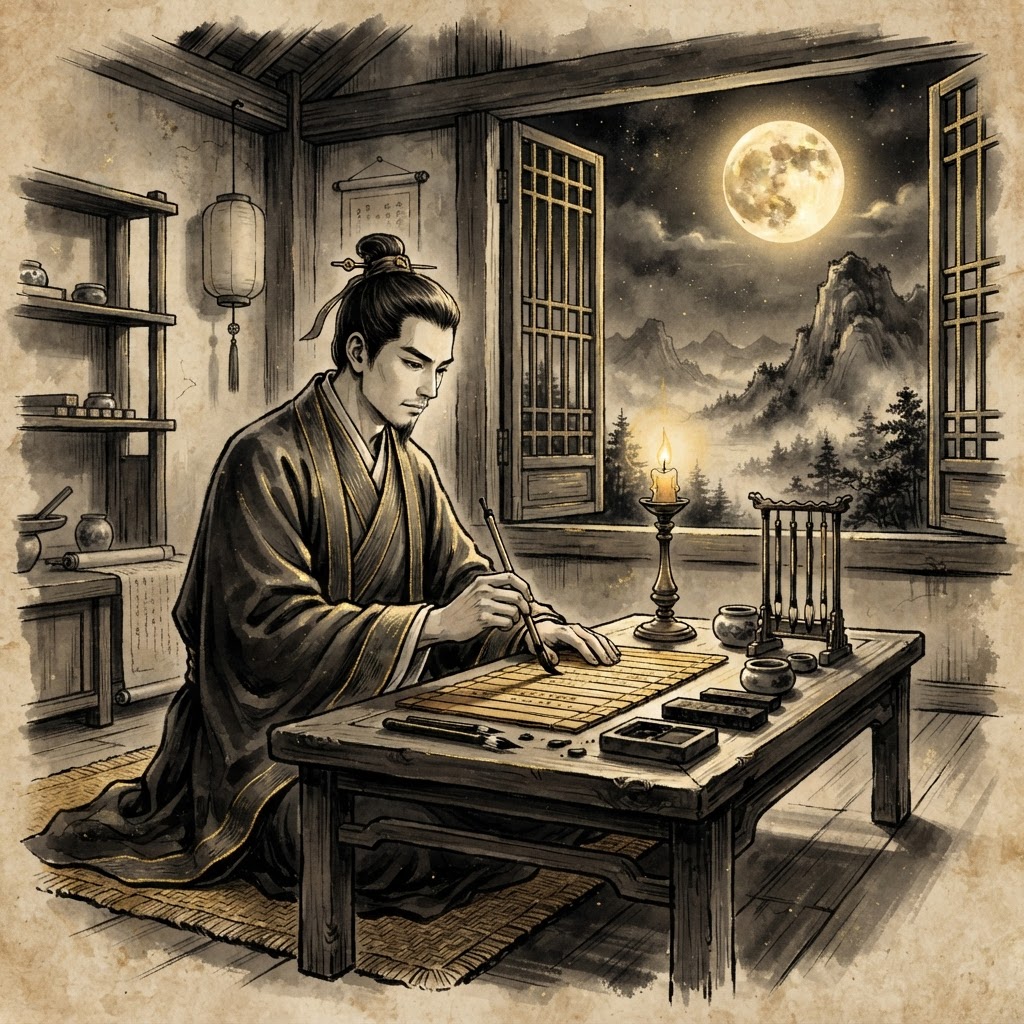
For anyone who has read the Shiji and wondered what kind of person could write such a vast, measured, and fair-minded history of China, the letter to Ren An provides the answer. Sima Qian wrote it from a place of personal devastation. The letter reveals that the Shiji was not written from comfortable scholarly distance. It was written as an act of will, a refusal to let humiliation be the last thing that defined him.
The Context: Why Was Sima Qian Punished?
In 99 BCE, a Han general named Li Ling led a campaign against the Xiongnu (匈奴), the confederation of nomadic peoples north of China. Li Ling was vastly outnumbered. His troops fought bravely but ran out of arrows and supplies. He surrendered rather than die in a last stand.
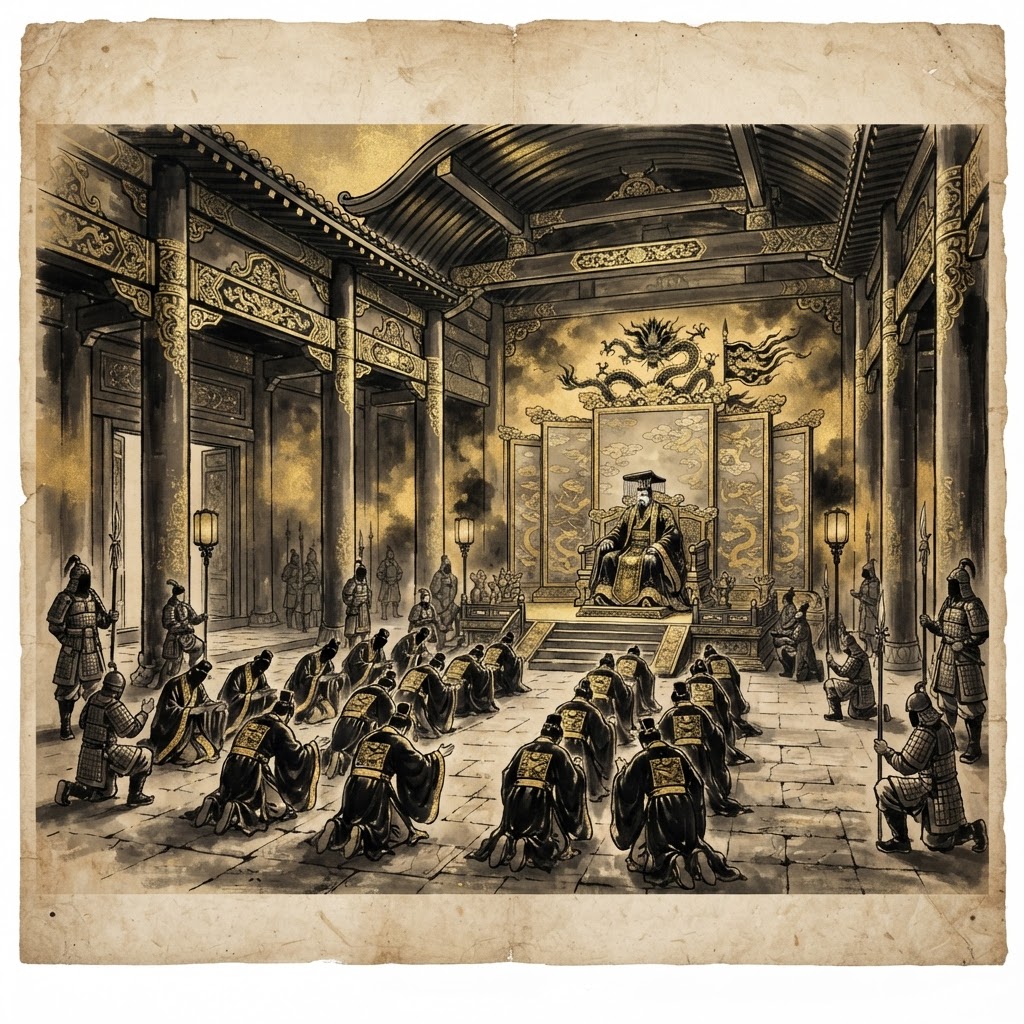
The court was outraged. Emperor Wu demanded condemnation of Li Ling. Sima Qian, who knew Li Ling personally and respected his character, spoke up in his defense. He argued that Li Ling had done his duty, fought well, and deserved understanding rather than scorn.
A quick note: The punishment Sima Qian received was castration (宫刑). In Han China, this was not merely physical. It meant social death. A castrated man could not hold office, could not continue his family line, and was considered a permanent outsider to respectable society. For a court official, this was a punishment worse than execution because it erased your identity while keeping you alive to see it erased.
Emperor Wu did not appreciate Sima Qian’s defense. He had the historian sentenced to castration. Sima Qian had the option of paying a fine to commute the sentence, but he could not afford it. He endured the punishment and returned to court, now stripped of his previous social standing.
The Letter Itself
The letter to Ren An was written some years after the punishment, when Ren An himself had fallen into trouble and was facing execution. Ren An had apparently written to Sima Qian earlier asking him to recommend talented men for office, a standard obligation of court officials. Sima Qian had not responded. The letter is his belated explanation of why he could not help, and why he had been silent.
The key passage, the one that makes this letter immortal, is Sima Qian’s explanation of why he chose to live:
A man faces death only once. There are deaths heavier than Mount Tai and deaths lighter than a feather. The reason men of old did not spare themselves was because they saw that some things were worth more than life itself.
Sima Qian goes on to list famous scholars who suffered terrible adversity and turned it into lasting work. Confucius wrote the Spring and Autumn Annals while in hardship. Qu Yuan wrote his poems in exile. Han Fei wrote his political treatises while imprisoned. Zuo Qiuming went blind and wrote the Zuo Zhuan. For Sima Qian, suffering and creative work were not opposite forces. Suffering was the fuel that produced the most powerful writing.
Men Who Turned Adversity Into Creation
| Figure | Hardship | Work Produced |
|---|---|---|
| Confucius | Wandering among hostile states | Spring and Autumn Annals (春秋) |
| Qu Yuan | Exiled from his home state of Chu | The Li Sao (离骚), Encountering Sorrow |
| Han Fei | Imprisoned in Qin | Han Feizi (韩非子) |
| Zuo Qiuming | Lost his sight | Zuo Zhuan (左传), Guoyu (国语) |
| Sima Qian | Castrated and humiliated | Shiji (史记), Records of the Grand Historian |
The Emotional Core of the Letter
What makes the letter devastating is not the list of precedents. It is the rawness of Sima Qian’s grief. He writes about the physical reality of his punishment with a directness that is rare in classical Chinese prose. He describes the shame of living in a body that has been mutilated, the daily humiliation of facing colleagues who know what happened to him, and the social isolation that turned him into a ghost in his own court.
He writes about visiting his father’s grave, unable to look his ancestors in the face. He writes about the ridicule of strangers. He writes about the internal struggle between ending everything and finding a reason to continue. The reason he found was the Shiji.
I wanted to examine heaven and humanity, to understand the changes from past to present, and to form the words of a single school. Before I could finish the draft, I met with this disaster. I regret that the work is not yet done, which is why I face the extreme punishment without rage.
Why the Letter Matters Beyond Biography
The letter to Ren An is read in Chinese schools and universities as one of the great documents of Chinese literature. It matters for three reasons.
First, it gives us Sima Qian’s own voice. The Shiji is a massive work, but Sima Qian hides himself behind his subject matter. The letter is the one place where he speaks directly, without the mask of the historian.
Second, the letter articulates a Chinese philosophy of suffering that resonates across centuries. The idea that adversity produces great work is not original to Sima Qian, but his version is the most personally credited because he lived it. Every later Chinese writer who faced hardship turned to this letter for validation.
A quick note: The phrase “heavier than Mount Tai, lighter than a feather” (重于泰山, 轻于鸿毛) entered the Chinese language from this letter. Chairman Mao used it centuries later in his essay “Serve the People.” This is one line that traveled from a personal letter to a national slogan.
Third, the letter raises a question that every reader has to face: what would you do? Sima Qian chose to endure shame to finish a book. He could have stopped. He could have died. He chose to write. That choice is the engine behind every word of the Shiji.

The Letter and the Shiji
Reading the Shiji before and after reading the letter to Ren An are two different experiences. Before the letter, the Shiji is a magnificent but impersonal chronicle. After the letter, every chapter carries the weight of a man writing against his own destruction.
The Shiji is filled with biographies of men who fell from power, who were betrayed, who were tortured, who were misunderstood. These chapters carry a hidden layer. They are, in part, Sima Qian processing his own experience through the lives of others. The deep empathy he brings to Xiang Yu’s downfall, to Han Xin’s execution, to the assassins who gave their lives for causes they believed in, comes from a man who knows what it means to lose everything.
Connecting the Letter to Key Shiji Chapters
| Shiji Chapter | Theme | Connection to Sima Qian’s Suffering |
|---|---|---|
| Biography of Jing Ke | Facing death with purpose | Sima Qian’s own choice to face life with purpose |
| Biography of Han Xin | Talent destroyed by the powerful | A minister destroyed by imperial whim |
| Biography of Qu Yuan | Exile, grief, and writing | The direct precedent Sima Qian names in the letter |
| The Grand Historian’s postface | Why the Shiji exists | Same voice as the letter, explaining purpose |
The Circulation of the Letter
How did this private letter survive? The letter was presumably carried to Ren An before his execution, but copies circulated. Ban Gu, the author of the Book of Han, included the letter in Chapter 62 of his history, which is the version that has come down to us.
That survival matters. It means someone thought this letter deserved to be preserved, not as a personal document but as a work of literature and philosophy. By the time Ban Gu compiled the Book of Han in the first century CE, about 150 years after Sima Qian wrote it, the letter had already acquired the status of a classic. People were reading it not for the specifics of Li Ling’s case or Ren An’s situation, but for the universal voice of a person explaining his own endurance.
The letter has been translated into English several times. Burton Watson’s version in his Courtier and Commoner in Ancient China is widely read. The challenges of translation are considerable. Sima Qian uses compressed classical Chinese that depends on cultural context the translator has to unpack. Every English version is a small essay on how to convey the emotional density of a language that can say enormous things in four characters.
For modern readers, the letter to Ren An is worth reading on its own, even without any intention of tackling the full Shiji. It stands alone as a piece of writing. It takes you inside the mind of someone making a choice about whether his life is still worth living, and it does it with an honesty that crosses cultural and historical boundaries. The specific punishment, the specific emperor, the specific historical project, they all matter. But the core question, whether to endure humiliation or to end it, is one that arrives in every life eventually in some form.
The letter also raises an unanswerable question: did Sima Qian finish the Shiji after writing it? Most scholars believe the letter was written around 93 or 91 BCE, and that Sima Qian died not long after, having finally completed his massive work. The letter reads like someone who knows the end is near and wants one person to understand why he did what he did.
Frequently Asked Questions
What is the Letter to Ren An about?
The Letter to Ren An (报任安书) is Sima Qian’s personal explanation of why he chose to live after being castrated as punishment for defending General Li Ling. In the letter, he argues that great works throughout Chinese history were produced under conditions of suffering, and that finishing the Shiji justified his decision to endure humiliation rather than commit suicide.
Why was Sima Qian castrated?
Sima Qian was castrated after he defended General Li Ling, who had surrendered to the Xiongnu after fighting bravely against overwhelming odds. Emperor Wu saw this defense as disloyalty and punished Sima Qian with castration (宫刑), a punishment that meant social death in Han dynasty China.
What does “heavier than Mount Tai” mean?
In the letter, Sima Qian writes that “there are deaths heavier than Mount Tai and lighter than a feather.” He means that a death can carry great meaning if it serves a larger purpose, or it can be meaningless if it serves nothing. He chose to live specifically because he had not yet finished the Shiji, and his work mattered more to him than a quick escape from suffering.
How is the Letter to Ren An related to the Shiji?
The letter gives us Sima Qian’s personal voice and motivation. It reveals that the Shiji was written as an act of will by a man who had been publicly humiliated. Understanding the letter deepens the experience of reading the Shiji, because it shows the personal suffering behind the scholarly prose.
Related reading:
- The Shiji Pillar: Records of the Grand Historian
- Sima Qian: The Life and Legacy of China’s First Great Historian
- The Structure of the Shiji: Its Five Sections Explained
- The Greatest Chapters and Biographies of the Shiji
- The Records of the Grand Historian as Literature
- Shiji Lessons for Modern Leaders and Business Owners
Leave a Reply
You must be logged in to post a comment.