Why Shaving the Head Is the First Act of the Monk
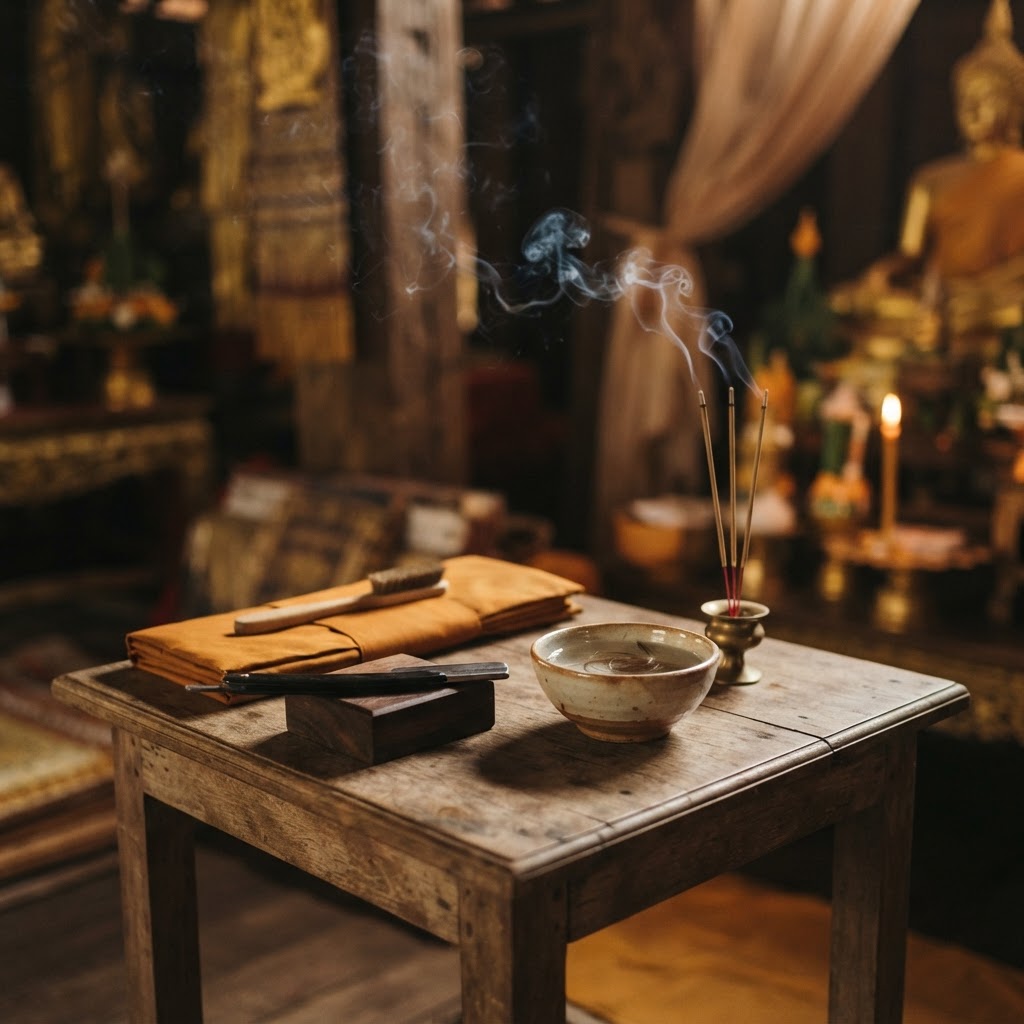
When a man or woman enters a Buddhist monastery in the Chinese tradition, the first thing that happens is not a teaching. It is not a ceremony of robes. It is a haircut. Not a trim. The entire head is shaved, clean, down to the scalp. This is the tonsure, and it is one of the most deliberate acts a person can make with their body.
I have studied the Chinese metaphysics systems for years, and across every system, from Tong Shu timing to BaZi reading, hair carries the surplus qi of the kidneys. It is the most visible store of body energy. To shave it all off is to make a statement so loud that no one can miss it: I am releasing my attachment to this body and its social presentation.
The razor across the scalp is not a loss. It is a release. The monk gives up what most people protect, and in giving it up, the binding loosens.
The Three Stages of Head Shaving in the Ordination Path
Ordination in the Chinese Buddhist tradition is not a single moment. It unfolds in stages, and each stage may involve a further shaving:
| Stage | Shaving Act | What It Marks |
|---|---|---|
| Lay practitioner | Optional, symbolic trim | A step toward commitment, but not full renunciation |
| Novice ordination (sramanera) | Full head shave by the preceptor | Renunciation of worldly identity and attachments |
| Full ordination (bhikshu/bhikshuni) | Head shave reaffirmed, received with incense dots | Full commitment to the monastic vows and community |
The Timing of the Ordination Shave
The ordination ceremony itself is chosen through the same calendar logic as a wedding or a funeral timing system. The day must carry a favourable officer in the Tong Shu, and it must not clash with the ordinand’s birth branch. The preceptor performs the shave at a specific time within the ceremony, usually during the morning when yang energy is rising and the mind is considered most clear.
What the Unshaved Hair Says About Attachment
There is a teaching story about a monk who was asked why he shaved his head every few weeks. He said: the hair grows back precisely so I can let it go again. The practice is not the first shave. The practice is the ongoing act of release.
For lay people, this teaching translates directly. You do not need to shave your head to practice the principle. But understanding that your hair is an attachment, and that you manage it consciously rather than unconsciously, is the lesson the ordination shave offers to everyone. Every time you sit in the barber’s chair, you are making a small version of the choice the monk makes fully: how much of my appearance do I need?
The Modern Monk: Shaving in Contemporary Practice
In my conversations with practitioners who maintain a daily shaving discipline, what stands out is the consistency more than the act itself. A person who shaves their head every morning as part of their practice is doing something the almanac tradition recognises: creating a daily rhythm that aligns the body with intention.
The beauty of the ordination shave is this: the most dramatic body change becomes the most ordinary routine. That shift from extraordinary to daily is exactly what the five arts are about in the end, making what seems esoteric into something you practice without thinking about it.
Hair grows back. That is the point. The release is not a one-time event. It is a practice of letting go over and over.
FAQ: Ordination and Head Shaving
Do all Chinese Buddhist monks shave their heads on a schedule?
Most maintain a clean shave. The frequency varies by tradition and individual, but the principle is consistent: the head should not show the return of worldly grooming habits. Some lineages allow a short regrowth during retreat periods, but the general standard is a clean scalp.
Is there a connection between head shaving and the Tong Shu haircut rules?
The Tong Shu treats herbal cutting of any kind through the same officer system. For a monk, the ordination shave follows the full ceremony date rules. For daily maintenance shaving, the officer rules are observed more loosely, the same way a layperson might not check the almanac for every minor trim.
Why do some traditions use incense dots on the shaved scalp?
The incense dots (jieba) are a visible record of vows received. They are not a haircut rule, but they do follow the shaving. The dots are placed after the head is clean, signifying that the vows are written on the body, in the place where hair used to cover identity.
Can a lay person shave their head as a spiritual practice?
Traditionally yes, and there are precedents for it. The key is intention. Shaving your head without intention is just a haircut. Shaving your head as an act of releasing attachment is a small ordination. Choose the day through the almanac if you want the full traditional framework.
Leave a Reply
You must be logged in to post a comment.