
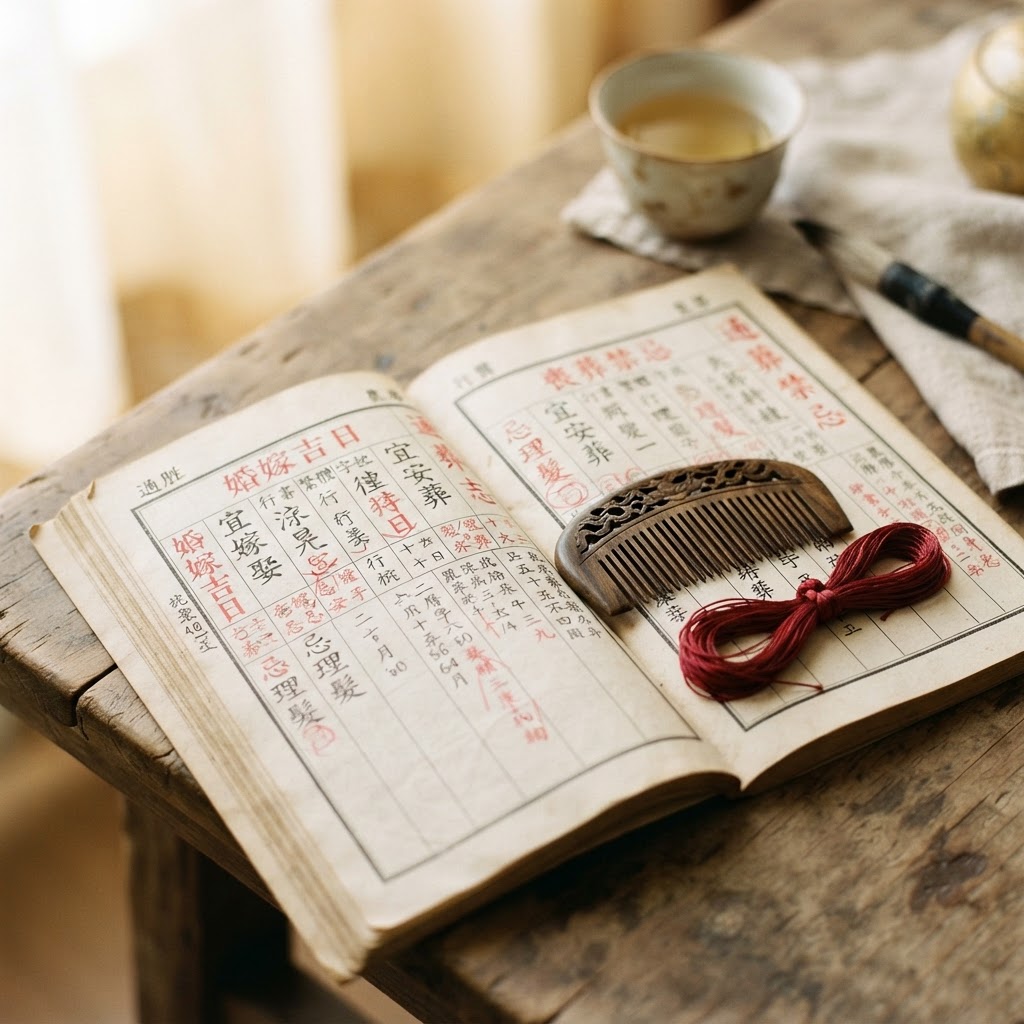
Why Haircuts Before Weddings Carry So Much Weight
Of all the life events where haircut timing matters, the one I get asked about most is weddings. There is something about a wedding that makes people pause and wonder whether every detail needs to be right, including the last trim before the big day. And in the Chinese tradition, they are not wrong to wonder.
A wedding is a threshold event. In the language of the Tong Shu, it is a day of major transition, where two people cross from one state of life into another. Everything you do in the days leading up to a threshold day either supports or disrupts the crossing. The haircut is one of those things. It is a body change, it alters how you look, and in the traditional view it shifts your surface qi just before the most important day of the cycle.
The last haircut before your wedding is the last body change you make as a single person. The tradition says: make it clean, make it good, make it on a day that supports you.
The Pre-Wedding Haircut Window: When and How
The traditional window for a pre-wedding haircut is three to seven days before the wedding date. Not the day before, and certainly not the morning of. The reason is practical and energetic. A fresh cut needs a few days to settle, both in how it looks and in how your scalp and surface energy adjust to the change. On the wedding day itself, you want to be stable, not freshly altered.
Within that window, choose a day that carries one of the favourable officers: Establish, Success, or Open. These are the builders and completers in the 12 Day Officers system. Avoid days with the Broken or Destroy officers, and avoid any day that clashes with your personal birth branch in your BaZi chart.
| Timing | Approach | Why |
|---|---|---|
| 7 days before | Full restyle acceptable | Enough time to settle and adjust |
| 5 days before | Trim and shape | Moderate change, still settles in time |
| 3 days before | Light touch-up only | Small adjustment, minimal disruption |
| 1 day before | Avoid cutting | Too fresh, energy unsettled |
| Wedding day | Styling only, no cutting | Stability over change on the threshold day |
The Groom’s Haircut vs the Bride’s: What Tradition Says
The groom’s pre-wedding haircut is more commonly discussed in traditional texts, because the groom was expected to present a clean, formal appearance marking his new role as head of household. The timing was deliberate: a good day for the cut meant the groom was entering the marriage with refreshed and supported qi.
For the bride, the pre-wedding hair treatment is more about styling and the updo than about cutting. But if the bride does want a trim before the wedding, the same window and officer rules apply. The key difference is that the bride’s hair is often being styled into an elaborate form for the ceremony, so the cut should be conservative enough that the stylist has room to work.
Funerals and Mourning: When You Do Not Cut
The other side of the life cycle is mourning. In Chinese tradition, cutting hair during the mourning period is deeply significant. The practice varies by family and lineage, but the core idea is consistent: when someone close to you has passed, you suspend personal grooming as a visible sign that your attention has moved from yourself to the one who has gone.
The closest family members, typically the children and spouse of the deceased, are the ones who observe the strictest form. In some traditions, they do not cut their hair for the entire mourning period, which can be 49 days (the traditional period between death and the next rebirth in Buddhist-influenced practice) or up to 100 days in some family customs. This is not a punishment or a hardship. It is a statement: my outer appearance does not matter right now because my inner world is saying goodbye.
The uncut hair during mourning is the body’s way of saying: something more important than my appearance is happening.
The Post-Mourning Haircut: Re-entering the World
When the mourning period ends, the first haircut marks re-entry into normal life. This is a small but real rite of passage. The day for this cut should be chosen with the same care as a pre-wedding cut: a favourable officer, no clash with your birth branch, and a calm atmosphere.
The emotional quality of this cut matters. Going to a familiar barber, a person who knows you and the context, is better than a stranger. The cut goes deeper than hair. It is about closing the grief period and opening the next chapter. The almanac guide covers the general rules, but for this specific moment, the personal energy of the day matters as much as the technical almanac reading.
Haircuts Before Funerals: Attending as a Guest
If you are attending a funeral as a guest rather than as a close family member, the rules are lighter. You should be clean and presentable, but you should not get a fresh haircut on the day of the funeral. The reasoning is subtle: a funeral is not a celebration, and a fresh, sharp haircut reads as putting too much attention on appearance on a day that is not about you.
Trim a few days before if you need one, and attend the funeral with hair that is neat but settled. This is a respectful middle path between the strict mourning observance and no concern at all.
Other Life Events Where Haircut Timing Matters
Weddings and funerals are the two extremes, but the same logic applies to other threshold events where you want your qi to be in the right state:
Starting a new job: Cut a few days before, on a favourable officer day, so you enter the new role looking fresh but energetically settled. See the interview haircut guide for more detail.
Before travelling: The tradition warns against cutting hair the day before a long journey. Cut three to five days before departure so the surface energy is stable when you travel. This connects to the broader travel timing in the auspicious dates system.
Before a business launch: A pre-launch haircut marks the shift from planning to execution. Choose a day with the Establish or Success officer, and cut three to seven days before the launch.
Before moving house: Cutting hair before a move is less about the haircut and more about not doing too many things at once. The move itself is a major qi shift. Adding a body change on top of that can be disorienting. If you need a cut, do it a week before, not in the same window as the move.
FAQ: Haircuts Before Weddings, Funerals, and Life Events
What if I cannot find a favourable day within the pre-wedding window?
Pick the least unfavourable day. A neutral day officer (Balance, Stable) is fine if no strongly favourable one appears. The main thing is to avoid a Broken, Destroy, or Close day. If every day in the window carries one of those, extend the window by a day or two. The three-to-seven-day framework is a guideline, not a rigid law.
Can the bride and groom visit the same barber?
They can, but on different days. The tradition prefers staggering body changes. If convenience demands the same day, make sure it is a day that favours both people’s birth branches, not just one.
How long after a funeral should I wait before getting a haircut if I am a guest, not family?
As a guest, you are not under the strict mourning rule. You can resume normal grooming after the funeral day itself. Just avoid cutting on the day of the funeral. The next day is fine.
Does the bride need to consider the groom’s BaZi when choosing her haircut day?
No. Each person personalises their own day with their own chart. The couple’s compatibility is assessed at the wedding date selection level, not at the haircut level. Each person manages their own pre-wedding grooming independently.
What about cutting a child’s hair before a family wedding?
Apply the same rules as for the adults but with the child’s birth branch for clash checking. Children’s energy is more sensitive, so a calm day matters even more. See the newborn haircut guide for child-specific considerations.
Is it ever appropriate to cut hair during the mourning period?
In some family traditions, a single symbolic trim is done at the funeral itself, where a small lock of the mourner’s hair is cut and placed with the deceased. This is a different practice from regular grooming. Beyond that symbolic act, personal grooming is suspended until the mourning period ends.
Leave a Reply
You must be logged in to post a comment.