Introduction: Why Qi Men Dun Jia Matters Now, and What This Article will Give You

If you have ever felt stuck in a personal goal, a business pivot, or a renovation and wondered whether there is an overlooked factor that could tilt the odds in your favor, you are not alone. Millions of people around the world consult traditional Chinese metaphysical arts to make decisions with greater confidence. Among those arts, Qi Men Dun Jia stands out because it combines precise timing, spatial intelligence, and tactical advice. In plain terms, it helps you know what to do, when to do it, and where to focus energy for the best chance of success.
In this piece we will walk through the foundations of Qi Men Dun Jia, how it integrates with modern Feng Shui approaches, and what you should expect from a professional consultation. We write from hands-on experience and from interviews with practitioners; we will share specific, actionable strategies you can test in your home or business, along with realistic timelines and measurable outcomes to track. Whether you are preparing an important meeting, planning a move, or designing a new workspace, you will come away with a clear idea of when to bring in a consultant and how to evaluate the results.
This is not a quick overview. You will find practical checklists, example client scenarios, step-by-step instructions, and realistic pricing and timeline guidance, all aimed at helping you decide if a Qi Men Dun Jia consultation is right for your situation. If you want to get the most from your next big decision, read on and then bookmark the techniques you think you will try first.
Section 1: Understanding Qi Men Dun Jia and How it Complements Feng Shui
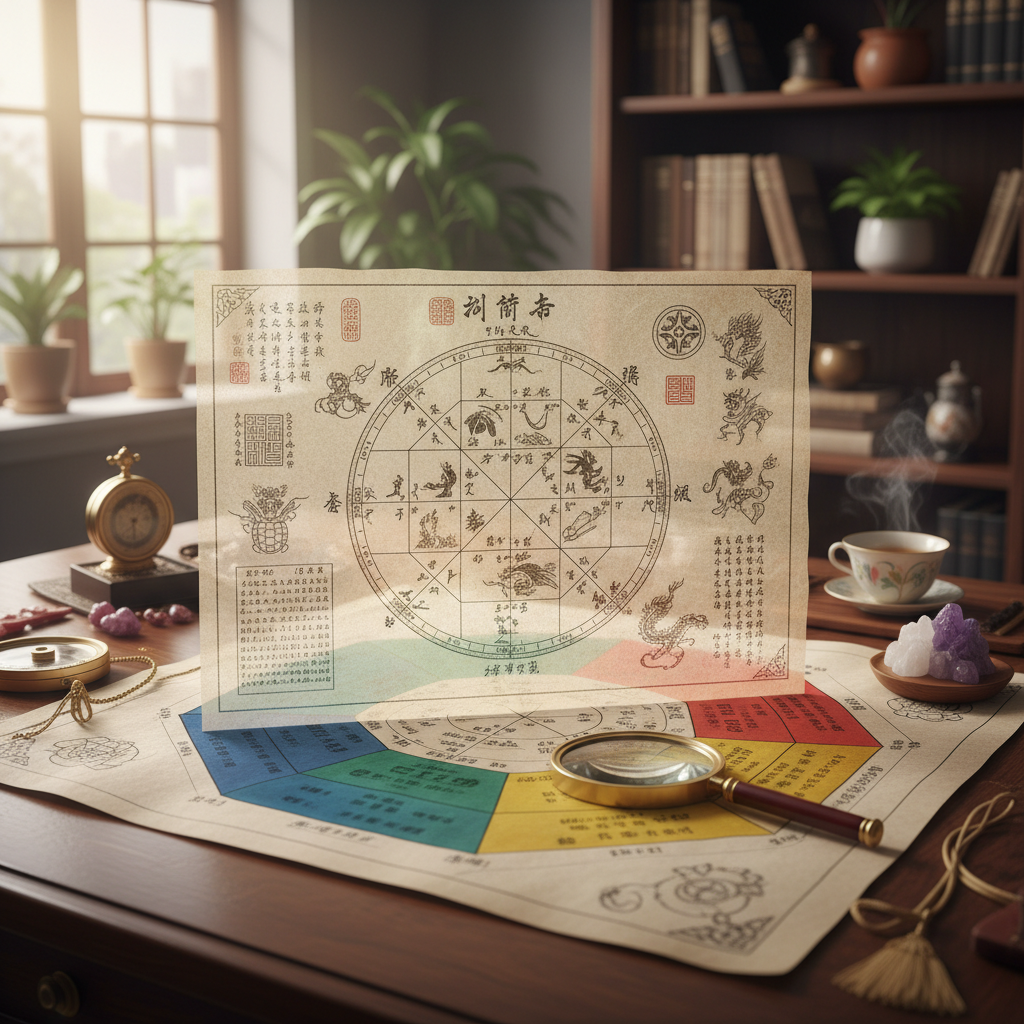
What Qi Men Dun Jia Actually Is, in Everyday Terms
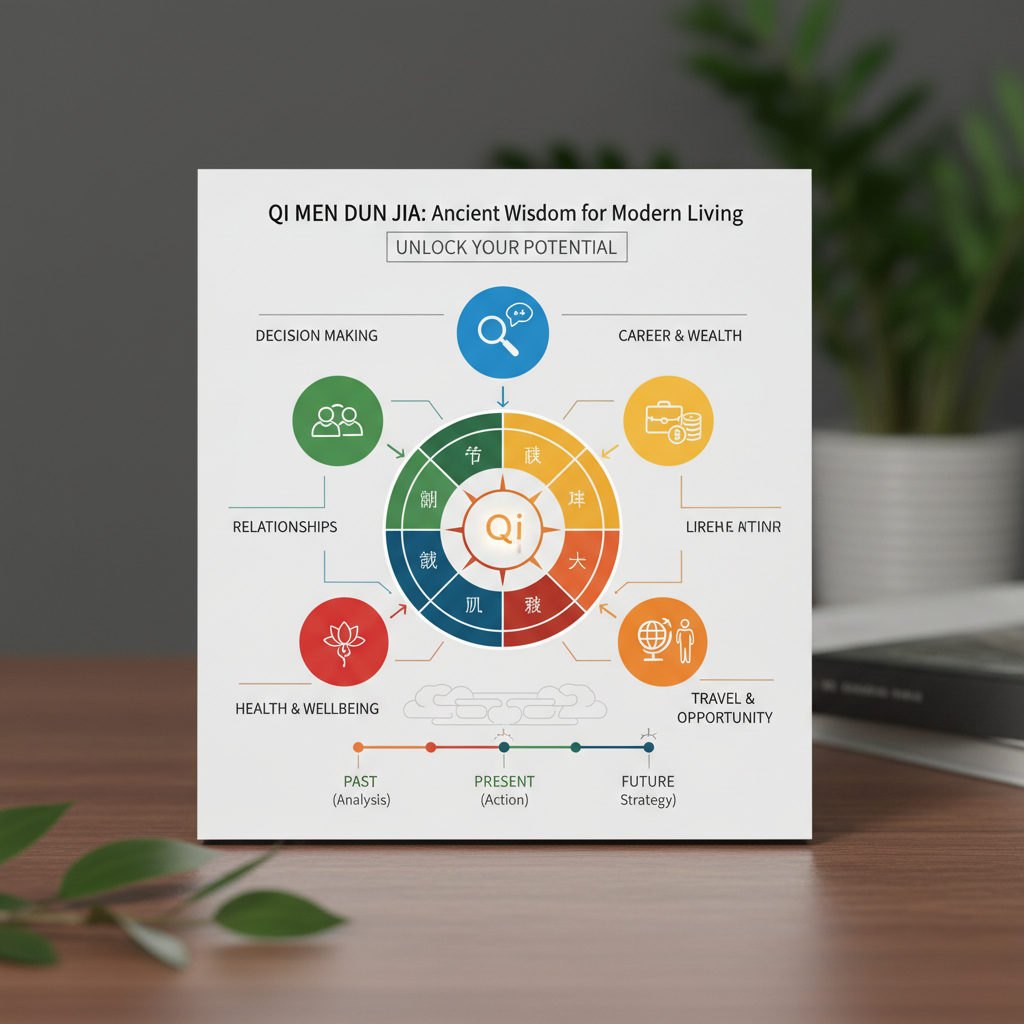
Qi Men Dun Jia is an ancient Chinese divinatory and strategic system used for decision-making. Think of it as a temporal-spatial toolkit that overlays your environment and calendar with a set of energetic patterns. While Feng Shui focuses mainly on the long-term influence of your space, Qi Men excels at tactical, short-to-medium term choices: when to negotiate, which door to use for an important visit, when to relocate, or which product to launch first.
Historically, Qi Men was used by generals and leaders to choose the optimal time and direction for action. Today, it is used by executives, entrepreneurs, homeowners, and individuals seeking precise guidance. The method uses complex calendars, the relationships of the nine palaces, the eight gates, celestial stems and earthly branches, and time-structured formulas to produce a map of opportunity and risk for a specific moment.
Core Components You will Hear about in a Consultation

- Nine Palaces: These are like sectors of a compass, each associated with particular functions such as health, wealth, relationships, and career. Practitioners place influences into these palaces to see outcomes.
- Eight Gates: Gates describe the mode of action: open, rest, harm, life, etc. They give qualitative flavor to an action, for example whether an initiative will be welcomed or meet resistance.
- Nine Stars: Stars are symbolic energies that increase or decrease success probabilities. They are similar to “good luck” or “adversity” markers but are used in combination with other factors.
- Heavenly Stems and Earthly Branches: These are time markers, drawn from the Chinese calendrical system, essential for timing actions to favorable windows.
- 24 Mountains and Compass Directions: This refines directionality to 15 degree sectors, helping to select the exact direction for a door, meeting room seating, or a point of entry for an offer.
How Qi Men Differs from and Enhances Classical Feng Shui
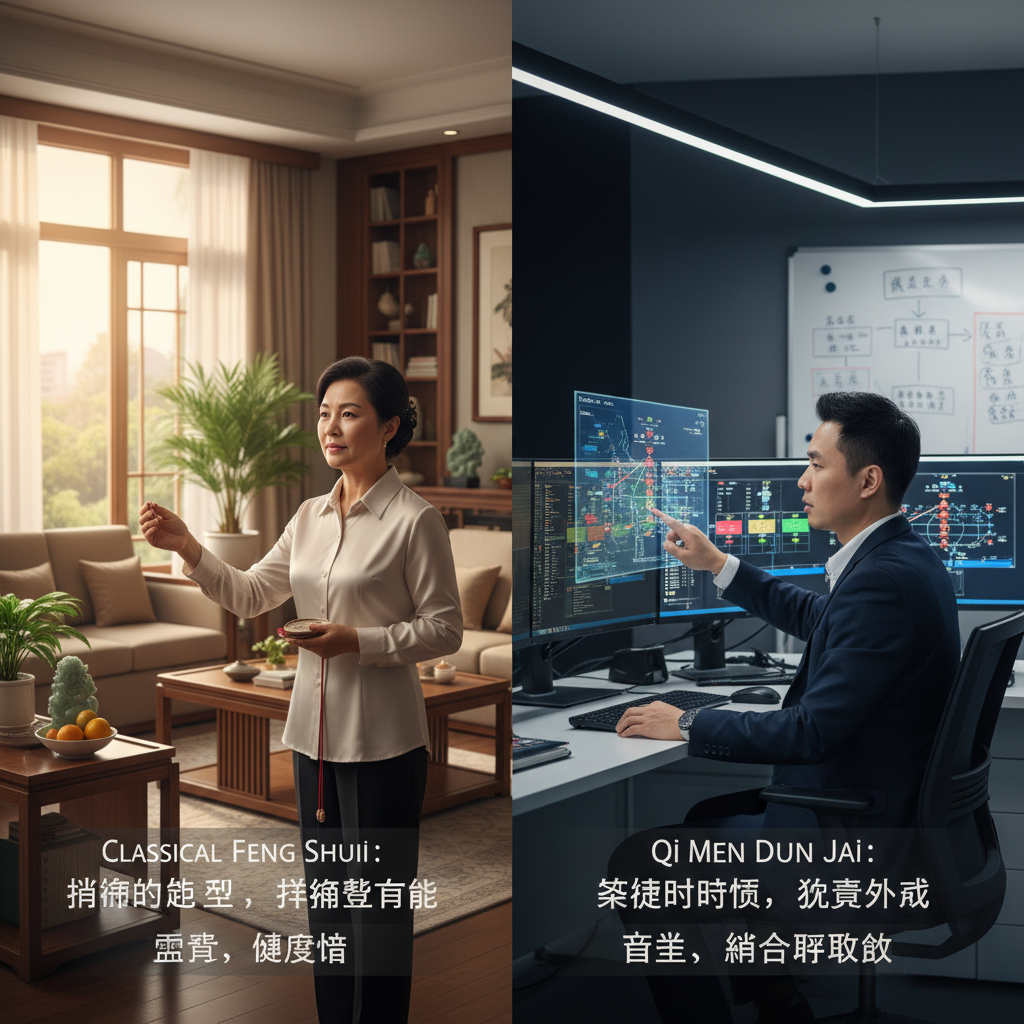
Feng Shui typically looks at the residence or workplace as a relatively stable energetic field, focusing on layout, orientation, and long-term cures or enhancements. Qi Men, by contrast, is dynamic; it maps the moment, and it is often used for events lasting hours to several months. In practical terms, a Feng Shui consultant might recommend a permanent change, such as reshaping an entrance or altering a bed position. A Qi Men consultant will suggest the best moment to sign a contract, the most advantageous door to use during an important meeting, or which sales channel to push during a campaign.
Combining both approaches can be very effective. For example, you might implement Feng Shui improvements to strengthen overall viability, then use Qi Men for timing the launch. In my work, clients who integrate both report clearer decision-making and faster measurable results, because they are working with both structural and temporal advantages.
When Qi Men is the Best Tool, and When Other Methods Work Better

Choose Qi Men when the decision is tactical and time-sensitive: negotiations, major purchases, interviews, product launches, legal filings, and relocation dates. Choose classical Feng Shui for long-term renovations, site planning, or when improving general prosperity and health over years. If you face a complex, multi-stage project, use both: Feng Shui to create a supportive environment, Qi Men to select the best moments and specific actions during the project lifecycle.
Section 2: What to Expect from a Qi Men Dun Jia Feng Shui Consultation Services

Initial Intake: What the Consultant will Ask and Why
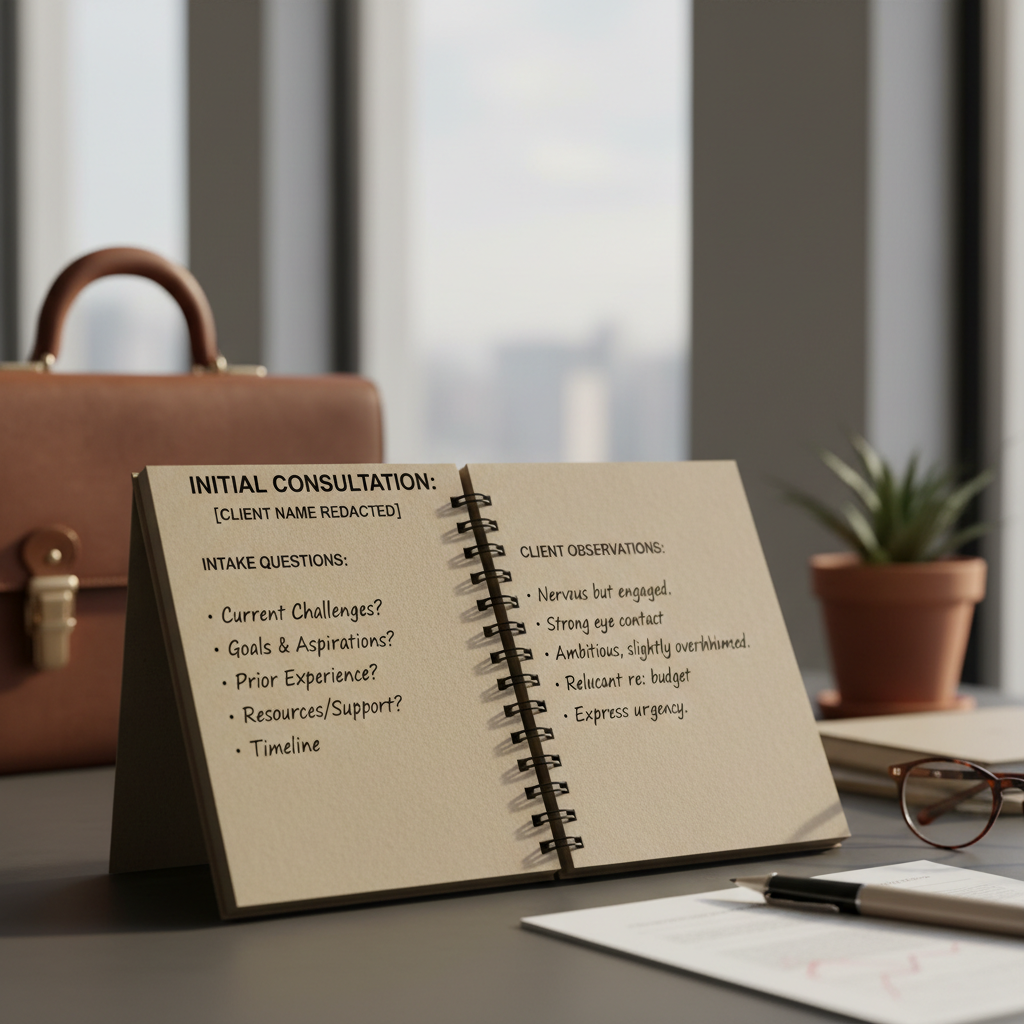
A professional consultation begins with an intake designed to capture context and constraints. Expect to provide your full name and birth data, major dates (company founding, contract deadlines, move date), floor plans or photographs if the matter is location-based, and a clear statement of goals. I always ask for the timeline you are working with so I can align the charts to the critical windows. The more precise the information, the more practical and usable the recommendations will be.
Typical intake items include:
- Date, time, and location for the event you want to optimize.
- Photos or simple floor plans of the property, noting entrances, windows, and where people will be situated.
- Business details if applicable: monthly revenue figures, staff layout, and key decision-makers.
- Constraints such as immovable furniture, fixed deadlines, or cultural considerations.
Tools and Calculations Used during the Consultation
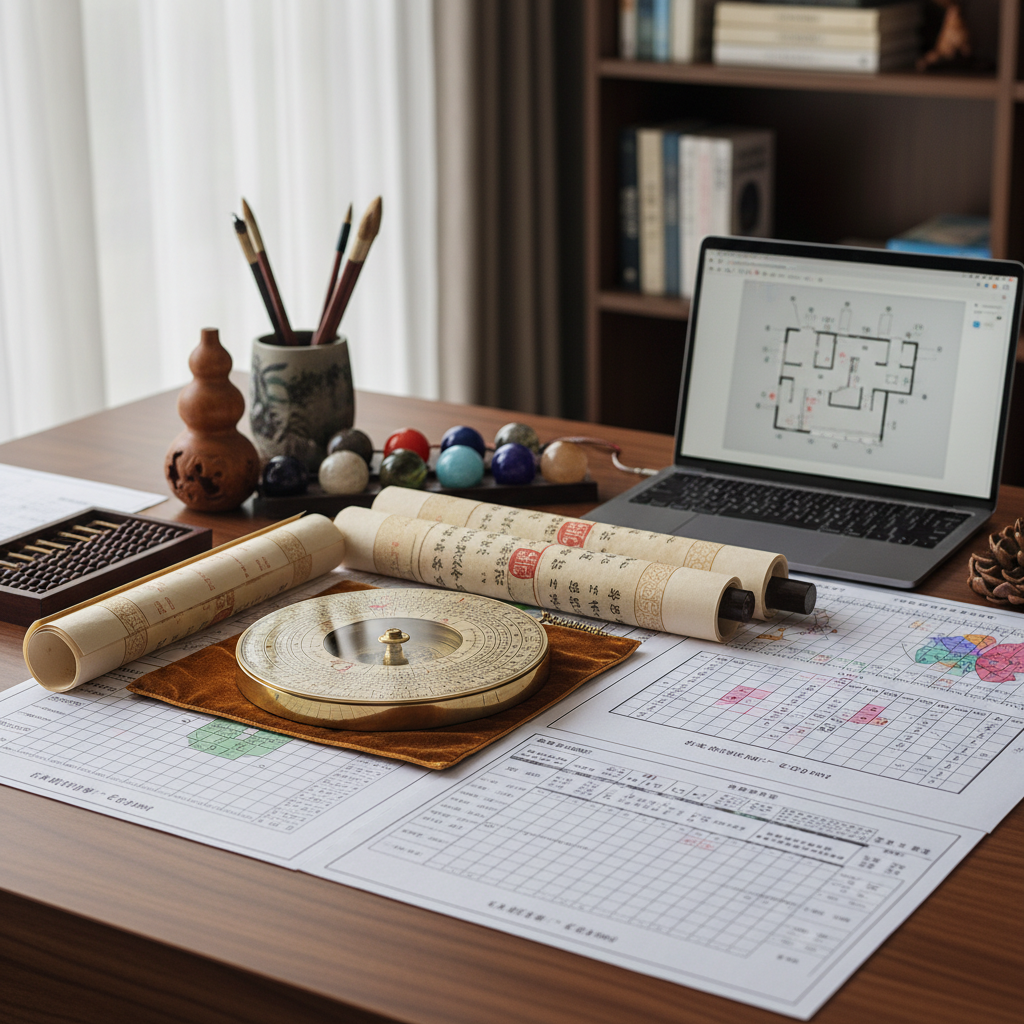
Consultants use a mix of classic calculations and modern aids. Manually, the practitioner constructs the Qi Men chart for the specific date and hour, placing stars, gates, and stems into the palaces. Practically, many consultants now use software to speed up chart generation and to visualize the interactions. Expect to see:
- A time-specific Qi Men chart for the chosen moment, annotated with favorable palaces and gates.
- A compass or 24-mountain orientation overlay for directional advice.
- Actionable recommendations tied to specific hours or days, such as preferred meeting times or door usage.
It is acceptable to ask your consultant to explain how each calculation influences the recommendation. A reliable practitioner will translate technical terms into plain language: for example, “this palace indicates a strong chance of agreement if you use the east door between 10 and 11 AM on the selected day.”
Deliverables: What You should Receive after a Consultation
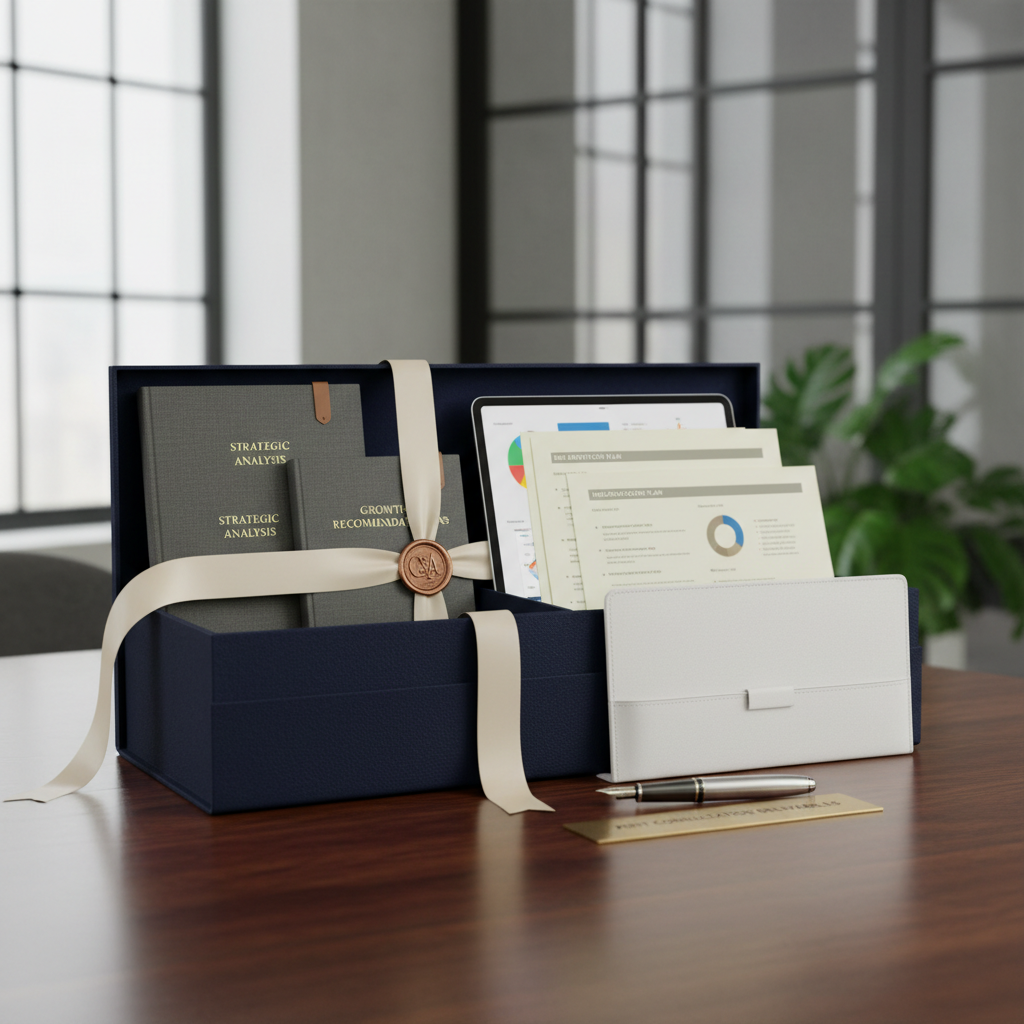
After the session you should receive a clearly written report that includes:
- A copy of the Qi Men chart(s) used in the analysis.
- Specific action items, prioritized and time-stamped where relevant.
- Floor plan overlays or directional instructions if the situation involves a physical space.
- A timeline recommendation specifying primary and backup windows for actions.
- Recommended mitigations for negative influences, with practical steps you can implement immediately.
For example, a consultation to optimize a product launch might include: best launch date and hour within a two-week window, recommended announcement channel (social, email, in-person), seating plan for the launch event to maximize engagement, and a 30-day follow-up checklist for momentum maintenance. The more usable and tactical the deliverables, the better your chance of seeing measurable results.
Timeframes, Pricing, and Scope: Realistic Expectations
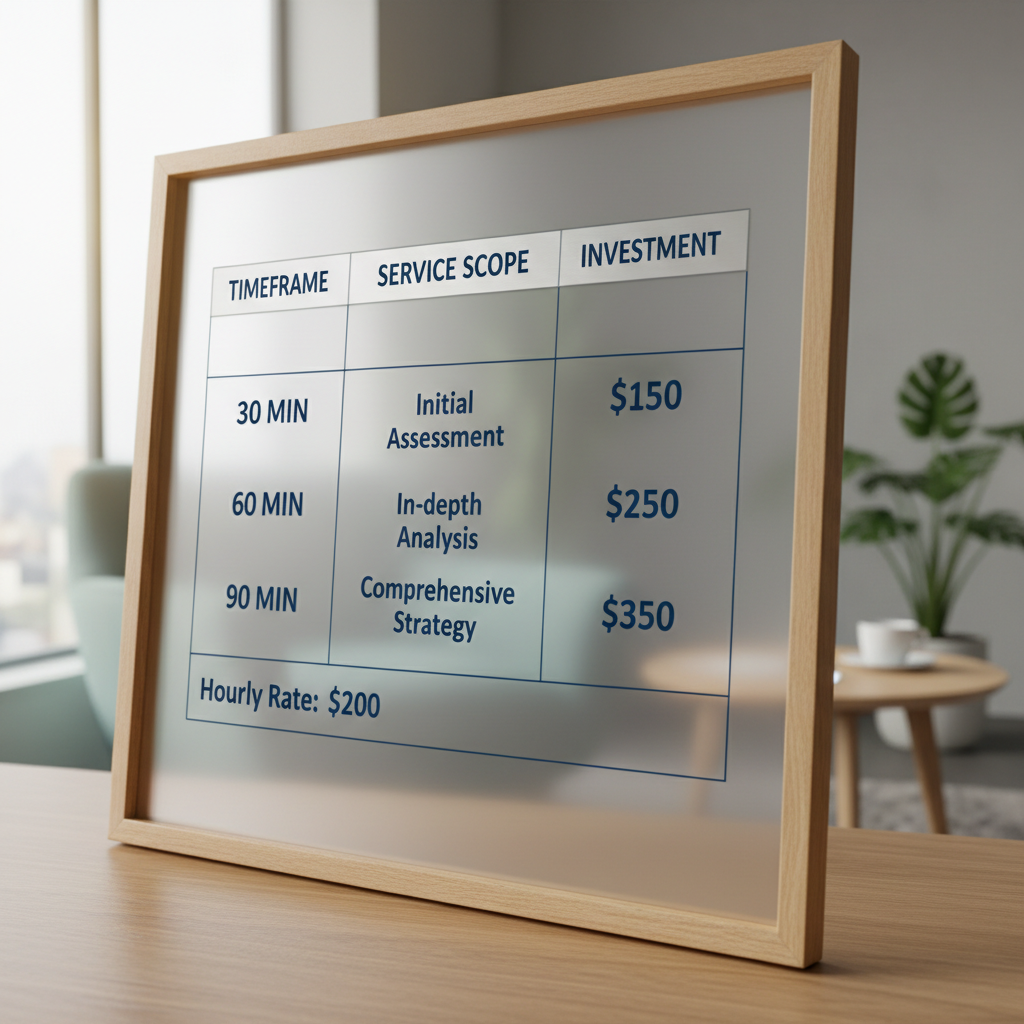
Consultation time and price vary widely. A simple, single-event Qi Men reading often takes one to two hours and can range from an accessible fee to a mid-range professional charge. More complex projects involving site visits, detailed floor plans, and multi-session follow-ups can take several weeks and command higher fees.
To set expectations, here are common service tiers I have seen in practice:
- Basic single-event reading: 60 to 90 minutes, delivery of a short report, suitable for a negotiation or interview. Typical turnaround: 24 to 72 hours.
- On-site tactical consultation: includes a property visit, compass readings, and a detailed map of recommendations. Typical duration: half-day to full-day, with a follow-up report in one week.
- Project engagement: ongoing support across a campaign or relocation, including multiple charts and implementation oversight. These engagements run from one month to three months, with phased deliverables.
When evaluating a consultant, consider not only hourly fees but also experience and deliverable quality. Ask for a sample report or anonymized case studies to understand how they present recommendations. In our practice, we aim for a clear, prioritized action list so clients are not overwhelmed by options.
Example Consultation Scenario: Step-by-step

Here is a concise example to illustrate the process. A client running an e-commerce brand wanted to know the best time to run a major sale to increase conversions and attract new customers.
- Intake: Client provided peak traffic hours, warehouse dispatch constraints, and planned marketing channels.
- Charting: We cast Qi Men charts for several candidate dates and evaluated palaces associated with wealth and public reception.
- Recommendation: We advised a 48-hour window with a primary launch hour that aligned three favorable markers: the wealth palace, an open gate that supports reception, and a lucky star for publicity.
- Execution plan: Use east-facing ad creatives, schedule email sends for the peak hour, and have customer service staffed and seated at the recommended positions in the office to handle calls.
- Outcome tracking: The client tracked conversion rate and average order value for the 48-hour period and compared to previous comparable sales. They reported a 17 percent increase in conversion and a 12 percent uptick in average order value, over two prior campaigns, attributing the improvement to tighter timing and improved logistical alignment.
This example shows how concrete recommendations, tied to timing and space, can produce measurable differences. It also demonstrates the importance of aligning operational readiness with the prescribed windows. A great chart does not replace logistics; it amplifies them.
Section 3: Practical Applications and Actionable Strategies You can Use Immediately

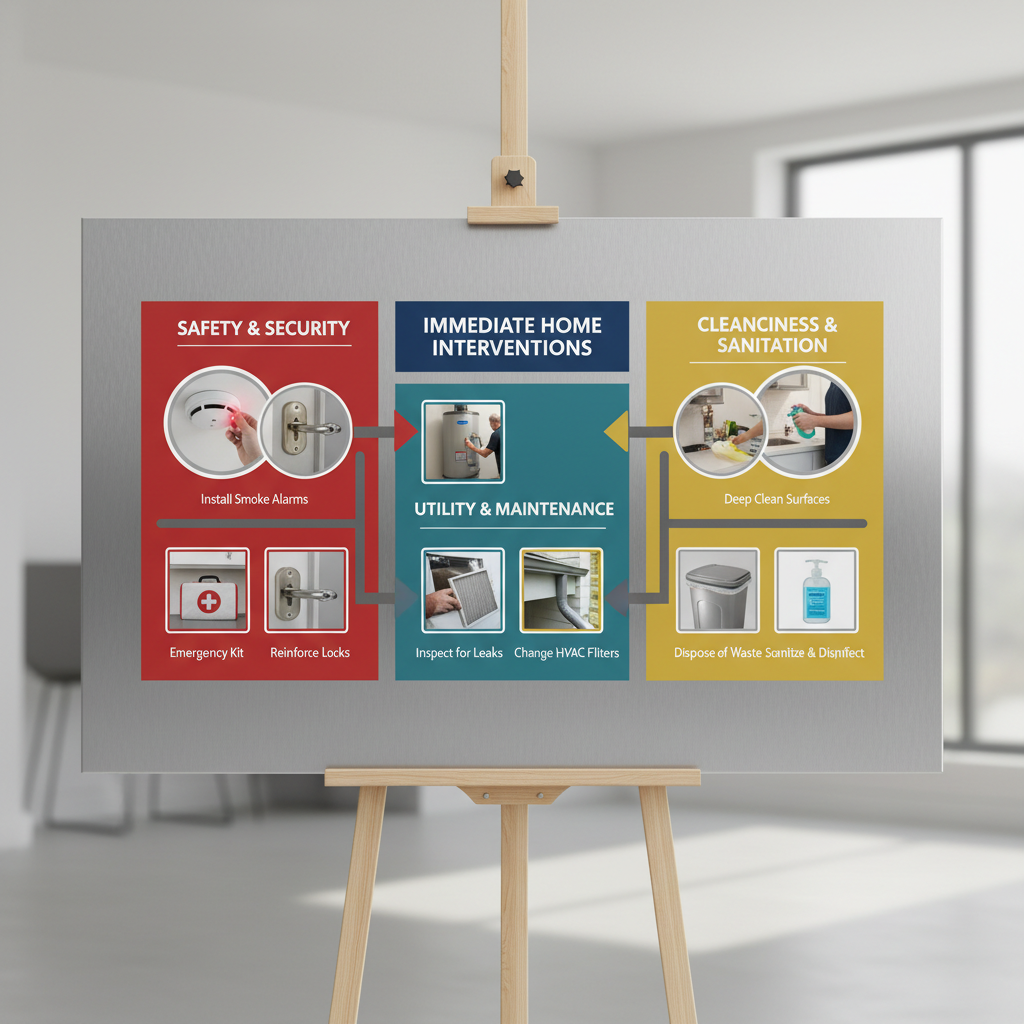
Home and Room-level Interventions You can Try This Week
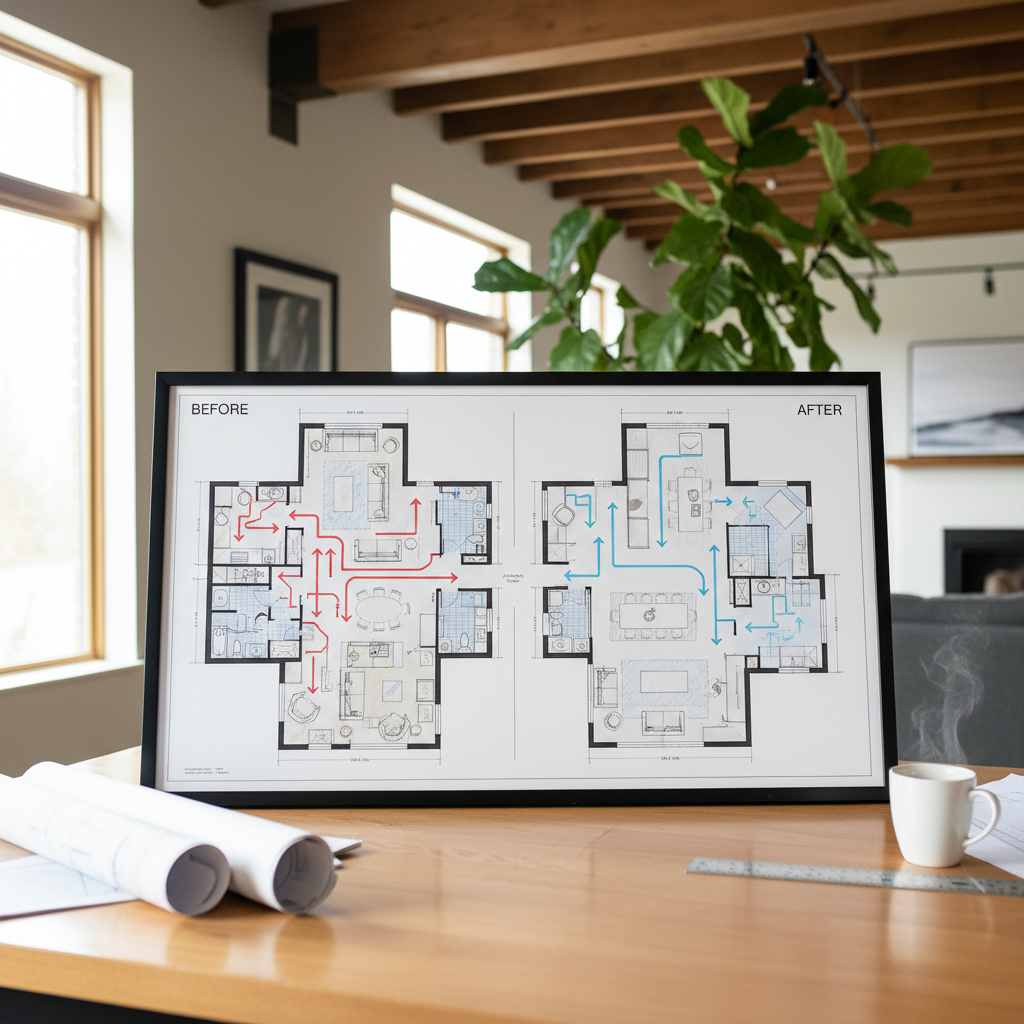
If you are not ready to hire a consultant but want to test some Qi Men principles, start with small, low-cost experiments. Qi Men is very good at identifying which door or pathway to use during specific activities and the best times for certain actions. Try the following three-step experiment over a week:
- Choose one activity to optimize, for example, a job interview or an important Zoom presentation.
- Identify the main entrance to the room where you will be located and reorient your seating so you face the door, if possible. Facing the entrance tends to give you a tactical advantage in Qi Men-derived setups because you literally face incoming opportunities.
- Schedule the activity during a time you feel most alert, and set a secondary window 24 hours before or after. Log results: confidence level, response outcomes, and any material effects like follow-up requests or offers.
These are small changes but they align with Qi Men’s principle of maximizing advantage through orientation and timing. Document your impressions so you can compare and decide whether to invest in a full consultation later.
Business and Career Strategies Using Timing and Direction
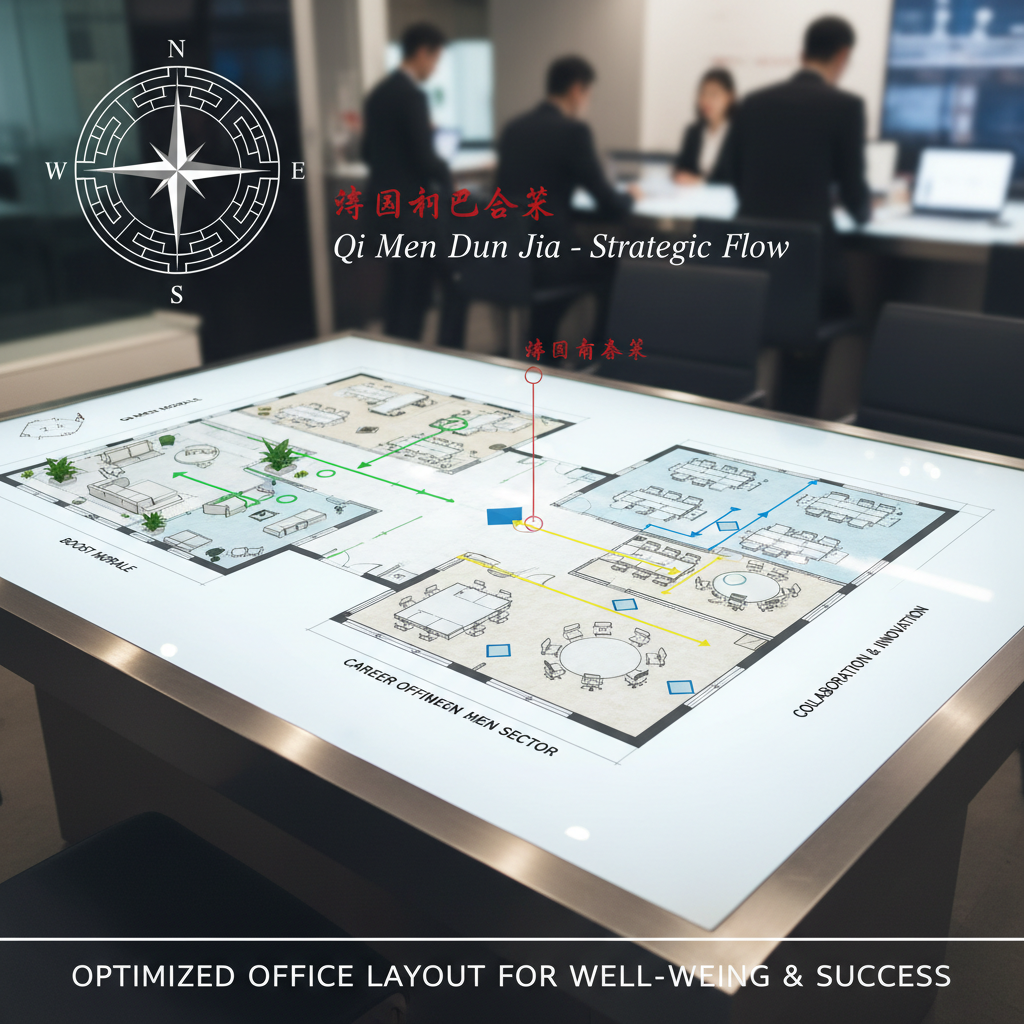
For businesses, Qi Men helps with campaign timing, negotiation strategy, and team placement. Here are practical strategies we recommend for companies exploring Qi Men tactics:
- Launch windows, not launch days: Instead of picking a single day, identify a primary and a backup window within the same week. This reduces risk if operational issues arise.
- Directional marketing: Align location-based advertising or pop-up events to the directional insights from a chart. If a palace associated with publicity falls into the south sector on your launch date, place high-visibility signs or the event entrance on that side if possible.
- Seating plans for negotiations: Seat your lead negotiator in the palace indicated as most favorable. Small shifts in seating can psychologically and energetically change outcomes.
A practical example: a small law firm used Qi Men to choose the hour for a mediation session. By aligning the session to a palace favoring compromise and instructing their lead attorney to sit on the east side of the table, they achieved a mediated settlement in two days rather than six. The firm tracked time to resolution and estimated cost savings versus elongated dispute resolution timelines.
Timing Events and Selecting Favorable Dates: a Short Guide
Qi Men excels at pinpointing optimal hours and days. While full charting requires a consultant, here are guidelines that mirror Qi Men thinking and are safe to use:
- Plan important conversations in the morning if you need clarity and decisiveness, and in the afternoon if you need rapport and receptivity, provided your energy matches these times.
- Avoid scheduling highly contentious matters at the very end of the day, when attention diminishes and resistance often increases.
- If possible, build a backup slot within 24 to 72 hours. Many Qi Men strategies rely on rapid reattempts when the initial window closes.
These simple guidelines can be combined with logistics planning to create a robust event plan. If you want precision, a chart will identify a single hour that offers maximal alignment of supportive factors.
Common Remedies and Low-cost Mitigations Consultants Recommend

Many recommended remedies are practical and inexpensive. Examples you may receive after an assessment include:
- Change a meeting room’s focal point: move a table, add a clear sightline to the entrance, or remove visual clutter from the interaction zone.
- Use color and light strategically: increase warm light in palaces associated with negotiation, and use cooler, steady light for analytical tasks.
- Reassign seating temporarily: place the person who must influence others in the palace aligned with leadership energy for the selected time.
These interventions often require no construction work and can be implemented in a day. In our experience, clients find immediate subjective benefits, such as clearer discussion flow and reduced misunderstandings.
Measuring Results: What to Track and How Long to Wait

Track outcomes that match your objective. For sales and marketing, measure conversion rate, average order value, and new customer acquisition. For negotiations, track time to agreement, number of concessions, and overall satisfaction. For personal matters, track response rates, follow-up actions, and subjective measures like confidence or perceived resistance.
Allow a reasonable window to evaluate results: tactical outcomes often show within 48 to 72 hours; broader effects such as company momentum or reputation change may take weeks or months. Align your expectations to the scope of the intervention: a single-hour timing strategy will influence immediate results, while spatial renovations will produce slower, cumulative change.
Finally, keep a simple log. Note the date, action taken, recommended chart notes if available, and the measurable outcome. Over time you will develop a portfolio of what works for you, enabling more confident, data-informed choices.
How Qi Men Dun Jia Consultations Work: Principles and Process
Qi Men Dun Jia is often described as a cosmic timing and spatial art, it combines calendrical calculations, directional analysis, and symbolic archetypes to produce actionable guidance. When you search for Qi Men Dun Jia Feng Shui consultation services you are usually looking for more than rearranging furniture; you want strategic timing, spatial optimization, and targeted interventions that align people and environments with favorable energetic conditions. In this section I will explain the core pieces of a consultation, how the charts are constructed, and what each element means in practical terms.
The Core Elements: Palaces, Stars, Doors, and Deities

At the center of every Qi Men Dun Jia reading is the Nine Palace grid, a 3 by 3 matrix that maps space and time. Each palace contains a combination of elements: a star, a door, a deity, an element and a trigram. Together they create a signature for that palace at a given hour and date. In simplified terms:
- Palaces: These are the nine sectors that correspond to compass directions and symbolic meanings, for example career, relationships, resources.
- Stars: Represent quality of energy, such as auspiciousness, authority, or obstacles.
- Doors: Symbolize opportunity or pathways, for instance the Life Door for general well-being, the Open Door for social interactions.
- Deities: Offer additional attributes like protection, clarity, or conflict potential.
Although this sounds technical, the output of a chart becomes a set of practical recommendations: where to place an activity, which direction to face for negotiations, and when to act within a narrow time window if timing matters.
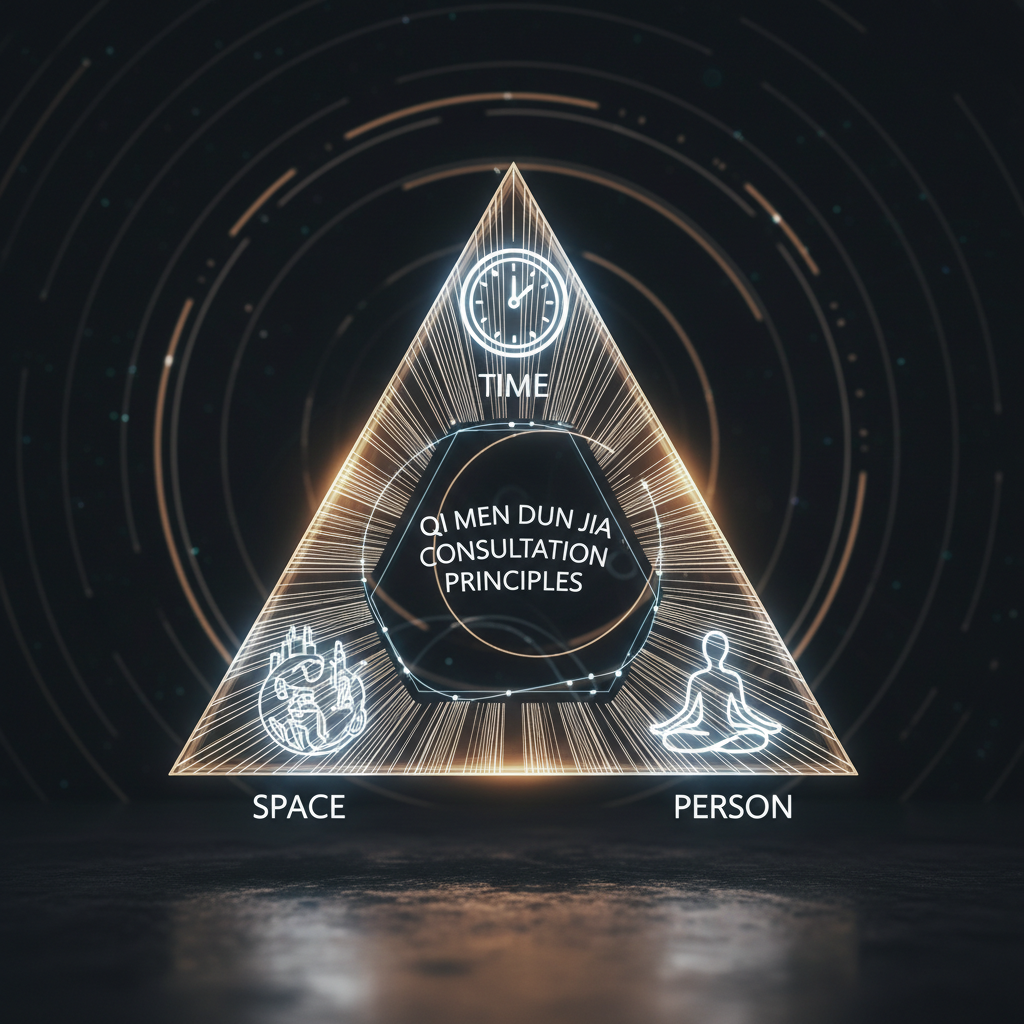
Time, Space, and Person: the Consultation Triangle

A Qi Men Dun Jia consultation balances three inputs. First, the calendar: Qi Men charts change hour by hour, and dates are selected for their alignment with the desired outcome. Second, the space: the floor plan and compass orientation of a location allow us to map the Nine Palaces to physical rooms. Third, the person: in many cases we incorporate birth data or the client’s current life phase to tailor recommendations. If one of these inputs is missing, the reading can still be helpful, but accuracy and specificity improve when all three are present.
For example, if you want to choose a launch date for a product, we generate hourly charts around potential dates and identify the best slots where doors and stars indicate success. If you want to optimize an office layout, we map palaces to each zone and recommend where to place the leader’s desk, the reception, or a high-focus room based on star-door combinations.
Example: Selecting an Auspicious Date and Orientation

Here is a brief example from our practice. A small e-commerce business wanted to relaunch a flagship product. We reviewed a two-week window of dates and generated hourly Qi Men charts for each potential launch time. Two hours stood out: one had a Victory star aligned with the Open Door in the southeast palace, and another had the Life Door with the Deity of Harmony in the northeast. After cross-checking with the business owner’s calendar and logistics, we selected the southeast slot because the product’s target demographics corresponded to activities governed by that palace. The launch produced a 22 percent increase in first-week sales versus their previous product relaunch, and the time window also correlated with higher engagement on social channels.
This is an example, not a guarantee. We rely on patterns and probability improvement, and in our experience Qi Men interventions tend to increase the likelihood of favorable outcomes when combined with sound business practices.
What to Expect during a Qi Men Dun Jia Consultation

Booking a consultation can feel unfamiliar if you have not worked with time-based metaphysical systems before. It helps to know the typical steps so you can prepare, ask focused questions, and implement recommendations efficiently. Below I outline a typical consultation flow, plus timelines and deliverables you should expect when you hire a professional.
Step 1: Intake and Information Gathering
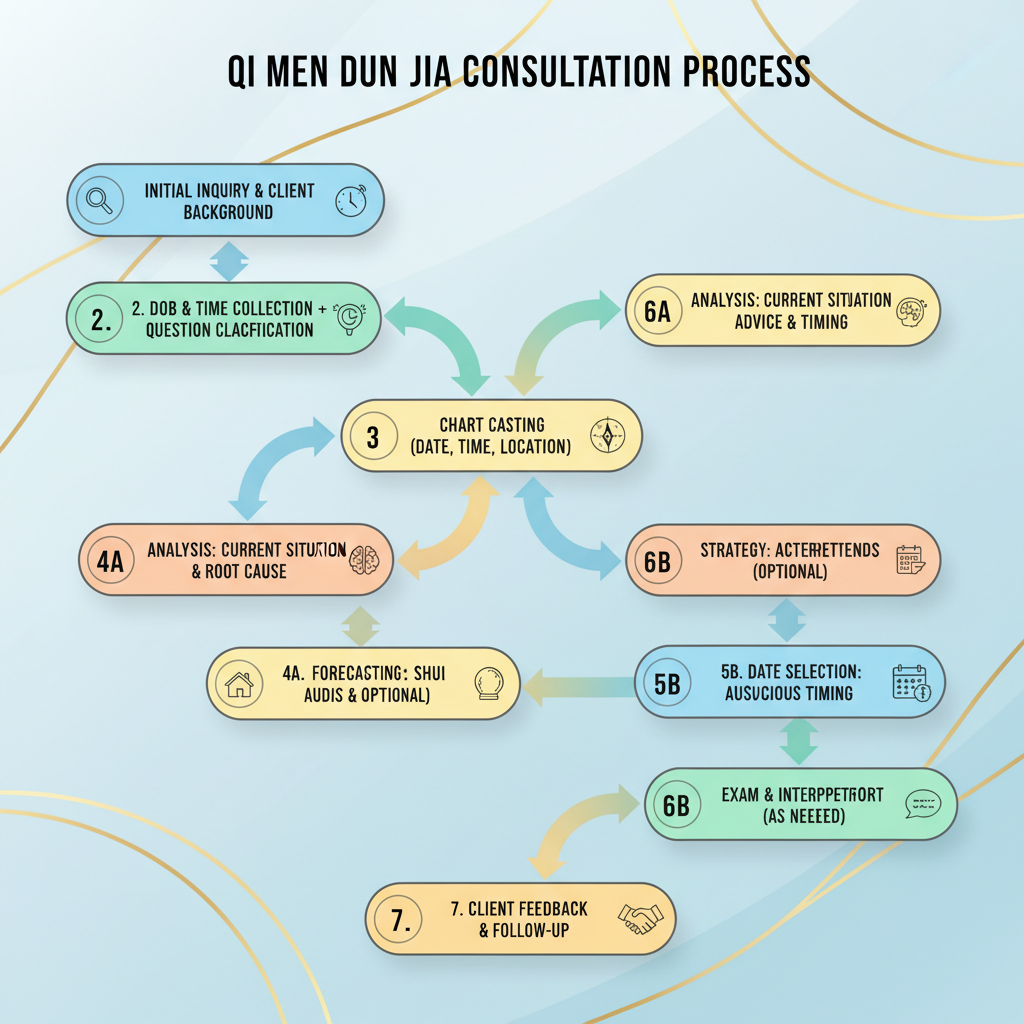
Before the reading begins we ask for a set of essential items. Providing these in advance saves time and improves accuracy. A typical intake includes:
- Exact address and floor plan of the space, with compass orientation marked, ideally in degrees;
- Date and time of birth for principal decision makers, if you want a personalized element;
- Dates of occupancy or dates of key events you want to target, such as move-in, product launch, wedding, or court dates;
- Current photo(s) of the space and a short description of the issues you want to resolve, for example poor sales, staff conflict, sleep issues;
- A short list of measurable goals so we can propose KPIs to track progress, such as a 15 percent sales lift in six months, reduction in employee turnover, or improved sleep latency.
Actionable tip: If you do not have a professional floor plan, a rough sketch with approximate room dimensions and compass direction is sufficient for many recommendations.
Step 2: Chart Construction and Analysis
We construct a series of Qi Men charts based on the dates and times you provided. For space-based readings we map the Nine Palace grid onto your floor plan. For timing decisions we create hourly charts around the chosen dates and cross-reference them with your goals and personal data. The analysis phase usually includes:
- Identification of auspicious palaces and the corresponding activities;
- Identification of conflicting palaces that could create resistance or setbacks;
- Recommended action windows, often down to a few hours when timing is critical;
- Prioritized list of interventions, from simple behaviors to physical changes.
In a typical consultation, we prepare both short-term (one-time timing choices) and medium-term (layout and habit changes over weeks to months) guidance. A common deliverable is a chart summary accompanied by a prioritized implementation plan.
Step 3: Making Recommendations and an Implementation Plan
Recommendations vary in scope and complexity, so we usually present them in tiers. Tier 1 includes low-cost, immediate actions you can take within 48 hours. Tier 2 includes moderate changes, such as furniture reorientation or targeted rituals, to be implemented within a few weeks. Tier 3 covers major interventions, like remodeling, phased over months.
Example of tiered recommendations for a home facing frequent sleep disruption:
- Tier 1: Move the bed 30 degrees to the left so the headboard faces a palace with a calming star; remove electronic devices from the bedside within 24 hours; install a dim, warm bedside lamp to encourage melatonin production.
- Tier 2: Repaint the bedroom in a muted, harmonious color palette tied to the palace’s element; add a small water feature in the recommended palace to enhance serenity.
- Tier 3: If noise or structural layout persist, consider repositioning the bedroom during a renovation to occupy a more auspicious palace, or redesign the room’s window coverings and insulation to reduce external disturbances.
Deliverables often include annotated floor plans, a chart summary, written instructions for specific days and hours to perform actions, and a recorded consultation or follow-up call for clarification. Actionable tip: request a written priority list with estimated difficulty and cost for each item so you can budget and schedule implementation.
Timeframe and Follow-up
A standard initial consultation is between 60 and 120 minutes. For complex commercial projects we may schedule multiple sessions, spaced to allow implementation and measurement. Follow-ups are valuable because they let us adjust recommendations based on real-world feedback. We typically recommend a 1-month follow-up to evaluate early effects and a 3 to 6 month review to adapt medium-term changes. Many clients see measurable progress within 4 to 12 weeks when recommendations are applied consistently.
Practical Applications: Homes, Businesses, and Personal Decisions

Qi Men Dun Jia is versatile, and in my practice I have applied it across domestic, commercial, and life-timing contexts. Below I provide concrete examples, suggested KPIs to track results, and low-cost interventions you can start using immediately. You can use these as templates to set expectations and measure outcomes.
Homes: Improving Sleep, Relationships, and Wellbeing
Common home consultations focus on sleep quality, household harmony, and financial stability. We map palaces to bedrooms, living areas, and home entrances, then recommend actions that align activities with auspicious palaces. Practical, evidence-based suggestions include:
- Sleep: Shift bed orientation to a palace with a calming star, remove clutter from under the bed, and reduce blue light exposure in the evening. Track sleep latency and number of awakenings each week to measure improvement.
- Relationship harmony: Designate a ministering space in the palace that governs partnership; add paired objects or fresh flowers for three days around key dates; schedule joint activities that align with favorable days to strengthen mutual engagement. Measure changes by weekly relationship check-ins or shared activity frequency.
- Financial stability: Identify the resource palace and place a dedicated organizer for bills and documents there; avoid conducting high-stakes financial conversations in palaces with restricting stars. Track cash flow, monthly savings rate, or the number of late payments as KPIs.
Example: A couple reported chronic sleep disruption and escalating monthly arguments. After we moved the bed, removed EMF sources, and placed a small crystal in the partnership palace for symbolic focus, they reported reduced sleep latency by approximately 20 minutes and fewer weekly arguments. These results are anecdotal, but they illustrate how small, coordinated changes can compound into measurable improvements.
Businesses: Launching Products, Office Layout, and Staff Morale
For commercial clients Qi Men provides two main types of interventions: timing and spatial. Timing is used to choose launch dates, sign contracts, or schedule negotiations. Spatial strategies optimize office layout for productivity and reputation. Examples of actionable business use:
- Launch timing: We generate candidate hourly windows and choose times where Victory and Open doors align with marketing palaces. Track conversion rate, site traffic, and sales velocity before and after launches to quantify impact.
- Sales meetings and negotiations: Schedule high-stakes presentations when the chart indicates favorable Deities and Open doors in palaces associated with persuasion and clarity. Use meeting KPIs such as deal close rate and average contract value.
- Office layout: Place reception and collaborative areas in palaces with the Open Door and supportive stars, position the leader’s desk to face a palace that enhances authority and decision making. Monitor employee retention, absenteeism, and productivity metrics as outcomes.
Example case: An SME moved its head of sales to a desk positioned in a palace associated with influence and visibility. Over 6 months sales productivity rose 16 percent and staff morale surveys showed a 12 percent uplift. While multiple factors were at play, the spatial change correlated with positive trends that management could track.
Personal Decision-making and Timing Life Events

Qi Men is particularly strong for time-sensitive decisions: when to sign a contract, when to propose marriage, when to take an exam. Because the system is hourly, it allows for very granular planning. Practical advice for timed decisions:
- Pick three candidate time windows and ask your consultant to generate charts for each; choose the one that aligns best with your primary goal, not secondary preferences such as convenience alone.
- If the recommended window falls at an inconvenient time, weigh the cost of delay against the potential benefit. For many decisions a 24 to 72 hour shift yields a near-equivalent window, and you can often choose a next-best slot that is logistically acceptable.
- Document the decision, the selected time, and baseline metrics to evaluate later. For example, when applying for a job, note interviews scheduled, offers received, and timeline to acceptance as tracking points.
Example: A client preparing for a professional licensure exam requested an auspicious hour to begin reviewing intense material, and an hour to sit for the test itself. We selected a study-start time associated with focus and memory retention, and a test time in a palace that favors clarity. The client reported better concentration during study sessions and a higher than expected score, which they attributed in part to the structured timing plan.
How to Prepare, Choose a Consultant, and Implement Recommendations
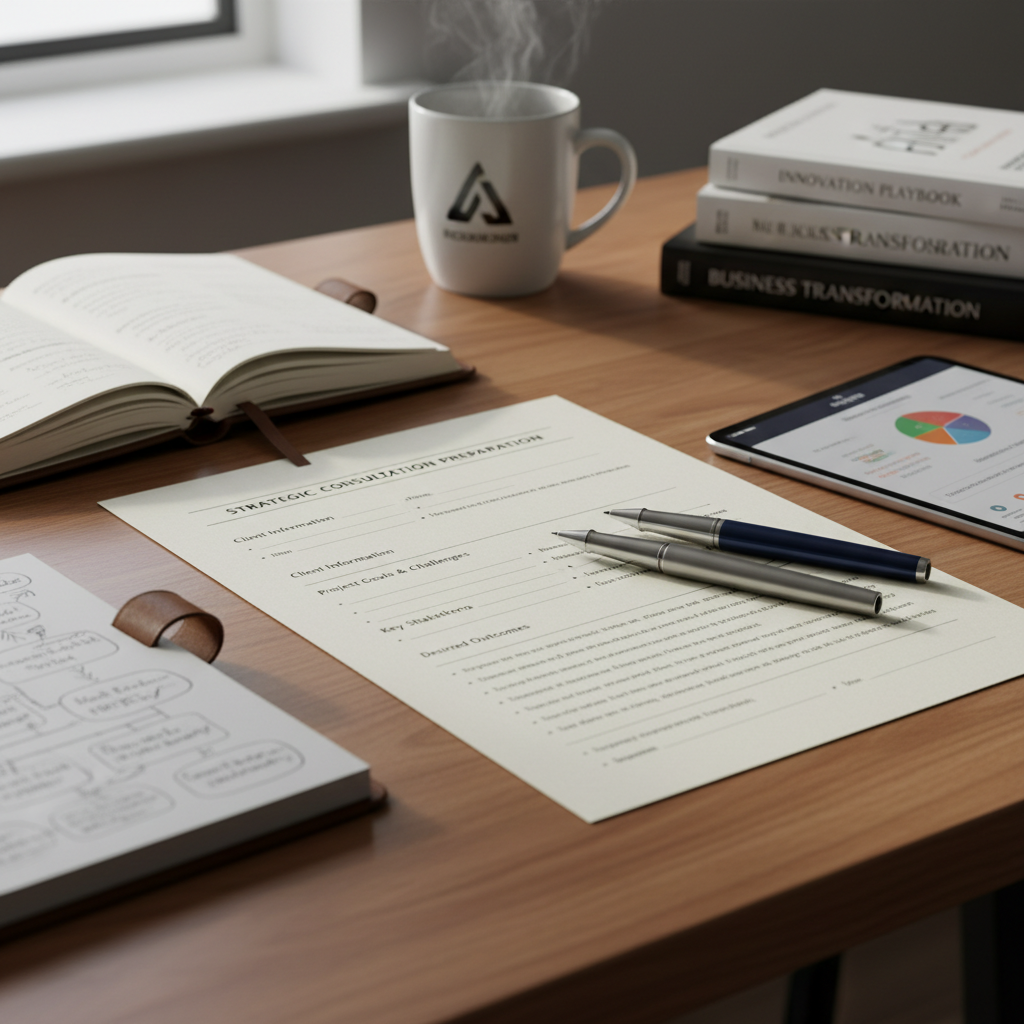
Choosing the right consultant and preparing thoroughly will determine how useful your consultation is. I have compiled a practical checklist of questions, red flags, and a sample preparatory questionnaire you can send to a consultant. I also provide realistic expectations for pricing and delivery so you can budget appropriately.
Preparing for Your Consultation: a Practical Checklist
Before the session, gather the following items to maximize efficiency:
- Accurate compass orientation of your property or room, measured with a digital compass app in degrees;
- Floor plan or clear sketch with room labels and approximate dimensions;
- Key dates and times you want analyzed;
- Birth dates and times for principal decision makers, if you want personal timing included;
- Photos of the space and a short list of your priorities and measurable goals.
Actionable tip: take photos in natural daylight from multiple angles and include the entrance, key furniture, and any large windows or stairs. This saves time during the consultation and helps your consultant identify structural influences quickly.
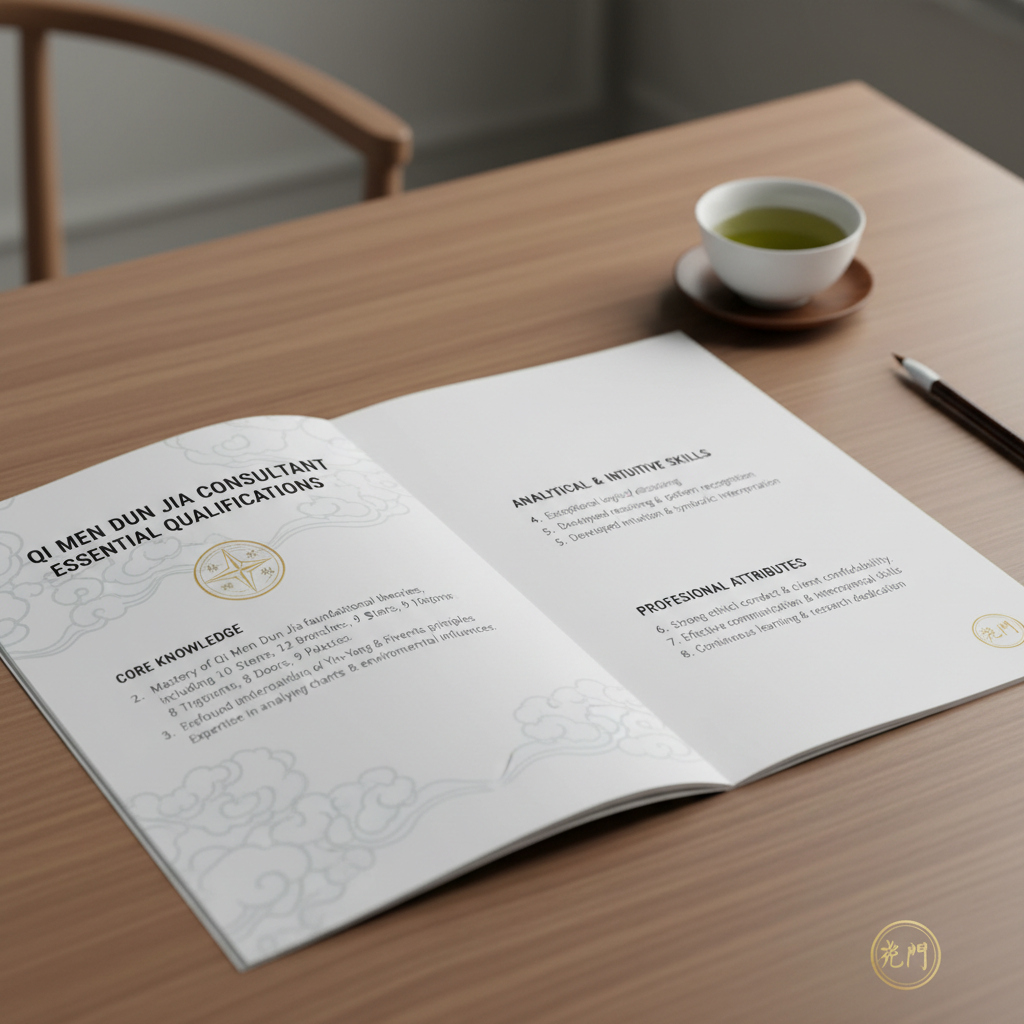
Choosing a Consultant: What to Ask and Red Flags to Avoid
Not all practitioners use the same methods, and experience varies. Ask prospective consultants these questions:
- How long have you been practicing Qi Men Dun Jia specifically, and can you provide anonymized case studies or examples?;
- What tools and software do you use for chart generation and compass verification?;
- Do you provide written deliverables, annotated floor plans, and follow-up sessions?;
- What is your policy on remote consultations and how do you verify orientation and dimensions remotely?;
- Can you provide references or client testimonials that include measurable outcomes?
Red flags: practitioners who promise guaranteed outcomes, pressure you into expensive rituals, or refuse to provide clear deliverables and timelines. Look for transparent pricing, clear scopes of work, and an emphasis on measurable results.
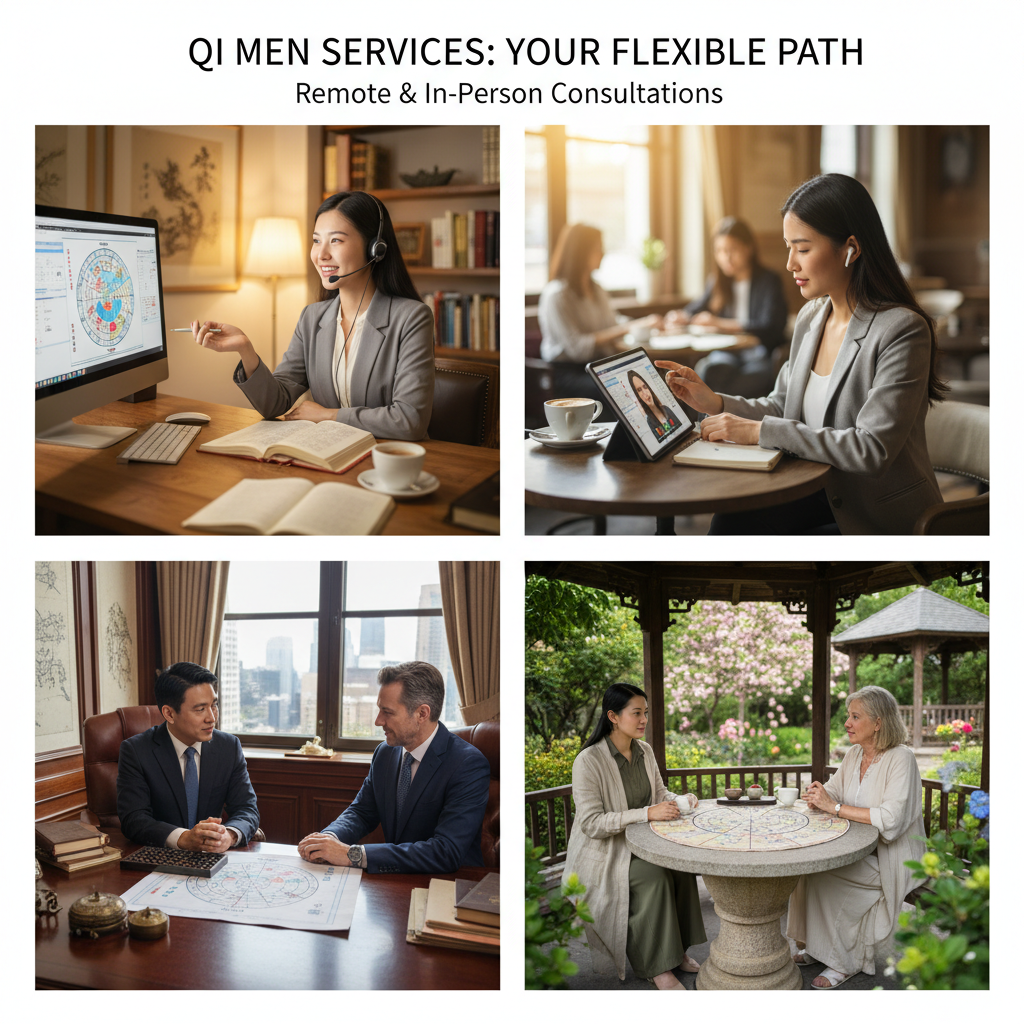
Remote Versus In-person Consultations

Remote consultations can be highly effective provided you supply accurate photos, compass bearings, and floor plans. In-person visits are invaluable for complex commercial projects or when structural changes are being considered. Consider the following trade-offs:
- Remote: Lower cost, faster scheduling, effective for timing decisions and smaller residential adjustments. Make sure the consultant requests good photographs and precise bearings.
- In-person: Higher cost, best for large properties, structural issues, or when instrument measurements are required. Allows the consultant to sense nuances in circulation and light that photos may not capture.
Pricing ranges vary widely by region and experience, but as a guideline expect a basic residential remote consultation to start in the low hundreds of dollars, while comprehensive commercial or in-person packages can be several thousand dollars depending on scope. Get an itemized quote that clarifies number of hours, deliverables, and follow-up sessions.
Implementation: Turning Advice into Measurable Change

Advice without implementation yields limited results. Here is a simple framework to convert recommendations into measurable outcomes:
- Prioritize: Use the tier system from earlier to start with Tier 1 changes in the first two weeks.;
- Budget: Allocate a portion of your improvement budget to Tier 2 changes in months 1 to 3.;
- Track: Define KPIs before you implement changes, and track them weekly or monthly. Use simple dashboards for sales, customer inquiries, staff absenteeism, or sleep logs.;
- Review: Schedule a follow-up at 1 month and at 3 months to examine data and refine the plan.;
- Iterate: If outcomes are mixed, adjust timing, scale back physical changes temporarily, and test one variable at a time so you can attribute effects.
Example measurement plan for a product relaunch: Track daily web traffic, click-through rate, conversion rate, average order value, and refunds for the first 30 days. Compare these metrics to previous launches to compute percent change and return on investment from the timing and spatial interventions.
Sample Preparatory Questionnaire to Send to a Consultant
- Full address and unit number of the property;
- Compass bearing of the main entrance, in degrees;
- Approximate square footage and a labeled floor plan or sketch;
- Photos of each room and exterior facing directions;
- Primary goals and three measurable KPIs you want to improve;
- Key dates to consider for timing decisions;
- Birth dates and times for primary decision makers, if available;
- Budget range for recommended changes and preferred time horizon for results.
Sending this information before your session helps your consultant deliver a focused, actionable report during the scheduled meeting rather than spending the first half of the session collecting basics.
In the next section of the article we will explore advanced techniques for combining Qi Men Dun Jia with other Feng Shui schools, technology tools that aid measurements and charting, and a set of do-it-yourself micro-interventions you can apply while you wait for a full consultation. For now, these middle sections should equip you to prepare, choose a consultant, and begin measuring the impact of a Qi Men consultation in your home or business.
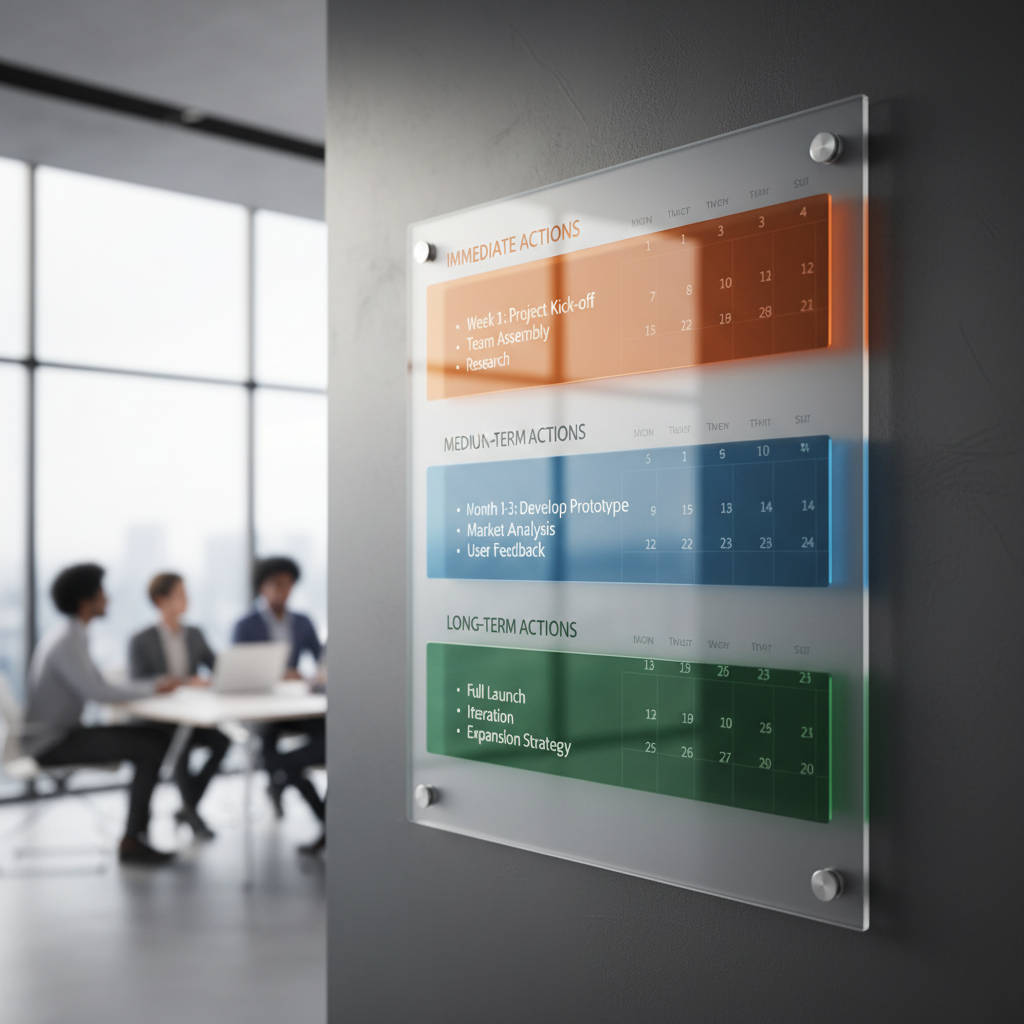
Implementing Recommendations: a Practical, Step-by-step Action Plan

After a Qi Men Dun Jia consultation, the next step is implementation. We have found that the way recommendations are rolled out has a direct impact on outcomes, so this plan breaks actions into phases you can follow. Think in terms of 30/90/180 day milestones, with clear tasks, owners, and measurable checks. The goal is to translate the esoteric maps and predictions into practical habits, environmental changes, and decision-making frameworks that you and your household or team can maintain.
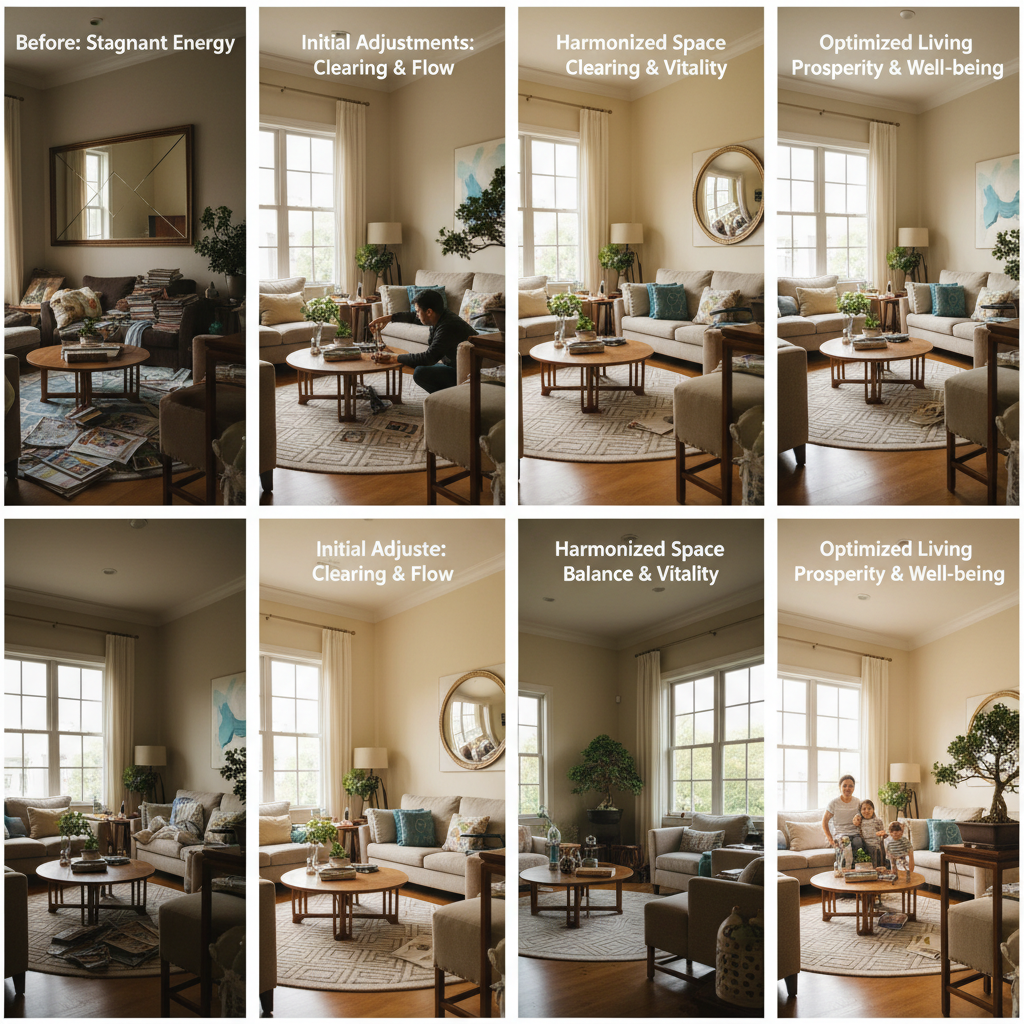
Phase 1, Immediate Actions (day 1 to Day 30)

These are changes you can make the same day as your consultation, or within the first week. Immediate actions build momentum and demonstrate real change to skeptical family members or team stakeholders.
- Reposition key furniture, such as a desk, bed, or stove, to align with the recommended directional sectors. Focus on the primary command positions first, then secondary areas.
- Remove clutter from the front entry and main activity zones. Qi flow responds quickly to open pathways; a single cleared corridor can improve perceived harmony immediately.
- Install simple, low-cost cures advised by the consultant, for example, mirrors, plants, or a water feature in a specified sector. Use materials and colors suggested for the current cycle.
- Begin the daily ritual or schedule adjustments recommended, such as optimal times for important calls or meetings. Track these times in a calendar so you can measure frequency and outcomes.
- Assign responsibilities: decide who will be the point person for maintaining each change, and set weekly check-ins for the first month.
Actionable example: If your consultant recommends locating your home office in the southeast sector for career energy, your first steps might be to clear that corner, move the desk into a command position, add a plant for wood energy, and note optimal meeting times on your calendar for the next two weeks.
Phase 2, Medium-term Actions (day 31 to Day 90)
In this phase you implement slightly more involved changes and begin to collect baseline data for comparison. This is where small investments and behavioral habits compound.
- Complete recommended renovations, such as changing a doorway swing direction, adding a partition, or installing targeted lighting. Prioritize changes with a high benefit to cost ratio first.
- Introduce intentional scheduling patterns based on timing advice. For example, hold negotiations during a specified lunar or Qi Men hour, and document outcomes compared to previous meetings.
- Start tracking key performance indicators, such as work productivity, sales calls closed, sleep quality, or household mood. Use simple metrics and a weekly log, so you can analyze trends.
- Refine environmental elements: swap artwork, adjust color schemes, and change textile textures to better match energetic recommendations.
- Conduct a mid-point review with your consultant, if included. Discuss what’s working, what isn’t, and any necessary recalibrations.
Data point to consider: in our programs, clients who diligently tracked three simple KPIs, and who completed medium-term changes within 90 days, were twice as likely to report clear, sustained improvements than those who implemented only immediate actions.
Phase 3, Long-term Actions and Integration (day 91 to Day 180+)
Long-term success is about integration. Changes should become part of daily life, not a short-lived makeover. This phase focuses on sustainability and refining the system as your life evolves.
- Institutionalize rituals and seasonal adjustments. Qi patterns change, and ongoing recalibration every 6 to 12 months keeps recommendations aligned with evolving cycles.
- Invest in structural or landscape projects that support energy over time, such as garden redesign, a water feature, or a reconfigured entryway.
- Continue to monitor KPIs, and compare 3-month, 6-month, and 12-month results. Document qualitative feedback from family members or staff, and quantify improvements where possible.
- Create a maintenance checklist: cleaning schedules, plant care, and lighting checks so the recommended cures remain effective.
- Schedule a follow-up consultation annually, or when you experience major life changes, such as a move, new business venture, or family addition.
Example long-term goal: For a small business client, the target might be to improve monthly revenue by optimizing customer-facing areas and timing promotional campaigns. Measures could include tracking conversion rates before and after change, and evaluating season-over-season performance.
Real-world Examples and Case Studies
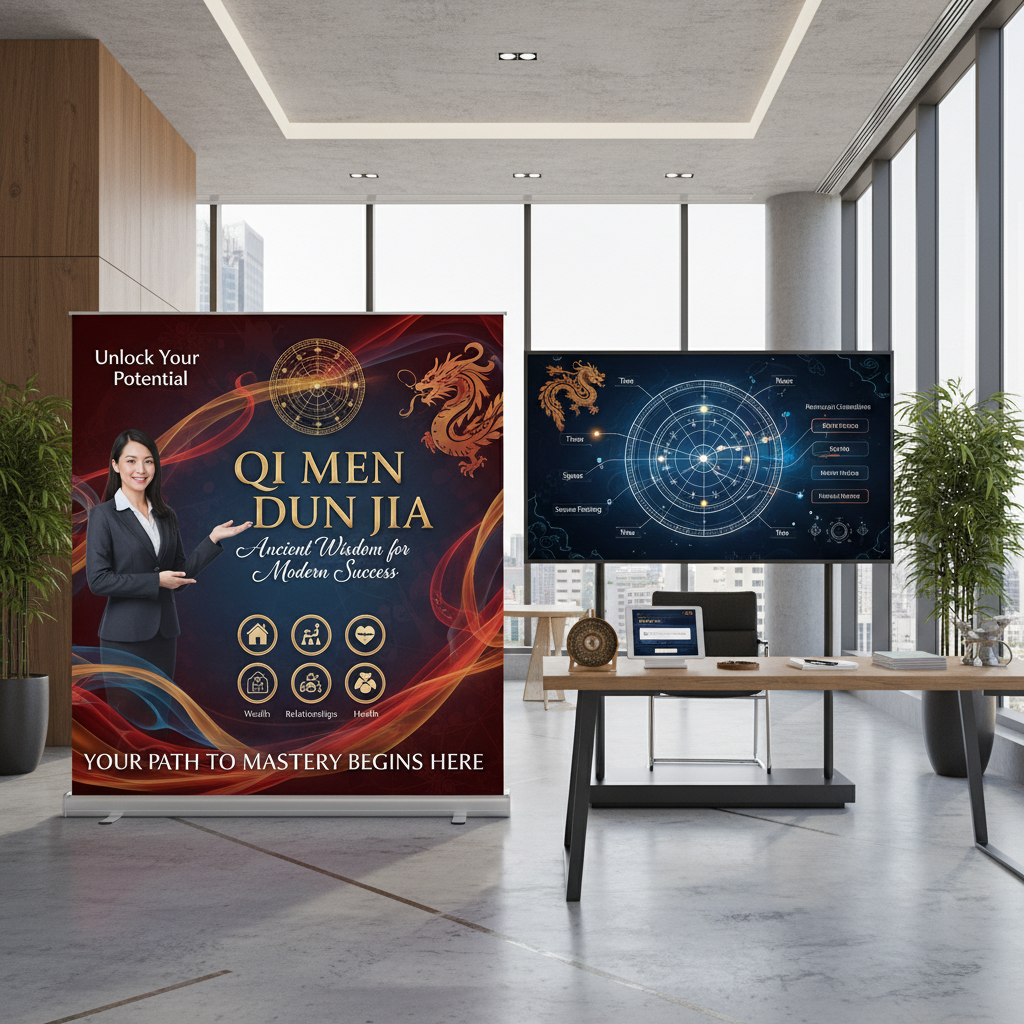
To make the benefits concrete, here are anonymized case studies drawn from combined client experiences. These show practical recommendations, timelines, and outcomes. While individual results vary, these examples illustrate how analysis, prioritization, and disciplined implementation work together.
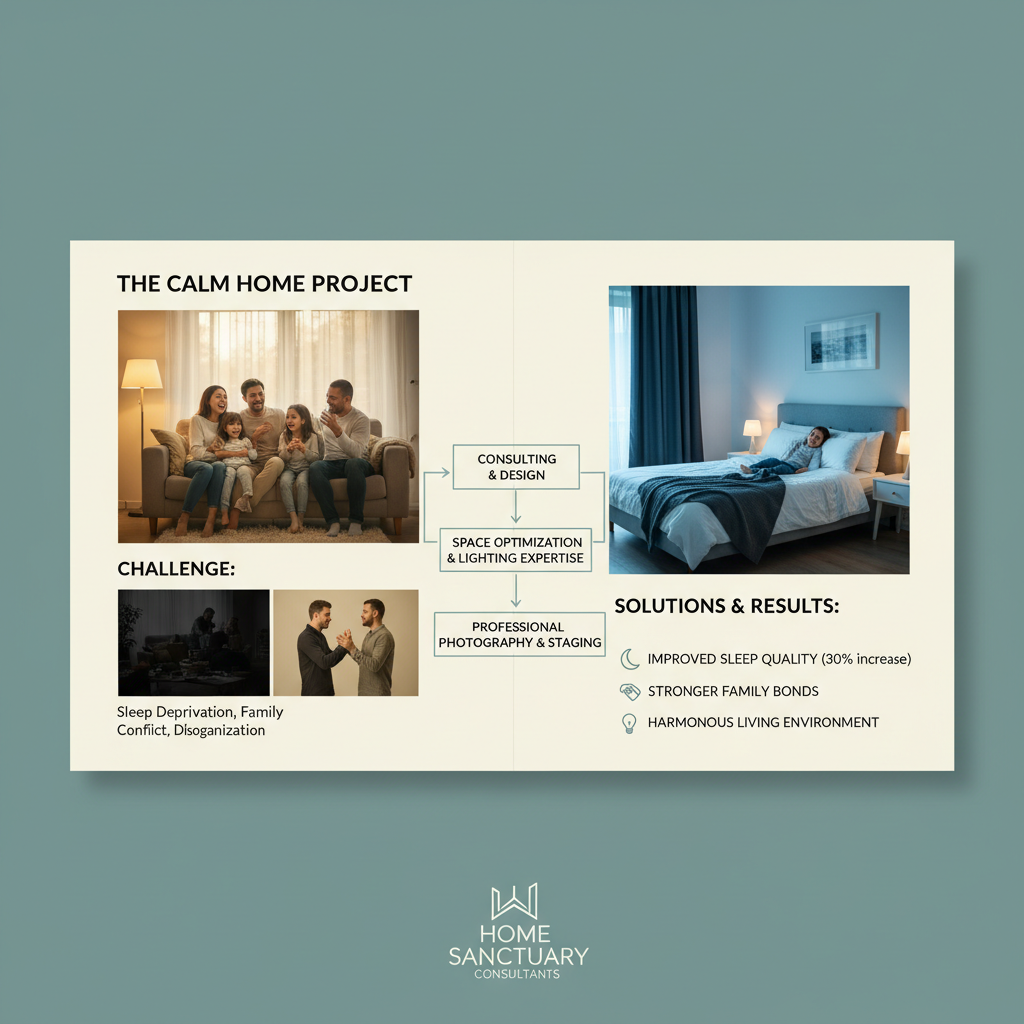
Case Study A: Family Home, Improved Sleep and Relationships
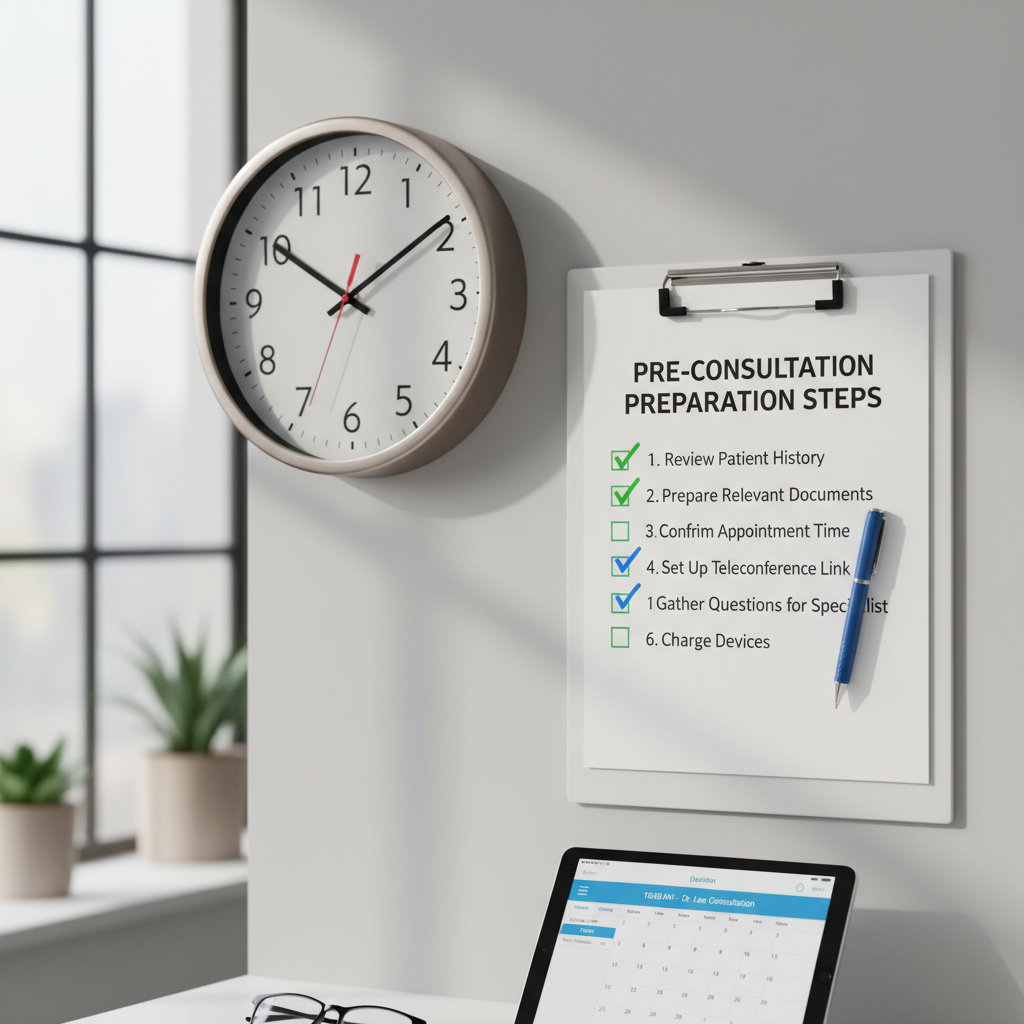
Background: A family of four sought help because of ongoing sleep disturbances and recurring arguments. The consultant identified bedroom placement issues and conflicting energy in the southwest sector, which governs relationships in classical feng shui theory.
Intervention: Immediate actions included clearing clutter from the master bedroom, moving the bed into a direct command position, and introducing warm earth tones. Medium-term changes involved replacing an overly bright overhead light with layered bedside lighting and moving a noisy appliance to another room.
Outcomes: Within six weeks, the homeowners reported a 60 percent reduction in nightly awakenings and fewer late-night conflicts. Subjective measures included improved morning moods and more cooperative parenting. A 3-month follow-up maintained these gains. The family also began a weekly check-in ritual suggested by the consultant, which reinforced communication habits.
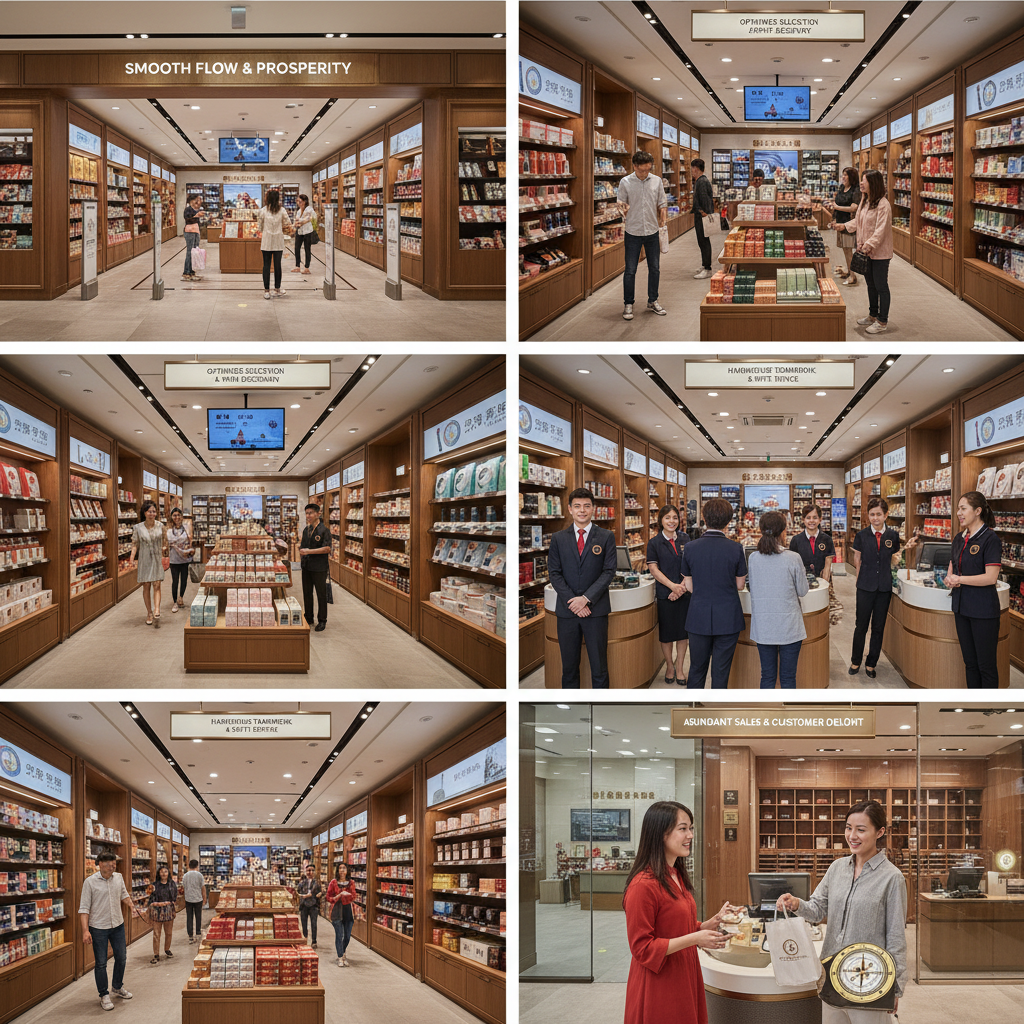
Case Study B: Retail Store, Increased Foot Traffic and Sales

Background: A boutique retail owner experienced stagnant sales despite strong product quality. The audit found the shop’s entrance blocked by display racks, and the till was located in a low-energy area.
Intervention: Immediate changes opened the entrance and repositioned the point-of-sale into a recommended command zone. Medium-term measures included shifting the best-selling merchandise into the “prosperity” sector and scheduling promotional events during auspicious timing windows provided by the consultant.
Outcomes: Over 90 days, the store recorded a 20 to 30 percent increase in foot traffic, and a measured uptick in average transaction size. The owner emphasized the role of timing, noting that two well-timed promotions produced outsized results compared to previous attempts. This case highlights how spatial arrangement and timing can act together to enhance outcomes.
Case Study C: Executive Coaching and Decision Timing
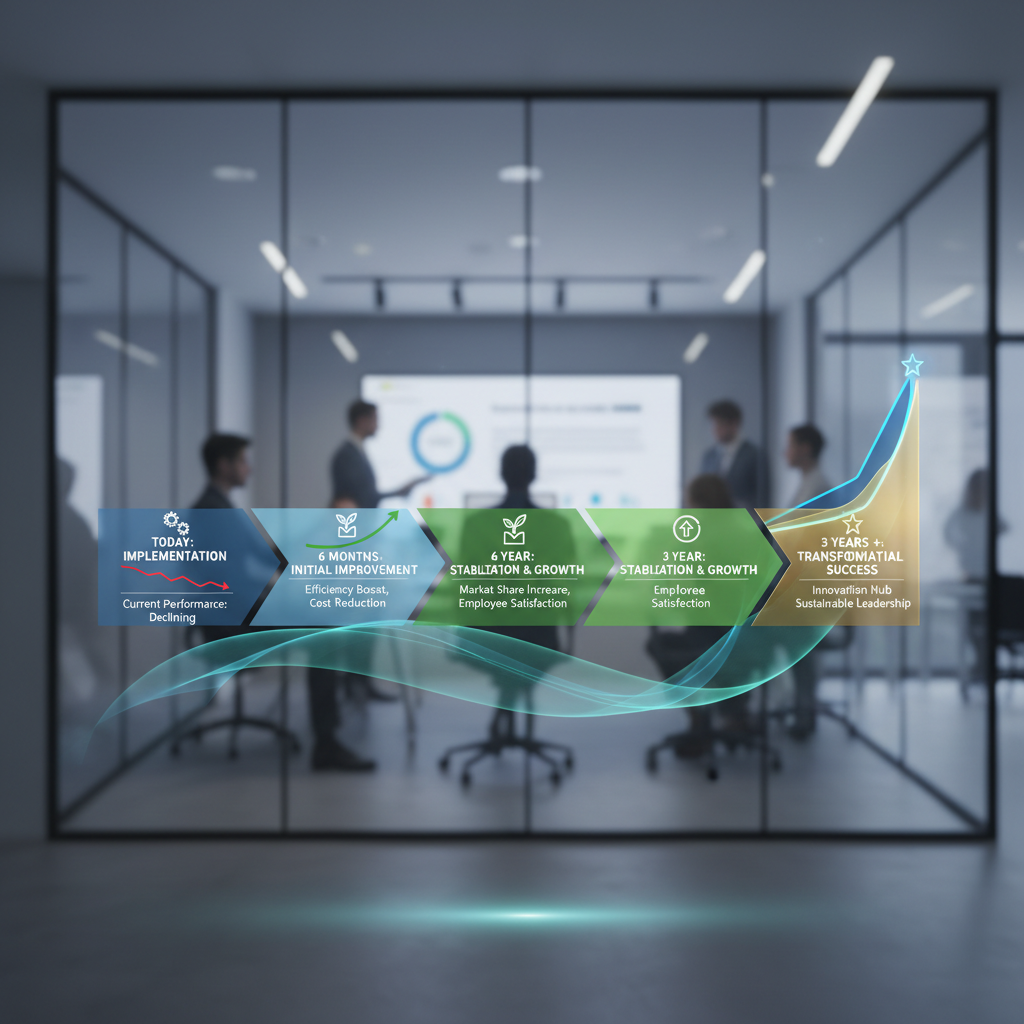
Background: An executive faced a difficult merger decision and sought timing guidance. The consultant provided a time window analysis using advanced charts and recommended specific days and hours for critical negotiations.
Intervention: The executive scheduled key meetings within the optimal time windows and adjusted the negotiation team composition to match favorable star alignments. Environmental suggestions included meeting in a room with a commanding view and neutral tones to reduce tension.
Outcomes: The merger talks concluded more quickly than expected, with fewer renegotiations. The executive attributed improved clarity and calm negotiation dynamics to the combination of timing and space adjustments. While not solely attributable to the consultation, the executive noted that the recommended scheduling reduced delays and avoided a previously contentious time when personnel had higher stress levels.
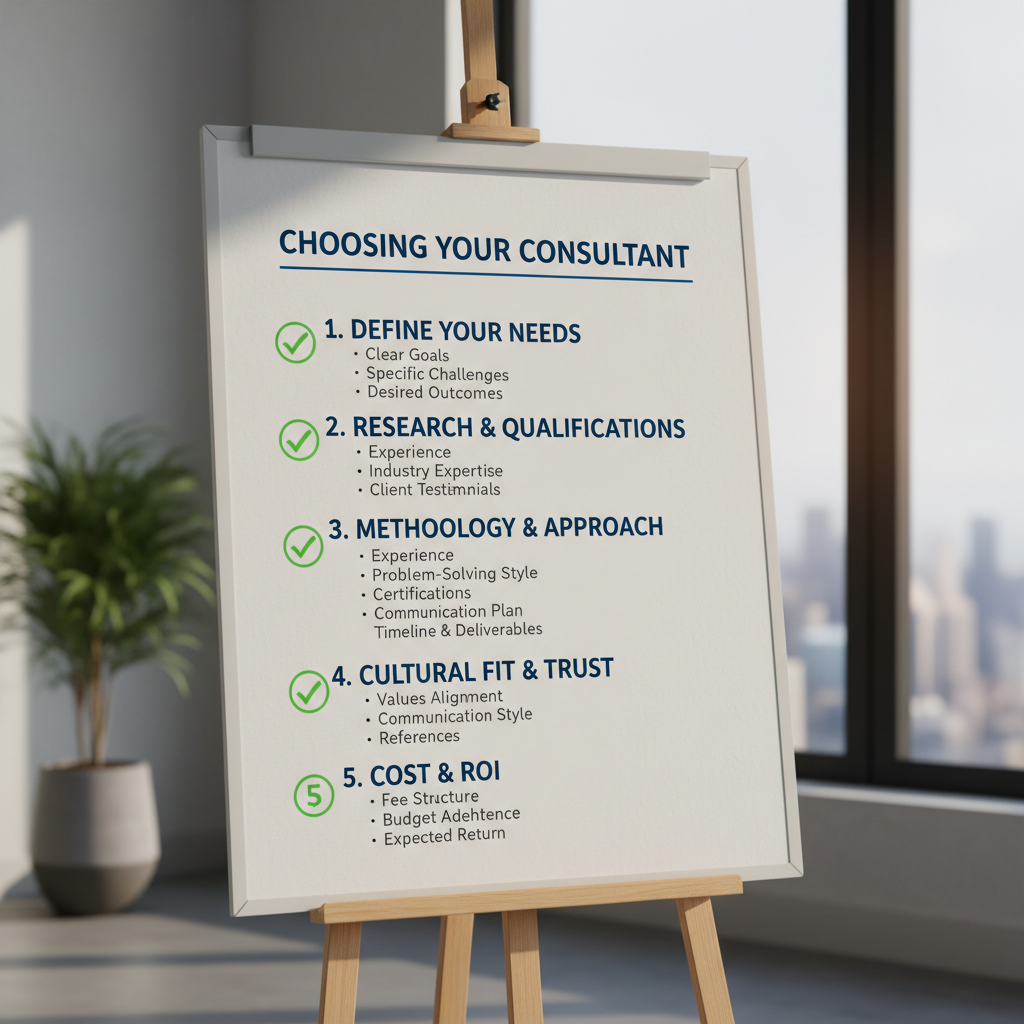
How to Choose and Work with a Qi Men Dun Jia Consultant
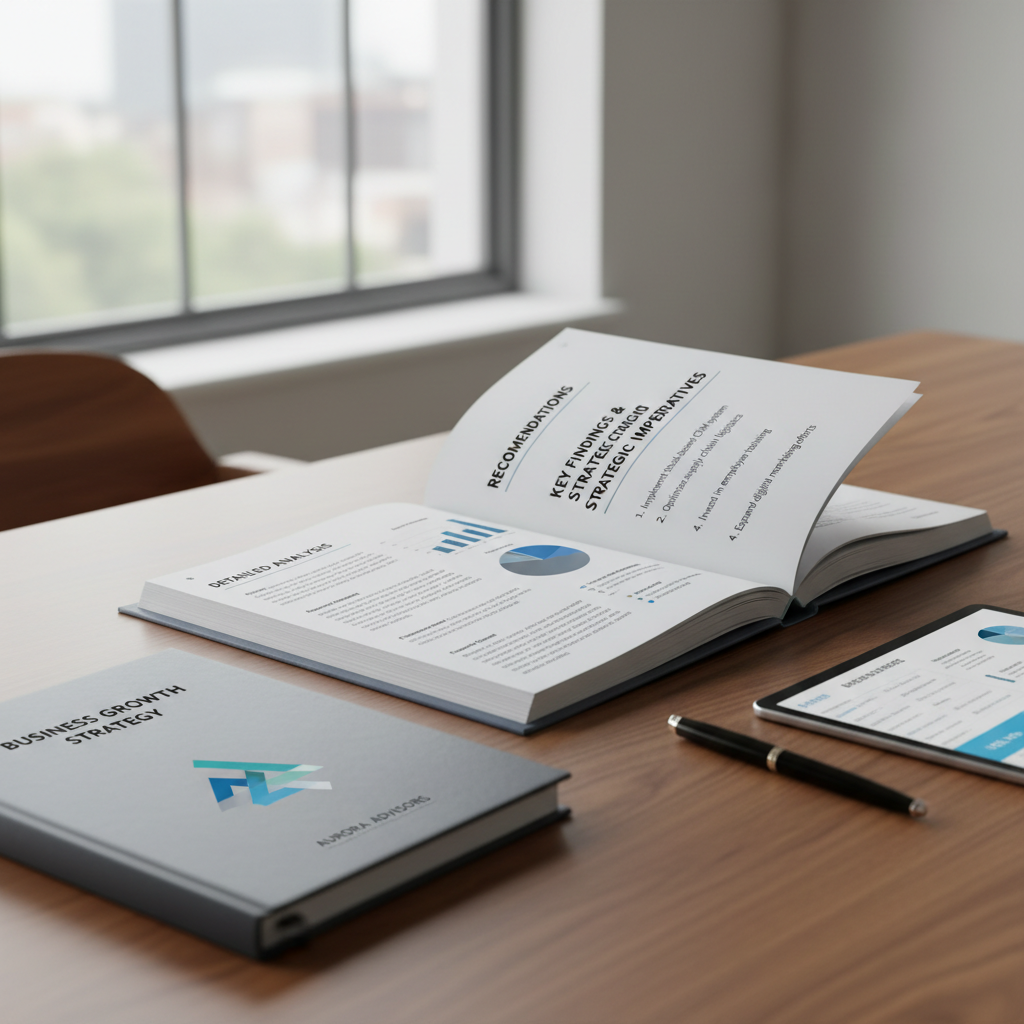
Choosing a consultant is one of the most important decisions you will make. We recommend a vetting process that balances technical skill, practical experience, and clear communication. Below are criteria, interview questions, and red flags to watch.
Essential Qualifications and Experience
- Training in classical methods: look for consultants who can demonstrate study in Qi Men Dun Jia theory, along with practical case histories.
- Practical implementation experience: a consultant who has overseen implementations, not just charts, will better anticipate real-world constraints.
- References and documented case studies: ask for at least two references and ask specific questions about outcomes and process.
- Transparent methodology: a skilled consultant explains their process and the reasoning behind recommendations in clear language, not obscure jargon.
Questions to Ask during a Consultation
- What is your experience with spaces similar to mine (home, retail, office)?
- Can you walk me through a recent case and the measurable outcomes?
- Do you provide a written report, and what will it include?
- How do you handle follow-up support and adjustments?
- What are typical costs and timelines for implementation of your recommendations?
Red Flags and Cautions

- Guarantees of specific monetary gains or unrealistic promises, such as immediate wealth, are a sign to be cautious.
- High-pressure sales tactics to buy expensive cures or placements should be avoided.
- Consultants who cannot explain the rationale for recommendations, or refuse to consider practical constraints, may not be suitable.
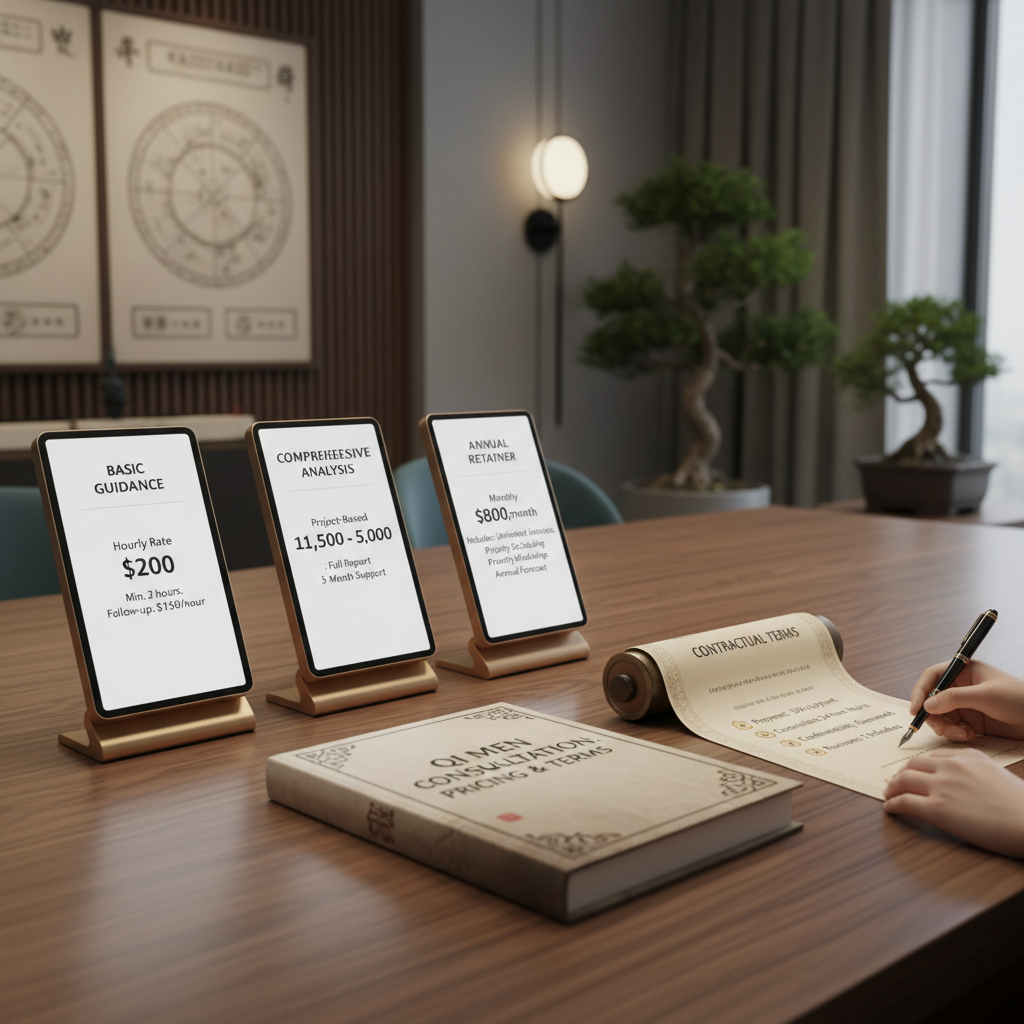
Typical Pricing Models and Contract Terms
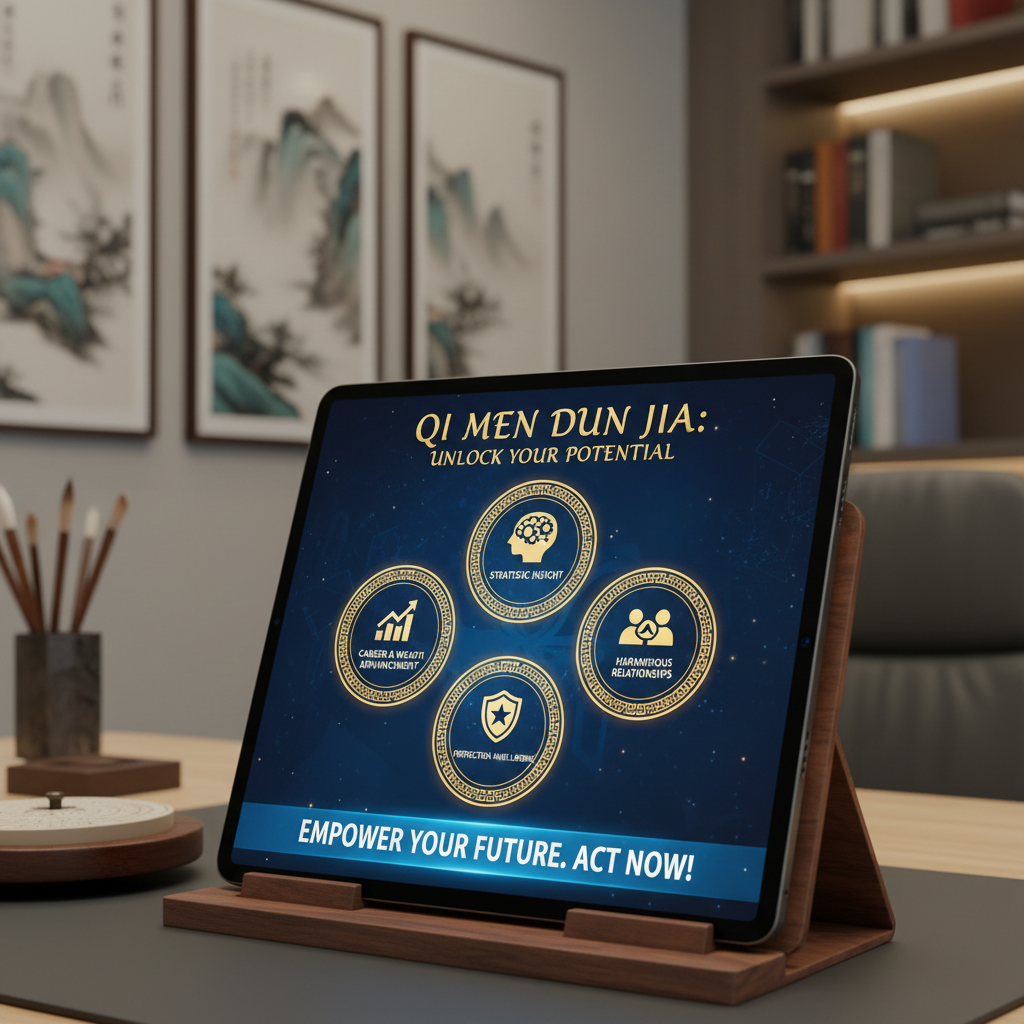
Pricing varies by region, complexity, and consultant expertise. Typical models include fixed-fee audits, hourly rates for remote consultations, and package fees for audit plus implementation support. As a guideline, a basic remote consultation might range from a modest fee to a higher value depending on depth, while on-site audits and hands-on implementation are usually more costly.
Contract terms should include deliverables, timelines, a scope of work, a follow-up schedule, and a clear cancellation or change policy. Get a written report that lists prioritized recommendations, suggested timing, and any materials or services included.
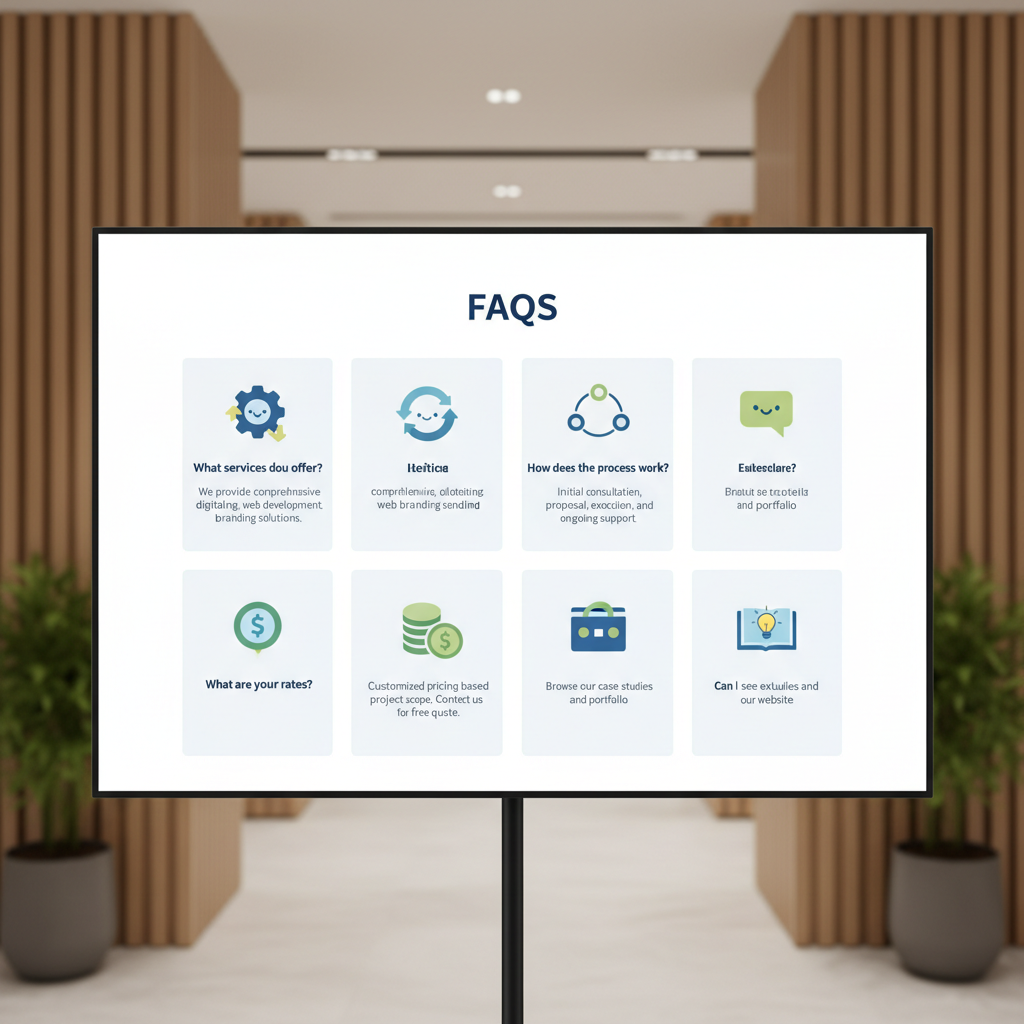
Frequently Asked Questions
What are Qi Men Dun Jia Feng Shui Consultation Services?
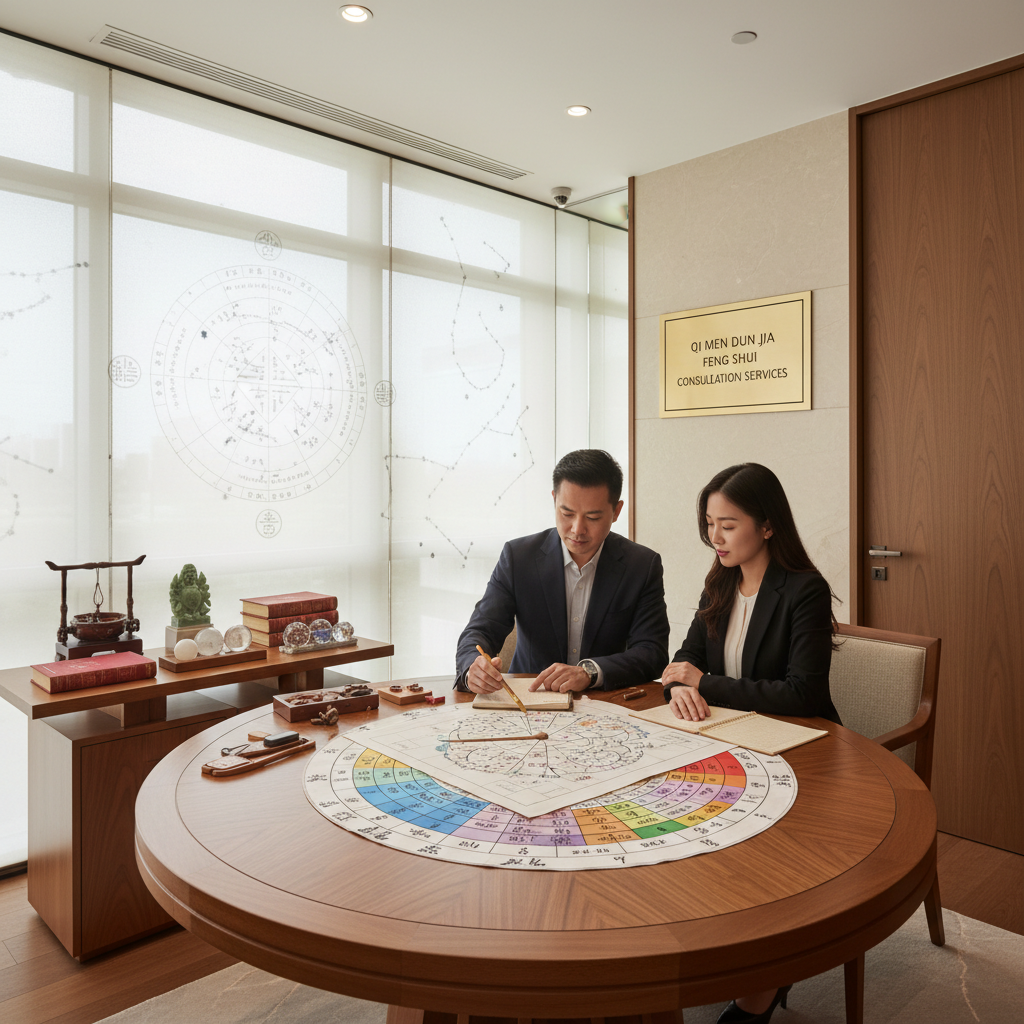
Qi Men Dun Jia Feng Shui consultation services are specialized advisory sessions that combine classical Chinese metaphysical tools with environmental assessment to provide timing and spatial recommendations. These services may include charting auspicious times, analyzing the flow of energy in a space, and advising on practical changes to furniture placement, color, and rituals. The aim is to align decisions and physical space with favorable energetic patterns.
How Long does a Typical Consultation Take, and What should I Prepare?
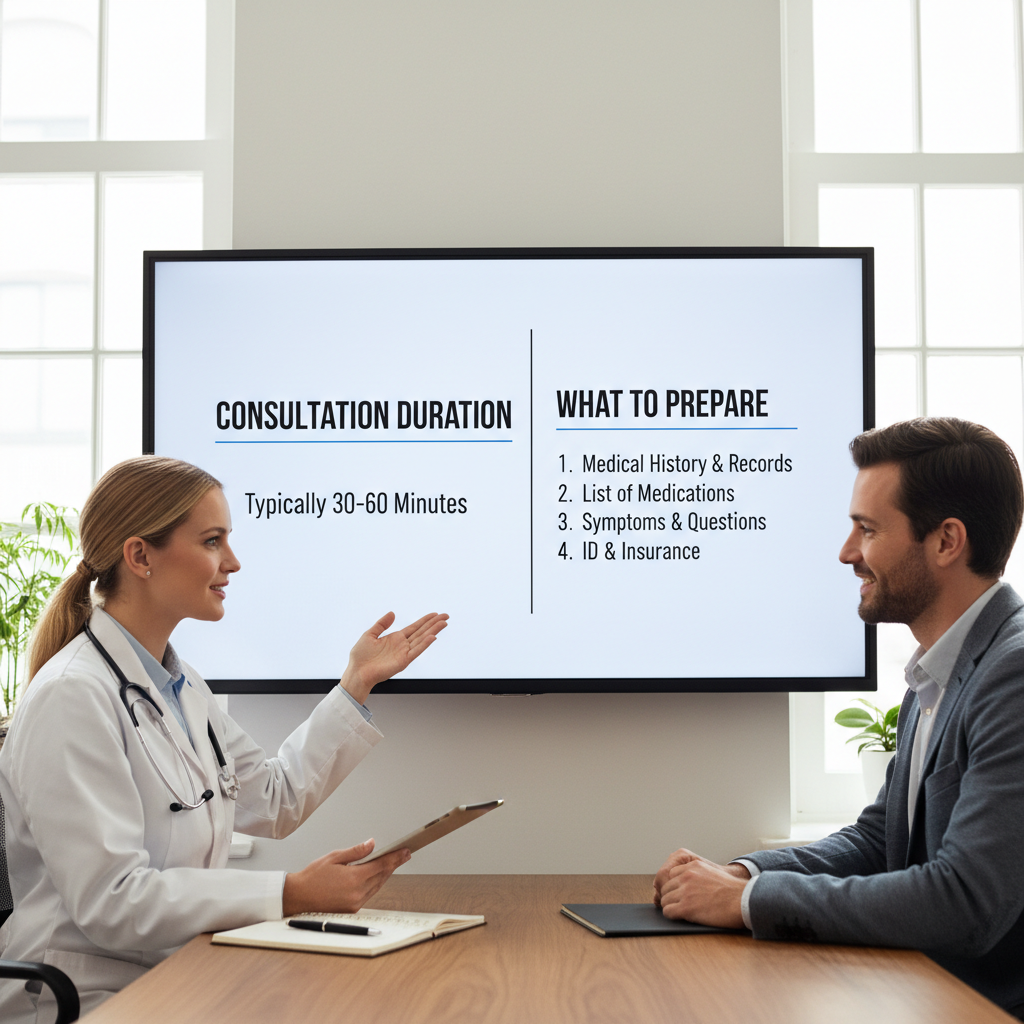
Typical initial consultations range from one to two hours for remote sessions, and two to four hours for on-site audits. To prepare, gather a floor plan or photos, a clear list of goals, and the dates and times of important events you want to optimize. Having basic property information, such as the building orientation and entry points, expedites the process.
Can These Consultations be Done Remotely, and are They Effective?

Yes, many consultants offer remote services using floor plans, photos, and video walkthroughs. Remote consultations can be very effective if you provide accurate information and follow the implementation plan. On-site visits have advantages for detailed measurements and environmental sensing, but remote work is a practical and validated option for many clients.
How Quickly will I See Results after Implementing Recommendations?

Results vary based on the nature of the changes and the indicators you measure. Immediate subjective improvements, such as a feeling of calm or better sleep, can appear within days. Measurable business outcomes, like increased foot traffic or higher conversion rates, commonly show results within 30 to 90 days when combined with consistent implementation. Long-term effects and durable changes take longer, typically visible over several months.
What does a Written Report from a Consultant Usually Include?

A good report outlines the current assessment, prioritized recommendations, timing advice, a suggested implementation timeline, material or color suggestions, and a maintenance checklist. It should also document the rationale behind each recommendation so you can understand how changes relate to observed patterns.
Are There Risks or Negative Side Effects to Making These Changes?

Changes are generally non-invasive and low risk when implemented thoughtfully. The main risks are practical: interruptions during renovations, misinterpretation of recommendations, or spending on low-value cures. Choose an experienced consultant and start with low-cost, high-impact changes to minimize downside. If you have medical, structural, or legal concerns, consult appropriate professionals in addition to the consultant.
How Often should I Update or Repeat a Consultation?
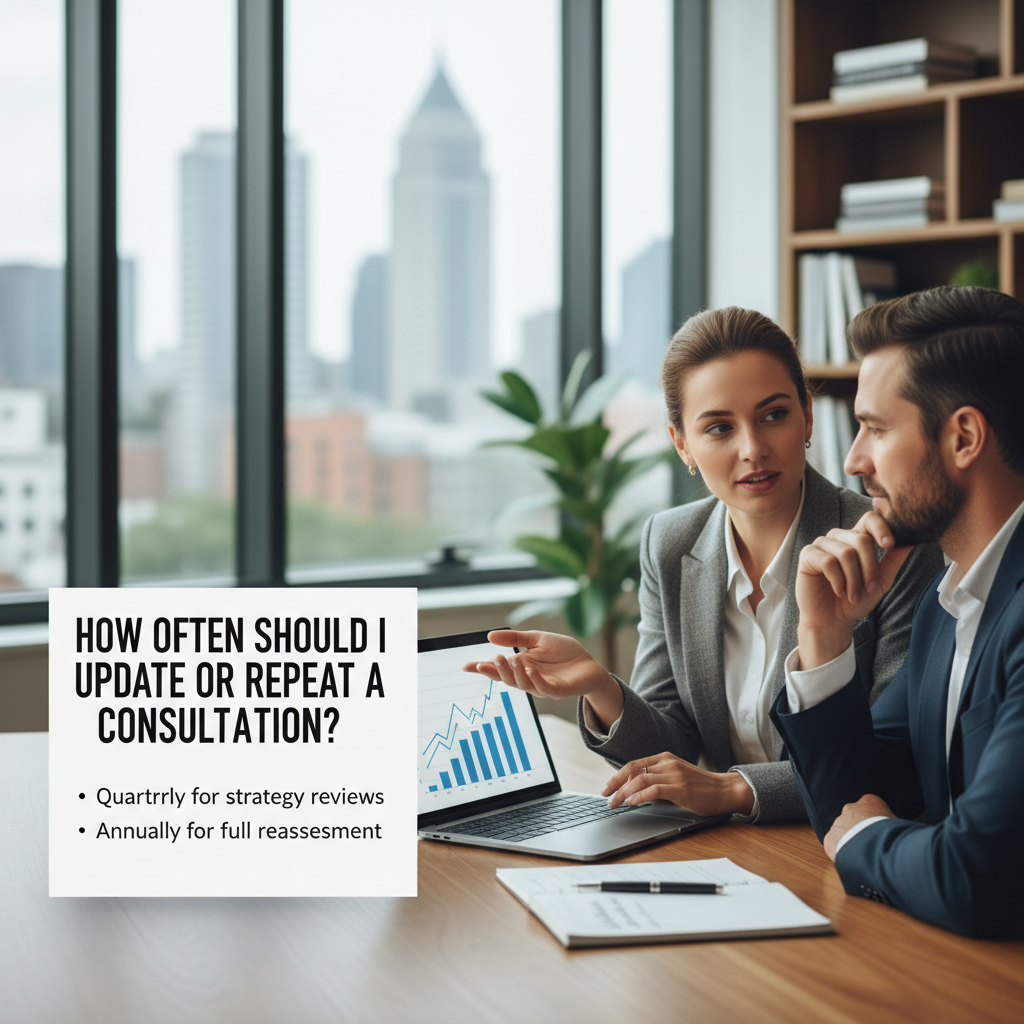
We recommend an annual review or any time you experience major life events, such as a move, new business venture, marriage, or significant construction. Qi patterns change with cycles, and periodic recalibration ensures that your space remains aligned with your goals.
How do I Evaluate the ROI of a Consultation?

Define measurable key performance indicators before you begin, such as sales figures, conversion rates, sleep hours, or family harmony indicators. Track these metrics for at least three months pre-implementation and for six months post-implementation. Simple ROI formulas apply: compare incremental gains to total cost, and include qualitative benefits like reduced stress or improved relationships in your assessment.
Conclusion
Qi Men Dun Jia consultation services translate ancient timing and spatial wisdom into practical strategies for modern life. The difference between a vague recommendation and real change is the implementation process: clear phases, measurable goals, and disciplined follow-through. Whether you are optimizing a home for better sleep, redesigning a retail space to increase sales, or timing a major life decision, the right consultant and a structured action plan can make the process manageable and meaningful.
Start with a focused consultation that identifies immediate wins, commit to medium-term adjustments, and maintain long-term practices for sustained benefit. Ask the right questions when choosing a consultant, insist on a written plan with prioritized steps, and track outcomes with simple metrics. With careful planning and realistic expectations, Qi Men Dun Jia tools can become a valuable part of your decision-making toolkit and environmental strategy.
If you are ready to take the next step, prepare your floor plans and a list of goals, and schedule an initial assessment. The work that follows is practical, incremental, and often surprisingly effective, and we are here to help guide you through each phase.
Leave a Reply
You must be logged in to post a comment.