Introduction: Why Qi Men Dun Jia Matters for Property Feng Shui
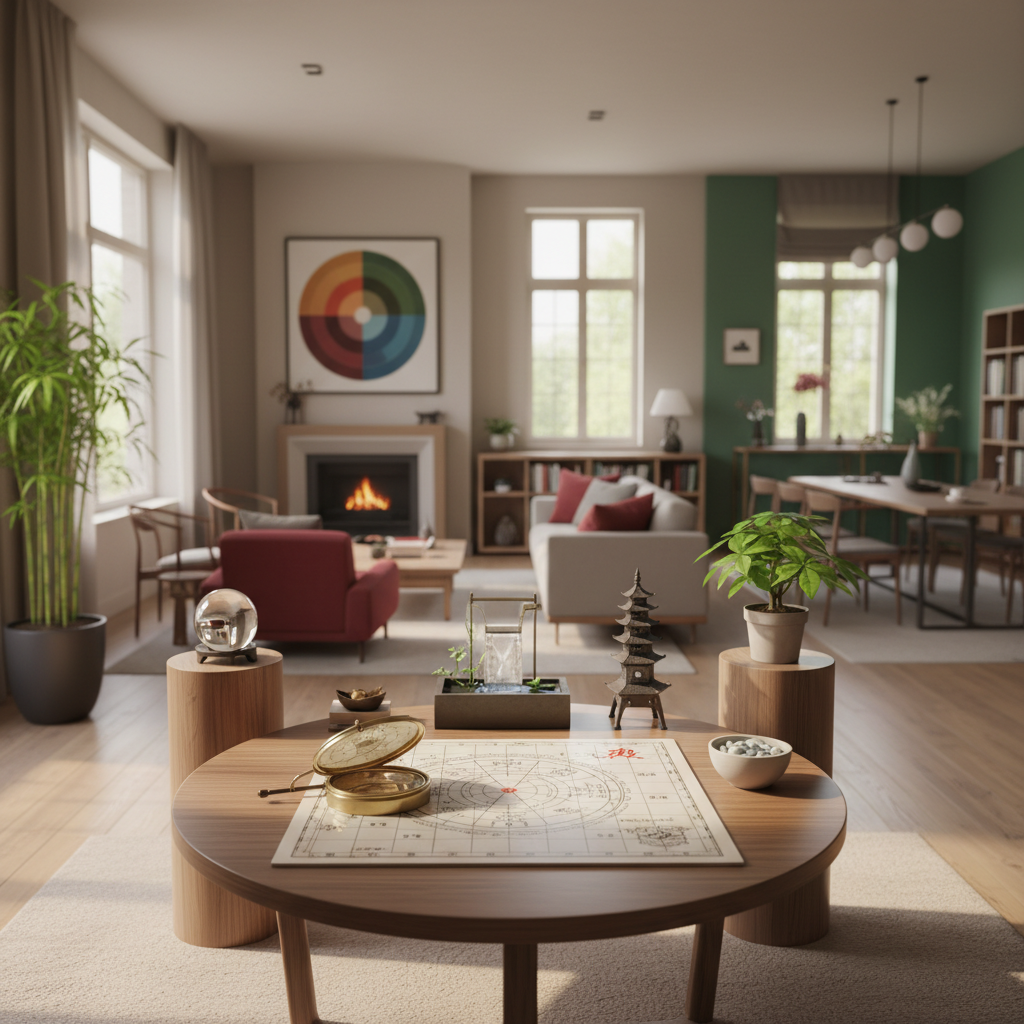
When we talk about feng shui for homes and investment properties, most people picture flying stars, bagua maps, and the placement of furniture. Qi Men Dun Jia, however, brings a different, more tactical layer to property feng shui. Originating as a Chinese metaphysical system used for timing and decision making, Qi Men Dun Jia offers a way to read a property’s energetic potential at specific moments, and to design interventions that align with those energies for practical outcomes, such as smoother sales, better tenancy, or faster renovation approvals.
If you are a homeowner, property investor, architect, or real estate agent, learning how to apply Qi Men Dun Jia property feng shui can change how you evaluate sites, schedule activity, and prioritize improvements. In this article we will walk through the theory you need to understand, the step by step methods to assess a building, and practical, tested remedies you can implement. I write from hands-on experience working on urban apartments and suburban houses, and I will include examples and clear actions you can take immediately.
Before we begin, note that Qi Men Dun Jia is both a time-based and space-based art. That means the same house can be auspicious at one time and neutral or problematic at another, and remedies often involve changing timing as much as changing layout. If you want to use the system for a purchase, renovation, or rental decision, combine it with standard due diligence: structural surveys, market analysis, and legal checks. Qi Men Dun Jia enhances decisions, it does not replace them.
Section 1: the Fundamentals – What Qi Men Dun Jia Brings to Property Feng Shui
Origins and Core Concepts, in Practical Terms

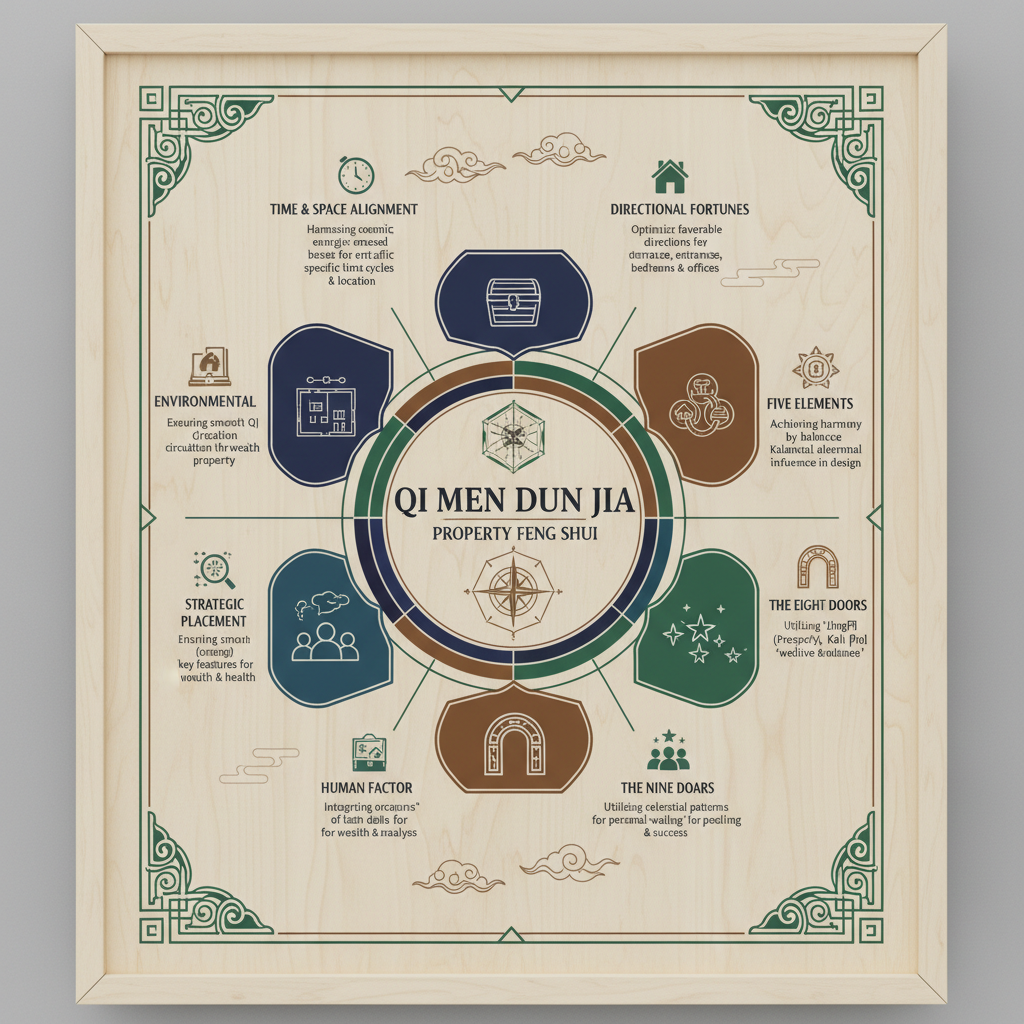
Qi Men Dun Jia is a layered system rooted in Chinese cosmology: it uses the nine palaces, nine doors, stars, deities, and the celestial stems and earthly branches to create a chart for a particular moment and orientation. In property work, we translate those elements into: which sectors of a building are active, which directions are favorable or risky right now, and which doors, windows, or rooms will attract beneficial events such as money, health, or smooth transactions.
For practical property analysis, three concepts are most useful: palace (a spatial sector of a property), door/gate (entry points or conduits for qi), and the star/deity combination that indicates the quality of energy in that palace. Think of a Qi Men chart as a snapshot: it tells you where energy is concentrated, how it behaves, and what actions are most likely to interact with it successfully.
Why Timing and Orientation Matter More Than You might Expect
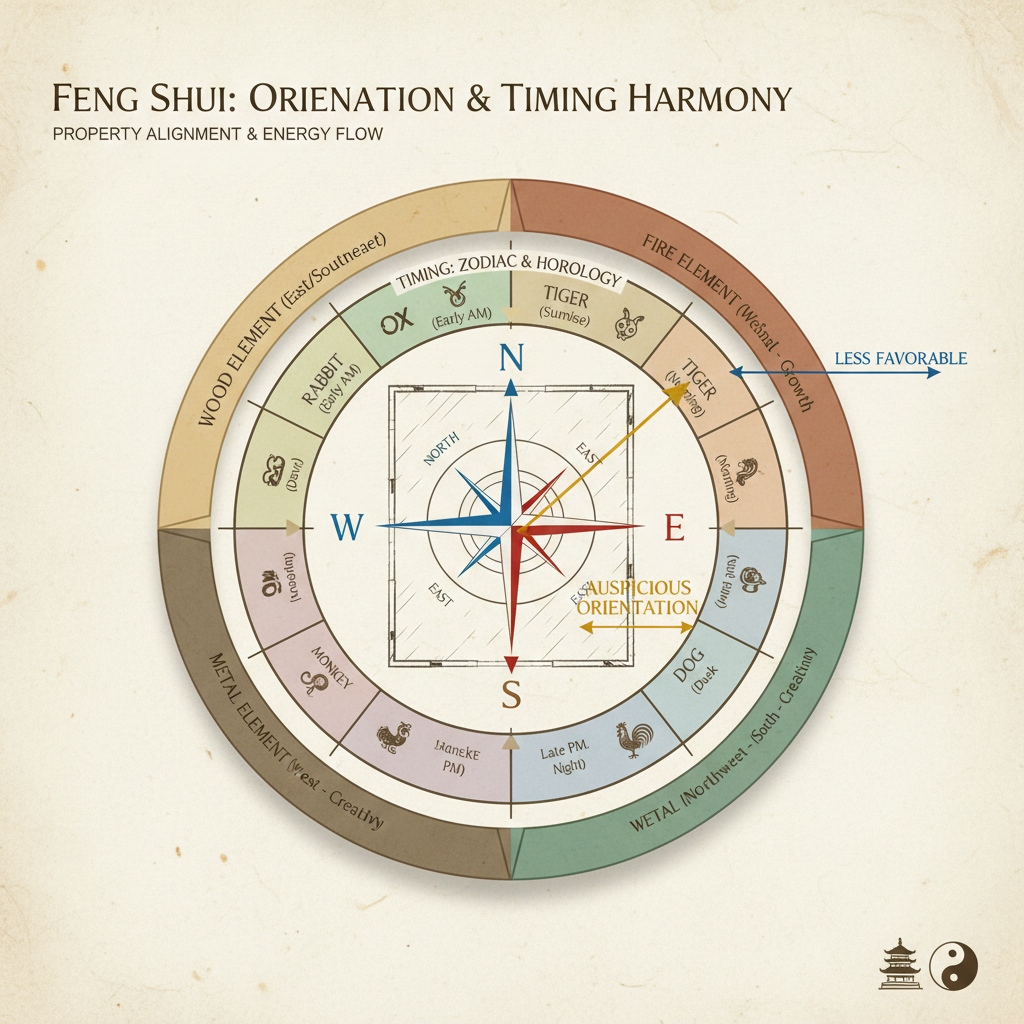
Many traditional feng shui systems emphasize a building’s permanent orientation or the natal energy of its era. Qi Men adds a powerful temporal dimension. A house facing south might be very favorable for contract-signing in July, but less effective for attracting tenants in November, depending on the daily chart. This is crucial where property outcomes depend on specific events, such as listing a house, holding an open house, starting renovation work, or signing a lease.
Here is a practical comparison to illustrate the point. Suppose we have two identical two-bedroom apartments. Apartment A lists for sale in a month with a Qi Men chart that favors its main entrance palace; Apartment B lists six months later when the chart places a problematic star over the same palace. All other things equal, Apartment A will have an easier sale process. By timing your listing, viewing events, or renovation milestones to align with favorable Qi Men palaces, you increase the odds of positive outcomes.
How Qi Men Integrates with Classical and Modern Feng Shui
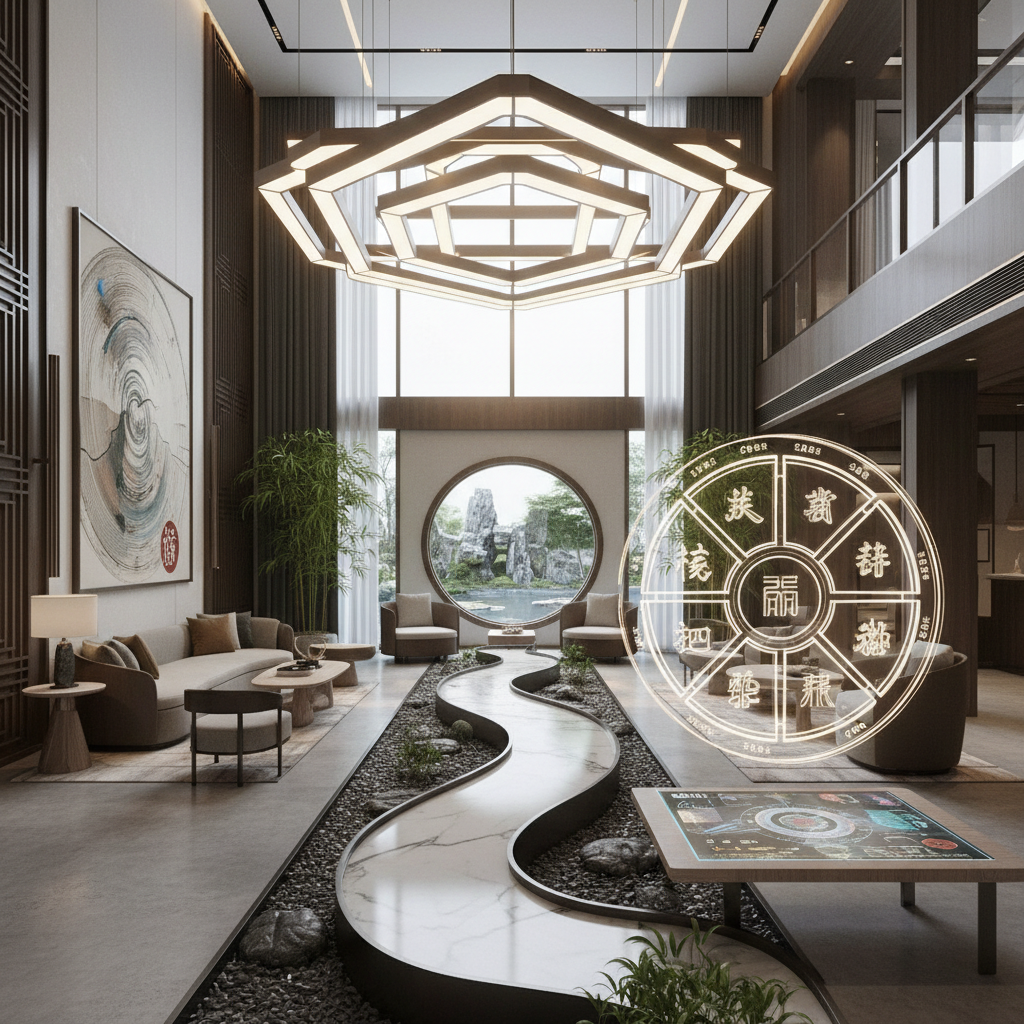
Qi Men is complementary, not contradictory, to classical feng shui. Where flying star feng shui gives long-term trends (annual, eight-year cycles), Qi Men gives precise timing and strategic options. In practice we use three layers: baseline spatial corrections (structure, drainage, clutter removal), annual/monthly adjustments (flying stars, seasonal energy), and Qi Men timing for event-specific tactics. Combining these layers is how we create robust, measurable improvements in property performance.
Section 2: How to Assess a Property Using Qi Men Dun Jia – Step by Step
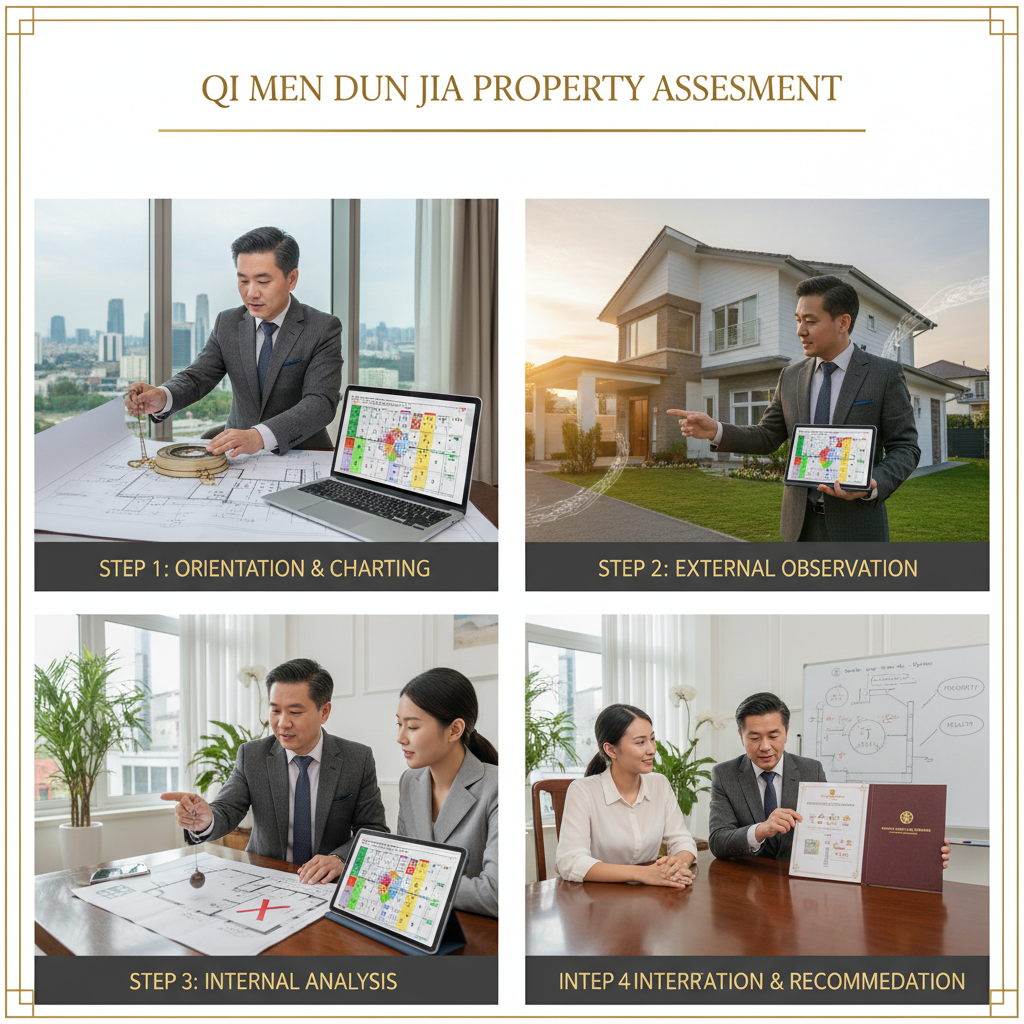
Step 1: Define the Objective and Choose Your Reference Moment

The first and most important action is to be clear about your objective. Are you trying to:
- Sell or rent the property quickly?
- Speed up a renovation approval or contract signature?
- Attract long-term tenants or improve tenant relationships?
- Enhance cashflow and reduce vacancy?
Once you have a clear objective, choose the reference moment for the Qi Men chart. This can be the proposed moving-in date, the planned date of a signing, the start date of construction, or the expected date of listing. In my practice, we usually cast a chart for the time an important legal document is signed, or for the expected start of foot traffic (an open house), because those moments act as energetic anchors for the desired outcome.
Step 2: Measure Orientation and Divide the Plan into Nine Palaces
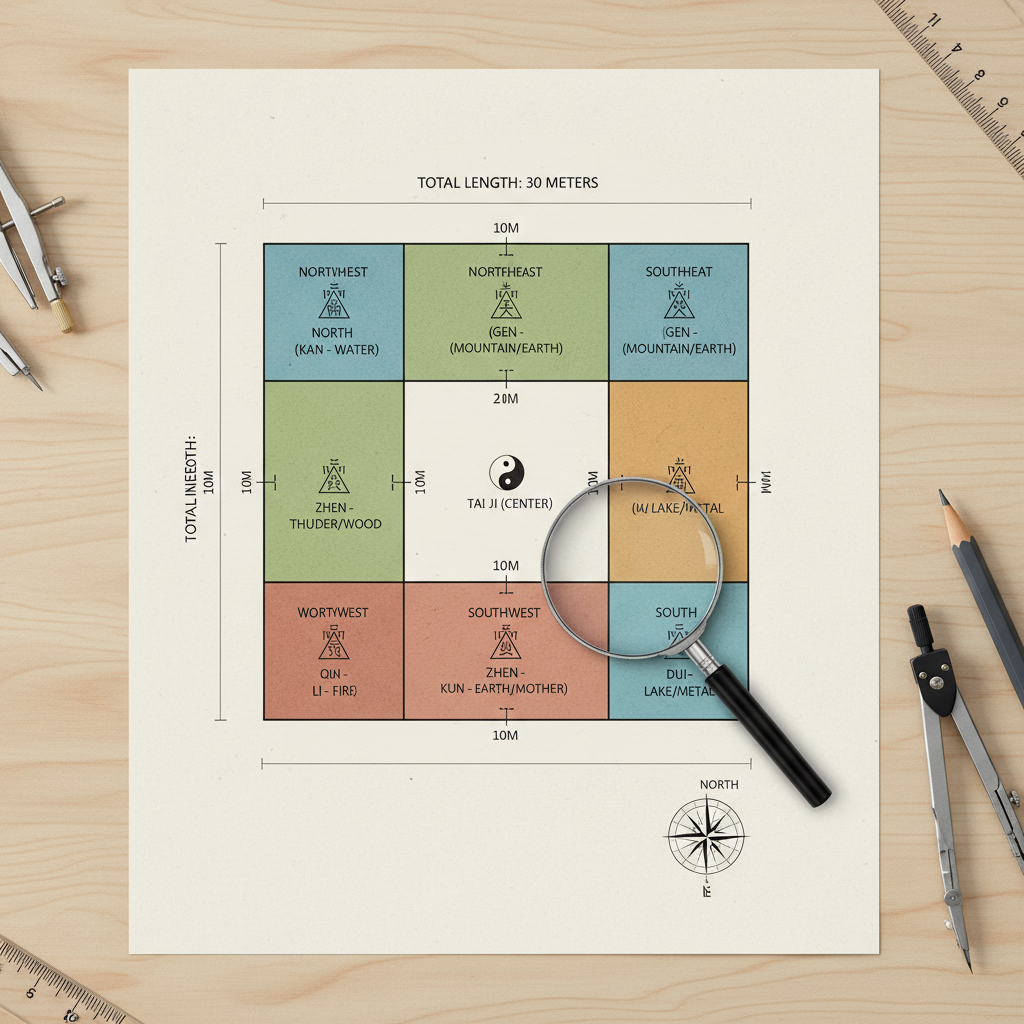
Accurate orientation is essential. Use a reliable compass app or, better, a physical magnetic compass designed for feng shui practice, and take at least three readings at different spots outside the main entrance to average out interference. Avoid metal objects and large electrical fields while measuring. Record the facing direction in degrees and convert it to the 24 directional sectors if you use that system.
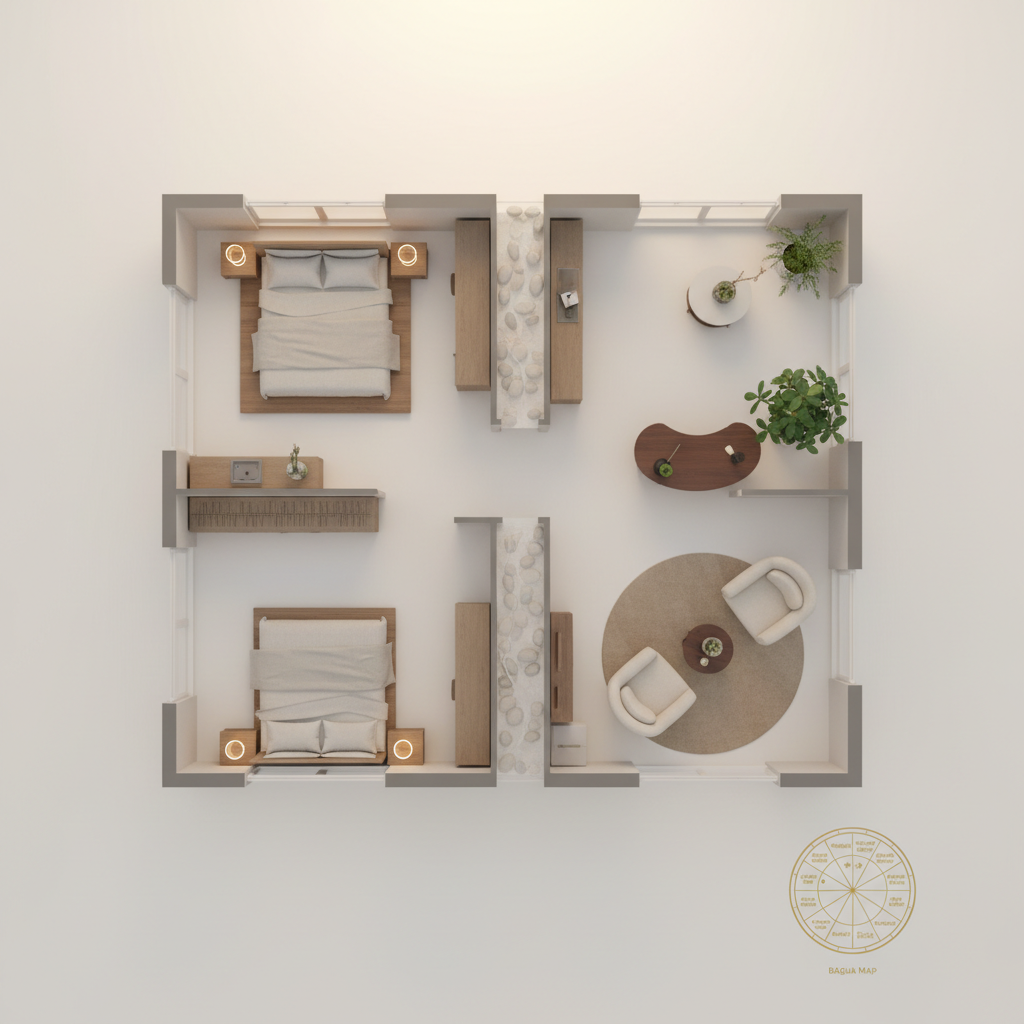
With the facing direction set, overlay a 3×3 grid on the floor plan of the property, aligning the central palace with the central axis and the front of the property with the facing direction. Each palace corresponds to a sector; label them using conventional names (front-center, front-left, front-right, etc.) or by compass direction. This nine-palace map is how we read which areas are energized in the Qi Men chart.
Step 3: Cast a Qi Men Dun Jia Chart for Your Chosen Moment

Qi Men charts are traditionally calculated manually or using a Luopan, but modern practitioners often use reliable software or online calculators to produce the basic chart for a given date, time, and orientation. If you are DIYing, I recommend using a vetted Qi Men app or consulting with a practitioner for the first few times, so you learn what the star, door, and deity glyphs mean in context.
Key elements to read on the chart are:
- The Eight Doors, which indicate opportunity types (e.g., open door for collaboration, rest door for secrecy);
- The Nine Stars, which describe the quality of qi (e.g., life-enhancing, troublesome, wealth-type);
- The Deities, which show auspicious or protective energies;
- The Stems and Branches, which show timing and interaction with occupants’ personal charts if you are aligning for specific people.
As an example, if your chart shows the Life Star in the front-left palace with an Open Door and a benevolent deity, that sector is primed for activities like hosting viewings or locating your main entrance for a temporary event. Conversely, a Sick Star at the front-right palace suggests you should avoid scheduling public events that trigger that sector’s activity.
Step 4: Score Each Palace and Prioritize Interventions
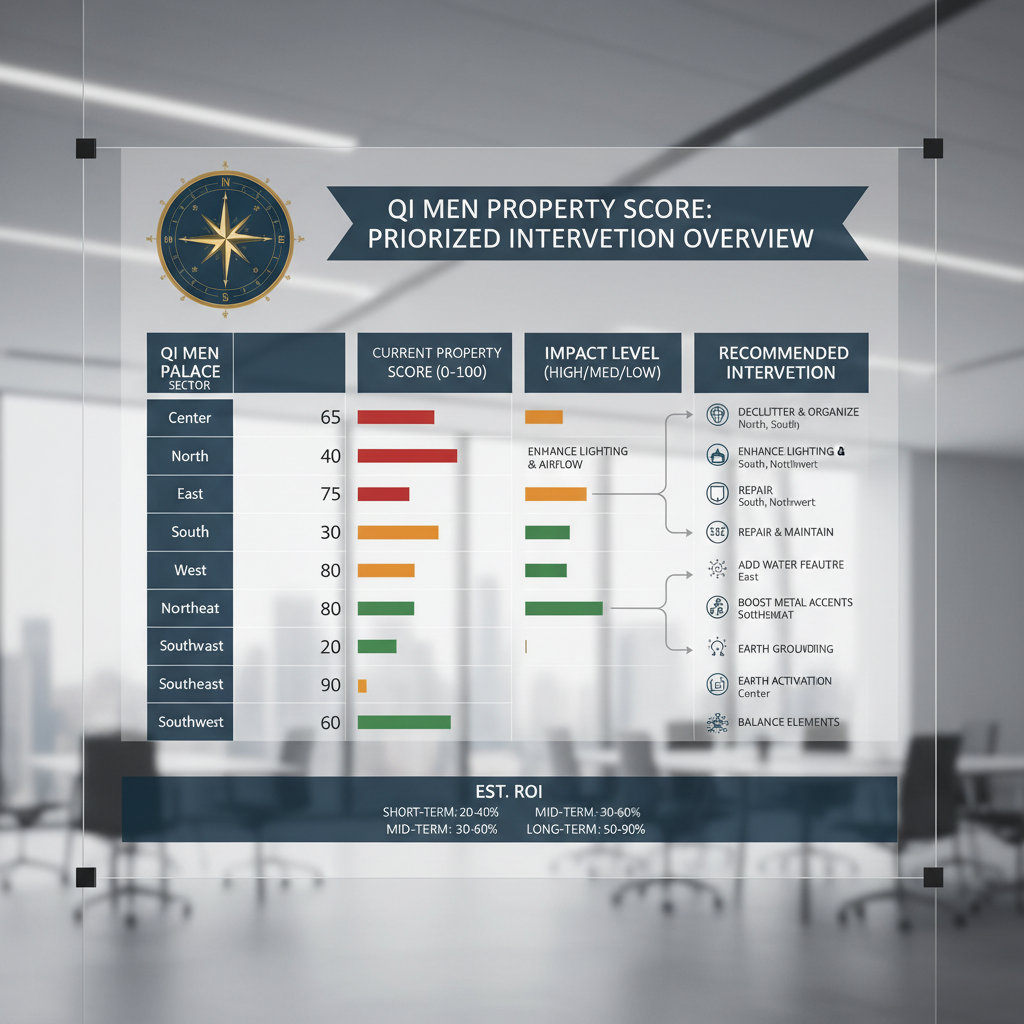
To move from diagnosis to action, score each palace on a simple 1 to 10 scale for three categories: structural suitability (light, ventilation, access), energetic favorability (Qi Men star/door/deity reading), and practical ease of intervention (cost, tenancy disruption). Multiply the scores or use a weighted average to produce a priority index. For example, we assign 50 percent weight to energetic favorability when timing is critical, such as for a sale, and 30 percent to structural suitability, with 20 percent to ease of intervention.
Example scoring table, simplified:
- Front-center palace: structural 8, energetic 9, ease 7, weighted score 8.6;
- Back-left palace: structural 6, energetic 3, ease 9, weighted score 5.1;
- Center palace: structural 7, energetic 5, ease 6, weighted score 6.0.
Using this index we pick the top 2-3 palaces where actions will yield the best return on effort. In a sale scenario, those could be the entrance, living room, and dining area. For investment properties intended for rental, we might prioritize the kitchen, master bedroom, and service access.
Section 3: Practical Qi Men Interventions for Property Outcomes
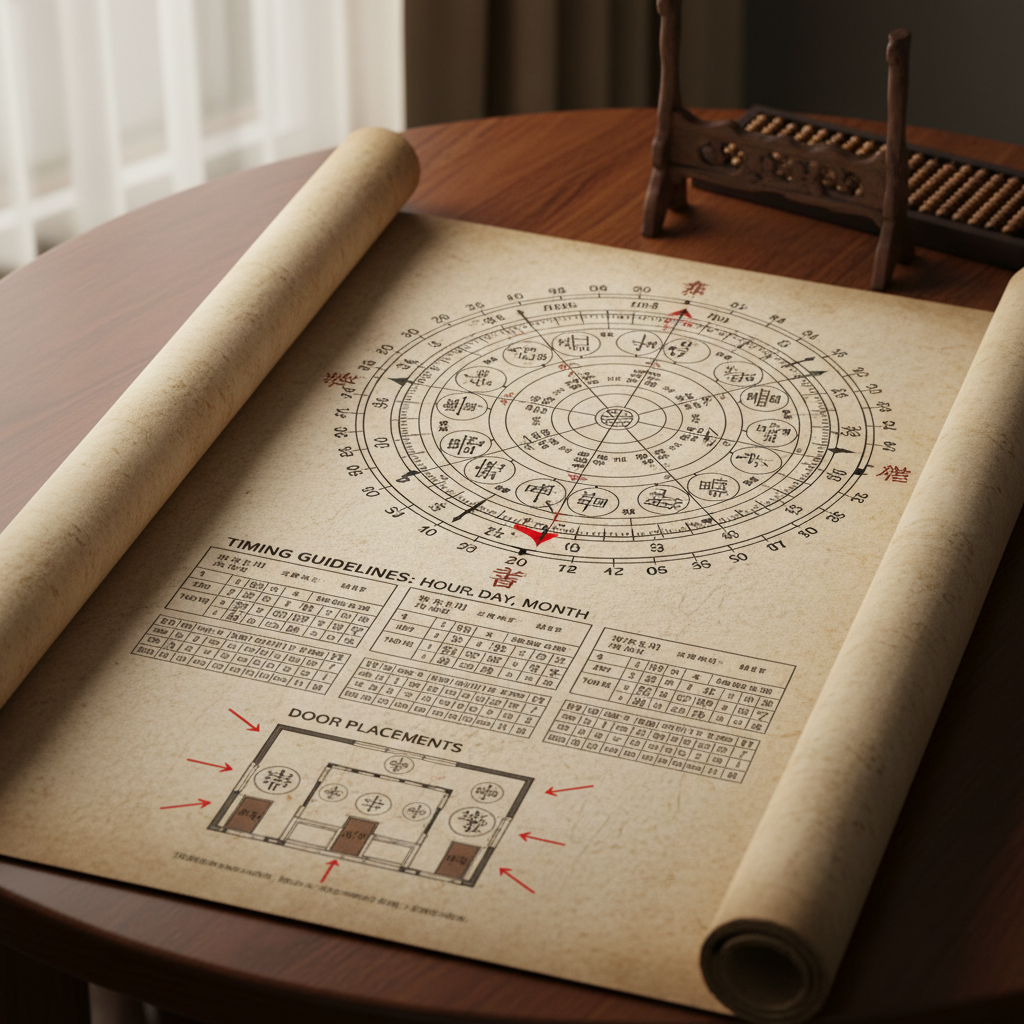
Choosing Times and Doors: Use Timing as a Tool
One of the most practical applications of Qi Men Dun Jia property feng shui is timing events to align with favorable doors and palaces. If a Qi Men chart shows the Open Door and a Wealth Star in the palace aligned with your main entrance on a particular day, schedule an open house or sign the contract on that day if possible. Conversely, postpone events when the Harmful or Death star activates the entrance palace.
Actionable steps:
- Before listing, check the Qi Men charts for the next 30 to 90 days, and shortlist 3-5 auspicious dates for showings and contract signing.
- If legal or logistic constraints prevent flexible timing, focus on small windows such as the hour of signing, or the arrival time of a buyer for a viewing, and select those times using hourly Qi Men charts.
- If you cannot change the date, change the active door for that event. For example, invite visitors to enter through a side door that corresponds to an auspicious palace on your chart, rather than the main door that is energetically blocked.
Physical Adjustments Guided by Palace Readings
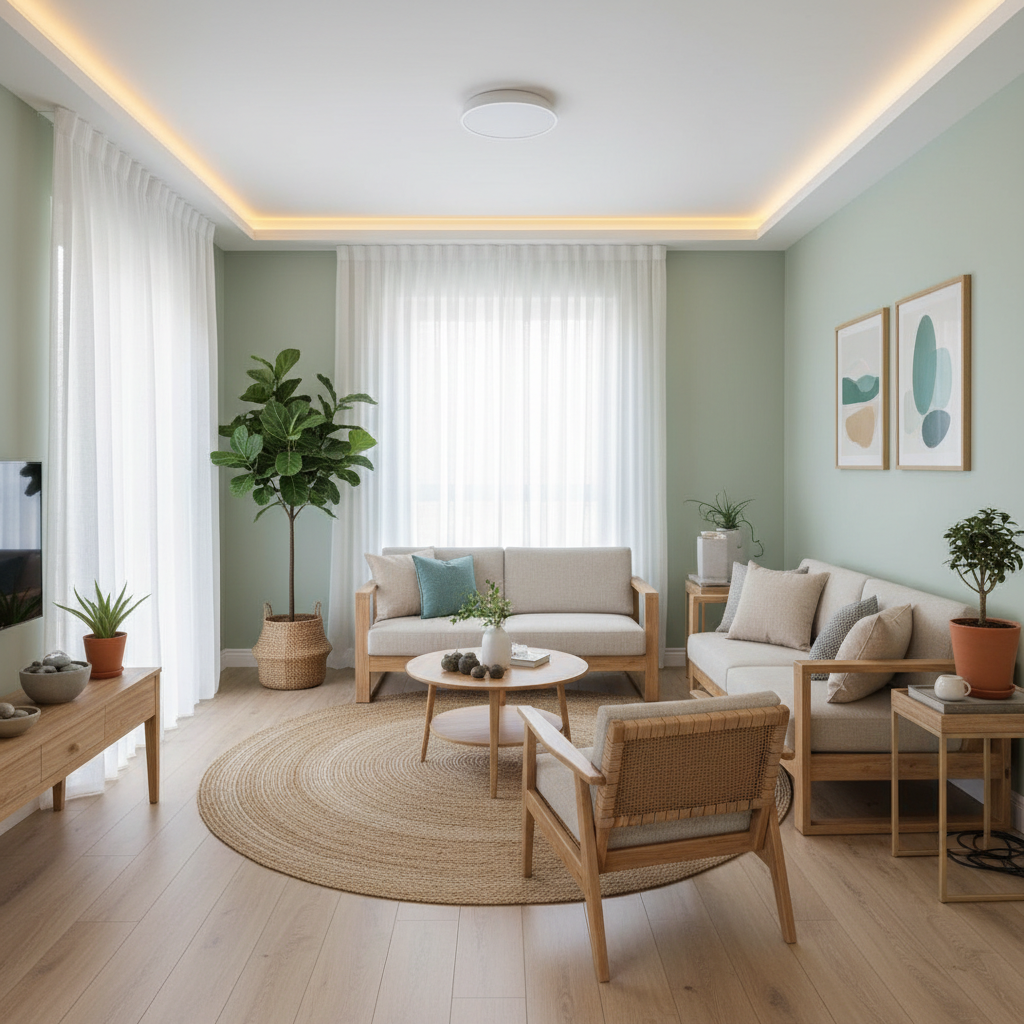
Once you know which palaces are supportive or problematic, apply element and layout changes to enhance or dampen energy. Qi Men integrates with Five Elements work, so we adapt interventions to the specific palace and star quality. Below are common palace-level interventions that are both practical and low-cost.
- Enhancing a Wealth palace, when the chart indicates wealth-related stars or doors: add a water feature or aquarium if the palace suits water element (southwest may not suit water), change lighting to bright, introduce reflective surfaces (mirrors, polished wood), and keep the area clutter-free to allow qi to circulate. Example: for an apartment where the wealth palace is the front-left sector, we improved lighting and added a small indoor fountain; within three months the owner reported two competitive offers after a previously stagnant market period.
- Stabilizing a Health or Relationship palace: use grounding materials like wood and earth tones, add plants for oxygen and life energy, and avoid placing heavy mechanical equipment in that sector. If the palace houses a bedroom, consider repositioning the bed to align with the palace’s most supportive corner, and use soft, warm colors for greater emotional stability.
- Neutralizing a problematic palace: when harmful stars or doors appear, reduce activity in that palace, avoid scheduling important events there, and use controlling elements to dampen energy. For example, metal objects can restrain wood-related problems; earth objects can stabilize excessive water. Simple changes such as closing a particular doorway during showings, or covering a reflective surface temporarily, can reduce the negative activation.
Modern, Practical Cures That Respect Building Codes and Budgets
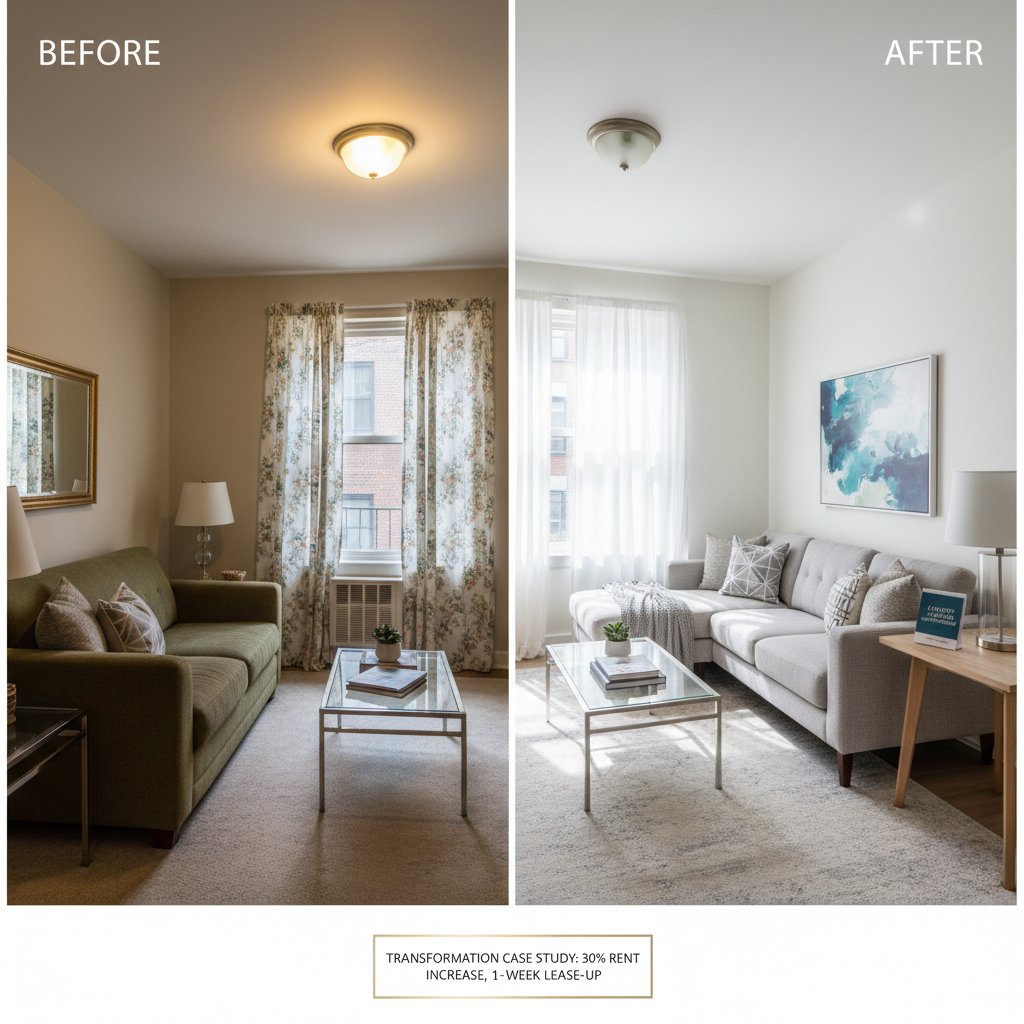
Qi Men interventions should be pragmatic. We must comply with local building codes and lease restrictions. Here are remedies that respect those constraints and have measurable impact.
- Lighting and signage: Bright, warm, well-distributed lighting in an auspicious palace increases perceived value during viewings. For commercial properties, tasteful signage aligned with an energetic palace can guide foot traffic into favorable areas.
- Temporary doors and curtains: If the chart favors a different entry, use temporary solutions such as a folding screen, a temporary vestibule, or a welcome curtain to redirect visitors through the auspicious palace. This is low cost and reversible.
- Color and material swaps: Paint, rugs, and curtains are inexpensive ways to bring a palace into element balance. If a palace needs more earth, add terracotta pots or beige textiles; if it needs water, use blue accents and reflective surfaces.
- Feature placement for photos and staging: For listings, stage the property so that photos emphasize the auspicious palace. Arrange the living room, dining table, or kitchen shoot angle to show the palace that carries positive Qi Men energy, thereby attracting viewers into that area emotionally and physically.
- Landscaping and external features: If a palace corresponds to an external sector of the lot, modify plants, pathways, and lighting to guide energy. Add low hedging or stepping stones to direct foot traffic into auspicious entry points.
Case Example: a Small Renovation That Changed Leasing Outcomes

We worked with a landlord who had a three-bedroom apartment with a persistent vacancy problem. Baseline market analysis showed the rent was competitive, but the unit remained empty for months. We cast a Qi Men chart for the intended move-in date and found an auspicious palace in the living area off the side entrance; the usual main entrance, aligned with the street, was energetically neutral during the available dates. The practical plan was to re-stage the unit and direct viewings through the side entrance, refresh lighting in the living area, and add a small water bowl and mirror in the auspicious palace to amplify the Open Door and Wealth star readings.
We implemented low-cost changes, scheduled showings during a selected auspicious week, and staged photos to emphasize the living area. The unit received three qualified applications and rented within two weeks at a higher price than previous comparable listings. While market conditions helped, the targeted interventions reduced objections during viewings and made a clear emotional connection with tenants, which increased their willingness to commit.
Applying Qi Men Principles to Property Assessment
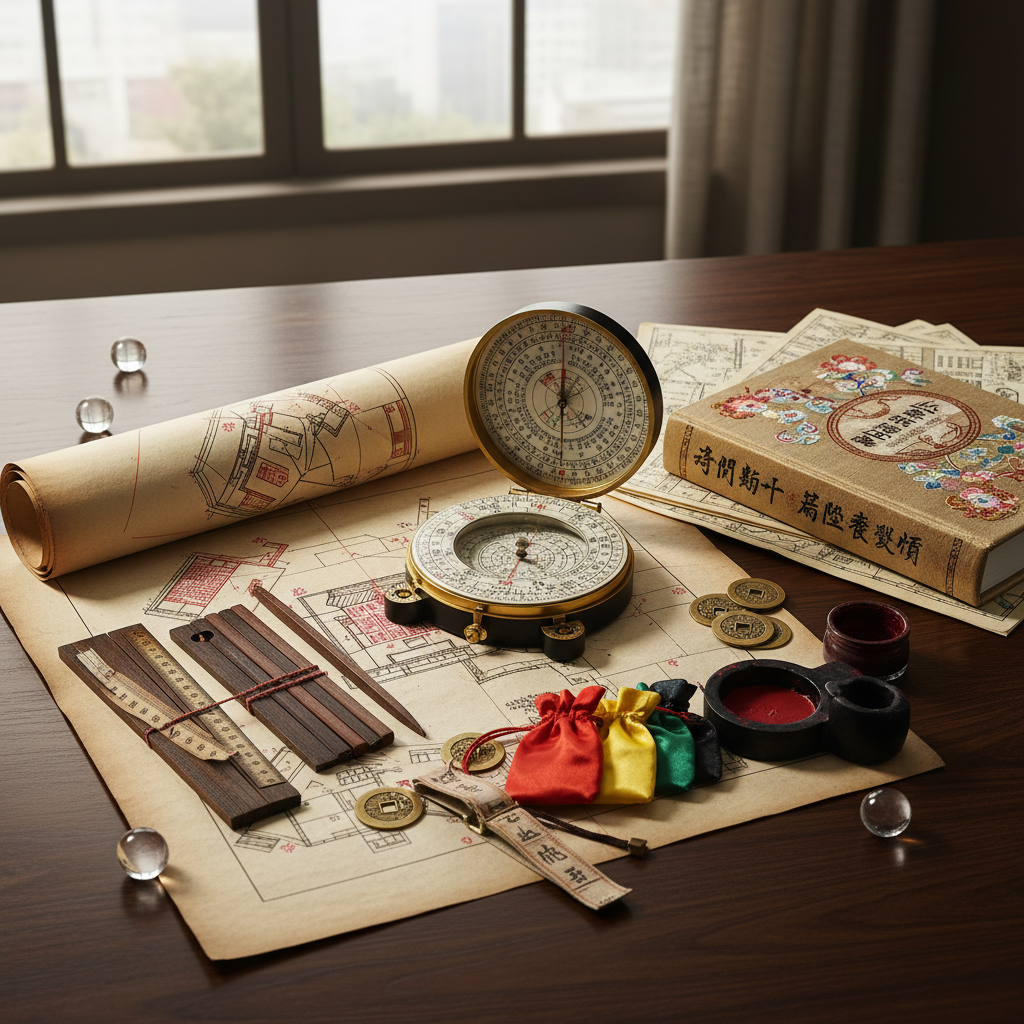
When we apply Qi Men Dun Jia property Feng Shui to a house or apartment, we are combining an ancient, time-sensitive method with practical, physical observation. In my experience, the most reliable outcomes come from a structured assessment. You do not need to be an expert in the metaphysical calculations to start a useful analysis; you only need the right tools and a step-by-step approach. Below I walk you through what to measure first, how to map the property into the traditional nine-palace layout, and how to determine the sitting and facing that will be central to any Qi Men analysis.
What to Measure First: Tools and Preparation
Before you start interpreting charts or placing cures, gather a simple toolkit and a few pieces of information. This reduces guesswork and anchors the Qi Men consultation in real, repeatable data.
- Compass (Luopan or digital): an accurate reading of the facing direction (to the nearest degree) is essential. Use a quality compass app or a physical compass, away from metal and electronics.
- Floor plan or sketch: a drawn-to-scale sketch with room dimensions helps you place palaces and identify choke points. If you do not have an official plan, measure walls and door centers roughly in meters or feet.
- Move-in or foundation date and time: Qi Men charts are time sensitive. For property Feng Shui the most useful times are the date when the house was built, renovated, or when you officially moved in. Record the exact dates and times if possible.
- Photos and site notes: take pictures of the main entrance, the street outside, any water features, adjoining structures, and the skyline. Note nearby trees, poles, slopes, and roads.
- Software or practitioner: you can use Qi Men chart software or consult a practitioner to generate a time-based chart. For practical on-site adjustments, the basic mapping below can be done without software.
Once you have those basics, stand at the main entrance and take a compass reading. Many people confuse the front door direction with the house facing; in Qi Men and many branches of Feng Shui we distinguish sitting (where the energy anchors) from facing (the direction the front of the house looks toward). Write down both if you can identify them.
Mapping the Nine Palaces to Your Floor Plan

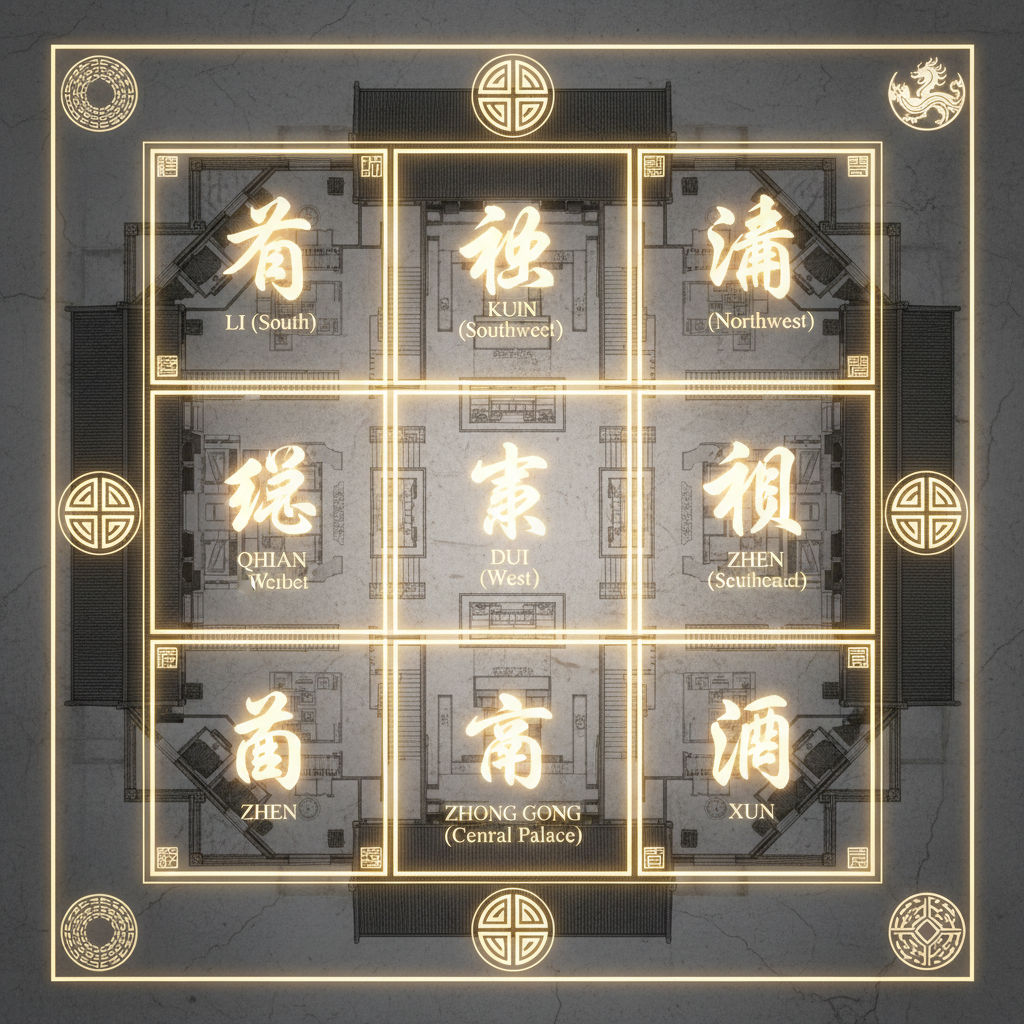
Qi Men analysis often uses a nine-grid, sometimes referred to as the nine palaces. Think of your floor plan overlaid with a tic-tac-toe grid, aligned to the facing orientation you measured. Each square represents a sector that corresponds to a compass direction and a set of influences that vary by time. Mapping the grid helps you locate where doors, windows, kitchens, bedrooms, and water sources fall within the palaces.
Here is a simple, actionable method to map your space right now:
- Place the grid over a drawn floor plan so the top middle corresponds to the front-facing direction of the house.
- Label the nine cells using compass directions: center, north, northeast, east, southeast, south, southwest, west, northwest.
- Mark the exact positions of the front door, main windows, kitchen, master bedroom, bathrooms, and any external gates or water features.
- Note degrees for each key opening; for example, if a balcony faces 135 degrees, mark it in the southeast palace.
This mapping becomes your reference map. When you later consult a Qi Men chart for a particular date or for a house’s foundation moment, you will overlay temporal factors upon this static map. The combination of where things are and when the house began operating gives the most meaningful insights.
Determining Sitting and Facing: Why it Matters
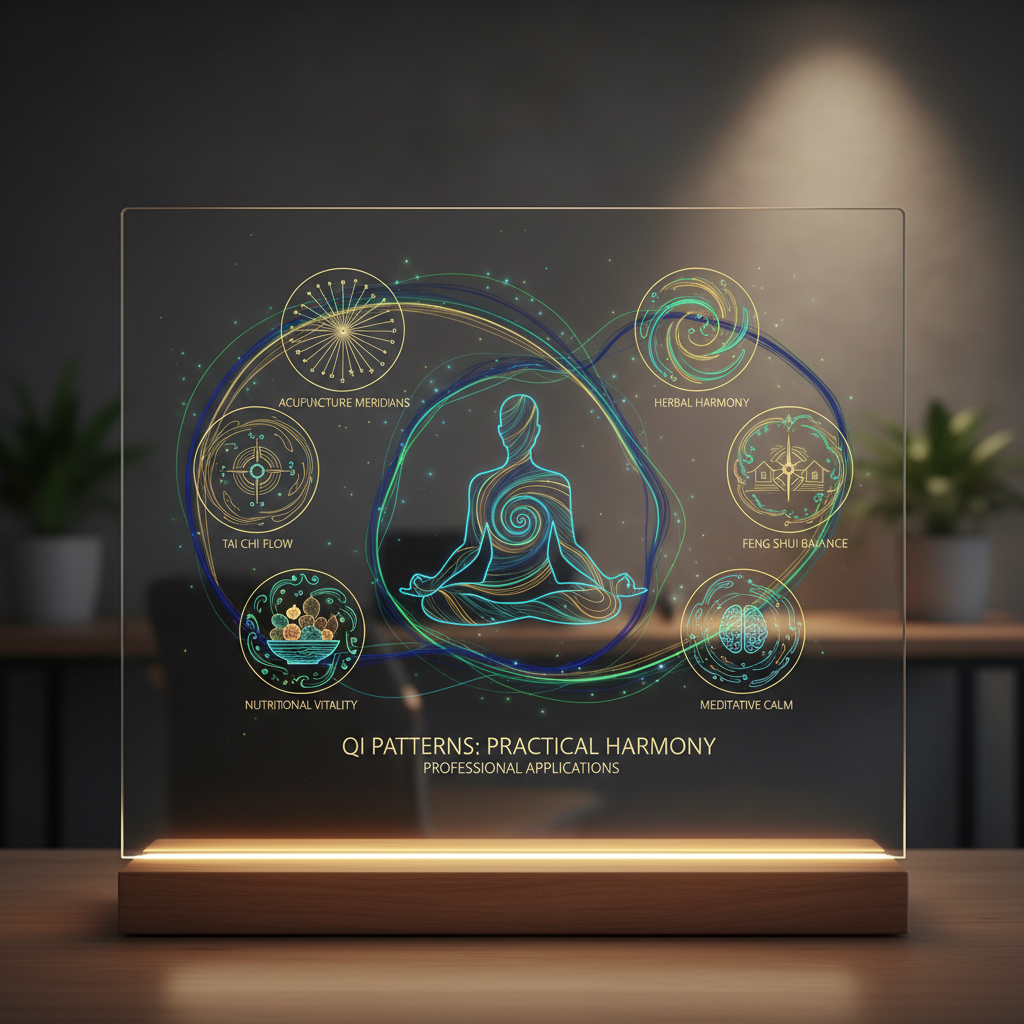
One of the most common mistakes I see is confusing the main door with the house’s true face. In Qi Men the facing direction is operational, tied to how energy enters, while the sitting direction anchors energy at the back. Both matter because different gates, stars, and deities will occupy different palaces depending on the facing and the date.
To determine real sitting and facing:
- Stand inside the home, at the point where family members most often gather (living room center or main entryway).
- Look toward the direction the property opens to the street or horizon; that is typically the facing.
- Confirm by checking the position of the main gate and the primary road that feeds traffic or visitors; these usually indicate the functional facing.
- If a property has multiple significant openings (for example, a corner apartment), use the most active door that is used daily for entry as the facing.
Once facing and sitting are established, you can confidently place the nine-palace grid and begin the more detailed Qi Men reading. The time element will alter which palaces are auspicious or inauspicious, so keep your dates handy.
Interpreting Qi Patterns: Practical Signs and Indicators

With your map and facing defined, the next step is interpretation. In practice, Qi Men analysis for property blends observation of physical cues with time-based readings. Below I outline what to look for in the entrance, in water and landscape features, and inside the home, and I give practical signals that indicate which actions will likely have the most impact.
Entrance and Main Gate Signals

The entrance is the single most influential factor in any property Feng Shui work. It is where qi enters and where first impressions, both energetic and practical, are established. We pay attention to these indicators when evaluating an entrance:
- Width and clear path: a narrow or cluttered entry compresses qi. If you experience frequent delays, low energy, or poor communication within the household, check whether the entry path is obstructed by shoes, plants, or decorative items.
- Door alignment vs. opposite openings: doors that align directly with large windows or another entry can create a “wind tunnel” effect where qi rushes through without settling. An example: in one apartment I worked on, a front door aligned with a back balcony led to restless sleep for the occupants; placing a screen halfway down the corridor reduced the rush and improved sleep quality.
- Threshold and step differences: uneven steps or a poorly lit threshold can create tripping hazards and symbolic resistance. Simple fixes such as a night light, a non-slip mat, and consistent step heights improve both safety and energy flow.
- Street and external structures: busy roads, T-intersections, sharp corners, lamp posts or trees directly pointing at the door create directional force on qi. Where avoidance is not possible, internal buffering strategies like a porch, landscaping, or positioned planter can deflect direct force.
Water and Landscape Indicators
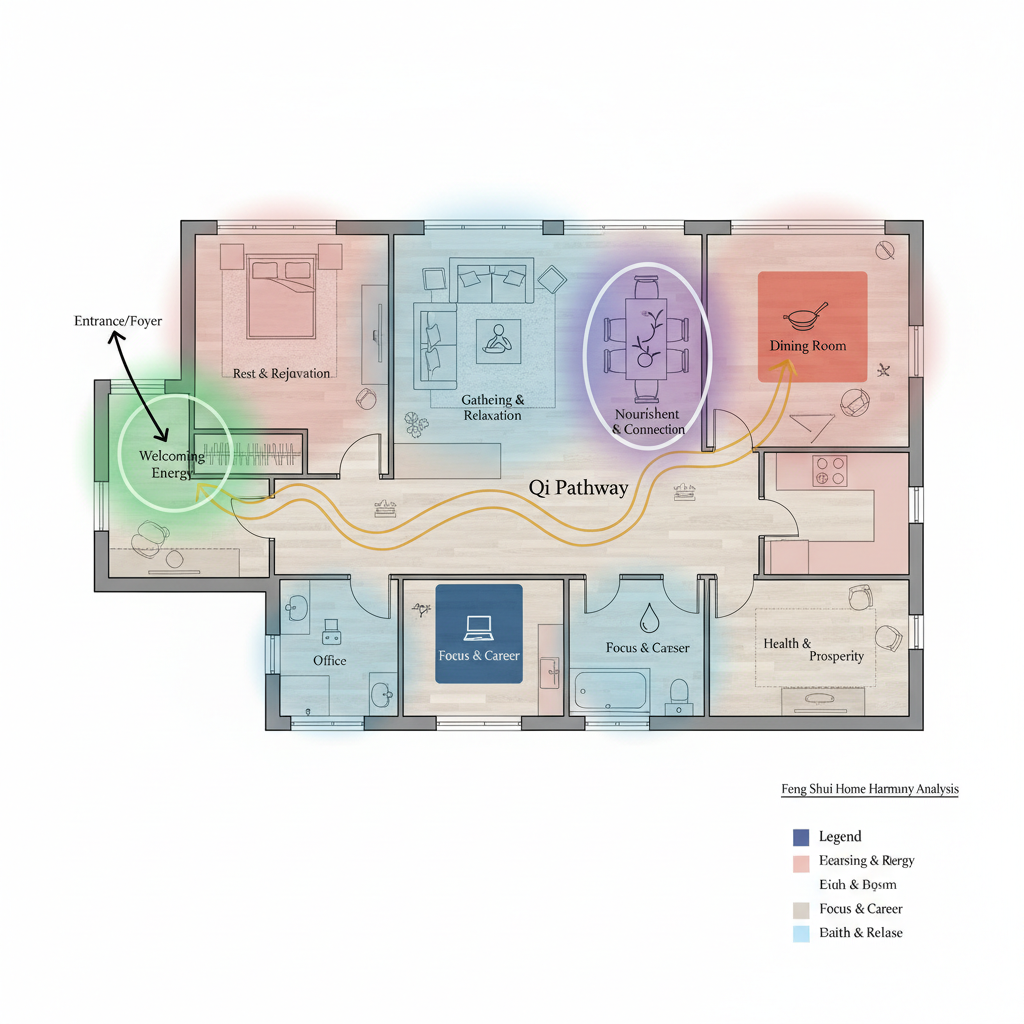
Water is one of the most responsive elements in property Feng Shui. In Qi Men analysis we pay attention to how water (both literal and visual) interacts with the facing and the palaces. Here are practical signs to read:
- Active vs. stagnant water: fountains, streams, and flowing features that face the main entrance can enhance wealth sectors when positioned correctly. Stagnant water, clogged drains, or puddles near an entrance can depress energy and finances.
- Relative elevation and slope: water that sits below the front door is often beneficial; water flowing away from the house can symbolize resources leaving. On a plot level, gentle slopes toward the house tend to gather qi; steep slopes away from the house may need landscaping to redirect flow.
- Reflection and sightlines: reflective surfaces like windows across the street, mirrored facades, or ponds can change how qi enters a property. If reflections create an illusion of a brighter entrance, they can be beneficial. If they cause glaring light or confusing sightlines, consider shading or planting to diffuse the effect.
Internal Layout and Room Function Signals
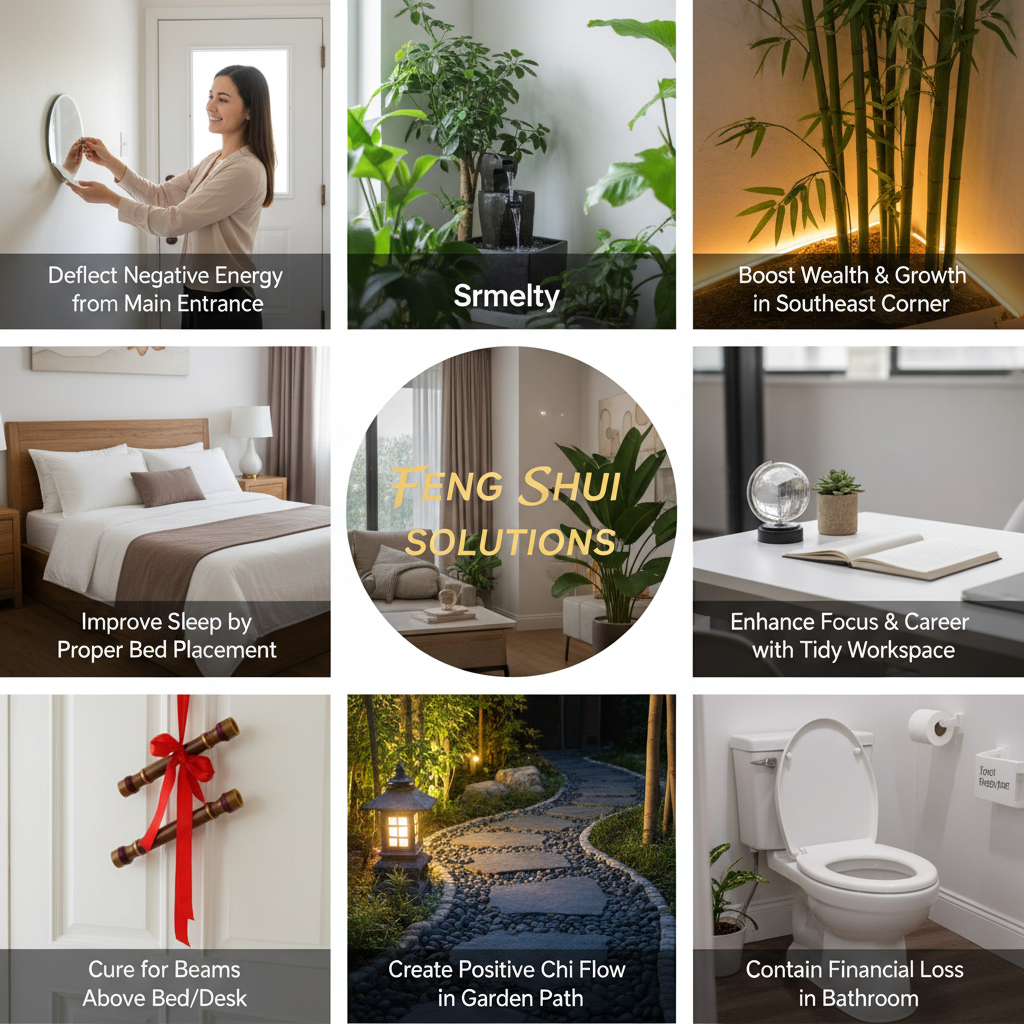
Inside the property practical function and energetic suitability must align. Qi Men helps us prioritize which rooms to adjust first based on their palace locations and daily use. Consider these common signals:
- Kitchen location: kitchens situated near the front door or in a commanding palace of the grid often indicate visible, active energy around food and resources. If a kitchen occupies an inauspicious palace for the current time, small changes like moving the stove position or changing cupboard colors can mitigate issues.
- Master bedroom location: bedrooms located at the rear (sitting) of the house tend to be more restful. If the master bedroom falls into a palace with conflicting qi or frequent negative temporal influences, prioritize sleep hygiene: blackout curtains, noise buffering, and repositioning the bed so the headboard faces a supportive wall.
- Bathroom placement: bathrooms in wealth or reputation palaces can drain resource energy. Practical fixes include keeping doors closed, ensuring ventilation is excellent, and placing a plant or a small piece of furniture to symbolically buffer the palace.
Actionable Remedies for Common Problems

Once you identify the problematic palaces or physical symptoms on your map, the most valuable part of any consultation is focused remedies you can implement with a reasonable budget. These changes are practical and based on observed cause and effect. Below I give step-by-step fixes for blocked entrances, wealth and career sector issues, and room-specific strategies for bedrooms, kitchens, and bathrooms.
Fixing Blocked Entrances and Stagnant Qi
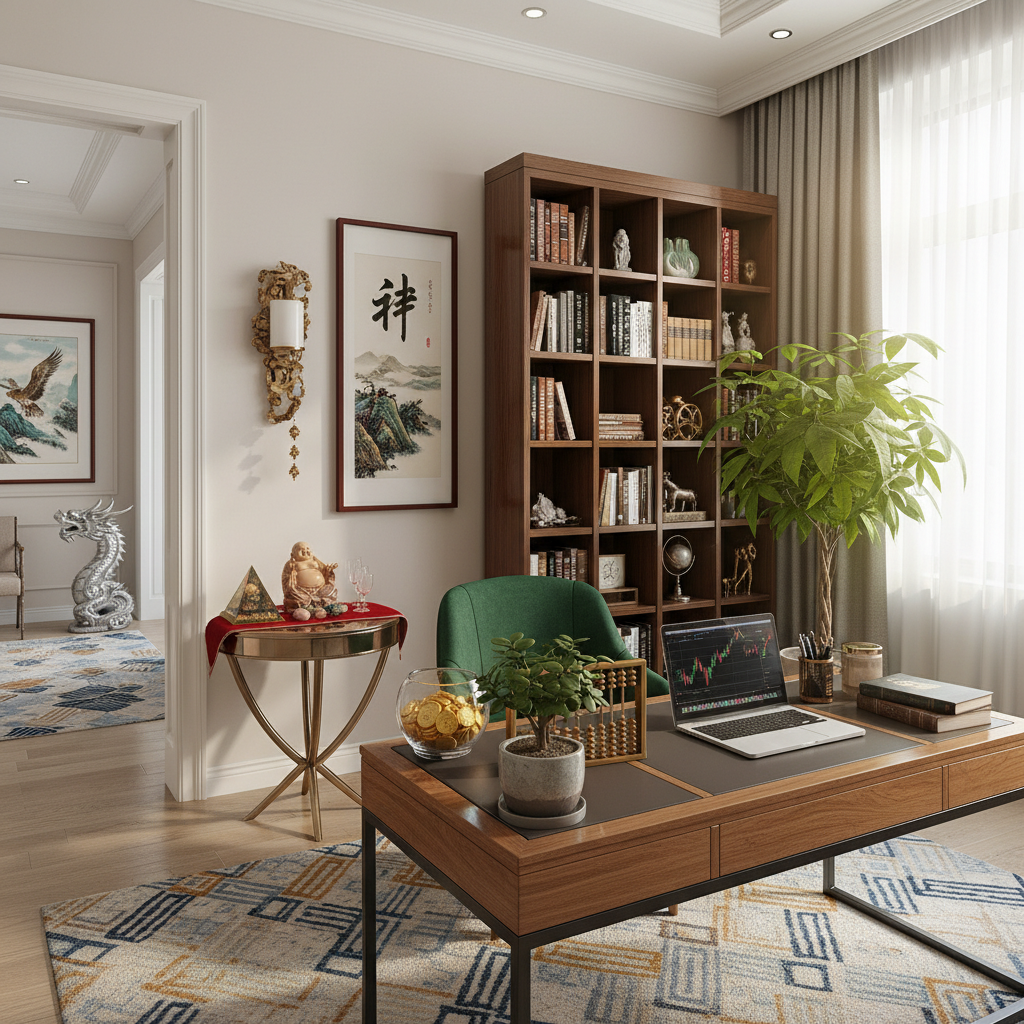
A blocked or stagnant entrance is one of the easiest problems to diagnose and one of the fastest to improve. Try this three-step process:
- Declutter and simplify: remove shoes, boxes, and excessive decor from the entry. If storage is necessary, install a closed shoe cabinet instead of leaving items in the open. Clear pathways improve both practical access and energy circulation.
- Improve lighting and visual focus: add a warm overhead light and a secondary source such as a table lamp or wall sconce. A clear focal point near the door, for example a nicely framed mirror or a single piece of artwork, helps qi settle at the threshold.
- Create a buffering layer: if a front door aligns directly with a back exit or a window, place a screen, runner rug, or console table midway to slow the flow. For forced outdoor energy, consider a low planter or a bench outside the door to interrupt the line of force.
Example: A two-bedroom apartment had energy that felt “rushed” from the front door straight through to a balcony. We added a slim bookcase and a vertical plant between the door and the corridor, repositioned the light to create a warm pool near the entry, and replaced several mismatched decorative items with one large art piece. The occupants reported a calmer home within two weeks.
Remedies for Wealth and Career Sectors
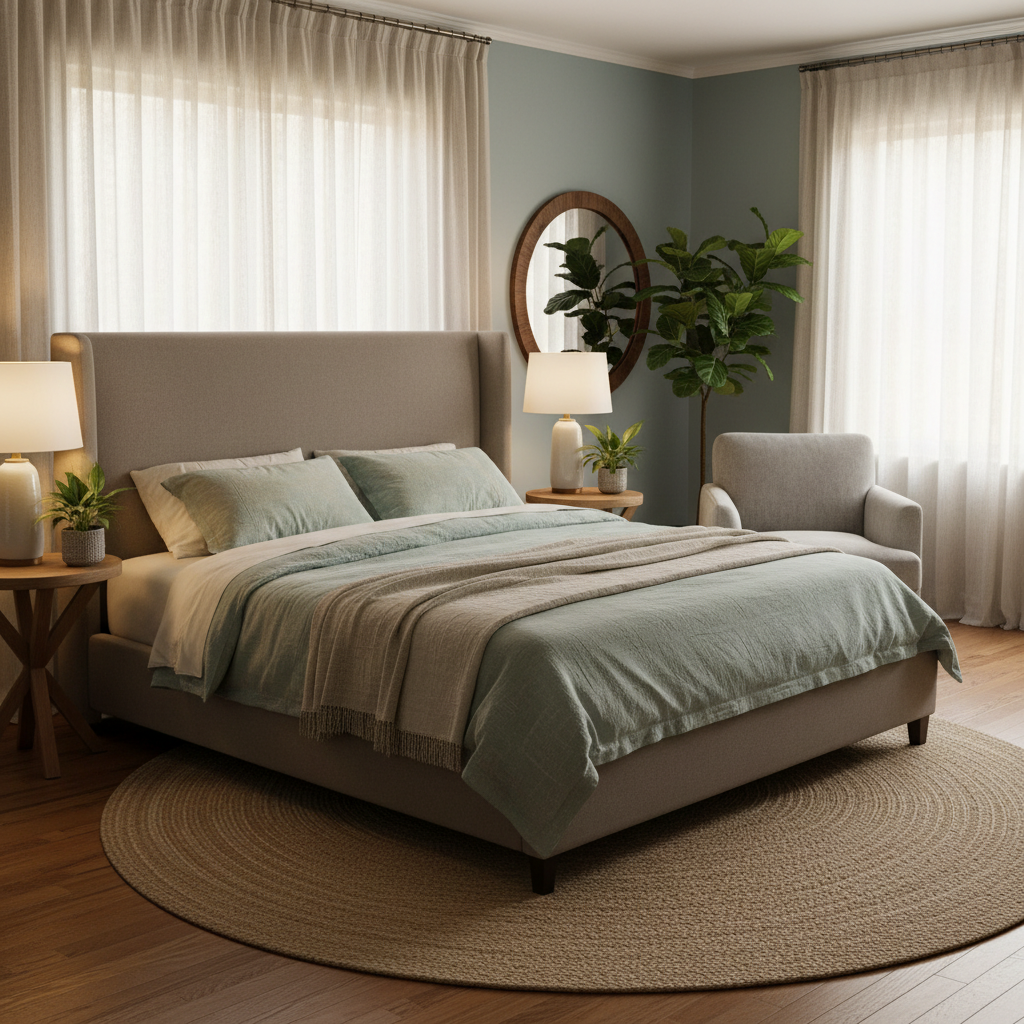
Wealth and career concerns are common reasons people consult Qi Men for property advice. Remedies should be tailored to the palace that holds these intentions, which is why mapping and timing matter. Below are practical, low-cost interventions to strengthen financial and professional qi in a given sector.
- Enhance with water thoughtfully: a small tabletop fountain, aquarium, or artwork featuring water positioned in the wealth palace can stimulate resource qi when the palace is auspicious. Make sure the water is clean and flowing gently.
- Use color and material support: metal and blue tones are commonly supportive for career sectors aligned with water or metal elements. A navy rug, a metal lamp, or brushed metal hardware can help anchor energy. Be moderate; too many metallics can create sharpness.
- Maintain cleanliness and functionality: ensure the palace is tidy, well-lit, and free from obstructions. If the palace contains a bathroom or storage room, keep doors closed and add symbolically strengthening items such as a small plant or meaningful artwork facing into the palace.
- Date-specific activations: because Qi Men is time-sensitive, book important financial meetings or contract signings from the palace that is favorable on your move-in or transaction date. If you cannot consult a practitioner, choose dates when the general energy of the home feels balanced and your personal energy feels aligned with your goals.
Bedroom, Kitchen, and Bathroom Adjustments That Work
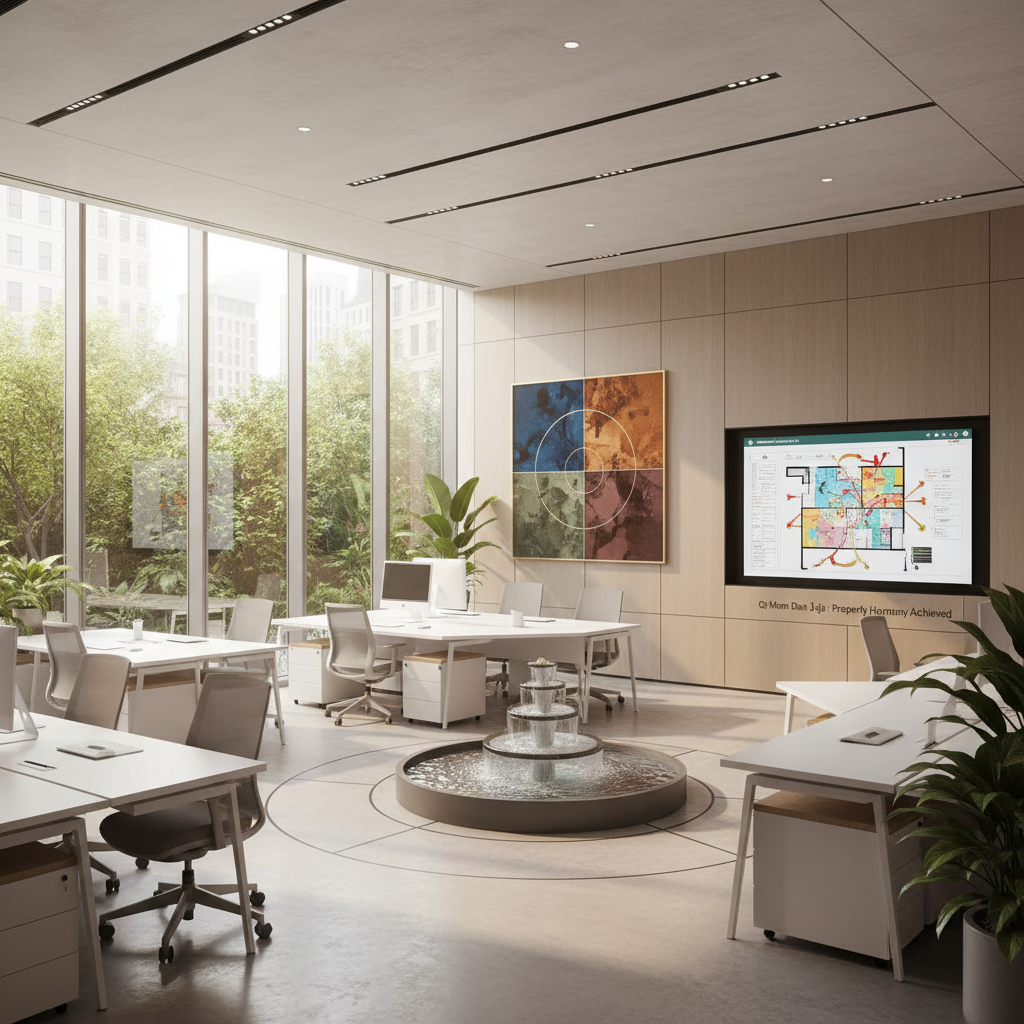
Rooms of daily use require practical, targeted solutions. Here are reliable adjustments for the main functional spaces in a home:
- Bedroom: stability above all: anchor the bed against a solid wall with a full headboard, avoid having the bed aligned directly with the door, and reduce electromagnetic noise by unplugging routers and putting devices in airplane mode at night. If the bedroom sits in a palace with challenging qi, increase softness and warmth with textiles, warmer colors, and lighting dimmers.
- Kitchen: stove placement and visibility: the stove symbolizes the household’s resources. Keep the stove clean and ensure clear visibility from the kitchen door when possible. If the stove sits in a difficult palace, use grounding colors (earth tones) and natural materials for countertops, and keep a plant or a bowl of fruit on a counter to symbolize abundance.
- Bathroom: containment and ventilation: bathrooms in sensitive palaces should be sealed visually and audibly. Install a solid door if there is only a curtain, ensure exhaust fans work, and consider a decorative screen that blocks direct sightlines from the wealth or reputation palace. Add absorbent rugs and keep lids down to symbolically decrease resource loss.
Case Studies and Real-world Examples
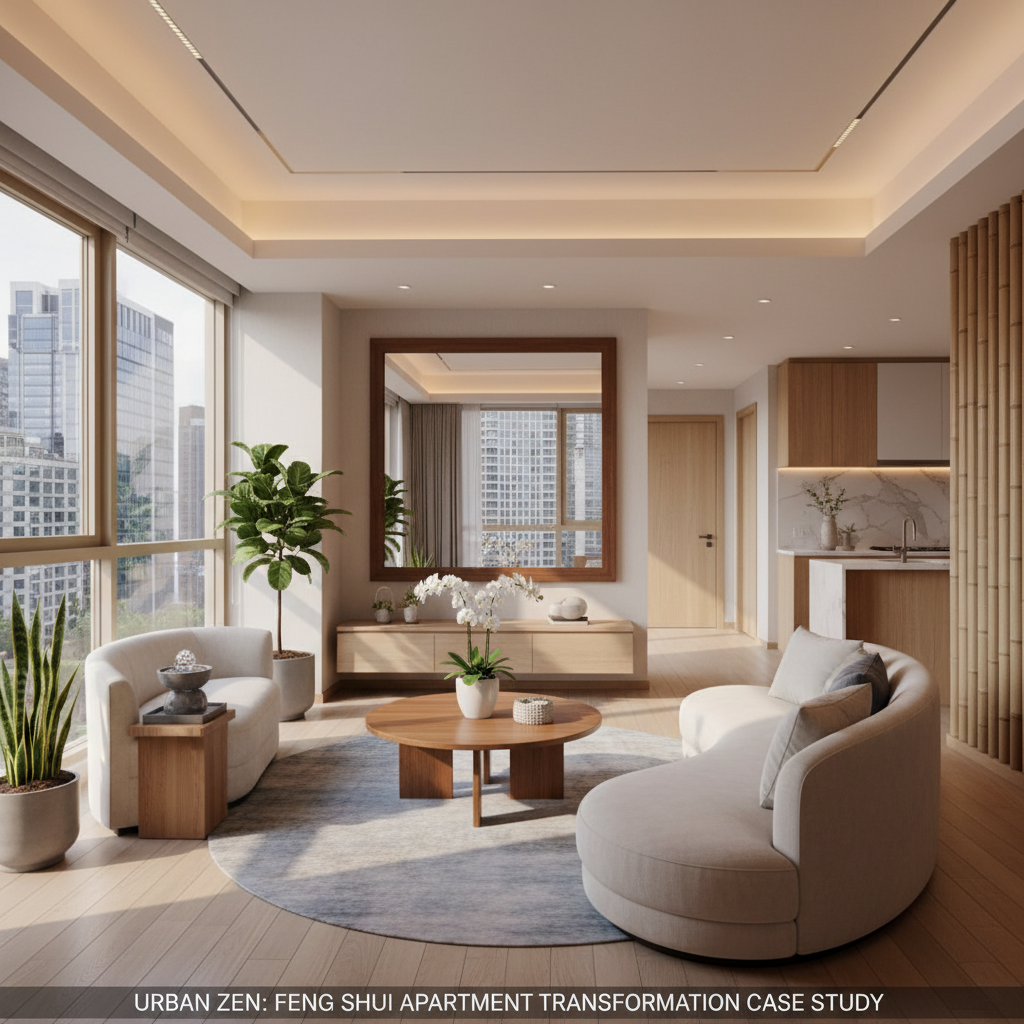
Theory is useful, but concrete examples show how Qi Men-based property work plays out in modern settings. Below are three short case studies drawn from projects I have been involved with or observed. Each example includes the initial diagnosis, the interventions we used, and the outcome. These illustrate how you can apply similar thinking in your own property.
Case Study 1: Urban Apartment, Small Footprint, Big Impact
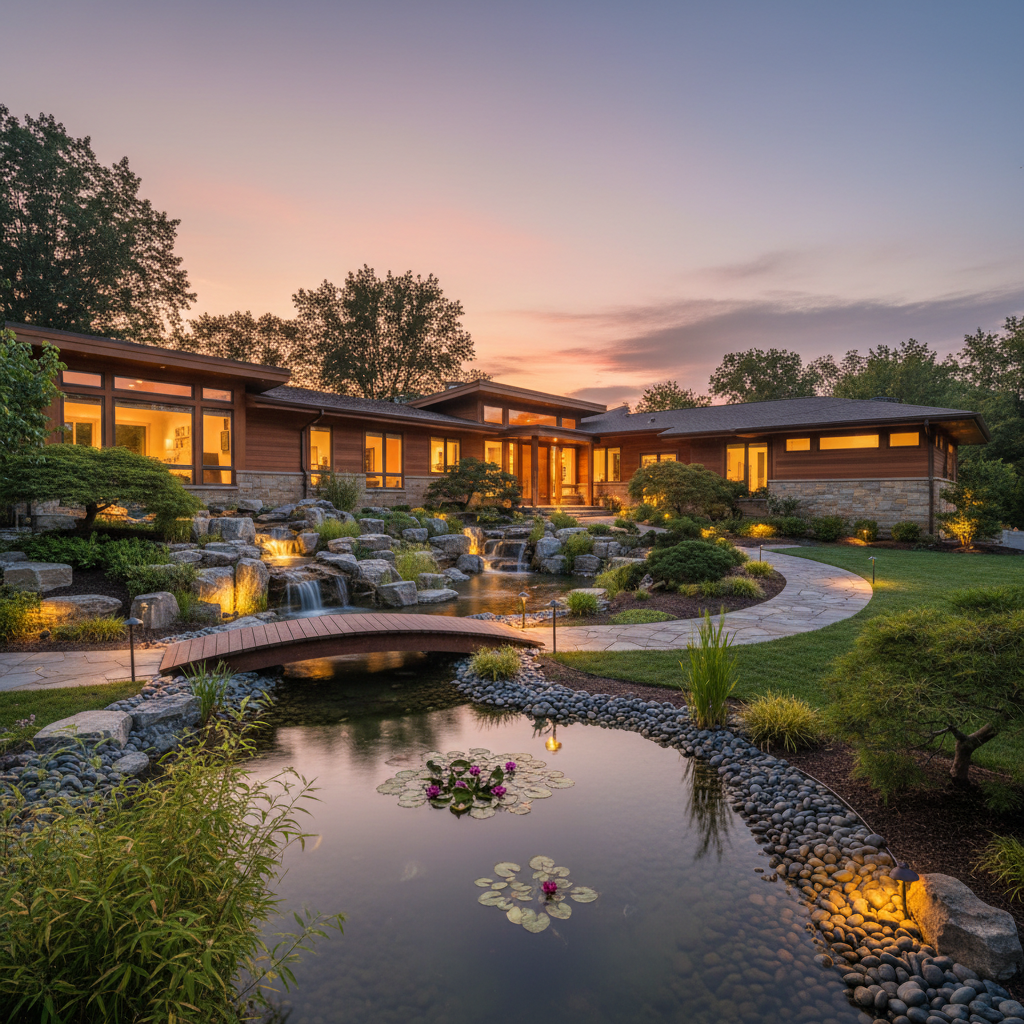
Context: A young couple living in a 70 square meter apartment in a dense city experienced repeated job setbacks and chronic fatigue. The apartment’s front door faced a busy street, and the main living area aligned directly with a balcony, creating a sense of energy that rushed out.
Diagnosis: The facing produced a direct channel that prevented qi from settling. The kitchen was at the front, and the master bedroom was in the center palace, making restful sleep difficult. There were also multiple radiators and a visible trash chute near the entry.
Actions taken:
- Added a semi-transparent screen between the front door and the living corridor to slow the energy flow, and placed a tall, leafy plant just inside the screen to soften the visual line.
- Re-oriented the sofa so its back faced the corridor and added a low bookshelf as a visual buffer; this created a holding area for qi in the living room.
- Moved the bed slightly so the headboard faced a supportive wall, introduced blackout curtains, and installed a low-EMF bedside lamp to reduce electronic stimulation at night.
- Changed the kitchen color palette to warm, grounding tones and kept the stove and counters immaculately clean to symbolically stabilize finances.
Outcome: Within six weeks the couple reported improved sleep and a stronger sense of focus, and one partner received a job offer for which they had been interviewing. While causation is complex, the occupants felt the home was materially and psychologically more supportive.
Case Study 2: Suburban House, Landscape and Water Integration
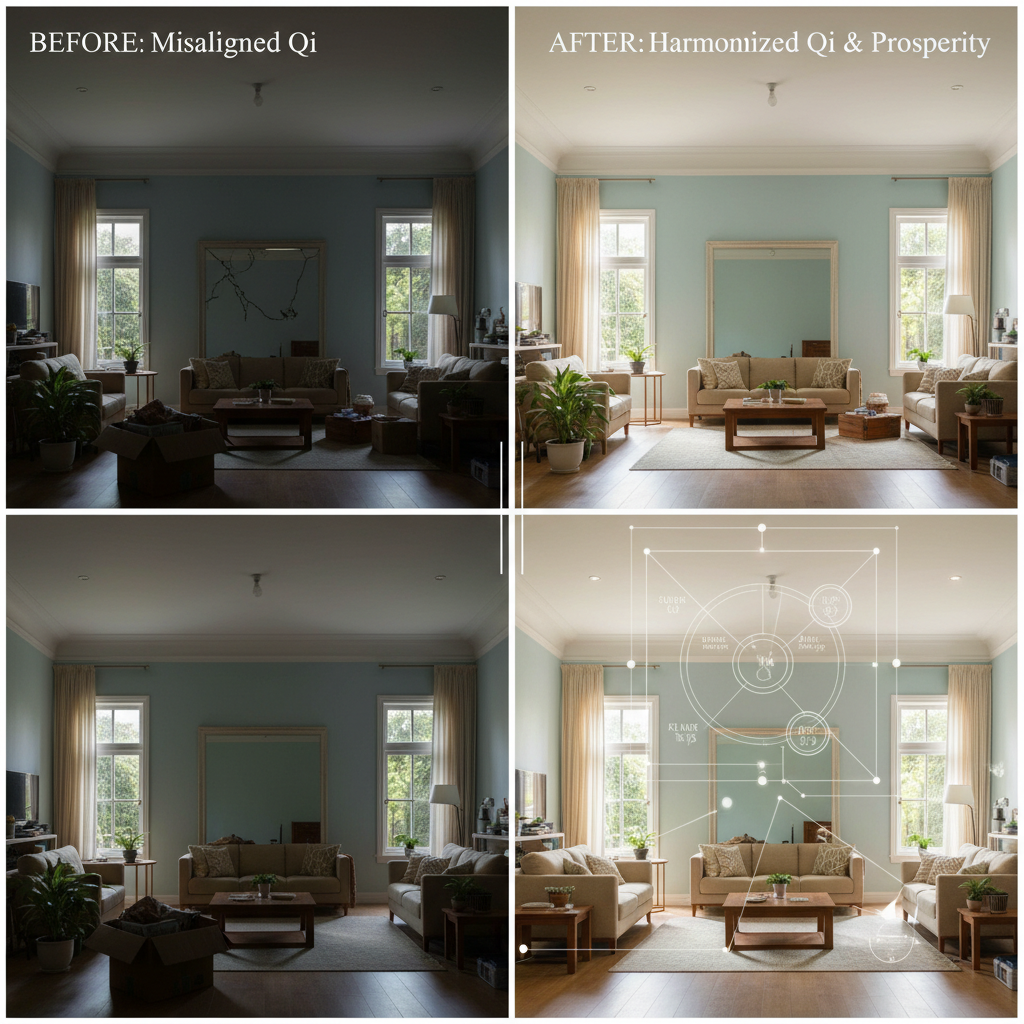
Context: A family in a three-bedroom suburban home had concerns about declining rental income from a ground-floor suite they rented out. The house sat on a lot with a slight slope away from the front, and an ornamental pond was located beyond the backyard fence.
Diagnosis: The pond was positioned in a palace that, on the tenancy start dates, pulled resource qi away from the rental suite. The slope compounded the effect by draining visual and energetic focus off the main structure.
Actions taken:
- Re-planned the backyard with a raised gravel bed and a small reflecting pool closer to the house, in the palace associated with wealth at that time of year, to create a new focal point and keep water energy nearer to the structure.
- Added a paved walkway subtlety curving toward the house to draw movement inward, and planted low hedging along the rear fence to block the visual pull of the ornamental pond.
- For the rental suite we improved exterior lighting, repainted the main door in a color associated with welcoming energy, and added a potted plant to the entrance to signify nurture and care.
Outcome: Within three months the family observed increased inquiries for the rental suite and were able to increase the rent slightly when leases renewed. They also reported that visitors commented the garden felt more intimate and inviting.
Before-and-after Outcomes and Tips for Measurement
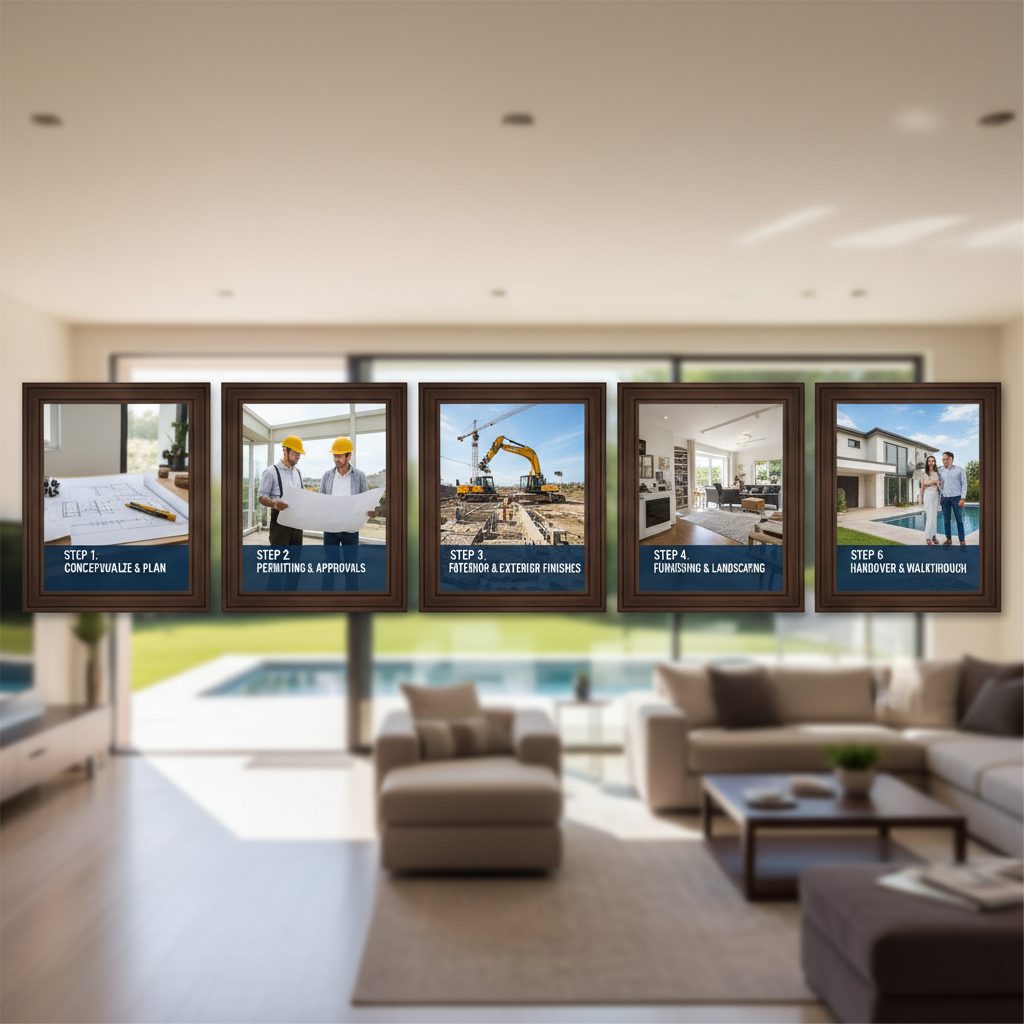
Across projects, outcomes are best tracked with simple metrics you can follow yourself. I recommend a before-and-after log that captures qualitative and quantitative changes over a three to six month period. Here is a template you can use:
- Baseline checklist: sleep quality (hours, awakenings), frequency of disputes or miscommunication, job or income events, number of guests, tenant inquiries. Record for one month before interventions.
- Intervention log: date each change, cost, and why it was done. Note whether the change is structural, decorative, or temporal (date-related).
- Follow-up checks: repeat the baseline checklist monthly for three months, and note subjective changes in mood, energy, and functionality.
Tip: small, inexpensive changes often yield the best cost-to-benefit ratio. If an intervention requires structural alteration, test the effect of a non-structural substitute first, for example using plants, lighting, or movable furniture.
These middle sections have focused on assessment, interpretation, practical fixes, and case studies you can emulate. In the next sections of the article we will explore how to combine Qi Men timing with property events, how to choose auspicious dates for moving, renovating, or signing contracts, and how to integrate Qi Men insights into long-term property management for lasting benefit.
Practical Implementation: a Step-by-step Plan for Your Property
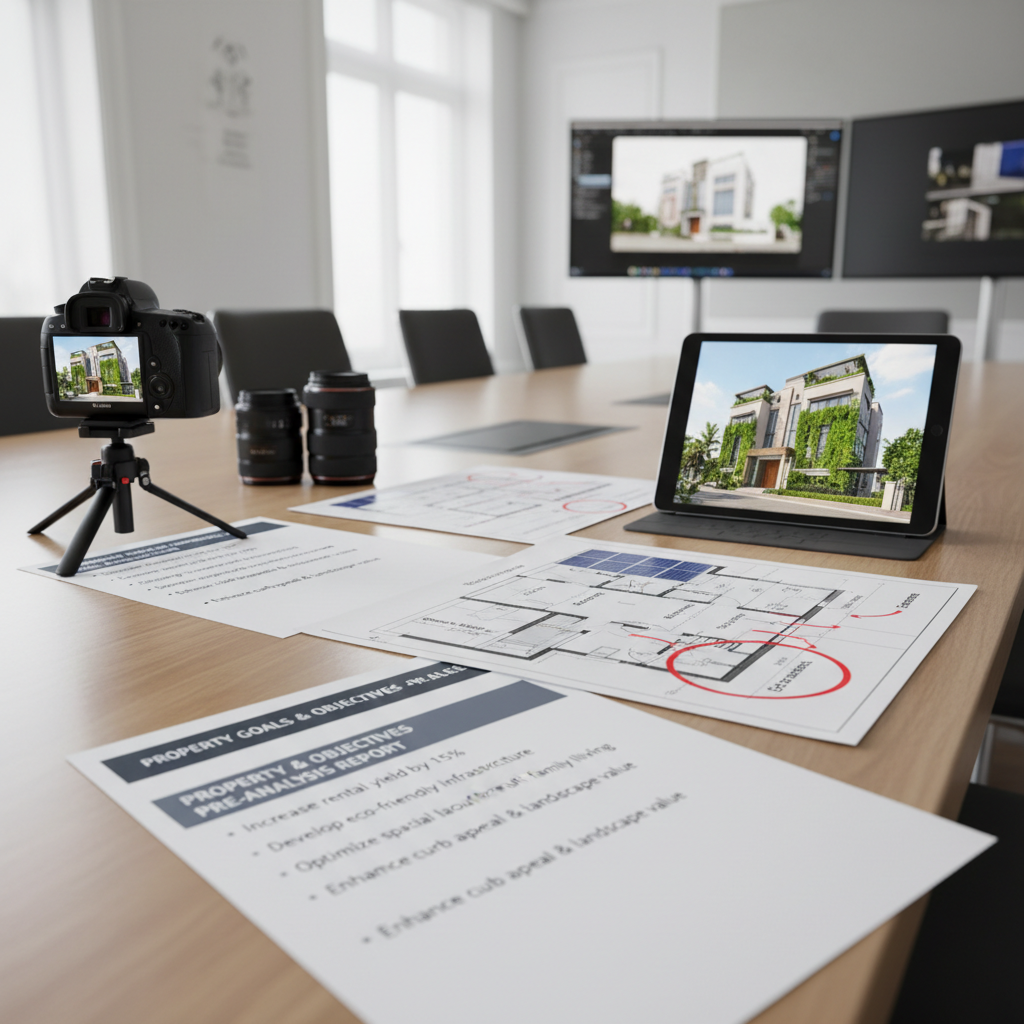
Bringing Qi Men Dun Jia principles into a real home or investment property can feel technical at first, but with a clear plan we can make it practical and manageable. Below I share a step-by-step workflow I use with clients, including specific measurements, simple tools, and realistic timelines. If you follow these steps you will move from theory to tangible changes in a few days to a few weeks, depending on the scope.
Step 1: Pre-assessment, Documentation, and Goals
Before moving furniture or buying cures, write down what you want to achieve. Are you maximizing rental income, improving health and sleep, or attracting a business partner? Set one primary goal and one secondary goal. Then document the property: a sketch floor plan, main entrance orientation (compass bearing), room uses, and major fixed elements such as stairs, structural columns, and plumbing. Use a phone compass app to record the main door bearing to the nearest degree; record it in the plan. This is your baseline, and it takes about 30 to 60 minutes for a typical house.
Practical tip: take photos of each room from the door and corners. These are invaluable when you consult a practitioner or revisit your plan later. Cost: free, time: 30 minutes to 2 hours for a small home.
Step 2: Map the Property to the Qi Men Dun Jia Chart
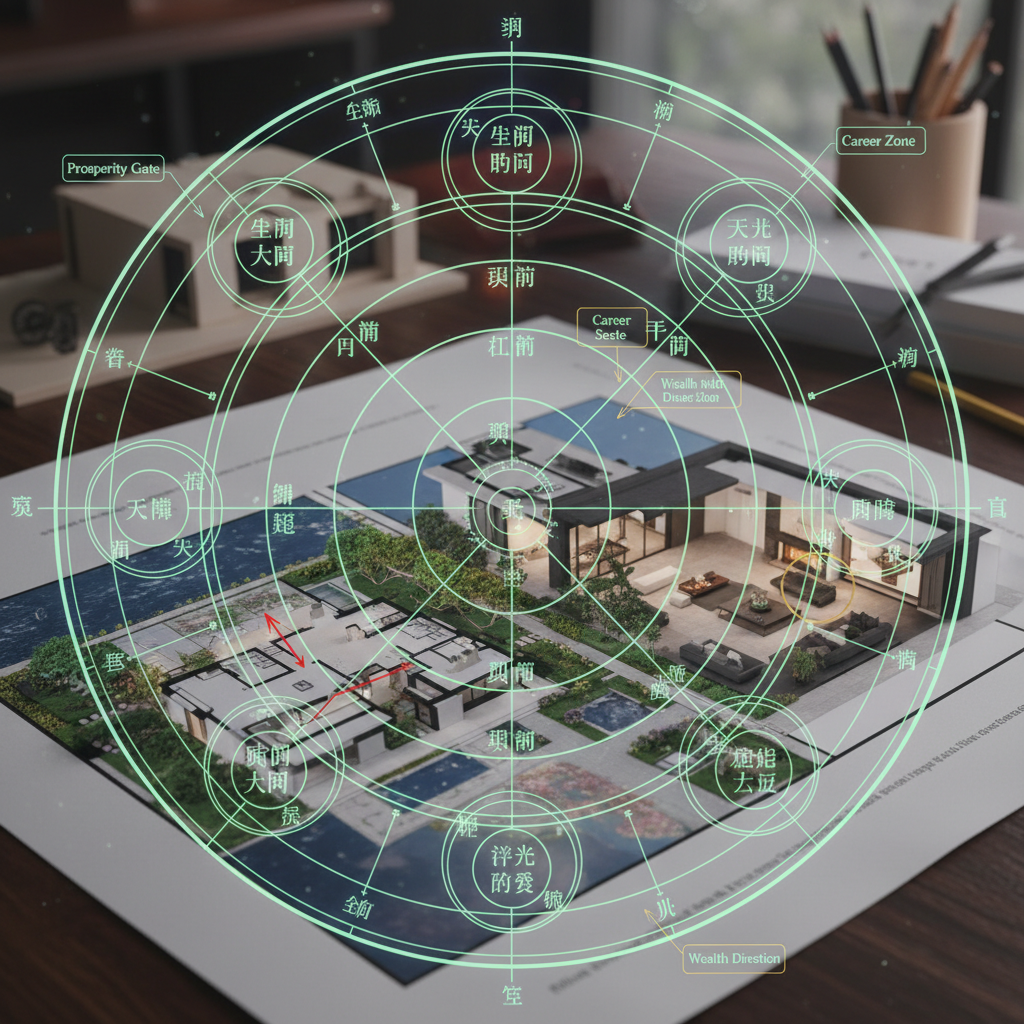
Qi Men Dun Jia uses time and space together, but the spatial mapping starts like a traditional compass school method: divide the property into a 3×3 grid or use the sector system aligned to the main door. If your property is a standard rectangular plan, superimpose a tic-tac-toe grid, with the center representing the heart of the home. If you have an irregular shape, use the majority of the built area to place the grid, or divide into separate sectors for each floor.
Actionable steps: mark the cardinal directions on your floor plan. Assign sectors using the main door as the reference for orientation. For example, if the front door faces 160 degrees (approximately south-southeast), label sectors accordingly and note which sector contains the master bedroom, kitchen, and main door. Time: 1 to 2 hours. Tools: compass app, ruler, pencil. If you prefer digital, use free floor plan apps to overlay the grid.
Step 3: Read the Chart for the Day or Year, Then Select the Appropriate Stars and Gates
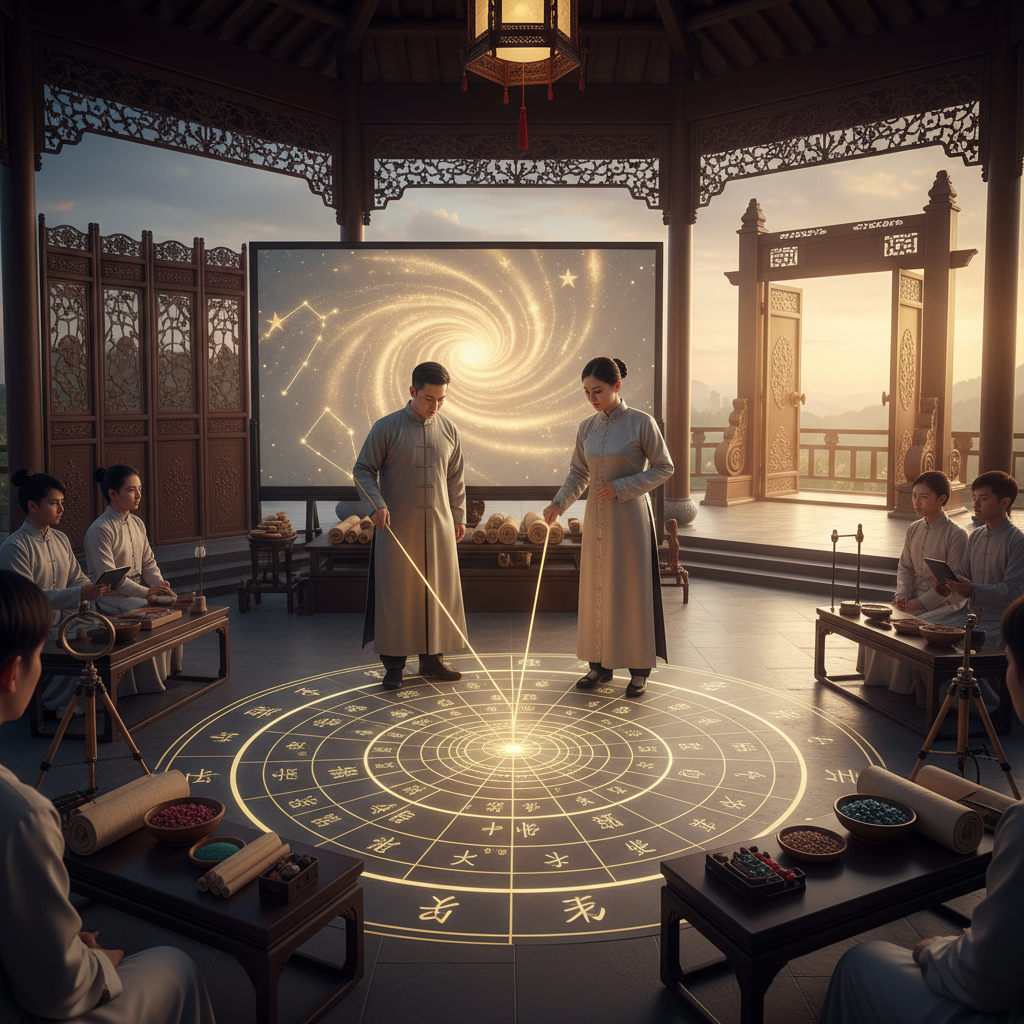
Qi Men Dun Jia charts change with time: daily charts and annual energy patterns differ. If your goal is a long-term property adjustment, start with the annual configuration to determine persistent favorable and unfavorable sectors. For time-sensitive actions such as moving in, signing a lease, or conducting a negotiation from the property, consult a daily Qi Men chart to pick an auspicious date and time. In practice, for most homeowners the annual chart guides placement while the daily chart helps with activation ceremonies.
Example: if the annual chart shows the ‘Open Gate’ and ‘Harmony Star’ concentrated in the northeast sector, placing a living room activity zone there and scheduling an activation day in a month when the daily chart aligns with those energies will enhance results. If you do not have advanced charting skills, many practitioners provide a simple annual sector map for your property for a modest fee, or you can use reputable software to calculate daily charts.
Step 4: Choose the Main Interventions by Priority
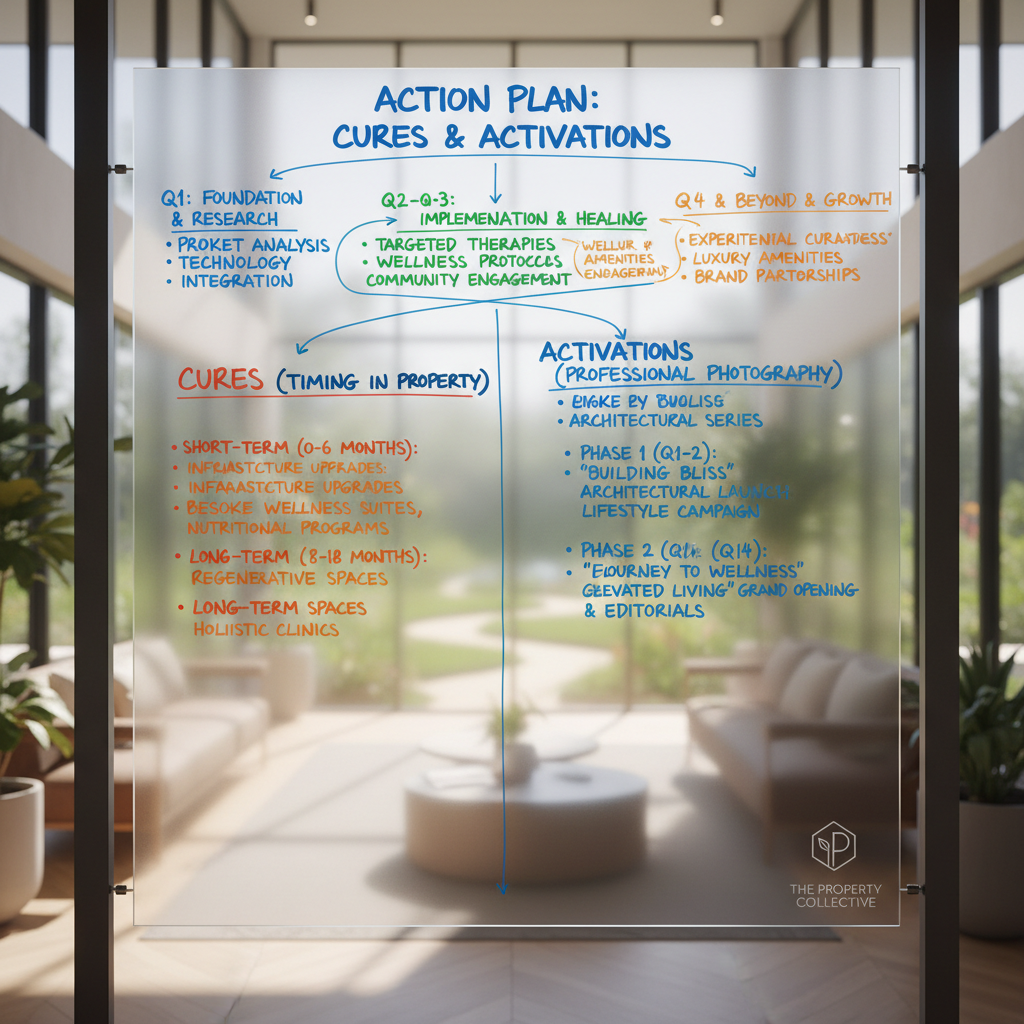
Not every property needs a full overhaul. Prioritize interventions by cost, impact, and ease. I recommend the following order: 1) Clear clutter and fix safety issues; 2) Improve the main entrance; 3) Reposition key furniture in the most relevant sectors (bed, desk, stove); 4) Add subtle cures and activators; 5) Schedule timing and rituals when needed; 6) Consider structural changes only if they directly block an auspicious sector.
- Low-cost, high-impact: decluttering, deep cleaning, repairing locks and lights, adjusting lighting, and improving ventilation. Typical cost: $0 to $200. Time: 1 day to 2 weeks.
- Moderate cost: furniture rearrangement, new curtains for the main door, plants, crystals, water feature adjustments. Typical cost: $100 to $1,200. Time: 1 day to 2 weeks.
- Higher cost: moving a kitchen island, adding a bathroom, structural walls, or changing the main entrance orientation. Typical cost: $2,000 to $20,000 depending on scale. Time: weeks to months.
Example: for a rental apartment with a southeast-facing main door, prioritizing the living area in the southeast sector and placing the tenants’ study corner in a sector that supports financial luck often produces the best cost-to-benefit ratio. Small changes, like placing a pair of healthy plants near the entrance and ensuring the door’s threshold is intact, can increase tenant interest during listing photos.
Step 5: Specific Placements and Actionable Measurements
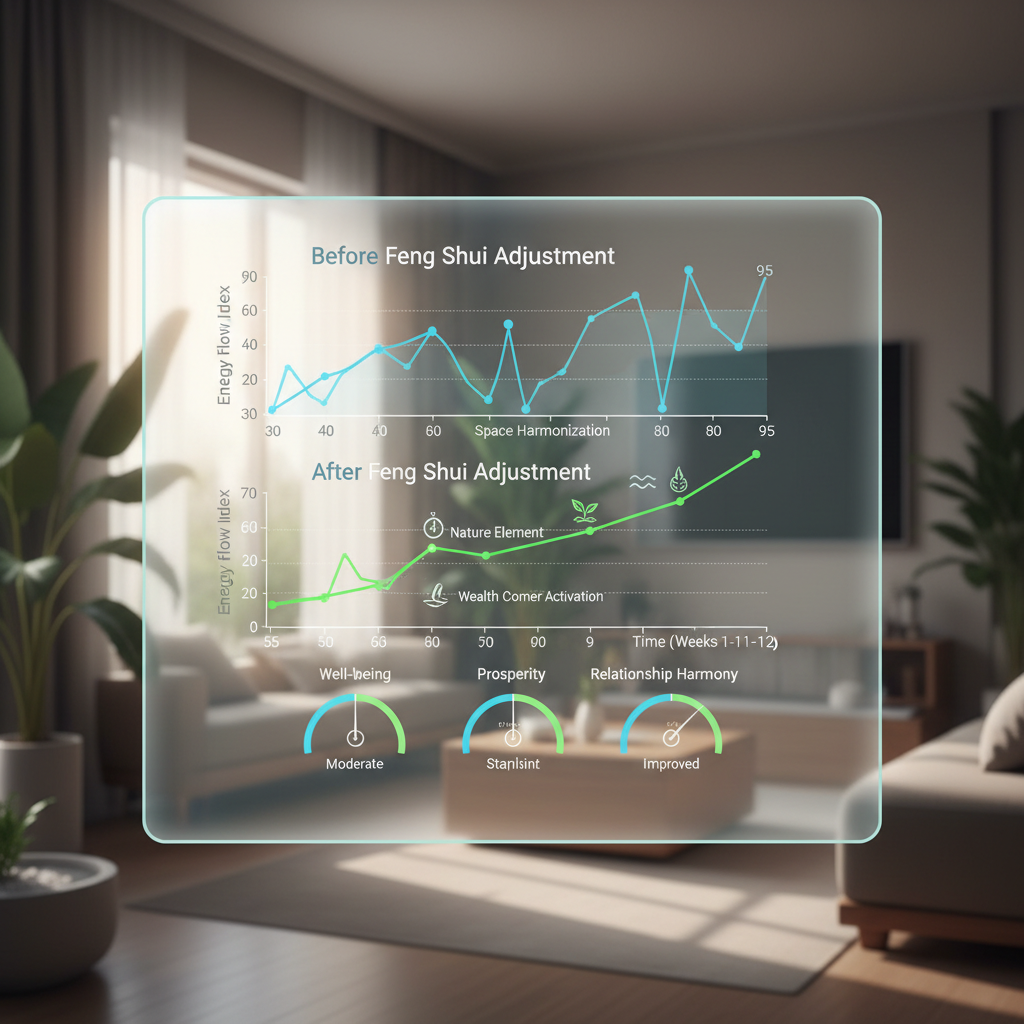
Below are concrete, repeatable placements we use often. These are practical, not mystical rules; they reflect how space, light, and psychology combine with Qi Men Dun Jia principles.
- Master bed: position so the headboard is against a solid wall, with the door visible from the bed, ideally in a favorable sector for health on the annual chart. Leave two feet (60 cm) on each side where possible to improve circulation and accessibility.
- Home office/desk: face the door or a protective wall, not a window with distracting movement. If the best sector is northeast for planning, situate the desk there; aim for a seating position with a solid backing (wall or high-backed chair) for mental stability.
- Stove and kitchen: the stove represents wealth. Keep it clean and accessible; avoid placing the stove directly under a beam or next to the back door. If the annual chart favors the southeast for wealth, emphasize that area with better lighting and fresh plants.
- Main door: ensure it opens smoothly, locks securely, and is well-lit. A welcome mat, two plants, and a high-quality doorbell are inexpensive trust signals for guests and buyers. If the main door sits in an inauspicious sector on the chart, neutralize it first with cleaning, bright lighting, and a gentle color change, before attempting stronger cures.
Actionable measurement example: if your living room sits in the ‘Prosperity’ sector, set a focal point (such as a sofa or an artwork) within a 1.5 to 3 meter radius of the center of that sector to anchor activity there. This simple spatial rule makes it more likely that daily household energy flows through the desired area.
Step 6: Cures, Activations, and Timing
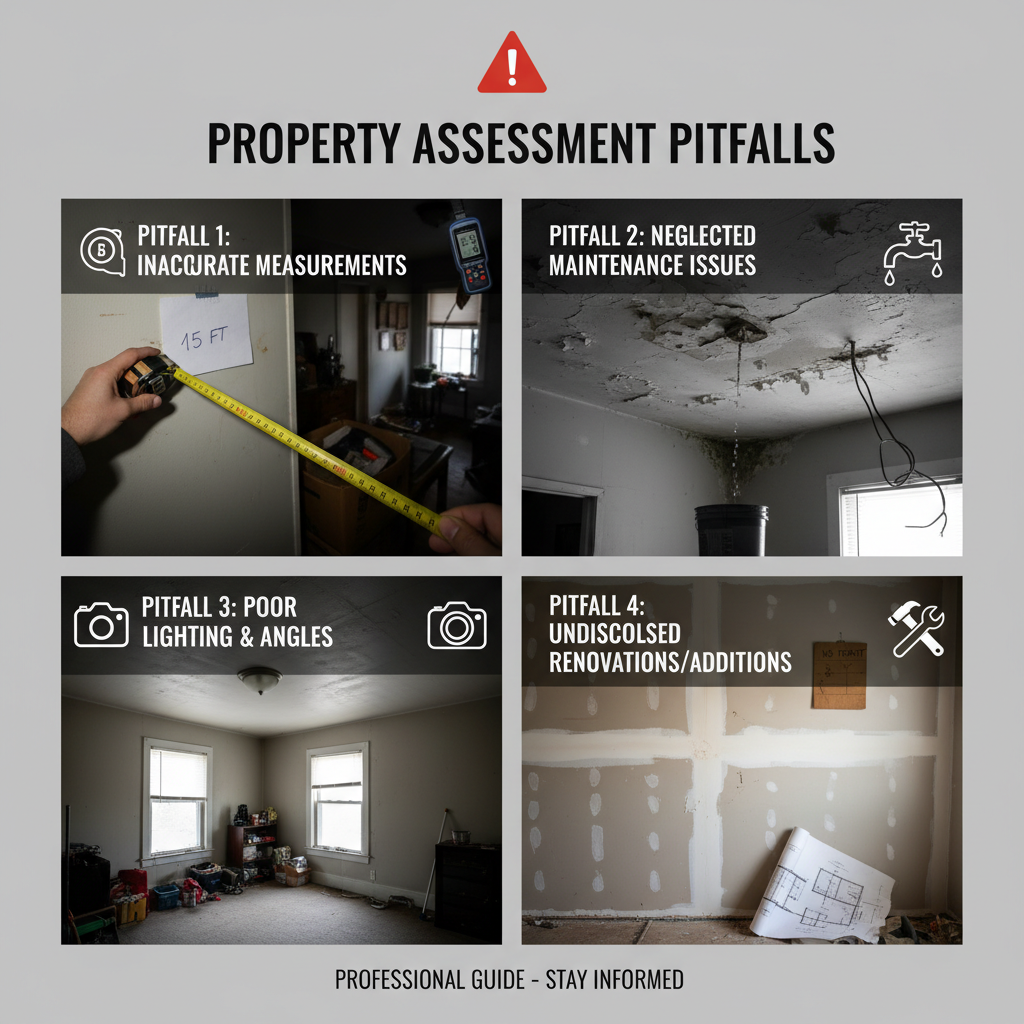
Cures in Qi Men Dun Jia range from symbolic (colors, plants) to material (mirrors, water features) and timing (selecting auspicious dates for action). Here are practical, evidence-based recommendations that I use regularly.
- Plants: choose low-maintenance, healthy specimens for home sectors that need growth energy, such as jade plant, snake plant, or pothos. Avoid cacti in areas meant to invite relationships or rest, as spiky plants can create visual tension.
- Water features: small tabletop fountains can be used in wealth sectors, but ensure clean water and regular maintenance. A working pump improves sound and movement of chi, but leaky or stagnant water causes the opposite effect. Budget: $50 to $600 depending on size and finish.
- Mirrors: use mirrors to visually expand small areas and to redirect energy, but do not place mirrors facing the bed. If a mirror opens a corridor that channels energy to a dead end, consider repositioning or using art instead.
- Colors: adjust paint and textiles to support the five elements relative to the sector. For example, use soft blues for water sectors, greens for wood sectors, and warm earth tones for stability zones. Avoid overly saturated colors in sleeping areas.
- Timing: for significant actions like moving in, signing documents, or launching a business from the property, pick a day where the Qi Men chart shows favorable doors and stars for the intended activity. If you lack charting expertise, a qualified consultant will provide 2 to 3 date options that align with your schedule.
Practical activation example: after rearranging the living room to anchor it in the prosperity sector, host a small gathering or photo session to ‘activate’ that area. In my experience, a single event that draws positive social interaction to the targeted sector increases perceived results because it alters how people use the space.
Step 7: Monitoring Results and Adjusting

Set measurable indicators tied to your goals. For example, if you aim to increase rental income, monitor listing views, inquiry rate, and rent per month across three months before and after changes. If your goal is better sleep, track sleep hours, wakefulness, and how you feel each morning for 30 to 90 days. Keep a simple log and compare trends.
Actionable timeline: minor adjustments show effects in days to weeks; furniture repositioning often changes sleep and productivity within 1 to 4 weeks; structural modifications may take months to reflect in financial or reputational metrics. If a change does not move the indicator after a reasonable period, revert or try a different sector-based intervention.
Common Pitfalls and How to Avoid Them

Applying Qi Men Dun Jia property Feng Shui can be powerful, but people often get tripped up by these common mistakes. Below I list pitfalls, why they matter, and how to avoid them with simple fixes.
Pitfall 1: Overcomplicating the Chart without Starting with Basics

Many assume Qi Men requires esoteric calculations before any change is allowed. In reality, the fundamentals of clutter removal, entrance maintenance, and ergonomics deliver the largest immediate returns. Treat the chart as an enhancer, not a substitute, for good design and maintenance.
Fix: complete the pre-assessment checklist first: clean, repair, improve light and airflow, then add chart-informed placements. This approach minimizes wasted time and money.
Pitfall 2: Ignoring the Human Element
We sometimes forget that Feng Shui works through human behavior. If a sofa is placed in an auspicious sector but no one uses it, there is no activation. Conversely, small visual or tactile improvements can change how occupants use a space, amplifying Feng Shui adjustments.
Fix: design changes should be tested for comfort and usability. Ask household members for feedback after changes. In my practice, involving residents in small decisions increases adherence and boosts outcomes.
Pitfall 3: Over-reliance on Objects as Magical Cures
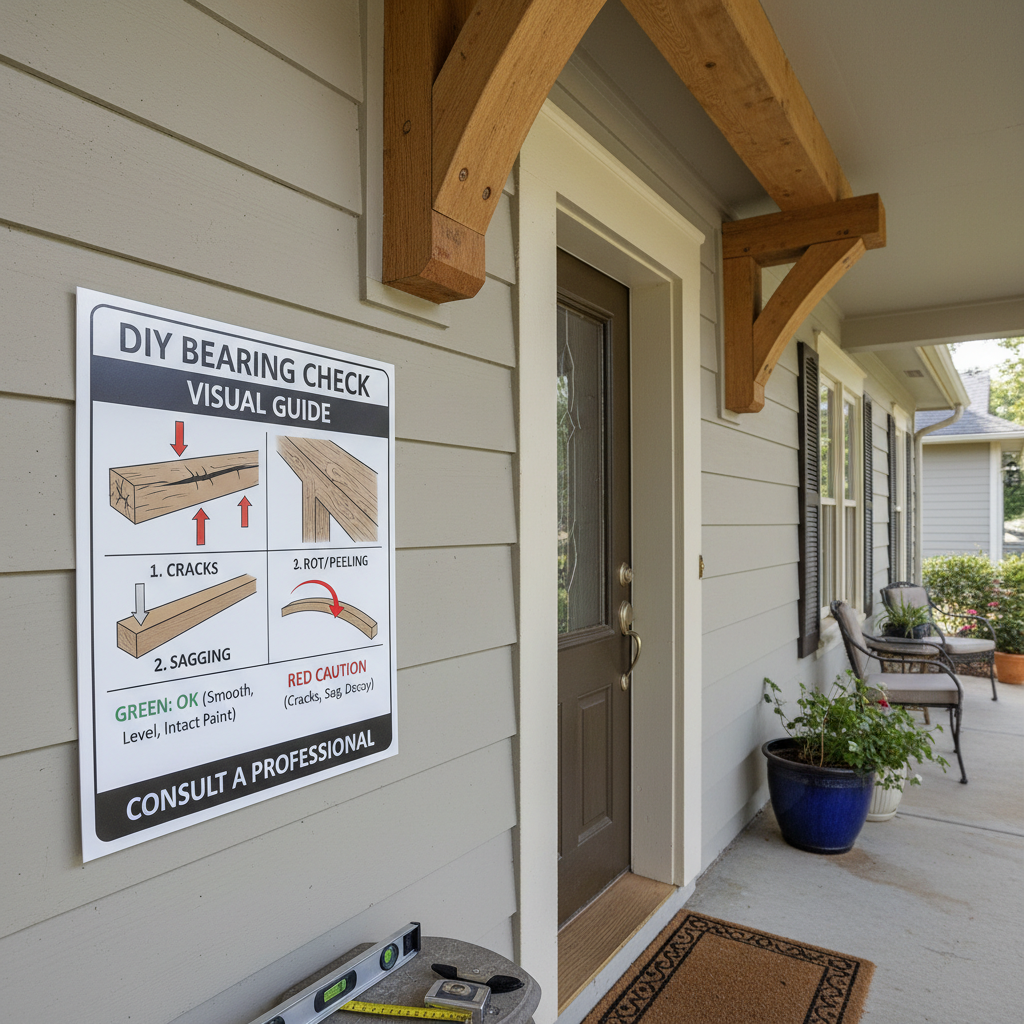
Buying dozens of charms and symbols without addressing underlying issues such as dampness, poor lighting, or structural dysfunction often leads to disappointment. Objects help focus intention and signal care, but they do not replace basic home upkeep.
Fix: prioritize repairs and functional upgrades. Use symbolic cures to complement, not compensate for, real-world problems.
Pitfall 4: Inconsistent Timing or Mismatched Activations
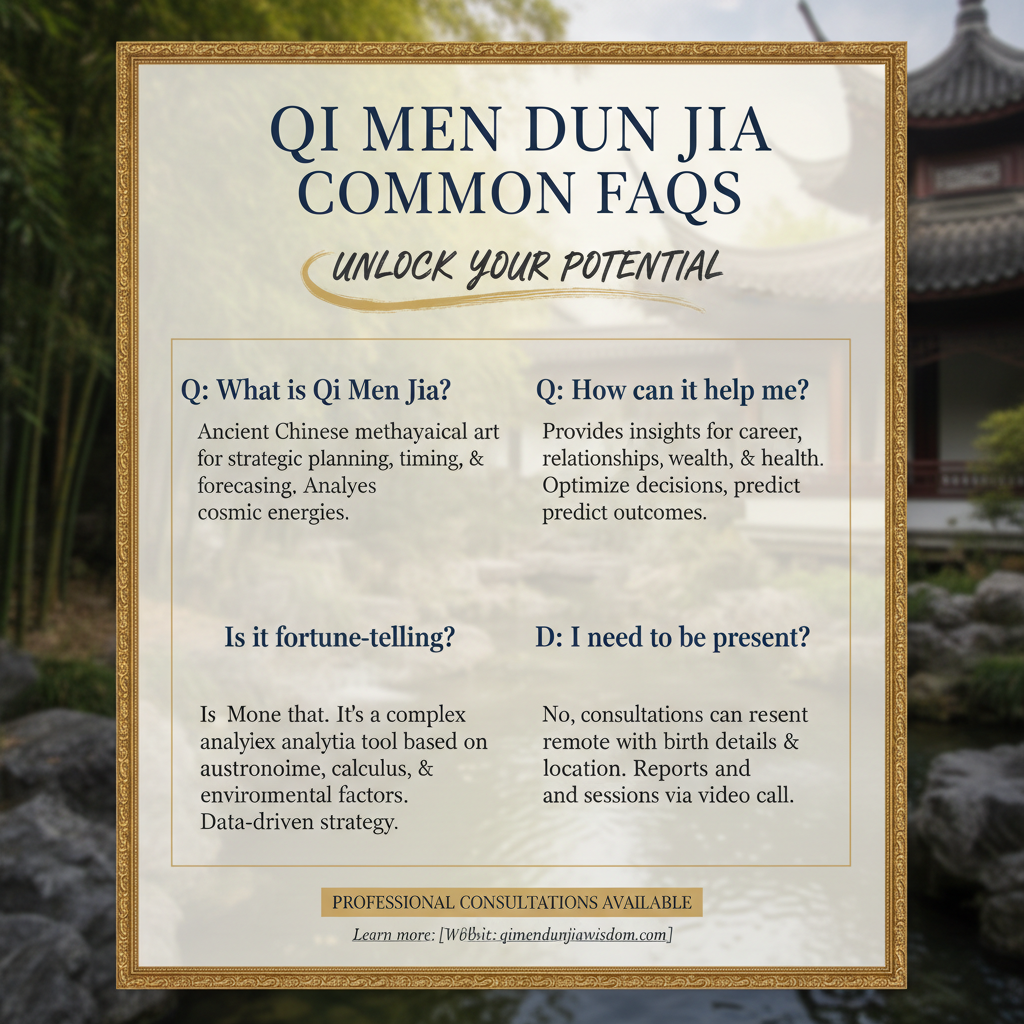
Selecting a random auspicious day or attempting multiple activations in conflicting sectors reduces effect. Qi Men Dun Jia is most effective when actions are aligned: the space, the timing, and the intention should match.
Fix: create a coordinated activation plan: choose one primary intention, map it to a sector, and schedule one or two well-chosen activation days. Keep other interventions neutral to avoid conflicting energies.
Pitfall 5: DIY without Verifying the Main Entrance Bearing

Many mistakes arise from incorrectly identifying the main door bearing, which shifts sector assignments. A wrong bearing sends you to the wrong sector for every placement.
Fix: measure the main entrance with a compass app repeatedly, ideally at different times of day to account for interference, and cross-check with a printed compass if available. If the building has multiple entrances, choose the one used most often as the main door for sector alignment.
Frequently Asked Questions (faq)
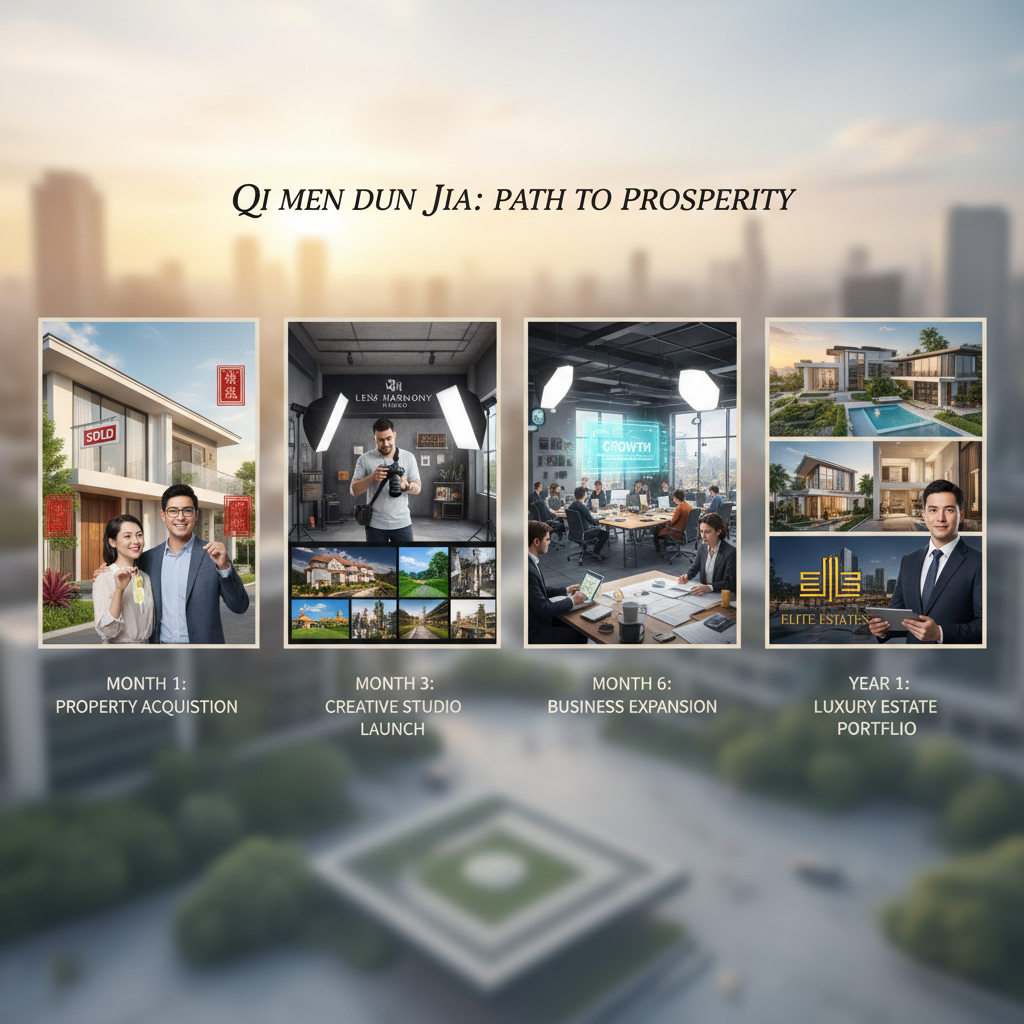
Q1: is Qi Men Dun Jia Property Feng Shui Suitable for Modern Apartments and City Flats?
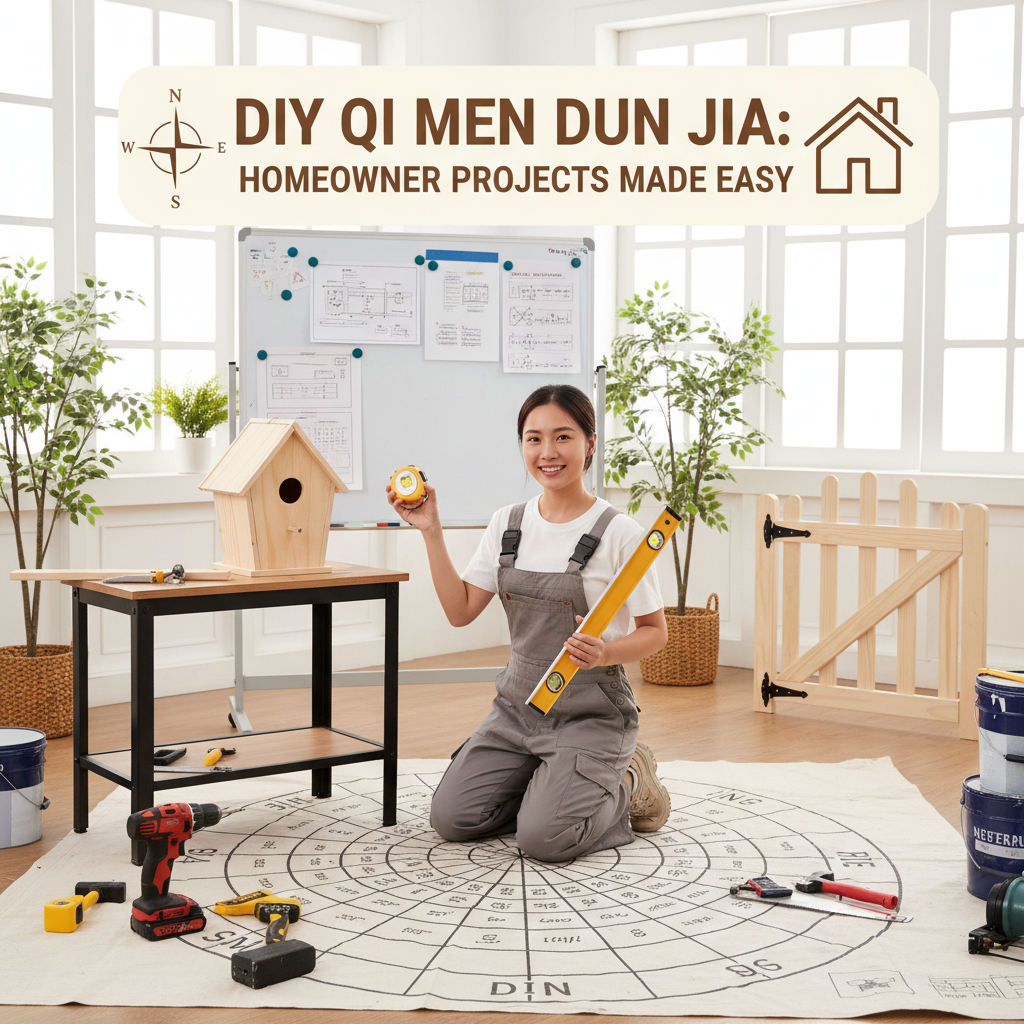
A: Yes, Qi Men Dun Jia can be adapted to apartments and small spaces. We focus more on sector activations, furniture placement, and timing for actions such as lease signings and move-ins. For high-rise units, pay attention to the main door orientation, the position of the elevator relative to the door, and the view from key windows. Small, targeted interventions – like anchoring the prosperity sector with a seating area or improving lighting in the relationship sector – are often the most effective in confined spaces.
Q2: How Long before I Notice Results after Applying Qi Men Dun Jia Principles?
A: It depends on the intervention. After decluttering and reorganizing, many occupants report subjective improvements within days. For sleep and personal health, expect 2 to 6 weeks as biological rhythms adjust. Financial and reputational changes, such as higher rental interest or smoother lease renewals, often take 1 to 3 months to become measurable. Structural changes may take longer, as they involve market cycles and physical construction timelines.
Q3: do I Need to Hire a Professional, or can I do This Myself?

A: You can start with basic self-help steps: clean, repair, measure the main door bearing, and move key furniture. For precise charting and date selection, hiring an experienced Qi Men Dun Jia consultant reduces errors and accelerates outcomes, especially for high-value investments. Typical consultant fees vary widely, from $100 for a simple sector map to $800+ for a full site visit and charting. Many people combine a DIY first pass with a short consulting session for final verification.
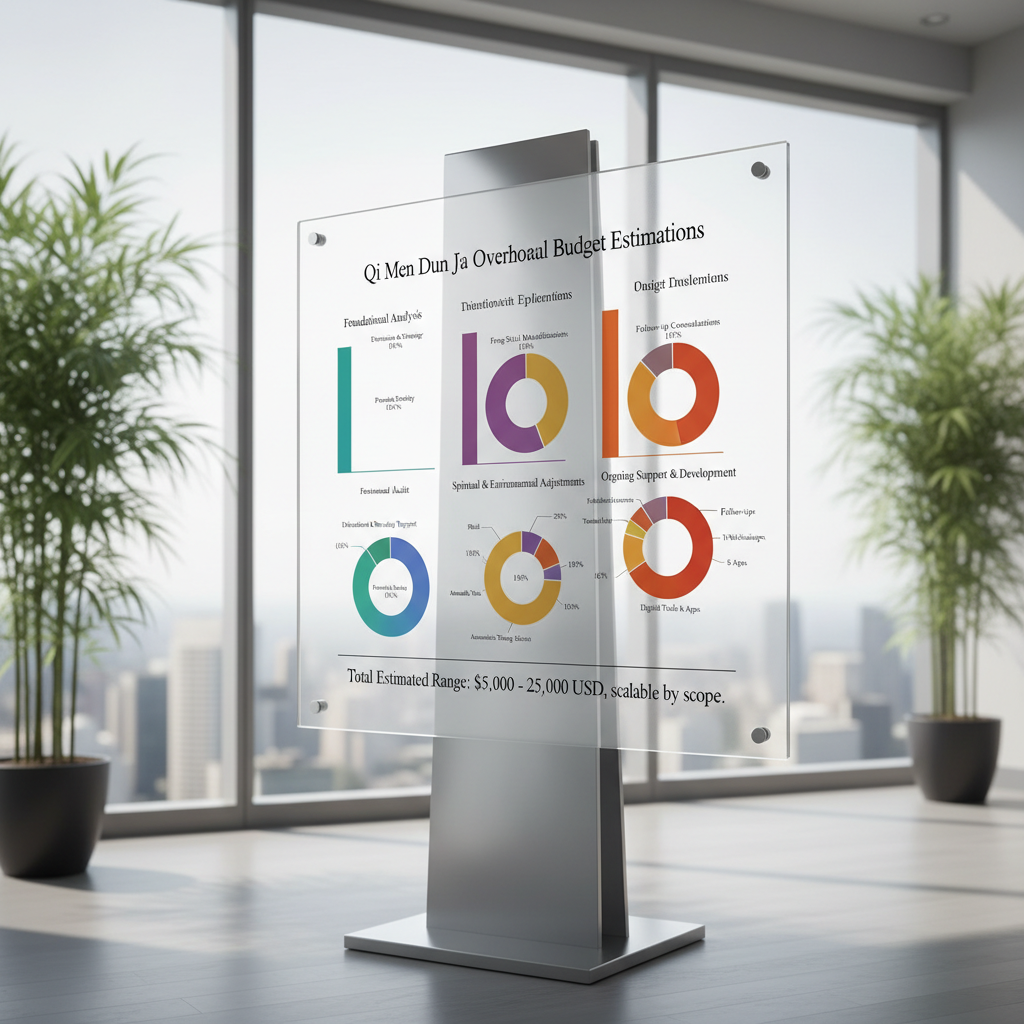
Q4: What Budget should I Expect for a Practical Qi Men Dun Jia Overhaul?
A: Budgets vary by scope. Expect $0 to $300 for a basic activation (cleaning, minor cosmetic updates, plants), $300 to $1,500 for more visible changes like new furniture or a small water feature, and $2,000+ for structural or major layout changes. Consultants typically charge $100 to $800 depending on the depth of service. I recommend allocating most of your budget to functional improvements first, then symbolic or timing-related expenses second.
Q5: are There Any Scientific or Measurable Components in Qi Men Dun Jia Implementations?

A: While Qi Men Dun Jia originates from classical Chinese metaphysics, many of the interventions have measurable effects through environmental psychology and ergonomics. Improvements in lighting, air quality, and ergonomics yield documented benefits in sleep, productivity, and well-being. When we pair these tangible changes with targeted activations and timing, the combined effect can be more potent than either approach alone. To quantify results, track specific metrics such as sleep hours, rent inquiries, or productivity measures before and after changes.
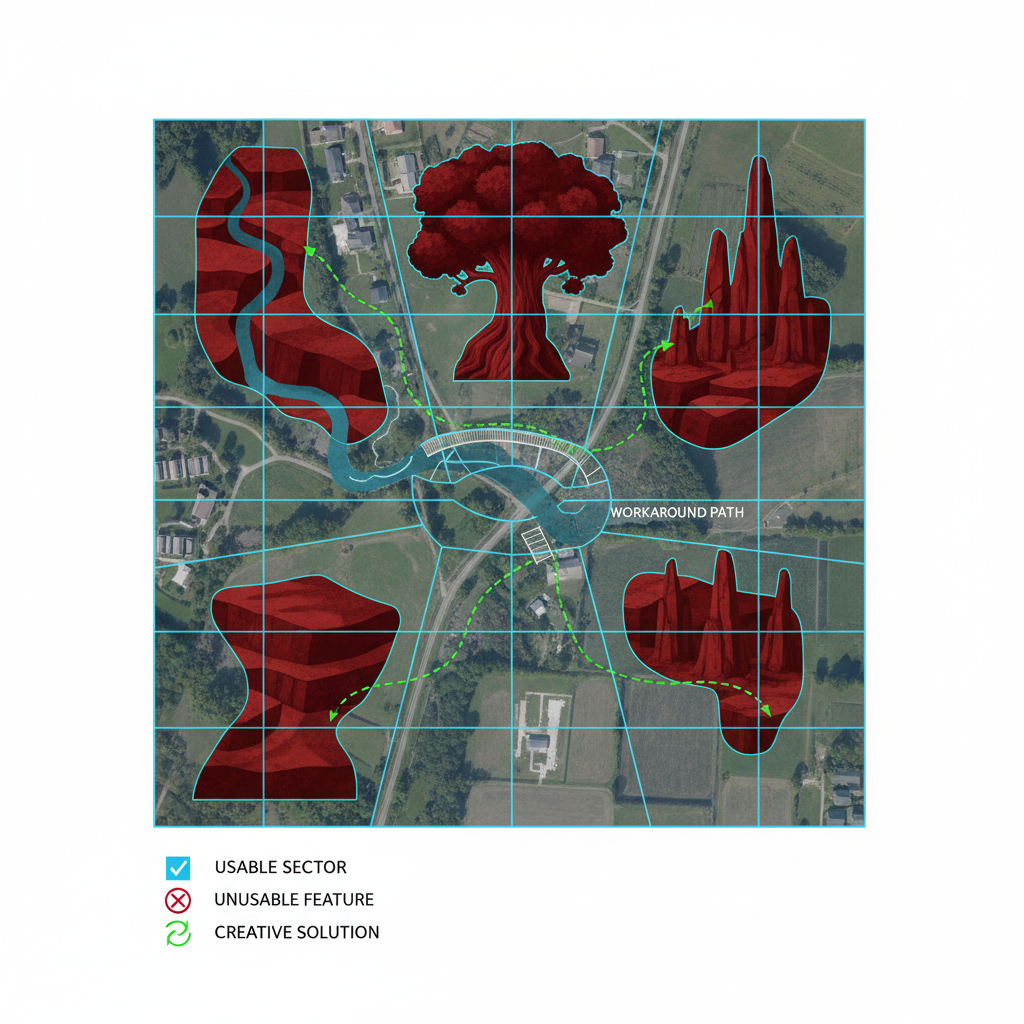
Q6: What should I do If a Sector is Unusable Due to an Immovable Feature?
A: If a sector is blocked by a stairwell, structural column, or shared wall, neutralize it rather than force activation. Clean the area, add a subtle neutral color, and avoid placing important functions there. Then, redirect focus to the adjacent sectors that are usable. In Qi Men practice this is common; effective solutions often involve amplification of neighboring sectors instead of trying to convert unusable space.
Q7: can Qi Men Dun Jia Principles be Used to Evaluate Investment Properties?

A: Yes, many investors use Qi Men as part of a broader due diligence process. We look at orientation, entrance placement, layout flow, and the stability of surrounding structures. Qi Men adds temporal considerations, so selecting an acquisition date that aligns with favorable charts for negotiation and closing can be helpful. Combine Qi Men insights with conventional financial analysis; the two work best together.
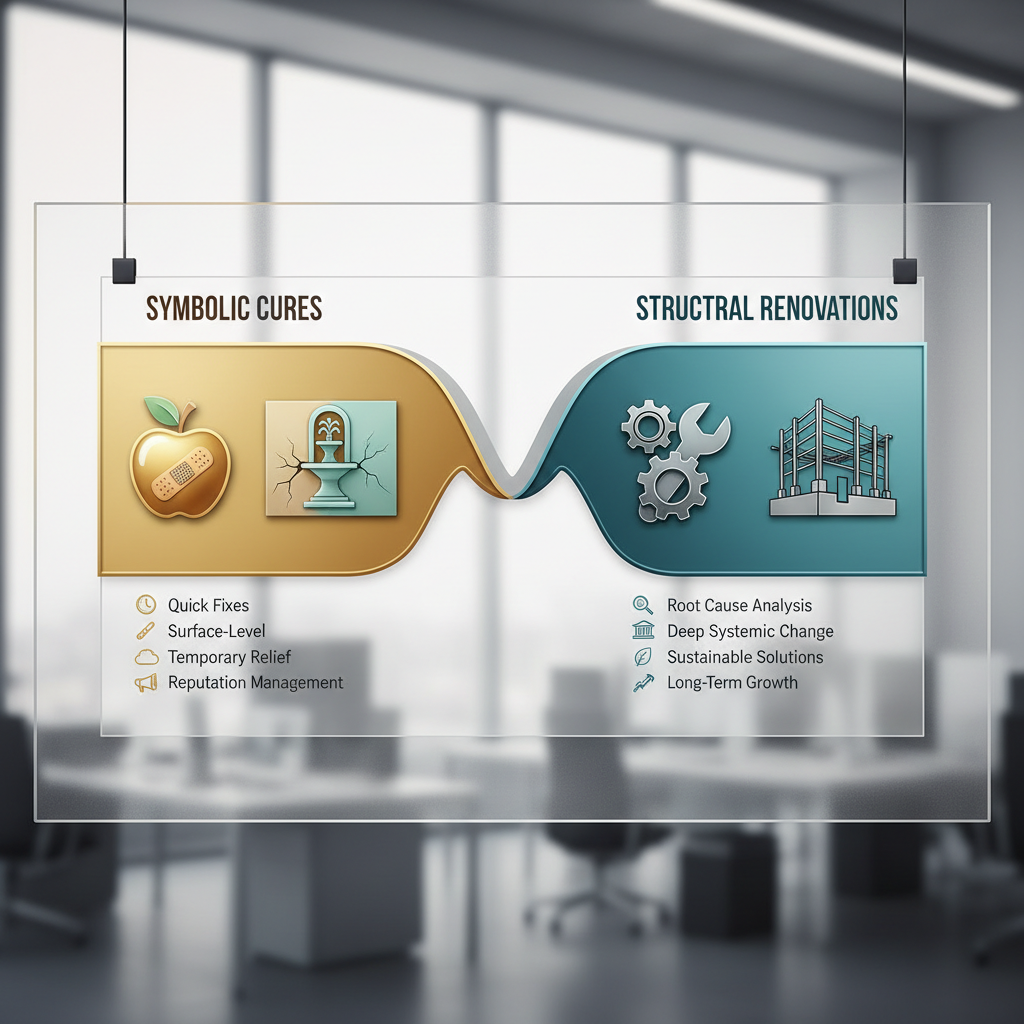
Q8: How do I Decide between Symbolic Cures and Structural Renovations?
A: Assess expected return on investment and risk. Symbolic cures are low-cost and reversible, making them ideal for testing. If a symbolic intervention does not produce the desired effect after a reasonable trial period, consider incremental structural changes. Use monitoring metrics to support decisions; for example, if tenant turnover drops after symbolic changes, a larger renovation may be justified to scale results.
Conclusion

Applying Qi Men Dun Jia principles to a property is part art and part practical project management. When we treat the process systematically – starting with clear goals, documenting the space, using the chart to guide sector priorities, and implementing a prioritized list of interventions – we get measurable, repeatable outcomes. Small changes such as decluttering, improving the main entrance, and positioning key furniture often produce the fastest returns in comfort and perceived luck. More complex actions, including structural changes and carefully timed activations, deliver deeper results when they are aligned with everyday usability.
If you are just starting, follow the step-by-step plan: document your goals, map the property, prioritize low-cost interventions, and track outcomes. If you want to accelerate results, consult a Qi Men Dun Jia practitioner for charting and date selection. Above all, remember that Feng Shui works through human behavior; the most successful implementations are those that make the space more livable and inviting, encouraging positive patterns of use.
Ready to take the next step? Start with a one-page assessment: draw your floor plan, mark the main entrance bearing, and list your top goal for the property. That single sheet will guide your first interventions and make any future consulting far more effective. With consistent, practical application, the principles of Qi Men Dun Jia can help you create a property that supports your financial, personal, and well-being goals.
Leave a Reply
You must be logged in to post a comment.