
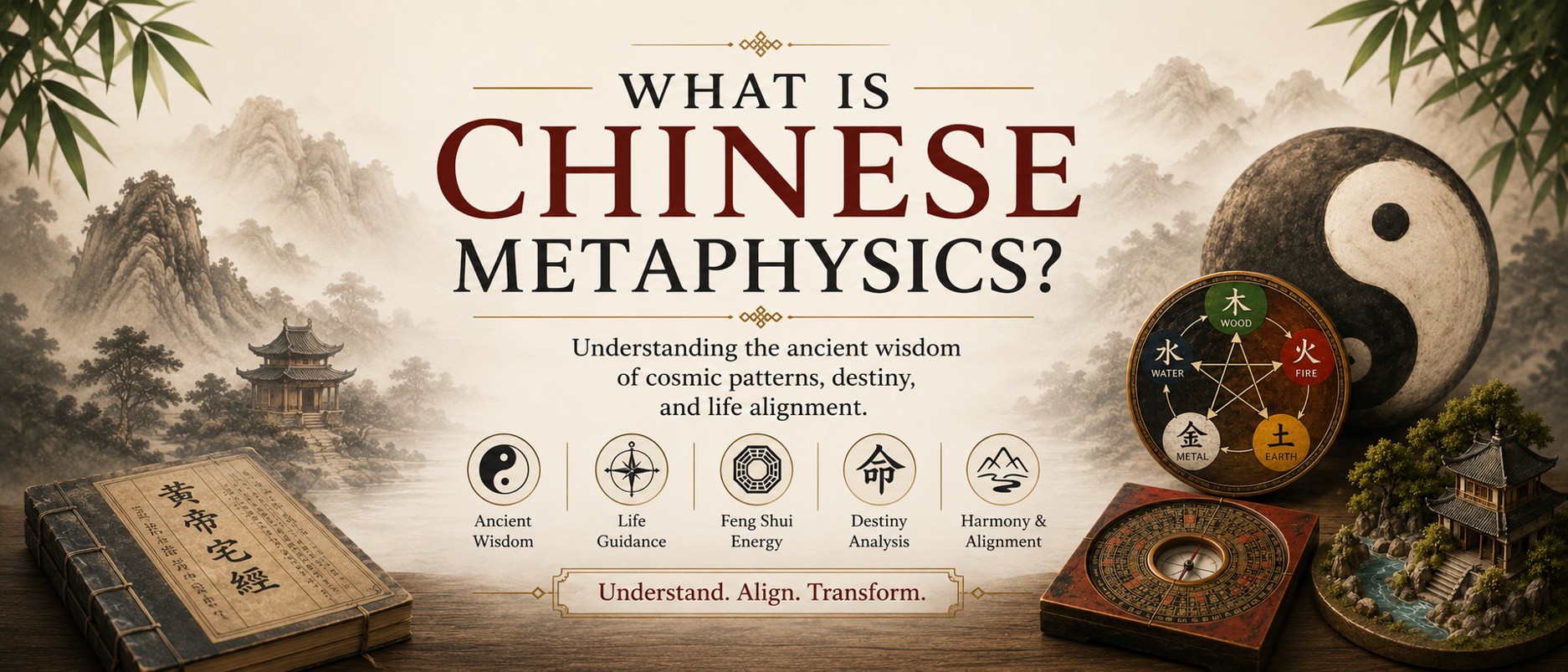
1. What Is Chinese Metaphysics?

Chinese metaphysics (中国玄学 / 中国命理学) is the study of invisible forces, cosmic patterns, and energetic laws that govern human life and the natural world. At its core, it seeks to answer three fundamental questions:
- Who am I? (Nature, character, strengths, weaknesses)
- What is my destiny? (Timing, opportunities, challenges)
- How should I act? (Decision-making, strategy, alignment)
Rather than denying fate or surrendering to it, Chinese metaphysics teaches that destiny can be understood, managed, and optimized through awareness and correct action.
This knowledge system is deeply integrated into Chinese culture and has historically influenced:
- Governance and statecraft
- Military strategy
- Architecture and city planning
- Medicine and health
- Ethics and moral cultivation
- Business and wealth planning
To truly understand Chinese metaphysics, one must first understand the philosophical roots from which it emerged.
2. Philosophical Foundations of Chinese Metaphysics

The intellectual backbone of Chinese metaphysics lies in classical Chinese philosophy. These philosophies shaped not only metaphysical systems but also Chinese culture, ethics, and social structures.
2.1 Confucianism: Order, Ethics, and Human Responsibility
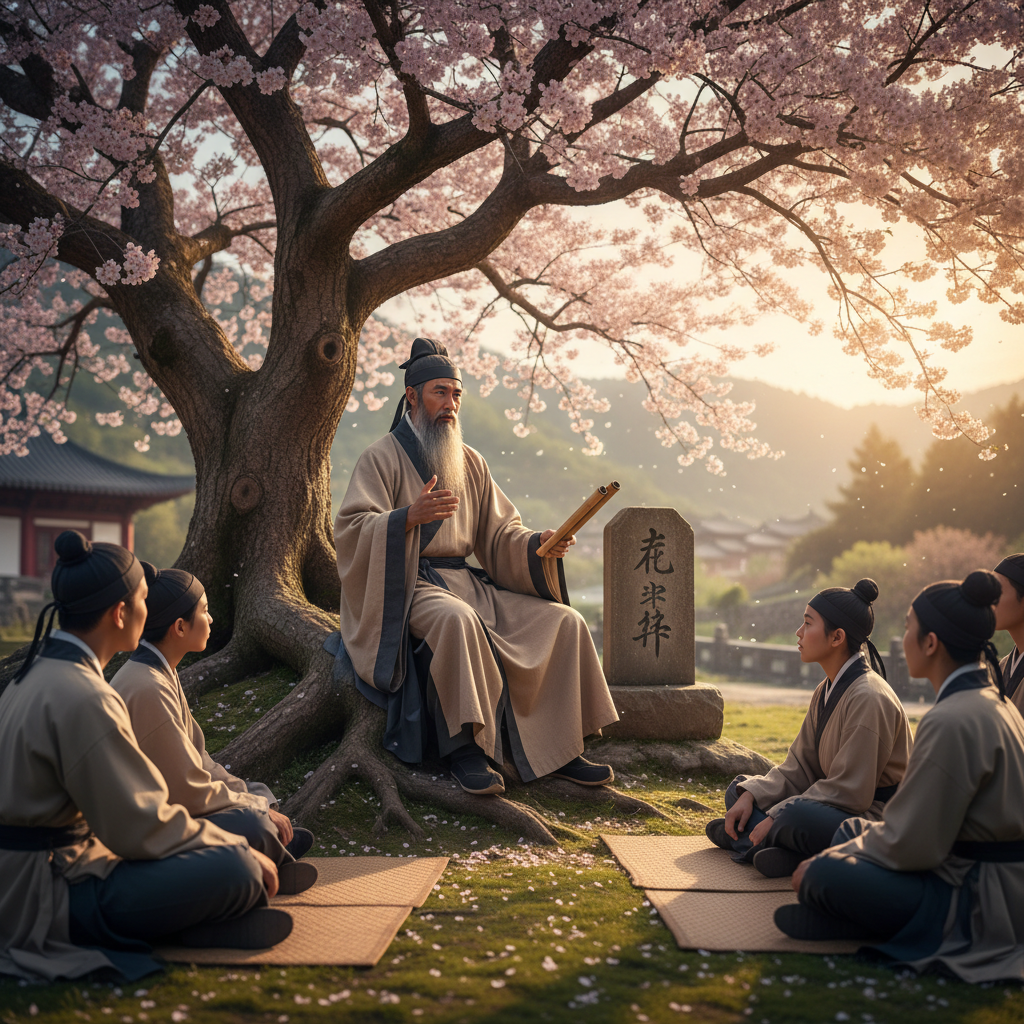
Confucius (孔子), one of the most influential philosophers in Chinese history, emphasized:
- Moral cultivation
- Social harmony
- Responsibility within relationships
- Alignment between personal conduct and cosmic order
Confucianism teaches that Heaven (天) has a moral order, and humans must align their actions with this order to achieve harmony and prosperity.
In metaphysical terms, Confucianism influenced:
- Destiny interpretation
- Ethical decision-making
- The concept of Heaven’s mandate (天命)
Rather than seeing fate as random, Confucian thought framed destiny as something responsive to virtue and conduct.
2.2 Taoism: Natural Flow and Universal Law

If Confucianism focuses on structure, Taoism (道家) focuses on flow.
Founded on the teachings of Laozi (老子) and Zhuangzi (庄子), Taoism introduced key metaphysical principles such as:
- The Tao (道): the natural, ineffable source of all things
- Wu Wei (无为): effortless action aligned with nature
- Yin and Yang (阴阳): dynamic balance of opposing forces
Taoism profoundly influenced Chinese metaphysics by emphasizing that everything follows natural cycles. Success comes not from force, but from timing, positioning, and alignment.
This philosophy directly underpins:
- Feng Shui
- Qi Men Dun Jia
- Yin-Yang and Five Elements theory
2.3 Yin-Yang and Five Elements Theory
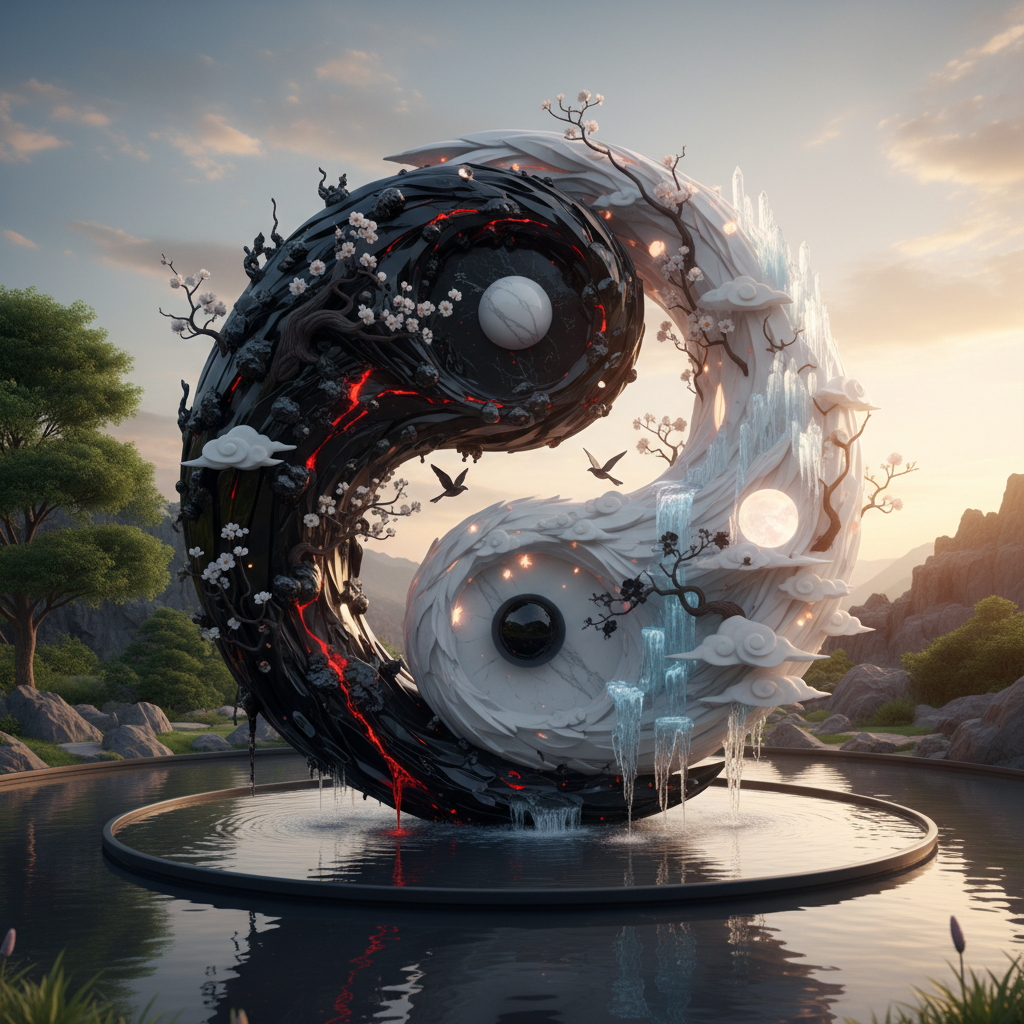
At the heart of Chinese metaphysics are two universal models:
Yin and Yang

- Yin: passive, internal, receptive, dark
- Yang: active, external, assertive, light
All phenomena arise from the interaction of Yin and Yang. Nothing is purely Yin or Yang; balance determines outcome.
Five Elements (五行)

- Wood (growth, planning)
- Fire (action, visibility)
- Earth (stability, resources)
- Metal (structure, discipline)
- Water (intelligence, adaptability)
These elements describe processes, not substances. They are used to analyze personalities, environments, timing, and events.
3. Historical Development of Chinese Metaphysics
Chinese metaphysics evolved through three major historical movements.
3.1 First Movement: The Hundred Schools of Thought (6th–2nd Century BCE)
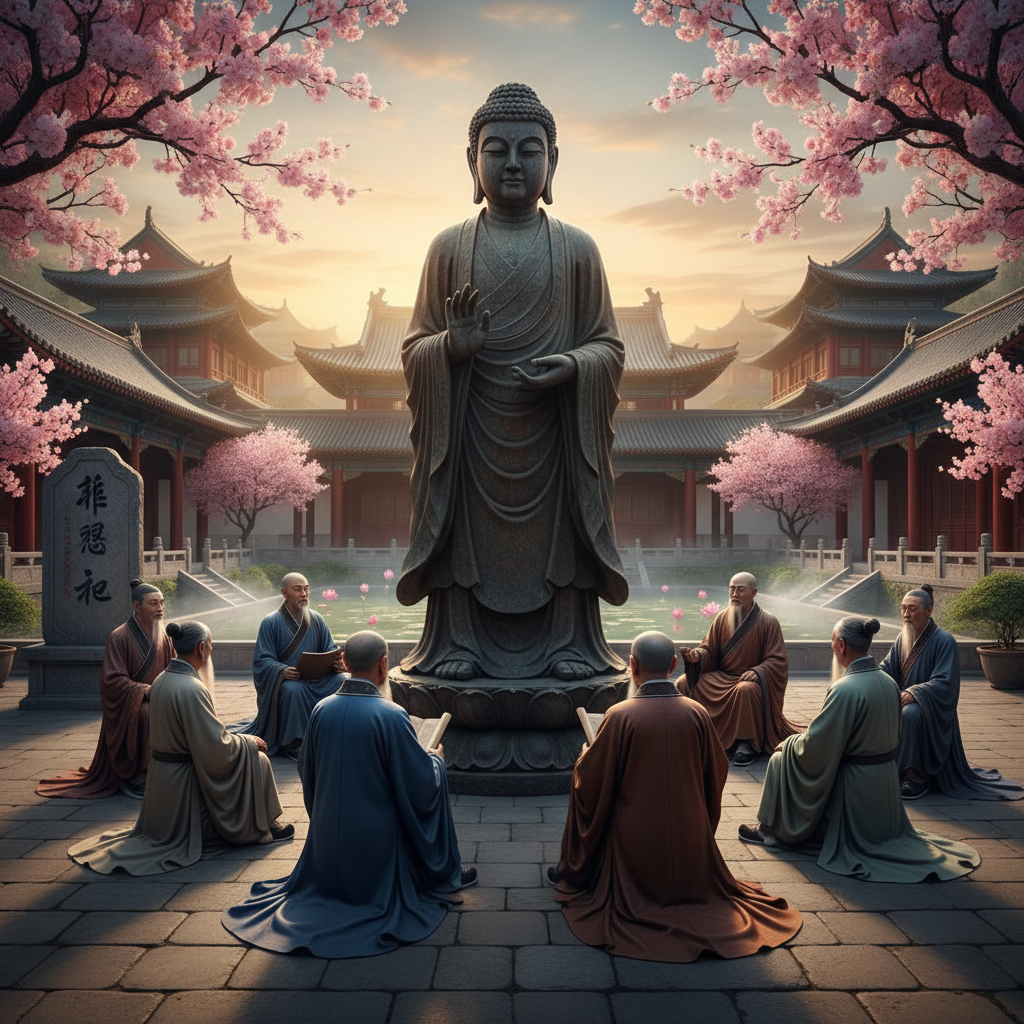
This era marked an intellectual explosion in China, producing multiple philosophical schools, including:
- Confucianism
- Taoism
- Mohism
- Legalism
- Logicians
- Yin-Yang School
These schools debated ethics, governance, nature, and cosmic order. Their ideas laid the groundwork for metaphysical models used today.
The Yin-Yang School, in particular, formalized cosmological thinking, which later became the foundation of astrology, Feng Shui, and destiny analysis.
3.2 Second Movement: Integration of Buddhism

Buddhism entered China from India during the Han Dynasty and merged with existing philosophies.
This integration introduced:
- Karma and rebirth
- Impermanence
- Inner cultivation
Buddhism influenced Chinese metaphysics by adding spiritual depth and introspection, especially in fate interpretation and personal transformation.
3.3 Third Movement: Neo-Confucianism (11th Century–Present)

Neo-Confucianism synthesized:
- Confucian ethics
- Taoist cosmology
- Buddhist metaphysics
This movement refined metaphysical theories into systematic models that could be studied, taught, and applied, forming the basis of modern BaZi, Feng Shui, and divination systems.
4. Feng Shui: Harmonizing Environment and Energy
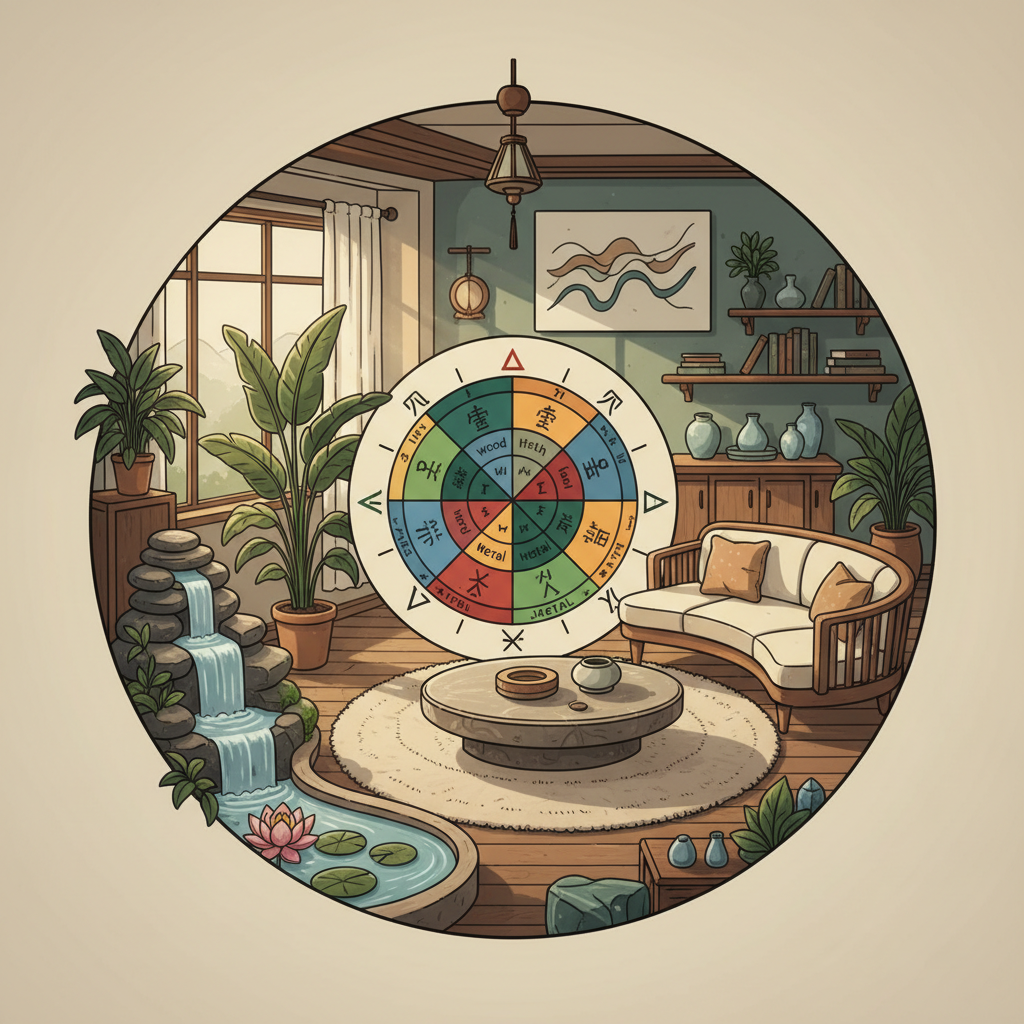
Feng Shui (风水), meaning “Wind and Water,” is the art and science of environmental energy management.
4.1 Core Principles of Feng Shui

Feng Shui is based on the belief that:
- Qi (气) flows through land, buildings, and spaces
- Proper flow brings health, wealth, and harmony
- Blocked or aggressive Qi causes obstacles
Key Feng Shui principles include:
- Orientation and direction
- Landform analysis
- Spatial arrangement
- Timing
Contrary to popular belief, authentic Feng Shui is not superstition or decoration. It is a structured system developed through centuries of observation.
4.2 Applications of Feng Shui Today
Modern Feng Shui is used for:
- Residential homes
- Corporate offices
- Retail spaces
- Urban planning
Correct Feng Shui supports:
- Financial growth
- Relationship harmony
- Health and recovery
- Business sustainability
5. BaZi (Four Pillars of Destiny): Understanding Personal Blueprint
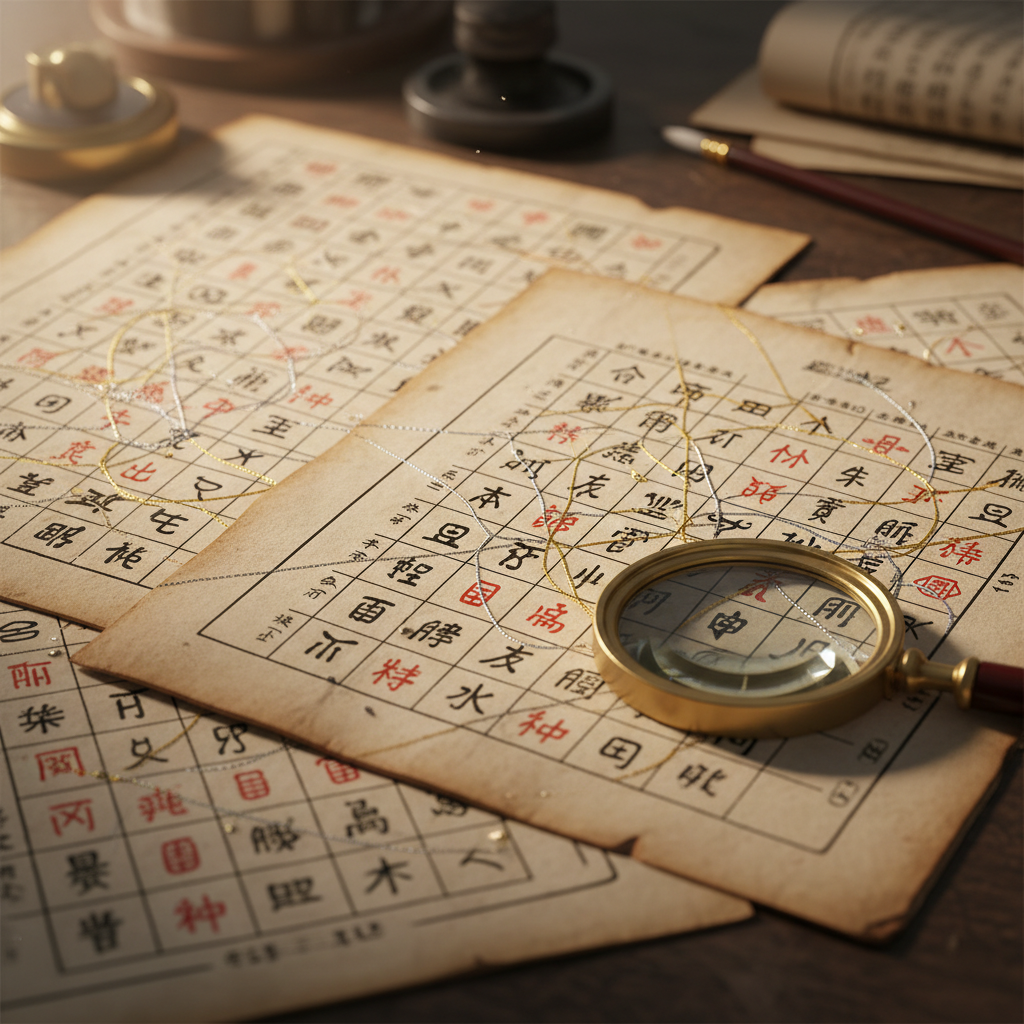
BaZi (八字), also known as the Four Pillars of Destiny, is one of the most important systems in Chinese metaphysics.
5.1 What Is BaZi?

BaZi analyzes a person’s destiny using:
- Year pillar
- Month pillar
- Day pillar
- Hour pillar
Each pillar consists of:
- A Heavenly Stem
- An Earthly Branch
Together, these eight characters form a destiny blueprint that reveals:
- Personality traits
- Strengths and weaknesses
- Wealth potential
- Career suitability
- Relationship patterns
5.2 Why BaZi Is Not Fatalistic

BaZi does not say, “This will happen no matter what.”
Instead, it answers:
- What is your natural tendency?
- When are opportunities strongest?
- What strategies suit you best?
BaZi empowers individuals to work with destiny, not fight it.
6. Qi Men Dun Jia: Strategic Divination for Critical Decisions
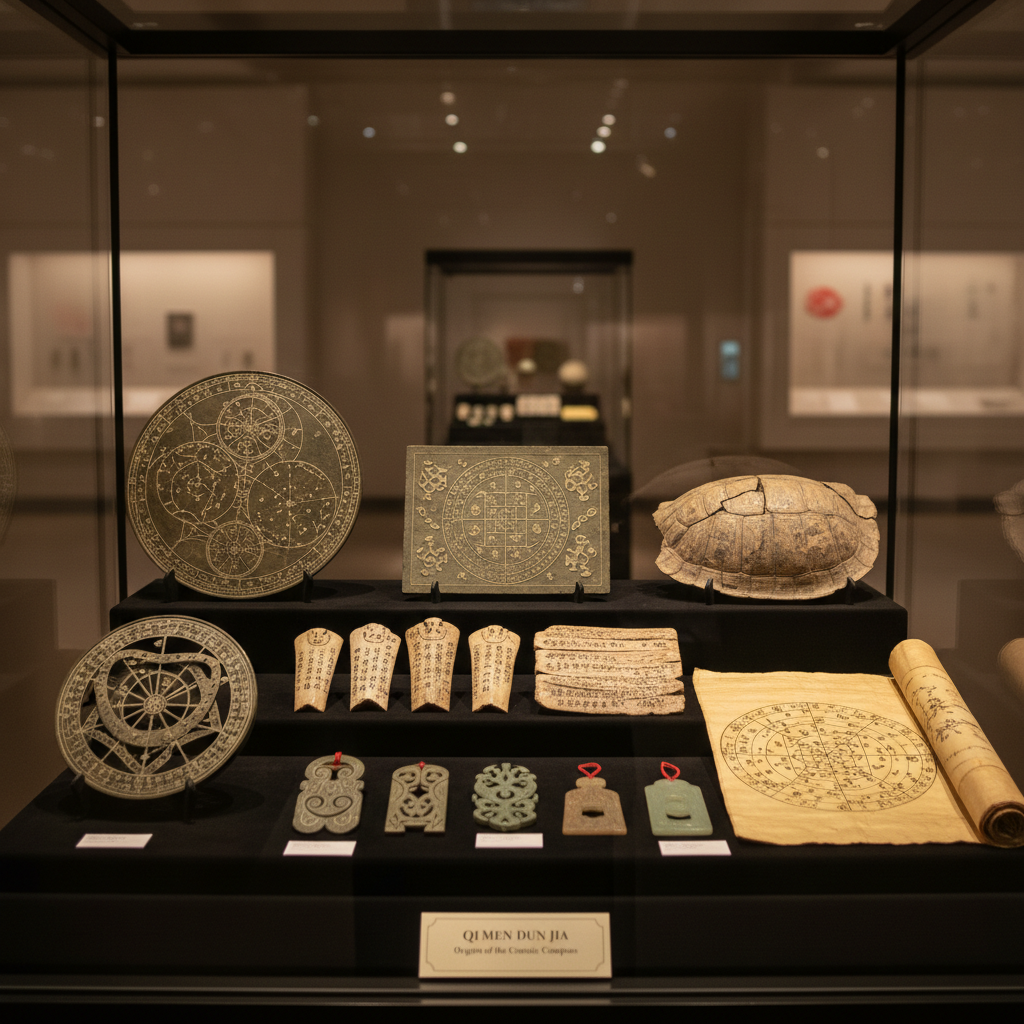
Qi Men Dun Jia (奇门遁甲) is regarded as the highest level of Chinese metaphysical divination.
6.1 Origins of Qi Men Dun Jia
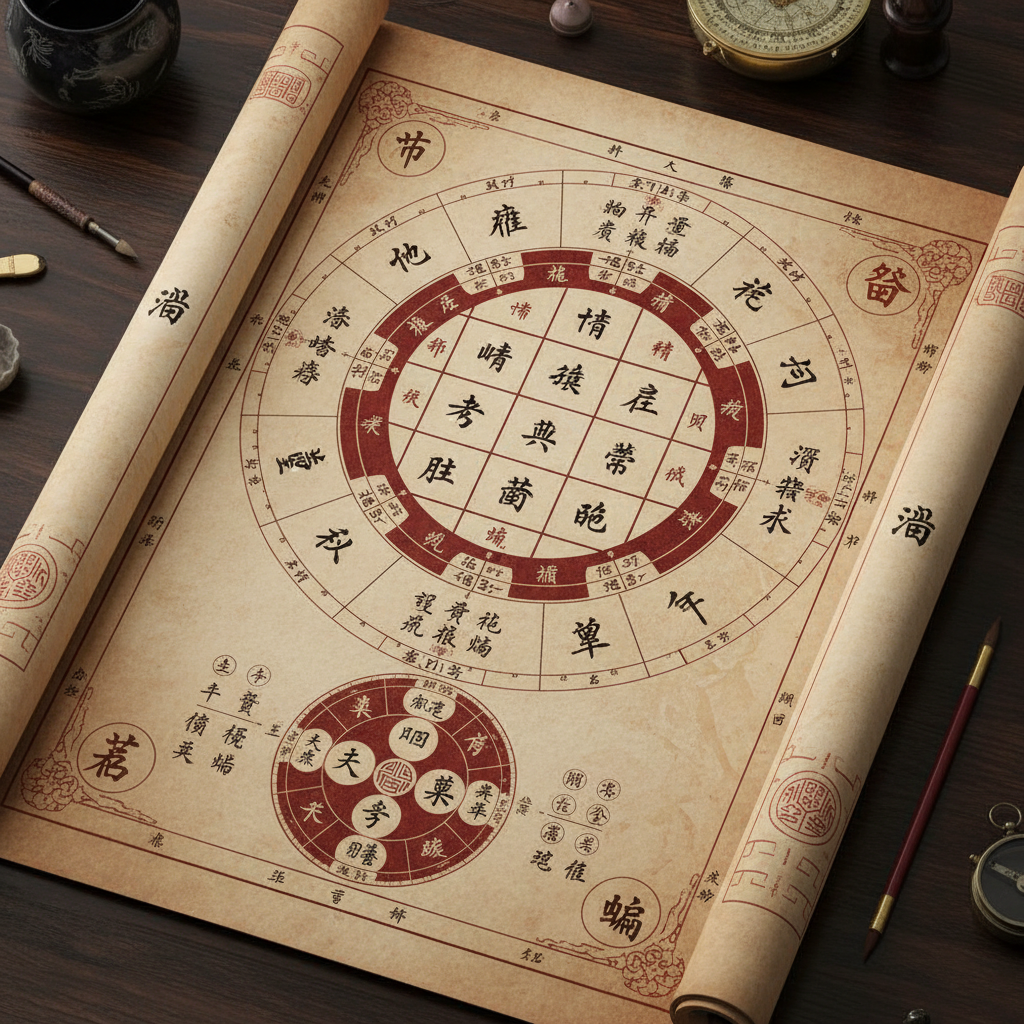
Originally used by:
- Military strategists
- Emperors
- Political advisors
Qi Men Dun Jia focuses on:
- Timing
- Strategy
- Positioning
It answers immediate, tactical questions, such as:
- Is this the right time?
- Which option is best?
- Where is the advantage?
6.2 Structure of Qi Men Dun Jia

A Qi Men Dun Jia chart includes:
- 8 Gods
- 8 Doors
- 9 Palaces
- 10 Heavenly Stems
- 12 Earthly Branches
Each chart represents a snapshot of cosmic conditions at a specific moment.
6.3 When to Use Qi Men Dun Jia

Qi Men Dun Jia is best used for:
- Business decisions
- Negotiations
- Legal matters
- Investments
- Crisis management
It complements BaZi and Feng Shui by focusing on short-term, high-impact decisions.
7. Chinese Metaphysics in Modern Life
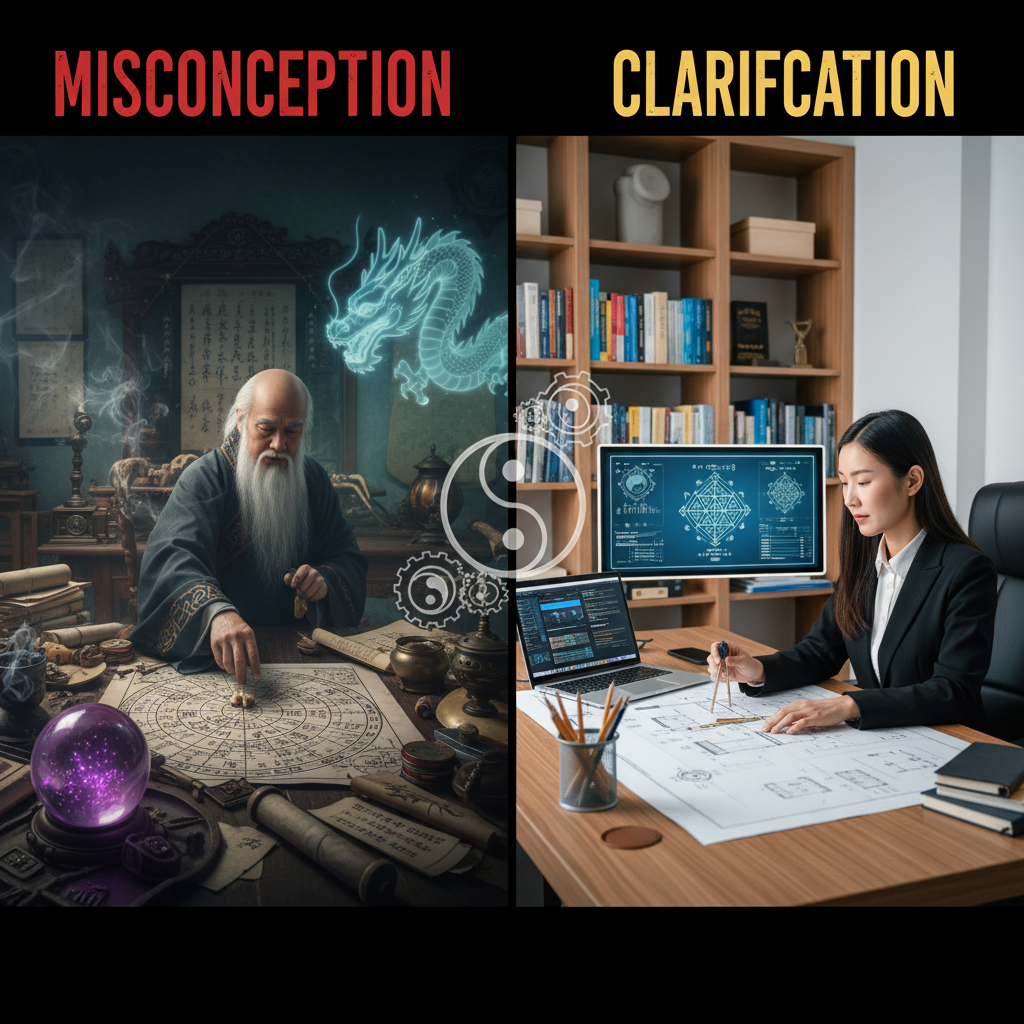
In the modern world, Chinese metaphysics is increasingly used by:
- Entrepreneurs
- CEOs
- Investors
- Consultants
- Coaches
It provides an edge in uncertainty, especially where data alone is insufficient.
Applications include:
- Career planning
- Strategic launches
- Market timing
- Relationship compatibility
- Risk management
8. Dispelling Common Misconceptions

Chinese metaphysics is often misunderstood as:
- Superstition
- Fortune telling
- Religious belief
In reality, it is:
- Observational science
- Pattern recognition
- Strategic forecasting
It does not replace effort or intelligence – it enhances them.
9. Conclusion: Why Chinese Metaphysics Still Matters Today

Chinese metaphysics has endured because it addresses timeless human concerns:
- Who we are
- Where we are going
- How to act wisely
By understanding cosmic timing, personal strengths, and environmental influences, individuals can make better decisions and live more aligned lives.
In a world of rapid change and uncertainty, Chinese metaphysics remains a powerful tool – not for prediction alone, but for clarity, strategy, and conscious living.
Leave a Reply
You must be logged in to post a comment.