
People ask me this constantly: should I get a Qi Men Dun Jia reading or a Bazi reading? The honest answer is that they do different jobs, and once you understand the difference you will know exactly which one your question needs. Here is the comparison I give my own students.
Qi Men Dun Jia Destiny Reading
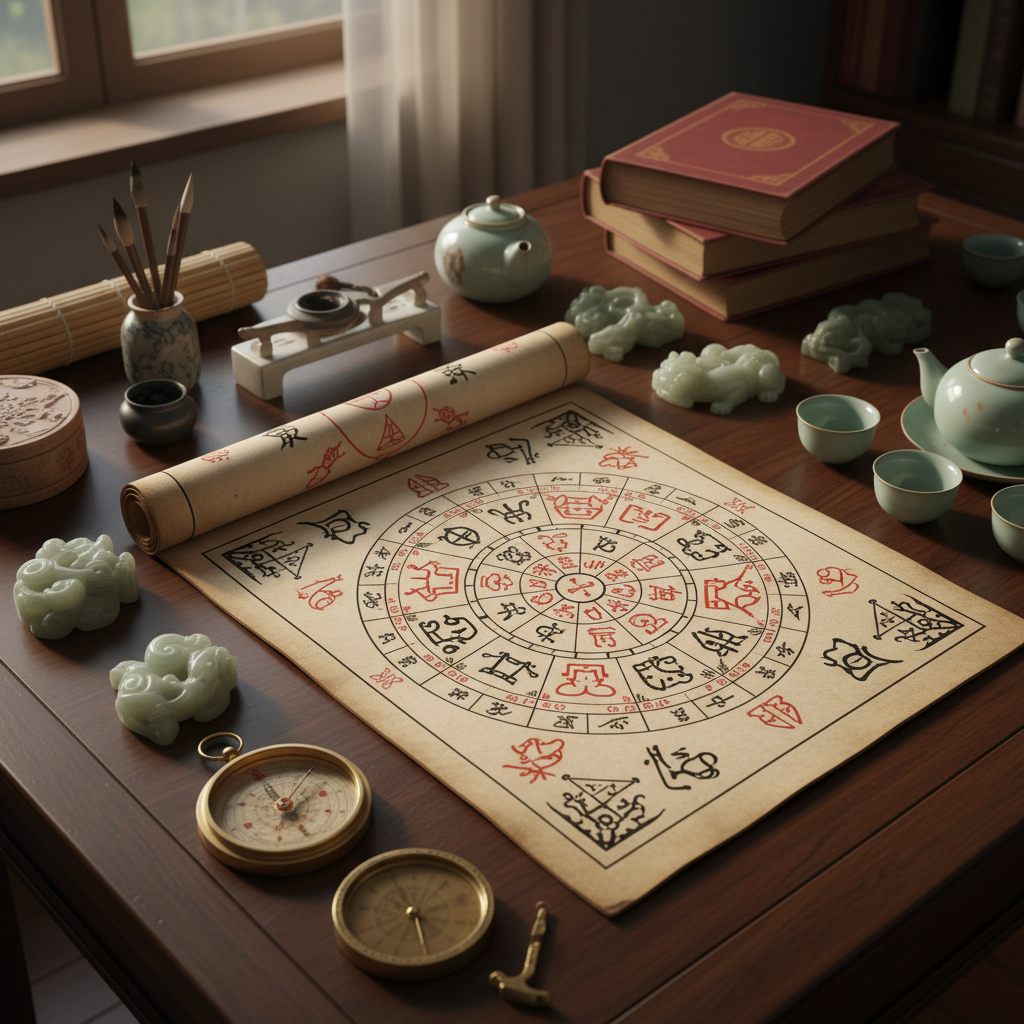
Qi Men Dun Jia destiny reading uses the day stem as its anchor, then reads the combinations of heavenly and earthly stems together with the 8 trigrams across the palaces: career, marriage, wealth, health and so on. Where Bazi works with four pillars (hour, day, month, year), QMDJ concentrates on the day stem and builds an unusually fine-grained picture of character and timing from there.
The level of detail is what surprises people. QMDJ gives a person six or even eight different self characters to work with, so you can see very specific facets of someone’s personality and the events forming around them. This is the system I reach for when a client wants specifics, not generalities.
It also refuses to stay in boxes. Bazi tends toward fixed groupings and set categorizations; QMDJ produces thousands of unique combinations and dimensions, and the interpretation is not confined to predefined patterns. That is its power, and also its demand on the reader.
A fair warning, because I would rather you hear it from me: the precision is a double-edged sword. QMDJ can show things a person is not ready to hear. Any ethical practitioner has to deliver hard information with discernment and care. Used well, though, nothing else gives guidance this targeted on how to navigate what is coming.
Bazi Reading
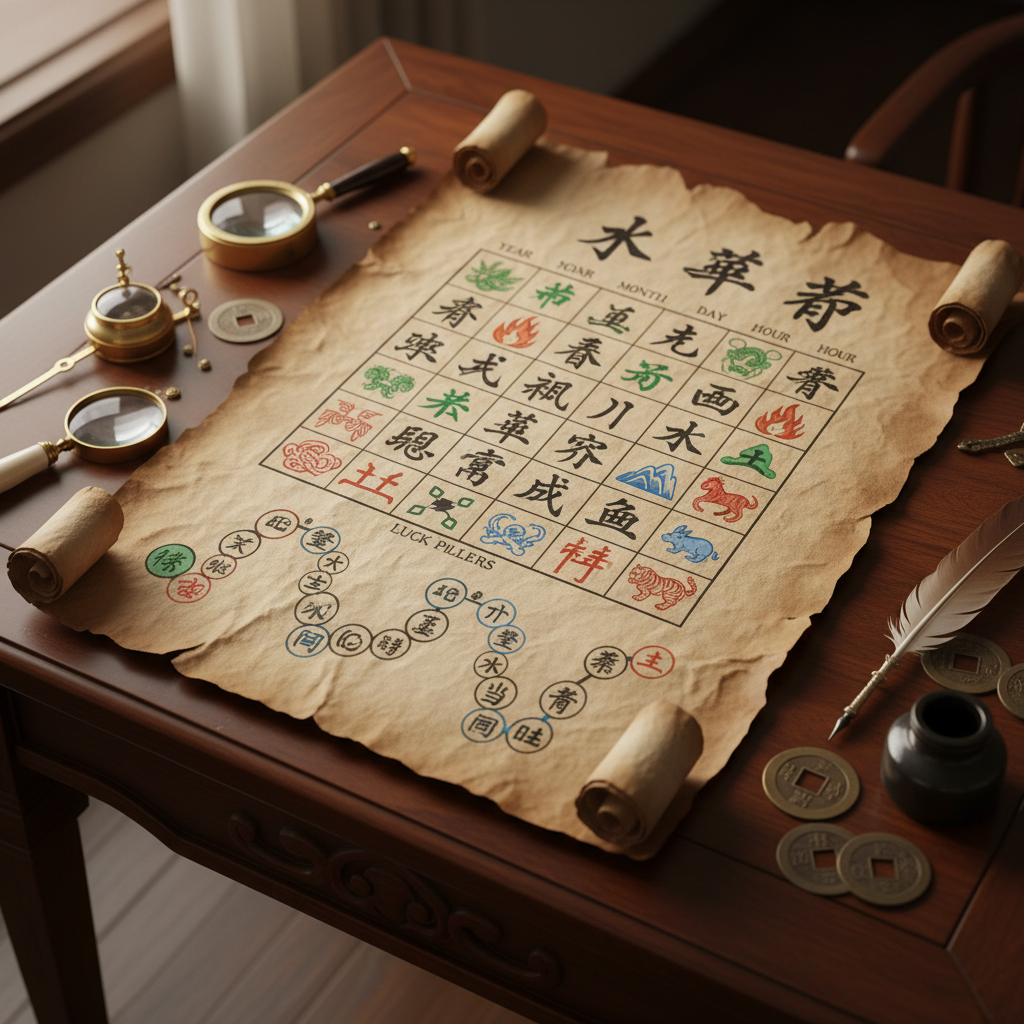
Bazi, also called Four Pillars or Eight Characters, reads destiny from those four pillars: hour, day, month and year. Each pillar pairs a heavenly stem with an earthly branch, and the interactions between them describe character, life path and likely events.
For beginners it is the more approachable of the two. The framework is straightforward, which is exactly why I recommend most people learn it first or start their readings there. What you trade away is granularity: four pillars give you solid insights, but they rarely reach the intricacies QMDJ can pull out of the same person.
Bazi’s real strength is the broad overview. It is an excellent first map of a life: where the character tendencies sit, which life paths fit, what career directions the chart supports. I use it as the foundation and QMDJ as the zoom lens.
Comparison and Application
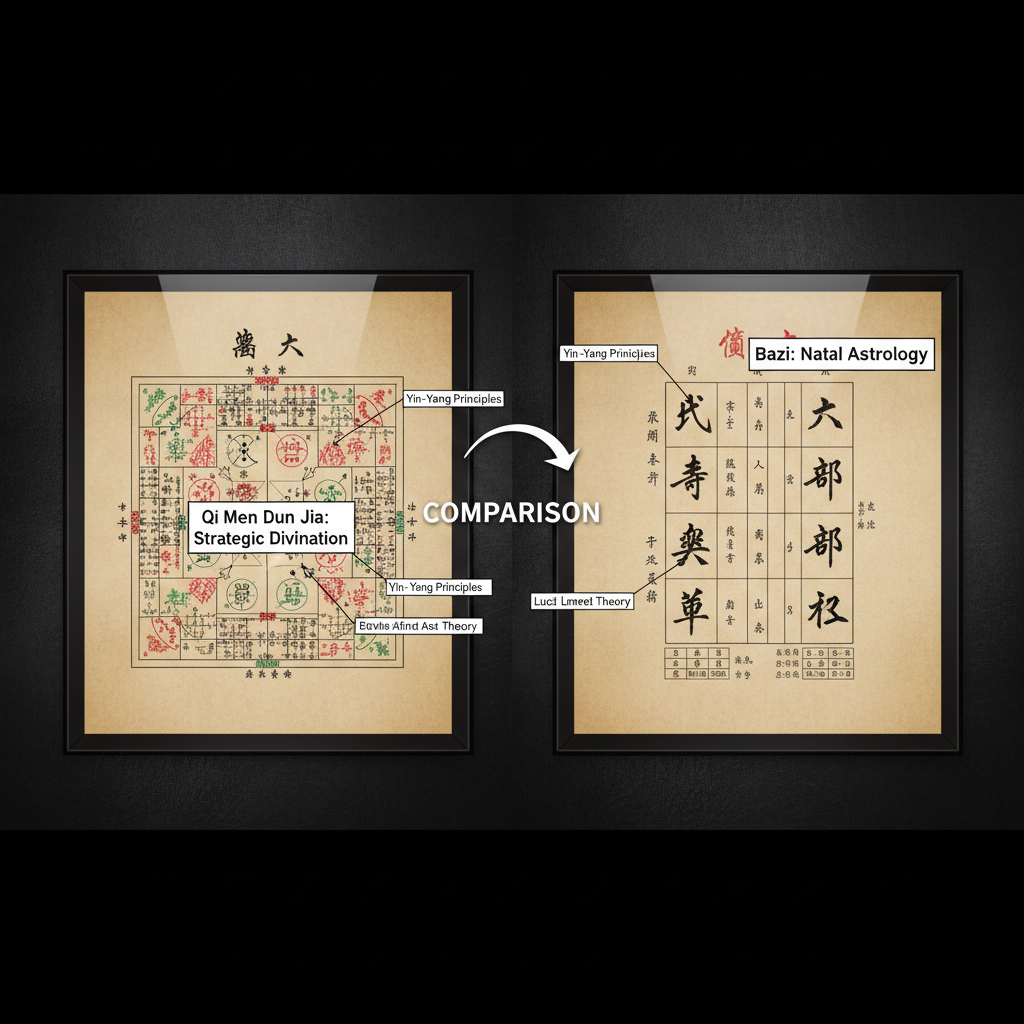
Put side by side: QMDJ pinpoints, Bazi orients. If you want to know what kind of life you have and its general shape, Bazi answers efficiently. If you want to know what is specifically forming around your career, your marriage or a decision you are about to make, that is QMDJ territory.
For students, Bazi is the ideal entry point: accessible, well documented, and it builds the vocabulary you will need anyway. For seekers with a specific burning question, QMDJ earns its reputation for detail.
Which one you choose comes down to the question in front of you and the level of detail you actually want. In my practice the two rarely compete. They hand the client off to each other.
Conclusion

Both systems earn their place. QMDJ, anchored on the day stem with its intricate combinations, delivers specific, personalized guidance on events and character. Bazi delivers the broad, human overview of a life path, and it is where I tell most beginners to start.
My suggestion after years of both: learn the broad strokes from Bazi, then sharpen the answers with QMDJ when the question deserves precision. That sequence has served my students well, and it is the same order I teach in my own courses.
Qi Men Dun Jia Destiny Reading vs Bazi Reading FAQ
Do I need experience to understand this?
No. Every concept on this page sits inside a learnable system: nine palaces, ten stems, eight doors, nine stars, eight gods. The complete Qi Men Dun Jia guide builds the whole foundation from zero.
How long does it take to learn?
The mechanics take days. Confident reading takes a few months of practice with feedback. Students who log real decisions and check outcomes move fastest.
What should I learn first?
The Qimen hour chart. It is quick to plot, answers practical questions and teaches the five layers of a chart without overwhelming you.
Where to go deeper: the complete Qi Men Dun Jia guide covers the whole system free, and my Qi Men Dun Jia course teaches it end to end in plain English.
Where This Article Sits
This guide is part of the QMDJ Destiny Reading: Topic Guide topic collection. The Qi Men Dun Jia hub opens the full topic-guide directory.
Leave a Reply
You must be logged in to post a comment.